Professional product catalogue
Ophthalmology medicines
Ophthalmology medicines are preparations intended for the eye, with purposes as different as tear substitution, action on intraocular pressure and treatment of infection. Eye drop, gel and ophthalmic ointment describe dosage forms rather than one indication. This professional category organises those families while preserving their distinct mechanisms. It also separates medicines from other eye products, including selected moisturising devices and contact lens care solutions. Understanding the complete presentation helps distinguish products that share an anatomical destination but have different pharmaceutical identities.
Products in this category
418 products
 Biogaran
AFIVEG 40 mg/ml solution for injection in pre-filled syringe Syringe/0,09ml
CIP / EAN : 3400930323632
 Sandoz
AFQLIR 40 mg/mL Solution for Injection Pre-filled Syringe Syringe/0,165mL
CIP / EAN : 3400930306567
 Teva Santé
AHZANTIVE 40 mg/ml Solution for injection prefilled syringe Syringe/0,09ml
CIP / EAN : 3400930327715
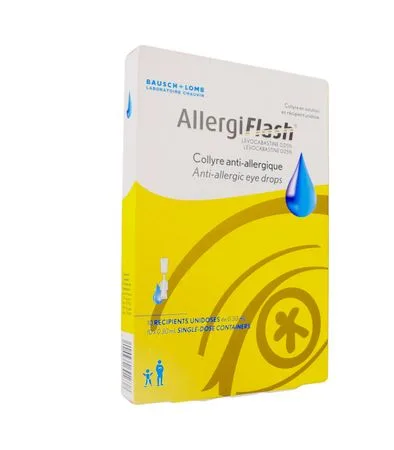
 Laboratoire Chauvin
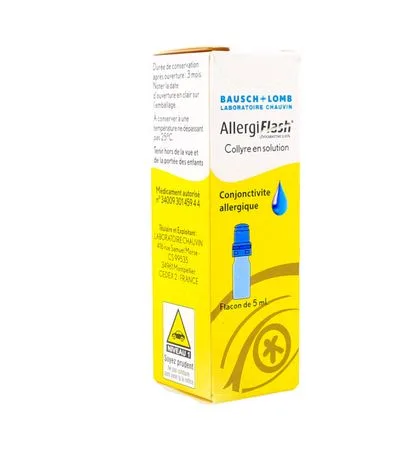
ALLERGIFLASH 0,05 % Eye drops solution single-dose container 10units
CIP / EAN : 3400934691638
 Amgen SAS
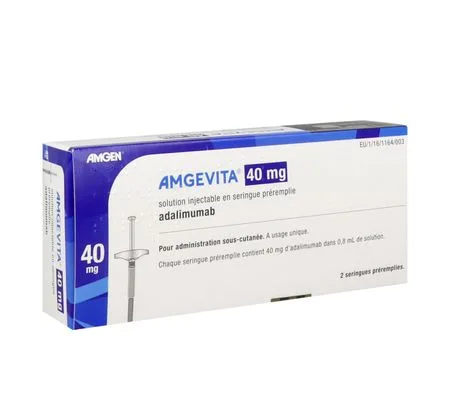
AMGEVITA 40 mg Solution for Injection in Prefilled Syringe (100 mg/mL) 2Syringe/0,4mL
CIP / EAN : 3400930294482
- Amgen SAS
AMGEVITA 40 mg Injectable Solution prefilled syringe (100 mg/ml) 6Syringe (3x2)/0,4ml
CIP / EAN : 3400930294499
- Amgen SAS
AMGEVITA 40 mg Injectable Solution prefilled syringe (100 mg/ml) Syringe/0,4ml
CIP / EAN : 3400930294475
- Amgen SAS
AMGEVITA 40 mg Injectable Solution prefilled syringe (50 mg/ml) 2Syringe/0,8ml
CIP / EAN : 3400930141731
- Amgen SAS
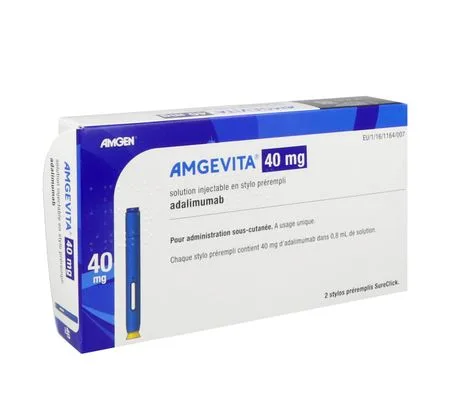
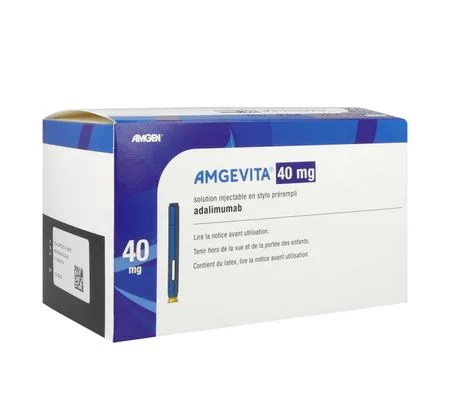
AMGEVITA 40 mg Solution for Injection in Prefilled Pen (100 mg/mL) 2Pen/0,4mL
CIP / EAN : 3400930294512
- Amgen SAS
AMGEVITA 40 mg Solution for Injection in Prefilled Pen (100 mg/mL) 6Pen (3x2)/0,4mL
CIP / EAN : 3400930294529
- Amgen SAS
AMGEVITA 40 mg Solution for Injection in Prefilled Pen (100 mg/mL) Pen/0,4mL
CIP / EAN : 3400930294505
- Amgen SAS
AMGEVITA 40 mg Injectable Solution prefilled pen (50 mg/ml) 2Pen/0,8ml
CIP / EAN : 3400930141779
- Amgen SAS
AMGEVITA 40 mg Injectable Solution prefilled pen (50 mg/ml) 6Pen/0,8ml
CIP / EAN : 3400930141809
- Amgen SAS
AMGEVITA 80 mg Inj solution prefilled syringe (100 mg/ml) Syringe/0,8ml
CIP / EAN : 3400930294536
- Amgen SAS
AMGEVITA 80 mg Inj solution in prefilled pen (100 mg/ml) Pen/0,8ml
CIP / EAN : 3400930294567





Understanding ophthalmology medicines
One ocular route, several functions
The cornea, conjunctiva and internal eye structures represent different sites. An ophthalmic destination alone does not define a product's target. Redness, dryness and raised intraocular pressure are not equivalent descriptions. Medicines in this category are understood through their substances, routes and documented indications. Some agents used for an eye condition may belong to another family when given systemically; the organ involved does not erase their pharmacological identity. This gives the category a practical scope without interpreting every ocular symptom as a reason for the same preparation.
Dry eye and tear substitutes
Artificial tears and other tear substitutes relate to the ocular surface and tear film. Solutions and gels differ in formulation, while single-dose containers and bottles describe presentation systems. The expression tear substitute can apply to products with different regulatory statuses. The medicinal category therefore retains its own boundaries rather than treating every moisturising product as a medicinal product. Preservative content, composition and information about contact lenses remain characteristics of the precise reference. They are not universal properties shared by every preparation associated with dry eyes or surface discomfort.
Glaucoma and intraocular pressure
Antiglaucoma medicines include several families, notably prostaglandin analogues, beta blockers and carbonic anhydrase inhibitors. Fixed combinations contain several active substances in one preparation. Their action concerns intraocular pressure, which differs from blood pressure. Glaucoma assessment involves the optic nerve and other ophthalmological parameters. This category describes medicines and formulation distinctions without defining an individual pressure target. It also keeps pharmaceutical treatment separate from laser and surgical approaches, which belong to the wider care pathway rather than being alternative dosage forms of the medicines listed in the professional category.
Anti-infectives and presentation identity
Ocular anti-infectives include agents directed against different microorganisms. Antibiotic and antiviral are not synonyms, and conjunctivitis can also have a non-infectious origin. Combinations containing a corticosteroid retain their specific composition. Eye drops and ophthalmic ointments must be distinguished from skin or ear preparations even when containers look similar. For pharmacy work, concentration, formulation, volume and information after opening provide complementary distinctions. Dosage form explains part of the identity, while official documents establish the particular scope of each medicinal product rather than a universal use for all ophthalmic preparations.
Frequently asked questions
Does eye drop identify a single therapeutic family?
No. It describes a form intended for the eye. Eye drops can contain very different substances and have different purposes, distinguished through their composition.
Are contact lens solutions ophthalmic medicines?
A lens-care purpose does not make them medicinal eye drops. Status, composition and documented use define distinct products.
Updated 10 November 2026
Sources and further reading
- OMS — index ATC/DDD, S01
- OMS — index ATC/DDD, S01E
- OMS — index ATC/DDD, S01A
- Assurance Maladie — Sécheresse oculaire, consultation et traitement
- Assurance Maladie — Traitement du glaucome
- Assurance Maladie — Conjonctivite, consultation et traitement
- Assurance Maladie — Collyres et présentations ophtalmiques