Professional product catalogue
Glaucoma medicines
Glaucoma medicines belong to several families with different actions on intraocular pressure. Eye drops are prominent, containing single substances or combinations, while selected preparations use other routes. This professional category describes antiglaucoma classes and their presentations without confusing eye pressure with blood pressure. Complete composition, concentration and packaging system are essential features of each medicinal product. They help distinguish references even when several preparations are associated with the same condition or have similar-looking ophthalmic containers and familiar substance names.
Products in this category
151 products
 Difarmed SL
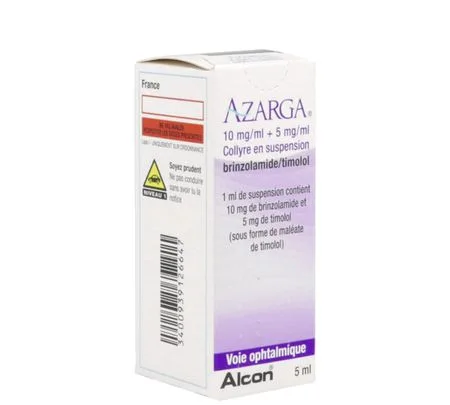
AZARGA 10 mg/ml + 5 mg/ml Eye drops suspension Bottle/5ml [ADP1]
CIP / EAN : 3400949500093
 Novartis Pharma SAS
AZARGA 10 mg/ml + 5 mg/ml Eye drops suspension Bottle/5ml
CIP / EAN : 3400939126647
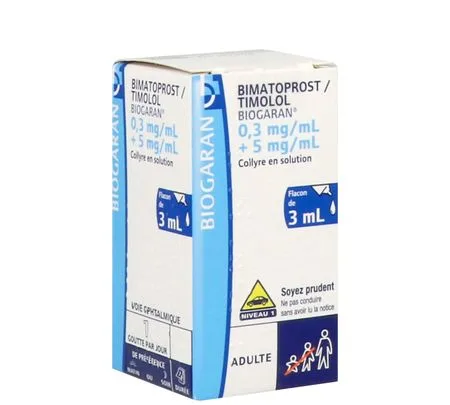
 Biogaran
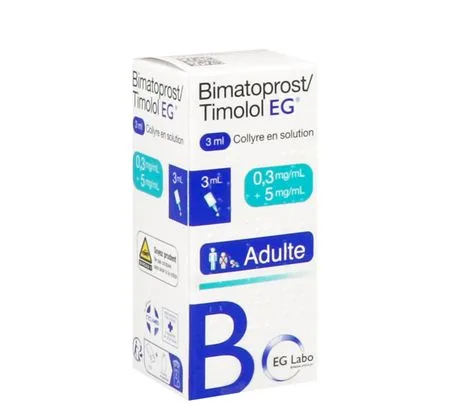
BIMATOPROST/TIMOLOL BIOGARAN 0,3 mg/ml + 5 mg/ml Collyre sol Fl/3ml
CIP / EAN : 3400930118474
 Viatris Santé
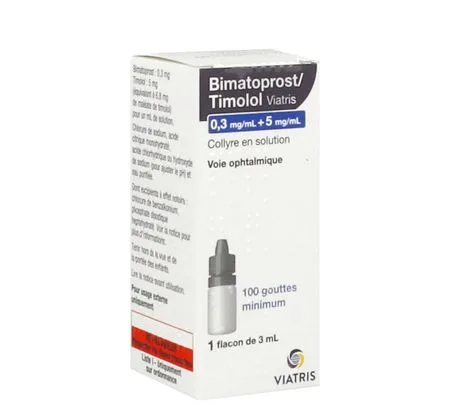
BIMATOPROST/TIMOLOL VIATRIS 0,3 mg/ml + 5 mg/ml Collyre sol Fl/3ml
CIP / EAN : 3400930107683
 Zentiva France
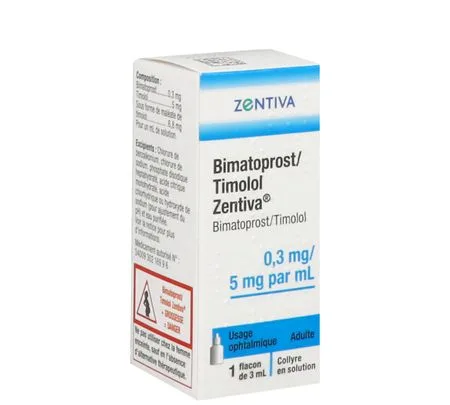
BIMATOPROST/TIMOLOL ZENTIVA 0,3 mg/5 mg par ml Collyre sol Fl/3ml
CIP / EAN : 3400930216996


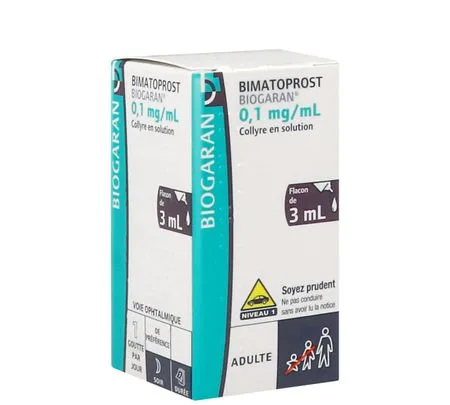
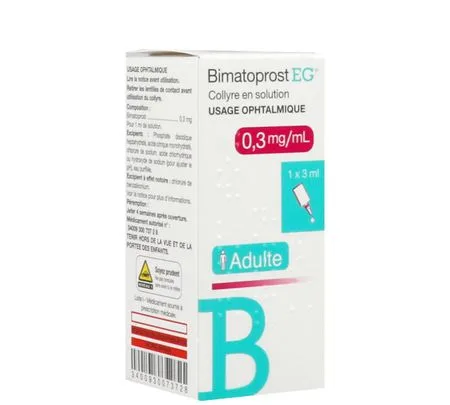

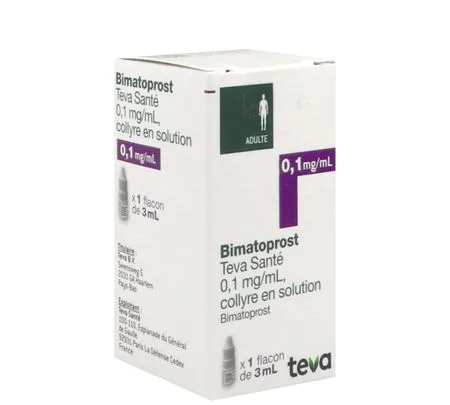




Understanding glaucoma medicines
Intraocular pressure and glaucoma
Glaucoma involves damage to the optic nerve, and its assessment extends beyond a pressure measurement. Intraocular pressure is a central management parameter, but it is not the blood pressure measured at the arm. Aqueous humour and the balance between its production and drainage help explain several antiglaucoma mechanisms. These terms place pharmaceutical families in context without reducing every glaucoma to one clinical form or determining an individual target pressure. The disease name therefore provides a setting, while the particular medicine retains its specific characteristics.
Several families and combinations
Prostaglandin analogues, beta blockers and carbonic anhydrase inhibitors illustrate classes in this field. Other agents act through adrenergic or cholinergic pathways. Fixed combinations contain several substances in one presentation, unlike a single-active product. Sharing a family name with a cardiovascular medicine does not make ophthalmic and systemic formulations equivalent. Route, concentration and authorised indications remain specific to each medicine, even when the molecule is familiar. Complete composition is especially useful for recognising which substances are already included in a combination reference.
Eye drops and presentation formats
Ophthalmic solutions and suspensions are distinct formulations where these terms appear in the official product name. Multidose bottles, single-dose containers and any preservative add further differences. The concentration of one active substance does not describe an entire combination or its container. In pharmacy practice, precise identification distinguishes references and their storage information. Other glaucoma approaches, such as laser procedures and surgery, belong to the ophthalmological care pathway; they are not pharmaceutical dosage forms within this category or interchangeable descriptions for a medicinal product.
Frequently asked questions
Are eye pressure and high blood pressure the same thing?
No. They concern different compartments and measurements. An antiglaucoma medicine cannot be identified simply from the shared terminology of hypertension.
Why identify every active substance in a combination eye drop?
A fixed combination contains several substances. The name or concentration of just one component does not fully describe the medicinal product or its pharmaceutical characteristics.
Updated 10 November 2026
Sources and further reading