
Medicines
SmPC of 10/06/2026
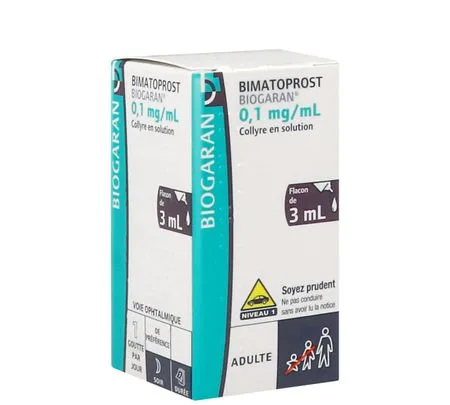
BIMATOPROST BIOGARAN 0,1 mg/mL, eye drops in solution
Forms and presentations
Eye drops in solution.
Clear, colourless, particle-free aqueous eye drop solution.
Composition
Bimatoprost...................................................................................................................................................0,1 mg
For 1 mL of solution.
Excipients with known effect: One millilitre of solution contains 0,2 mg of benzalkonium chloride and 0,95 mg of phosphates.
Benzalkonium chloride, disodium hydrogen phosphate heptahydrate, citric acid monohydrate, sodium chloride, hydrochloric acid (for pH adjustment), sodium hydroxide (for pH adjustment), water for injections.
Indications
Reduction of elevated intraocular pressure in adult patients with open-angle chronic glaucoma or ocular hypertension (as monotherapy or in combination with beta-blockers).
Dosage and administration
Dosage
The recommended dose is one drop in the affected eye or eyes once daily, administered in the evening. The dose must not exceed one instillation per day, as more frequent use may reduce the efficacy in lowering intraocular pressure.
Paediatric population
The safety and efficacy of bimatoprost in children aged 0 to 18 years have not yet been established.
Patients with hepatic or renal impairment
Bimatoprost has not been studied in patients with moderate to severe renal or hepatic impairment. Consequently, it should be used with caution in these patients.
In patients with a history of mild liver disease or abnormal baseline levels of alanine aminotransferase (ALT), aspartate aminotransferase (AST) and/or bilirubin, no deleterious effect on liver function was observed with the eye drops containing 0,3 mg/ml of bimatoprost over 24 months.
Method of administration
If several topical ophthalmic medicinal products are used concomitantly, an interval of at least 5 minutes must be observed between the administrations of each of them.
Contraindications
Hypersensitivity to the active substance or to any of the excipients listed in section Composition.
BIMATOPROST BIOGARAN is contraindicated in patients who have previously experienced adverse reactions suspected to be related to benzalkonium chloride that led to treatment discontinuation.
Warnings and precautions
Ocular
Before starting treatment, patients must be informed that BIMATOPROST BIOGARAN may cause prostaglandin analogue-associated periorbitopathy (PAP) and increased iris pigmentation, as has been observed in patients treated with BIMATOPROST BIOGARAN. Some of these changes may be permanent and may result in visual field alteration and differences in appearance between the eyes if only one eye is treated (see section Adverse effects).
Cases of cystoid macular oedema have been reported infrequently (≥1/1 000 to <1/100) following treatment with the eye drops containing 0,3 mg/ml of bimatoprost. Consequently, BIMATOPROST BIOGARAN should be used with caution in patients with a known risk factor for macular oedema (for example: aphakic patients, pseudophakic patients with posterior capsule rupture).
Rare cases of reactivation of old corneal infiltrates or old ocular infections have been spontaneously reported with the eye drops containing 0,3 mg/ml of bimatoprost. BIMATOPROST BIOGARAN should be used with caution in patients with a history of significant viral ocular infections (for example: herpes simplex) or uveitis/iritis.
BIMATOPROST BIOGARAN has not been studied in patients with ocular inflammation, neovascular and inflammatory glaucoma, angle-closure glaucoma, congenital glaucoma or narrow-angle glaucoma.
Dermatological
An increase in eyelash growth may occur at the sites of repeated contact of the BIMATOPROST BIOGARAN solution with the skin. It is therefore important to apply BIMATOPROST BIOGARAN according to the instructions and to avoid it running onto the cheek or other areas of the skin.
Respiratory
BIMATOPROST BIOGARAN has not been studied in patients with respiratory insufficiency. Although the available data in patients with a history of asthma or COPD are limited, cases of asthma exacerbation, dyspnoea and COPD, as well as asthma attacks, have been reported since marketing. The frequency of these symptoms is unknown. Patients with COPD, asthma, or whose respiratory function is impaired due to other conditions should be treated with caution.
Cardiovascular
BIMATOPROST BIOGARAN has not been studied in patients with cardiac block more severe than first-degree block or with uncontrolled congestive heart failure. There have been a limited number of spontaneous reports of cases of bradycardia or hypotension with the use of the eye drops containing 0,3 mg/ml of bimatoprost. BIMATOPROST BIOGARAN should be used with caution in patients predisposed to a slow heart rate or low blood pressure.
Additional information
In studies with bimatoprost 0,3 mg/ml in patients with glaucoma or ocular hypertension, it was shown that more frequent exposure of the eye to bimatoprost (i.e. more than one dose per day) may reduce the intraocular pressure-lowering effect (see section Interactions). Patients in whom BIMATOPROST BIOGARAN is combined with other prostaglandin analogues should therefore be monitored to observe changes in their intraocular pressure.
BIMATOPROST BIOGARAN contains a preservative, benzalkonium chloride (200 ppm), which may be absorbed by soft contact lenses. Benzalkonium chloride may cause eye irritation and discolouration of contact lenses. Contact lenses should be removed before instillation and may be reinserted 15 minutes after administration.
Benzalkonium chloride, commonly used as a preservative in ophthalmic products, may cause superficial punctate keratitis and/or toxic ulcerative keratopathy. As BIMATOPROST BIOGARAN 0,1 mg/mL contains 200 ppm of benzalkonium chloride (four times the concentration of the eye drops containing 0,3 mg/ml of bimatoprost), it should be used with caution in patients with dry eye, in patients with corneal disorders and/or in patients taking several eye drops containing benzalkonium chloride. In addition, monitoring is required during prolonged use in these patients.
Bacterial keratitis associated with the use of multidose containers of topical ophthalmic products has been reported. These containers had been accidentally contaminated by patients who, in most cases, had an underlying ocular condition.
In patients with damage to the ocular surface epithelium, the risk of developing bacterial keratitis is higher.
Patients should be instructed to avoid contact of the bottle tip with the eye or surrounding structures, in order to avoid eye injury or contamination of the solution.
Interactions
No interaction studies have been performed.
No interaction is expected in humans, as systemic concentrations of bimatoprost are extremely low (less than 0,2 ng/ml) after ocular administration of the eye drops containing 0,3 mg/ml of bimatoprost. Bimatoprost is transformed by various metabolic pathways, but no effect on enzymes involved in hepatic metabolism was observed in preclinical studies.
In clinical studies, the solution eye drops containing 0,3 mg/ml of bimatoprost were used concomitantly with several ophthalmic beta-blockers without any interactions being identified.
Apart from topical beta-blockers, the combination of BIMATOPROST BIOGARAN with other antiglaucoma agents has not been studied in the treatment of glaucoma.
The intraocular pressure-lowering effect of prostaglandin analogues (for example BIMATOPROST BIOGARAN) may be reduced if they are used with other prostaglandin analogues in patients with glaucoma or ocular hypertension (see section Warnings and precautions).
Fertility, pregnancy and breastfeeding
Pregnancy
There are no relevant data on the use of bimatoprost in pregnant women. Animal studies have shown reproductive toxicity at high maternotoxic doses (see section Preclinical safety).
BIMATOPROST BIOGARAN should not be used during pregnancy, unless absolutely necessary.
Breast-feeding
It is not known whether bimatoprost is excreted in human milk. Animal studies have shown that bimatoprost passes into milk. The decision to discontinue breastfeeding or to stop treatment with BIMATOPROST BIOGARAN should be made taking into account the benefit of breastfeeding for the child and the benefit of the treatment for the mother.
Fertility
There are no data on the effects of bimatoprost on human fertility.
Driving and using machines
BIMATOPROST BIOGARAN has a negligible effect on the ability to drive and use machines.
As with any ophthalmic treatment, if transient blurred vision occurs after instillation, the patient should wait until their vision returns to normal before driving or using machines.
Adverse effects
In the twelve-month phase III clinical study, approximately 38 % of patients treated with BIMATOPROST BIOGARAN 0,1 mg/ml experienced adverse effects. The most frequent adverse effect was conjunctival hyperaemia, occurring in 29 % of patients; in most cases, the hyperaemia was minimal to mild and non-inflammatory in nature. Approximately 4 % of patients discontinued treatment due to adverse effects.
The adverse effects described below were reported during clinical trials with BIMATOPROST BIOGARAN 0,1 mg/ml, solution eye drops, or after its marketing. Most were ocular, of mild intensity, and none were serious.
Very common adverse effects (≥1/10); common (≥1/100 to <1/10); uncommon (≥1/1 000 to <1/100); rare (≥1/10 000 to <1/1 000); very rare (<1/10 000); of unknown frequency (cannot be estimated from the available data) are classified in table 1 according to system organ classes. Within each frequency grouping, adverse effects are presented in order of decreasing seriousness.
Table 1
|
System organ class |
Frequency |
Adverse reaction |
|
Nervous system disorders |
uncommon |
Headache |
|
unspecified |
Dizziness sensations |
|
|
Eye disorders
|
very common |
Conjunctival hyperaemia, periorbitopathy associated with prostaglandin analogues |
|
frequent |
Superficial punctate keratitis, eye irritation, ocular pruritus, eyelash growth, ocular pain, eyelid erythema, eyelid pruritus |
|
|
uncommon |
Asthenopia, vision disorders, conjunctival disorders, conjunctival oedema, iris hyperpigmentation, madarosis, eyelid oedema |
|
|
|
unspecified |
Eyelid pigmentation, macular oedema, dry eye, ocular discharge, eye oedema, sensation of foreign bodies in the eyes, increased lacrimation, eye discomfort, photophobia |
|
Respiratory, thoracic and mediastinal disorders |
unspecified |
Asthma, exacerbation of asthma, exacerbation of COPD and dyspnoea |
|
Gastrointestinal disorders |
uncommon |
Nausea |
|
Skin and subcutaneous tissue disorders
|
frequent |
Skin hyperpigmentation, hypertrichosis |
|
uncommon |
Dry skin, crusts at the eyelid margin, pruritus |
|
|
unspecified |
Skin discolouration (periocular) |
|
|
General disorders and administration site conditions |
frequent |
Irritation at the instillation site |
|
Immune system disorders |
unspecified |
Hypersensitivity reaction including signs and symptoms of ocular allergy and allergic dermatitis |
|
Vascular disorders |
unspecified |
Hypertension |
In clinical studies, more than 1 800 patients were treated with bimatoprost at 0,3 mg/mL. Pooling data from phase III clinical studies with bimatoprost at 0,3 mg/mL as monotherapy or in combination, the most frequent treatment-related adverse events were:
• eyelash growth up to 45% in the first year with a reduced incidence of new cases
• at 7% at 2 years and 2% at 3 years,
• conjunctival hyperaemia (most often minimal to mild and considered to be of
• non-inflammatory nature) in up to 44% of patients in the first year with a reduced incidence of
• new cases at 13% at 2 years and 12% at 3 years,
• ocular pruritus in up to 14% of patients in the first year with an incidence of new
• cases reduced to 3% at 2 years and 0% at 3 years. Fewer than 9% of patients had to discontinue treatment
• due to an adverse event in the first year, with an incidence of additional discontinuations
• of 3% in the second and third years.
Other adverse effects reported with bimatoprost at 0,3 mg/mL are presented in Table 2. This table also includes adverse effects occurring with both formulations, but with different frequencies. Most of these effects are ocular, mild to moderate, and none were serious: for each frequency, adverse effects are presented in decreasing order of severity.
Table 2.
|
System organ class |
Frequency |
Adverse reaction |
|
Nervous system disorders |
frequent |
Headache |
|
uncommon |
Vertigo sensations |
|
|
Eye disorders |
very common |
Ocular pruritus, eyelash growth |
|
frequent |
Corneal erosion, ocular burning, allergic conjunctivitis, blepharitis, decreased visual acuity, asthenopia, conjunctival oedema, foreign body sensation, dry eye, ocular pain, photophobia, lacrimation, ocular discharge, visual disturbance/blurred vision, increased iris pigmentation, darkening of eyelashes visual disturbance/blurred vision, increased iris pigmentation, darkening of eyelashes |
|
|
uncommon |
Retinal haemorrhage, uveitis, cystoid macular oedema, iritis, blepharospasm, eyelid retraction, periorbital erythema |
|
|
Vascular disorders |
frequent |
Hypertension |
|
Skin and subcutaneous tissue disorders |
uncommon |
Hirsutism |
|
General disorders and administration site conditions |
uncommon |
Asthenia |
|
Investigations |
frequent |
Abnormal liver function tests |
Description of selected adverse reactions
Periorbitopathy associated with prostaglandin analogues (PAP)
Prostaglandin analogues, including BIMATOPROST BIOGARAN, may cause periorbital lipodystrophic changes that may lead to deepening of the eyelid sulcus, ptosis, enophthalmos, eyelid retraction, involution of dermatochalasis and inferior scleral exposure. These changes are generally moderate, may occur as early as one month after starting treatment with BIMATOPROST BIOGARAN and may lead to visual field impairment even without the patient's awareness. PAP is also associated with hyperpigmentation or discolouration of the periocular skin and with hypertrichosis. These changes have been found to be partially or fully reversible upon discontinuation of treatment or switching to another treatment.
Iris hyperpigmentation
The increase in iris pigmentation is likely to be permanent. The change in pigmentation is due to an increase in melanin content in melanocytes rather than an increased number of melanocytes. The long-term effects of increased iris pigmentation are not known. Changes in iris colour observed with ocular administration of bimatoprost may not be visible for several months or years. Usually, the brown pigmentation around the pupils extends concentrically towards the periphery of the iris, and all or part of the iris becomes brownish. Treatment does not appear to affect iris naevi and ephelides. The incidence of iris hyperpigmentation after 12 months of treatment with an eye drop containing 0,1 mg/mL of bimatoprost was 0,5%. With the eye drop containing 0,3 mg/mL of bimatoprost, the incidence, which was 1,5% at 12 months (see section Adverse effects, Table 2), did not increase during the 3 years of treatment.
Adverse effects reported with phosphate-containing eye drops:
A few rare cases of corneal calcification have been reported in association with the use of phosphate-containing drops in some patients with severely damaged corneas. Reporting of suspected adverse reactions.
Reporting suspected adverse reactions after authorisation of the medicinal product is important. It allows continued monitoring of the benefit/risk balance of the medicinal product. Healthcare professionals are asked to report any suspected adverse reactions via the national reporting system: National Agency for the Safety of Medicines and Health Products (ANSM) and the network of Regional Pharmacovigilance Centres - Website: https://signalement.social-sante.gouv.fr .
Overdose
No cases of overdose have been reported: such incidents are unlikely to occur with ocular instillation.
In case of overdose, symptomatic and supportive treatment should be instituted. If BIMATOPROST BIOGARAN is accidentally ingested, the following information may be useful: in two-week oral studies in rats and mice, doses up to 100 mg/kg/day caused no toxicity. This dose expressed in mg/m2 is at least 210 times higher than the dose corresponding to the accidental ingestion of one bottle of BIMATOPROST BIOGARAN 0,1 mg/ml, eye drops in solution by a child weighing 10 kg.
Pharmacodynamics
Pharmacotherapeutic class: ophthalmological products, prostaglandin analogues, ATC code: S01EE03
Mechanism of action
Bimatoprost reduces intraocular pressure in humans by increasing aqueous humour outflow through the trabecular meshwork and by improving uveoscleral outflow. The reduction in intraocular pressure begins approximately 4 hours after the first administration, and maximum effect is obtained at approximately 8 to 12 hours. The action persists for at least 24 hours.
Bimatoprost is a potent ocular hypotensive agent. It is a synthetic prostamide, structurally related to prostaglandin F2α (PGF2α) that does not act through known prostaglandin receptors. Bimatoprost selectively reproduces the effects of newly discovered biosynthetic substances called prostamides. However, the structure of prostamide receptors has not yet been identified.
In the pivotal study of 12 months conducted with bimatoprost 0,1 mg/ml eye drops in adults, mean daytime IOP values, measured at each visit during the 12 months, did not vary by more than 1,1 mmHg over the course of the day and never exceeded 17,7 mmHg.
BIMATOPROST BIOGARAN 0,1 mg/mL contains benzalkonium chloride at a concentration of 200 ppm.
There are few data available on the use of bimatoprost in patients with pseudoexfoliative glaucoma and open-angle pigmentary glaucoma, as well as in patients with chronic angle-closure glaucoma who have undergone iridotomy.
No clinically significant effect on heart rate and blood pressure was observed in clinical studies.
Paediatric population
The safety and efficacy of bimatoprost in children aged 0 to 18 years have not yet been established.
Pharmacokinetics
Absorption
Bimatoprost penetrates well into the human cornea and sclera in vitro. After ocular administration in adults, systemic exposure to bimatoprost is very low and no accumulation is observed over time. After two weeks of administration of one drop per day of bimatoprost 0,3 mg/ml in both eyes, the peak plasma concentration is reached 10 minutes after the last instillation. Circulating plasma concentrations fall below the limit of detection (0,025 ng/ml) after approximately 1 h 30. The mean Cmax and of ASC0-24 h (Area Under Curve) values were comparable on day 7e and on day 14e (approximately 0,08 ng/ml and 0,09 ng • h/ml), indicating that a stable concentration of bimatoprost is reached by the end of the first week of treatment.
Distribution
Bimatoprost distributes moderately into the extravascular compartment. In humans, the systemic volume of distribution at steady state is 0,67 l/kg. In blood, bimatoprost is found mainly in plasma in a form bound to circulating proteins (approximately 88 %).
Biotransformation
In plasma, bimatoprost is weakly metabolised. The unchanged form is the predominant circulating entity after ocular administration. Bimatoprost undergoes oxidative metabolism (N-deethylation and glucuronidation) leading to the formation of various metabolites.
Elimination
Bimatoprost is mainly eliminated by renal excretion. Up to 67 % of an intravenous dose administered to healthy adult volunteers is eliminated in urine and 25% is excreted in faeces. The elimination half-life determined after intravenous administration is approximately 45 minutes; total blood clearance is 1,5 l/h/kg.
Characteristics in elderly subjects
When administered at the rate of 2 instillations per day of eye drops in solution containing bimatoprost at 0,3 mg/mL, the systemic exposure to bimatoprost observed in subjects aged over 65 years (AUC0-24 h : 0,0634 ng•h/mL) is markedly higher than that observed in young adults (AUC0-24 h : 0,0218 ng•h/mL).
However, due to the low systemic passage via the ocular route, this systemic exposure to bimatoprost remains low in both groups and therefore without clinical consequence. Given the absence of accumulation of bimatoprost in the blood, the safety profile would be comparable in elderly and young patients.
Preclinical safety
The effects observed in animals at exposures far exceeding the maximum exposure in humans have little clinical significance.
In monkeys, daily ophthalmic administration of bimatoprost at concentrations of ≥ 0,3 mg/mL for one year resulted in increased iris pigmentation and reversible, dose-dependent periocular changes, characterised by prominence of the upper or lower fornices and widening of the palpebral fissure. The process of increased iris pigmentation is due to a marked stimulation of melanin production in melanocytes and not to an increase in the number of melanocytes. No functional or microscopic changes related to these periocular effects were observed. The mechanism underlying these periocular effects is unknown.
Bimatoprost was not shown to be mutagenic or carcinogenic in the studies in vitro and in vivo.
Bimatoprost had no effect on fertility in rats at doses up to 0,6 mg/kg/day (at least 103 times higher than human exposure). In studies on embryo and foetal development in pregnant mice and rats, abortions were observed, but no developmental effects, at doses at least 860 or 1 700 times higher respectively than the doses administered to humans. These doses represented, in mice and rats respectively, a systemic exposure at least 33 times or 97 times higher than exposure in humans. In perinatal or postnatal studies in rats, maternal toxicity resulted in reduced gestation time, foetal death and reduced body weight in the offspring of females given a dose ≥ 0,3 mg/kg/day (at least 41 times higher than human exposure). The neurobehavioural functions of the offspring were not affected.
Special storage precautions
To be stored at a temperature not exceeding 30°C.
Keep in the original package.
For storage conditions of the medicine after first opening, see section Shelf life.
Prescription, supply and reimbursement
| Marketing authorisation (AMM) |
|
| Price: |
|
- Indication(s) appearing in the marketing authorisation at the date of publication of this decree
Collection.
15 BOULEVARD CHARLES DE GAULLE
92707 COLOMBES CEDEX
Tel: 01 55 72 41 00 contact@biogaran.fr
https://www.biogaran.fr
Source: VIDAL · Updated on 10/11/2026. This information does not replace advice from a healthcare professional.