
Medicines
SmPC of the 15/06/2020
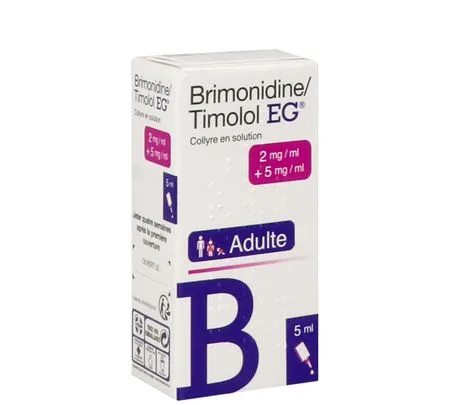
BRIMONIDINE/TIMOLOL EG 2 mg/ml + 5 mg/ml, eye drops in solution
Forms and presentations
Eye drops in solution.
Clear solution, pale yellow-green in colour, free from any visible particles.
The pH of the solution is between 6,5 and 7,3.
The osmolality of the solution is between 260 and 330 mOsm/kg.
Composition
Brimonidine tartrate......................................................................................................................................2,0 mg
Equivalent to 1,3 mg of brimonidine.
Timolol..................................................................................................................................................................5,0 mg
Equivalent to 6,80 mg of timolol maleate.
For 1 ml of solution.
Excipient with known effect :
1 ml of solution contains 0,05 mg of benzalkonium chloride and 10,58 mg of phosphates..
For the full list of excipients, see section Composition.
Benzalkonium chloride, sodium dihydrogen phosphate monohydrate, disodium hydrogen phosphate heptahydrate, hydrochloric acid or sodium hydroxide (for pH adjustment), purified water.
Indications
Reduction of intraocular pressure (IOP) in patients with chronic open-angle glaucoma or ocular hypertension, associated with an insufficient response to topical beta-blockers.
Dosage and administration
To avoid contamination of the eye or the eye drops, do not let the tip of the bottle touch your eye or anything else.
Dosage
Use in adults : (including in elderly patients)
The recommended dose is one drop of brimonidine/timolol in the affected eye or eyes twice daily, instillations to be given approximately 12 hours apart. When several topical ophthalmic medicinal products are used concomitantly, each must be administered at an interval of at least 5 minutes.
As with all eye drops, in order to reduce possible systemic absorption, it is recommended to compress the lacrimal sac at the inner canthus (punctal occlusion) or to close the eyelids for 2 minutes. This should be done immediately after the instillation of each drop. This method may help reduce systemic side effects and increase local efficacy.
Use in patients with renal or hepatic impairment
Brimonidine/timolol has not been studied in patients with renal impairment or hepatic impairment. Consequently, it should be used with caution in these patients.
Paediatric population :
Brimonidine/timolol is contraindicated in newborns and infants (less than 2 years) (see sections Contraindications, Warnings and precautions, Adverse effects and Overdose).
The safety and efficacy of brimonidine/timolol have not been established in children and adolescents (2 to 17 years), therefore its use is not recommended in children and adolescents (see sections Warnings and precautions and Adverse effects).
Contraindications
- Hypersensitivity to the active substances or to any of the excipients listed in section Composition ;
- Bronchial hyperreactivity, including bronchial asthma or a history of bronchial asthma, or severe chronic obstructive bronchopneumopathy;
- Sinus bradycardia, second- or third-degree atrioventricular block not controlled by a pacemaker, manifest heart failure, cardiogenic shock;
- Use in newborns and infants (less than 2 years) (see section Adverse effects) ;
- Patients taking a monoamine oxidase inhibitor (MAOI);
- Patients taking antidepressants that affect noradrenergic transmission (tricyclic antidepressants and mianserin, for example).
Warnings and precautions
Paediatric population
Children aged 2 years or older, in particular those aged 2 to 7 years and/or weighing less than 20 kg, must be treated with caution and closely monitored because of the high incidence of drowsiness. The safety and efficacy of brimonidine/timolol in children and adolescents (2 to 17 years) have not been established (see sections Dosage and administration and Adverse effects).
In clinical trials, a few patients experienced allergic-type ocular reactions (allergic conjunctivitis and allergic blepharitis). Allergic conjunctivitis was observed in 5,2% of patients. Its onset was generally between 3th and 9th months and led to discontinuation of treatment in 3,1% of cases. Allergic blepharitis was reported infrequently (< 1%). In case of an allergic reaction, treatment with brimonidine/timolol must be discontinued.
Delayed ocular hypersensitivity reactions have been reported with brimonidine tartrate ophthalmic solution at 0,2%, some of which were associated with an increase in IOP.
As with other topically applied ophthalmic agents, systemic absorption of brimonidine/timolol is possible. No increase in systemic absorption of each of the active substances was observed. Due to the presence of a beta-blocker, timolol, cardiovascular and pulmonary adverse effects and other adverse effects identical to those seen with systemically administered beta-blockers may occur. The frequency of systemic adverse effects after topical ophthalmic administration is lower than after systemic administration. To reduce systemic absorption, see section Dosage and administration.
Cardiac disorders
Cardiac reactions, including death due to heart failure, have rarely been reported after administration of timolol. In patients with cardiovascular diseases (for example: coronary artery disease, Prinzmetal's angina and heart failure) and hypotension, treatment with beta-blockers must be carefully evaluated and treatment with other active substances should be considered. In these patients, monitoring must be carried out to look for signs of worsening of these conditions or adverse effects.
Due to their negative dromotropic effect, beta-blockers should only be prescribed with caution to patients with first-degree heart block.
As with systemic beta-blockers, if discontinuation of treatment is necessary in patients with coronary artery disease, treatment must be stopped gradually to avoid rhythm disorders, myocardial infarction or sudden death.
Vascular disorders
Patients with severe peripheral circulatory disorders (i.e., severe forms of Raynaud's disease or Raynaud's syndrome) should be treated with caution.
Respiratory disorders
In asthmatic patients, respiratory manifestations, up to and including death from bronchospasm, have been reported after administration of certain ophthalmic beta-blockers. Brimonidine/timolol must be administered with caution in patients with mild to moderate chronic obstructive bronchopneumopathy (COPD) and only if the potential benefit appears to outweigh the potential risk.
Hypoglycemia/diabetes
Beta-blockers should be administered with caution in patients prone to spontaneous hypoglycemia or in patients with unstable diabetes, as beta-blockers may mask the signs and symptoms of acute hypoglycemia.
Hyperthyroidism
Beta-blockers may also mask the signs of hyperthyroidism.
Brimonidine/timolol must be used with caution in patients with metabolic acidosis or untreated pheochromocytoma.
Corneal disorders
Ophthalmic beta-blockers may cause ocular dryness. Patients with corneal diseases should be treated with caution.
Other beta-blockers
The effect on intraocular pressure or the known effects of systemic beta-blockers may be potentiated when timolol is administered to patients already receiving a systemic beta-blocker. The response of these patients must be closely monitored. The use of two topical beta-blockers is not recommended (see section Interactions).
Anaphylactic reactions
Patients treated with beta-blockers who have a history of atopy or severe anaphylactic reactions to various allergens may be more reactive to repeated administration of such allergens and may not respond to the usual doses of adrenaline used to treat anaphylactic reactions.
Choroidal detachment
Detachment of the choroid has been observed after filtering surgery for glaucoma during administration of treatments that decrease aqueous humour secretion (e.g. timolol, acetazolamide).
Surgical anesthesia
Beta-blockers used in ophthalmology may block the effects of systemic beta-agonists such as adrenaline. The anaesthetist must be informed when the patient is receiving timolol.
In patients with severe renal insufficiency undergoing dialysis, treatment with timolol has been associated with pronounced hypotension.
Brimonidine/timolol has not been studied in patients with angle-closure glaucoma.
Excipients :
Benzalkonium chloride may be absorbed by soft contact lenses and discolour them. Contact lenses must be removed before use and may be reinserted after 15 minutes.
Benzalkonium chloride may also cause eye irritation, especially if the patient suffers from dry eye syndrome or corneal disorders.
Interactions
No interaction study has been performed with the fixed combination brimonidine/timolol. Although no specific drug interaction study has been conducted with brimonidine/timolol, the theoretical possibility of an additive effect or potentiation with central nervous system depressants (alcohol, barbiturates, opiates, sedatives or anaesthetics) must be taken into consideration.
Additive effects resulting in hypotension and/or marked bradycardia may in theory occur when an ophthalmic solution containing beta-blockers is administered in combination with‑calcium channel blockers, guanethidine or oral beta-blockers, antiarrhythmics (including amiodarone), digitalis glycosides, parasympathomimetics or guanethidine. Hypotension has been reported in very rare cases (< 1 in 10 000) following instillation of brimonidine. Caution is therefore recommended when brimonidine/timolol is administered in combination with systemic antihypertensives.
Mydriasis has occasionally been reported when ophthalmic beta-blockers and adrenaline (epinephrine) have been used concomitantly. Beta-blockers may increase the hypoglycaemic effect of antidiabetic agents.
Beta-blockers may furthermore mask the signs and symptoms of hypoglycaemia (see section Warnings and precautions).
Hypertension induced by abrupt withdrawal of clonidine may be potentiated by the intake of beta-blockers.
Potentiation of systemic beta-adrenergic blockade (e.g. reduction in heart rate, depression) has been described during treatment with CYP2D6 inhibitors (e.g. quinidine, fluoxetine, paroxetine) and timolol.
Concomitant use of a beta-blocker and anaesthetics may attenuate compensatory tachycardia and increase the risk of hypotension (see section Warnings and precautions). Therefore, the anaesthetist must be informed that the patient is using brimonidine/timolol.
Monitoring is required when brimonidine/timolol is used with iodinated contrast media or during intravenous administration of lidocaine.
Cimetidine, hydralazine and alcohol may increase plasma concentrations of timolol.
No data are available on circulating catecholamine levels following administration of brimonidine/timolol. Caution is nevertheless recommended in patients taking medicinal products that may alter the metabolism and uptake of circulating amines, for example chlorpromazine, methylphenidate and reserpine.
Caution is advised when initiating (or changing the dose of) concomitant systemic treatment (regardless of pharmaceutical form) that may interact with or interfere with the activity of alpha-adrenergic agonists, i.e. adrenergic receptor agonists or antagonists (for example isoprenaline or prazosin).
Although no specific drug interaction study has been carried out with brimonidine/timolol, the theoretical possibility of an additive effect on IOP reduction with prostamides, prostaglandins, carbonic anhydrase inhibitors and pilocarpine must be considered.
Brimonidine is contraindicated in patients receiving monoamine oxidase inhibitors and in patients taking antidepressants that affect noradrenergic transmission (such as tricyclic antidepressants and mianserin) (see section Contraindications). Patients who have received MAOI treatment must observe an interval of 14 days before starting treatment with brimonidine/timolol.
Fertility, pregnancy and breastfeeding
Pregnancy
There are no relevant data on the safety of brimonidine/timolol in pregnant women. Brimonidine/timolol must not be used during pregnancy unless absolutely necessary. To reduce systemic absorption, see section Dosage and administration.
Brimonidine tartrate
There are no relevant data on the use of brimonidine tartrate in pregnant women. Animal studies have shown reproductive toxicity at high maternotoxic doses (see section Preclinical safety). The potential risk for humans is not known.
Timolol
Animal studies have shown reproductive toxicity at doses significantly higher than those used in clinical practice (see section Preclinical safety).
However, epidemiological studies have not shown any sign of malformation but have shown a risk of intrauterine growth retardation following exposure to oral beta-blockers. Furthermore, signs and symptoms suggestive of beta-adrenergic blockade (e.g. bradycardia, hypotension, respiratory distress and hypoglycaemia) have been observed in the newborn when beta-blockers were administered until delivery. Therefore, if brimonidine/timolol is administered until delivery, the newborn should be closely monitored during the first days of life.
Breast-feeding
Brimonidine tartrate
It has not been established whether brimonidine is excreted in human milk, but it is excreted in the milk of lactating rats.
Timolol
Beta-blockers are excreted in breast milk. However, at the therapeutic doses of timolol contained in eye drops, it is unlikely that the amount passing into breast milk would be sufficient to produce clinical symptoms of beta-blockers in the infant. To reduce systemic absorption, see section Dosage and administration.
Brimonidine/timolol must not be used by women who are breast-feeding.
Driving and using machines
Brimonidine/timolol may have a minor influence on the ability to drive and use machines. Brimonidine/timolol is likely to cause transient blurred vision, fatigue and/or drowsiness that may impair the ability to drive and use machines. The patient must wait for these symptoms to disappear before driving or using machines.
Adverse effects
Based on clinical data obtained over a period of 12 months, the most frequently reported adverse reactions were conjunctival hyperaemia (in approximately 15% of patients) and ocular burning sensations (in approximately 11% of patients). In the majority of cases, these reactions were mild and led to discontinuation of treatment in only 3,4% and 0,5% of patients, respectively.
The following drug-related adverse reactions were reported during clinical trials conducted with brimonidine/timolol:
Eye disorders
Very common (≥ 1/10): conjunctival hyperaemia, burning sensations.
Common (≥ 1/100 to < 1/10): eye stinging sensations, allergic conjunctivitis, corneal erosion, superficial punctate keratitis, ocular pruritus, conjunctival follicular reaction, visual disturbances, blepharitis, epiphora, dry eye, ocular discharge, eye pain, eye irritation, sensation of foreign body in the eye.
Uncommon (≥ 1/1 000 to < 1/100): decreased visual acuity, conjunctival oedema, follicular conjunctivitis, allergic blepharitis, conjunctivitis, vitreous floaters, asthenopia, photophobia, papillary hypertrophy, eyelid pain, conjunctival blanching, corneal oedema, corneal infiltrates, vitreous detachment.
Psychiatric disorders
Common (≥ 1/100 to < 1/10): depression.
Nervous system disorders
Common (≥ 1/100 to < 1/10): somnolence, headache.
Uncommon (≥ 1/1 000 to < 1/100): dizziness, syncope.
Cardiac disorders
Uncommon (≥ 1/1 000 to < 1/100): congestive heart failure, palpitations.
Vascular disorders
Common (≥ 1/100 to < 1/10): hypertension.
Respiratory, thoracic and mediastinal disorders
Uncommon (≥ 1/1 000 to < 1/100): rhinitis, nasal dryness.
Gastrointestinal disorders
Common (≥ 1/100 to < 1/10): dry mouth.
Uncommon (≥ 1/1 000 to < 1/100): taste disturbance, nausea, diarrhoea.
Skin and subcutaneous tissue disorders
Common (≥ 1/100 to < 1/10): eyelid oedema, eyelid pruritus, eyelid erythema.
Uncommon (≥ 1/1 000 to < 1/100): allergic contact dermatitis.
General disorders and administration site conditions
Common (≥ 1/100, < 1/10): asthenia.
The following adverse reactions have been reported since the marketing of brimonidine/timolol.
Eye disorders
Frequency not known: blurred vision.
Cardiac disorders
Frequency not known: arrhythmia, bradycardia, tachycardia.
Vascular disorders
Frequency not known: hypotension.
Skin disorders
Frequency not known: facial erythema.
Other adverse reactions have been reported with one of the components of the preparation, and are also likely to be observed with brimonidine/timolol:
Brimonidine
Eye disorders
Iritis, iridocyclitis (anterior uveitis), miosis.
Psychiatric disorders
Insomnia.
Respiratory, thoracic and mediastinal disorders
Upper respiratory symptoms, dyspnoea.
Gastrointestinal disorders
Gastrointestinal symptoms.
General disorders and administration site conditions
General allergic reactions.
Skin and subcutaneous tissue disorders
Skin reaction including erythema, facial oedema, pruritus, rash and vasodilation.
In cases where brimonidine was used as part of the medical treatment of congenital glaucoma, symptoms of brimonidine overdose such as loss of consciousness, lethargy, somnolence, hypotension, hypotonia, bradycardia, hypothermia, cyanosis, pallor, respiratory depression and apnoea have been reported in newborns and infants (less than 2 years) who received brimonidine (see section Contraindications).
Numerous cases of somnolence have been reported in children aged 2 years or older, particularly those aged 2 to 7 years and/or weighing less than 20 kg (see section Warnings and precautions).
Timolol
As with other topically applied ophthalmic agents, systemic absorption of brimonidine/timolol (brimonidine/timolol tartrate) is possible. Absorption of timolol may cause adverse reactions similar to those of beta-blockers taken systemically.
The incidence of systemic adverse reactions after topical ophthalmic administration is lower than after systemic administration. In order to reduce systemic absorption, see section Dosage and administration.
Other adverse reactions that have been observed with ophthalmic beta-blockers and are likely to be observed with brimonidine/timolol are listed below:
Immune system disorders
Systemic allergic reactions including angioedema, urticaria, localised and generalised rash, pruritus, anaphylactic reaction.
Metabolism
Hypoglycaemia.
Psychiatric disorders
Insomnia, nightmares, memory loss.
Frequency not known: hallucinations
Nervous system disorders
Cerebrovascular accident, cerebral ischaemia, increased signs and symptoms of myasthenia gravis, paraesthesia.
Eye disorders
Keratitis, choroidal detachment following filtration surgery (see section Warnings and precautions), decreased corneal sensitivity, corneal erosion, ptosis, diplopia.
Cardiac disorders
Chest pain, oedema, atrioventricular block, cardiac arrest, heart failure.
Vascular disorders
Raynaud's syndrome, coldness of the extremities.
Respiratory, thoracic and mediastinal disorders
Bronchospasm (predominantly in patients with pre-existing bronchospastic disease), dyspnoea, cough.
Gastrointestinal disorders
Dyspepsia, abdominal pain, vomiting.
Skin and subcutaneous tissue disorders
Alopecia, psoriasiform eruption or exacerbation of psoriasis, skin rash.
Musculoskeletal and systemic disorders
Myalgia.
Disorders of the reproductive system and breast
Sexual dysfunction, decreased libido.
General disorders and administration site conditions
Fatigue.
Adverse effects reported when using eye drops containing phosphates
Cases of corneal calcification have been very rarely reported in association with the use of eye drops containing phosphates in some patients with significant corneal impairment.
Reporting of suspected adverse reactions
Reporting suspected adverse reactions after authorisation of the medicinal product is important. It allows continued monitoring of the benefit/risk balance of the medicinal product. Healthcare professionals are asked to report any suspected adverse reactions via the national reporting system: National Agency for the Safety of Medicines and Health Products (ANSM) and the network of Regional Pharmacovigilance Centres - Website:www.signalement-sante.gouv.fr.
Overdose
The rare cases of overdose with brimonidine/timolol in humans did not result in any adverse effects. Treatment of overdose consists of symptomatic and supportive therapy; the patient's respiratory tract must be monitored.
Brimonidine
Ophthalmic overdose (adult)
In these cases received, the reported events were generally those already listed as adverse effects.
Systemic overdose resulting from accidental ingestion (adult)
There is very little information on accidental ingestion of brimonidine in adults. The only adverse effect reported to date was hypotension. It has been reported that the episode of hypotension was followed by an episode of rebound hypertension. Reported cases of oral overdose with other alpha-2-adrenergic agonists have mentioned symptoms such as: hypotension, asthenia, vomiting, lethargy, sedation, bradycardia, arrhythmias, miosis, apnea, hypotonia, hypothermia, respiratory depression and convulsions.
Paediatric population
Several reports of serious adverse effects following accidental ingestion of brimonidine by pediatric patients have been published or reported. Subjects presented with symptoms of central nervous system depression, typically temporary coma or low level of consciousness, lethargy, somnolence, hypotonia, bradycardia, hypothermia, pallor, respiratory depression and apnea requiring admission to intensive care with intubation if necessary. Complete recovery was reported in all subjects, generally within 6 to 24 hours.
Timolol
Symptoms of systemic overdose with timolol are: bradycardia, hypotension, bronchospasm, headache, dizziness and cardiac arrest. A clinical study indicated that timolol is not easily removed by dialysis.
Pharmacodynamics
Pharmacotherapeutic class: Ophthalmological drugs - antiglaucoma and miotics - beta-blockers, ATC code: S01ED51.
Mechanism of action
Brimonidine/timolol contains two active substances: brimonidine tartrate and timolol maleate. These two components lower elevated intraocular pressure (IOP) through complementary mechanisms of action; this combined effect results in an additional reduction in IOP compared with that induced by either active substance as monotherapy. Brimonidine/timolol has a rapid onset of action.
Brimonidine tartrate is an alpha-2-adrenergic receptor agonist that is 1 000 times more selective for alpha-2 adrenergic receptors than for alpha-1 ones. This selectivity results in the absence of mydriasis and microvessel vasoconstriction associated with human retinal xenografts.
Brimonidine tartrate is thought to lower IOP by increasing aqueous humor outflow via the uveoscleral pathway and by reducing aqueous humor production.
Timolol is a non-selective beta1- and beta2-adrenergic blocker which has no significant intrinsic sympathomimetic activity, nor direct depressant action on the myocardium, nor local anesthetic (membrane-stabilizing) effect. Timolol lowers IOP by reducing aqueous humor production. Its mechanism of action is not clearly elucidated, but it probably involves inhibition of the increase in cyclic AMP synthesis induced by endogenous beta-adrenergic stimulation.
Clinical efficacy
In three double-blind, controlled clinical studies, brimonidine/timolol (twice daily) produced a clinically significant additional reduction in mean diurnal IOP compared with that observed with timolol (twice daily) or brimonidine (two or three times daily) as monotherapy. In a study conducted in patients whose IOP was insufficiently controlled by monotherapy for at least 3 weeks, additional reductions in mean diurnal IOP reaching 4,5, 3,3 and 3,5 mmHg, respectively, were observed during the 3 months of treatment with brimonidine/timolol (twice daily), timolol (twice daily) and brimonidine (twice daily). In this study, a significant additional reduction in trough IOP could be demonstrated for brimonidine but not for timolol, although a positive trend was observed at all other time points. In the pooled data from the 2 other studies, a statistical superiority versus timolol was demonstrated at all time points.
Furthermore, the IOP reduction produced by brimonidine/timolol was consistently non-inferior to that observed with a regimen combining brimonidine and timolol (twice daily in all cases).
It was demonstrated that the IOP reduction produced by brimonidine/timolol was maintained during the double-blind studies lasting up to 12 months.
Pharmacokinetics
Brimonidine/Timolol
Plasma concentrations of brimonidine and timolol were determined during a crossover study comparing monotherapies with brimonidine/timolol in healthy subjects. No statistically significant difference in the areas under the curve (AUC) of brimonidine and timolol was detected between brimonidine/timolol and the two monotherapies. In patients treated with brimonidine/timolol, the mean plasma Cmax plasma values of brimonidine and timolol were 0,0327 and 0,406 ng/ml, respectively.
Brimonidine
In humans, plasma concentrations of brimonidine measured after ocular administration of a 0,2% solution eye drop are low. Brimonidine is poorly metabolized in the human eye, and its plasma protein binding rate in humans is approximately 29%. The mean apparent systemic half-life is close to 3 hours after ocular administration in humans.
Brimonidine is well absorbed and rapidly eliminated after oral administration in humans. The major part of the dose (approximately 74 % of the dose) is excreted in the urine as metabolites within five days; the unchanged form of brimonidine is not detected in the urine. Studies conducted in vitro on animal and human livers indicated that metabolism largely involves aldehyde oxidase and cytochrome P450. Consequently, systemic elimination appears to be mainly due to hepatic metabolism.
Brimonidine is significantly and reversibly bound to melanin in ocular tissues, without any undesirable effects. Accumulation does not occur in the absence of melanin.
Brimonidine does not undergo significant metabolism in the human eye.
Timolol
Peak timolol concentrations reached 898 ng/ml in the aqueous humour one hour after ocular administration of a 0,5 % solution eye drop in subjects undergoing cataract surgery. Part of the dose passes into the general circulation, where it is significantly metabolised by the liver. The plasma half-life of timolol is on the order of 7 hours. Timolol is partially metabolised in the liver and excreted by the kidneys with its metabolites. The binding rate of timolol to plasma proteins is low.
Preclinical safety
The ocular and systemic safety profile of each active substance is well established. Non-clinical data from conventional safety pharmacology, repeated-dose toxicology, genotoxicity and carcinogenicity studies did not reveal any particular risk for humans. Additional repeated-dose ocular toxicity studies also indicated that brimonidine/timolol does not present any particular risk for humans.
Brimonidine
Brimonidine tartrate has no teratogenic effect in animals, but causes abortions in rabbits and postnatal growth retardation in rats at systemic exposures approximately 37 and 134 times higher, respectively, than those used for treatment in humans.
Timolol
In animal studies, beta-blockers have been shown to reduce umbilical blood flow, reduce foetal growth, delay ossification and increase foetal and post-natal mortality, but without teratogenicity. With timolol, at high maternal doses, embryotoxicity (resorption) was observed in rabbits and foetotoxicity (delayed ossification) in rats. No foetal malformation was demonstrated in teratogenicity studies in mice, rats and rabbits, at oral timolol doses up to 4 200 times the daily dose of brimonidine/timolol in humans.
Special storage precautions
Store the bottle in the outer packaging, protected from light.
Store at a temperature not exceeding 25°C.
Prescription, supply and reimbursement
| Marketing authorisation (AMM) |
|
| Price: |
|
Collection.
CENTRAL PARK 9-15 RUE MAURICE MALLET
92130 ISSY-LES-MOULINEAUX
Tel: 01 46 94 86 86 contact@eglabo.fr
https://www.eglabo.fr/
Source: VIDAL · Updated on 10/11/2026. This information does not replace advice from a healthcare professional.