Professional product catalogue
Antidepressants
Antidepressants comprise several families acting on chemical messenger transmission in the nervous system. Selective serotonin reuptake inhibitors, agents with mixed mechanisms and other classes are not identical substances. This category explains their pharmacological and formulation distinctions and their differences from anxiolytics and hypnotics. The term antidepressant identifies a medicine family without summarising the complex causes of depression or every possible indication of an individual substance. Related clinical settings do not make all medicines for mood, anxiety and sleep interchangeable pharmaceutical products.
Products in this category
258 products
 Substipharm
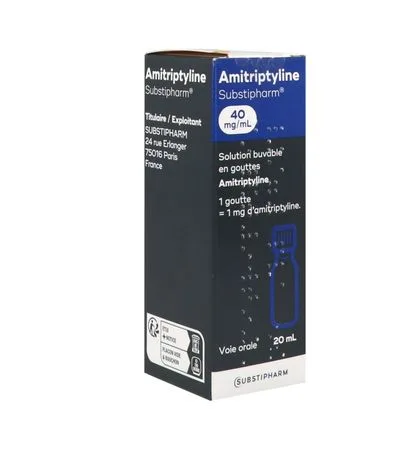
AMITRIPTYLINE SUBSTIPHARM 40 mg/ml Oral drops solution Bottle/20ml
CIP / EAN : 3400930265116
 Alfasigma France
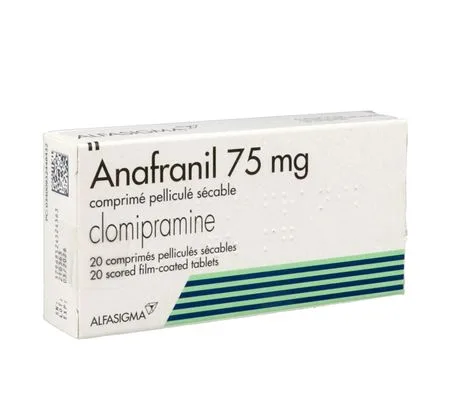
ANAFRANIL 75 mg scored film-coated tablet single-dose Blister/20
CIP / EAN : 3400932448432













Understanding antidepressants
Neurotransmission and mechanisms
Serotonin and noradrenaline participate in multiple brain functions. Selective serotonin reuptake inhibitors affect serotonin availability in synaptic transmission, while serotonin and noradrenaline reuptake inhibitors concern two pathways. Tricyclic antidepressants, monoamine oxidase inhibitors and other agents have different profiles. Describing those mechanisms does not reduce depression to a simple shortage of one messenger. They provide pharmacological context rather than a single explanation of the condition. The distinction between a medicine's target and a disease's wider causes is essential when interpreting these family names and scientific abbreviations.
Medicine families and indications
Depression belongs to a clinical care setting that can combine several approaches, including psychotherapy. Selected antidepressants also have documented indications in anxiety disorders or other fields. This variety does not automatically extend to every substance. Anxiolytics and hypnotics retain their own roles and families even when they appear in the same care environment. Mood, anxiety and sleep describe related but different dimensions; the corresponding medicines cannot be reduced to one common scale of strength or speed. Individual indications explain their purpose more precisely than the broad psychotropic label.
Forms and release profiles
Tablets, capsules and liquid preparations can represent different formulations depending on the medicinal product. Prolonged-release and gastro-resistant descriptions identify particular pharmaceutical properties rather than simple packaging differences. Any combination must be described through all its components. Official information on interactions and conditions of use remains specific to each substance and preparation. It does not establish a universal onset, tolerability profile or approach to changing treatment across the whole family. The exact form therefore retains meaning even where several references share the same substance name.
Frequently asked questions
Do all antidepressants share one mechanism?
No. Several families act through different pathways and targets. SSRIs and SNRIs, for example, describe distinct mechanisms.
Is an antidepressant a sleeping medicine?
No. The families and their roles differ. Effects on sleep or use in the same care setting do not make the classes equivalent.
Updated 10 November 2026
Sources and further reading