
Medicines
SmPC of 26/08/2025
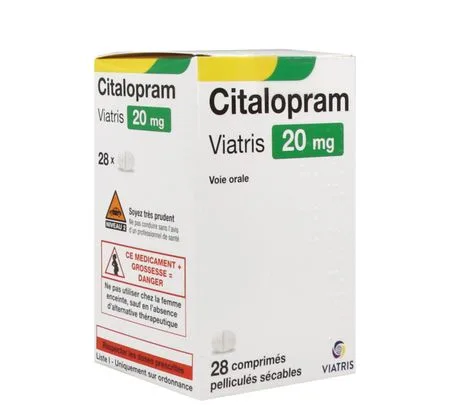
CITALOPRAM VIATRIS 20 mg, scored film-coated tablet
Composition
Citalopram......................................................................................................................................................20 mg
As citalopram hydrobromide
For one scored film-coated tablet.
Excipient with known effect: lactose monohydrate.
For the full list of excipients, see section Composition.
Core : maize starch, lactose monohydrate, crospovidone, microcrystalline cellulose, magnesium stearate, povidone K30.
Film coating : hypromellose, lactose monohydrate, macrogol 4000, titanium dioxide (E171).
Indications
• Major depressive episodes (i.e. characterised).
• Prevention of panic attacks with or without agoraphobia.
Dosage and administration
Dosage
MAJOR DEPRESSIVE EPISODES (I.E. CHARACTERISED)
In adults
20 to 40 mg per day.
The minimum effective dose is 20 mg per day and will be used as the starting dose. An increase may be made according to the individual clinical response up to 40 mg per day, the maximum dose.
Duration of treatment
The antidepressant effect usually appears after 2 to 4 weeks of treatment.
Antidepressant treatment is symptomatic. Treatment of an episode lasts several months (usually of the order of 6 months) in order to prevent the risk of relapse.
PREVENTION OF PANIC ATTACKS WITH OR WITHOUT AGORAPHOBIA
In adults
The recommended dose is 20 to 30 mg per day. Treatment should be started at a low dose, 10 mg per day during the first week before increasing the dose up to 20 mg per day. The dose may be increased up to a maximum of 40 mg per day according to the individual clinical response.
Duration of treatment
Treatment will be prolonged for several months. A clinical study shows that maximum efficacy is reached at 3 months of treatment and that the response is maintained throughout the duration of treatment.
Elderly patients over 65 years of age
The initial dose in elderly patients is half the usually recommended dose, i.e. 10-20 mg per day. The maximum recommended dose in elderly patients is 20 mg/day.
Paediatric population
Children and adolescents (< 18 years)
Citalopram must not be used to treat children and adolescents under 18 years of age.
Hepatic impairment
An initial dose of 10 mg per day is recommended during the first two weeks of treatment in patients with mild to moderate hepatic impairment. Depending on individual response, the dose may be increased to 20 mg per day. Caution is advised in patients with severely reduced hepatic function, and dose increases should be particularly cautious (see section Pharmacokinetics).
Renal impairment
No dose adjustment is necessary in cases of mild or moderate renal impairment. Caution is recommended in patients with severe renal impairment (ClCR less than 30 mL/min), (see section Pharmacokinetics).
Symptoms observed on discontinuation of treatment
Abrupt discontinuation should be avoided. When discontinuing treatment with citalopram, the dose will be reduced gradually over a period of at least one to two weeks in order to reduce the risk of discontinuation symptoms (see sections Warnings and precautions and Adverse effects). If intolerable symptoms occur following a dose reduction or on discontinuation of treatment, return to the previously prescribed dose may be considered. The physician may subsequently resume the dose reduction, but more gradually.
Method of administration
Citalopram tablets may be administered as a single daily dose at any time of the day, independently of food intake.
Contraindications
This medicine must NEVER be prescribed in the following cases:
• hypersensitivity to the active substance or to any of the excipients listed in section Composition ;
• severe renal impairment with creatinine clearance less than 20 mL/min, in the absence of data;
• combination with irreversible monoamine oxidase inhibitors (MAOIs) due to the risk of serotonin syndrome (see section Interactions) ;
• citalopram must not be administered for 14 days after discontinuation of an irreversible MAOI or for the time specified in the product information of a reversible MAOI after its discontinuation;
• MAOIs must not be administered for seven days after discontinuation of citalopram;
• combination with pimozide (see section Interactions) ;
• in patients with acquired or congenital prolongation of the QT interval;
• association with another medicine that could lead to QT prolongation (see section Interactions).
Warnings and precautions
Treatment of elderly patients and patients with renal and hepatic impairment, see section Dosage and administration.
Paediatric population
Use in children and adolescents under 18 years
The use of CITALOPRAM VIATRIS is not recommended in children and adolescents under 18 years of age. Suicide-related behaviours (suicide attempts and suicidal thoughts) and hostility-related behaviours (mainly aggression, oppositional behaviour and anger) were more frequently observed in clinical trials in children and adolescents treated with antidepressants compared with those treated with placebo. If, in cases of clinical need, the decision to treat is nevertheless taken, the patient should be carefully monitored for the emergence of suicidal symptoms. Furthermore, no long-term safety data are available in children and adolescents concerning growth, maturation and cognitive and behavioural development.
Paradoxical anxiety
Some patients with panic disorder may experience an exacerbation of anxiety symptoms at the start of antidepressant treatment. This paradoxical reaction generally subsides within the first 2 weeks of treatment. It is therefore advised to start treatment at a low dose in order to reduce the risk of this anxiogenic effect (see section Dosage and administration).
Hyponatraemia
Rare cases of hyponatraemia, probably due to inappropriate secretion of antidiuretic hormone (SIADH), have been described with SSRIs. This hyponatraemia generally resolves on discontinuation of treatment. Elderly women appear to be at greater risk.
Suicides/suicidal ideation or clinical worsening
Depression is associated with an increased risk of suicidal ideation, self-harm and suicide (suicide-related behaviour). This risk persists until significant remission occurs. As improvement may not occur until several weeks or more of treatment, patients should be closely monitored until such improvement occurs. Clinical experience shows that the suicide risk may increase in the early stages of recovery.
Other psychiatric disorders for which CITALOPRAM VIATRIS 20 mg, scored film-coated tablet is prescribed may also be associated with an increased risk of suicidal behaviour. In addition, these disorders may be associated with a major depressive episode. The same precautions as those mentioned for patients suffering from major depressive episodes should therefore be applied to patients presenting with other psychiatric disorders.
Patients with a history of suicide-related behaviour or those expressing significant suicidal ideas before starting treatment are at higher risk of suicidal thoughts or suicide-related behaviours, and must be closely monitored during treatment. A meta-analysis of placebo-controlled clinical trials versus placebo in the use of antidepressants in adults with psychiatric disorders showed an increased risk of suicidal-type behaviour in patients under 25 years of age treated with antidepressants compared with those receiving placebo. Close monitoring of patients, and in particular of those at high risk, should accompany drug treatment, particularly at the beginning of treatment and during dose changes. Patients (and their families or caregivers) should be advised to monitor for the occurrence of clinical worsening, the emergence of suicidal ideas/behaviours and any abnormal change in behaviour, and to seek medical advice immediately if these symptoms occur.
Akathisia/psychomotor agitation
The use of SSRIs/SNRIs has been associated with the development of akathisia, characterized by agitation felt as unpleasant or distressing and a frequent need to move, as well as by an inability to sit or stand still. These disorders most often occur during the very first weeks of treatment. An increase in dose may be detrimental to patients who have developed these symptoms.
Manic episodes
A manic phase may occur in patients with bipolar disorders. Citalopram must be discontinued in case of a manic episode.
Convulsions
Convulsions are a potential risk with antidepressant treatments. Citalopram should be discontinued in any patient presenting with convulsions. Citalopram should be avoided in patients with unstable epilepsy. In case of controlled epilepsy, particular monitoring of patients is recommended. Citalopram must be discontinued in case of an increase in the frequency of convulsions.
Diabetes
Treatment with SSRIs in diabetic patients may disturb glycemic control. A dose adjustment of insulin or oral antidiabetics may prove necessary.
Serotonin syndrome
Rare cases of serotonin syndrome have been described in patients treated with SSRIs. Symptoms such as agitation, tremor, myoclonus and hyperthermia may indicate the occurrence of such a syndrome. Treatment with citalopram should be discontinued immediately and symptomatic treatment initiated (see section Interactions).
Serotonergic treatments
Combination of citalopram with serotonergic treatments such as sumatriptan or other triptans, buprenorphine and tramadol, oxitriptan and tryptophan should be avoided.
Haemorrhage
Cases of cutaneous bleeding, such as ecchymoses, abnormalities of bleeding time, gynecological hemorrhages, gastrointestinal bleeding, and other cutaneous or mucosal bleeding have been described with SSRIs (see section Adverse effects). SSRIs and SNRIs may increase the risk of postpartum hemorrhage (see sections Fertility, pregnancy and breastfeeding, Adverse effects). Caution is recommended, in particular in patients treated with medicinal products known to impair platelet function or any other medicinal product known to increase the risk of bleeding, or in patients with a history of bleeding disorders.
E.C.T. (electroconvulsive therapy)
Due to the limited clinical data available on the administration of an SSRI concomitantly with electroconvulsive therapy, caution is recommended.
St John's wort
Concomitant intake of herbal preparations containing St John's wort (Hypericum perforatum) may lead to an increased frequency of adverse effects. Therefore, citalopram and herbal preparations containing St John's wort should not be administered concomitantly.
Symptoms observed on discontinuation of treatment
The occurrence of withdrawal symptoms upon discontinuation of treatment is frequent, particularly if discontinuation is abrupt (see section Adverse effects). In a clinical relapse-prevention study, adverse effects encountered on treatment discontinuation occurred in approximately 40 % of patients versus 20 % of patients who continued treatment with citalopram.
The risk of occurrence of symptoms related to treatment discontinuation may depend on several factors, including the duration of treatment, the dose and the relative magnitude of dose reduction. The most frequently reported reactions are the following: dizziness, sensory disturbances (including paraesthesia and sensations of electric shock), sleep disorders (including insomnia and intense dreams), agitation or anxiety, nausea and/or vomiting, tremor, confusion, hyperhidrosis, headache, diarrhoea, palpitations, emotional instability, irritability and visual disturbances.
Generally, these symptoms are of mild to moderate intensity; however, they may be of severe intensity in some patients. They usually occur during the very first days after discontinuation of treatment, but very rare cases have been reported in patients who had inadvertently forgotten a dose.
Generally, these symptoms are spontaneously resolving and usually fade within less than 2 weeks, although they may persist in some cases (2 or 3 months, or even longer).
It is therefore recommended to gradually reduce the doses of citalopram over a period of several weeks or months, according to the patient's needs (see section Dosage and administration.).
Sexual dysfunction
Selective serotonin reuptake inhibitors (SSRIs)/serotonin and noradrenaline (or norepinephrine) reuptake inhibitors (SNRIs) could cause symptoms of sexual dysfunction (see section Adverse effects). Cases of sexual dysfunction whose symptoms have persisted despite discontinuation of treatment with SSRIs/SNRIs have been reported.
Psychoses
Treatment of psychotic patients suffering from depressive episodes may lead to an exacerbation of psychotic symptoms.
Prolongation of the QT interval
Citalopram has been shown to cause a dose-dependent prolongation of the QT interval. Cases of QT interval prolongation and ventricular arrhythmia, including torsades de pointes, have been reported since its marketing, particularly in women and in patients with hypokalaemia, pre-existing QT interval prolongation or other cardiac pathologies (see sections Contraindications., 4.5., 4.8 and 5.1.).
Caution is recommended in patients with bradycardia, those who have had a recent myocardial infarction, or those with uncompensated heart failure.
Electrolyte abnormalities such as hypokalaemia or hypomagnesaemia increase the risk of arrhythmia and must be corrected before starting treatment with citalopram.
If a patient with stabilised cardiac pathology is treated with citalopram, an electrocardiogram (ECG) check should be considered before starting treatment.
If signs of cardiac arrhythmia appear during treatment with citalopram, treatment must be stopped and an ECG must be performed.
Angle-closure glaucoma
SSRIs, including citalopram, may have an effect on pupil size causing mydriasis. This mydriatic effect may cause narrowing of the angle of the eye, resulting in raised intra-ocular pressure and angle-closure glaucoma, mainly in predisposed patients. CITALOPRAM VIATRIS should therefore be used with caution in patients with angle-closure glaucoma or with a history of glaucoma.
Excipients
This medicine contains lactose. Patients with galactose intolerance, total lactase deficiency or glucose-galactose malabsorption syndrome (rare hereditary diseases) must not take this medicine.
Interactions
Pharmacodynamic interactions
Medicinal products causing serotonin syndrome
Certain overdoses or certain medicines may give rise to a serotonergic syndrome requiring immediate discontinuation of treatment.
These medicinal products are mainly represented by:
• linezolid;
• methylene blue;
• St John's wort;
• pethidine and tramadol;
• most antidepressants;
• the class of serotonin reuptake inhibitors;
• certain tricyclics (clomipramine, amitriptyline, imipramine, trimipramine);
• mixed-action agents (venlafaxine, milnacipran, sibutramine);
• with indications other than depression: atomoxetine, duloxetine, oxitriptan);
• MAOIs, mainly non-selective, or even selective MAO-A inhibitors.
The serotonergic syndrome is manifested by the simultaneous or sequential (possibly abrupt) onset of a set of symptoms that may require hospitalisation or even lead to death.
These symptoms may be of the following types:
• neuropsychiatric (agitation, confusion, hypomania);
• motor (myoclonus, tremors, hyperreflexia, rigidity, hyperactivity);
• autonomic (hypo- or hypertension, tachycardia, chills, hyperthermia, sweating, possibly coma);
• gastrointestinal (diarrhoea).
Strict adherence to the recommended doses is an essential factor in preventing the onset of this syndrome.
Contraindicated combinations
+ irreversible MAOIs (iproniazid)
Risk of serotonin syndrome: diarrhoea, tachycardia, sweating, tremors, confusion or even potentially fatal coma (see section Warnings and precautions).
Observe a two-week interval between discontinuing the MAOI and starting treatment with citalopram, and at least one week between discontinuing citalopram and starting treatment with the MAOI.
+ Prolongation of the QT interval
No pharmacokinetic or pharmacodynamic study between citalopram and medicinal products prolonging the QT interval has been performed. A cumulative effect of citalopram and these medicinal products cannot be excluded. Concomitant administration of citalopram and medicinal products prolonging the QT interval, such as class IA and III antiarrhythmics, antipsychotics (for example phenothiazines, pimozide, haloperidol), tricyclic antidepressants, certain anti-infectives (for example sparfloxacin, moxifloxacin, intravenous erythromycin, pentamidine, antimalarial medicinal products in particular halofantrine), certain antihistamines (astemizole, hydroxyzine, mizolastine), etc. is therefore contraindicated.
+ Pimozide
Concomitant administration of a single dose of pimozide 2 mg in subjects treated with racemic citalopram 40 mg/day for 11 days resulted in an increase in the AUC (area under the curve) and Cmax of pimozide, although this was not consistently observed in the studies. Concomitant administration of pimozide and citalopram results in a mean prolongation of the QTc interval of approximately 10 msec. Because of this interaction observed with low doses of pimozide, concomitant administration of citalopram and pimozide is contraindicated.
Increased risk of ventricular rhythm disorders, in particular torsades de pointes.
Combinations not recommended
+ Reversible MAO-A inhibitors, including linezolid and methylene blue (moclobemide)
Risk of serotonin syndrome* (see above).
If the combination cannot be avoided, very close clinical monitoring. Start the combination at the recommended minimum doses.
Associations requiring precautions for use
+ Serotonergic medicinal products
Lithium and tryptophan
No pharmacodynamic interaction was observed in clinical studies where citalopram was administered concomitantly with lithium. However, potentiation of effects has been reported with concomitant administration of SSRIs and lithium or tryptophan, warranting precautions when such combinations are used. Regular clinical monitoring of lithium levels should be carried out.
Concomitant administration with serotonergic medicinal products (such as buprenorphine and tramadol, sumatriptan and other triptans) may lead to an increase in associated 5-HT effects. Pending availability of additional data, concomitant use of citalopram and 5-HT agonists, such as sumatriptan and other triptans, is not recommended (see section Warnings and precautions).
+ St John's wort (oral route) (enzyme inducer)
Pharmacodynamic interactions between SSRIs and herbal preparations containing St John's wort (Hypericum perforatum) may occur, leading to an increase in adverse effects (see section Warnings and precautions). Pharmacokinetic interactions have not been studied.
+ Haemorrhage
Caution is recommended in patients treated concomitantly with anticoagulants, medicinal products that affect platelet function, such as non-steroidal anti-inflammatory drugs (NSAIDs), acetylsalicylic acid, dipyridamole, and ticlopidine, or other treatments (e.g. atypical antipsychotics, phenothiazines, tricyclic antidepressants) that may increase the risk of bleeding (see section Warnings and precautions).
+ E.C.T. (electroconvulsive therapy)
There are no clinical studies establishing the risks and benefits of the combined use of electroconvulsive therapy and citalopram (see section Warnings and precautions).
+ Alcohol
No pharmacodynamic or pharmacokinetic interaction is expected between citalopram and alcohol. Nevertheless, the combination of citalopram and alcohol is not advised.
+ Medicinal products causing QT prolongation or hypokalaemia/hypomagnesaemia
Caution is recommended with concomitant use of treatments that prolong the QT interval or induce hypokalaemia/hypomagnesaemia.
+ Medicinal products that lower the epileptic threshold
SSRIs may lower the seizure threshold. Caution is recommended when administering a treatment that lowers the seizure threshold (e.g. antidepressants [tricyclics, SSRIs], neuroleptics [phenothiazines, thioxanthenes, and butyrophenones], mefloquine, chloroquine, fluoroquinolones, bupropion and tramadol).
+ Oral anticoagulants
Increase in the effect of the oral anticoagulant and of the haemorrhagic risk.
More frequent monitoring of the prothrombin level and INR monitoring. Possible adjustment of the oral anticoagulant dosage during treatment with citalopram and after its discontinuation.
+ Tricyclic antidepressants
Increase in plasma concentrations of the imipramine-type antidepressant with risk of convulsions and increased frequency of adverse effects.
In case of combination, increased clinical monitoring and, if necessary, dosage adjustment.
Associations to be taken into account
+ MAO-B inhibitors (rasagiline, selegiline)
Risk of serotonin syndrome.
+ Other hyponatraemic medicinal products
Increased risk of hyponatraemia.
+ Cyproheptadine
Risk of decreased efficacy of the antidepressant.
+ Tramadol
Risk of onset of convulsions and/or serotonergic syndrome (see above).
+ Triptans (almotriptan, eletriptan, frovatriptan, naratriptan, rizatriptan, sumatriptan, zolmitriptan)
Potential risk of arterial hypertension, coronary arterial vasoconstriction or serotonergic syndrome (see above).
Pharmacokinetic interactions
The biotransformation of citalopram to desmethylcitalopram is carried out via CYP2C19 (approximately 38%), CYP3A4 (approximately 31%) and CYP2D6 (approximately 31%), isozymes of the cytochrome P450 system. Because citalopram is metabolised by several CYPs, inhibition of its biotransformation is less likely, as inhibition of one enzyme may be compensated by another. Consequently, co-administration of citalopram with other medicinal products has a low risk of causing a pharmacokinetic drug interaction.
+ Food
The absorption and other pharmacokinetic properties of citalopram are not modified by taking food.
Effects of other medicinal products on the pharmacokinetics of citalopram.
Administration with ketoconazole (a potent inhibitor of CYP3A4) does not modify the pharmacokinetics of citalopram.
A pharmacokinetic interaction study between lithium and citalopram showed no pharmacokinetic interaction (see also above).
Cimetidine (a potent inhibitor of CYP2D6, CYP3A4 and CYP1A2) causes a moderate increase in the mean steady-state level of citalopram. Caution is recommended when administering citalopram in combination with cimetidine. A dosage adjustment may be justified.
Therefore, caution should be exercised in cases of concomitant use of CYP2C19 inhibitors (for example omeprazole, esomeprazole, fluconazole, fluvoxamine, lansoprazole, ticlopidine) or cimetidine. A reduction in the citalopram dose may prove necessary depending on monitoring of undesirable effects during concomitant treatment (see section Warnings and precautions).
Effects of citalopram on the pharmacokinetics of other medicinal products
+ Metoprolol
In a pharmacokinetic/pharmacodynamic interaction study in healthy volunteers, concomitant administration of citalopram and metoprolol (a CYP2D6 substrate) showed a doubling of metoprolol concentrations, but without a statistically significant increase in the effects of metoprolol on blood pressure and heart rate in healthy volunteers. Caution is nevertheless recommended when metoprolol and citalopram are administered concomitantly. A dosage adjustment may be necessary.
Citalopram and desmethylcitalopram are negligible inhibitors of CYP2C9, CYP2E1 and CYP3A4, and are only weak inhibitors of CYP1A2, CYP2C19 and CYP2D6 in comparison with other SSRIs, which are known as significant inhibitors.
+ Levomepromazine, digoxin, carbamazepine
No changes or only minor changes of no clinical significance were observed when citalopram was administered with substrates of CYP1A2 (clozapine and theophylline), CYP2C9 (warfarin), CYP2C19 (imipramine and mephenytoin), CYP2D6 (sparteine, imipramine, amitriptyline, risperidone) and CYP3A4 (warfarin, carbamazepine (and its metabolite carbamazepine epoxide) and triazolam).
No pharmacokinetic interaction was observed between citalopram and levomepromazine or digoxin (note that citalopram neither induces nor inhibits P-glycoprotein).
+ Desipramine, imipramine
In a pharmacokinetic study, no effect was observed at any concentration of citalopram or imipramine, although the concentration of desipramine, the primary metabolite of imipramine, was increased. When desipramine is combined with citalopram, an increase in plasma concentration has been observed. A reduction in the dose of desipramine may be necessary.
Fertility, pregnancy and breastfeeding
Pregnancy
Animal studies have not shown any teratogenic effect.
Published data in pregnant women (more than 2500 exposed pregnancies) do not show fetal malformative toxicity. However, citalopram should not be used during pregnancy unless clearly necessary and after assessing the benefit/risk ratio.
Epidemiological data suggest that the use of SSRIs during pregnancy, particularly in late pregnancy, may increase the risk of persistent pulmonary hypertension of the newborn (PPHN). The observed risk was approximately 5 cases per 1000 pregnancies. In the general population, the risk of PPHN is 1 to 2 cases per 1000 pregnancies.
Data from observational studies indicate an increased risk (less than 2 times higher) of postpartum haemorrhage following exposure to SSRIs/SNRIs in the month preceding birth (see sections Warnings and precautions, Adverse effects).
The following symptoms have been reported in newborns after use of SSRIs/SNRIs late in pregnancy: respiratory distress, cyanosis, apnoea, convulsions, unstable temperature, feeding difficulties, vomiting, hypoglycaemia, hypertonia, hypotonia, hyperreflexia, tremor, tremulousness, irritability, lethargy, constant crying, drowsiness, sleep disturbances. These symptoms may reflect either a direct drug effect or a withdrawal syndrome. In the majority of cases, complications begin immediately or rapidly (<24 hours) after delivery.
Newborns should be monitored accordingly if treatment has been continued until late in pregnancy.
An abrupt discontinuation during pregnancy should be avoided.
Breast-feeding
Although the passage of citalopram into breast milk is very low, in the absence of sufficient data, caution is recommended when breastfeeding during treatment with citalopram.
Fertility
Data in animals have shown that citalopram may affect semen quality (see section Preclinical safety.).
Reported cases in men treated with SSRIs have shown that the effect on semen quality is reversible.
No impact on human fertility has been observed to date.
Driving and using machines
Citalopram has a minor or moderate influence on the ability to drive vehicles or operate machinery. Psychoactive medicinal products may reduce judgement and reaction to emergency situations. Patients should be informed of these effects and warned of the possibility of impaired ability to drive vehicles and operate machinery.
Adverse effects
The adverse effects observed during citalopram treatment are generally of mild intensity and transient, and are most frequently observed during the first or first two weeks of treatment, diminishing thereafter in intensity and frequency.
For the following adverse effects, a dose-dependent effect was noted: increased sweating, dry mouth, insomnia, somnolence, diarrhoea, nausea and fatigue.
The adverse reactions observed during treatment with SSRIs and/or citalopram in controlled studies of patients versus placebo or since marketing, are listed below by MedDRA system organ class and by frequency.
Frequencies are defined as: very common (≥ 1/10), common (≥ 1/100 to < 1/10), uncommon (≥ 1/1 000 to < 1/100), rare (≥ 1/10 000 to < 1/1 000), very rare (< 1/10 000), or not known (cannot be estimated from the available data).
|
System Organ Classes |
Frequency |
Adverse reaction |
|
Blood and lymphatic system disorders |
Frequency not known |
Thrombocytopenia |
|
Immune system disorders |
Frequency not known |
Hypersensitivity,
|
|
Endocrine disorders |
Frequency not known |
Inappropriate secretion of ADH Hyperprolactinaemia |
|
Metabolism and nutrition disorders |
Common |
Decreased appetite, decreased weight |
|
|
Uncommon |
Increased appetite, increased weight |
|
|
Rare |
Hyponatraemia |
|
|
Frequency not known |
Hypokalaemia |
|
Psychiatric disorders |
Common |
Agitation, decreased libido, anxiety, nervousness, confusion, anorgasmia in women, abnormal dreams |
|
|
Uncommon |
Aggression, depersonalisation, hallucinations, mania |
|
Frequency not known |
Panic attack, bruxism, restlessness, sleep disorders, suicidal ideation, suicidal behaviors1 |
|
|
Nervous system disorders |
Very common |
Somnolence, insomnia, headaches |
|
|
Common |
Tremors, paraesthesia, dizziness, difficulty concentrating |
|
Uncommon |
Syncope |
|
|
Rare |
Grand mal-type convulsions, dyskinesia, taste disturbance |
|
|
Frequency not known |
Convulsions, serotonin syndrome, extrapyramidal syndrome, akathisia, abnormal movements |
|
|
Eye disorders |
Uncommon |
Mydriasis |
|
|
Frequency not known |
Visual disorders |
|
Ear and labyrinth disorders |
Common |
Tinnitus |
|
Cardiac disorders |
Uncommon |
Bradycardia (in patients with a low heart rate), tachycardia |
|
|
Frequency not known |
QT prolongation2 Ventricular arrhythmia including torsades de pointes |
|
|
||
|
Vascular disorders |
Frequency not known |
Orthostatic hypotension |
|
Respiratory, thoracic and mediastinal disorders |
Common |
Yawning |
|
|
Uncommon |
Epistaxis |
|
Gastrointestinal disorders |
Very common |
Dry mouth, nausea |
|
Common |
Diarrhoea, vomiting, constipation |
|
|
Frequency not known |
Gastrointestinal haemorrhages (including rectal bleeding) |
|
|
Hepatobiliary disorders |
Rare |
Hepatitis |
|
|
Frequency not known |
Abnormal liver function tests |
|
Skin and subcutaneous tissue disorders |
Very common |
Hyperhidrosis |
|
|
Common |
Pruritus |
|
|
Uncommon |
Urticaria, alopecia, rash, purpura, photosensitivity |
|
|
Frequency not known |
Ecchymoses, angioedema |
|
Musculoskeletal and systemic disorders |
Common |
Myalgia, arthralgia |
|
Renal and urinary disorders |
Uncommon |
Urinary retention |
|
Disorders of the reproductive system and breast |
Common |
In men: impotence, ejaculation disorders |
|
|
Uncommon |
In women: menorrhagia |
|
Frequency not known |
Galactorrhoea In women: metrorrhagia, postpartum haemorrhage3
|
|
|
General disorders and administration site conditions |
Common |
Fatigue |
|
|
Uncommon |
Oedema |
|
|
Rare |
Pyrexia |
Number of patients who received citalopram / placebo = 1346 / 545
1 Cases of suicidal ideation and suicidal behaviour have been reported during treatment with citalopram or shortly after discontinuation of treatment (see section Warnings and precautions).
2 Prolongation of the QT interval
Cases of QT interval prolongation and ventricular arrhythmias including torsades de pointes have been reported since marketing, particularly in women and in patients with hypokalaemia, pre-existing QT interval prolongation or other cardiac pathologies (see sections Contraindications., 4.5. and 5.1.).
3 This event has been reported for the therapeutic class of SSRIs and SNRIs (see sections Warnings and precautions, Fertility, pregnancy and breastfeeding).
Have been found, as monotherapy or in combination with other psychotropics :
• rare cases of bruising, gynaecological haemorrhage, gastrointestinal bleeding or other cutaneous-mucosal bleeding;
• very rarely: serotonin syndrome in combination (see section Interactions) ;
• very rare cases of elevated liver enzymes and exceptional cytolytic, cholestatic or mixed hepatitis have been reported during treatment with citalopram.
Cases of reversible hyponatraemia upon discontinuation of treatment, which may present as confusion or even convulsive seizures, have been observed, notably in elderly subjects.
Bone fractures
Epidemiological studies, carried out mainly in patients aged 50 years and over, show an increased risk of bone fractures in patients receiving selective serotonin reuptake inhibitors (SSRIs) or tricyclic antidepressants. The mechanism leading to this risk is unknown.
Symptoms observed on discontinuation of treatment
Discontinuation of treatment with citalopram (particularly when abrupt) usually leads to the occurrence of symptoms related to discontinuation. The reactions most frequently reported are: dizziness, sensory disturbances (including paraesthesia and electric shock sensations), sleep disturbances (including insomnia and intense dreams), agitation or anxiety, nausea and/or vomiting, tremor, confusion, hyperhidrosis, headache, diarrhoea, palpitations, emotional instability, irritability and visual disturbances. Generally, these events are of mild to moderate intensity and are spontaneously resolving; nevertheless, they may be of severe intensity and/or prolonged in some patients. It is therefore advised that, when treatment with citalopram is no longer necessary, the doses be gradually reduced (see sections Dosage and administration and Warnings and precautions).
Furthermore, certain adverse effects are linked to the nature of the depressive illness itself:
• lifting of psychomotor inhibition, with suicidal risk;
• mood inversion with onset of manic episodes;
• reactivation of delusions in psychotic subjects;
• paroxysmal manifestations of anxiety.
Paediatric population
Adverse effects observed in clinical trials in major depressive episode in children and adolescents
Psychiatric adverse effects have been reported in clinical trials conducted with citalopram in major depressive episode in children and adolescents under 18 years of age. These adverse effects, notably suicidal-type behaviour (including suicide attempt and suicidal ideation) and agitation, are reminiscent of those observed with other SSRIs and could reflect a stimulating effect of citalopram.
Reporting of suspected adverse reactions
Reporting suspected adverse reactions after authorisation of the medicinal product is important. It allows continued monitoring of the benefit/risk balance of the medicinal product. Healthcare professionals are asked to report any suspected adverse reaction via the national reporting system: National Agency for the Safety of Medicines and Health Products (ANSM) and the network of Regional Centres of Pharmacovigilance - Website: https://signalement.social-sante.gouv.fr/
Overdose
Toxicity
Clinical data on citalopram overdose are limited and often include concomitant overdose of several medicinal products and/or alcohol. Fatal cases of citalopram overdose have been reported with citalopram alone. However, the majority of cases involved concomitant overdose of several medicinal products.
Symptoms
The following symptoms have been reported in cases of overdose with citalopram: convulsion, tachycardia, drowsiness, QT interval prolongation, coma, vomiting, tremor, hypotension, cardiac arrest, nausea, serotonin syndrome, agitation, bradycardia, dizziness, bundle branch block, QRS complex prolongation, hypertension and mydriasis, torsades de pointes, stupor, sweating, cyanosis, hyperventilation, and atrial and ventricular arrhythmia.
Treatment
There is no known specific antidote for citalopram. Treatment must be symptomatic. Administration of activated charcoal, osmotic laxatives (such as sodium sulphate) and gastric lavage should be considered. If consciousness is impaired the patient should be intubated. Medical monitoring should focus on vital signs and cardiac function.
Electrocardiogram monitoring is recommended in cases of overdose in patients with congestive heart failure/bradyarrhythmia, in patients using treatments that prolong the QT interval, or in patients with metabolic impairment (for example hepatic impairment).
Pharmacodynamics
Pharmacotherapeutic class: antidepressant / selective serotonin reuptake inhibitor, ATC code: N06AB04.
Mechanism of action
Citalopram is a potent inhibitor of serotonin (5-HT) reuptake.
Citalopram is the most selective serotonin reuptake inhibitor known to date.
Citalopram has practically no effect on the reuptake of noradrenaline (NA), dopamine (DA) and gamma-aminobutyric acid (GABA).
Citalopram has practically no affinity for 5 HT receptors.2, α1-adrenergic, histaminergic H1, cholinergic (muscarinic). Furthermore, citalopram also has practically no affinity for 5 HT receptors1A, dopaminergic D1 and D2, α2- and ß-adrenergic, benzodiazepine and opioid receptors.
This selectivity of citalopram could explain the low incidence of certain undesirable effects of citalopram.
Pharmacodynamic effects
There is no tolerance phenomenon induced by long-term treatment with citalopram.
Like tricyclic antidepressants, serotonergic antidepressants and MAOIs, citalopram decreases the amount of paradoxical sleep and increases the percentage of deep sleep phases.
Although citalopram has no affinity for morphine receptors, it potentiates the anti-nociceptive effect of commonly used central analgesics.
Clinical efficacy and safety
In humans, citalopram does not decrease cognitive functions (intellectual functions) or psychomotor performance. It has very little or no sedative effect, even in combination with alcohol.
Citalopram did not reduce salivary flow in a study after single administration to healthy volunteers. Furthermore, in all studies conducted in healthy volunteers, cardiovascular parameters were not significantly modified.
In a double-blind, controlled study versus placebo in healthy adult subjects, the mean prolongation of the QTcF interval (correction according to the Fridericia formula) relative to baseline was 7,5 msec (CI 90 % 5,9-9,1) at a dose of 20 mg per day and 16,7 msec (CI 90 % 15,0-18,4) at a dose of 60 mg per day.
Pharmacokinetics
Absorption
Absorption is rapid (Tmax close to 4 hours), almost complete and independent of food intake.
Oral bioavailability is of the order of 80%.
Distribution
Plasma protein binding is less than 80% for citalopram and its main metabolites.
Biotransformation
All active metabolites of citalopram, and in particular didemethylcitalopram, are also serotonin reuptake inhibitors, although less potent than the parent molecule.
Plasma concentrations of unchanged citalopram remain predominant.
Elimination
The elimination half-life is approximately 33 hours.
There is no accumulation of plasma concentrations within the recommended dose range.
Steady-state plasma concentrations are reached in 1 to 2 weeks.
Citalopram is mainly eliminated hepatically (85%), with 15% eliminated renally.
In patients over 65 years of age
The half-life is prolonged and clearance values are decreased.
In patients with hepatic impairment
Citalopram is eliminated more slowly in patients with hepatic impairment.
The half-life of citalopram is approximately twice as long, and steady-state plasma concentrations of citalopram are 2 times higher for a given dose, compared with concentrations reached in patients with normal hepatic function.
In patients with renal impairment
After a single dose of 20 mg of citalopram, elimination is slower in patients with mild or moderate renal impairment, without this resulting in a significant change in the pharmacokinetic parameters of citalopram.
Currently, there is no information available on the outcome of patients with severe renal impairment who would be treated long-term with citalopram (creatinine clearance < 20 mL/min).
Preclinical safety
Citalopram has low acute toxicity.
In chronic toxicity studies, no findings detrimental to therapeutic use were observed.
In animal experiments, citalopram was not teratogenic and did not alter gestation or the perinatal period. Very low concentrations of citalopram do however pass into milk (see section Fertility, pregnancy and breastfeeding).
Animal data showed a decrease in fertility and pregnancy indices, a decrease in the number of implantations and abnormal sperm upon exposure to doses far exceeding therapeutic doses.
Prescription, supply and reimbursement
| Marketing authorisation (AMM) |
|
| Price: |
|
Social Security reimbursement at 65% (Fl/28) in the indications:
- Indication(s) listed in the marketing authorisation (AMM) on the date of publication of this decree (Fl/28)
Collection.
1 RUE DE TURIN
69007 LYON
Tel: 04 37 25 75 00 https://www.viatris.fr/
Source: VIDAL · Updated on 10/11/2026. This information does not replace advice from a healthcare professional.