
Professional product catalogue
Bacterial vaccines
Bacterial vaccines use antigens associated with bacteria or selected bacterial products and have very different compositions. Attenuated bacteria, selected components, toxoids and polysaccharide antigens do not describe one technology. Conjugation to a protein is another important distinction. This category explains those terms, serotypes, valencies and pharmaceutical presentations without equating a bacterial vaccine with an antibiotic or turning antigen count into a general comparison scale. Target organism, antigen type and formulation together give a more precise description than the broad word bacterial alone.
Products in this category
17 products
 GlaxoSmithKline
MENJUGATE 10 µg Injectable suspension in prefilled syringe Syringe
CIP / EAN : 3400930017609
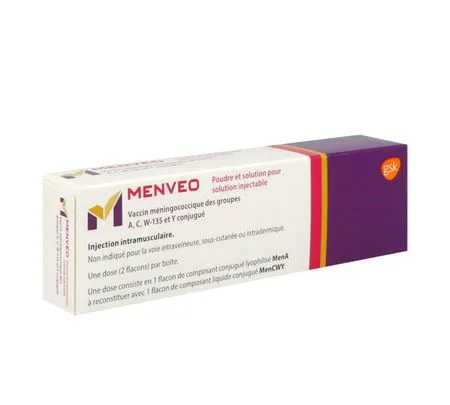
- GlaxoSmithKline
MENVEO Powder & solvent for injectable solution in vial Vial/25µg+Solvent vial/0,5ml
CIP / EAN : 3400921702903
 Pfizer
PREVENAR 20 Suspension for injection, prefilled syringe Syringe+Needle
CIP / EAN : 3400930247853
 Sanofi Winthrop Industrie
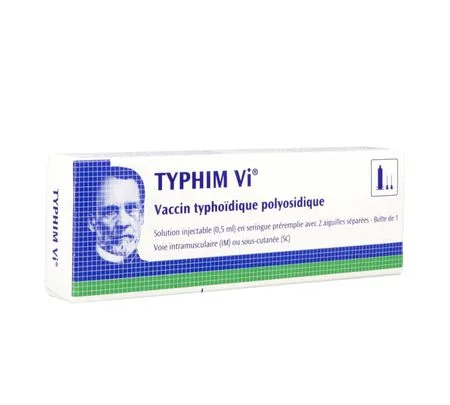
TYPHIM VI Injection solution in prefilled syringe Syringe/0,5ml+2Needle
CIP / EAN : 3400936993020
 MSD Vaccins
VAXNEUVANCE Suspension for injection in prefilled syringe Syringe+Needle
CIP / EAN : 3400930244371


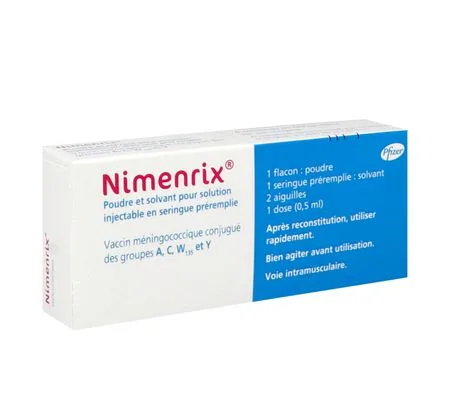
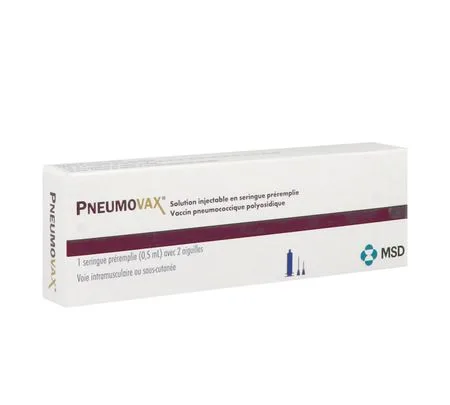
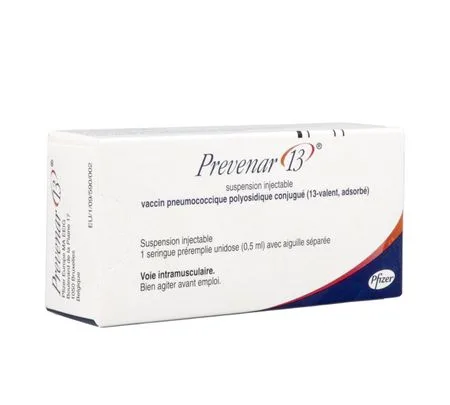

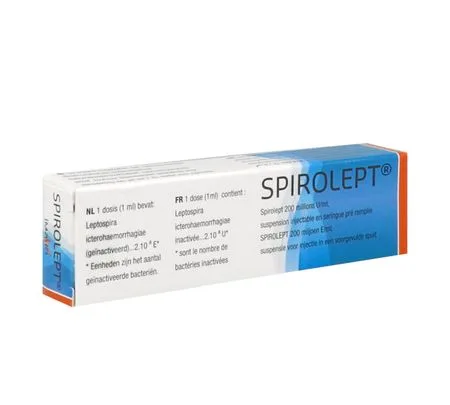



Understanding bacterial vaccines
Bacteria, toxins and antigens
A vaccine can concern a bacterium or a component involved in disease. A toxoid is a modified toxin used as an antigen; the term does not mean that the vaccine is an antibiotic or a toxin administered in its pathogenic form. Protein antigens and capsular polysaccharides represent other components. Tetanus, diphtheria and infections associated with selected encapsulated bacteria illustrate different antigenic settings rather than an exhaustive list or an assumption that a particular medicine is present in this category. The biological source helps explain composition without identifying every preparation characteristic.
Polysaccharides and conjugate vaccines
Selected antigens are polysaccharides originating particularly from a bacterial capsule. In a conjugate vaccine, the polysaccharide antigen is linked to a carrier protein. This structure is distinct from bringing several vaccines against different diseases together in a combined preparation. Conjugate and combination therefore describe different properties. Unconjugated and conjugated preparations must not be equated using the bacterium name alone. The exact product identifies antigen nature and other formulation components, giving these scientific descriptions meaning beyond a familiar infectious agent or a broad disease-prevention setting.
Serotypes, valencies and presentations
Serotypes describe antigenic distinctions within an agent. Several can occur in one medicine, but the number alone does not describe complete composition. Comparison must preserve the context of agent, technology and documented indications rather than creating an automatic hierarchy from higher valency. Vials, prefilled syringes and powders with solvent are different presentations. Route, preparation state and storage information remain vaccine-specific. Bacterial in the title provides neither a universal rule nor administration instructions for every preparation, and similar-looking containers do not establish equivalence between products with different antigens or technologies.
Frequently asked questions
Do conjugate and combination mean the same thing?
No. Conjugation describes a polysaccharide antigen linked to a carrier protein. Combination describes vaccine components brought together in one preparation.
Does a bacterial vaccine replace an antibiotic?
Their principles differ. A vaccine involves a specific immune response, while an antibiotic is an antibacterial agent. A shared infectious target does not make them equivalent.
Updated 10 November 2026
Sources and further reading