
Medicines
SmPC of 25/04/2023
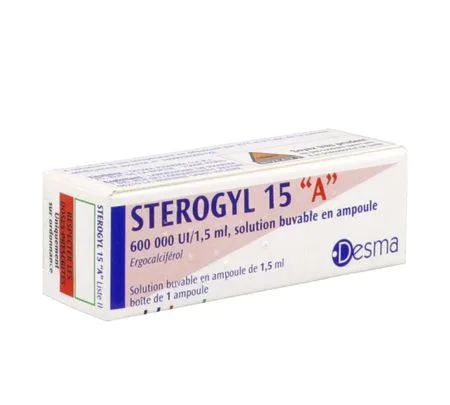
STEROGYL 15 "A" 600 000 IU/1,5 ml, oral solution in ampoule
Composition
For one ampoule of 1,5 ml :
Ergocalciferol: 600 000 IU
Excipient with known effect : Alcohol.
Alcohol by volume of the solution: 90 % (v/v).
Ethyl alcohol at 96,2 °, purified water. Inerting gas: nitrogen.
Dosage and administration
Dosage
RESERVED FOR ADULTS.
This presentation, due to the high vitamin D content, is not suitable for children.
1/2 to 1 ampoule (i.e. 300 000 IU to 600 000 IU of vitamin D2), in a single dose, once a year.
Method of administration
Oral use.
Do not drink this medicine neat; dilute it in water or fruit juice.
Contraindications
This medicine must not be used in cases of:
- Hypersensitivity to the active substance or to any of the excipients listed in section Composition.
- Hypercalcaemia, hypercalciuria, calcium lithiasis.
Warnings and precautions
This medicine is not recommended with sedative medicines, non-selective MAOIs, insulin, metformin, sulfonylureas and medicines causing an antabuse reaction with alcohol.
|
This medicine contains 90 % vol. of ethanol (alcohol), i.e. up to 1 000 mg per ampoule, equivalent to 25 ml of beer, 10 ml of wine per dose. Use of this medicine is dangerous in alcoholics and must be taken into account in pregnant or breastfeeding women, children and high-risk groups such as patients with liver impairment or epilepsy. The amount of alcohol in this medicine may modify the effects of other medicines. |
This specialty contains a very high dose of vitamin D. To avoid any overdose, do not administer more than once a year and avoid combination with other medicines containing this vitamin.
Monitor calciuria and calcemia and stop vitamin D intake if calcemia exceeds 105 mg/ml (2,62 mmol/l) or if calciuria exceeds 4 mg/kg/day in adults.
In cases of high calcium intake, regular monitoring of urinary calcium excretion is essential.
Interactions
Related to vitamin D2:
Associations to be taken into account
Orlistat
Decreased absorption of vitamin D.
Related to the presence of alcohol:
Combinations not recommended
Sedative medicines:
morphine derivatives (analgesics, antitussives and substitution treatments); hypnotics, barbiturates; benzodiazepines; anxiolytics other than benzodiazepines (for example, meprobamate); sedative antidepressants (amitriptyline, doxepin, mianserin, mirtazapine, trimipramine); neuroleptics; sedative H1 antihistamines; central antihypertensives; baclofen, pizotifen, thalidomide: increase in the sedative effect of these substances by alcohol.
Impaired alertness may make driving vehicles and using machines dangerous.
Avoid taking alcoholic beverages and medicines containing alcohol.
Non-selective MAOIs (iproniazid, nialamide)
Increase in the hypertensive and/or hyperthermic effects of tyramine present in certain alcoholic beverages (Chianti, certain beers, etc.).
Avoid taking alcoholic beverages and medicines containing alcohol.
Insulin
Increase of the hypoglycaemic reaction (inhibition of compensatory reactions which may facilitate the occurrence of hypoglycaemic coma).
Avoid taking alcoholic beverages and medicines containing alcohol.
Metformin
Increased risk of lactic acidosis during acute alcohol intoxication, particularly in cases of fasting or malnutrition, and hepatocellular insufficiency.
Avoid taking alcoholic beverages and medicines containing alcohol.
Hypoglycaemic sulfonylureas
Antabuse effect, notably with glibenclamide, glipizide, tolbutamide. Increase in the hypoglycemic reaction (inhibition of compensatory reactions), which may facilitate the onset of hypoglycemic coma.
Avoid taking alcoholic beverages and medicines containing alcohol.
Medicines causing an antabuse reaction with alcohol:
Cefamandole, disulfiram, furazolidone, glibenclamide, glipizide, griseofulvin, ketoconazole, metronidazole, ornidazole, procarbazine, secnidazole, tenonitrozole, tinidazole, tolbutamide.
Antabuse effect (heat, flushing, vomiting, tachycardia).
Avoid taking alcoholic beverages and medicines containing alcohol.
Associations to be taken into account
Oral anticoagulants:
Possible variations in the anticoagulant effect: increase in cases of acute intoxication and decrease in cases of chronic alcoholism (increased metabolism).
Nicotinic acid:
Risk of pruritus, redness and warmth, related to potentiation of the vasodilatory effect
Fertility, pregnancy and breastfeeding
At a dose of 600 000 IU of vitamin D per ampoule, the vitamin D concentration of this specialty is high and does not correspond to the doses usually recommended during pregnancy. Consequently, this specialty must not be administered either during pregnancy or during breastfeeding.
Driving and using machines
The amount of alcohol contained in this medicine may impair the ability to drive vehicles and use machines.
Adverse effects
Skin and subcutaneous tissue disorders: Pruritus, skin rash, erythema, oedema.
Reporting of suspected adverse reactions
Reporting suspected adverse reactions after authorisation of the medicinal product is important. It allows continued monitoring of the benefit/risk balance of the medicinal product. Healthcare professionals are asked to report any suspected adverse reactions via the national reporting system: National Agency for the Safety of Medicines and Health Products (ANSM) and the network of Regional Pharmacovigilance Centres - Website: https://signalement.social-sante.gouv.fr/.
Overdose
Signs resulting from the administration of excessive doses of vitamin D or its metabolites:
- Clinical signs: headache, asthenia, anorexia, weight loss, growth arrest, nausea, vomiting, polyuria, polydipsia, dehydration, arterial hypertension, calcium lithiasis, tissue calcifications (in particular renal and vascular), renal insufficiency.
- Signs Biological: hypercalcaemia, hypercalciuria, hyperphosphataemia, hyperphosphaturia.
Action to be taken:
Stop administration of vitamin D, reduce calcium intake, increase diuresis, abundant drinks.
Pharmacodynamics
Pharmacotherapeutic class: VITAMIN D, ATC code: A11CC01 (A: Alimentary tract and metabolism).
The essential role of vitamin D is exerted on the intestine, where it increases the capacity to absorb calcium and phosphates, and on the skeleton, where it promotes mineralisation (through its direct actions on bone being formed and its indirect actions involving the intestine, the parathyroid glands, and already mineralised bone).
Pharmacokinetics
Vitamin D is absorbed passively in the small intestine, then joins the general circulation via the lymphatic route, incorporated into chylomicrons.
After absorption, it binds to a specific carrier protein and is transported to the liver where it is converted into 25-hydroxyvitamin D. The latter in turn binds to the same carrier protein and is transported to the kidneys where it is transformed into its active form, 1,25-dihydroxyvitamin D.
Its essential storage sites are adipose tissue, muscles, but also blood. The 1,25-hydroxyvitamin D bound to its carrier protein is the major circulating reserve form of vitamin D. Its half-life in the blood is 15 to 40 days.
Elimination of vitamin D and its metabolites occurs via the faeces, in untransformed form or in water-soluble form (calcitroic acid, glucuroconjugated derivatives).
SPECIAL PRECAUTIONS FOR DISPOSAL AND OTHER HANDLING
No special requirements.
Any unused medicinal product or waste material should be disposed of in accordance with local requirements.
Prescription, supply and reimbursement
| Marketing authorisation (AMM) |
|
| Price: |
|
87 RUE LA BOÉTIE
75008 PARIS
Tel: 01 78 96 18 00 info-fr@desmahealthcare.com
https://desmahealthcare.com/Desma-France
Source: VIDAL · Updated on 11/11/2026. This information does not replace advice from a healthcare professional.