
Medicines
SmPC of 28/04/2026
SIKLOS 100 mg and 1 000 mg, scored film-coated tablets
Forms and presentations
Siklos 100 mg scored film-coated tablet
Film-coated tablet (white, oblong in shape, marked with a notch* on each side).
Bottle of 60, with child-resistant closure and desiccant.
* The tablet can be divided into two equal parts. Each half-tablet is engraved with an "H" on one side.
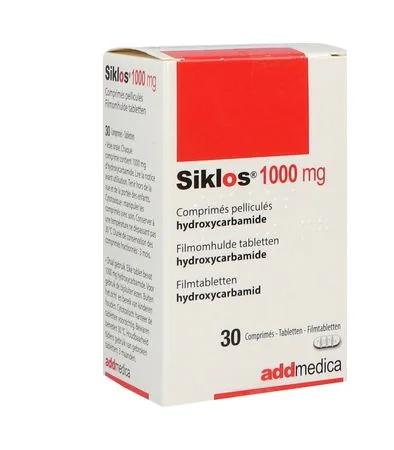
Siklos 1 000 mg scored film-coated tablet
Film-coated tablet (white, oblong in shape, marked with three notches* on each side).
Bottle of 30, with child-resistant closure and desiccant.
* The tablet can be divided into four equal parts. Each quarter-tablet is engraved with a "T" on one side.
Composition
Siklos 100 mg scored film-coated tablet
Each tablet contains 100 mg of hydroxycarbamide.
Siklos 1 000 mg scored film-coated tablet
Each tablet contains 1 000 mg of hydroxycarbamide.
Sodium stearyl fumarate, silicified microcrystalline cellulose, basic butylated methacrylate copolymer.
Indications
Siklos is indicated for the prevention of recurrent painful vaso-occlusive crises, including acute chest syndrome, in adults, adolescents and children older than 2 years with symptomatic sickle cell disease (see section Pharmacodynamics).
Dosage and administration
Treatment with Siklos must be initiated by a physician experienced in the management of patients with sickle cell disease.
Dosage
Adults, adolescents and children older than 2 years
The dosage must be based on the patient's body weight.
The initial dose of hydroxycarbamide is 15 mg/kg and the usual dose ranges between 15 and 30 mg/kg per day.
The dose of Siklos should be maintained as long as the patient shows a clinical or hematological response to treatment (e.g., increase in fetal hemoglobin (HbF), increase in mean corpuscular volume (MCV), decrease in neutrophil count).
In case of non-response (recurrence of crises or no reduction in crisis frequency), the daily dose may be increased in steps of 2,5 to 5 mg/kg per day using the most appropriate formulation.
Under exceptional circumstances, a maximum dose of 35 mg/kg per day may be justified under close hematological monitoring (see section Warnings and precautions).
If the patient does not respond to the maximum dose of hydroxycarbamide (35 mg/kg/day) received over three to six months, permanent discontinuation of Siklos treatment should be considered.
If blood counts reach values indicating a toxic effect, Siklos treatment must be temporarily stopped until blood counts normalize. Hematological normalization usually occurs within two weeks. Treatment may then be reintroduced at a reduced dose. The Siklos dose may subsequently be increased again under close hematological monitoring. A treatment at a dose causing hematological toxicity should not be attempted more than twice.
Toxicity may be characterized by the following results on blood tests:
|
Neutrophils |
< 1 500/mm3 |
|
|
Blister packs |
< 80 000/mm3 |
|
|
Haemoglobin |
< 4,5 g/dL |
|
|
Reticulocytes |
< 80 000/mm3 if the hemoglobin concentration is < 9 g/dL |
There are data on long-term continuous treatment with hydroxycarbamide in children and adolescents with sickle cell disease; the follow-up duration was 12 years in children and adolescents and more than 13 years in adults. Currently, it is unknown how long patients should be treated with Siklos. The duration of treatment is the responsibility of the prescribing physician and should be based on the clinical and hematological status of each patient.
Special populations
Children under 2 years of age
The safety and efficacy of hydroxycarbamide in children from birth to 2 years have not yet been established. Limited data suggest that 20 mg/kg/day reduces pain episodes and is safe in children under 2 years, but the safety of long-term treatment remains to be established. Therefore, no dosage recommendation can be given.
Renal impairment
As renal excretion is the main route of elimination, a dose reduction of Siklos should be considered in patients with renal impairment. In patients with a creatinine clearance ≤ 60 mL/min, the initial dose of Siklos should be reduced by 50%. Close hematological monitoring is advised in these patients. Siklos should not be administered to patients with severe renal impairment (creatinine clearance < 30 mL/min) (see sections Contraindications, Warnings and precautions and Pharmacokinetics).
Hepatic impairment
There are no data supporting the use of specific dose adjustments in patients with hepatic impairment. Close hematological monitoring is nevertheless advised in these patients. For safety reasons, Siklos is contraindicated in patients with severe hepatic impairment (see sections Contraindications and Warnings and precautions).
Method of administration
Depending on the individual prescribed dose, the whole tablet or half or a quarter of a tablet should be taken once daily, preferably in the morning before breakfast, if necessary with a glass of water or a very small amount of food.
For patients unable to swallow tablets, they may be dispersed immediately before taking, in a small spoon containing a little water. Syrup may be added or the mixture may be mixed with food to mask any bitter taste.
Contraindications
Hypersensitivity to the active substance or to any of the excipients of the medicinal product.
Severe hepatic impairment (Child-Pugh classification C).
Severe renal impairment (creatinine clearance < 30 mL/min).
Toxic signs of myelosuppression described in section Dosage and administration.
Breast-feeding (see section Fertility, pregnancy and breastfeeding).
Warnings and precautions
Myelosuppression:
Treatment with Siklos requires close clinical monitoring. The patient's hematological status as well as renal and hepatic function should be assessed before treatment and regularly during treatment. During treatment with Siklos, blood counts should be performed once a month at the start of treatment (for example during the first two months) and in case of a daily dose of hydroxycarbamide up to 35 mg/kg body weight. Patients stable on the lowest doses should be monitored every 2 months.
Treatment with Siklos should be discontinued in case of a marked myelosuppressive effect. Neutropenia is generally the first and most frequent of these hematological manifestations. Thrombocytopenia and anemia are less frequent and are rarely observed in the absence of prior neutropenia. Recovery from myelosuppression is usually rapid upon treatment interruption. Treatment with Siklos may then be reintroduced at a lower dose (see section Dosage and administration).
Renal and hepatic impairment:
Siklos should be used with caution in patients with mild to moderate renal impairment (see section Dosage and administration).
Siklos should be used with caution in patients with mild or moderate hepatic impairment due to the still limited data in these populations (see section Dosage and administration).
Leg ulcers and toxic cutaneous vasculitis:
In patients with leg ulcers, Siklos should be used with caution. Leg ulcers are a frequent complication of sickle cell disease but have also been reported in patients treated with hydroxycarbamide. Toxic cutaneous vasculitis, including ulceration and gangrene of vasculitic origin, has occurred in patients with myeloproliferative disorders during treatment with hydroxycarbamide. These toxic vasculitides have been reported most often in patients who had previously received or were currently receiving interferon treatment. As potentially severe clinical consequences of ulcers of cutaneous vasculitic origin have been reported in patients with myeloproliferative disorders, treatment with hydroxycarbamide should be discontinued and/or its dose reduced if ulcers secondary to cutaneous vasculitis develop. In rare cases, the ulcers are due to leukocytoclastic vasculitis.
Limbal stem cell deficiency:
Cases of limbal stem cell deficiency have been reported during treatment with hydroxycarbamide. In some cases, limbal stem cell deficiency improved after treatment discontinuation. Patients presenting with signs and symptoms (reduced/impaired vision, photophobia, redness and pain) should be referred to an ophthalmologist. If limbal stem cell deficiency is confirmed, discontinuation of treatment should be considered.
Macrocytosis:
Hydroxycarbamide causes macrocytosis, which may mask the incidental development of a folic acid and vitamin B deficiency12. Prophylactic administration of folic acid is recommended.
Carcinogenicity:
Hydroxycarbamide is unquestionably genotoxic across a wide range of systems tested. Hydroxycarbamide is presumed to be carcinogenic in different species. A secondary leukaemia has been reported in patients receiving long-term hydroxycarbamide for myeloproliferative disorders. It is unknown whether this leukaemogenic effect is secondary to hydroxycarbamide or associated with the patient's disease. Skin cancer has also been reported in patients receiving long-term hydroxycarbamide.
Administration and monitoring:
Patients and/or parents or the legally responsible person must be able to follow instructions regarding the administration of this medicine, monitoring and care.
Interactions
No specific interaction study has been carried out with hydroxycarbamide.
Potentially fatal hepatotoxicity and pancreatitis, as well as severe peripheral neuropathy, have been reported in HIV-infected patients receiving hydroxycarbamide in combination with first-generation antiretrovirals, in particular didanosine combined with stavudine. Patients treated with hydroxycarbamide in combination with didanosine, stavudine and indinavir showed a median decrease in CD4 cells of approximately 100/mm3.
Concomitant use of hydroxycarbamide with other myelosuppressive medicines or radiotherapy may increase bone marrow depression, gastrointestinal disorders or mucositis. Erythema secondary to radiotherapy may be aggravated by hydroxycarbamide.
Concomitant use of hydroxycarbamide with a live virus vaccine may potentiate replication of the vaccine virus and/or increase the adverse reaction to the vaccine virus, as normal defence mechanisms may be suppressed by hydroxycarbamide treatment. Vaccination with a live vaccine in a patient treated with hydroxycarbamide may lead to severe infections. In general, the patient's vaccine response in terms of antibodies developed may be reduced. Treatment with Siklos and concomitant immunisation with live virus vaccines should only be carried out if the benefits clearly outweigh the potential risks.
Interference with continuous glucose monitoring systems
Hydroxycarbamide may falsely elevate sensor glucose results of certain continuous glucose monitoring systems and may lead to hypoglycaemia if sensor glucose results are relied upon to dose insulin.
Fertility, pregnancy and breastfeeding
Women of childbearing potential/Contraception in men and women.
Women of childbearing potential must be informed that it is not advisable to become pregnant during treatment with hydroxycarbamide and that the treating physician must be informed immediately should a pregnancy occur.
The use of effective contraception is strongly recommended in women of childbearing potential.
Male and female patients treated with hydroxycarbamide who wish to have a child should, where possible, stop treatment 3 to 6 months before conception. The benefit-risk balance must be assessed on a case-by-case basis, taking into account the risk of hydroxycarbamide treatment compared with switching to a blood transfusion programme.
Pregnancy
Animal studies have shown toxicity to reproductive function (see section Preclinical safety). Female patients treated with hydroxycarbamide must be informed of the risks to the foetus.
There are limited data on the use of hydroxycarbamide in pregnant women. Siklos is not recommended during pregnancy.
The patient must be informed that she must contact a physician immediately if pregnancy is suspected.
Breast-feeding
Hydroxycarbamide is excreted in human milk. Because of the risk of severe adverse reactions in the infant, breastfeeding must be discontinued during Siklos treatment.
Fertility
Male fertility may be affected during treatment. Very common cases of reversible oligospermia and azoospermia have been observed in men, although these abnormalities may also be related to the underlying disease. Impaired fertility has been observed in male rats (see section Preclinical safety).
Driving and using machines
Siklos has a minor influence on the ability to drive and use machines. Patients are advised not to drive or use machines if they experience dizziness while taking Siklos.
Adverse effects
Summary of the safety profile
The tolerability profile of hydroxycarbamide in sickle cell disease has been established from clinical trials and confirmed by long-term cohort studies including up to 1 903 adults and children over 2 years of age.
The most frequent adverse reaction is myelosuppression accompanied by neutropenia as the most common manifestation. Myelosuppression is a dose-limiting toxic effect of hydroxycarbamide. When the maximum tolerated dose is not reached, transient myelotoxicity occurs in fewer than 10% of patients, whereas at the maximum tolerated dose, more than 50% of patients may develop reversible myelosuppression. These adverse reactions are expected given the pharmacology of hydroxycarbamide. Gradual dose adjustment may help reduce these effects (see section Dosage and administration).
Clinical data obtained in patients with sickle cell disease have not revealed adverse reactions of hydroxycarbamide on liver and kidney function.
Tabulated summary of adverse reactions
Adverse reactions are listed below by organ system and absolute frequency. Frequencies are defined as very common (≥ 1/10); common (≥ 1/100, < 1/10); uncommon (≥ 1/1 000, < 1/100); rare (≥ 1/10 000, < 1/1 000); very rare (< 1/10 000), frequency not known (cannot be estimated from the available data). Within each frequency category, adverse reactions are presented in order of decreasing seriousness:
|
Benign, malignant and unspecified neoplasms: |
||
|
Frequency not known: |
Leukaemia and skin cancers in elderly patients |
|
|
Blood and lymphatic system disorders: |
||
|
Very common : |
Myelosuppression1 including neutropenia (< 1,5 x 10⁹/L), reticulocytopenia (< 80 x 109/L), macrocytosis2 |
|
|
Common: |
Thrombocytopenia (< 80 x 109/L), anaemia (haemoglobin < 4,5 g/dL)3 |
|
|
Nervous system disorders: |
||
|
Common: |
Headache |
|
|
Uncommon: |
Vertigo |
|
|
Eye disorders: |
||
|
Frequency not known: |
Limbal stem cell deficiency |
|
|
Vascular disorders: |
||
|
Frequency not known: |
Haemorrhage |
|
|
Gastrointestinal disorders: |
||
|
Uncommon: |
Nausea |
|
|
Frequency not known: |
Gastrointestinal disorders, vomiting, gastrointestinal ulcer, severe hypomagnesaemia |
|
|
Hepatobiliary disorders: |
||
|
Rare: |
Increased liver enzymes |
|
|
Skin and subcutaneous tissue disorders: |
||
|
Common: |
Skin reactions (for example oral, nail and skin pigmentation) and oral mucositis. |
|
|
Uncommon: |
Erythema, melanonychia, alopecia |
|
|
Rare: |
Leg ulcers |
|
|
Very rare: |
Cutaneous and systemic lupus erythematosus |
|
|
Frequency not known: |
Dry skin |
|
|
Reproductive system and breast disorders: |
||
|
Very common: |
Oligospermia, azoospermia4 |
|
|
Frequency not known: |
Amenorrhea |
|
|
General disorders and administration site conditions: |
||
|
Frequency not known: |
Fever |
|
|
Investigations: |
||
|
Frequency not known: |
Weight gain5 |
|
1 Haematological normalisation usually appears within two weeks following discontinuation of hydroxycarbamide.
2 The macrocytosis caused by hydroxycarbamide does not depend on vitamin B12 or folic acid.
3 Mainly due to infection with Parvovirus, splenic or hepatic sequestration, or renal insufficiency.
4 Oligospermia and azoospermia are generally reversible, but must be taken into account in case of a desire for paternity (see section Preclinical safety). These conditions are also related to the underlying disease.
5 These may be a consequence of the improvement in general condition.
Paediatric population
The frequency, type and severity of adverse reactions in children are generally similar to those in adults. Pharmacovigilance data from an observational study with Siklos® (Escort HU) in a large number of patients (n = 1 906) with sickle cell disease show that patients aged 2 to 10 years had a higher risk of neutropenia and a lower risk of dry skin, alopecia, headache and anaemia. Patients aged 10 to 18 years had a lower risk of dry skin, skin ulcer, alopecia, weight gain and anaemia compared with adult patients.
Reporting of suspected adverse reactions
Reporting suspected adverse reactions after authorisation of the medicinal product is important. It allows continued monitoring of the benefit/risk balance of the medicinal product. Healthcare professionals are asked to report any suspected adverse reactions via the national reporting system: National Agency for the Safety of Medicines and Health Products (ANSM) and the network of Regional Pharmacovigilance Centres - Website: https://signalement.social-sante.gouv.fr.
Overdose
Acute mucocutaneous toxicity has been reported in patients treated with hydroxycarbamide at doses several times higher than the therapeutic dose. Pain, violaceous erythema, oedema of the palms and soles followed by desquamation of the hands and feet, severe generalised skin hyperpigmentation and stomatitis have been observed.
In patients with sickle cell disease, severe myelosuppression has been reported in isolated cases of overdose of hydroxycarbamide administered at between 2 and 10 times the prescribed dose (up to 8,57 times the maximum recommended dose of 35 mg/kg/day). It is recommended to monitor blood counts for several weeks after overdose as recovery may be delayed.
Management of overdose consists of gastric lavage followed by symptomatic treatment and monitoring of bone marrow function.
Pharmacodynamics
Pharmacotherapeutic class: Antineoplastic, other antineoplastics, ATC code: L01XX05.
Mechanism of action
Not all mechanisms of action of hydroxycarbamide are fully understood. One mechanism of action is the increase in foetal haemoglobin (HbF) concentrations in patients with sickle cell disease. Foetal haemoglobin (HbF) interferes with the polymerisation of HbS and thus prevents sickling of the red blood cell, which then reduces vaso-occlusion and haemolysis. In all clinical studies, there was a significant increase in HbF compared with the baseline value after treatment with hydroxycarbamide. The rise in HbF also increases red blood cell survival and total haemoglobin level and thus reduces anaemia in these patients.
Hydroxycarbamide has been shown to be accompanied by the formation of nitric oxide. This suggests that nitric oxide stimulates the production of cyclic guanosine monophosphate (cGMP), which then activates a protein kinase and increases HbF production. Other pharmacological effects of hydroxycarbamide that may contribute to its beneficial effects in sickle cell disease include a decrease in neutrophils, an increase in the water content of red cells, an increase in the deformability of sickle cells and an alteration of red cell adhesion to the endothelium.
In addition, hydroxycarbamide causes immediate inhibition of DNA synthesis by acting as an inhibitor of ribonucleotide reductase, without interfering with the synthesis of ribonucleic acid or proteins.
Pharmacodynamic effects
Beyond the inconsistent correlation between the reduction in crisis frequency and the increase in HbF, the cytoreductive effect of hydroxycarbamide, in particular the decrease in neutrophils, was the factor with the strongest correlation with the reduction in crisis frequency.
Clinical efficacy and safety
In almost all clinical studies in sickle cell disease, hydroxycarbamide reduced the frequency of vaso-occlusive episodes in children and adults by 40 to 80%. The same decrease was observed for the number of hospital admissions and the number of hospitalisation days in the treated groups. The annual frequency of acute chest syndrome was also reduced by 25 to 68% with hydroxycarbamide in several studies. In sickle cell disease, acute chest syndrome is a frequent complication that threatens life and is characterised by chest pain or fever or dyspnoea accompanied by a recent infiltrate on chest radiographs.
A prolonged clinical benefit has been demonstrated in patients who remain on hydroxycarbamide treatment for more than 8 years.
In 1 906 patients included in the ESCORT HU cohort study, a significant increase in Hb level (+1,4 g/dL and 1,5 g/dL) and in the percentage of HbF (+14,65% and 15%) was observed after twelve and twenty-four months of hydroxycarbamide treatment compared with baseline values. In parallel, after one year of treatment, there was a significant reduction in the number of painful crises lasting more than 48 hours (-40% in children and -50% in adults), of acute chest syndrome episodes (-68% in children and -57% in adults) and of hospitalisations (-44% in children and -45% in adults), and the percentage of patients requiring blood transfusion decreased by 50%. In the ESCORT-HU study, the tolerability profile of hydroxycarbamide observed in adults and children was consistent with previously published data and showed no new risk (Montalembert 2021).
Paediatric population
In the NOHARM trial (Opoka 2017), children with a mean age of 2,2 years (range 1 to 3,99 years) were randomised to receive either hydroxycarbamide (n = 104) or placebo (n = 104). Treatment was administered once daily at 20 ± 2,5 mg/kg for 12 months. The clinical composite endpoint related to sickle cell disease (comprising vaso-occlusive painful crisis, dactylitis, acute chest syndrome, splenic sequestration or blood transfusion) was less frequent with hydroxycarbamide (45%) than with placebo (69%, p = 0,001). The risk of increased infections in children with drug-induced neutropenia was rare in the NOHARM study and showed no difference between hydroxycarbamide and placebo treatment.
At the end of the NOHARM trial, children were recruited into the NOHARM extension trial (John 2020) and randomised in a ratio of 1:1 to receive hydroxycarbamide either at a fixed standard dose (mean [± standard deviation], 20 ± 5 mg per kilogram per day) or with dose escalation up to the maximum tolerated dose. 187 children were randomised: 94 (age 4,6 ± 1,0) to the fixed-dose group (19,2 ± 1,8 mg/kg/day) and 93 (age 4,8 ± 0,9) to the dose-escalation group (29,5 ± 3,6 mg/kg/day). After 18 months, an increase in Hb level (+0,3 g/dL) and in the percentage of HbF (+8%) was observed in the dose-escalation group.
Clinical adverse events of any grade were more frequent in the fixed-dose group, including all sickle cell disease-related events (245 vs. 105) and specific events: vaso-occlusive painful crisis (200 vs. 86) and acute chest syndrome or pneumonia (30 vs. 8). The number of major medical interventions was also lower in the dose-escalation group than in the fixed-dose group, both for transfusions (34 vs. 116) and for hospitalisations (19 vs. 90).
In young children with SS/Sb0 sickle cell disease, aged 9 to 23 months, a decrease in painful episodes (-52%, 177 vs. 375 events), dactylitis (-80%, 24 vs. 123), acute chest syndrome (8 vs. 27) and hospitalisations (-28%, 232 vs. 324) was reported with hydroxycarbamide (n = 96) compared with placebo (n = 97) in the randomised controlled Baby HUG study. In 25 patients treated for 1 year in the uncontrolled ESCORT HU study, a reduction in vaso-occlusive crises (-42%) and hospitalisations (-55%) was observed compared with the year preceding inclusion (n = 25).
The benefit-risk ratio and long-term tolerability remain to be established in this population.
In the uncontrolled ESCORT HU cohort study, a subset of 27 paediatric patients with severe chronic anaemia and baseline haemoglobin levels below 7 g/dL were treated with Siklos for 12 months. Of these, only 6 patients (22%) had levels below 7 g/dL 12 months after treatment initiation. Although a majority of patients (56%) showed an increase equal to or greater than 1 g/dL compared with baseline, due to a large proportion of missing data, regression to the mean and a possible effect of transfusions that could not be excluded, no robust conclusion on efficacy can be drawn from this uncontrolled study.
Pharmacokinetics
Absorption
After oral administration at a dose of 20 mg/kg, hydroxycarbamide is rapidly absorbed and reaches peak plasma concentrations of about 30 mg/L after 0,75 h and 1,2 h, respectively, in children and adults with sickle cell disease. Total exposure up to 24 h after administration is 124 mg.h/L in children and adolescents and 135 mg.h/L in adults. The oral bioavailability of hydroxycarbamide is nearly complete according to analyses performed in indications other than sickle cell disease.
Distribution
Hydroxycarbamide is rapidly distributed in the human body, crosses into the cerebrospinal fluid, appears in peritoneal fluid and ascites, and concentrates in leukocytes and erythrocytes. The estimated volume of distribution of hydroxycarbamide approximates the total body water compartment volume. The steady-state volume of distribution, adjusted for bioavailability, is 0,57 L/kg in patients with sickle cell disease (approximately 72 L in children and 90 L in adults). The extent of protein binding of hydroxycarbamide is unknown.
Biotransformation
The biotransformation pathways and metabolites have not been fully identified. Urea represents a metabolite of hydroxycarbamide.
Hydroxycarbamide at 30, 100 and 300 μM is not metabolised in vitro by the cytochrome P450s of human hepatic microsomes. At concentrations between 10 and 300 μM, hydroxycarbamide does not stimulate the in vitro ATPase activity of recombinant human P-glycoprotein (PGP), which indicates that hydroxycarbamide is not a substrate of PGP.
No interaction is therefore expected when administered concomitantly with substances that are substrates of cytochromes P450 or of P-glycoprotein.
Elimination
A repeated-dose study conducted in adults with sickle cell disease detected approximately 60% of the hydroxycarbamide dose in the urine at steady state. In adults, the total bioavailability-adjusted clearance was 9,89 L/h (0,16 L/h/kg), of which 5,64 and 4,25 L/h were for renal and non-renal clearance, respectively. In children, the corresponding clearance value was 7,25 L/h (0,20 L/h/kg), with values equal to 2,91 and 4,34 L/h for the renal and non-renal routes.
In adults with sickle cell disease, the mean cumulative urinary excretion of hydroxycarbamide represented, after 8 hours, 62% of the administered dose and was higher than that of patients with cancer (35-40%). In patients with sickle cell disease, hydroxycarbamide had an elimination half-life of approximately six to seven hours, which is longer than the half-lives reported in other indications.
Elderly patients, sex and race
No information is available on pharmacokinetic differences due to age (except for children), sex and race.
Paediatric patients
In children and adults with sickle cell disease, systemic exposure to hydroxycarbamide at steady state was similar based on the mean areas under the time-concentration curve. Maximum plasma concentrations and apparent volume of distribution relative to body weight were comparable between the different age groups. The time to reach maximum plasma concentration and the percentage of the dose excreted in urine were increased in children compared with adults.
In children, the half-life was slightly longer and the total clearance relative to body weight slightly higher than in adults (see section Dosage and administration).
Renal impairment
As renal excretion is an elimination route, a reduction of the Siklos dose should be considered in patients with renal impairment. An open-label study involving a single administration of hydroxycarbamide in adult patients with sickle cell disease (Yan JH et al, 2005) evaluated the influence of renal function on the pharmacokinetics of hydroxycarbamide. Patients with normal renal function (creatinine clearance ClCr > 80 mL/min), mild renal impairment (ClCr 60-80 mL/min), moderate (ClCr 30-< 60 mL/min) or severe (< 30 mL/min) renal impairment received a single administration of hydroxycarbamide at a dose of 15 mg/kg body weight using 200 mg, 300 mg or 400 mg capsules. In patients with a ClCr below 60 mL/min or those with end-stage renal disease, mean exposure to hydroxycarbamide was approximately 64% higher than in patients with normal renal function. Another study showed that patients with a ClCr < 60 mL/min had an area under the curve approximately 51% higher than patients with a ClCr ≥ 60 mL/min. This suggests that a 50% reduction in the hydroxycarbamide dose may be appropriate in patients with a ClCr ≤ 60 mL/min. Haemodialysis reduced exposure to hydroxycarbamide by 33% (see sections Dosage and administration and Warnings and precautions).
Close monitoring of haematological parameters is recommended in these patients.
Hepatic impairment
There are no data supporting specific dose adjustment recommendations in patients with hepatic impairment. Nevertheless, for safety reasons, Siklos is contraindicated in patients with severe hepatic impairment (see section Contraindications). Close monitoring of haematological parameters is recommended in patients with hepatic impairment.
Preclinical safety
In preclinical toxicity studies, the most frequently observed effects were bone marrow depression, lymphoid atrophy and degenerative lesions of the colonic and small intestinal epithelium. Cardiovascular effects and haematological abnormalities were observed in some species. In rats, testicular atrophy accompanied by decreased spermatogenesis also occurred, while reversible azoospermia was noted in dogs.
Hydroxycarbamide is unequivocally genotoxic across a wide range of tests.
Although conventional long-term studies to assess the carcinogenic potential of hydroxycarbamide have not been performed, hydroxycarbamide is presumed to be carcinogenic in various species.
Hydroxycarbamide crosses the placental barrier and has been shown to have a potent teratogenic and embryotoxic effect in a wide variety of animal models at doses less than or equal to the human therapeutic dose. Teratogenicity was characterised by partial ossification of the cranial bones, absence of orbits, hydrocephaly, bipartite sternebrae, and absence of lumbar vertebrae. Embryotoxicity was characterised by decreased foetal viability, reduced size of the live litter and developmental delay.
Hydroxycarbamide administered to male rats at a dose of 60 mg/kg body weight per day (approximately twice the maximum recommended dose in humans) resulted in testicular atrophy, decreased spermatogenesis and a significant reduction in their fertilising capacity.
Shelf life
3 years.
Unused tablet fragments must be returned to the bottle and used within 3 months.
SPECIAL PRECAUTIONS FOR DISPOSAL AND OTHER HANDLING
Siklos is a medicine that must be handled with care. Persons not taking Siklos, and in particular pregnant women, must avoid any contact with hydroxycarbamide. Anyone handling Siklos must wash their hands before and after handling the tablets.
Any unused product or waste must be disposed of in accordance with the regulations in force.
If the prescribed dose requires splitting the tablet into two or four, this must be done away from any food. Any powder released during splitting of the tablet must be wiped off using a single-use disposable wipe.
Prescription, supply and reimbursement
SIKLOS 100 mg, film-coated scored tablets| Medicine subject to initial annual hospital prescription, reserved for specialists in hematology, pediatrics or internal medicine. Renewal not restricted. | |
| Medicine requiring particular monitoring during treatment. |
| Marketing authorisation (AMM) |
|
| Price: |
|
SIKLOS 1000mg scored film-coated tablets
| Medicine subject to initial annual hospital prescription, reserved for specialists in hematology, pediatrics or internal medicine. Renewal not restricted. | |
| Medicine requiring particular monitoring during treatment. |
| Marketing authorisation (AMM) |
|
| Price: |
|
NORGINE SAS
23, rue François-Jacob. 92500 Rueil-Malmaison
Tel: 01 41 39 94 00
Source: VIDAL · Updated on 11/11/2026. This information does not replace advice from a healthcare professional.