
Medicines
SPC of 28/10/2025
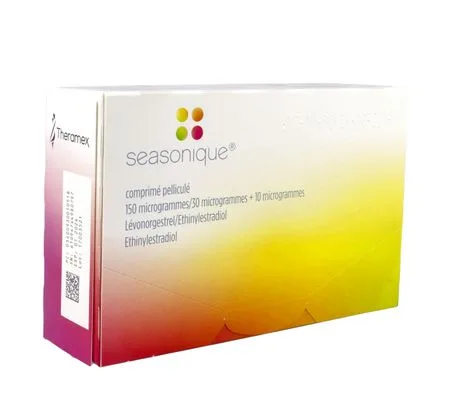
SEASONIQUE 150 micrograms/30 micrograms + 10 micrograms, film-coated tablet
Forms and presentations
Film-coated tablet.
The levonorgestrel/ethinylestradiol tablets are round, biconvex, pink, approximately 5,7 mm in diameter, bearing the inscription "172" on one side and "T" on the other side.
The ethinylestradiol tablets are round, biconvex, white, approximately 5,7 mm in diameter, bearing the inscription "173" on one side and "T" on the other side.
Composition
Each pink film-coated tablet contains 150 micrograms of levonorgestrel and 30 micrograms of ethinylestradiol.
Each white film-coated tablet contains 10 micrograms of ethinylestradiol.
Excipients with known effect:
Each pink film-coated tablet contains: 63,02 mg of lactose and 0,169 mg of Allura red (E129).
Each white film-coated tablet contains: 69,20 mg of lactose.
For the full list of excipients, see section Composition.
Pink film-coated tablets :
Tablet core :
Lactose, hypromellose, microcrystalline cellulose, magnesium stearate.
Film coating :
Hypromellose, titanium dioxide (E171), macrogol 400, Allura red (E129), polysorbate 80, brilliant blue (E133).
White film-coated tablets :
Tablet core :
Lactose, potassium polacrilin, microcrystalline cellulose, magnesium stearate.
Film coating :
Titanium dioxide (E171), polydextrose FCC, hypromellose, triacetin, macrogol 8000.
Indications
Oral contraception.
The decision to prescribe Seasonique must take into account the patient's risk factors, in particular her risk factors for venous thromboembolism (VTE), as well as the risk of VTE associated with Seasonique compared with other CHCs (combined hormonal contraceptives) (see sections Contraindications and Warnings and precautions).
Dosage and administration
Dosage
Seasonique is an extended-cycle oral contraceptive, in which the tablets must be taken continuously for 91 days. The following pack, corresponding to a new cycle of 91 days, must be started the day after taking the last tablet of the previous pack.
Each pack of Seasonique contains 84 tablets of the combination of 150 micrograms of levonorgestrel and 30 micrograms of ethinylestradiol and 7 tablets of 10 micrograms of ethinylestradiol.
How to use Seasonique
Tablets are taken continuously for 91 days. One tablet must be taken orally at the same time each day in the order indicated on the blister pack.
Take one pink tablet containing levonorgestrel and ethinylestradiol every day for 84 consecutive days, followed by one white ethinylestradiol tablet for 7 days, during which a withdrawal bleed will normally occur.
How to start taking Seasonique
The tablets must be taken every day at approximately the same time, if necessary with a little water, in the order indicated on the blister pack. Take one tablet every day for 91 consecutive days. Take one pink tablet every day for 84 consecutive days, followed by one white tablet for 7 consecutive days. A withdrawal bleed will normally occur during the period of 7 days of taking the white tablets.
Start each subsequent cycle of 91 days without interruption on the same day of the week as the first intake of Seasonique, following the same pattern.
• No prior intake of a hormonal contraceptive (during the last month)
Tablet intake must start on day 1 of the normal menstrual cycle (i.e., the first day of menstruation). Seasonique intake may start later (between day 2e and day 5e of the cycle) but, in this case, simultaneous use of a barrier contraceptive method is recommended during the first 7 days of tablet intake.
• Switching from a combined hormonal contraceptive (Combined Oral Contraceptive (COC), vaginal ring, transdermal patch)
Seasonique intake must start the day after the last active tablet (the last tablet containing the active substances) of the previous COC. In case of prior use of a vaginal ring or transdermal patch, Seasonique use must start on the day the ring or patch is removed and, at the latest, on the day the next application would have been due.
• Switching from progestogen-only contraception (progestogen-only pill, injection, implant) or from an intrauterine system (IUS) releasing a progestogen
Switching from the progestogen-only pill may be done on any day (switching from the implant or IUS must be done on the day of its removal; switching from the injection must start on the day the next injection is due). In all these cases, simultaneous use of a barrier contraceptive method is recommended during the first 7 days of tablet intake.
• After an abortion/miscarriage at 1er trimester
Tablet intake may start immediately. In this case, no additional contraceptive measures will be necessary.
• After childbirth or an abortion/miscarriage at 2e trimester
It is recommended to start tablet intake between 21 and 28 days after childbirth or an abortion at the 2e trimester. In case of later start, it is recommended to simultaneously use a barrier contraceptive method during the first 7 days of tablet intake. If sexual intercourse has already occurred, it is advisable to ensure the absence of pregnancy before starting CHC intake or to wait for the next menstruation.
Nevertheless, the increased risk of VTE in the postpartum period must be taken into account (see sections Warnings and precautions and Fertility, pregnancy and breastfeeding).
For women who are breastfeeding, see section Fertility, pregnancy and breastfeeding.
Missed tablets
Contraceptive efficacy may be reduced in case of missed pink tablets, particularly in case of missed first tablets of the blister pack.
In case of a missed pink tablet for less than 12 hours, the missed tablet must be taken as soon as possible and the following tablets will be taken at the usual time.
In case of one or more missed pink tablets for more than 12 hours, contraceptive efficacy may be reduced. The following two basic rules apply in case of missed tablets:
1. Tablet intake must never be interrupted for more than 7 days
2. 7 days of uninterrupted treatment intake are necessary in order to obtain proper inhibition of the hypothalamic-pituitary-ovarian axis.
The following advice will therefore be given in practice:
Missed levonorgestrel/ethinylestradiol pink tablets
• Between the 1er and the 7e day (1re week)
The woman must take the last forgotten pink tablet as soon as she realises it, even if this means taking two tablets at the same time. She will then continue to take the tablets at the usual time. In addition, a barrier contraceptive method, for example a condom, must be used for the following 7 days. If sexual intercourse has taken place during the previous 7 days, the possibility of pregnancy must be considered. The higher the number of forgotten tablets and the closer the omission is to the period of taking the white tablets, the higher the risk of pregnancy.
• Between 8e and 77e day (2e at 11e week)
The woman must take the last forgotten pink tablet as soon as she realises it, even if this means taking two tablets at the same time. She will then continue to take the tablets at the usual time. If the woman has taken her tablets correctly during the 7 days preceding the first forgotten tablet, no additional contraceptive measures are necessary. However, if the woman has forgotten more than one tablet, she should be advised to take additional precautions for 7 days.
• Between 78e and 84e day (12e week)
The risk of reduced efficacy is imminent due to the proximity of the 7-day period of taking the ethinylestradiol-only tablets. It is nevertheless still possible to prevent the decrease in contraceptive protection by adjusting the tablet-taking schedule. It is not necessary to take additional contraceptive measures, provided the woman has taken all tablets correctly during the 7 days preceding the omission of the first tablet. If this is not the case, she must take additional contraceptive measures for the following 7 days and must stop taking the pink tablets and take the white ethinylestradiol-only tablets, minus the number of tablets she has forgotten, in order to induce withdrawal bleeding. Thereafter, she may start a new cycle of Seasonique.
Omission of white ethinylestradiol tablets (13e week)
Forgotten tablets will not be replaced and the remaining tablets will be taken at the usual time until the end of the blister pack. It will not be necessary to take additional contraceptive measures.
If no withdrawal bleeding occurs during the 13e week (during the taking of the white ethinylestradiol tablets), the possibility of pregnancy must be ruled out before starting a new 91-day cycle.
Management of gastrointestinal disorders
In the case of severe gastrointestinal disturbances (for example vomiting or diarrhoea), absorption of a tablet may not be complete and additional contraceptive measures must be taken.
In the case of vomiting within 3 to 4 hours of taking a tablet, the advice concerning forgotten tablets should be followed.
To avoid changing the order in which the tablets are taken, the additional pink tablet or tablets to be taken may be taken from the last row (12e week).
Paediatric population
The safety and efficacy of Seasonique in women of childbearing potential under the age of 18 years have not been established.
Method of administration : oral route.
Contraindications
Combined hormonal contraceptives (CHCs) must not be used in the following situations. If any of the following conditions appear for the first time while taking a CHC, use of this product must be stopped immediately.
• Presence or risk of venous thromboembolism (VTE):
- Venous thromboembolism – presence of VTE (patient treated with anticoagulants) or history of VTE (e.g. deep vein thrombosis [DVT] or pulmonary embolism [PE]);
- Known inherited or acquired predisposition to venous thromboembolism, such as activated protein C (APC) resistance (including factor V Leiden mutation), antithrombin III deficiency, protein C deficiency, protein S deficiency;
- Major surgery with prolonged immobilisation (see section Warnings and precautions) ;
- High risk of venous thromboembolism due to the presence of multiple risk factors (see section Warnings and precautions).
• Presence or risk of arterial thromboembolism (ATE):
- Arterial thromboembolism – presence or history of arterial thromboembolism (e.g. myocardial infarction [MI]) or prodromes (e.g. angina pectoris);
- Cerebrovascular disease – presence or history of stroke or prodromes (e.g. transient ischaemic attack [TIA]);
- Known inherited or acquired predisposition to arterial thromboembolism, such as hyperhomocysteinaemia or the presence of antiphospholipid antibodies (anticardiolipin antibodies, lupus anticoagulant);
- History of migraine with focal neurological signs;
- High risk of arterial thromboembolism due to the presence of multiple risk factors (see section Warnings and precautions) or a severe risk factor such as:
- diabetes with vascular symptoms;
- severe arterial hypertension;
- severe dyslipoproteinaemia.
• Pancreatitis or history of pancreatitis, in case of association with severe hypertriglyceridaemia;
• Severe hepatic disorder or history of severe hepatic disorder, in the absence of normalisation of liver function tests;
• Active (benign or malignant) liver tumour or history thereof;
• Known or suspected hormone-dependent malignant tumour (for example of the genital organs or breasts);
• Undiagnosed vaginal bleeding;
• In association with St John's wort (Hypericum perforatum) ;
• Hypersensitivity to the active substances or to any of the excipients listed in section Composition ;
• Concomitant use of Seasonique and other medicinal products containing ombitasvir/paritaprevir/ritonavir, dasabuvir, glecaprevir/pibrentasvir and sofosbuvir/velpatasvir/voxilaprevir is contraindicated (see sections Warnings and precautions and Interactions).
Warnings and precautions
Warnings
If the patient has any of the disorders or risk factors mentioned below, the appropriateness of treatment with Seasonique should be discussed with her.
In case of worsening, exacerbation or onset of any of these disorders or risk factors, the need to discontinue use of Seasonique should be discussed between the physician and the patient.
Circulatory disorders
Risk of venous thromboembolism (VTE)
The risk of venous thromboembolism (VTE) is increased in women who use a combined hormonal contraceptive (CHC) compared with women who do not use one. CHCs containing levonorgestrel, norgestimate or norethisterone are associated with the lowest risk of VTE. Data from a retrospective cohort study suggest that the risk of VTE associated with Seasonique is 1,4 times higher (HR 1,4, CI 95% 0,90 – 2,19) compared with CHCs containing levonorgestrel, used during a cycle of 28 days. The data suggest that this risk is further increased in women using Seasonique as their first oral contraceptive. The decision to use Seasonique should be taken only after discussion with the patient to ensure she understands the risk of VTE associated with CHCs, the influence of her current risk factors on this risk, and the fact that the risk of VTE is highest during the first year of use. Some data also indicate an increased risk when resuming a CHC after a break of 4 weeks or more.
Among women who do not use CHCs and are not pregnant, approximately 2 out of 10 000 will develop a VTE over a period of one year. However, for an individual woman, the risk may be considerably higher, depending on the risk factors she has (see below).
Epidemiological studies in women using low-dose combined oral contraceptives (< 50 μg ethinylestradiol) have shown that, out of 10 000 women, approximately 6 to 12 will develop VTE over a period of one year.
It is estimated that out of 10 000 women who use a CHC containing levonorgestrel, approximately 6[1] will develop VTE over a period of one year.
The number of VTE events per year with low-dose CHCs is lower than that expected during pregnancy or in the postpartum period.
VTE may be fatal in 1 to 2 % of cases.
Very rarely, cases of thrombosis have been reported in CHC users in other blood vessels, for example hepatic, mesenteric, renal or retinal veins and arteries.
VTE risk factors
The risk of venous thrombo-embolic complications in users of CHC may be considerably increased if other risk factors are present, in particular if these are multiple (see the table below).
Seasonique is contraindicated in women with multiple risk factors, which expose them to a high risk of venous thrombosis (see section Contraindications). When a woman has more than one risk factor, the increase in risk may be greater than the sum of the risks associated with each factor taken individually – in this case, the overall risk of VTE must be considered. If the benefit-risk balance is judged unfavourable, the CHC must not be prescribed (see section Contraindications).
Table: VTE risk factors
|
Risk factor |
Comment |
|
Obesity (body mass index greater than 30 kg/m²) |
The increase in BMI considerably increases the risk. This is particularly important to consider if other risk factors are present. |
|
Prolonged immobilisation, major surgical intervention, any surgical intervention on the legs or pelvis, neurosurgery or major trauma.
Note: temporary immobilisation, including air travel > 4 hours, may also constitute a risk factor for VTE, particularly in women with other risk factors. |
In these situations, it is advised to discontinue use of the pill (at least four weeks in advance in the case of scheduled surgery) and not to resume the CHC until at least two weeks after complete remobilisation. Another method of contraception must be used in order to avoid an unwanted pregnancy.
Anti-thrombotic treatment should be considered if Seasonique has not been discontinued in advance. |
|
Family history (venous thromboembolism occurring in a sibling or a parent, particularly at a relatively young age, i.e. before 50 years). |
In case of suspected hereditary predisposition, the woman should be referred to a specialist for advice before any decision regarding the use of CHC. |
|
Other medical conditions associated with VTE |
Cancer, systemic lupus erythematosus, haemolytic uraemic syndrome, chronic inflammatory bowel disease (Crohn's disease or ulcerative colitis) and sickle cell disease. |
|
Age |
In particular above 35 years |
There is no consensus regarding the possible role of varicose veins and superficial thrombophlebitis in the onset or progression of venous thrombosis.
The increased risk of thromboembolism during pregnancy, and in particular during the 6 weeks of the puerperal period, must be taken into account (for information regarding "Pregnancy and breast-feeding", see section Fertility, pregnancy and breastfeeding).
Symptoms of VTE (deep venous thrombosis and pulmonary embolism)
Women should be informed that if these symptoms occur, they should seek urgent medical attention and tell the doctor that they are using a CHC.
Symptoms of deep venous thrombosis (DVT) may include:
• unilateral swelling of a leg and/or foot or along a vein in the leg;
• pain or tenderness in a leg, which may only be felt when standing or walking;
• warmth, redness or change in skin colour of the affected leg.
Symptoms of pulmonary embolism (PE) may include:
• sudden, unexplained onset of shortness of breath or rapid breathing;
• sudden cough, which may be associated with haemoptysis;
• acute chest pain;
• severe dizziness or light-headedness;
• rapid or irregular heartbeat.
Some of these symptoms (e.g. "shortness of breath", "cough") are not specific and may be wrongly interpreted as signs of more frequent or less severe events (e.g. respiratory infections).
Other signs of vascular occlusion may include: sudden pain, swelling and slight blue discolouration of a limb.
If the occlusion occurs in the eye, symptoms may begin as painless blurred vision that may progress to loss of vision. In some cases, loss of vision may occur almost immediately.
Risk of arterial thromboembolism (ATE)
Epidemiological studies have shown an association between the use of CHC and an increased risk of arterial thromboembolism (myocardial infarction) or stroke (e.g. transient ischaemic attack, CVA). Data from a retrospective longitudinal study suggest a higher risk of ATE associated with Seasonique compared to 28 days of levonorgestrel-containing CHC. Arterial thromboembolic events can be fatal.
Risk factors for ATE
The risk of arterial thromboembolic complications or stroke in CHC users increases with the presence of risk factors (see table). Seasonique is contraindicated in women with a severe risk factor or multiple risk factors for ATE that expose them to a high risk of arterial thrombosis (see section Contraindications). When a woman has more than one risk factor, the increase in risk may be greater than the sum of the risks associated with each factor taken individually – in this case, the overall risk must be taken into account. If the benefit/risk ratio is judged unfavourable, CHC must not be prescribed (see section Contraindications).
Table: Risk factors for ATE
|
Risk factor |
Comment |
|
Age |
In particular above 35 years |
|
Smoking |
Women should be advised not to smoke if they wish to use a CHC. Women over 35 years of age who continue to smoke should be strongly advised to use a different method of contraception. |
|
Arterial hypertension |
|
|
Obesity (body mass index greater than 30 kg/m²) |
The increase in BMI considerably increases the risk. This is particularly important to consider in women with other risk factors. |
|
Family history (arterial thromboembolism occurring in a sibling or parent, particularly at a relatively young age, i.e. before 50 years) |
In case of suspected hereditary predisposition, the woman should be referred to a specialist for advice before any decision regarding the use of CHC. |
|
Migraine |
Increased frequency or severity of migraines during use of a CHC (which may be the prodrome of a cerebrovascular event) may constitute a reason for immediate discontinuation of the CHC. |
|
Other medical conditions associated with adverse vascular events |
Diabetes, hyperhomocysteinaemia, heart valve disease and atrial fibrillation, dyslipoproteinaemia and systemic lupus erythematosus |
Symptoms of ATE
Women should be informed that if these symptoms occur, they should seek urgent medical attention and tell the doctor that they are using a CHC.
Symptoms of a cerebrovascular accident may include:
• sudden onset of numbness or weakness of the face, arm or leg, especially on one side of the body;
• sudden onset of difficulty walking, dizziness, loss of balance or coordination;
• sudden onset of confusion, difficulty speaking or understanding;
• sudden onset of difficulty seeing in one or both eyes;
• sudden, severe or prolonged headache, with no known cause;
• loss of consciousness or fainting with or without a convulsive seizure.
Temporary symptoms suggest that this is a transient ischaemic attack (TIA).
Symptoms of myocardial infarction (MI) may include:
• pain, discomfort, pressure, heaviness, sensation of tightness or congestion in the chest, the arm or under the sternum;
• sensation of discomfort radiating to the back, jaw, throat, arm, stomach;
• sensation of congestion, indigestion or suffocation;
• sweating, nausea, vomiting or dizziness;
• extreme weakness, anxiety or breathlessness;
• rapid or irregular heartbeat.
Tumours
Some epidemiological studies suggest that long-term use of CHC (> 5 years) could be associated with an increased risk of cervical cancer. However, it has not been established to what extent this increased risk is linked to confounding factors such as sexual behaviour and other factors such as human papillomavirus (HPV).
A meta-analysis of 54 epidemiological studies concluded that there is a slight increase in the relative risk (RR = 1,24) of breast cancer in women taking CHC. This increased risk gradually disappears over the 10 years following discontinuation of CHC. As breast cancer is rare in women under 40 years of age, the higher number of cancers diagnosed in regular users or new users of CHC remains low compared with the overall risk of breast cancer. These studies do not allow a causal relationship to be established. It is possible that, in CHC users, this increased risk is due to earlier diagnosis of breast cancer, to the biological effects of this contraception, or to a combination of both. Breast cancers diagnosed in women using or having used a COC tend to be clinically less advanced than those diagnosed in women who have never used one.
In rare cases, benign liver tumours and, in even rarer cases, malignant liver tumours have been reported in CHC users. In isolated cases, these tumours have led to intra-abdominal haemorrhages that have been life-threatening. In women taking CHC, the occurrence of upper abdominal pain, an increase in liver size or signs of intra-abdominal haemorrhage should raise suspicion of a liver tumour.
The use of higher-dose CHC (50 µg of ethinylestradiol) reduces the risk of endometrial and ovarian cancer. This needs to be confirmed with lower-dose CHC.
Other pathologies
Women with hypertriglyceridaemia or with a hereditary predisposition to this condition may have an increased risk of pancreatitis when taking CHC.
A moderate increase in blood pressure has been observed in many women taking CHC, but clinically significant cases are rare. Immediate discontinuation of CHC is justified only in these rare cases. Persistence of elevated blood pressure readings, or failure to control blood pressure with antihypertensive treatment in a hypertensive woman taking CHC, should lead to discontinuation of CHC. CHC may possibly be resumed after blood pressure has been normalised with antihypertensive treatment.
The onset or worsening of the following conditions has been observed during pregnancy or in women taking CHC, although a causal role for CHC has not been established: jaundice and/or pruritus due to cholestasis, gallstones, porphyria, systemic lupus erythematosus, haemolytic uraemic syndrome, Sydenham's chorea, herpes gestationis, and hearing impairment due to otosclerosis.
Exogenous oestrogens may induce or worsen symptoms of hereditary and acquired angioedema.
The occurrence of acute or chronic liver abnormalities may require discontinuation of CHC until liver parameters return to normal. Recurrence of cholestatic jaundice and/or pruritus related to cholestasis that occurred during a previous pregnancy or during prior use of steroid hormones should lead to discontinuation of CHC.
Although CHC may have an effect on peripheral insulin resistance and glucose tolerance, it is not obligatory to modify treatment in diabetic women using a low-dose CHC (containing less than 0,05 mg of ethinylestradiol). However, diabetic women should be closely monitored, particularly when starting a CHC.
Cases of worsening of endogenous depression, epilepsy, Crohn's disease and ulcerative colitis have been observed during CHC use.
Chloasma may occur, particularly in women with a history of gravid chloasma. Women with a predisposition to chloasma while on CHC should avoid exposure to the sun or ultraviolet rays.
Depressive mood and depression are well-known undesirable effects associated with the use of hormonal contraceptives (see section Adverse effects). Depression can be severe and is a well-known risk factor for suicidal behaviour and suicide. Women should be advised to contact their physician in the event of mood changes and depressive symptoms, including shortly after treatment initiation.
Consultation/medical examination
Initiation or resumption of treatment with Seasonique should be preceded by a complete collection of medical history (including family history). Possible pregnancy must be excluded. A complete clinical examination, including measurement of blood pressure, should be performed, taking contraindications into account (see section Contraindications) and warnings (see section Warnings and precautions). It is important to draw patients' attention to information regarding venous and arterial thrombosis, including the risk associated with Seasonique compared with that associated with other CHC, the symptoms of VTE and ATE, known risk factors, and the action to take in case of suspected thrombosis.
Women will be advised to read the product leaflet carefully and follow its recommendations. The frequency and nature of examinations performed will take into account established medical recommendations and will be adapted to each patient.
Women must be informed that hormonal contraceptives do not protect against infection with HIV (AIDS) or other sexually transmitted diseases.
Reduced efficacy
The efficacy of CHC may be reduced, for example in case of missed tablets (see section Dosage and administration), gastrointestinal disorders during intake of active tablets (see section Dosage and administration) or concomitant use of medicinal products (see section Interactions).
Menstrual cycle disorders
With all CHC, irregular bleeding (spotting or metrorrhagia) may occur, particularly during the first 3 months of use. Assessment of bleeding irregularities should be carried out if bleeding persists.
In the clinical trials of Seasonique, scheduled (withdrawal) bleeds and/or spotting were relatively consistent over time, with an average of 3 days of bleeding and/or spotting per 91-day cycle. Irregular bleeding and spotting decreased during the following 91-day cycles.
In case of bleeding or irregular spotting, tablet-taking should continue normally. If the bleeding persists or is prolonged, the woman should consult her doctor.
Increased ALT
In clinical studies in female patients treated for hepatitis C virus (HCV) infection with medicinal products containing ombitasvir/paritaprevir/ritonavir and dasabuvir, with or without ribavirin, an elevation of transaminases (ALT) of more than 5 times the upper limit of normal (ULN) was observed significantly more frequently in women using medicinal products containing ethinylestradiol, such as combined hormonal contraceptives (CHC).
Elevations of ALT levels have also been observed with HCV antiviral medicinal products containing glecaprevir/pibrentasvir and sofosbuvir/velpatasvir/voxilaprevir (see sections Contraindications and Interactions).
Seasonique tablets contain lactose. Patients with rare hereditary problems such as galactose intolerance, Lapp lactase deficiency or glucose-galactose malabsorption should not take this medicine.
Seasonique pink tablets contain azo dyes, Allura red AC (E129), which may cause allergic reactions.
Interactions
The prescribing information for concomitant medicinal products should be consulted to identify any possible interactions.
Influence of other medicinal products on Seasonique
Interactions between oral contraceptives and other medicinal products may induce breakthrough bleeding and/or lead to contraceptive failure. The following interactions have been reported in the literature.
Hepatic metabolism
Interactions may occur with medicinal products that induce hepatic enzymes, which may lead to increased clearance of sex hormones (for example phenytoin, barbiturates, primidone, carbamazepine, rifampicin, bosentan, vemurafenib and anti-HIV medicinal products (for example ritonavir, nevirapine)) and possibly also oxcarbazepine, topiramate, felbamate, griseofulvin and herbal preparations containing St John's wort (Hypericum perforatum)). In general, maximal enzyme induction is observed after approximately 10 days of treatment; however, it may persist for at least 4 weeks after treatment discontinuation.
Management
Women taking for a short duration a medicinal product from one of the classes mentioned above or other active substances (enzyme-inducing medicinal products) other than rifampicin should temporarily use, in addition to their CHC, a complementary mechanical contraceptive method for the entire duration of this treatment and for 7 days after treatment discontinuation.
In case of treatment with rifampicin, the same precautions apply, but mechanical contraception must be continued for 28 days after discontinuation of the antibiotic.
In women taking long-term treatment with active substances with an enzyme-inducing action on hepatic enzymes, another reliable, non-hormonal contraceptive method is recommended.
Influence of Seasonique on other medicinal products
Concomitant use of CHC and lamotrigine resulted in a reduction of approximately 50% in lamotrigine levels. This interaction may be due to the oestrogen component, since it does not occur with progestogens administered alone. In a patient already treated with lamotrigine, close clinical monitoring and possibly dose adjustment at the start and end of the contraceptive may be necessary. Conversely, initiation of oral contraception during lamotrigine titration should be avoided.
Pharmacodynamic interactions
Concomitant use of medicinal products containing ombitasvir/paritaprevir/ritonavir and dasabuvir, with or without ribavirin, glecaprevir/pibrentasvir and sofosbuvir/velpatasvir/voxilaprevir may increase the risk of ALT elevation (see sections Contraindications and Warnings and precautions).
Therefore, users of Seasonique should adopt another method of contraception (e.g., a progestogen-only contraceptive or a non-hormonal method) before starting this combined treatment. Seasonique may be resumed 2 weeks after discontinuation of this combined treatment.
Laboratory tests
The use of CHC may affect the results of certain laboratory tests, including liver, thyroid, adrenal and renal function tests, plasma protein levels (carrier proteins), e.g. the corticosteroid-binding globulin (CBG), and lipid/lipoprotein fractions, carbohydrate metabolism parameters and parameters of coagulation and fibrinolysis. Changes generally remain within the normal range.
Women on thyroid hormone replacement therapy may need higher doses of thyroid hormone because serum concentrations of the thyroxin binding globulin increase with the use of CHC.
Fertility, pregnancy and breastfeeding
Pregnancy
Seasonique is not indicated during pregnancy.
If pregnancy is discovered during use of Seasonique, treatment must be stopped immediately. Large epidemiological studies have not revealed an increased risk of congenital anomalies in children born to women who used a CHC before pregnancy, nor a teratogenic effect when a CHC was inadvertently taken during pregnancy.
Animal studies have shown the presence of adverse effects during pregnancy and lactation (see section Preclinical safety). Based on these data, an adverse effect due to the hormonal activity of the active ingredients cannot be excluded. However, based on the experience of using CHCs during pregnancy, such an adverse effect has not been observed in humans.
The increased risk of VTE in the postpartum period must be taken into account when resuming Seasonique (see sections Dosage and administration and Warnings and precautions).
Breast-feeding
As CHCs may influence the quantity and composition of breast milk, they are generally not recommended until the end of weaning. The use of CHCs may be accompanied by excretion of small amounts of these steroid contraceptives and/or their metabolites into the milk, which may have an effect on the child.
Fertility
Seasonique is indicated for the prevention of pregnancy.
Driving and using machines
No studies on the effects on the ability to drive vehicles and use machines have been performed. No effect on the ability to drive or use machines has been observed in CHC users.
Adverse effects
Summary of the safety profile
The pivotal clinical trial that evaluated the tolerability and efficacy of Seasonique was an open-label, randomised, multicentre study over 12 months, which included women aged 18 to 40 years, of whom 1 006 took at least one tablet of Seasonique.
The most frequently reported treatment-emergent adverse reactions were irregular and/or heavy uterine bleeding, weight gain and acne.
Additional adverse reactions identified following the marketing of Seasonique are reported as being of unknown frequency.
Tabulated summary of adverse reactions
Frequencies are defined as follows: very common (≥ 1/10); common (≥ 1/100 to < 1/10); uncommon (≥ 1/1 000 to < 1/100); rare (≥ 1/10 000 to < 1/1 000); very rare (< 1/10 000); frequency not known (cannot be estimated from the available data).
|
System organ class |
Very common |
Common |
Uncommon |
Rare |
Frequency not known |
|
Infections and infestations |
|
|
Fungal infection, fungal vaginosis, bacterial vaginitis, bladder infection, gastroenteritis, sinusitis, pharyngitis, vaginal candidiasis, vaginal infection, vaginitis |
|
|
|
Benign, malignant and unspecified neoplasms (incl cysts and polyps) |
|
|
Fibrocystic breast disease, uterine fibroids, worsening of uterine fibroids |
|
|
|
Blood and lymphatic system disorders |
|
|
Anaemia |
|
|
|
Immune system disorders |
|
|
|
|
Hypersensitivity reaction |
|
Metabolism and nutrition disorders |
|
|
Increased appetite, anorexia, decreased appetite, diabetes, insulin resistance |
|
|
|
Psychiatric disorders |
|
Mood changes, decreased libido, depression |
Irritability, anxiety, worsening of depression, depressed mood, emotional distress, insomnia, abnormal orgasm, paranoia |
|
|
|
Nervous system disorders |
|
Headache1, migraine2 |
Dizziness, hyperesthesia, hypoesthesia |
|
Loss of consciousness |
|
Ear and labyrinth disorders |
|
|
Vertigo |
|
|
|
Cardiac disorders |
|
|
Palpitations, tachycardia |
|
|
|
Vascular disorders |
|
|
Vasomotor flushes, hypertension, worsening of hypertension, orthostatic hypotension |
Arterial thromboembolism (ATE), venous thromboembolism (VTE) |
|
|
Respiratory, thoracic and mediastinal disorders |
|
|
Sinus congestion |
Pulmonary embolism, pulmonary thrombosis |
|
|
Gastrointestinal disorders |
|
Nausea3, abdominal pain4 |
Vomiting, dyspepsia, diarrhea, constipation |
|
|
|
Hepatobiliary disorders |
|
|
Cholecystitis, cholelithiasis |
|
Transaminases increased |
|
Skin and subcutaneous tissue disorders |
|
Acne5 |
Rash, abnormal hair/hair growth, abnormal hair/hair texture, hypotrichosis, nail disorder, night sweats, photosensitivity reaction, cutaneous hyperpigmentation |
|
Alopecia |
|
Musculoskeletal and systemic disorders |
|
|
Peripheral swelling, back pain, muscle spasms, arthralgia, joint stiffness, myalgia, neck pain |
|
Pain in extremities |
|
Disorders of the reproductive system and breast |
Metrorrhagia |
Menorrhagia, breast tenderness, dysmenorrhoea |
Vulvovaginal dryness, uterine spasm, breast pain, menstrual irregularity, breast engorgement, breast hypertrophy, dyspareunia, postcoital bleeding, vaginal discharge, nipple discharge, genital pruritus, genital rash, pelvic pain, polycystic ovaries, vulvar disorder, vulvovaginal discomfort |
|
|
|
General disorders and administration site conditions |
|
|
Fatigue, oedema6, pain, chest pain, feeling hot, influenza-like illness, malaise, pyrexia |
|
|
|
Investigations |
|
Weight gain |
Increased blood pressure, increased lipids, weight loss |
|
|
1 including worsening of headaches and tension headaches
2 including worsening of migraine and migraine with aura
3 including worsening of nausea
4 including abdominal distension, upper abdominal pain and lower abdominal pain
5 including worsening of acne
6 including peripheral oedema
Description of certain particular adverse effects
An increased risk of arterial and venous thrombotic and thromboembolic events, including myocardial infarction, stroke, transient ischaemic attacks, venous thrombosis, and pulmonary embolism, has been observed in women using CHCs; this is discussed in more detail in section Warnings and precautions.
The following serious adverse events have been reported in CHC users and are discussed in the section Warnings and precautions :
• Venous thromboembolic disorders;
• Arterial thromboembolic disorders;
• Arterial hypertension;
• Hepatic tumours;
• Depression;
• Onset or worsening of conditions for which an association with the use of COCs has not been established: Crohn's disease, ulcerative colitis, epilepsy, migraine, uterine fibroids, porphyria, systemic lupus erythematosus, herpes gestationis, Sydenham's chorea, haemolytic uraemic syndrome, cholestatic jaundice;
• Chloasma;
• Acute or chronic disturbances of liver function that may necessitate discontinuation of CHC use until liver function markers have returned to normal;
• Exogenous oestrogens may induce or exacerbate symptoms of hereditary and acquired angioedema
The frequency of breast cancer diagnosis is very slightly increased among CHC users. Since breast cancer is rare in women under 40 years, the increase in the number of cases is small compared with the overall risk of breast cancer. The causal relationship with CHC use is not established. For more information, see sections Contraindications and Warnings and precautions.
Reporting of suspected adverse reactions
Reporting suspected adverse reactions after authorisation of the medicinal product is important. It allows continued monitoring of the benefit/risk balance of the medicinal product. Healthcare professionals are asked to report any suspected adverse reactions via the national reporting system: National Agency for the Safety of Medicines and Health Products (ANSM) and the network of Regional Pharmacovigilance Centres - Website: https://signalement.social-sante.gouv.fr/
Overdose
No cases of overdose have been reported with oral contraceptives to date. The general experience gained with combined oral contraceptives shows that the symptoms that may appear in the event of an overdose of hormone-containing tablets are: nausea, vomiting and, in young girls, light vaginal bleeding. There is no antidote and treatment must be symptomatic.
Pharmacodynamics
Pharmacotherapeutic class: Sex hormones and modulators of the genital system, Hormonal contraceptives for systemic use, Progestogens and oestrogens in fixed combination, ATC code: G03AA07.
Global Pearl Index (18-35 years): 0,76 (upper limit of the bilateral 95% confidence interval: 1,76).
Pearl Index for method failure (18-35 years): 0,26 (upper limit of the bilateral 95% confidence interval: 0,80).
Global Pearl Index (18-40 years): 0,67 (upper limit of the bilateral 95% confidence interval: 1,56).
The contraceptive action of CHCs depends on the interaction of various factors, the most important of which are inhibition of ovulation and modification of the endometrium.
Seasonique is an oral contraceptive with an extended cycle of 91 days that reduces withdrawal menstrual bleeding to 4 scheduled episodes per year. In addition, during the last 7 days of the extended cycle (85e to 91e day), Seasonique includes 10 micrograms of ethinylestradiol instead of a placebo in order to strengthen ovarian follicular suppression and reduce the risk of escape ovulation. However, it is not known to what extent contraceptive efficacy is altered.
Paediatric population
The European Medicines Agency has granted a waiver of the obligation to submit the results of studies conducted with Seasonique in all subgroups of the paediatric population in contraception (see section Dosage and administration for information on paediatric use).
Pharmacokinetics
Absorption
Maximum plasma concentrations of ethinylestradiol and levonorgestrel are reached within 2 hours after oral administration. Levonorgestrel is completely absorbed after oral administration (bioavailability of approximately 100%) and does not undergo a first-pass effect. Ethinylestradiol is absorbed in the digestive tract but, due to the first-pass effect in the intestinal mucosa and the liver, its bioavailability is approximately 43%.
Steady state
With continuous use of Seasonique, serum levonorgestrel levels increase approximately 3-fold and ethinylestradiol levels approximately 1,6-fold by day 21e compared with day 1er of treatment.
The daily exposure to levonorgestrel and ethinylestradiol on day 21e corresponding to the end of a conventional 3-week contraceptive cycle, and on day 84e at the end of an extended cycle, was similar, with no additional accumulation of the medicinal product.
Distribution
Levonorgestrel binds strongly to proteins, mainly to Sex Hormone Binding Globulin (SHBG) and serum albumin. Ethinylestradiol binds to serum albumin to a significant extent (approximately 95%) but non-specifically. Ethinylestradiol does not bind to SHBG but induces an increase in serum SHBG concentrations, influencing the relative distribution of levonorgestrel among the different protein fractions (increase in the SHBG-bound fraction and decrease in the albumin-bound fraction).
Biotransformation
After absorption, levonorgestrel is conjugated at the 17β-OH position to form sulfates and, to a lesser extent, glucuroconjugates in plasma.
The first-pass effect of ethinylestradiol involves the formation of ethinylestradiol-3-sulfate in the intestinal wall, followed by 2-hydroxylation of a portion of the remaining unchanged ethinylestradiol by hepatic cytochrome P-450 3A4. The various hydroxylated metabolites then undergo methylation and/or conjugation.
Elimination
Approximately 45% of levonorgestrel and its metabolites are excreted in the urine and approximately 32% are excreted in the faeces, mainly as glucuroconjugates. The terminal elimination half-life of levonorgestrel after administration of a single dose of Seasonique was approximately 34 hours.
Ethinylestradiol is excreted in the urine and faeces as glucuroconjugates and sulfoconjugates and undergoes enterohepatic recirculation. The terminal elimination half-life of ethinylestradiol after administration of a single dose of Seasonique was approximately 18 hours.
Preclinical safety
In animals, the effects of levonorgestrel and ethinylestradiol were limited to those associated with their recognised pharmacological action. In particular, reproductive toxicity studies revealed embryotoxic and foetotoxic effects in animals.
The non-clinical data for ethinylestradiol and levonorgestrel from repeated-dose toxicity, genotoxicity and carcinogenicity studies did not reveal any particular risk for humans. It should nevertheless be recalled that sex steroid hormones may promote the growth of certain hormone-dependent tissues and tumours.
Environmental Risk Assessment (ERA)
Environmental evaluation studies have shown that compounds containing ethinylestradiol present a risk to the aquatic environment, in particular to fish (see section Disposal and handling).
Special storage precautions
To be stored in the original outer packaging, protected from light and moisture.
SPECIAL PRECAUTIONS FOR DISPOSAL AND OTHER HANDLING
As with other products containing ethinylestradiol, this medicine may present a risk to the aquatic environment (see section Preclinical safety). Any unused medicinal product or waste material should be disposed of in accordance with local requirements.
Prescription, supply and reimbursement
| Marketing authorisation (AMM) |
|
TOUR ATLANTIQUE 83 AVENUE CHARLES DE GAULLE
92200 NEUILLY-SUR-SEINE
Tel: 01 56 69 45 13 Tel (toll-free): 0800 100 350
customerservices.fr@theramex.com
http://theramex.com/fr
Source: VIDAL · Updated on 11/11/2026. This information does not replace advice from a healthcare professional.