Medicines
SmPC of 07/12/2018
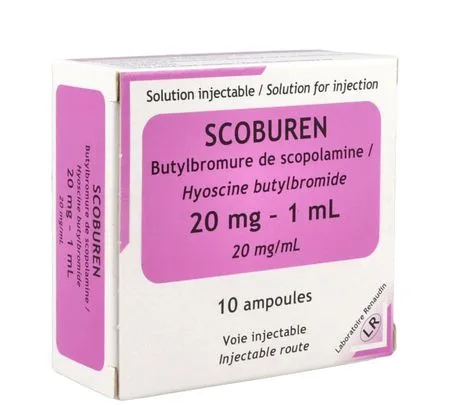
SCOBUREN 20 mg/ml, solution for injection in ampoule
Composition
Scopolamine butylbromide............................................................................................................................... 20 mg
For one ampoule of 1 mL.
Sodium chloride, water for injections.
Indications
- Symptomatic treatment of acute painful manifestations associated with functional disorders of the digestive tract and biliary tract.
- Symptomatic treatment of acute painful manifestations in gynecology.
- Palliative care treatment of intestinal obstruction.
Dosage and administration
Injectable route.
The product may be used by infusion and is compatible with the usual solutions.
Treatment of acute pain associated with functional disorders of the digestive tract, biliary tract and treatment of pain in gynecologyent of pain in gynecology :
Adults
1 ampoule by intravenous infusion.
The injection may be repeated during the day, by intravenous, intramuscular or subcutaneous route.
Children over 5 years
1/2 ampoule by intramuscular route.
In children under 5 years
1/4 of an ampoule by intramuscular route.
The injection may be repeated during the day by intramuscular route.
Palliative care treatment of intestinal obstruction :
The usual dosage is between 40 and 80 mg/day of scopolamine butylbromide for 3 days by continuous infusion (intravenous or subcutaneous); i.e. 2 to 4 ampoules distributed over 24 hours for 3 days.
The dosage will be adjusted according to the desired clinical effect and the patient's tolerance.
Contraindications
- Hypersensitivity to the active substance or to any of the excipients listed in section Composition.
- Risk of angle-closure glaucoma,
- Risk of urinary retention related to urethro-prostatic disorders.
This medication is generally not recommended (see section Fertility, pregnancy and breastfeeding) :
- during the last trimester of pregnancy,
- contraindicated during breastfeeding.
Warnings and precautions
Use with caution in cases of:
- prostatic hypertrophy,
- renal and/or hepatic insufficiency,
- coronary insufficiency, rhythm disorders, hyperthyroidism,
- chronic bronchitis due to increased viscosity of bronchial secretions,
- paralytic ileus, intestinal atony in the elderly, toxic megacolon.
Interactions
Associations to be taken into account
+ Atropine and other atropine-like substances
Imipramine-type antidepressants, most H antihistamines1anticholinergic antiparkinsonian agents, atropine-like antispasmodics, disopyramide (class Ia antiarrhythmic), phenothiazine neuroleptics.
Additive atropine-like undesirable effects such as urinary retention, constipation, dry mouth, etc.
Fertility, pregnancy and breastfeeding
Pregnancy
At very high doses, a study conducted in rabbits showed a slightly embryotoxic effect.
In clinical use, no malformative effect has appeared to date. However, follow-up of pregnancies exposed to this medication is insufficient to exclude any risk.
In newborns of mothers treated long-term with high doses of medications with anticholinergic properties, digestive signs linked to atropine-like properties (abdominal distension, meconium ileus...) have rarely been described.
Consequently, it seems reasonable to try to limit doses and prescription durations during pregnancy.
In case of prolonged treatment and/or high doses and/or near term, it seems justified to observe a period of monitoring of the newborn's digestive function.
Breast-feeding
This medication is not recommended for women who are breastfeeding due to the decrease in milk secretion and the passage of atropine derivatives into milk (risk of atropine-like effects in the infant at therapeutic doses).
Driving and using machines
Warn drivers of vehicles and operators of machinery of the risk linked to accommodation disorders.
Adverse effects
- Dry mouth.
- Thickening of bronchial secretions.
- Decrease in lacrimal secretion.
- Accommodation disorders.
- Tachycardia, palpitations.
- Constipation.
- Urinary retention.
- Excitability.
- Irritability.
- Mental confusion in elderly people.
Reporting of suspected adverse reactions
Reporting suspected adverse reactions after authorisation of the medicinal product is important. It allows continued monitoring of the benefit/risk balance of the medicinal product. Healthcare professionals are asked to report any suspected adverse reactions via the national reporting system: National Agency for the Safety of Medicines and Health Products (ANSM) and the network of Regional Pharmacovigilance Centres - Website:www.signalement-sante.gouv.fr.
Overdose
Clinical signs
CThese are those of anticholinergics with dry mouth, mydriasis, paralysis of accommodation, cessation of secretions and especially: tachycardia, agitation, confusion and hallucinations extending to delirium, respiratory depression.
Treatment
Symptomatic treatment with cardiac and respiratory monitoring, in a hospital setting.
Pharmacodynamics
Pharmacotherapeutic class: ANTISPASMODIC ANTICHOLINERGIC (A: Alimentary tract and metabolism), ATC code: A03BB01
INCOMPATIBILITIES
In the absence of compatibility studies, this medicinal product must not be mixed with other medicinal products.
SPECIAL PRECAUTIONS FOR DISPOSAL AND OTHER HANDLING
No special requirements.
Any unused medicinal product or waste material should be disposed of in accordance with local requirements.
Prescription, supply and reimbursement
| Marketing authorisation (AMM) |
|
| Price: |
|
- Palliative care: intestinal obstruction
Collection.
ZONE ARTISANALE ERROBI
64250 ITXASSOU
Tel: 05 59 29 74 90 https://www.societe.com
Source: VIDAL · Updated on 11/11/2026. This information does not replace advice from a healthcare professional.