
Medicines
SmPC of 04/08/2023
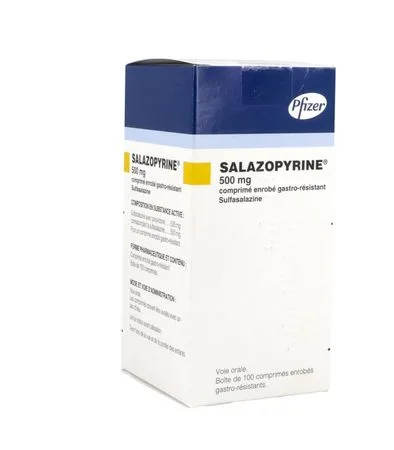
SALAZOPYRINE 500 mg, gastro-resistant coated tablet.
Composition
Sulfasalazine with polyvidone.............................................................................................................................. 535 mg
corresponding to sulfasalazine............................................................................................................................... 500 mg
For one gastro-resistant coated tablet
Excipient with known effect:
SALAZOPYRINE 500 mg, gastro-resistant coated tablet contains 5 mg of propylene glycol per tablet.
Anhydrous colloidal silica, magnesium stearate, pregelatinised maize starch q.s. for one core.
Coating: cellulose acetophthalate, propylene glycol (E1520), white beeswax, carnauba wax, self-emulsifying glycerol monostearate, Macrogol 20 000, talc.
Indications
In gastroenterology :
• Ulcerative colitis: induction treatment of flare-ups and prevention of relapses.
• Crohn's disease in its colonic localisation.
In rheumatology :
Rheumatoid arthritis.
Dosage and administration
Dosage
In adults (including the elderly)
In gastroenterology
• Induction treatment: 4 to 6 g per day, i.e. 8 to 12 tablets per day in 3 or 6 doses, regularly spaced.
• In slow acetylators, it is advised to reach this dose only over 2 or 3 days.
• Maintenance treatment: 4 tablets per day in 2 doses.
In rheumatology
• 2 g/day, i.e. 4 tablets per day. This dosage will be reached after 4 weeks by weekly increments of 0,5 g (1 tablet).
In children (over 6 years)
• Induction treatment: 100 to 150 mg/kg/day.
• Maintenance treatment: 50 to 75 mg/kg/day.
A study of whether the child is a slow or rapid acetylator should allow the dosage to be adjusted.
Method of administration
Oral use.
The tablets should be swallowed whole with a little water, preferably after meals, and must be neither broken nor crushed.
Contraindications
• Hypersensitivity to the active substance, its metabolites, sulfonamides, salicylates or any of the excipients mentioned in section Composition.
• G6PD deficiency: risk of triggering haemolysis.
• Premature infants and newborns due to the immaturity of their enzyme systems.
• Acute intermittent porphyria and porphyria variegata.
Warnings and precautions
• Serious infections associated with myelosuppression, including septicaemia and pneumonia, have been reported. Patients who develop a new infection during treatment with sulfasalazine should be closely monitored. Administration of sulfasalazine must be interrupted if the patient develops a serious infection. Caution is required when using sulfasalazine in patients with a history of recurrent or chronic infections or underlying conditions likely to predispose them to infections.
• Regarding liver damage and hypersensitivity reactions, there is a possibility of cross-reactivity between mesalazine and sulfasalazine.
• Sulfasalazine should be administered with caution and with particular monitoring in patients with severe hepatic impairment or severe renal impairment.
• A biological check of the blood count (with platelet count) and liver enzymes is recommended before starting treatment, then every two weeks during the first three months of treatment. During the second trimester of treatment, this check should be performed monthly, then every 3 months or when clinical signs appear.
• Renal function will be checked regularly (serum creatinine, proteinuria).
• It is necessary to ensure an adequate fluid intake.
• Skin or mucosal manifestations require immediate discontinuation of treatment.
• In case of exacerbation of disease symptoms, the benefit/risk ratio must be reassessed.
• The appearance of clinical signs such as sore throat, fever, pallor, purpura or jaundice during treatment with sulfasalazine may suggest myelosuppression, haemolysis or hepatotoxicity. Treatment should be stopped pending blood test results. See section Warnings and precautions "Interference with laboratory tests".
• Oral sulfasalazine inhibits the absorption and metabolism of folic acid (see section Fertility, pregnancy and breastfeeding) and may therefore lead to folic acid deficiency, resulting in serious blood disorders (for example macrocytosis or pancytopenia).
• Sulfasalazine should be prescribed with caution in patients with severe allergy or bronchial asthma.
• Organs may be affected by severe hypersensitivity reactions, such as hepatitis, nephritis, myocarditis, a mononucleosis-like syndrome (i.e. pseudomononucleosis), haematological abnormalities (including haemophagocytic histiocytosis) and/or pneumonia with eosinophilic infiltration.
• Life-threatening severe systemic hypersensitivity reactions such as drug reaction with eosinophilia and systemic symptoms (DRESS) have been reported in patients taking various medicines including sulfasalazine. It is important to note that early manifestations of hypersensitivity, such as fever or lymphadenopathy, may be present even when a skin rash is not evident. In the presence of these signs or symptoms, the patient must be evaluated immediately. Sulfasalazine should be discontinued if no other cause can be found for the signs or symptoms.
• Serious skin reactions, some fatal, including exfoliative dermatitis, Stevens-Johnson syndrome and toxic epidermal necrolysis (Lyell's syndrome), have been reported in very rare cases in association with the use of sulfasalazine. Patients appear to be most at risk of these reactions early in treatment, with onset of these events generally occurring during the first month of treatment. Sulfasalazine should be discontinued at the first sign of rash, mucosal lesions or any other sign of hypersensitivity.
• Use in children with systemic-onset juvenile rheumatoid arthritis may cause a serum sickness-type reaction; therefore sulfasalazine is not recommended in these patients.
• Abnormal discolouration of soft contact lenses has been observed.
Interference with laboratory tests
Several reports of potential interference with liquid chromatography measurements of urinary normetanephrines, leading to false-positive test results, have been observed in patients exposed to sulfasalazine or its metabolite, mesalamine/mesalazine.
Sulfasalazine or its metabolites may interfere with ultraviolet absorbance, particularly at 340 nm, and may cause interference with certain laboratory assays that use NAD(H) or NADP(H) to measure ultraviolet absorbance at this wavelength. Examples of such assays include: urea, ammonia, LDH, α-HBDH and glucose. Alanine aminotransferase (ALT), aspartate aminotransferase (AST), creatine kinase muscle/brain (CK-MB), glutamate dehydrogenase (GLDH) or thyroxine may also be subject to interference when sulfasalazine treatment is given at high doses. Consult your analytical laboratory for the methodology used. For patients receiving sulfasalazine, these laboratory results should be interpreted with caution. Results should be interpreted together with clinical findings.
Excipients
SALAZOPYRINE 500 mg, gastro-resistant coated tablet contains propylene glycol (see section 2). Examples of propylene glycol exposure based on daily doses are given below (see section Dosage and administration) :
• 16 SALAZOPYRINE 500 mg tablets administered to an adult weighing 70 kg would result in a propylene glycol exposure of 1,14 mg/kg/day.
• 6 SALAZOPYRINE 500 mg tablets administered to a child aged 6 years weighing 20 kg would result in a propylene glycol exposure of 1,50 mg/kg/day.
Interactions
Cases of myelosuppression and leukopenia have been reported when the thiopurine 6-mercaptopurine or its prodrug, azathioprine, were administered concomitantly with oral sulfasalazine, due to inhibition of thiopurine methyltransferase by sulfasalazine.
Co-administration of oral sulfasalazine and methotrexate to patients with rheumatoid arthritis did not modify the pharmacokinetic properties of these molecules. However, an increase in the incidence of gastrointestinal adverse effects, particularly nausea, has been reported.
Associations not recommended
+ Tedizolid
Risk of increased plasma concentrations of sulfasalazine, through increased absorption, with oral tedizolid.
Associations requiring precautions for use
+ Digoxin
Decrease in digoxinemia that may reach 50 %.
Clinical monitoring, ECG and, if appropriate, digoxinemia. If necessary, adjustment of the digoxin dosage during treatment with sulfasalazine and after its discontinuation.
+ Ponatinib
Risk of increased plasma concentrations of sulfasalazine through increased intestinal absorption by ponatinib.
Close clinical and biological monitoring during the combination.
Associations to be taken into account
+ Antipurines (azathioprine, mercaptopurine)
Risk of increased myelosuppressive effect of the immunomodulator by inhibition of its hepatic metabolism by the ASA derivative, particularly in subjects with partial thiopurine methyltransferase (TPMT) deficiency.
Fertility, pregnancy and breastfeeding
Pregnancy
Animal studies have not shown any teratogenic effect. In the absence of a teratogenic effect in animals, a malformative effect in humans is not expected. Indeed, to date, substances responsible for malformations in humans have been shown to be teratogenic in animals in well-conducted studies in two species.
Oral sulfasalazine inhibits the absorption and metabolism of folic acid and may therefore lead to folic acid deficiencies (see section Warnings and precautions). Cases of babies born with neural tube defects have been reported following maternal exposure to sulfasalazine during pregnancy, although the role of sulfasalazine in these malformations has not been established. As the risk of malformation cannot be fully excluded, sulfasalazine should be used during pregnancy only when absolutely necessary.
If a high dosage is required, fetal renal ultrasound monitoring is advised. Indeed, although no case has been reported with sulfasalazine itself, one case of fetal renal parenchymal involvement (with hyperechogenicity of the fetal kidneys) and renal insufficiency at birth has been described with 4 g/day orally of mesalazine alone, in the 2 trimester of pregnancy.
No neonatal jaundice has been reported to date with the administration of sulfasalazine up to delivery.
In case of fetal G6PD deficiency, a risk of haemolysis related to the presence of sulfapyridine is to be feared (see section Contraindications).
Breast-feeding
Sulfasalazine is poorly excreted in breast milk, unlike sulfapyridine, which is found at non-negligible concentrations in milk.
Due to the presence of the sulfonamide in breast milk:
• breastfeeding is contraindicated if the mother or the child has a G6PD deficiency, in order to prevent the occurrence of haemolysis.
• with long-half-life sulfonamides, kernicterus has been reported in newborns. Consequently, breastfeeding is contraindicated when the newborn is less than one month old.
Cases of bloody stools and diarrhoea have been reported in breastfed infants during maternal treatment with sulfasalazine. In this case, breastfeeding (or the medicine) should be interrupted to allow these symptoms to resolve.
Driving and using machines
The effects on the ability to drive vehicles and use machines have not been studied.
Adverse effects
|
System organ class |
Frequency |
Adverse reaction |
|
Infections and infestations |
Frequency not known |
aseptic meningitis, pseudomembranous colitis |
|
Blood and lymphatic system disorders |
Common |
leukopenia |
|
Uncommon |
thrombocytopenia† |
|
|
Frequency not known |
pancytopenia, agranulocytosis, bone marrow aplasia, pseudomononucleosis*†, hemolytic anemia, macrocytosis, megaloblastic anemia, hypereosinophilia, atypical lymphocytosis |
|
|
Immune system disorders |
Frequency not known |
anaphylaxis*, serum sickness, adenopathy |
|
Metabolism and nutrition disorders |
Common |
loss of appetite |
|
Frequency not known |
folate deficiency*† |
|
|
Psychiatric disorders |
Uncommon |
depression |
|
Nervous system disorders |
Common |
dizziness, headache, taste disorders |
|
Frequency not known |
encephalopathy, peripheral neuropathy, olfactory disorders |
|
|
Ear and labyrinth disorders |
Common |
tinnitus |
|
Cardiac disorders |
Frequency not known |
myocarditis*†, pericarditis, cyanosis |
|
Vascular disorders |
Frequency not known |
pallor*† |
|
Respiratory, thoracic and mediastinal disorders |
Common |
cough |
|
Uncommon |
dyspnoea |
|
|
Frequency not known |
interstitial pneumonia*, eosinophilic infiltrate, alveolar fibrosis, interstitial lung disease, oropharyngeal pain |
|
|
Gastrointestinal disorders |
Very common |
dyspepsia, nausea |
|
Common |
abdominal pain, diarrhoea*, vomiting* |
|
|
Frequency not known |
worsening of ulcerative colitis*,, pancreatitis, worsening of haemorrhagic proctocolitis, gastric pain, gastric disorders |
|
|
Hepatobiliary disorders |
Uncommon |
jaundice*† |
|
Frequency not known |
hepatic failure*, fulminant hepatitis*, hepatitis**, cholestatic hepatitis*, cholestasis* |
|
|
Skin and subcutaneous tissue disorders |
Common |
purpura*†, pruritus |
|
Uncommon |
alopecia, urticaria |
|
|
Frequency not known |
drug hypersensitivity syndrome (drug rash with eosinophilia and systemic symptoms - DRESS)*†, toxic epidermal necrolysis (Lyell syndrome)†, Stevens-Johnson syndrome†, exanthema, exfoliative dermatitis†, Quincke's oedema*, acute generalised exanthematous pustulosis, lichen planus, photosensitivity, erythema, skin rash. discolouration of the skin and body fluids, pustular toxicoderma, facial oedema, toxic pustular dermatosis |
|
|
Musculoskeletal and systemic disorders |
Common |
arthralgia |
|
Frequency not known |
disseminated lupus erythematosus, Sjögren's syndrome, myalgia |
|
|
Renal and urinary disorders |
Common |
proteinuria |
|
Frequency not known |
nephrotic syndrome, tubulointerstitial nephritis, nephrolithiasis*, haematuria, crystalluria† |
|
|
Disorders of the reproductive system and breast |
Frequency not known |
reversible oligoasthenospermia† |
|
General disorders and administration site conditions |
Common |
fever† |
|
Uncommon |
facial oedema |
|
|
Frequency not known |
yellow discolouration of the skin and body fluids* |
|
|
Investigations |
Uncommon |
increased liver enzymes |
|
Frequency not known |
induction of auto-antibodies |
|
|
Frequency categories: very common ≥ 1/10; common (≥ 1/100 to < 1/10); uncommon ( ≥ 1/1 000 to < 1/100); uncommon ( ≥ 1/10 000 to < 1/1 000); rare (< 1/10 000); frequency not known (cannot be estimated from the available data) * AEs identified after marketing †see section Warnings and precautions |
||
Reporting of suspected adverse reactions
Reporting suspected adverse reactions after authorisation of the medicinal product is important. It allows continued monitoring of the benefit/risk balance of the medicinal product. Healthcare professionals are asked to report any suspected adverse reaction via the national reporting system: National Agency for the Safety of Medicines and Health Products (ANSM) and the network of Regional Centres of Pharmacovigilance - Website: https://signalement.social-sante.gouv.fr/
Overdose
The main symptoms of overdose, common to other sulfonamides, are nausea and vomiting. Patients with renal impairment are at increased risk of serious toxicity. Treatment is symptomatic and should be adapted, including with urinary alkalinisation.
The development of methaemoglobinaemia or sulfhaemoglobinaemia should be monitored in patients. If this occurs, treat appropriately.
Pharmacodynamics
Pharmacotherapeutic class: intestinal anti-inflammatory agents, ATC code: A07EC02
It has been shown that patients with UC who are at highest risk of developing colorectal cancer are those with long-standing colitis (more than eight years of disease duration), extensive colitis lesions (reaching or extending beyond the left colon), associated primary sclerosing cholangitis, or a first-degree family history of colon cancer.
A meta-analysis of 9 observational studies (3 cohort studies and 6 case-control studies) including 334 cases of colorectal cancer and 140 cases of dysplasia, for a total of 1932 patients with UC, showed that the risk of colorectal cancer was approximately 50% lower in patients taking 5-aminosalicylic acid (5-ASA) regularly than in those taking 5-ASA irregularly or not taking it.
The reduction in colorectal cancer risk with 5-ASA, if confirmed, would involve both mechanisms related to the anti-inflammatory properties and the intrinsic antitumour properties of the molecule.
Pharmacokinetics
After oral ingestion, sulfasalazine is only partially absorbed during its passage through the small intestine (approximately 1/3 of the administered dose), so that it largely reaches the colon, where it is acted upon by intestinal bacteria. These are capable of cleaving the azo bond and releasing:
• on the one hand, 5 aminosalicylic acid, which is partially absorbed and then eliminated in the faeces,
• on the other hand, sulfapyridine, which, on the contrary, is almost completely absorbed by the colon. It is metabolised in the liver, where it undergoes in particular acetylation, and is then eliminated in the urine.
Prescription, supply and reimbursement
| Marketing authorisation (AMM) |
|
| Price: |
|
Collection.
23-25 DOCTOR LANNELONGUE AVENUE
75668 PARIS CEDEX 14
Tel: 01 58 07 30 00 Toll-free tel: 07 88 77 30 29
https://www.pfizer.fr/
Source: VIDAL · Updated on 11/11/2026. This information does not replace advice from a healthcare professional.