
Medicines
SmPC of 11/09/2025
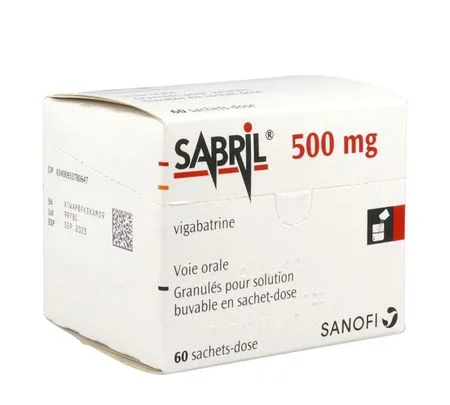
SABRIL 500 mg, granules for oral solution in sachet-dose
Indications
In combination with another antiepileptic treatment, treatment of drug-resistant partial epilepsies, with or without secondary generalisation, when all other appropriate therapeutic combinations have proven insufficient or poorly tolerated.
Monotherapy treatment of infantile spasms (West syndrome).
Dosage and administration
Treatment with SABRIL may only be initiated by a specialist in epileptology, neurology or paediatric neurology. Follow-up must be ensured under the supervision of a specialist in epileptology, neurology or paediatric neurology.
Dosage
SABRIL is intended for oral administration, in one or two daily doses before or after meals.
The contents of the sachet(s) must be dissolved in a drink (water, fruit juice or milk) immediately before administration.
If, after a well-conducted trial of treatment, vigabatrin does not produce a clinically significant improvement in the manifestations of epilepsy, treatment must be stopped. Vigabatrin treatment must be discontinued gradually under close medical supervision. A clinically significant improvement is usually observed within 2 to 4 weeks in patients with infantile spasms, and within 12 weeks in patients with refractory complex partial seizures.
In adults
Maximum efficacy is generally obtained with a daily dose between 2 and 3 g. Treatment is initiated at a daily dose of 1 g in addition to the patient's antiepileptic treatment. The daily dose should then be increased in steps of 0,5 g at weekly intervals depending on clinical response and tolerability. The maximum recommended dose is 3 g/day.
There is no correlation between plasma concentration and efficacy. The duration of action of the product depends on the rate of re-synthesis of GABA-transaminase and not on the plasma concentration of the product (see sections Pharmacodynamics and Pharmacokinetics).
Paediatric population:
Treatment of drug-resistant partial epilepsies:
The recommended initial dose in the newborn, the child and the adolescent is 40 mg/kg/day. Weight-based recommendations for maintenance treatment are as follows:
|
Body weight |
Dosage |
|
10-15 kg |
0,5-1 g/day |
|
15-30 kg |
1-1,5 g/day |
|
30-50 kg |
1,5-3 g/day |
|
> 50 kg |
2-3 g/day |
The maximum recommended dose for each body weight category must not be exceeded.
Monotherapy treatment of infantile spasms (West syndrome)
The recommended initial dose is 50 mg/kg/day. This dose may be reached by gradual increase over a period of one week, if necessary. Doses up to 150 mg/kg/day have been well tolerated.
In elderly patients and in patients with renal impairment
As vigabatrin is eliminated via the kidneys, special attention must be paid when administering it to elderly patients and, in particular, when creatinine clearance is below 60 ml/min. Adjustment of the dose or frequency of administration should be considered. These patients may respond to a lower maintenance dose. They must be closely monitored for possible undesirable effects such as sedation or confusion (see section Warnings and precautions and section Adverse effects).
Contraindications
- Hypersensitivity to vigabatrin or to any of the excipients mentioned in section Composition.
Warnings and precautions
With the exception of the treatment of infantile spasms, SABRIL must not be initiated as monotherapy.
|
Visual field abnormalities (VFA) have been reported with a high prevalence in patients treated with vigabatrin (approximately 1 patient in 3). The frequencies of visual field abnormalities, determined in an open-label clinical study, are presented in section Pharmacodynamics. These abnormalities generally occur after months or even years of treatment with vigabatrin. The degree of visual field constriction can be significant. Most patients with abnormalities confirmed by perimetry were asymptomatic. This adverse effect can therefore only be reliably detected by systematic performance of perimetry, which is generally only feasible in patients older than 9 years of mental age. For infants, children and patients unable to perform perimetry, electroretinography (ERG), optical coherence tomography (OCT) and/or other methods appropriate for the patient may be considered. |
|
Patients must undergo systematic screening examination when vigabatrin is initiated and at regular intervals for the detection of visual field abnormalities and reduction of visual acuity (see Visual field abnormalities (VFA)). |
|
A vision examination is recommended at the start of treatment (at the latest 4 weeks after the start of vigabatrin treatment), every 3 to 6 months during treatment and approximately 3 to 6 months following discontinuation of treatment. |
|
Available data suggest that visual field abnormalities are irreversible, including after discontinuation of vigabatrin treatment. A worsening of visual field abnormalities after discontinuation of treatment cannot be excluded. |
|
Vigabatrin should therefore only be used after a rigorous assessment of benefits and risks compared with the available therapeutic alternatives. |
|
Due to the risk of decreased vision, gradual discontinuation of treatment must be initiated immediately in the absence of significant improvement after an appropriate therapeutic trial. The patient's response and the need to continue vigabatrin treatment must be reassessed periodically. |
|
Vigabatrin is not recommended in patients with a pre-existing clinically significant visual field abnormality. |
Visual field abnormalities (VFA)
According to available data, visual field abnormalities generally take the form of bilateral concentric constriction of the visual field, which is usually more pronounced on the nasal than the temporal side. An annular nasal loss is frequently observed in the central visual field (within a limit of 30 degrees of eccentricity). The VFAs reported in patients treated with vigabatrin have, however, ranged from mild to severe in intensity. Severe cases may be characterised by tunnel vision. Cases of blindness have also been reported in severe cases.
Most patients who present with abnormalities confirmed by perimetry had not previously spontaneously noticed any symptoms, including in cases where a severe abnormality was revealed by perimetry. Available information appears to indicate that VFA is irreversible, including after discontinuation of vigabatrin treatment. A worsening of visual field abnormalities after discontinuation of treatment cannot be excluded.
Pooling of data from prevalence surveys suggests that one third of patients treated with vigabatrin have VFA. Men would be at higher risk than women. The frequencies of VFA, determined in an open-label clinical study, are presented in section Pharmacodynamics. A possible link between the risk of VFA and the extent of exposure to vigabatrin, in terms of daily dose (from 1 gram to more than 3 grams) and duration of treatment (maximum during the first 3 years) has been shown in this study.
Before starting treatment with vigabatrin, all patients must be referred to an ophthalmologist for a visual field examination.
Monitoring of vision by an ophthalmologist specialised in interpreting visual fields and capable of performing dilated indirect ophthalmoscopy of the retina is recommended. As vision examination is difficult in infants, a decrease in vision may not be detected until it is severe. For patients receiving vigabatrin, assessment of the visual field and/or retinal function is recommended at the start of treatment (at the latest 4 weeks after the start of vigabatrin treatment), every 3 to 6 months during treatment, and approximately 3 to 6 months following discontinuation of treatment. The diagnostic approach must be individualised according to the patient and the clinical situation.
In adults and cooperative paediatric patients, perimetry is recommended, preferably by automated threshold visual field testing. Additional tests may also include electrophysiology (for example, electroretinography [ERG]), retinal imaging (for example, optical coherence tomography [OCT]), and/or other methods appropriate for the patient.
In patients who cannot be tested, treatment may continue at the clinician's discretion, with appropriate advice given to the patient. Because of their variability, the results of ophthalmologic monitoring must be interpreted with caution, and reassessment is recommended if results are abnormal or uninterpretable. A reassessment during the first weeks of treatment is recommended to determine whether, and to what extent, reproducible results can be obtained, and to guide the choice of appropriate ongoing monitoring for the patient.
The patient and/or caregiver must receive complete information on the frequency and consequences of developing visual field constriction (VFC) during treatment with vigabatrin. Patients should be advised to report the onset of any new visual problem or symptom that may be associated with visual field constriction. If visual symptoms appear, the patient should be referred to an ophthalmologist.
If visual field constriction develops during follow-up, gradual discontinuation of vigabatrin treatment should be considered. If it is decided to continue treatment, more frequent monitoring (perimetry) should be considered in order to detect progression of the constriction or the occurrence of visual field defects.
Vigabatrin must not be administered concomitantly with other retinotoxic medicinal products.
Visual acuity
The prevalence of decreased visual acuity in patients treated with vigabatrin is unknown.
A retinal disorder, blurred vision, optic nerve atrophy or optic neuritis may lead to decreased visual acuity (see section Adverse effects).
Visual acuity should be assessed during ophthalmologic consultations before initiating treatment with vigabatrin and then every 6 months during treatment.
Neurological and psychiatric disorders
Given the results of safety studies conducted in animals (see section Preclinical safety), patients treated with vigabatrin must be closely monitored for possible neurological adverse reactions.
Rare cases of encephalopathy symptoms, such as marked sedation, stupor or confusion, associated with the non-specific presence of slow waves on the electroencephalogram, have been described shortly after the start of treatment with vigabatrin. Risk factors for the development of these reactions include administration of an initial dose higher than the recommended dose, dose increases that are faster and/or in larger steps than recommended, or the presence of renal impairment. These events have been shown to be reversible after dose reduction or discontinuation of vigabatrin (see section Adverse effects).
Cases of cerebral abnormalities have been reported on MRI, particularly in infants/young children treated for infantile spasms with high doses of vigabatrin. The clinical consequences of these abnormalities are not yet known. In addition, cases of intramyelinic oedema (IMO) have been reported, particularly in infants/young children treated for infantile spasms (see sections Adverse effects and Preclinical safety). IMO has been reported to be reversible on treatment discontinuation, and it is therefore recommended to gradually discontinue vigabatrin when IMO is observed.
Abnormal movements including dystonia, dyskinesia and hypertonia have been reported in patients treated for infantile spasms. The benefit/risk ratio of vigabatrin must be evaluated for each patient. If new abnormal movements appear during treatment with vigabatrin, a dose reduction or gradual discontinuation of treatment may be considered.
As with any antiepileptic, some patients taking vigabatrin may experience an increase in seizure frequency or the emergence of new seizure types (see section Adverse effects). These phenomena may also result from overdosage, a decrease in plasma concentrations of a concomitantly administered antiepileptic, or a paradoxical effect.
As with any antiepileptic, abrupt withdrawal of treatment may lead to rebound seizures. Where a patient must discontinue treatment with vigabatrin, it is recommended to gradually reduce the dose over a period of 2 to 4 weeks.
Vigabatrin should be used with caution in patients with a history of psychosis, depression or behavioural disorders. Psychiatric adverse reactions (e.g. agitation, depression, thought disorders, paranoid reactions) have been reported during treatment with vigabatrin. These effects have been observed in patients with or without a psychiatric history and have generally been reversible upon dose reduction of vigabatrin or gradual discontinuation of treatment.
Suicidal risk
Suicidal ideation and behaviour have been reported in patients treated with antiepileptics for several indications. A meta-analysis of randomised, placebo-controlled trials of antiepileptics also showed a slight increase in the risk of suicidal ideation and behaviour. The causes of this risk are not known, and the available data do not exclude the possibility of an increased risk for vigabatrin.
Consequently, patients must be closely monitored for any signs of suicidal ideation and behaviour and appropriate treatment must be considered. Patients (and their carers) should be advised to seek medical advice should signs of suicidal ideation and behaviour occur.
In elderly patients and in patients with renal impairment
As vigabatrin is eliminated renally, particular attention must be paid to patients with a creatinine clearance below 60 ml/min, as well as to elderly individuals. These patients should be specifically monitored for possible adverse reactions such as sedation or confusion (see section Dosage and administration).
Interactions to be taken into account
Concomitant use of vigabatrin and clonazepam may exacerbate sedative effects (see section Interactions). The need for the combination should be carefully evaluated.
Interactions
As vigabatrin is neither metabolised nor protein-bound, nor an inducer of hepatic cytochrome P450 enzymes responsible for drug metabolism, there is little risk of interaction with other medicinal products. However, a gradual reduction in plasma concentrations of phenytoin reaching 16 to 33 % has been reported in controlled clinical studies. The precise mechanism of this interaction is not known, and in the majority of cases the clinical consequence is unlikely.
Plasma concentrations of carbamazepine, phenobarbital and sodium valproate were also monitored during controlled clinical trials and no clinically significant interaction was observed.
Vigabatrin may cause a decrease in plasma levels of alanine aminotransferase (ALAT) and, to a lesser extent, of aspartate aminotransferase (ASAT). The decrease in ALAT ranged between 30 and 100 %. These liver tests may therefore not be quantitatively reliable in patients treated with vigabatrin (see section Adverse effects).
Vigabatrin may cause an increase in urinary amino acid levels, which may lead to false positives during screening tests for certain rare genetic metabolic disorders (e.g. alpha-aminoadipic aciduria).
Concomitant use of vigabatrin and clonazepam may exacerbate sedative effects (see section Warnings and precautions).
Fertility, pregnancy and breastfeeding
Pregnancy
Risks related to epilepsy and antiepileptic drugs in general
In children born to mothers treated with antiepileptic drugs, the prevalence of malformations is 2 to 3 times higher than in the general population. The most frequently reported malformations are cleft lip, cardiovascular malformations and neural tube defects. Treatment combining several antiepileptic drugs may be associated with a higher risk of congenital malformations than monotherapy; therefore, monotherapy should be used whenever possible.
Medical advice must be given to women who are starting a pregnancy or who are of childbearing potential. The need for antiepileptic treatment must be reassessed when a woman is considering pregnancy.
In case of pregnancy in women treated for epilepsy, abrupt discontinuation of antiepileptic treatment should be avoided, as this may lead to an increase in seizures that could have serious consequences for the woman and the foetus.
Risks related to vigabatrin
Data on exposure to vigabatrin during pregnancy, from spontaneous reports, have reported cases of abnormalities in children born to mothers treated with vigabatrin (congenital abnormalities or spontaneous abortions). Given the limited data available and the concomitant administration of other antiepileptic drugs during these pregnancies, it is not possible to conclude on any possible increased risk of malformations related to the administration of vigabatrin during pregnancy.
Studies performed in animals have demonstrated reproductive toxicity (see section Preclinical safety).
SABRIL must not be used during pregnancy, except in cases of absolute necessity.
Very little information is available regarding the possibility of a visual field defect occurring in children exposed in utero to vigabatrin.
Breast-feeding
Vigabatrin is excreted in breast milk. Information on the effects of vigabatrin on newborns and infants is insufficient. The decision either to discontinue breastfeeding or to discontinue/abstain from treatment with SABRIL must be made by considering the benefit of breastfeeding for the child against the benefit of treatment for the mother.
Fertility
Fertility studies in rats have shown no effect on male or female fertility (see section Preclinical safety).
Driving and using machines
As a general rule, patients whose epilepsy is not controlled are not able to drive or use potentially dangerous machinery. Given that cases of drowsiness have been observed during clinical trials with SABRIL, patients should be informed of this risk when treatment is started.
Visual field defects likely to significantly affect the ability to drive vehicles or use machinery have frequently been reported in association with SABRIL. Patients should be examined to screen for possible visual field defects (see section Warnings and precautions). Patients who drive, use machinery or carry out hazardous tasks should be particularly cautious.
Adverse effects
Summary of safety data
Visual field defects of mild to severe intensity have frequently been reported in patients treated with vigabatrin. Severe cases are potentially disabling. These defects generally appear after a few months or years of treatment with vigabatrin. Pooled data from prevalence surveys suggest that one third of patients treated with vigabatrin have visual field defects (see section Warnings and precautions).
In controlled clinical studies, approximately 50 % of patients experienced adverse effects during treatment with vigabatrin. In adults, the main adverse effects are related to the central nervous system, such as sedation, drowsiness, fatigue and impaired concentration. In children, on the other hand, cases of excitation or agitation are frequent. The incidence of these adverse effects is generally higher at the start of treatment and then decreases.
As with any antiepileptic, some patients treated with vigabatrin may experience an increase in seizure frequency, or even status epilepticus. Patients who have myoclonic seizures are particularly susceptible to this effect. De novo onset of myoclonus or worsening of pre-existing myoclonus has been observed in rare cases.
Summary table of adverse reactions
Adverse reactions are classified within each system organ class by frequency, using the following convention: very common (≥ 1/10); common (≥ 1/100 and < 1/10); uncommon (≥ 1/1 000 and < 1/100); rare (≥ 1/10 000 and < 1/1 000); very rare (< 1/10 000); frequency not known (cannot be estimated from the available data).
|
Very common |
Common |
Uncommon |
Rare |
Very rare |
Frequency not known |
|
|
Blood and lymphatic system disorders |
anaemia |
|||||
|
Psychiatric disorders* |
agitation, aggressiveness, nervousness, depression, paranoid reaction, insomnia |
hypomania, mania, psychotic disorders |
suicide attempt |
hallucinations |
||
|
Nervous system disorders |
somnolence |
speech disorders, headache, dizziness, paresthesia, attention and memory disorders, decreased mental abilities (ideation disorders), tremor |
coordination disorders (ataxia) |
encephalopathy** |
optic neuritis |
cases of brain abnormalities have been reported on MRI, intramyelinic edema (particularly in infants/young children) (see sections Warnings and precautions and Preclinical safety).
|
|
Eye disorders |
visual field abnormalities |
blurred vision, double vision, nystagmus |
retinal disorders (mainly peripheral) |
optic nerve atrophy |
reduced visual acuity. |
|
|
Gastrointestinal disorders |
nausea, vomiting, abdominal pain |
|||||
|
Hepatobiliary disorders |
hepatitis |
|||||
|
Skin and subcutaneous tissue disorders |
alopecia |
eruption |
Quincke's edema, urticaria |
|||
|
Musculoskeletal and systemic disorders |
arthralgia |
|||||
|
General disorders and administration site conditions |
fatigue |
oedema, irritability |
||||
|
Investigations*** |
weight gain |
* Psychiatric reactions have been reported under treatment with vigabatrin. These reactions have been observed in patients with or without psychiatric history and have generally been reversible upon dose reduction or gradual discontinuation of treatment (see section Warnings and precautions). Depression is a psychiatric reaction that has been frequently observed during clinical trials, but has only rarely required discontinuation of treatment with vigabatrin.
** Rare cases of encephalopathy symptoms, such as marked sedation, stupor or confusion, associated with the non-specific presence of slow waves on the electroencephalogram, have been described shortly after the start of treatment with vigabatrin. These reactions proved to be completely reversible after dose reduction or discontinuation of vigabatrin (see section Warnings and precautions).
*** Laboratory test results indicate that treatment with vigabatrin does not cause nephrotoxicity. Decreases in ALT and AST, considered to be the result of inhibition of these aminotransferases by vigabatrin, have been observed.
Paediatric population
Psychiatric disorders
- Very common: excitation, agitation.
Reporting of suspected adverse reactions
Reporting suspected adverse reactions after authorisation of the medicinal product is important. It allows continued monitoring of the benefit/risk balance of the medicinal product. Healthcare professionals are asked to report any suspected adverse reactions via the national reporting system: National Agency for the Safety of Medicines and Health Products (ANSM) and the network of Regional Pharmacovigilance Centres - Website: https://signalement.social-sante.gouv.fr/.
Overdose
Symptoms
Cases of vigabatrin overdose have been reported. When known, the doses were most often between 7,5 and 30 g, but overdoses reaching 90 g have also been reported. In nearly half of the cases, these were multiple drug ingestions. The most frequently reported symptoms were drowsiness or coma. Other symptoms were reported less frequently, including dizziness, headache, psychosis, respiratory depression or apnoea, bradycardia, arterial hypotension, agitation, irritability, confusion, behavioural disorders, and speech disorders. None of the overdose cases had a fatal outcome.
Management
There is no specific antidote. The usual symptomatic measures should be taken. Measures to eliminate the product not yet absorbed should be considered. In one study in vitro activated charcoal did not significantly adsorb vigabatrin. The efficacy of haemodialysis in the treatment of vigabatrin overdose is not known. In isolated cases in renally impaired patients treated with therapeutic doses of vigabatrin, haemodialysis reduced plasma vigabatrin concentrations by 40 to 60 %.
Pharmacodynamics
Pharmacotherapeutic class: Antiepileptic, ATC code: N03AG04.
(N: central nervous system).
Mechanism of action
Vigabatrin is an antiepileptic whose mechanism of action is clearly defined. Treatment with vigabatrin leads to an increase in the concentration of GABA (gamma-aminobutyric acid), the main inhibitory cerebral neurotransmitter. Vigabatrin is a selective irreversible inhibitor of GABA-transaminase, the enzyme responsible for the catabolism of GABA.
Clinical efficacy and safety
Controlled, long-term clinical trials have shown that vigabatrin is an effective anticonvulsant when administered as adjunctive therapy in epileptic patients inadequately controlled by conventional treatments. The efficacy of vigabatrin is particularly marked in patients with partial epilepsy.
The epidemiology of visual field abnormalities in patients with refractory partial epilepsy was examined in an open, multicentre, comparative, parallel-group, observational phase IV study including 734 patients, aged at least 8 years, with refractory partial epilepsy for at least one year.
Patients were divided into 3 treatment groups: patients receiving treatment with vigabatrin (group I), patients previously treated with vigabatrin (group II), and patients who had never been treated with vigabatrin (group III).
The following table presents the main results at inclusion, at the first and at the last assessment in the population in which assessment was feasible (n = 524).
|
Children (from 8 to 12 years) |
Adults (> 12 years) |
|||||
|
Group I1 |
Group II2 |
Group III |
Group I3 |
Group II4 |
Group III |
|
|
N = 38 |
N = 47 |
N = 41 |
N = 150 |
N = 151 |
N = 97 |
|
|
Visual field abnormalities without identified etiology |
||||||
|
At inclusion |
1 (4,4 %) |
3 (8,8 %) |
2 (7,1 %) |
31 (34,1 %) |
20 (19,2 %) |
1 (1,4 %) |
|
At first conclusive assessment |
4 (10,5 %) |
6 (12,8 %) |
2 (4,9 %) |
59 (39,3 %) |
39 (25,8 %) |
4 (4,1 %) |
|
At last conclusive assessment |
10 (26,3 %) |
7 (14,9 %) |
3 (7,3 %) |
70 (46,7 %) |
47 (31,1 %) |
5 (5,2 %) |
1 Median treatment duration: 44,4 months; mean daily dose: 1,48 g.
2 Median treatment duration: 20,6 months; mean daily dose: 1,39 g.
3 Median treatment duration: 48,8 months; mean daily dose: 2,10 g.
4 Median treatment duration: 23,0 months; mean daily dose: 2,18 g.
Pharmacokinetics
Absorption
Vigabatrin is a water-soluble product whose digestive absorption is rapid and complete.
Food intake does not influence the absorption of vigabatrin. The time to reach maximum plasma concentration (Tmax) is approximately 1 hour.
Distribution
The product is distributed extensively, with an apparent volume of distribution slightly greater than that of total body water. Concentrations in plasma and in cerebrospinal fluid are proportional to the dose administered within the range of recommended dosages.
Biotransformation
Vigabatrin is not metabolized significantly. No metabolite has been identified in plasma.
Elimination
Vigabatrin is eliminated by renal excretion with a terminal elimination half-life between 5 and 8 hours. The oral clearance (Cl/F) is approximately 7 L/h (i.e. 0,10 L/h/kg). Approximately 70 % of the administered dose was recovered unchanged in urine 24 hours after a single oral dose.
Pharmacokinetic/pharmacodynamic relationships
There is no direct correlation between plasma concentration and efficacy. The duration of action of the product depends on the rate of re-synthesis of GABA-transaminase.
Paediatric population
The pharmacokinetic properties of vigabatrin were studied in groups of six neonates (aged 15 to 26 days), six infants (5 to 22 months) and six children (4,6 to 14,2 years) with refractory epilepsy. After administration of a single dose of 37-50 mg/kg of vigabatrin in oral solution, the Tmax was approximately 2,5 hours in neonates, 5,7 hours in infants and 5,5 hours in children. The mean Cl/F of the active S-enantiomer of vigabatrin in infants and children was 0,591 L/h/kg and 0,446 L/h/kg respectively.
Preclinical safety
Safety studies conducted in rats, mice, dogs and monkeys showed that vigabatrin has no significant adverse effects on the liver, kidney, lung, heart and digestive tract.
In the brain, microvacuolation was observed in the white matter of rats, mice and dogs at doses between 30 and 50 mg/kg/day. In monkeys, these lesions were minimal or questionable. This phenomenon is caused by detachment of the outer lamellar sheath of myelinated fibres, which is a characteristic change of intramyelinic oedema. In both rats and dogs, intramyelinic oedema was shown to be reversible upon cessation of vigabatrin treatment and, even when treatment was continued, histological regression was observed. In rodents, however, minor residual changes of the type of axonal swelling (eosinophilic spheroids) or mineralisation of peroxisomes were observed. In dogs, the results of an electrophysiological study indicate that intramyelinic oedema is associated with an increase in the latency of the sensory evoked potential, reversible upon cessation of treatment.
Vigabatrin-associated retinotoxicity was observed in albino rats, but not in pigmented rats, dogs or monkeys. The retinal changes in albino rats were characterised by focal or multifocal disorganisation of the outer nuclear layer with displacement of nuclei into the cone and rod cell zone. The other layers of the retina were not affected. These lesions were observed in 80 to 100 % of animals at the oral dose of 300 mg/kg/day. The histological appearance of these lesions was found to be comparable to that of lesions seen in albino rats after excessive light exposure. The retinal changes could, however, also result from a direct effect of the product.
Animal studies have shown that vigabatrin has no deleterious effect on fertility and offspring development. No teratogenic effect was observed in rats treated with doses up to 150 mg/kg (3 times the human dose) and in rabbits treated with doses up to 100 mg/kg. In rabbits, however, a slight increase in the incidence of palatine clefts was observed at doses between 150 and 200 mg/kg.
Studies on vigabatrin have not revealed any mutagenic or carcinogenic effect.
SPECIAL PRECAUTIONS FOR DISPOSAL AND OTHER HANDLING
No special requirements.
The contents of the sachet(s) must be dissolved in at least 100 ml of water, fruit juice or milk, just before administration. After dissolution in water, the solution is clear and yellow.
Prescription, supply and reimbursement
Medicine requiring particular monitoring during treatment.
Initial prescription reserved for neurologists, paediatricians or neuropsychiatrists.
| Marketing authorisation (AMM) |
|
| Price: |
|
Collection.
Sanofi Winthrop Industrie
82, av Raspail. 94250 Gentilly
Medical information, Pharmacovigilance, Quality complaints, Quality of information and Medical visit ethics:
Medical Information website:
https://www.sanofimedicalinformation.com/s/?language=fr&CN=FR
Source: VIDAL · Updated on 11/11/2026. This information does not replace advice from a healthcare professional.