
Medicines
SmPC of the 14/11/2022
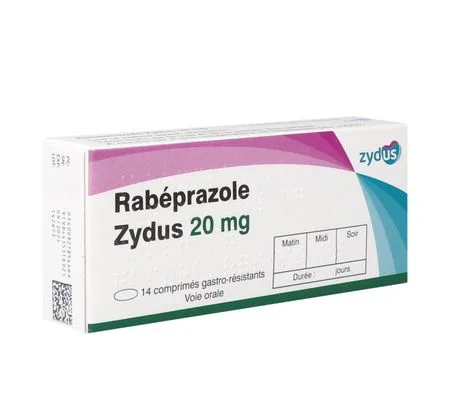
RABEPRAZOLE ZYDUS 20 mg, gastro-resistant tablet
Composition
Rabeprazole sodium..............................................................................................................................20,00 mg
Quantity corresponding to rabeprazole base.......................................................................................18,85 mg
For a gastro-resistant tablet.
For the full list of excipients, see section Composition.
Core: Mannitol, magnesium oxide, low-substituted hydroxypropylcellulose, povidone, magnesium stearate.
Coating: Ethylcellulose, magnesium oxide.
Gastro-resistant coating: Methacrylic acid and ethyl acrylate copolymer, propylene glycol, talc, titanium dioxide (E171), yellow iron oxide (E172).
Indications
RABEPRAZOLE ZYDUS is indicated for the treatment of:
- active duodenal ulcer,
- active benign gastric ulcer,
- symptomatic erosive or ulcerative oesophagitis due to gastro-oesophageal reflux,
- maintenance of oesophagitis due to gastro-oesophageal reflux,
- symptomatic gastro-oesophageal reflux from moderate to very severe,
- Zollinger-Ellison syndrome,
- eradication of Helicobacter pylori (H. pylori) in case of gastroduodenal ulcer disease, in combination with appropriate antibiotic therapy. See section Dosage and administration.
Dosage and administration
Adult - Elderly
Active duodenal ulcer, active benign gastric ulcer:
The recommended daily dose for the treatment of active duodenal ulcer or benign active gastric ulcer is 20 mg per day, as a single dose, in the morning.
Healing is achieved in most patients with active duodenal ulcer within a maximum of 4 weeks of treatment. However, in a small number of patients it may be necessary to continue treatment for a further 4 weeks to achieve complete healing. Healing is achieved in most patients with benign active gastric ulcer within 6 weeks of treatment. However, in a small number of patients, it may be necessary to continue treatment for a further 6 weeks to achieve complete healing.
Erosive or ulcerative esophagitis due to gastro-esophageal reflux:
The recommended daily dose for the treatment of gastro-esophageal reflux esophagitis is 20 mg per day, as a single dose, in the morning for 4 to 8 weeks.
Maintenance treatment of erosive esophagitis due to gastro-esophageal reflux disease:
During long-term treatment, the maintenance dose is 20 or 10 mg per day, as a single dose, in the morning, depending on the patient's response.
Symptomatic treatment of moderate to very severe gastro-esophageal reflux disease:
10 mg once daily, as a single dose, in patients without oesophagitis. If symptoms persist after 4 weeks, further investigations should be carried out.
After resolution of symptoms, control of symptomatic relapses may be achieved by on-demand intake of RABEPRAZOLE ZYDUS 10 mg once daily as needed.
Eradication of Helicobacter pylori :
A drug combination is recommended for 7 days according to the following dosing regimen:
20 mg of RABEPRAZOLE ZYDUS 2 times daily combined with clarithromycin 500 mg 2 times daily and amoxicillin 1 g 2 times daily.
Treatment of Zollinger-Ellison syndrome:
The recommended initial dose is 60 mg of rabeprazole once a day. This may be increased to 120 mg per day depending on the patient's needs.
Single daily doses of 100 mg of rabeprazole may be administered. Daily doses of 120 mg may be divided into 2 doses of 60 mg. Treatment should be continued for as long as clinically necessary.
In indications where RABEPRAZOLE ZYDUS is administered as one intake per day, RABEPRAZOLE ZYDUS should be taken in the morning, before breakfast. Although neither the timing of intake nor food has an influence on the activity of rabeprazole sodium, this therapeutic regimen facilitates adherence.
IRenal and hepatic impairment
No dose adjustment is necessary in patients with renal or hepatic impairment.
See section Warnings and precautions for the use of RABEPRAZOLE ZYDUS in patients with severe hepatic impairment.
Child
The use of RABEPRAZOLE ZYDUS is not recommended in children, due to the absence of studies in these patients.
Method of administration
Patients must be advised that RABEPRAZOLE ZYDUS tablets must not be chewed or crushed but must be swallowed whole.
Contraindications
Hypersensitivity to the active substance or to any of the excipients listed in section Composition.
RABEPRAZOLE ZYDUS is contraindicated during pregnancy and breastfeeding (see section Fertility, pregnancy and breastfeeding).
Warnings and precautions
An improvement in symptoms during treatment with rabeprazole sodium does not exclude the presence of a malignant condition of the oesophagus or stomach; consequently, any possibility of malignancy of the lesions must be ruled out before starting treatment with RABEPRAZOLE ZYDUS.
Regular monitoring should be carried out during long-term treatment (particularly in patients treated for more than one year).
A cross-hypersensitivity reaction with other proton pump inhibitors (PPIs) or benzimidazole derivatives cannot be excluded.
Patients must be advised that RABEPRAZOLE ZYDUS tablets must not be chewed or crushed but must be swallowed whole.
The use of RABEPRAZOLE ZYDUS is not recommended in children, in the absence of studies in these patients.
Blood abnormalities (thrombocytopenia and neutropenia) have been reported since marketing. In most cases where no aetiology was identified, these abnormalities were uncomplicated and normalised on discontinuation of rabeprazole treatment.
Liver enzyme abnormalities have been observed in clinical trials and reported since marketing. In most cases where no other aetiology was identified, these increases were uncomplicated and normalised on discontinuation of rabeprazole treatment.
Studies in patients with mild to moderate hepatic impairment did not reveal any significant drug-related adverse effects compared with healthy subjects of the same age and sex. However, in the absence of clinical data on the use of RABEPRAZOLE ZYDUS in patients with severe hepatic impairment, the prescriber must ensure particular monitoring when initiating treatment with RABEPRAZOLE ZYDUS in these patients.
Co-administration of RABEPRAZOLE ZYDUS with atazanavir is not recommended (see section Interactions).
It is possible that treatment with PPIs, including RABEPRAZOLE ZYDUS, increases the risk of gastrointestinal infections caused by bacteria such as Salmonella, Campylobacter and Clostridium difficile (see section Pharmacodynamics).
PPIs, particularly if used at high doses and over a prolonged period (> 1 year), may moderately increase the risk of hip, wrist and vertebral fractures, mainly in elderly patients or in the presence of other identified risk factors. Observational studies suggest that PPIs may increase the overall risk of fracture by 10 to 40 %. This increase may be partly due to other risk factors. Patients at risk of osteoporosis should be managed in accordance with current clinical guidelines and receive an adequate intake of vitamin D and calcium.
Cases of severe hypomagnesaemia have been reported in patients treated with PPIs such as RABEPRAZOLE ZYDUS for at least 3 months, and in most cases for one year. Hypomagnesaemia may manifest with serious clinical signs such as fatigue, tetany, delirium, convulsions, dizziness, ventricular arrhythmia, but it may begin insidiously and go unnoticed. In most patients, hypomagnesaemia improved after magnesium supplementation and discontinuation of the PPI.
In patients requiring prolonged treatment or when PPIs are combined with digoxin or with treatments that may induce hypomagnesaemia (for example diuretics), measurement of blood magnesium levels should be considered by healthcare professionals before starting PPI treatment and then periodically during treatment.
Concomitant use of rabeprazole and methotrexate
Literature data suggest that concomitant use of PPIs and methotrexate (especially at high doses; refer to the methotrexate product information) may increase and prolong plasma levels of methotrexate and/or its metabolite, and lead to methotrexate-associated toxicity. When methotrexate is administered at high doses, a temporary interruption of the PPI may be considered in some patients.
Influence on the absorption of vitamin B12
Rabeprazole sodium, like all antacids, may decrease the absorption of vitamin B12 (cyanocobalamin) due to hypo- or achlorhydria. This should be taken into account in patients undergoing long-term treatment who have reduced vitamin B12 stores or risk factors for decreased vitamin B12 absorption, or when corresponding clinical symptoms are observed.
Subacute cutaneous lupus erythematosus (SCLE)
PPIs are associated with very rare cases of SCLE. If lesions develop, particularly on sun-exposed skin areas, and if they are accompanied by arthralgia, the patient should consult a doctor promptly and the healthcare professional should consider discontinuing RABEPRAZOLE ZYDUS. The occurrence of SCLE following PPI treatment may increase the risk of SCLE with other PPIs.
Interference with laboratory tests
An increase in Chromogranin A (CgA) levels may interfere with tests performed to investigate neuroendocrine tumours. To avoid this interference, treatment with RABEPRAZOLE ZYDUS should be interrupted at least 5 days before measuring CgA levels (see section Pharmacodynamics). If CgA and gastrin levels have not normalised after the initial measurement, measurements should be repeated 14 days after discontinuation of PPI treatment.
Renal impairment
Acute tubulo-interstitial nephritis (TIN) has been observed in patients taking rabeprazole. This adverse effect may occur at any time during the rabeprazole treatment period (see section Adverse effects). Acute tubulo-interstitial nephritis may progress to renal failure.
Rabeprazole must be discontinued if TIN is suspected, and appropriate treatment must be promptly initiated.
Interactions
Rabeprazole sodium produces a strong and sustained inhibition of gastric acid secretion. An interaction with products whose absorption is dependent on gastric pH may occur. Concomitant administration of rabeprazole sodium with ketoconazole or itraconazole may lead to a significant decrease in the plasma levels of these antifungals. Therefore, patient monitoring may be necessary when ketoconazole or itraconazole is used concomitantly.
In clinical studies, antacids were used concomitantly with RABEPRAZOLE ZYDUS and a specific study showed no interaction with antacids in solution.
Atazanavir 300 mg and ritonavir 100 mg administered in combination with omeprazole (40 mg once daily) or atazanavir 400 mg with lansoprazole (60 mg daily), in healthy volunteers, resulted in a marked decrease in atazanavir exposure. Absorption of atazanavir is pH-dependent. Although not studied, similar results are expected with other PPIs. PPIs, including rabeprazole, should therefore not be administered in combination with atazanavir (see section Warnings and precautions).
Methotrexate
Spontaneous notifications, published population pharmacokinetic studies and retrospective analyses suggest that concomitant use of PPIs and methotrexate (especially at high doses; refer to the methotrexate product information) may increase and prolong plasma levels of methotrexate and/or its metabolite, hydroxymethotrexate. However, no interaction study between methotrexate and PPIs has been performed.
Fertility, pregnancy and breastfeeding
Pregnancy
There are no clinical data on the safety of rabeprazole during pregnancy. Reproduction studies in rats and rabbits did not provide evidence of decreased fertility or risk to the foetus attributable to rabeprazole sodium, despite low foeto-placental transfer in rats. RABEPRAZOLE ZYDUS is contraindicated during pregnancy.
Breast-feeding
Excretion of rabeprazole sodium into human milk is not documented. There are no studies in breastfeeding women. Rabeprazole sodium is excreted into milk in rats. Consequently, RABEPRAZOLE ZYDUS must not be used during breastfeeding.
Driving and using machines
Due to its pharmacodynamic properties and its side-effect profile, RABEPRAZOLE ZYDUS is unlikely to affect the ability to drive or use machines. However, if the patient's attention is reduced due to drowsiness, it is recommended to avoid driving or using complex machines.
Adverse effects
The adverse events most frequently reported during clinical studies with rabeprazole were: headache, diarrhoea, abdominal pain, asthenia, flatulence, rash and dry mouth.
The majority of adverse events experienced in clinical studies were of mild or moderate intensity and transient in nature.
The following adverse events have been reported in clinical studies and during post-marketing surveillance.
Frequencies are defined as follows: frequent (>1/100, <1/10), uncommon (> 1/1 000, < 1/100), rare (> 1/10 000, < 1/1 000), very rare (< 1/10 000), frequency not known (cannot be estimated from the available data).
|
System organ classes |
Common |
Uncommon |
Rare |
Very rare |
Not known |
|
Infections and infestations |
Infections |
- |
- |
- |
- |
|
Blood and lymphatic system disorders |
- |
- |
Neutropenia |
- |
- |
|
Leukopenia |
|||||
|
Thrombocytopenia |
|||||
|
Leukocytosis |
|||||
|
Immune system disorders |
- |
- |
Hypersensitivity1,2 |
- |
- |
|
Metabolism and nutrition disorders |
- |
- |
Anorexia |
- |
Hyponatraemia |
|
Hypomagnesaemia4 |
|||||
|
Psychiatric disorders |
Insomnia |
Nervousness |
Depression |
- |
Confusion |
|
Nervous system disorders |
Headache |
Somnolence |
- |
- |
- |
|
Dizziness |
|||||
|
Eye disorders |
- |
- |
Vision disorders |
- |
- |
|
Vascular disorders |
- |
- |
- |
- |
Peripheral oedema |
|
Respiratory, thoracic and mediastinal disorders |
Cough |
Bronchitis |
- |
- |
- |
|
Pharyngitis |
|||||
|
Rhinitis |
Sinusitis |
||||
|
Gastrointestinal disorders |
Diarrhoea |
Dyspepsia |
Gastritis |
- |
Microscopic colitis |
|
Vomiting |
|||||
|
Nausea |
Dry mouth |
Stomatitis |
|||
|
Abdominal pain |
|||||
|
Constipation |
Eructation |
Dysgeusia |
|||
|
Bloating Fundic gland polyps (benign) |
|||||
|
Hepatobiliary disorders |
- |
- |
Hepatitis |
- |
- |
|
Jaundice |
|||||
|
Hepatic encephalopathy3 |
|||||
|
Skin and subcutaneous tissue disorders |
- |
Rash |
Pruritus |
Erythema multiforme |
Subacute cutaneous lupus erythematosus4 |
|
Sweating |
Stevens Johnson syndrome |
||||
|
Erythema2 |
Bullous reactions2 |
Lyell's syndrome |
|||
|
Musculoskeletal and systemic disorders |
Non-specific pain |
Myalgia |
- |
- |
- |
|
Cramps of the lower limbs |
|||||
|
Back pain |
Arthralgia |
||||
|
Hip, wrist or vertebral fracture4 |
|||||
|
Renal and urinary disorders |
- |
Urinary tract infection |
Tubulo-interstitial nephritis (with possible progression to renal failure) |
- |
- |
|
Disorders of the reproductive system and breast |
- |
- |
- |
- |
Gynaecomastia |
|
General disorders and administration site conditions |
Asthenia |
Chest pain |
- |
- |
- |
|
Flu-like syndrome |
Chills |
||||
|
Pyrexia |
|||||
|
Investigations |
- |
Increased liver enzymes3 |
Weight gain |
- |
- |
1 including facial oedema, hypotension and dyspnoea.
2 Erythema, bullous reactions and hypersensitivity reactions have generally disappeared after treatment discontinuation.
3 Rare cases of hepatic encephalopathy have been reported in patients with cirrhosis. In patients with severe hepatic impairment, the prescriber is advised to exercise increased monitoring when initiating treatment with RABEPRAZOLE ZYDUS (see section Warnings and precautions).
4 See Special warnings and precautions for use (section Warnings and precautions).
Reporting of suspected adverse reactions
Reporting suspected adverse reactions after authorisation of the medicinal product is important. It allows continued monitoring of the benefit/risk balance of the medicinal product. Healthcare professionals are asked to report any suspected adverse reaction via the national reporting system: National Agency for the Safety of Medicines and Health Products (ANSM) and the network of Regional Centres of Pharmacovigilance - Website: www.signalement-sante.gouv.fr.
Overdose
Experience in cases of intentional or accidental overdose is limited to date. The maximum doses ingested did not exceed 60 mg twice daily or 160 mg once daily. The effects are generally minimal, consistent with the profile of known adverse events, and are reversible without specific intervention.
There is no known specific antidote. Rabeprazole sodium is strongly bound to plasma proteins and is therefore not readily dialysable. In case of overdose, treatment will be symptomatic and aimed at preserving vital functions.
Pharmacodynamics
Pharmacotherapeutic class: Alimentary tract and metabolism, medicines for peptic ulcer and gastro-oesophageal reflux disease (GORD), PROTON PUMP INHIBITOR ATC code: A02BC04
Mechanism of action
Rabeprazole sodium belongs to the class of antisecretory compounds, benzimidazole derivatives, which possess no anticholinergic or histamine H2 receptor antagonist properties, but act by suppressing gastric acid secretion through specific inhibition of the H+/K+-ATPase enzyme (the proton or acid pump). This effect is dose-dependent and leads, regardless of the stimulus, to inhibition of both basal and stimulated secretion. Animal studies indicate that, after administration, rabeprazole sodium rapidly disappears from both the bloodstream and the gastric mucosa. Like any weak base, rabeprazole is rapidly absorbed regardless of dose and concentrates in the acidic environment of the parietal cells. Rabeprazole is converted by protonation into the active sulfenamide derivative, which reacts with the cysteine residues available at the proton pump.
Antisecretory activity
After oral administration of a 20 mg dose of rabeprazole sodium, the onset of antisecretory effect occurs within one hour, and it is maximal at 2 to 4 hours. Twenty-three hours after the first intake of rabeprazole sodium, inhibition of basal and food-stimulated secretion is 69% and 82%, respectively, and the effect lasts up to 48 hours. The inhibitory activity of rabeprazole sodium on acid secretion increases slightly with repeated daily administration, reaching a steady-state inhibitory level after 3 days. Upon discontinuation of treatment, secretory activity returns to normal within 2 to 3 days.
Reduction of gastric acidity, from whatever cause, including by PPIs such as rabeprazole, increases the number of bacteria normally present in the gastrointestinal tract. Treatment with a PPI may possibly increase the risk of gastrointestinal infections caused by bacteria such as Salmonella, Campylobacter and Clostridium difficile.
Effects on serum gastrin
In clinical studies, patients were treated with 10 to 20 mg of rabeprazole sodium, as a single daily dose, for a duration of up to 43 months. Serum gastrin concentrations increased during the first 2 to 8 weeks, reflecting the inhibitory activity on acid secretion; they remained stable during maintenance treatment. Serum gastrin values returned to pre-treatment values, as a rule, 1 to 2 weeks after discontinuation of treatment.
Biopsy samples of human gastric tissue from the antrum and fundus in more than 500 patients treated with rabeprazole sodium or comparator for a duration of up to 8 weeks did not reveal any changes in ECL cell histology, degree of gastritis, incidence of gastric atrophies, intestinal metaplasia, or the distribution of infections with H. pylori. In more than 250 patients followed for 36 months on continuous treatment, no significant changes from baseline data were noted.
Other effects
No systemic effect of rabeprazole sodium on the CNS, cardiovascular or respiratory system has been identified to date. Rabeprazole sodium administered at an oral dose of 20 mg for 2 weeks has no effect on thyroid function, carbohydrate metabolism, or circulating levels of parathyroid hormone, cortisol, oestrogens, testosterone, prolactin, cholecystokinin, secretin, glucagon, FSH, LH, renin, aldosterone or somatotropic hormone.
Studies in healthy subjects showed no clinically significant interaction between rabeprazole sodium and amoxicillin. Rabeprazole does not induce changes in plasma concentrations of amoxicillin or clarithromycin when they are administered for the purpose of eradicating an upper gastrointestinal infection with Helicobacter pylori.
During treatment with antisecretory medicinal products, serum gastrin concentration increases in response to decreased acid secretion. Similarly, CgA levels increase due to decreased gastric acidity. The increase in CgA levels may interfere with tests performed to investigate neuroendocrine tumours.
According to published data, PPI intake should be discontinued between 5 days and 2 weeks before measuring CgA levels. The aim is to allow CgA levels, which may have been artificially increased by PPI intake, to return to normal.
Population paediatric
The European Medicines Agency has deferred the obligation to submit the results of studies conducted with rabeprazole in one or more subsets of the paediatric population in the treatment of Gastro-Oesophageal Reflux Disease (see section Dosage and administration for information on paediatric use).
The European Medicines Agency has granted a waiver from the obligation to submit the results of studies conducted with rabeprazole in all subsets of the paediatric population in the treatment of Zollinger-Ellison Syndrome, duodenal ulcer and gastric ulcer (see section Dosage and administration for information on paediatric use).
Pharmacokinetics
Absorption
RABEPRAZOLE ZYDUS 20 mg is a gastro-resistant film-coated tablet containing rabeprazole sodium.
This formulation is necessary because of the unstable nature of rabeprazole in an acidic environment. As a result, absorption of rabeprazole begins only after the tablet has left the stomach. Absorption is rapid, leading to a maximum plasma concentration in 3,5 hours approximately after administration of a dose of 20 mg. Between 10 and 40 mg, the maximum plasma concentration (Cmax) of rabeprazole and the area under the curve (AUC) vary linearly with dose. The absolute bioavailability of an oral dose of 20 mg (compared with the intravenous route) is approximately 52 %, mainly due to pre-systemic metabolism. Furthermore, bioavailability does not appear to increase with repeated administration. In healthy volunteers the plasma half-life is approximately 1 hour (0,7 to 1,5 hour), and total clearance is estimated at 283 ± 98 ml/min. Neither food nor the time of administration has an influence on the absorption of rabeprazole sodium.
Distribution
In humans, rabeprazole is approximately 97% bound to plasma proteins.
Metabolism/Excretion
Rabeprazole sodium, like other drugs of the PPI class, is metabolised in the liver by cytochrome P450 (CYP450). Studies in vitro on human liver microsomes have shown that rabeprazole sodium is metabolised by the iso-enzymes CYP2C19 and CYP3A4 of CYP450. In these studies, at concentrations expected in humans, rabeprazole does not induce or inhibit CYP3A4, and although studies in vitro are not always predictive of the effect in vivo, these results indicate that an interaction between rabeprazole and ciclosporin is not expected in clinical practice.
In humans, the thioether (M1) and carboxylic acid (M6) derivatives are the main plasma metabolites. The sulphone derivatives (M2), desmethyl-thioether (M4) and the mercapturic acid conjugate (M5) are minor metabolites present at lower concentrations. Only the desmethyl derivative (M3) shows weak antisecretory activity but is not found in plasma.
After administration of a single 20 mg dose of 14C-labelled rabeprazole sodium, the product is not found unchanged in the urine. Approximately 90 % of the dose is eliminated in the urine mainly as two metabolites: a mercapturic acid conjugate derivative (M5) and a carboxylic acid compound (M6), plus two other unidentified metabolites. The remainder of the dose is found in the faeces.
Sex
Following administration of a single 20 mg dose, there is no difference in pharmacokinetic parameters related to the sex of the patient after adjustment for body weight and height.
Renal impairmrenal
In stabilised end-stage renal failure patients requiring regular haemodialysis (creatinine clearance ≤ 5 ml/min/1,73 m2), the availability of rabeprazole was very similar to that observed in healthy volunteers. The AUC and Cmax in these patients were approximately 35 % lower than those observed in healthy volunteers. The half-life of rabeprazole was 0,82 h in healthy volunteers, 0,95 h in patients on dialysis and 3,6 h after dialysis.
The clearance of this drug was approximately multiplied by 2 in patients with renal impairment requiring regular haemodialysis compared with healthy volunteers.
Hepatic impairment
After administration of a single 20 mg dose of rabeprazole, the AUC was doubled and the half-life was multiplied by 2 to 3 in patients with mild to moderate hepatic impairment compared with healthy volunteers. However, after 7 days of daily administration of 20 mg, the AUC was only multiplied by 1,5 and the Cmax by only 1,2. The half-life in hepatically impaired patients was 12,3 h compared with 2,1 h in healthy volunteers. The pharmacodynamic response (control of gastric pH) in both groups was clinically comparable.
Elderly person
The elimination of rabeprazole was very slightly reduced in elderly subjects. After 7 days of daily administration of 20 mg of rabeprazole sodium, the AUC was approximately doubled, the Cmax increased by 60 % and the elimination half-life by approximately 30 % compared with young healthy volunteers. However, no accumulation of rabeprazole was demonstrated.
CYP2C19 polymorphism
After 7 days of daily administration of 20 mg of rabeprazole sodium in slow metabolisers of CYP2C19, the AUC and elimination half-life were 1,9 and 1,6 times greater, respectively, than those observed in rapid metabolisers, whereas the Cmax was increased by only 40 %.
Preclinical safety
In non-clinical studies, effects were observed only after exposure to doses far higher than those used in humans. Consequently, the effects noted in animals are negligible with regard to the safety of use in humans.
Mutagenicity studies have produced contradictory results. Studies on mouse lymphoma gave positive results but studies on the micronucleus in vivo and chromosomal aberration tests in vivo and in vitro gave negative results. Carcinogenicity studies did not reveal any phenomena that could be harmful in humans.
SPECIAL PRECAUTIONS FOR DISPOSAL AND OTHER HANDLING
No special requirements.
Any unused medicinal product or waste material should be disposed of in accordance with local requirements.
Prescription, supply and reimbursement
| Marketing authorisation (AMM) |
|
| Price: |
|
Collection.
ZAC DES HAUTES PATURES 25 RUE DES PEUPLIERS - BÂT. L
92752 NANTERRE CEDEX
Tel: 01 41 19 18 50 https://www.zydusfrance.com/
Source: VIDAL · Updated on 11/11/2026. This information does not replace advice from a healthcare professional.