
Medicines
SmPC of 05/06/2023
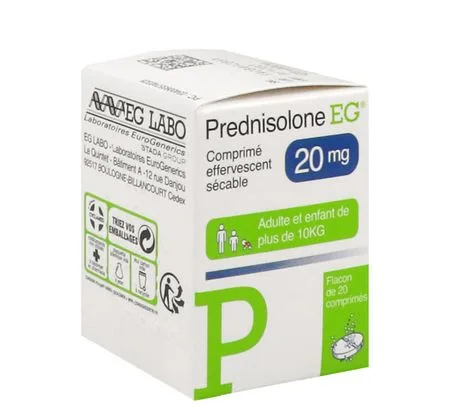
PREDNISOLONE EG 20 mg, scored effervescent tablet
Composition
Prednisolone............................................................................................................................................ 20,00 mg
As prednisolone sodium metasulfobenzoate ................................................... 31,44 mg
For one scored effervescent tablet.
Excipients with known effect: This medicine contains 27 mg of sodium, 10,5 mg of sodium benzoate, 106,6 mg of lactose monohydrate, and less than 7 mg of maltodextrin (source of glucose) and sorbitol per tablet.
Sodium bicarbonate, sodium diacid citrate, tartaric acid, lactose monohydrate, sodium benzoate, sodium saccharin, orange-grapefruit flavouring (grapefruit essential oil, orange essential oil, concentrated orange juice, acetaldehyde, ethyl butyrate, citral, aldehyde C6, linalool, terpineol, ethyl acetate, maltodextrin, gum arabic, sorbitol).
Indications
DISEASES OR CONDITIONS
• COLLAGEN DISEASES-CONNECTIVE TISSUE DISORDERS
- Acute exacerbations of systemic diseases, notably: disseminated lupus erythematosus, vasculitis, polymyositis, visceral sarcoidosis.
• DERMATOLOGICAL
- Severe autoimmune bullous dermatoses, in particular pemphigus and bullous pemphigoid;
- severe forms of infantile haemangiomas;
- certain forms of lichen planus;
- certain acute urticarias;
- severe forms of neutrophilic dermatoses.
• DIGESTIVE
- progressive episodes of ulcerative colitis and Crohn's disease;
- chronic active autoimmune hepatitis (with or without cirrhosis);
- severe acute alcoholic hepatitis, histologically proven.
• ENDOCRINE
- severe subacute de Quervain thyroiditis;
- certain hypercalcaemias.
• HEMATOLOGIC
- severe immunological thrombocytopenic purpuras;
- autoimmune haemolytic anaemias;
- in association with various chemotherapies in the treatment of malignant haemopathies; lymphoid;
- chronic acquired or congenital erythroblastopenias.
• INFECTIOUS
- tuberculous pericarditis and severe forms of tuberculosis threatening vital prognosis;
- pneumopathy due to Pneumocystis carinii with severe hypoxia.
• NEOPLASTIC
- anti-emetic treatment during antineoplastic chemotherapy;
- oedematous and inflammatory flare associated with antineoplastic treatments (radiotherapy and chemotherapy).
• NEPHROLOGICAL
- nephrotic syndrome with minimal glomerular lesions;
- nephrotic syndrome of primary focal and segmental hyalinosis;
- stage III and IV lupus nephropathy;
- intrarenal granulomatous sarcoidosis;
- vasculitis with renal involvement;
- primary extracapillary glomerulonephritis.
• NEUROLOGICAL
- myasthenia;
- cerebral oedema of tumour cause;
- chronic, idiopathic, inflammatory polyradiculoneuritis;
- infantile spasms (West syndrome) / Lennox-Gastaut syndrome;
- relapsing multiple sclerosis, following intravenous corticosteroid therapy.
• OPHTHALMOLOGICAL
- severe anterior and posterior uveitis;
- oedematous exophthalmos;
- certain optic neuropathies, following intravenous corticosteroid therapy (in this indication, oral route as first intention is not recommended).
• ENT
- certain serous otitis media;
- nasal sinus polyposis;
- certain acute or chronic sinusitis;
- seasonal allergic rhinitis in short courses;
- acute stridulous laryngitis (subglottic laryngitis) in children.
• RESPIRATORY
- persistent asthma, preferably in short courses in case of failure of high-dose inhaled treatment;
- exacerbations of asthma, in particular severe acute asthma;
- chronic obstructive pulmonary disease under evaluation of the reversibility of the obstructive syndrome;
- progressive sarcoidosis;
- diffuse interstitial pulmonary fibroses.
• RHEUMATOLOGICAL
- rheumatoid arthritis and certain polyarthritis;
- polymyalgia rheumatica-like pseudo-polyarthritis and Horton's disease;
- acute rheumatic fever;
- severe and refractory cervicobrachial neuralgia.
• ORGAN AND ALLOGENEIC HEMATOPOIETIC STEM CELL TRANSPLANTATION
- prophylaxis or treatment of graft rejection;
- prophylaxis or treatment of graft-versus-host disease.
Dosage and administration
Dosage
RESERVED FOR ADULTS AND CHILDREN WEIGHING MORE THAN 10KG.
PREDNISOLONE EG 20 mg is suitable for induction treatments or short-term treatments requiring medium or high doses in adults and children over 10 kg.
For maintenance treatment and for dosages below 20 mg per day, more appropriate strengths exist.
Adult
The dosage varies depending on the diagnosis, the severity of the condition, the prognosis, the patient's response and tolerance to treatment.
Induction treatment: 0,35 to 1,2 mg/kg/day. For guidance: 1 to 4 tablets per day in an adult weighing 60 kg.
In severe inflammatory diseases, the dosage ranges from 0,75 to 1,2 mg/kg/day. For guidance: 2 to 4 tablets per day for an adult weighing 60 kg.
Very exceptional situations may require higher doses.
Paediatric population
CHILDREN OVER 10 kg
The dosage must be adapted to the condition and to the child's weight.
Induction treatment: from 0,5 to 2 mg/kg/day. For guidance: ½ to 2 tablets for a child weighing 20 kg.
Alternate-day corticosteroid therapy (one day without corticosteroid and the second day with a dose double the daily dose that would otherwise have been required) is used in children to try to limit growth retardation. This alternate-day regimen can only be considered after control of the inflammatory disease with high corticosteroid doses, and when no rebound is observed during tapering.
General
The "induction dose" treatment must be continued until the disease is durably controlled. In the case of long-term treatment, the dose reduction must be slow. Achieving withdrawal is the aim sought. Maintaining a maintenance dose (minimum effective dose) is a compromise that is sometimes necessary.
For prolonged treatment and high doses, the initial doses may be divided into two daily intakes. Subsequently, the daily dose may be administered as a single intake, preferably in the morning during a meal.
Discontinuation of treatment
The pace of withdrawal depends mainly on the duration of treatment, the starting dose and the disease.
The treatment leads to a suppression of ACTH and cortisol secretion, sometimes with prolonged adrenal insufficiency. On withdrawal, discontinuation must be carried out gradually, in steps, because of the risk of relapse: reduction of 10% every 8 to 15 days on average.
For short courses of less than 10 days, stopping the treatment does not require tapering.
During dose reduction (prolonged course): at a dosage of 5 to 7 mg prednisone equivalent, when the underlying disease no longer requires corticosteroid therapy, it is advisable to replace the synthetic corticosteroid with 20 mg/day of hydrocortisone until recovery of corticotropic function. If corticosteroid therapy must be maintained at a dose below 5 mg prednisone equivalent per day, a small dose of hydrocortisone may be added to reach a hydrocortisone equivalent of 20 to 30 mg per day. When the patient is only on hydrocortisone, the corticotropic axis can be tested by endocrine tests. These tests alone do not rule out the possibility of adrenal insufficiency occurring during stress.
Under hydrocortisone or even after discontinuation, the patient must be warned of the need to increase the usual dose or resume replacement therapy (for example 100 mg of hydrocortisone intramuscularly every 6 to 8 hours) in case of stress: surgical procedure, trauma, infection.
Method of administration
Oral use.
Anti-inflammatory equivalence (equipotency) for 5 mg of prednisone: 5 mg of prednisolone.
The tablets are to be dissolved in a glass of water during the meal.
Contraindications
This medicine is generally contraindicated in the following situations (however, there is no absolute contraindication for corticosteroid therapy with a life-saving indication.):
• hypersensitivity to prednisolone or to any of the excipients listed in section Composition ;
• any infectious state, excluding the specified indications (see section Indications ;
• certain active viral infections (notably hepatitis, herpes, chickenpox, shingles);
• psychotic states not yet controlled by treatment;
• live vaccines.
Warnings and precautions
Special warnings
In case of gastroduodenal ulcer, corticosteroid therapy is not contraindicated if anti-ulcer treatment is associated. In case of a history of ulcer, corticosteroid therapy may be prescribed, with clinical monitoring and, if necessary, after fibroscopy.
Corticosteroid therapy may promote the occurrence of various infectious complications due notably to bacteria, yeasts and parasites. The occurrence of malignant strongyloidiasis is a major risk.
All subjects coming from an endemic area (tropical, subtropical regions, southern Europe) must have a stool parasitological examination and systematic eradication treatment before corticosteroid therapy.
Evolving signs of infection may be masked by corticosteroid therapy.
After prolonged use of prednisolone, a corticosteroid withdrawal syndrome may occur.
Discontinuation of corticosteroids after prolonged treatment must be done gradually. The risks associated with abrupt discontinuation of treatment are exacerbation or recurrence of the underlying disease, acute adrenal insufficiency (particularly in stressful situations, for example during infections, after an accident, during intense physical exertion) or corticosteroid withdrawal syndrome. Corticosteroid withdrawal syndrome may present with a set of symptoms, the most typical of which are fever, anorexia, nausea, lethargy, malaise, arthralgia, skin desquamation, asthenia, hypotension and weight loss.
Before starting treatment, it is important to rule out any possibility of a visceral focus, particularly tuberculosis, and to monitor during treatment for the onset of infectious pathologies.
In case of past tuberculosis, prophylactic anti-tuberculosis treatment is necessary if there are significant radiological sequelae and if one cannot ensure that a well-conducted treatment of 6 months with rifampicin has been given.
The use of corticosteroids requires particularly appropriate monitoring, notably in elderly subjects and in cases of ulcerative colitis (risk of perforation), recent intestinal anastomoses, renal insufficiency, hepatic insufficiency, osteoporosis, myasthenia gravis.
Due to the risk of growth retardation, prolonged use (and exposure to higher doses) of prednisolone should be avoided in children.
Oral or injectable corticosteroids may promote the occurrence of tendinopathy, or even tendon rupture (exceptional). This risk is increased when co-prescribed with fluoroquinolones and in dialysed patients with secondary hyperparathyroidism or who have undergone renal transplantation.
This medicinal product is not recommended in combination with anti-inflammatory doses of acetylsalicylic acid (see section Interactions).
Visual disturbances: visual disturbances may appear during systemic or local corticosteroid therapy. In case of blurred vision or onset of any other visual symptom during corticosteroid therapy, an ophthalmological examination is required to look in particular for cataract, glaucoma, or a rarer lesion such as central serous chorioretinopathy, described with the administration of systemic or local corticosteroids.
Crises related to the presence of a pheochromocytoma, which may be fatal, have been reported following administration of corticosteroids. Corticosteroids should only be administered to patients in whom a pheochromocytoma is suspected or identified after appropriate assessment of the benefit/risk ratio (see section Adverse effects).
Scleroderma renal crisis: precautions are required for patients suffering from systemic sclerosis, as an increased incidence of scleroderma renal crisis (potentially fatal), accompanied by hypertension and a decrease in urinary output, has been reported with administration of a daily dose of 15 mg or more of prednisolone. Blood pressure and renal function (serum creatinine) must therefore be checked regularly. If renal crisis is suspected, blood pressure must be carefully monitored.
Adrenal insufficiency
Secondary adrenocortical insufficiency may develop during treatment.
Glucocorticoid-induced suppression of the hypothalamic-pituitary-adrenal function depends on the dose and duration of treatment. Recovery occurs gradually as the steroid dose is reduced and discontinued. However, relative insufficiency may persist for months after treatment has been stopped; therefore, in any stress situation (for example during infections, after accidents, or in cases of increased physical exertion) treatment should be reinstated.
Since marketing, tumor lysis syndrome (TLS) has been reported in patients with malignant haemopathies following the use of PREDNISOLONE 20 mg, scored effervescent tablet alone or in combination with other chemotherapy agents. Patients at high risk of TLS, such as patients with a high proliferation rate, a high tumour burden and high sensitivity to cytotoxic agents, must be closely monitored and appropriate precautions must be taken (See section Adverse effects Adverse effects
Special precautions for use
This medicine must not be used in children weighing less than 10 kg and therefore in premature and full-term newborns (see section Dosage and administration.). However, hypertrophic cardiomyopathies have been reported after systemic administration of other glucocorticoids in premature infants. In infants treated with systemic glucocorticoids, cardiac ultrasounds must be performed to monitor myocardial structure and function.
In case of long-term corticosteroid therapy:
A diet low in rapidly absorbed sugars and high in protein should be combined, due to the hyperglycaemic effect and protein catabolism with negative nitrogen balance.
Sodium and water retention is common, partly responsible for a possible increase in blood pressure.
Potassium supplementation is only justified for high-dose treatments, prescribed for a long duration, or in case of risk of rhythm disorders or association with a hypokalaemic treatment.
The patient must systematically have an intake of calcium and vitamin D.
When corticosteroid therapy is essential, diabetes and arterial hypertension are not contraindications, but the treatment may cause their imbalance. Their management should be reassessed.
Certain viral diseases (chickenpox, herpes zoster and measles) can be very severe in patients treated with glucocorticoids. Unless they have previously had these viral diseases, patients must avoid any contact with individuals with chickenpox, herpes zoster or measles. If they are exposed to such infections while receiving prednisolone, they must contact a doctor immediately even if they have no symptoms.
Excipients with known effect
This medicine contains 27 mg of sodium per scored effervescent tablet, which is equivalent to 1,4 % of the maximum recommended daily dietary intake by the WHO of 2 g of sodium per adult.
This medicine contains 10,50 mg of sodium benzoate per scored effervescent tablet.
This medicine contains lactose and maltodextrin (a source of glucose). Patients with galactose intolerance, total lactase deficiency or glucose-galactose malabsorption syndrome (rare hereditary diseases) must not take this medicine.
This medicine contains less than 7 mg of sorbitol per scored effervescent tablet. The additive effect of concomitantly administered products containing sorbitol (or fructose) and the dietary intake of sorbitol (or fructose) must be taken into account. The sorbitol content of oral medicines may affect the bioavailability of other concomitantly administered oral medicines.
Interactions
Hypokalaemia-inducing medicines
Hypokalaemia is a factor favouring the occurrence of heart rhythm disorders (torsades de pointes, in particular) and increasing the toxicity of certain medicines, for example digoxin. Therefore, medicines that may cause hypokalaemia are involved in a large number of interactions. These include potassium-depleting diuretics, alone or combined, stimulant laxatives, glucocorticoids, tetracosactide and amphotericin B (IV route).
Contraindicated combinations
+ Live attenuated vaccines
With the exception of inhaled and topical routes, and for doses greater than 10 mg/day of prednisone equivalent (or > 2 mg/kg/day in children, or > 20 mg/day in children over 10 kg), for more than two weeks, and for corticosteroid "pulses": risk of generalised vaccine disease, possibly fatal.
Live attenuated vaccines are contraindicated even during the 3 months following discontinuation of corticosteroid therapy.
Combinations not recommended (see section Warnings and precautions)
+ Acetylsalicylic acid
Increased bleeding risk.
Association not recommended with anti-inflammatory doses of acetylsalicylic acid (≥ 1 g per dose and/or ≥ 3 g per day).
Associations subject to Precautions for use
+ Oral anticoagulants
Possible impact of corticotherapy on the metabolism of oral anticoagulants and on that of coagulation factors.
Corticosteroid-specific bleeding risk (gastrointestinal mucosa, vascular fragility) at high doses or with prolonged treatment longer than 10 days.
When the association is justified, reinforce monitoring: where appropriate, biological control at 8th day, then every 15 days during corticosteroid therapy and after its discontinuation.
+ Other potassium-lowering agents:
Increased risk of hypokalaemia. Monitor serum potassium and, if necessary, correct.
+ Enzyme-inducing anticonvulsants:
Decrease in plasma concentrations and efficacy of corticosteroids due to increased hepatic metabolism by the inducer: the consequences are particularly significant in Addisonian patients treated with hydrocortisone and in cases of transplantation.
Clinical and biological monitoring; adjust the corticosteroid dose during treatment with the inducer and after its discontinuation.
+ Digoxin
Hypokalaemia favouring toxic effects of cardiac glycosides. Correct any hypokalaemia beforehand and carry out clinical, electrolyte and electrocardiographic monitoring.
+ Isoniazid
Described for prednisolone: decrease in plasma concentrations of isoniazid. Proposed mechanism: increased hepatic metabolism of isoniazid and decreased metabolism of glucocorticoids. Clinical and biological monitoring.
+ Medicinal products liable to cause torsades de pointes:
Increased risk of ventricular rhythm disorders, in particular torsades de pointes.
Correct any hypokalaemia before administering the product and carry out clinical, electrolyte and electrocardiographic monitoring.
+ Rifampicin
Decrease in plasma concentrations and efficacy of corticosteroids due to increased hepatic metabolism by rifampicin: the consequences are particularly significant in Addisonian patients treated with hydrocortisone and in cases of transplantation.
Clinical and biological monitoring; adjustment of the corticosteroid dosage during treatment with rifampicin and after its discontinuation.
+ CYP3A inhibitors
Concomitant administration of CYP3A inhibitors (for example itraconazole, clarithromycin, erythromycin) and products containing cobicistat or ritonavir could increase the risk of systemic corticosteroid side effects. The combination should be avoided, unless the benefits outweigh the increased risk of systemic corticosteroid side effects. Patients should be monitored for possible systemic corticosteroid side effects and a reduction in the corticosteroid dose may be considered.
Associations to be taken into account
+ Fluoroquinolones
Possible increased risk of tendinopathy, or even tendon rupture (exceptional), particularly in patients receiving prolonged corticosteroid therapy.
+ Acetylsalicylic acid
Increased bleeding risk.
To be considered with analgesic or antipyretic doses (≥ 500 mg per dose and/or < 3 g per day).
+ Non-steroidal anti-inflammatory drugs
Increased risk of gastrointestinal ulceration and haemorrhage.
+ Ciclosporin
Increased effects of prednisolone: cushingoid appearance, reduced glucose tolerance (decreased clearance of prednisolone).
+ Oestrogens
Caution is advised when a patient receiving glucocorticoids is treated concurrently with oestrogens or oestrogen-containing preparations, and clinical monitoring is recommended. A reduction in the prednisolone dose may be considered, if necessary.
Fertility, pregnancy and breastfeeding
Pregnancy
In animals, experimentation shows a teratogenic effect that varies according to species.
In humans, there is transplacental passage.
An increased incidence of cleft palate was observed in animal studies (see section Preclinical safety).
According to data from an epidemiological study, the use of glucocorticoids during the first trimester may increase the risk of cleft lip and/or cleft palate.
PREDNISOLONE EG 20 mg, scored effervescent tablet should only be used during pregnancy if the benefits for the mother outweigh the risks, including those for the foetus.
During chronic diseases requiring treatment throughout pregnancy, a slight intrauterine growth retardation is possible. Neonatal adrenal insufficiency has been exceptionally observed after high-dose corticosteroid therapy.
A period of clinical (weight, diuresis) and biological monitoring of the newborn is warranted.
Breast-feeding
Prednisolone is excreted in breast milk. In case of treatment at high doses and on a chronic basis, breastfeeding is not recommended.
Fertility
Not applicable.
Adverse effects
Adverse reactions are listed by system organ class and may occur at the following frequencies: Very common (≥ 1/10), common (≥ 1/100, < 1/10), uncommon (≥ 1/1 000, < 1/100), rare (≥ 1/10 000, < 1/1 000), very rare (< 1/10 000) and not known (cannot be estimated from the available data).
Undesirable effects are mainly to be feared at high doses or with prolonged treatment over several months.
|
System organ class |
Adverse Effect |
|
Infections and infestations |
Frequency not known: increased susceptibility to infections |
|
Benign, malignant and unspecified tumours (including cysts and polyps) |
Not known frequency: pheochromocytoma crises; cases of tumour lysis syndrome have been reported in patients with haematological malignancies (see section Warnings and precautions) |
|
Immune system disorders |
Frequency not known: hypersensitivity |
|
Endocrine disorders |
Frequency not known: Cushing's syndrome, adrenocorticotropic hormone deficiency, adrenal deficiency or insufficiency, adrenal atrophy4, manifestation of latent diabetes, growth retardation in children, corticosteroid withdrawal syndrome1 |
|
Metabolism and nutrition disorders |
Frequency not known: hypokalaemia, metabolic alkalosis, fluid retention |
|
Psychiatric disorders |
o Frequent: euphoric mood, insomnia, agitation (nervousness) o Rare: manic-like episodes, confusional or confusional-oneiric states o Frequency not determined: depressive state on cessation of treatment |
|
Nervous system disorders |
Frequency not determined: increased intracranial pressure with papilledema (idiopathic intracranial hypertension), generally after cessation of treatment; convulsions (systemic or intrathecal route) |
|
Eye disorders |
Frequency unknown: blurred vision, glaucoma and cataracts (including subcapsular), chorioretinopathies1 |
|
Cardiac disorders |
Frequency unknown: congestive heart failure, hypertrophic cardiomyopathies in premature infants1 |
|
Vascular disorders |
Frequency undetermined: hypertension |
|
Gastrointestinal disorders |
Frequency not determined: gastroduodenal ulcers, small intestine ulcer, perforations and gastrointestinal hemorrhages; acute pancreatitis has been reported, especially in children |
|
Skin and subcutaneous tissue disorders |
Frequency not determined: skin atrophy, acne, purpura, ecchymosis, hypertrichosis |
|
Musculoskeletal and connective tissue disorders |
Frequency not known: muscle atrophy preceded by muscle weakness (increased protein catabolism), osteoporosis, pathological fractures, osteonecrosis, particularly of the femoral and humeral heads, tendon ruptures2 |
|
Renal and urinary disorders |
Frequency unknown: scleroderma renal crisis3 |
|
Disorders of the reproductive system and breast |
Frequency not determined: irregular menstruation |
|
General disorders and administration site conditions |
Frequency not determined: delayed wound healing |
|
Investigations |
Frequency not determined: decreased glucose tolerance, increased intraocular pressure |
|
Injury, poisoning and procedural complications |
Frequency not known: contusion, vertebral compression fracture |
1 class effect of corticosteroids – See section Warnings and precautions "Special warnings and precautions for use"
2 in a few exceptional cases, tendon ruptures have been described, particularly with concomitant administration of fluoroquinolones.
3 scleroderma renal crisis
4 which is sometimes permanent.
Description of selected adverse reactions:
Scleroderma renal crisis:
The number of occurrences of scleroderma renal crisis varies among the different subpopulations. The highest risk was observed in patients with diffuse systemic sclerosis. The lowest risk was observed in patients with limited systemic sclerosis (2 %) and juvenile systemic sclerosis (1 %).
Reporting of suspected adverse reactions
Reporting suspected adverse reactions after authorisation of the medicinal product is important. It allows continued monitoring of the benefit/risk balance of the medicinal product. Healthcare professionals are asked to report any suspected adverse reaction via the national reporting system: National Agency for the Safety of Medicines and Health Products (ANSM) and the network of Regional Centres of Pharmacovigilance - Website: https://signalement.social-sante.gouv.fr
Pharmacodynamics
Pharmacotherapeutic class: GLUCOCORTICOIDS, ATC code: H02AB06.
(H: Non-sex systemic hormones).
Physiological glucocorticoids (cortisone and hydrocortisone) are essential metabolic hormones. Synthetic corticosteroids, including this specialty, are used mainly for their anti-inflammatory effect. At high doses, they reduce the immune response. Their metabolic and sodium-retaining effect is less than that of hydrocortisone.
Pharmacokinetics
Absorption
The peak plasma concentration is reached orally in 4 hours.
Distribution
The plasma half-life is between 2,5 and 3,5 hours.
Biotransformation
Metabolism is hepatic.
Elimination
Elimination is renal and biliary.
Preclinical safety
Animal studies in which glucocorticoids were administered to pregnant mice, rats and rabbits showed an increased incidence of cleft palate in litters.
SPECIAL PRECAUTIONS FOR DISPOSAL AND OTHER HANDLING
No special requirements.
Any unused medicinal product or waste material should be disposed of in accordance with local requirements.
Prescription, supply and reimbursement
| Marketing authorisation (AMM) |
|
| Price: |
|
Collection.
CENTRAL PARK 9-15 RUE MAURICE MALLET
92130 ISSY-LES-MOULINEAUX
Tel: 01 46 94 86 86 contact@eglabo.fr
https://www.eglabo.fr/
Source: VIDAL · Updated on 11/11/2026. This information does not replace advice from a healthcare professional.