
Medicines
SmPC of 21/07/2026
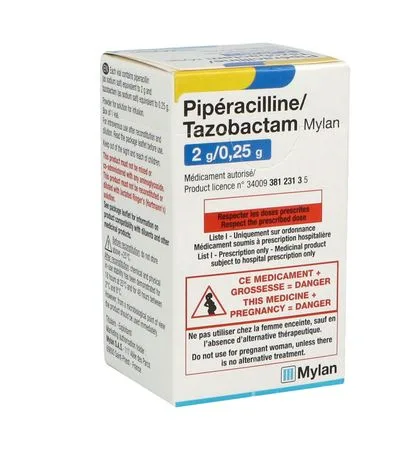
PIPERACILLIN TAZOBACTAM VIATRIS 2 g/0,25 g, powder for solution for infusion
Composition
Each vial contains the equivalent of 2 g of piperacillin (as sodium salt) and the equivalent of 0,25 g of tazobactam (as sodium salt).
Excipient with known effect: each vial of PIPERACILLIN TAZOBACTAM VIATRIS 2 g/0,25 g contains 103,3 mg of sodium.
None.
Indications
PIPERACILLIN TAZOBACTAM VIATRIS is indicated for the treatment of the following infections in adults and children over 2 years (see sections Dosage and administration and Pharmacodynamics) :
Adults and adolescents
• Severe pneumonia including hospital-acquired pneumonia and pneumonia under mechanical ventilation.
• Complicated urinary tract infections (including pyelonephritis).
• Complicated intra-abdominal infections.
• Complicated skin and soft tissue infections (including diabetic foot infections).
Treatment of patients with bacteraemia associated with, or suspected to be associated with, any of the infections listed above.
PIPERACILLIN TAZOBACTAM VIATRIS may be used in the management of neutropenic patients with fever suspected to be due to a bacterial infection.
Note: use in the case of bacteraemia due to E. coli and K. pneumoniae (ceftriaxone-resistant) producing extended-spectrum beta-lactamases (ESBL) is not recommended in adult patients, see section Pharmacodynamics.
Children aged 2 to 12 years
• Complicated intra-abdominal infections.
PIPERACILLIN TAZOBACTAM VIATRIS may be used in the management of neutropenic children with fever suspected to be due to a bacterial infection.
Official recommendations concerning the appropriate use of antibacterial agents should be taken into account.
Dosage and administration
Dosage
The dose and frequency of administration of the piperacillin/tazobactam combination depend on the severity and site of the infection, as well as the expected pathogens.
Adult and adolescent patients
Infections
The recommended dose is 4 g of piperacillin / 0,5 g of tazobactam, administered every 8 hours.
For nosocomial pneumonia and bacterial infections in neutropenic patients, the recommended dose is 4 g of piperacillin / 0,5 g of tazobactam, administered every 6 hours. This dosage may also be used to treat patients with other infections when they are particularly severe.
The following table summarises the frequency of administration of the treatment and the recommended dose for adult and adolescent patients by indication or condition:
|
Frequency of administration of the treatment |
Piperacillin/tazobactam 4 g/0,5 g |
|
Every 6 hours |
Severe pneumonia |
|
Neutropenic adults with fever suspected to be related to a bacterial infection |
|
|
Every 8 hours |
Complicated urinary tract infections (including pyelonephritis) |
|
Complicated intra-abdominal infections |
|
|
Complicated skin and soft tissue infections (including foot infections in diabetic patients) |
Renal impairment
The intravenous dose must be adjusted as follows according to the actual degree of renal impairment (each patient must be carefully monitored for signs of product toxicity; the dose of the medicine and the dosing interval must be adjusted accordingly):
|
Creatinine clearance (mL/min) |
Piperacillin/tazobactam (recommended dose) |
|
> 40 |
No dose adjustment necessary |
|
20-40 |
Suggested maximum dose: 4 g/0,5 g every 8 hours |
|
< 20 |
Suggested maximum dose: 4 g/0,5 g every 12 hours |
For haemodialysed patients, an additional dose of piperacillin/tazobactam 2 g/0,25 g must be administered after each dialysis session, as haemodialysis removes 30% to 50% of piperacillin in 4 hours.
Hepatic impairment
No dose adjustment is necessary (see section Pharmacokinetics).
Elderly patients
No dose adjustment is required for elderly subjects with normal renal function or creatinine clearance values above 40 ml/min.
Paediatric population (2-12 years)
Infections
The following table summarises the frequency of administration of the treatment and the weight-based dose, by indication or condition, for children aged 2 to 12 years:
|
Weight-based dose and frequency of administration of the treatment |
Indication / condition |
|
80 mg piperacillin / 10 mg tazobactam per kg / every 6 hours |
Neutropenic children with fever suspected to be related to bacterial infections* |
|
100 mg piperacillin / 12,5 mg tazobactam per kg / every 8 hours |
Complicated intra-abdominal infections* |
* Must not exceed the maximum of 4 g/0,5 g per dose over 30 minutes.
Renal impairment
The intravenous dose must be adjusted as follows according to the actual degree of renal impairment (each patient must be carefully monitored for signs of product toxicity; the dose of the medicine and the interval must be adjusted accordingly):
|
Creatinine clearance (mL/min) |
Piperacillin/tazobactam (recommended dose) |
|
> 50 |
No dose adjustment necessary. |
|
≤ 50 |
70 mg piperacillin / 8,75 mg tazobactam / kg every 8 hours. |
For children on haemodialysis, an additional dose of 40 mg piperacillin / 5 mg tazobactam / kg must be administered after each dialysis session.
Use in children aged less than 2 years
The safety and efficacy of piperacillin/tazobactam in children aged 0 to 2 years have not been established.
No data from controlled clinical studies are available.
Duration of treatment
The usual duration of treatment for most indications is between 5 and 14 days. However, the duration of treatment must be guided by the severity of the infection, the pathogens, and the patient's clinical and bacteriological progress.
Method of administration
PIPERACILLIN TAZOBACTAM VIATRIS 2 g/0,25 g is administered by intravenous infusion (over 30 minutes).
For instructions on reconstitution of the medicinal product before administration, see section Disposal and handling.
Contraindications
Hypersensitivity to the active substances or to any other antibacterial agent of the penicillin class.
History of severe acute allergic reaction to any other beta-lactam (e.g. cephalosporins, monobactams or carbapenems).
Warnings and precautions
The selection of piperacillin/tazobactam to treat an individual patient must take into account the appropriateness of using a broad-spectrum semi-synthetic penicillin based on factors such as the severity of the infection and the prevalence of resistance to other appropriate antibacterial agents.
Before starting treatment with piperacillin/tazobactam, a careful history must be taken to look for previous hypersensitivity reactions to penicillins, other beta-lactams (e.g. cephalosporins, monobactams or carbapenems) and other allergens. Severe and sometimes fatal hypersensitivity reactions (anaphylactic/anaphylactoid [including shock]) have been reported in patients receiving treatment with penicillins, including piperacillin/tazobactam. These reactions are most likely to occur in individuals with a history of hypersensitivity to multiple allergens. Severe hypersensitivity reactions require discontinuation of the antibiotic and may require administration of adrenaline and other emergency measures.
Cases of hypersensitivity reactions progressing to Kounis syndrome (acute allergic coronary artery spasm that may lead to myocardial infarction, see section Adverse effects) have been reported.
Treatment with piperacillin/tazobactam may cause severe cutaneous adverse reactions such as Stevens-Johnson syndrome, Lyell's syndrome (toxic epidermal necrolysis), drug reaction with eosinophilia and systemic symptoms (DRESS), and acute generalised exanthematous pustulosis (AGEP) (see section Adverse effects). In case of skin rash, patients must be closely monitored and treatment with piperacillin/tazobactam must be discontinued if the lesions progress.
Haemophagocytic lymphohistiocytosis (HLH): cases of HLH have been reported in patients treated with piperacillin/tazobactam, often after a treatment lasting more than 10 days. HLH is a potentially fatal syndrome consisting of a pathological immune activation characterised by the clinical signs and symptoms of excessive systemic inflammation (e.g. fever, hepatosplenomegaly, hypertriglyceridaemia, hypofibrinogenaemia, hyperferritinaemia, cytopaenias and haemophagocytosis). Patients developing early manifestations of pathological immune activation must be examined immediately. If the diagnosis of HLH is established, treatment with piperacillin/tazobactam must be discontinued.
Cases of rhabdomyolysis have been reported with the use of piperacillin/tazobactam. If signs or symptoms of rhabdomyolysis are observed, treatment with piperacillin/tazobactam must be discontinued and appropriate treatment must be initiated.
Antibiotic-induced pseudomembranous colitis may present as severe, persistent diarrhoea that may be life-threatening. The onset of symptoms of pseudomembranous colitis may occur during or after antibacterial treatment. In these cases piperacillin/tazobactam must be stopped.
Treatment with piperacillin/tazobactam may lead to the emergence of resistant organisms, which may cause superinfections.
Bleeding has occurred in patients receiving beta-lactams. These reactions have sometimes been associated with abnormalities of coagulation tests, such as bleeding time, platelet aggregation and prothrombin time, and are most likely to occur in patients with renal insufficiency. If bleeding occurs, the antibiotic must be stopped and appropriate treatment initiated.
Leukopenia and neutropenia may occur, particularly during prolonged treatment; therefore, periodic assessment of haematopoietic function must be performed.
As with treatment with other penicillins, neurological complications in the form of convulsions (seizures) may occur when high doses are administered, particularly in patients with impaired renal function (see section Adverse effects).
Hypokalaemia may occur in patients with low serum potassium or those receiving concomitant potassium-lowering medicinal products; periodic monitoring of electrolytes may be recommended in such patients.
Renal impairment
Due to potential nephrotoxicity (see section Adverse effects), piperacillin/tazobactam must be used with caution in patients with renal insufficiency or on haemodialysis. The intravenous dose and dosing interval must be adjusted according to the degree of renal insufficiency (see section Dosage and administration).
In a secondary analysis using data from a large multicentre, randomised controlled trial, when glomerular filtration rate (GFR) was examined following administration of frequently used antibiotics in critically ill patients, the use of piperacillin/tazobactam was associated with a lower rate of reversible improvement in GFR compared with other antibiotics. This secondary analysis concluded that taking piperacillin/tazobactam was a cause of delayed renal recovery in these patients.
The combined use of piperacillin/tazobactam and vancomycin may be associated with an increased incidence of acute kidney injury (see section Interactions).
Excipient
This medicine contains 103,3 mg of sodium per vial, equivalent to 5,2 % of the WHO recommended maximum daily dietary intake of 2 g of sodium per adult.
This should be taken into account in patients on a strict low-sodium diet.
Interactions
+ Non-depolarising muscle relaxants
Piperacillin used concomitantly with vecuronium has been implicated in the prolongation of neuromuscular blockade by vecuronium. Due to their similar mechanism of action, it is expected that the neuromuscular blockade produced by any other non-depolarising muscle relaxant may be prolonged in the presence of piperacillin.
+ Anticoagulants
When heparin, oral anticoagulants and other substances that may alter blood coagulation, including platelet function, are administered concurrently, appropriate coagulation tests should be performed more frequently and monitored regularly.
+ Methotrexate
Piperacillin may reduce the excretion of methotrexate; therefore, serum methotrexate levels should be monitored in patients to avoid product toxicity.
+ Probenecid
As with other penicillins, concomitant administration of probenecid and piperacillin/tazobactam induces a longer half-life and lower renal clearance for both piperacillin and tazobactam; however, the peak plasma concentrations of each substance are not modified.
+ Aminoglycosides
Piperacillin, alone or in combination with tazobactam, did not significantly modify the pharmacokinetic parameters of tobramycin in subjects with normal renal function or with mild or moderate renal impairment. The pharmacokinetic parameters of piperacillin, tazobactam, and the metabolite M1 were also not significantly modified by the administration of tobramycin.
Inactivation of tobramycin and gentamicin by piperacillin has been demonstrated in patients with severe renal impairment.
For further information on the administration of piperacillin/tazobactam with aminoglycosides, please refer to sections Incompatibilities and Disposal and handling.
+ Vancomycin
An increased incidence of acute kidney injury in patients treated with a combination of piperacillin/tazobactam and vancomycin, compared with patients treated with vancomycin alone, has been reported in studies (see section Warnings and precautions). Some of these studies showed that the interaction is dependent on the vancomycin dose.
No pharmacokinetic interaction has been observed between piperacillin/tazobactam and vancomycin.
Effects on laboratory tests
Non-enzymatic methods for measuring urinary glucose may lead to false-positive results, as with other penicillins. Therefore, enzymatic urinary glucose detection tests are necessary during treatment with piperacillin/tazobactam.
A number of chemical methods for detecting proteinuria may give false-positive results. Protein detection with urine dipsticks is not modified.
The direct Coombs test may be positive.
The Platelia Aspergillus EIA tests from Bio Rad Laboratories may give false-positive results in patients receiving piperacillin/tazobactam. Cross-reactions with polysaccharides and polyfuranoses of non-Aspergillus origin have been reported with the Platelia Aspergillus EIA test from Bio Rad Laboratories.
Positive results for the tests listed above in patients receiving piperacillin/tazobactam should be confirmed by other diagnostic methods.
Fertility, pregnancy and breastfeeding
Pregnancy
There are no or limited data on the use of piperacillin/tazobactam in pregnant women.
Animal studies have shown developmental toxicity, but no evidence of teratogenicity, at doses toxic to the mother (see section Preclinical safety).
Piperacillin and tazobactam cross the placenta. Piperacillin/tazobactam should be used during pregnancy only if clearly indicated, i.e. only if the expected benefit outweighs the potential risks to the pregnant woman and the foetus.
Breast-feeding
Piperacillin is excreted into breast milk in low concentrations; tazobactam concentrations have not been studied in breast milk. Breastfeeding women should be treated only if the expected benefit outweighs the potential risks to the woman and the child.
Fertility
A fertility study in rats showed no effect on fertility and mating after intraperitoneal administration of tazobactam or of the piperacillin/tazobactam combination (see section Preclinical safety).
Driving and using machines
The effects on the ability to drive vehicles and use machines have not been studied.
Adverse effects
The most frequently reported adverse reaction is diarrhoea (occurring in 1 patient out of 10).
Among the most serious adverse reactions, pseudomembranous colitis and Lyell's syndrome (toxic epidermal necrolysis) occur in 1 to 10 patients out of 10 000. The frequencies of pancytopenia, anaphylactic shock and Stevens-Johnson syndrome cannot be estimated from the currently available data.
In the following table, adverse events are listed by system organ class and according to the MedDRA terminology (preferred term). Within each frequency group, adverse reactions are presented in order of decreasing seriousness.
|
System Organ Classes |
Very common ≥ 1/10 |
Common ≥ 1/100, < 1/10 |
Uncommon ≥ 1/1 000, < 1/100 |
Rare ≥ 1/10 000, < 1/1 000 |
Frequency not known (cannot be estimated from the currently available data) |
|
Infections and infestations |
|
candidiasis* |
|
pseudomembranous colitis |
|
|
Blood and lymphatic system disorders |
|
thrombocytopenia, anaemia* |
leukopenia, |
agranulocytosis, |
pancytopenia*, neutropenia, haemolytic anaemia*, thrombocytosis*, eosinophilia* |
|
Disorders cardiac |
|
|
|
|
Kounis syndrome *,**
|
|
Immune system disorders |
|
|
|
|
anaphylactoid shock*, anaphylactic shock*, anaphylactoid reaction*, anaphylactic reaction*, hypersensitivity* |
|
Metabolism and nutrition disorders |
|
|
hypokalaemia |
|
|
|
Psychiatric disorders |
|
insomnia |
|
|
delirium* |
|
Nervous system disorders |
|
headache |
convulsions* |
|
|
|
Vascular disorders |
|
|
hypotension, phlebitis, thrombophlebitis, redness |
|
|
|
Respiratory, thoracic and mediastinal disorders |
|
|
|
epistaxis |
eosinophilic pneumonia |
|
Gastrointestinal disorders |
diarrhoea |
abdominal pain, vomiting, constipation, nausea, dyspepsia |
|
stomatitis, |
|
|
Hepatobiliary disorders |
|
|
|
|
hepatitis*, jaundice, |
|
Skin and subcutaneous tissue disorders |
|
rash, pruritus |
erythema multiforme*, urticaria, maculopapular rash* |
Lyell syndrome (toxic epidermal necrolysis)* |
Stevens-Johnson syndrome*, exfoliative dermatitis, drug reaction with eosinophilia and systemic symptoms (DRESS)*, acute generalised exanthematous pustulosis (AGEP)*, bullous dermatitis, linear immunoglobulin A (IgA) disease*, purpura |
|
Musculoskeletal and systemic disorders |
|
|
arthralgia, myalgia |
|
rhabdomyolysis* |
|
Renal and urinary disorders |
|
|
|
|
renal failure, tubulointerstitial nephritis* |
|
General disorders and administration site conditions |
|
pyrexia, reaction at injection site |
chills |
|
|
|
Investigations |
|
increased alanine aminotransferase, increased aspartate aminotransferase, hypoproteinaemia, hypoalbuminaemia, positive direct Coombs test, increased blood creatinine, increased alkaline phosphatase, increased blood urea, prolonged partial thromboplastin time |
hypoglycaemia, increased blood bilirubin, prolonged prothrombin time |
|
prolonged bleeding time, increased gamma glutamyl transferase |
*Adverse drug reaction observed after marketing
** Acute coronary syndrome associated with an allergic reaction.
Treatment with piperacillin has been associated with an increased incidence of fever and rashes in patients with cystic fibrosis.
Effects of the beta-lactam antibiotic class
Antibiotics of the beta-lactam class, including piperacillin/tazobactam, may lead to manifestations of encephalopathy and convulsions (see section Warnings and precautions).
Reporting of suspected adverse reactions
Reporting suspected adverse reactions after authorisation of the medicinal product is important. It allows continued monitoring of the benefit/risk balance of the medicinal product. Healthcare professionals are asked to report any suspected adverse reaction via the national reporting system: National Agency for the Safety of Medicines and Health Products (ANSM) and the network of Regional Centres of Pharmacovigilance - Website: https://signalement.social-sante.gouv.fr/.
Overdose
Symptoms
Cases of overdose with piperacillin/tazobactam have been reported after marketing. Most of the events encountered, including nausea, vomiting and diarrhoea, have also been reported with the usual recommended dose. Patients may present neuromuscular excitability or convulsions if doses higher than the recommended doses are administered intravenously (particularly in cases of renal insufficiency).
Treatment
In case of overdose, treatment with piperacillin/tazobactam should be discontinued. No specific antidote is known.
Treatment should be adapted and symptomatic according to the patient's clinical condition.
Excessive serum concentrations of piperacillin or tazobactam may be reduced by haemodialysis (see section Warnings and precautions).
Pharmacodynamics
Pharmacotherapeutic class: Antibacterials for systemic use, Penicillins in combination with beta-lactamase inhibitors included, ATC code: J01CR05.
Mechanism of action
Piperacillin, a broad-spectrum semisynthetic penicillin, exerts a bactericidal activity by inhibiting both septum and cell wall synthesis.
Tazobactam, a beta-lactam structurally related to penicillins, is an inhibitor of many beta-lactamases, which frequently cause resistance to penicillins and cephalosporins, but it does not inhibit AmpC enzymes or metallo-beta-lactamases. Tazobactam potentiates the antibiotic spectrum of piperacillin to include many beta-lactamase-producing bacteria that have acquired resistance to piperacillin alone.
Pharmacokinetic/pharmacodynamic relationship
The time above the minimum inhibitory concentration (T>MIC) is considered the major pharmacodynamic determinant of efficacy for piperacillin.
Resistance mechanism
The two main mechanisms of resistance to piperacillin/tazobactam are:
• Inactivation of the piperacillin component by beta-lactamases that are not inhibited by tazobactam: beta-lactamases in molecular classes B, C and D.
• Alteration of penicillin-binding proteins (PBPs), resulting in reduced affinity of piperacillin for the molecular target in the bacterium.
In addition, alterations in bacterial membrane permeability, as well as expression of multidrug efflux pumps, may cause or contribute to bacterial resistance to piperacillin/tazobactam, particularly in Gram-negative bacteria.
Susceptibility testing breakpoints
The interpretive criteria for minimum inhibitory concentrations (MICs) for susceptibility testing have been established by the European Committee on Antimicrobial Susceptibility Testing (EUCAST) for piperacillin/tazobactam and are listed below :
https://www.ema.europa.eu/documents/other/minimum-inhibitory-concentration-mic-breakpoints_en.xlsx
Susceptibility
The prevalence of acquired resistance may vary geographically and over time for certain species; it is therefore useful to have information on the local resistance prevalence, particularly for the treatment of severe infections.
If necessary, specialist advice should be obtained, mainly when the usefulness of the medicine in certain infections may be called into question due to the level of local resistance prevalence.
|
SPECIES NORMALLY SUSCEPTIBLE |
|
Aerobic Gram-positive microorganisms |
|
Enterococcus faecalis (isolates susceptible to ampicillin or penicillin only) |
|
Listeria monocytogenes |
|
Staphylococcus aureus (isolates susceptible to methicillin only) |
|
Species of Staphylococcus spp., coagulase-negative (isolates susceptible to methicillin only) Streptococcus agalactiae (group B streptococci)† |
|
Streptococcus pyogenes (group A streptococci)† |
|
Aerobic Gram-negative microorganisms |
|
Citrobacter koseri |
|
Haemophilus influenzae |
|
Moraxella catarrhalis |
|
Proteus mirabilis |
|
Anaerobic Gram-positive microorganisms |
|
Species of Clostridium |
|
Species ofEubacterium |
|
Anaerobic Gram-positive cocci†† |
|
Anaerobic Gram-negative microorganisms |
|
Group of Bacteroides fragilis |
|
Species of Fusobacterium |
|
Species of Porphyromonas |
|
Species of Prevotella |
|
SPECIES FOR WHICH ACQUIRED RESISTANCE MAY BE A PROBLEM |
|
Aerobic Gram-positive microorganisms |
|
Enterococcus faecium |
|
Streptococcus pneumoniae† |
|
Viridans group streptococci† |
|
Aerobic Gram-negative microorganisms |
|
Acinetobacter baumannii |
|
Citrobacter freundii |
|
Species ofEnterobacter |
|
Escherichia coli |
|
Klebsiella pneumoniae |
|
Morganella morganii |
|
Proteus vulgaris |
|
Providencia spp. |
|
Pseudomonas aeruginosa |
|
Species of Serratia |
|
NATURALLY RESISTANT SPECIES |
|
Aerobic Gram-positive microorganisms |
|
Corynebacterium jeikeium |
|
Aerobic Gram-negative microorganisms |
|
Burkholderia cepacia |
|
Species of Legionella |
|
Ochrobactrum anthropi |
|
Stenotrophomonas maltophilia |
|
Other microorganisms |
|
Chlamydophila pneumoniae |
|
Mycoplasma pneumoniae |
|
† Streptococci are not beta-lactamase-producing bacteria; resistance in these organisms is due to alterations of penicillin-binding proteins (PBPs) and, consequently, susceptible isolates are susceptible to piperacillin alone. Penicillin resistance has not been reported in S. pyogenes. †† Including Anaerococcus, Finegoldia, Parvimonas, Peptoniphilus and Peptostreptococcus spp |
Merino trial (Septicaemias due to ESBL-producing organisms)
In a published randomised, prospective, non-inferiority clinical trial in parallel groups, definitive treatment (i.e. based on confirmed susceptibility in vitro) with piperacillin/tazobactam, compared with meropenem, did not show non-inferior mortality at 30 days in adult patients with septicaemias due to E. coli or K. pneumoniae ceftriaxone-resistant organisms.
In total, 23 of 187 patients (12,3 %) randomised to receive piperacillin/tazobactam reached the primary mortality endpoint at 30 days versus 7 of 191 patients (3,7 %) randomised to receive meropenem (risk difference, 8,6 % [one-sided CI at 97,5 % — ∞ to 14,5 %]; P = 0,90 for non-inferiority). The difference did not reach the non-inferiority margin of 5 %.
Effects were consistent in a per-protocol population analysis, with 18 of 170 patients (10,6 %) reaching the primary endpoint in the piperacillin/tazobactam group versus 7 of 186 patients (3,8 %) in the meropenem group (risk difference, 6,8 % [one-sided CI at 97,5 %, — ∞ to 12,8 %]; P = 0,76 for non-inferiority).
Clinical and microbiological resolution (secondary endpoints) at D4 occurred in 121 of 177 patients (68,4 %) in the piperacillin/tazobactam group versus 138 of 185 patients (74,6 %) randomised to receive meropenem (risk difference, 6,2 % [CI at 95 % — 15,5 to 3,1 %]; P = 0,19). For secondary endpoints, statistical tests were two-sided, with a value of P < 0,05 considered significant.
In this trial, a difference in mortality was observed between the groups studied. It was assumed that deaths occurring in the piperacillin/tazobactam group were related to underlying diseases rather than to the concomitant infection.
Pharmacokinetics
Absorption
The maximum concentrations of piperacillin and tazobactam following administration of 4 g/0,5 g over 30 minutes by intravenous infusion are 298 μg/ml and 34 μg/ml, respectively.
Distribution
Piperacillin and tazobactam are approximately 30 % bound to plasma proteins. Protein binding of piperacillin or tazobactam is not altered by the presence of the other component. Protein binding of the tazobactam metabolite is negligible.
Piperacillin/tazobactam is widely distributed in tissues and body fluids including intestinal mucosa, gallbladder, lung, bile, and bone.
Mean tissue concentrations are generally 50 to 100 % of those in plasma. Distribution into cerebrospinal fluid is low in subjects without meningeal inflammation, as with other penicillins.
Biotransformation
Piperacillin is metabolised to a minor microbiologically active desethyl metabolite. Tazobactam is metabolised to a single metabolite considered microbiologically inactive.
Elimination
Piperacillin and tazobactam are eliminated via the kidney by glomerular filtration and tubular secretion.
Piperacillin is rapidly excreted unchanged, with 68 % of the administered dose recovered in urine. Tazobactam and its metabolites are mainly eliminated by renal excretion, with 80 % of the administered dose recovered unchanged and the remainder as a single metabolite. Piperacillin, tazobactam, and desethyl piperacillin are also secreted into bile.
After a single or repeated dose of piperacillin/tazobactam in healthy subjects, the plasma half-life of piperacillin and tazobactam ranges from 0,7 to 1,2 hours and is not altered by dose or infusion duration. Elimination half-lives of both piperacillin and tazobactam increase with decreasing renal clearance.
There are no significant changes in the pharmacokinetics of piperacillin due to tazobactam. Piperacillin appears to slightly decrease the clearance of tazobactam.
Special populations
The half-life of piperacillin and tazobactam increases by approximately 25 % and 18 %, respectively, in patients with hepatic cirrhosis compared with healthy subjects.
The half-life of piperacillin and tazobactam increases with decreasing creatinine clearance. The increase in half-life is two-fold for piperacillin and four-fold for tazobactam at a creatinine clearance below 20 ml/min compared to patients with normal renal function.
Haemodialysis removes 30 to 50 % of piperacillin/tazobactam, with additional removal of 5 % of the tazobactam dose as metabolite. Peritoneal dialysis removes approximately 6 % and 21 % of the piperacillin and tazobactam doses respectively, with a maximum removal of 18 % of the tazobactam dose as metabolite.
Paediatric population
In a population pharmacokinetic analysis, the estimated clearance for patients aged 9 months to 12 years was comparable to that of adults, with a population mean (standard deviation) of 5,64 (0,34) ml/min/kg. The estimated clearance of piperacillin is 80 % of this value for children aged 2 to 9 months. The volume of distribution of piperacillin for the population mean (standard deviation) is 0,243 (0,011) l/kg and independent of age.
Elderly patients
Mean half-lives for piperacillin and tazobactam were 32 % and 55 % longer, respectively, in elderly subjects compared with young subjects. This difference may be due to age-related changes in creatinine clearance.
Ethnic group
No difference in the pharmacokinetics of piperacillin or tazobactam was observed between healthy volunteers of Asian (n=9) and Caucasian (n=9) origin who received single doses of 4 g/0,5 g.
Preclinical safety
Non-clinical data from conventional repeated-dose toxicity and genotoxicity studies revealed no particular risk for humans. No carcinogenicity study has been conducted with piperacillin/tazobactam.
A fertility and general reproduction study in rats using intraperitoneal administration of tazobactam or the piperacillin/tazobactam combination showed a decrease in litter size and an increase in fetal delayed ossification and rib malformations during maternal toxicity. The fertility of the F1 generation and the embryonic development of the F2 generation were not impaired.
Teratogenicity studies with administration of tazobactam or the piperacillin/tazobactam combination in mice and rats showed a slight reduction in rat fetal weight at doses toxic to the mother but did not show a teratogenic effect.
Peri/postnatal development is impaired (reduced fetal weights, increased pup mortality, increased stillbirths) during maternal toxicity following intraperitoneal administration of tazobactam or the piperacillin/tazobactam combination in rats.
INCOMPATIBILITIES
This medicine must not be mixed with other medicines, except those mentioned in the section Disposal and handling.
Whenever PIPERACILLINE TAZOBACTAM VIATRIS is used concurrently with another antibiotic (e.g. aminoglycosides), the substances must be administered separately. Mixing beta-lactams with an aminoglycoside in vitro may result in significant inactivation of the aminoglycoside.
PIPERACILLINE TAZOBACTAM VIATRIS must not be mixed with other substances in a syringe or infusion bottle until compatibility has been established.
Due to chemical instability, PIPERACILLINE TAZOBACTAM VIATRIS must not be used in solutions containing sodium bicarbonate.
In the absence of compatibility studies, Ringer's lactate solution must not be mixed with the PIPERACILLINE TAZOBACTAM VIATRIS product.
PIPERACILLINE TAZOBACTAM VIATRIS must not be added to blood-derived products and albumin hydrolysates.
Shelf life
Before opening : 3 years.
After reconstitution/dilution : physico-chemical stability has been demonstrated for 18 hours at 25°C and for 48 hours at a temperature between 2°C and 8°C.
However, from a microbiological point of view, the product should be used immediately. If not used immediately, in-use storage times and conditions prior to use are the responsibility of the user and would normally not be longer than 24 hours at a temperature between 2°C and 8°C.
Special storage precautions
Before opening : Store at a temperature not exceeding 25°C.
For storage conditions of the medicinal product after reconstitution/dilution, see section Shelf life.
SPECIAL PRECAUTIONS FOR DISPOSAL AND OTHER HANDLING
Reconstitution and dilution must be carried out under aseptic conditions. The solution must be visually inspected prior to administration for particles or abnormal colouration. The solution should only be used if it is clear and free of particles.
Intravenous use
Each vial of PIPERACILLINE TAZOBACTAM VIATRIS must be reconstituted and then diluted by adding one of the following solutions:
• 0,9 % Sodium chloride injection solution (9 mg/ml)
• Water for injectable preparations
• Glucose 5 %
The reconstitution and dilution steps are detailed below.
1) Reconstitution step
First, add to each vial the volume of solution described in the table below:
|
Vial contents |
Volume of solution to add to the vial |
|
2 g/0,25 g (2 g of piperacillin and 0,25 g of tazobactam) |
10 ml |
|
4 g/0,5 g (4 g of piperacillin and 0,5 g tazobactam) |
20 ml |
Shake the vial vigorously for 1 to 2 minutes.
2) Dilution step
The reconstituted solutions may be diluted to the desired volume (from 50 ml to 150 ml) by adding the required quantity of the same solvent as that used for reconstitution.
Shake the vial vigorously until the product is completely dissolved.
The final solution must be withdrawn from the vial with a syringe. When reconstitution and dilution have been carried out as indicated, the contents of the vial withdrawn by the syringe will provide the quantity of piperacillin and tazobactam indicated on the label.
However, direct reconstitution/dilution using a transfer set into a bag of 50 or 100 ml of glucose at 5 % or of NaCl at 0,9 % is possible by following the two steps described above.
Co-administration with aminoglycosides
Due to the inactivation in vitro of aminoglycosides by beta-lactams, it is recommended to administer the piperacillin/tazobactam combination and the aminoglycoside separately. Piperacillin/tazobactam and the aminoglycoside must be reconstituted and diluted separately when simultaneous treatment with aminoglycosides is indicated.
PIPERACILLIN TAZOBACTAM VIATRIS must be administered separately from any other medicinal product.
See section Incompatibilities for incompatibilities.
Any unused medicinal product or waste material should be disposed of in accordance with local requirements.
For single use. Discard any unused solution.
Prescription, supply and reimbursement
Medicine subject to hospital prescription.
| Marketing authorisation (AMM) |
|
| Price: |
|
Hospital model(s) (10Fl/2g).
Collection.
1 RUE DE TURIN
69007 LYON
Tel: 04 37 25 75 00 https://www.viatris.fr/
Source: VIDAL · Updated on 11/11/2026. This information does not replace advice from a healthcare professional.