
Medicines
SmPC of 19/06/2026
▼This medicine is subject to additional monitoring which will allow rapid identification of new safety information. Healthcare professionals should report any suspected adverse reactions. See section Adverse effects for the reporting procedures for adverse reactions.
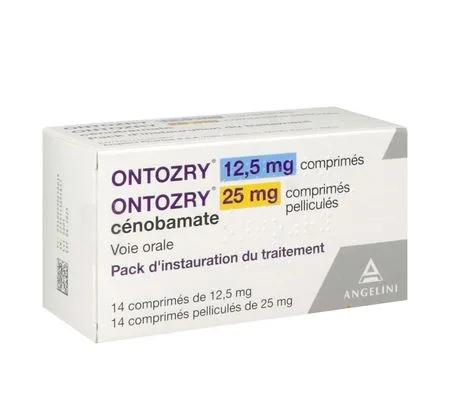
ONTOZRY 12,5/25 mg, initiation kit tablet
Forms and presentations
Marketed products
ONTOZRY 100 mg, film-coated tablet
ONTOZRY 200 mg, film-coated tablet
ONTOZRY 12,5/25 mg, initiation kit tablet
ONTOZRY 50 mg, film-coated tablet
ONTOZRY 150 mg, film-coated tablet
Products not marketed
ONTOZRY 25 mg, film-coated tablet
Ontozry 12,5 mg tablets
Tablet
Ontozry 25 mg, 50 mg, 100 mg, 150 mg and 200 mg film-coated tablets
Film-coated tablet
Ontozry 12,5 mg tablets
Round, non-film-coated tablet, white to off-white, engraved AV on one side and "12" on the other side
Ontozry 25 mg film-coated tablets
Round, brown film-coated tablet, engraved AV on one side and "25" on the other side
Ontozry 50 mg film-coated tablets
Round, yellow film-coated tablet, engraved AV on one side and "50" on the other side
Ontozry 100 mg film-coated tablets
Round, brown film-coated tablet, engraved AV on one side and "100" on the other side
Ontozry 150 mg film-coated tablets
Round, light orange film-coated tablet, engraved AV on one side and "150" on the other side
Ontozry 200 mg film-coated tablets
Oval, light orange film-coated tablet, engraved AV on one side and "200" on the other side
Composition
Ontozry 12,5 mg tablets
Each tablet contains 12,5 mg of cenobamate.
Ontozry 25 mg film-coated tablets
Each film-coated tablet contains 25 mg of cenobamate.
Ontozry 50 mg film-coated tablets
Each film-coated tablet contains 50 mg of cenobamate.
Ontozry 100 mg film-coated tablets
Each film-coated tablet contains 100 mg of cenobamate.
Ontozry 150 mg film-coated tablets
Each film-coated tablet contains 150 mg of cenobamate.
Ontozry 200 mg film-coated tablets
Each film-coated tablet contains 200 mg of cenobamate.
Excipient(s) with known effect:
Each 12,5 mg tablet contains 39,7 mg of lactose monohydrate.
Each 25 mg film-coated tablet contains 79,3 mg of lactose monohydrate.
Each 50 mg film-coated tablet contains 158,7 mg of lactose monohydrate.
Each 100 mg film-coated tablet contains 108,7 mg of lactose monohydrate.
Each 150 mg film-coated tablet contains 163 mg of lactose monohydrate.
Each 200 mg film-coated tablet contains 217,4 mg of lactose monohydrate.
The tablet and the film-coated tablet contain : lactose monohydrate, magnesium stearate (E470b), microcrystalline cellulose (E460), anhydrous colloidal silica (E551), sodium starch glycolate.
Film coating
25 mg and 100 mg film-coated tablets: indigo carmine aluminium lake (E132), red iron oxide (E172), yellow iron oxide (E172), macrogol, partially hydrolysed polyvinyl alcohol (E1203), talc (E553b), titanium dioxide (E171).
50 mg film-coated tablets: yellow iron oxide (E172), macrogol, partially hydrolysed polyvinyl alcohol (E1203), talc (E553b), titanium dioxide (E171).
150 mg and 200 mg film-coated tablets: red iron oxide (E172), yellow iron oxide (E172), macrogol, partially hydrolysed polyvinyl alcohol (E1203), talc (E553b), titanium dioxide (E171).
Indications
Ontozry is indicated in adults with epilepsy not controlled by at least two prior treatments, for the adjunctive treatment of partial-onset seizures with or without secondary generalisation.
Dosage and administration
Dosage
Adults
The recommended initial dose of cenobamate is 12,5 mg per day, gradually increased to the recommended target dose of 200 mg per day. Depending on the clinical response, the dose may be increased up to a maximum of 400 mg per day.
Table 1 presents the titration recommendations that must be followed because of the risk of serious adverse reactions (see section Adverse effects).
|
Treatment phase |
Dose (per day, oral route) |
Duration |
|
Initiation of treatment |
12,5 mg |
Weeks 1 and 2 |
|
25 mg |
Weeks 3 and 4 |
|
|
Gradual increase |
50 mg |
Weeks 5 and 6 |
|
100 mg |
Weeks 7 and 8 |
|
|
150 mg |
Weeks 9 and 10 |
|
|
Target dose |
200 mg |
Weeks 11 and 12 and onwards |
|
Dose optimisation |
Some patients who do not have optimal seizure control may benefit from doses above 200 mg (increased in steps of 50 mg/day every two weeks) up to a maximum of 400 mg per day. |
|
Missed doses
If a patient misses a dose, it is recommended to take the daily dose as soon as possible, unless there are less than 12 hours left before the time scheduled for the next dose.
Discontinuation of treatment
It is recommended to discontinue treatment gradually, in order to reduce the risk of seizures due to rebound effect (i.e. over at least 2 weeks), unless abrupt discontinuation is required for safety reasons.
Elderly people (65 years and over)
Clinical studies of cenobamate have not included sufficient numbers of patients aged 65 years and over to determine whether their response to treatment differs from that of younger patients. Elderly patients treated with antiepileptics appear to have a higher incidence of adverse reactions such as fatigue, gait disturbances, falls, ataxia, balance disorders, dizziness and somnolence. In general, caution should be exercised when adjusting the dose for an elderly patient, starting at the lower end of the dosage range, to take into account the decreased renal and hepatic function more common in this population, as well as comorbidities and potential interactions in these polymedicated patients (see section Warnings and precautions).
Renal impairment
Caution should be exercised and a reduction of the target dose should be considered when using cenobamate in patients with mild to moderate renal impairment (creatinine clearance of 30 to < 90 ml/min) or severe renal impairment (creatinine clearance < 30 ml/min). The maximum recommended dose for patients with mild, moderate or severe renal impairment is 300 mg/day. The use of cenobamate is not recommended in patients with end-stage renal disease or in patients undergoing haemodialysis.
Hepatic impairment
Patients with chronic liver disease are more exposed to cenobamate. A change in the initial dose is not necessary; however, a reduction of up to 50% of the target doses may be considered. The maximum recommended dose in patients with mild or moderate hepatic impairment is 200 mg/day. The use of cenobamate is not recommended in patients with severe hepatic impairment.
Paediatric population
The safety and efficacy of Ontozry in children aged 0 months to 18 years have not yet been established. No data are available.
Method of administration
Oral use.
Cenobamate should generally be taken once daily as a single oral dose at a chosen time of the day. It is preferable to take it at the same time each day. It may be taken with or without food (see section Pharmacokinetics). Tablets should be swallowed whole with a glass of water. In the absence of a breaking score, tablets cannot be divided accurately.
Tablets may be taken whole or crushed. Crushed tablets may be mixed with water and administered orally or via nasogastric tube (refer to the section Disposal and handling).
Administration of crushed tablets via nasogastric tube
Crushed Ontozry tablets may be mixed with water and administered via a nasogastric tube as follows:
- Crush the appropriate number of tablets for the prescribed dose.
- In a suitable container, mix the crushed tablet(s) with 25 ml of water.
- Shake to suspend the crushed tablet(s).
- Ensuring that no particles remain in the container, draw up the suspension into a syringe and instil it into the nasogastric tube.
- Refill the syringe with 10 ml of water, shake gently and administer into the nasogastric tube.
- Visually check that no particles remain in the syringe. If particles remain, repeat step 5.
Contraindications
Hypersensitivity to the active substance or to any of the excipients listed in section Composition.
Familial short QT syndrome (see section Warnings and precautions).
Warnings and precautions
Suicidal ideation
Suicidal ideation and behaviour have been reported in patients treated with antiepileptic medicinal products including cenobamate. A meta-analysis of randomised placebo-controlled studies of antiepileptic medicinal products also showed a small increased risk of suicidal ideation and behaviour. The mechanism of this risk is unknown. Patients should therefore be monitored for signs of suicidal ideation and behaviour and appropriate treatment should be considered.
Patients (and their carers) should be advised to seek medical advice if signs of suicidal ideation or behaviour occur.
Drug reaction with eosinophilia and systemic symptoms (DRESS syndrome)
A drug reaction with eosinophilia and systemic symptoms (DRESS syndrome [Drug Reaction with Eosinophilia and Systemic Symptoms]), which may be life-threatening or fatal, has been reported with cenobamate when treatment was initiated at higher doses followed by rapid dose escalation (weekly or more frequent) (see section Adverse effects). No cases of DRESS syndrome were reported in an open-label safety study conducted in 1 340 epileptic patients when cenobamate was initiated at 12,5 mg/day with dose escalation every two weeks.
At the time of prescription, patients must be informed of the signs and symptoms of DRESS syndrome and the occurrence of skin reactions must be closely monitored. Symptoms of DRESS syndrome generally include, but are not limited to, fever, a rash associated with involvement of other organ systems, lymphadenopathy, abnormal liver function tests and eosinophilia. It is important to note that early manifestations of hypersensitivity, such as fever or lymphadenopathy, may be present even when the rash is not visible. If signs and symptoms suggestive of these reactions appear, cenobamate must be discontinued immediately and an alternative treatment should be considered (where applicable).
Hepatic impairment
Elevations of hepatic enzymes as well as rare cases of severe liver injury with hepatic failure have been reported in patients treated with cenobamate. Many cases occurred in the clinical context of polytherapy with other antiepileptic medicinal products (see section Adverse effects).
Serum transaminases (ALT and AST), gamma-glutamyl transferase (GGT), alkaline phosphatases and total bilirubin should be assessed before initiation of cenobamate and monitored during treatment. In case of suspicion or detection of liver injury, dose reduction or discontinuation of cenobamate should be considered.
Shortening of the QT interval
A dose-dependent shortening of the QTcF interval has been observed with cenobamate. No shortening of the QTcF interval below 340 ms has been observed (see section Pharmacodynamics). Clinical studies have not shown that the combination of cenobamate with other antiepileptic medicinal products intensifies the shortening of the QT interval. Clinicians should exercise caution when prescribing cenobamate in combination with other medicinal products known to shorten the QT interval.
Familial short QT syndrome is a rare genetic syndrome associated with an increased risk of sudden death and ventricular arrhythmias, in particular ventricular fibrillation. Cenobamate must not be used in patients with familial short QT syndrome (see section Contraindications).
Lactose
Patients with rare hereditary disorders such as galactose intolerance, total lactase deficiency or glucose-galactose malabsorption syndrome should not take this medicinal product.
Interactions
Cenobamate is extensively metabolised, mainly by glucuronidation, with oxidation contributing to a lesser extent.
Cenobamate may reduce exposure to products primarily metabolised by CYP3A4 and CYP2B6. Cenobamate may increase exposure to products primarily metabolised by CYP2C19. When initiating or discontinuing cenobamate treatment, or changing the dose, 2 weeks may be needed before the new level of enzyme activity is reached.
Pharmacodynamic interactions
CNS depressants
Concomitant use of cenobamate with other CNS depressants, including alcohol, barbiturates and benzodiazepines, may increase the risk of neurological adverse reactions. Therefore, depending on individual response, doses of barbiturates and benzodiazepines should be reduced as necessary when used concomitantly with cenobamate.
Interactions with other antiepileptic molecules
|
Medicinal products or substrates |
Clinical recommendation |
Effects on pharmacokinetic parameters |
|
Antiepileptic medicinal products |
||
|
Phenytoin |
No dose adjustment of cenobamate is necessary.
|
↑ plasma concentrations of phenytoin.
|
|
Phenobarbital |
No dose adjustment of cenobamate is necessary.
|
↑ plasma concentrations of phenobarbital
|
|
Clobazam |
No dose adjustment of cenobamate is necessary.
|
↑ plasma concentrations of active metabolites of clobazam
|
|
Lamotrigine |
Depending on individual response, it may be necessary to increase the cenobamate dose
|
↓ plasma concentrations of lamotrigine
|
|
Carbamazepine |
No clinically significant decrease in efficacy was observed in patients taking carbamazepine concomitantly with cenobamate. Therefore, no dose adjustment is necessary for carbamazepine and cenobamate |
↓ plasma concentrations of carbamazepine
|
|
Valproic Acid |
No dose adjustment is necessary for cenobamate and valproic acid |
No clinically relevant effects of valproic acid.
|
|
Lacosamide, Levetiracetam and Oxcarbazepine |
No dose adjustment is necessary for cenobamate, lacosamide, levetiracetam or oxcarbazepine. |
No clinically significant effects of lacosamide, levetiracetam or oxcarbazepine.
|
Other medicinal products
|
Medicinal products or substrates |
Clinical Recommendation |
Effect on pharmacokinetic parameters |
|
Oral contraceptives (CYP3A4) |
Women of childbearing potential using oral contraceptives concomitantly should therefore use an additional or different non-hormonal method of contraception (see section Fertility, pregnancy and breastfeeding). |
↓ plasma concentrations of oral contraceptives
|
|
Substrates of CYP3A4 |
It may be necessary to increase the dose of medicinal products metabolised by CYP3A4 when used concomitantly with cenobamate. |
↓ plasma concentrations of CYP3A4 substrates
|
|
Substrates of CYP2B6 |
It may be necessary to increase the dose of medicinal products metabolised by CYP2B6 when used concomitantly with cenobamate. |
↓ plasma concentrations of CYP2B6 substrates.
|
|
Substrates of CYP2C19 |
It may be necessary to reduce the dose of medicinal products metabolised by CYP2C19 when used concomitantly with cenobamate. |
↑ plasma concentrations of CYP2C19 substrates
|
|
Substrates of OAT3 |
Concomitant administration of cenobamate and medicinal products transported by OAT3 may result in higher exposure to these medicinal products. |
↑ plasma concentrations of OAT3 substrates.
|
Fertility, pregnancy and breastfeeding
Women of childbearing potential and contraception in men and women
Cenobamate is not recommended in women of childbearing potential not using contraception. Women of childbearing potential using oral contraceptives concomitantly must use an additional non-hormonal contraceptive or an alternative method of contraception during treatment with cenobamate and for 4 weeks after discontinuation of treatment (see section Interactions).
Pregnancy
Risk related to epilepsy and antiepileptic medicinal products in general
The prevalence of malformations has been shown to be two to three times higher in children of treated epileptic women compared with the general population (malformation rate of approximately 3%). In the treated population, an increase in malformations has been observed with polytherapy; however, the role of the treatment and/or the underlying condition could not be determined. Discontinuation of antiepileptic treatments may lead to an exacerbation of the disease which could be harmful to the mother and the foetus.
Risk related to cenobamate
There are no adequate data on the use of Ontozry in pregnant women.
Studies performed in rats have shown that cenobamate crosses the placenta. Studies performed in animals have demonstrated reproductive toxicity at exposure levels below clinical exposure (see section Preclinical safety). Ontozry should not be used during pregnancy unless the clinical condition of the woman requires treatment with cenobamate.
Women of childbearing potential must use effective contraception during cenobamate treatment and for 4 weeks after discontinuation of treatment (see section Interactions).
Breast-feeding
It is not known whether cenobamate and its metabolites are excreted in human milk.
Studies in rats have shown excretion of cenobamate in milk (see section Preclinical safety). A risk to newborns/infants cannot be excluded. As a precaution, breastfeeding should preferably be discontinued during treatment with Ontozry.
Fertility
The effects of cenobamate on human fertility are unknown. Studies performed in animals are insufficient due to exposure below clinical levels (see section Preclinical safety).
Driving and using machines
Ontozry has a moderate influence on the ability to drive and use machines. Cenobamate may cause somnolence, dizziness, fatigue, impaired vision and other CNS-related symptoms, which may affect the ability to drive or use machines. Patients are advised not to drive, not to operate complex machinery or not to engage in other potentially hazardous activities until it is known whether cenobamate affects their ability to perform these tasks (see section Adverse effects).
Adverse effects
Summary of the safety profile
The most frequently reported adverse reactions were somnolence, dizziness, fatigue and headache.
Discontinuation rates due to adverse reactions in clinical studies were 5%, 6% and 19% in patients randomised to receive cenobamate at doses of 100 mg/day, 200 mg/day and 400 mg/day, respectively, compared with 3% in patients randomised to placebo. The 400 mg dose was more associated with adverse reactions, particularly when taken concomitantly with clobazam.
The adverse reactions that most often led to treatment discontinuation, in decreasing order of frequency, were: ataxia (1,6% vs 0,5% for placebo), dizziness (1,6% vs 0,5% for placebo), somnolence (1,4% vs 0,5% for placebo), nystagmus (0,7% vs 0% for placebo), vertigo (0,7% vs 0% for placebo) and diplopia (0,5% vs 0% for placebo). These adverse reactions are dose-dependent and the gradual dose escalation schedule must be strictly followed.
Tabulated list of adverse reactions
The adverse reactions reported in clinical studies are listed in table 2 by system organ class (SOC) and by frequency. Within each frequency grouping, adverse reactions are presented in order of decreasing seriousness: very common (≥ 1/10); common (≥ 1/100, < 1/10); uncommon (≥ 1/1 000, < 1/100) and rare (≥ 1/10 000, < 1/1 000).
|
System organ class |
Frequency |
Adverse effects during clinical trials |
|
Immune system disorders |
Uncommon |
Hypersensitivity* |
|
Psychiatric disorders |
Common |
Confusional state, irritability |
|
Uncommon |
Suicidal ideation |
|
|
Nervous system disorders |
Very common |
Somnolence*, abnormalities of coordination and gait*, headache |
|
Common |
Dysarthria, nystagmus, aphasia, memory impairment. |
|
|
Eye disorders |
Common |
Diplopia, blurred vision |
|
Gastrointestinal disorders |
Common |
Constipation, diarrhoea, nausea, vomiting, dry mouth |
|
Skin and subcutaneous tissue disorders |
Common |
Skin rash* |
|
Rare |
Drug reaction with eosinophilia and systemic symptoms (DRESS syndrome) |
|
|
Hepatobiliary disorders |
Rare |
Hepatic impairment |
|
Common |
Increased liver enzyme* |
* Associated terms: somnolence: somnolence, fatigue, sedation and hypersomnia; abnormalities of coordination and gait : dizziness, vertigo, balance disorders, ataxia, gait disturbances and abnormal coordination; hypersensitivity: hypersensitivity, drug hypersensitivity, eyelid oedema; skin rash: skin rash, erythematous rash, generalised rash, macular rash, maculopapular rash, morbilliform rash, papular rash, pruritic rash; increased liver enzymes: elevation of alanine aminotransferase, elevation of aspartate aminotransferase, elevation of liver enzymes, abnormal liver function, elevation of transaminases, increase in gamma-glutamyl transferase.
Description of particular adverse reactions
Drug reaction with eosinophilia and systemic symptoms (DRESS syndrome)
Three cases of DRESS syndrome were reported in 2 to 4 weeks following initiation of cenobamate in studies conducted with high initial doses (50 mg or 100 mg once daily) and a progressive increase in the weekly or more frequent dose. No cases of DRESS syndrome were reported in an open-label safety study conducted in 1 340 epileptic patients when cenobamate was initiated at 12,5 mg/day and increased every two weeks.
At the time of prescription, patients must be informed of the signs and symptoms of DRESS syndrome and closely monitored for skin reactions. Symptoms of DRESS syndrome generally include, but are not limited to, fever, a skin rash associated with involvement of other organ systems, lymphadenopathy, abnormal liver function tests and eosinophilia. It is important to note that early manifestations of hypersensitivity, such as fever or lymphadenopathy, may be present even if the skin rash is not visible. If signs and symptoms suggestive of these reactions appear, cenobamate must be stopped immediately and another treatment should be considered (as appropriate). Ontozry must always be initiated at a dose of 12,5 mg once daily and titrated at most once every two weeks (see sections Dosage and administration and Warnings and precautions).
Hepatobiliary disorders
Hepatic disorders, including marked elevations of hepatic transaminases and bilirubin as well as cases of hepatic failure, have been reported during treatment with cenobamate. Many cases occurred in the context of polytherapy with other antiepileptic drugs. In most cases, dose reduction or discontinuation of cenobamate was followed by rapid normalisation of serum transaminases (see section Warnings and precautions).
Hypersensitivity
Four (0,9%) patients treated with cenobamate and one (0,5%) patient on placebo experienced a hypersensitivity event. Two patients in the cenobamate group experienced drug hypersensitivity events. One patient treated with cenobamate experienced a hypersensitivity event and one patient treated with cenobamate experienced an event of eyelid oedema. The patient on placebo experienced a hypersensitivity event. All events were classified as mild or moderate.
Elderly
Safety data from the pooled dataset of double-blind studies and all phase 2/3 studies, as well as pharmacokinetic data from a phase 1 study, showed no additional safety risk in subjects aged ≥ 65 years at study entry. Further pooling by age for subjects aged ≥ 65 years during study participation showed similar results for adverse reactions in these 87 subjects compared with the 51 subjects aged ≥ 65 years at study entry (see section Dosage and administration).
Reporting of suspected adverse reactions
The reporting of suspected adverse reactions after marketing authorisation of the medicinal product is important. It allows continuous monitoring of the benefit/risk balance of the medicinal product. Healthcare professionals report any suspected adverse reaction via the national reporting system-see Appendix V.
Overdose
Symptoms of overdose are expected to correspond to the known adverse effects of Ontozry and include drowsiness, fatigue and dizziness. There is no specific antidote for the effects of cenobamate. General symptomatic treatment of the patient is indicated, including monitoring of vital signs and observation of the patient's clinical condition.
Pharmacodynamics
Pharmacotherapeutic class: antiepileptics, other antiepileptics, ATC code: N03AX25.
Mechanism of action
Cenobamate is a small molecule with a dual mechanism of action. It is a positive allosteric modulator of subtypes of the acid ion channel γ-aminobutyric (GABAA), which does not bind to the benzodiazepine binding site. Cenobamate reduces repetitive neuronal firing by enhancing sodium channel inactivation and inhibiting persistent sodium current. The precise mechanism of action by which cenobamate exerts its therapeutic effects in patients with focal seizures is unknown.
Pharmacodynamic effects
Cardiac electrophysiology
In a controlled study assessing the effect of cenobamate versus placebo on the interval in healthy volunteers, a dose-dependent shortening of the QTcF interval was observed with cenobamate. The mean ΔΔ ΔΔQTcF interval is -10,8 ms [CI: -13,4, -8,2] for 200 mg once daily and -18,4 ms [CI: -21,5, -15,2] for 500 mg once daily (1,25 times the maximum recommended dose). No reduction of the QTc interval below 340 ms was observed (see section Warnings and precautions).
Clinical efficacy and safety
The efficacy of cenobamate as adjunctive treatment for partial-onset seizures was studied in a multicentre, randomised, double-blind, placebo-controlled study in adult patients whose partial epilepsy was not adequately controlled by previous antiepileptic treatments. Patients were treated with one to three concomitant antiepileptic drugs, kept at a stable dose during the double-blind study. The daily dose of cenobamate was 100 to 400 mg/day.
The study included an initial period of 8 weeks, during which patients had to experience at least 3 or 4 partial seizures over 28 days and no seizure-free period exceeding 3 to 4 weeks, followed by a treatment period of 18 weeks, including 12 weeks at fixed dose. The antiepileptic drugs most frequently taken at study entry were levetiracetam, lamotrigine, carbamazepine and lacosamide. All subjects entering the study continued to have seizures, although a majority had already received 2 or more antiepileptic drugs. More than 80% of patients were taking two or more concomitant antiepileptic drugs at study entry. The efficacy results are summarised in table 3.
The study compared cenobamate doses of 100 mg/day, 200 mg/day and 400 mg/day with placebo, in addition to background therapy. Subjects received stable-dose background therapy consisting of one to three antiseizure medications. Patients started treatment at a daily dose of 50 mg, which was then increased by 50 mg/day each week until reaching 200 mg/day, then by 100 mg/day each week in subjects randomised to 400 mg/day.
Table 3 shows the proportion of patients who had a reduction of 50 % or more in seizure frequency compared with baseline.
|
Study |
Background therapy and placebo |
Background therapy and cenobamate |
||
|
100 mg/day |
200 mg/day |
400 mg/day |
||
|
Study C017 |
||||
|
n = 102 |
n = 102 |
n = 98 |
n = 95 |
|
|
Responder rate at 50 %1 |
26 (25,5 %) |
41 (40,2 %) |
55 (56,1 %) |
61 (64,2 %) |
|
Difference cenobamate - placebo |
14,7 %
|
30,6 %
|
38,7 %
|
|
1 More than 12 weeks of double-blind treatment, at fixed dose
Figure 1 presents the percentage of patients by seizure response category during the maintenance phase with increasingly stringent response criteria.
Figure 1: Cumulative distribution of seizure reduction from baseline during the 12-week maintenance phase
In the study, 4 of 102 patients (3,9 %) in the cenobamate 100 mg/day group, 11 of 98 patients (11,2 %) in the cenobamate 200 mg/day group, 20 of 95 patients (21,1 %) in the cenobamate 400 mg/day group and 1 of 102 patient (1 %) in the placebo group were seizure-free (100 % seizure reduction) during the 12-week maintenance phase. Similar responses were observed in subpopulations with seizure frequency above or below the median and with disease duration above or below the median.
Open-label long-term study
The majority of subjects were included in the open-label extension phase of study 1 (98,9 %). 80 % of subjects continued the study for at least 12 months and 58 % for at least 60 months. Additional seizure frequency data were collected and were consistent with the results of the initial double-blind study.
Paediatric population
The European Medicines Agency has deferred the obligation to submit the results of studies conducted with Ontozry in one or more subgroups of the paediatric population with epilepsy (see section Dosage and administration for information on paediatric use).
Pharmacokinetics
Absorption
Cenobamate is readily absorbed (at least 88 % recovered in urine) after oral administration, with a median Tmax valuemax ranging from 1 to 4 hours after fasting administration of a single or multiple doses, between 10 and 400 mg.
Concomitant administration with a high-fat meal (800 to 1 000 kcal with 50 % fat) showed no significant effect on the rate or extent of cenobamate absorption.
Plasma exposure to cenobamate as crushed tablets mixed with water, administered orally or via nasogastric tube, was comparable to that of whole tablets (confidence intervals for AUC and Cmax between 80 and 125 %). The median Tmax of crushed tablets is 0,5 hour.
Distribution
The apparent volume of distribution (Vd/F) of cenobamate after oral administration is approximately 40 to 50 litres. In vitro studies indicate that binding of cenobamate to plasma proteins is 60 % and is concentration-independent. Cenobamate binds mainly to albumin.
Biotransformation
Cenobamate is extensively metabolised. The main metabolic pathway is glucuronidation by UGT2B7 and, to a lesser extent, by UGT2B4. Minor metabolic pathways include oxidation by CYP2E1, CYP2A6, CYP2B6 and, to a lesser extent, by CYP2C19 and CYP3A4/5.
Elimination
Cenobamate and its metabolites are mainly eliminated via the urine. Elimination via the faeces accounts for only 5,2 % of the dose. More than 50 % of the dose is excreted within 72 hours. The apparent terminal half-life of cenobamate in plasma is 50 to 60 hours for doses between 100 mg/day and 400 mg/day. Steady state is reached after 14 days.
Linearity/non-linearity
The Cmax of cenobamate increases proportionally with increasing doses after single oral (between 5 and 750 mg) and repeated (between 50 and 500 mg/day) dose administration. Steady-state exposures (Cmax and AUC) increase proportionally with increasing doses between 100 and 400 mg), whereas doses below 100 mg/day may be eliminated more rapidly.
Special populations
Renal impairment
The plasma AUC of cenobamate is 1,4 times to 1,5 times higher in subjects with mild renal impairment (CLcr 60 to < 90 ml/min) and moderate (CLcr 30 to < 60 ml/min) renal impairment after a single oral dose of 200 mg of cenobamate compared with healthy volunteers. In subjects with severe renal impairment (CLcr < 30 ml/min), the plasma AUC of cenobamate does not change significantly compared with healthy volunteers after a single oral dose of 100 mg of cenobamate (see section Dosage and administration). The effect of haemodialysis on the pharmacokinetics of cenobamate has not been studied.
Hepatic impairment
The plasma AUC of cenobamate is 1,9 times and 2,3 times higher in subjects with mild and moderate hepatic impairment, respectively, after administration of a single oral dose of 200 mg of cenobamate compared with matched healthy volunteers (see section Dosage and administration). The effect of severe hepatic impairment on the pharmacokinetics of cenobamate has not been studied.
Sex
No difference has been observed in the pharmacokinetics of cenobamate between men and women.
Ethnic origin
No clinically significant effect of ethnic origin on the pharmacokinetics of cenobamate has been noted in a population PK analysis of pooled data from clinical studies conducted in subjects of Asian, Black, Caucasian, Hispanic or other origin.
Body weight
A 45 % decrease in exposure was estimated for a body weight ranging from 54 to 112 kg. This variability is not clinically relevant for determining the cenobamate dose. However, adjustments of the cenobamate dose may be necessary in patients with weight changes of 30 % or more of their initial weight.
Elderly people (65 years and over)
Data from subjects aged 18 years to 77 years show no clinically significant difference in the pharmacokinetics of cenobamate according to age.
Paediatric population
The safety and efficacy of Ontozry in patients aged less than 18 years have not been established.
Preclinical safety
Non-clinical data from conventional safety pharmacology, genotoxicity and carcinogenicity studies revealed no particular risk for humans. However, the maximum systemic exposure obtained in the carcinogenicity study in rats was lower than that achieved in humans at the maximum recommended human dose (MRHD) of 400 mg.
Repeated dose toxicity
The maximum doses in repeated-dose toxicity studies were limited by exaggerated CNS effects of cenobamate (notably hypoactivity, uncoordinated gait, hypothermia and tremors). The systemic exposures observed at the NOAELs (No Observed Adverse Effect Levels) were similar to or lower than those resulting from the MRHD in humans.
Toxicity to reproductive and developmental functions
Reproductive toxicity studies with once-daily oral administration showed toxic effects on embryo-foetal and postnatal development. No toxic effect on fertility was observed in a study conducted in rats. However, the systemic exposures at the respective NOAELs for the fertility, embryo-foetal development and pre- and postnatal development studies were lower than those observed at the maximum recommended human dose (MRHD).
With oral administration of cenobamate twice daily to female rats and once daily to female rabbits during the period of organogenesis, no teratogenic effect was observed. However, administration of cenobamate to pregnant rabbits resulted in increased embryo-foetal mortality at dose levels associated with maternal toxicity. The systemic exposure observed at the respective NOELs (No Observed Effect Levels) was lower than that resulting from the MRHD in humans.
With administration of cenobamate to female rats throughout gestation and lactation, neurobehavioural disturbances (increased acoustic startle reflex) were observed in the offspring at all doses; a decrease in body weight gain before weaning as well as toxic effects on female reproductive function (decreased numbers of corpora lutea, implantations and live foetuses) were observed in the offspring at the high dose.
The transfer of cenobamate into the placenta and breast milk was confirmed by the presence of cenobamate in the amniotic fluid and fetal blood of pregnant rats and in the breast milk of lactating rats.
The environmental risk assessment demonstrated that cenobamate is very persistent (vP) in aquatic systems (see section Disposal and handling).
SPECIAL PRECAUTIONS FOR DISPOSAL AND OTHER HANDLING
Cenobamate is very persistent (vP) in aquatic systems. Any unused medicinal product or waste material should be disposed of in accordance with local requirements.
Crushed tablets may also be administered via a nasogastric tube, in which case the tablets may be crushed into powder and mixed with water (25 ml).
Refer to section Dosage and administration for detailed information on administration via nasogastric tube.
Prescription, supply and reimbursement
| Marketing authorisation (AMM) |
|
| Price: |
|
Remb Séc soc at 65%. Collect.
| Marketing authorisation (AMM) |
|
| Price: |
|
Remb Séc soc at 65%. Collect.
| Marketing authorisation (AMM) |
|
| Price: |
|
Remb Séc soc at 65%. Collect.
| Marketing authorisation (AMM) |
|
| Price: |
|
Remb Séc soc at 65%. Collect.
| Marketing authorisation (AMM) |
|
| Price: |
|
Remb Séc soc at 65%. Collect.
Marketing Authorisation Holder : Angelini Pharma S.p.A, Viale Amelia 70, 00181, Rome - Italy
55, AVENUE DE COLMAR
92500 RUEIL-MALMAISON
press@angelinipharma.com
ttps://www.angelinipharma.com
Source: VIDAL · Updated on 11/11/2026. This information does not replace advice from a healthcare professional.