
Medicines
Update of 10/03/2026
NOVORAPID®
insulin aspart
Forms and presentations
NovoRapid vial:
Injectable solution SC or IV at 100 units/ml (clear, colourless and aqueous): Vial of 10 ml, sealed with a disc and a tamper-evident plastic protective cap.
NovoRapid FlexPen:
SC injectable solution at 100 units/ml (clear, colourless and aqueous): Cartridges of 3 ml in a prefilled disposable multi-dose injection pen, pack of 5.
NovoRapid Penfill:
SC injectable solution at 100 units/ml (clear, colourless and aqueous): Cartridges of 3 ml, box of 5.
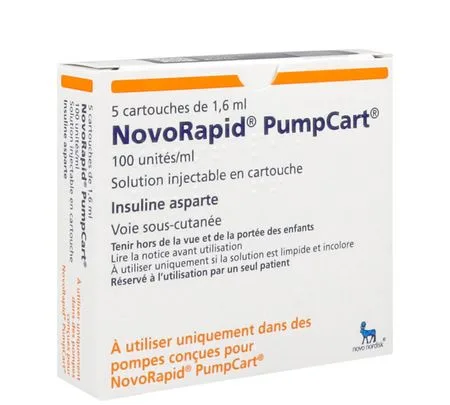
NovoRapid PumpCart:
SC injectable solution at 100 units/ml (clear, colourless and aqueous): Cartridges of 1,6 ml, pack of 5.
Composition
NovoRapid vial:
| per vial | |
| Insulin aspart*
|
1000 units |
NovoRapid FlexPen:
| per pen | |
| Insulin aspart*
|
300 units |
NovoRapid Penfill:
| per cartridge | |
| Insulin aspart*
|
300 units |
NovoRapid PumpCart:
| per cartridge | |
| Insulin aspart*
|
160 units |
1 ml of solution contains 100 units of insulin aspart, equivalent to 3,5 mg.
* Manufactured in Saccharomyces cerevisiae by recombinant DNA technology.Indications
NovoRapid is indicated for the treatment of diabetes in adults, adolescents and children from 1 year of age.Dosage and administration
DosageThe insulin content of insulin analogues, including insulin aspart, is expressed in units, whereas the insulin content of human insulin is expressed in international units.
The dosage of NovoRapid depends on each individual and is determined according to the patient's needs. As a general rule, NovoRapid is used in combination with an intermediate-acting or long-acting insulin. In addition, NovoRapid vial and NovoRapid PumpCart may be used in continuous subcutaneous insulin infusion (CSII) in a pump.
NovoRapid vial may also be used, by a physician or other medical staff member, if intravenous administration of insulin aspart is necessary.
Blood glucose monitoring and insulin dose adjustment are recommended in order to achieve optimal glycaemic control.
Individual insulin requirements in adults and children generally range between 0,5 and 1,0 unit/kg/day. When administered in a basal-bolus regimen, 50 to 70 % of these requirements may be covered by NovoRapid and the remainder by intermediate-acting or long-acting insulin.
A dose adjustment may be necessary if the patient increases physical activity, changes their usual diet or in case of concomitant illness.
- Special populations:
-
- Elderly subjects (≥ 65 years):
- NovoRapid can be used in elderly patients. Glycaemic control needs to be intensified and the insulin aspart dose individually adjusted in elderly patients.
-
- Renal or hepatic impairment:
- Renal or hepatic impairment may reduce the patient's insulin requirements. Glycaemic control needs to be intensified and the insulin aspart dose individually adjusted in patients with renal or hepatic impairment.
- Paediatric population:
- In children and adolescents aged 1 year and above, NovoRapid may be preferred over soluble human insulin where a rapid onset of action may be useful, for example, to schedule injections in relation to meals (see PharmacodynamicsPharmacokinetics).
- The safety and efficacy of NovoRapid in children aged less than 1 year have not been established. No data are available.
- Replacing other insulins:
- When switching from other insulins, an adjustment of the dose of NovoRapid and of the basal insulin may be necessary. NovoRapid has a faster onset of action and a shorter duration of action than soluble human insulin. Following subcutaneous injection in the abdominal wall, insulin starts to act within 10 to 20 minutes after injection. Its maximum effect occurs from 1 to 3 hours after injection. Its duration of action is 3 to 5 hours.
- Close blood glucose monitoring is recommended during the change of treatment and during the first weeks (see Warnings and Precautions for Use).
Method of administration:
NovoRapid is a rapid-acting insulin analogue.
NovoRapid is administered subcutaneously by injection into the abdominal wall, thigh, upper arm, deltoid region or buttock. Rotation of injection sites should always be performed within the same region in order to reduce the risk of developing lipodystrophy and cutaneous amyloidosis (see Warnings and Precautions for UseAdverse effects). Subcutaneous injection into the abdominal wall provides faster absorption than other injection sites. Regardless of injection site, the onset of action of NovoRapid remains faster than that of soluble human insulin. The duration of action varies depending on dose, injection site, blood flow, temperature and the intensity of physical activity.
Due to its faster onset of action, NovoRapid should generally be administered immediately before a meal. If necessary, NovoRapid may be injected shortly after a meal.
- NovoRapid vial/NovoRapid PumpCart:
-
- Continuous subcutaneous insulin infusion (CSII):
- NovoRapid may be administered by CSII using an insulin infusion pump. CSII should be administered into the abdominal wall. Infusion sites should be rotated.
- When used in an insulin infusion pump, NovoRapid must never be mixed with another insulin.
- Patients treated with CSII will receive detailed instructions on the use of the pump and will use the reservoir and tubing suitable for the pump (see Handling and disposal instructions). The infusion set (tubing and cannula) must be replaced in accordance with the instructions given in the information leaflet attached to the infusion set.
- When NovoRapid is administered by CSII, the patient must have another insulin delivery system that they will use in case of pump failure.
- NovoRapid vial:
-
- Intravenous route:
- If necessary, NovoRapid can be administered intravenously by a doctor or another member of medical staff.
- Intravenously, infusion systems containing NovoRapid 100 units/ml at insulin aspart concentrations ranging from 0,05 unit/ml to 1,0 unit/ml in sodium chloride infusion solutions at 0,9 %, dextrose at 5 %, or dextrose at 10 % with 40 mmol/l potassium chloride, remain stable at room temperature for 24 hours in a polypropylene infusion bag.
- Despite their stability over time, a certain amount of insulin will adsorb to the infusion bag from the outset. Blood glucose must be monitored during the insulin infusion.
-
- Mixing of two types of insulins:
- NovoRapid may only be mixed with NPH (Neutral Protamine Hagedorn) insulin in a syringe for subcutaneous administration. When NovoRapid is mixed with NPH insulin, NovoRapid must be drawn into the syringe first and the solution must be injected immediately after mixing. Insulin mixtures must not be administered intravenously or used in continuous subcutaneous insulin infusion via a pump.
-
- Administration with a syringe:
- NovoRapid vials must be used with insulin syringes bearing an appropriate graduation. See also section Incompatibilities.
- NovoRapid Penfill:
-
- Administration with an insulin delivery system:
- NovoRapid Penfill is designed to be used with Novo Nordisk insulin delivery systems and NovoFine or NovoTwist needles. NovoRapid Penfill is suitable only for subcutaneous injections administered using a reusable pen. If administration by syringe or intravenous injection is necessary, a vial should be used. If administration by infusion pump is necessary, a vial or NovoRapid PumpCart should be used.
- NovoRapid FlexPen:
-
- Administration with FlexPen:
- NovoRapid FlexPen is a prefilled pen (with a colour code) designed to be used with single-use NovoFine or NovoTwist needles up to 8 mm in length. FlexPen allows injection of 1 to 60 units in increments of 1 unit. NovoRapid FlexPen is suitable only for subcutaneous injections. If administration by syringe or intravenous injection is necessary, a vial should be used. If administration by infusion pump is necessary, a vial or NovoRapid PumpCart should be used.
- NovoRapid PumpCart:
-
- Administration by continuous subcutaneous insulin infusion (CSII):
- NovoRapid PumpCart is to be used only with an insulin infusion pump designed for use with this cartridge, such as the Accu-Chek Insight and YpsoPump insulin pumps. CSII must be administered in the abdominal wall. Infusion sites must be rotated. NovoRapid PumpCart is suitable only for CSII using an insulin infusion pump. If administration by syringe or intravenous injection is necessary, a vial should be used.
For more detailed instructions for use, please refer to the package leaflet.
Contraindications
Hypersensitivity to the active substance or to any of the excipients (see Composition).Warnings and precautions
Before travelling to countries with different time zones, the patient should consult their doctor as they may need to take their insulin and meals at different times.
- NovoRapid PumpCart:
-
- Misuse of NovoRapid PumpCart:
- NovoRapid PumpCart is to be used only with an insulin pump designed for use with this cartridge, such as the Accu-Chek Insight and YpsoPump insulin pumps. It must not be used with other devices not designed for use with NovoRapid PumpCart, as this could result in administration of an incorrect dose of insulin and, consequently, hyperglycaemia or hypoglycaemia.
- Hyperglycaemia:
- An inadequate dosage or discontinuation of treatment, particularly in patients with type 1 diabetes, may lead to hyperglycaemia and diabetic ketoacidosis.
- In general, the first symptoms of hyperglycaemia develop gradually, over a few hours or a few days. They include thirst, increased urination, nausea, vomiting, drowsiness, dry and flushed skin, dry mouth, loss of appetite and acetone odour of the breath. In type 1 diabetes, untreated hyperglycaemic episodes may eventually lead to diabetic ketoacidosis, which is potentially fatal.
- Hypoglycaemia:
- Skipping a meal or unplanned strenuous physical exercise may lead to hypoglycaemia. Particularly in children, insulin doses (especially in a basal-bolus regimen) should be adjusted according to food intake, physical activity and blood sugar levels in order to minimise the risk of hypoglycaemia.
- Hypoglycaemia may occur if the insulin dose is too high for the patient's insulin requirements. In case of hypoglycaemia or suspected hypoglycaemia, NovoRapid must not be injected. After the patient's blood glucose has stabilised, a dose adjustment should be considered (see Undesirable effectsOverdose).
- Patients whose glycaemic control is markedly improved, for example as part of intensified insulin therapy, may experience a change in the usual warning signs of hypoglycaemia and should be made aware of this possibility. The usual warning signs may disappear in patients with long-standing diabetes.
- Given the mechanism of action (pharmacodynamics) of rapid-acting insulin analogues, a hypoglycaemic episode may occur more rapidly after injection of this insulin than after injection of soluble human insulin.
- Since NovoRapid must be administered immediately before or after a meal, its rapid onset of action must be taken into account in patients with concomitant diseases or taking other medicines, and in whom absorption of food may be delayed.
- Concomitant diseases, particularly infections and febrile conditions, generally increase the patient's insulin requirements. Concomitant diseases affecting the kidneys, liver, or adrenal, pituitary or thyroid glands may require adjustment of the insulin dose.
- If patients change to a different type of insulin, the warning signs of hypoglycaemia may change or become less pronounced than those experienced with their previous insulin.
- Replacing other insulins:
- In case of a change in insulin type or brand, the patient should be closely monitored medically. Changes in concentration, brand (manufacturer), type, origin (animal insulin, human insulin or human insulin analogue) and/or manufacturing method (recombinant DNA or animal-origin insulin) may require a change in dose. Patients switching to NovoRapid to replace another type of insulin may require an increase in the number of daily injections or a change in dose compared with their usual insulins. If an adjustment proves necessary, it may be made with the first dose or during the first weeks or first months.
- Injection site reactions:
- As with all insulin therapy, injection site reactions may occur, presenting as pain, redness, urticaria, inflammation, bruising, swelling and pruritus. Continuous rotation of injection sites within the same region reduces the risk of developing these reactions. These reactions generally disappear within a few days to a few weeks. In rare cases, injection site reactions may require discontinuation of NovoRapid.
- Skin and subcutaneous tissue disorders:
- Patients should be instructed to continuously rotate injection sites in order to reduce the risk of developing lipodystrophy and cutaneous amyloidosis. There is a potential risk of delayed insulin absorption and worsening glycaemic control following insulin injections at sites showing these reactions. A sudden change of injection site to an unaffected area has been reported to cause hypoglycaemia. Blood glucose monitoring is recommended after changing the injection site from an affected to an unaffected area, and adjustment of the dose of antidiabetic medicinal products may be considered.
- Association of NovoRapid with pioglitazone:
- Cases of heart failure have been reported when pioglitazone was used in combination with insulin, particularly in patients with risk factors for developing heart failure. This should be taken into account if treatment combining pioglitazone and NovoRapid is considered. If such a combination is initiated, these patients should be monitored for signs and symptoms of heart failure, weight gain and oedema. Pioglitazone should be discontinued if worsening of heart failure symptoms occurs.
- To prevent accidental confusion/medication errors:
- Patients should be instructed to always check the insulin label before each injection in order to avoid accidental confusion between NovoRapid and other insulins.
- Anti-insulin antibodies:
- Insulin administration may induce the formation of antibodies. In rare cases, the presence of anti-insulin antibodies may require an adjustment of the insulin dose to correct a tendency towards hyperglycaemia or hypoglycaemia.
- Traceability:
- In order to improve the traceability of biological medicinal products, the name and batch number of the product administered must be clearly recorded.
Interactions
A number of medicinal products are known to interact with glucose metabolism.
The following substances may reduce the patient's insulin requirements: oral antidiabetics, monoamine oxidase inhibitors (MAOIs), beta-blockers, angiotensin-converting enzyme (ACE) inhibitors, salicylates, anabolic steroids and sulfonamides.
The following substances may increase the patient's insulin requirements: oral contraceptives, thiazides, glucocorticoids, thyroid hormones, sympathomimetics, growth hormone and danazol.
Beta-blockers may mask the symptoms of hypoglycaemia.
Octreotide and lanreotide may either increase or decrease insulin requirements.
Alcohol may either intensify or reduce the hypoglycaemic effect of insulin.
Fertility, pregnancy and breastfeeding
Pregnancy:NovoRapid (insulin aspart) may be used during pregnancy. Data from two randomised controlled clinical trials (322 and 27 pregnant women exposed) show no harmful effects of insulin aspart on pregnancy or on the health of the foetus/newborn compared with human insulin (see Pharmacodynamics).
In pregnant women with diabetes (type 1 diabetes, type 2 diabetes or gestational diabetes), it is recommended to intensify glycaemic control and monitoring throughout pregnancy as well as when planning a pregnancy. Insulin requirements usually fall during the first trimester, then increase during the second and third trimesters. After delivery, insulin requirements generally return rapidly to pre-pregnancy levels.
Breastfeeding:
The administration of NovoRapid during breastfeeding is not subject to any restriction.
Insulin therapy for a breastfeeding mother presents no risk to the baby. However, it may be necessary to adjust the dose of NovoRapid.
Fertility:Reproduction studies performed in animals have not revealed differences between insulin aspart and human insulin with respect to fertility.
Driving and using machines
The patient's concentration abilities and reflexes may be diminished in the event of hypoglycaemia. This could constitute a risk in situations where these abilities are essential (for example, driving vehicles or operating machinery).Patients must be informed of the precautions to take in order to avoid any hypoglycaemia while driving vehicles. This is particularly important in patients who are little or poorly familiar with the warning signs of hypoglycaemia or who are prone to frequent hypoglycaemic episodes. In such circumstances, the ability to drive vehicles must be evaluated.
Adverse effects
- Summary of the safety profile:
- The adverse effects observed in patients treated with NovoRapid are most often due to the pharmacological action of insulin.
- The most frequently reported adverse effect during treatment is hypoglycaemia. The frequency of hypoglycaemia varies depending on the patient population, the doses used and the level of glycaemic control; see the paragraph Description of certain adverse effects below.
- At the start of insulin treatment, refractive disorders, oedema and injection site reactions (pain, redness, urticaria, inflammation, bruising, swelling and pruritus at the injection site) may occur. These reactions are usually transient. A rapid improvement in glycaemic control may be associated with acute painful neuropathy, which is usually reversible. Intensification of insulin therapy with a sudden improvement in glycaemic control may be associated with a transient worsening of diabetic retinopathy, whereas improvement of long-term glycaemic control decreases the risk of progression of diabetic retinopathy.
- Tabulated list of undesirable effects:
- The adverse reactions listed below are derived from clinical trial data and classified by MedDRA frequency and by system organ class. Frequency categories are defined according to the following conventions: very common (≥ 1/10); common (≥ 1/100, < 1/10); uncommon (≥ 1/1000, < 1/100); rare (≥ 1/10 000, < 1/1000); very rare (< 1/10 000); frequency not known (cannot be estimated from the available data).
-
Immune system disorders Uncommon Urticaria, rash, eruptions Very rare Anaphylactic reactions* Metabolism and nutrition disorders Very common Hypoglycaemia* Nervous system disorders Rare Peripheral neuropathy (painful neuropathy) Eye disorders Uncommon Refraction disorders, diabetic retinopathy Skin and subcutaneous tissue disorders Uncommon Lipodystrophy* Frequency not known Cutaneous amyloidosis*(1) General disorders and administration site conditions Uncommon Injection site reactions, oedema -
* See the paragraph Description of selected adverse reactions.
-
(1) ADRs derived from post-marketing data.
- Description of certain adverse effects:
-
- Anaphylactic reactions:
- The occurrence of generalised hypersensitivity reactions (including generalised skin eruptions, pruritus, sweating, gastrointestinal disorders, angioneurotic oedema, breathing difficulties, palpitations and decreased blood pressure) is very rare, but these reactions can potentially be life-threatening.
-
- Hypoglycaemia:
- The most frequently reported adverse reaction is hypoglycaemia. This occurs when the insulin dose is too high relative to the insulin requirement. Severe hypoglycaemia may lead to loss of consciousness and/or convulsions, and may cause temporary or permanent impairment of brain function, or even death. Symptoms of hypoglycaemia usually occur suddenly. They may include: cold sweats, pale and cold skin, fatigue, nervousness or tremor, anxiety, unusual weakness or weakness, confusion, difficulty concentrating, drowsiness, excessive hunger, visual disturbances, headache, nausea and palpitations.
- During clinical trials, the frequency of hypoglycaemia varied depending on the patient population, the doses used and the level of glycaemic control. During the clinical trials, the overall rate of hypoglycaemia was not different between patients treated with insulin aspart and those treated with human insulin.
-
- Skin and subcutaneous tissue disorders:
- Lipodystrophy (including lipohypertrophy, lipoatrophy) and cutaneous amyloidosis may occur at the injection site and delay the local absorption of insulin. Continuous rotation of injection sites within a given area may help to reduce or avoid these reactions (see Warnings and Precautions for Use).
- Paediatric population:
- Since marketing and during clinical trials, the frequency, type and severity of adverse effects observed in the paediatric population do not show any differences compared with greater experience acquired in the general population.
- Other special populations:
- Since marketing and during clinical trials, the frequency, type and severity of adverse effects observed in elderly patients and in patients with renal or hepatic impairment show no differences compared with greater experience gained in the general population.
Reporting suspected adverse reactions after authorisation of the medicinal product is important. It allows continuous monitoring of the benefit/risk balance of the medicinal product. Healthcare professionals should report any suspected adverse reaction via the national reporting system: National Agency for the Safety of Medicines and Health Products (ANSM) and the network of Regional Pharmacovigilance Centres. Website: https://signalement.social-sante.gouv.fr.
Overdose
For insulins, there is no specific definition of overdose. However, hypoglycaemia may develop through successive stages if doses that are too high in relation to the patient's needs are administered:- Episodes of moderate hypoglycaemia can be treated by oral administration of glucose or sugary foods. Diabetic patients are therefore advised to always carry sugary foods with them.
- Episodes of severe hypoglycaemia, with loss of consciousness, may be treated by intramuscular or subcutaneous administration of glucagon (0,5 to 1 mg) by a person trained for this purpose, or by intravenous administration of glucose by a physician or another healthcare professional. If the patient does not respond to glucagon within 10 to 15 minutes, glucose will also need to be administered intravenously.
As soon as the patient has regained consciousness, oral intake of carbohydrates is recommended in order to prevent a relapse.
Pharmacodynamics
Pharmacotherapeutic class: medicines used in diabetes. Insulins and analogues for injection, rapid-acting. ATC code: A10AB05.
- Mechanism of action and pharmacodynamic effects:
- The hypoglycaemic effect of insulin aspart is due to the binding of insulin to receptors on muscle and fat cells, thereby facilitating glucose uptake, and to the simultaneous inhibition of hepatic glucose production.
- NovoRapid has a faster onset of action than soluble human insulin; in addition, blood glucose remains at lower values within the four hours following a meal. After subcutaneous injection, the duration of action of NovoRapid is shorter than that of soluble human insulin.
-
Figure 1: Blood glucose after injection of a single dose of NovoRapid immediately before a meal (solid line) or of soluble human insulin 30 minutes before a meal (dotted line) in patients with type 1 diabetes - Administered subcutaneously, NovoRapid begins to act within 10 to 20 minutes after injection. Its maximum effect occurs 1 to 3 hours after injection. Its duration of action is 3 to 5 hours.
- Clinical efficacy:
- In patients with type 1 diabetes, clinical trials showed that postprandial blood glucose with NovoRapid was lower than that obtained with soluble human insulin (Fig. 1). In two open-label long-term trials conducted in patients with type 1 diabetes including 1070 and 884 patients respectively, NovoRapid reduced glycated haemoglobin concentrations by 0,12% [CI 95%: 0,03; 0,22] and by 0,15% [CI 95; 0,05; 0,26] compared with human insulin; the limited clinical significance of these results is not demonstrated.
- In patients with type 1 diabetes, clinical trials showed that the risk of nocturnal hypoglycaemia was lower with insulin aspart than with soluble human insulin. The risk of daytime hypoglycaemia does not increase significantly.
- On a molar basis, insulin aspart is equipotent to soluble human insulin.
- Special populations:
-
- Elderly subjects (≥ 65 years):
- A randomised, double-blind, cross-over PK/PD study comparing insulin aspart with soluble human insulin was conducted in elderly patients with type 2 diabetes (19 elderly patients aged 65 to 83 years, mean age: 70 years). The relative differences in pharmacodynamic properties (Glucose Infusion Ratemax, AUCGIR, 0-120 min) between insulin aspart and soluble human insulin in elderly subjects were similar to those observed in healthy subjects and younger diabetic patients.
-
- Paediatric population:
- A clinical trial comparing soluble human insulin administered pre-meal with insulin aspart administered post-meal was conducted in young children (20 patients aged 2 to under 6 years, of whom 4 were under 4 years old, 12-week study), and a single-dose PK/PD study was conducted in children (6 to 12 years) and adolescents (13 to 17 years). The pharmacodynamic profile of insulin aspart was similar in children and adults.
- The efficacy and safety of NovoRapid administered as bolus insulin in combination with insulin detemir or with insulin degludec as basal insulin were studied over 12 months, in two randomised controlled clinical trials in adolescents and children aged 1 year to 18 years (n = 712). These trials included 167 children aged 1 to 5 years, 260 children aged 6 to 11 years and 285 children aged 12 to 17 years. The observed improvements in HbA1c and safety profiles were comparable across all age groups.
-
- Pregnancy:
- A clinical trial comparing the safety and efficacy of insulin aspart versus human insulin in the treatment of type 1 diabetes in pregnant women (322 pregnant women exposed (insulin aspart: 157; human insulin: 165)) did not show any deleterious effects of insulin aspart on pregnancy or on the health of the foetus/newborn.
- Furthermore, a clinical trial comparing insulin aspart and human insulin conducted in 27 women with gestational diabetes (insulin aspart: 14; human insulin: 13) showed similar safety profiles between the treatments.
Pharmacokinetics
- Absorption, distribution and elimination:
- The substitution of the amino acid proline by aspartic acid at position B28 made in NovoRapid reduces the tendency to hexamer formation observed with soluble human insulin.
- NovoRapid is therefore absorbed more rapidly than soluble human insulin from subcutaneous tissue.
- On average, the time to maximum concentration is reduced by half compared with soluble human insulin. In patients with type 1 diabetes, a mean maximum plasma concentration of 492 ± 256 pmol/l was observed 40 minutes (interquartile range: 30-40) after subcutaneous injection of a dose of 0,15 unit/kg body weight. Return to baseline insulin concentrations occurred in approximately 4 to 6 hours after injection. A slightly slower absorption rate was observed in patients with type 2 diabetes, resulting in a Cmax lower (352 ± 240 pmol/l) and a tmax delayed to 60 minutes (interquartile range: 50-90). The intra-individual variability of the time to maximum concentration is significantly lower for NovoRapid than for soluble human insulin; however, the intra-individual variability of the Cmax is greater with NovoRapid.
- Special populations:
-
- Elderly subjects (≥ 65 years):
- The relative differences in pharmacokinetic properties between insulin aspart and soluble human insulin in elderly patients with type 2 diabetes (65 to 83 years, mean age: 70 years) were similar to those observed in healthy subjects and younger diabetic patients. A decrease in absorption rate was observed in elderly subjects, inducing a delayed tmax (82 minutes (interquartile range: 60-120)), whereas the Cmax was similar to that observed in younger patients with type 2 diabetes and slightly lower than in patients with type 1 diabetes.
-
- Hepatic impairment:
- A single-dose pharmacokinetic study of insulin aspart was conducted in 24 subjects with normal to severely impaired hepatic function. In patients with hepatic impairment, the absorption rate was decreased and more variable, inducing a tmax delayed by approximately 50 min in patients with normal hepatic function to approximately 85 min in patients with moderate to severe hepatic disorders. The AUC, the Cmax, and the CL/F were similar in patients with impaired hepatic function compared with patients with normal hepatic function.
-
- Renal impairment:
- A single-dose pharmacokinetic study of insulin aspart was conducted in 18 subjects with normal to severely impaired renal function. No apparent effect of creatinine clearance on the values of the AUC, the Cmax, the CL/F, and the tmax of insulin aspart was demonstrated. Data are limited in patients with severe to moderate renal impairment. Patients with renal impairment requiring dialysis treatment have not been studied.
-
- Paediatric population:
- The pharmacokinetic and pharmacodynamic properties of NovoRapid were studied in children (6 to 12 years) and adolescents (13 to 17 years) with type 1 diabetes. Insulin aspart was absorbed rapidly in both groups, with a tmax equivalent to that of adults.
- However, a variation of the Cmax was observed according to age, which underlines the importance of individual dose adjustment of NovoRapid.
Preclinical safety
Non-clinical data from conventional safety pharmacology, repeated-dose toxicity, genotoxicity, and reproductive and developmental toxicity studies did not reveal any particular risk for humans.
In trials in vitro evaluating both binding to the insulin and IGF-1 receptors and effects on cell growth, insulin aspart behaved very similarly to human insulin. Studies also showed that the dissociation of insulin aspart binding from the insulin receptor was identical to that of human insulin.
INCOMPATIBILITIES
Certain substances mixed with NovoRapid may cause degradation of insulin aspart. This medicinal product must not be diluted or mixed with other medicinal products, except for mixing with NPH (Neutral Protamine Hagedorn) insulin in a syringe for subcutaneous administration or with the infusion fluids described in the section Dosage and administration.
Storage conditions
- Before opening:
-
- Shelf life
- 30 months.
- Store in a refrigerator (between 2 °C and 8 °C). Do not freeze.
- NovoRapid vial/NovoRapid Penfill:
-
- During use or carried as a spare:
- The product must be kept for a maximum of 4 weeks. Store at a temperature not exceeding 30 °C. Do not put in the refrigerator. Do not freeze.
- Keep the vial/cartridge in the outer packaging, in order to protect it from light.
- NovoRapid FlexPen:
-
- During use or carried as a spare:
- The product must be kept for a maximum of 4 weeks. Store at a temperature not exceeding 30 °C. Can be stored in the refrigerator (between 2 °C and 8 °C). Do not freeze.
- Keep the pen cap on the pen, in order to protect it from light.
- NovoRapid PumpCart:
-
- During use or carried as a spare:
- NovoRapid PumpCart can be carried on the person as a reserve for up to 2 weeks at a temperature not exceeding 30 °C. Thereafter, NovoRapid PumpCart can be used in an insulin infusion pump designed for use with this cartridge, such as the Accu-Chek Insight and YpsoPump insulin pumps, for up to 7 days at a temperature not exceeding 37 °C. Do not put in the refrigerator. Do not freeze.
- Keep the cartridge in the outer packaging in order to protect it from light.
HANDLING/DISPOSAL INSTRUCTIONS
Do not use this medicine if you notice that the solution is not clear, colourless and aqueous.
NovoRapid must not be used if it has been frozen.
The patient will be advised that they must discard the needle after each injection.
Any unused medicinal product or waste material should be disposed of in accordance with local requirements.
Needles, syringes, cartridges, prefilled pens and infusion equipment must not be shared.
Cartridges must not be refilled.
- NovoRapid vial:
- NovoRapid can be used with an insulin infusion pump (CSII), as described in section Dosage and administration. Tubing, whose internal lining is polyethylene or polyolefin, has been evaluated and is compatible with use of a pump.
- NovoRapid PumpCart:
- NovoRapid PumpCart is a prefilled cartridge ready to be used directly in the insulin infusion pump. For detailed instructions for use, see the leaflet.
- To ensure administration of the correct insulin dose, NovoRapid PumpCart must not be used in an insulin injector pen.
- NovoRapid PumpCart is to be used only with an insulin infusion pump designed for this cartridge, such as the Accu-Chek Insight or YpsoPump insulin pumps, as described in section Dosage and administration. Tubing, whose internal lining is polyethylene or polyolefin, has been evaluated and is compatible with use of a pump.
Prescription, supply and reimbursement
LIST II| Marketing authorisation (AMM) | EU/1/99/119/001; CIP 3400935259097 (SmPC rev 20.03.2023) vial. |
| EU/1/99/119/009; CIP 3400935527400 (SmPC rev 20.03.2023) FlexPen pen. | |
| EU/1/99/119/003; CIP 3400935259219 (SmPC rev 20.03.2023) Penfill cartridge. | |
| EU/1/99/119/024; CIP 3400927714573 (SmPC rev 20.03.2023) PumpCart cartridge. |
| Price: | 12,83 euros (vial of 10 ml). |
| 22,20 euros (5 FlexPen pens). | |
| 18,94 euros (5 Penfill cartridges). | |
| 17,53 euros (5 PumpCart cartridges). | |
| Reimbursed by Social Security at 65 %. Collective. | |
Marketing authorisation holder: Novo Nordisk A/S, Denmark.
Local representative:
NOVO NORDISK
12, cours Michelet. 92800 Puteaux
Medical and pharmaceutical information:
Tel:
or 01 41 97 65 00 (free service and calls)
Fax:
E-mail: infomed@novonordisk.com
http://www.novonordisk.fr
Source: VIDAL · Updated on 11/11/2026. This information does not replace advice from a healthcare professional.