
Medicines
SmPC of 07/12/2022
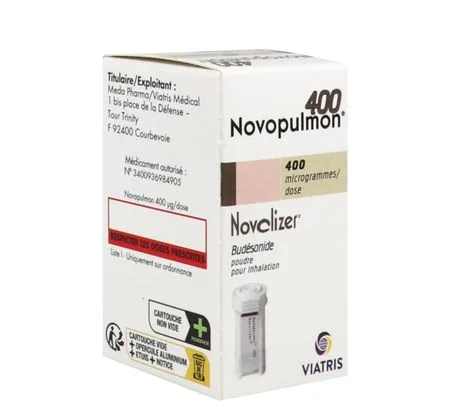
NOVOPULMON NOVOLIZER 400 micrograms/dose, powder for inhalation
Composition
Budesonide…………………………………………………………………………….........400 micrograms
Per metered dose
The amount of active substance in the delivered dose (at the mouthpiece outlet) is the same as the metered dose (at the outlet of the dose compartment).
Excipient with known effect: lactose monohydrate (10,5 mg/dose delivered).
Lactose monohydrate.
Indications
Continuous treatment of persistent asthma.
Note: budesonide is not intended for the treatment of acute asthma symptoms.
Dosage and administration
Initiation of treatment with NOVOPULMON NOVOLIZER 400 micrograms/dose, powder for inhalation when switching from another inhaled corticosteroid-based medicinal product requires dose readjustment, taking into account the nature of the corticosteroid, the dosing regimen and the delivery device.
Patients who have never received corticosteroids and patients previously stabilised on inhaled corticosteroid therapy:
Dosage
Adults (including the elderly) and children/adolescents over 12 years:
Recommended initial dose: 200 - 400 µg once or twice daily.
Recommended maximum dose: 800 µg twice daily.
Children aged 6 to 12 years:
Recommended initial dose: 200 µg twice daily or 200 - 400 µg once daily.
Recommended maximum dose: 400 µg twice daily.
Children under 6 years:
Novopulmon Novolizer 400 micrograms/dose is not recommended in children under 6 years because the data currently available have not established its efficacy and tolerability.
Note: for administration of a dose of 200 micrograms, a unit-dose presentation of 200 micrograms is available.
The dosage will be adjusted according to the patient's needs, the severity of their disease and the patient's clinical response. The dosage will be adjusted to achieve satisfactory control of symptoms. The minimum effective dose ensuring stabilisation of symptoms should then be sought.
Recommended dosages :
Adults (including the elderly) and children/adolescents over 12 years: between 200 and 1 600 µg/day.
Children aged 6 to 12 years: between 200 and 800 µg/day.
In children and adults, including the elderly, the daily dose should be administered in two doses per day at the start of treatment, during episodes of severe asthma and during the reduction or discontinuation of oral corticosteroid therapy.
The once-daily dosing regimen for daily doses up to 800 µg may be considered in adults, including the elderly, as well as in children and adolescents older than 12 years, presenting with mild to moderate asthma previously stabilised with inhaled corticosteroid therapy (budesonide or beclometasone dipropionate) administered in two doses per day.
The once-daily dosing regimen for daily doses up to 400 µg may be considered in children aged 6 to 12 years presenting with mild to moderate asthma previously controlled with inhaled corticosteroid therapy (budesonide or beclometasone dipropionate) administered in two doses per day.
When switching from a twice-daily to a once-daily treatment, the total daily dose should be maintained (taking into account the medicinal product and the method of administration). This dose should then be reduced to the minimum effective dose ensuring satisfactory control of asthma symptoms. A once-daily treatment may only be considered if asthma symptoms are controlled.
When used once daily, the dose should preferably be administered in the evening.
In case of worsening asthma (such as persistent respiratory symptoms or increased use of inhaled bronchodilators), the dose of inhaled corticosteroid should be increased. In patients treated once daily, the daily dose of inhaled corticosteroid should be doubled by switching to two doses per day. Any worsening of asthma should prompt the patient to consult a doctor as soon as possible.
The patient should always keep available a fast-acting inhaled beta-2 agonist bronchodilator (beta-2 mimetic) for the relief of acute asthma symptoms.
Asthma
NOVOPULMON NOVOLIZER 400 micrograms/dose may allow replacement or significant reduction of the oral glucocorticoid dose while ensuring asthma control. The patient should be in a relatively stable phase when beginning to switch from oral steroids to NOVOPULMON NOVOLIZER 400 micrograms/dose. A high dose of NOVOPULMON NOVOLIZER 400 micrograms/dose is then given in combination with the previously used oral steroid dose, for approximately 10 days.
Thereafter, the oral steroid dose should be gradually reduced (for example by 2,5 milligrams of prednisone or equivalent each month) to the lowest possible dose. In many cases, it is possible to completely replace the oral steroid with NOVOPULMON NOVOLIZER 400 micrograms/dose. For more information on discontinuing corticosteroids, see section Warnings and precautions.
Method and duration of treatment
NOVOPULMON NOVOLIZER 400 micrograms/dose is intended for long-term treatment. It should be administered regularly, according to the recommended dosing regimen, even if symptoms improve or disappear during treatment.
An improvement in asthma may appear within 24 hours, but one to two additional weeks of treatment may be needed to achieve the full effect.
Method of administration
Inhaled route
In order to ensure optimal intrabronchial distribution of the active substance, inhalation should be performed with a steady flow, inhaling as deeply and rapidly as possible (up to maximum inspiratory volume). The inhalation device is equipped with a system that signals whether inhalation has been performed correctly through an audible click and a change in colour of the control window from green to red. If no click is emitted and the window does not change colour, the patient should repeat the inhalation. The inhaler remains locked until inhalation has been performed correctly.
To reduce the risk of oral candidiasis and hoarseness, it is recommended to administer the medicine before meals and to rinse the mouth with water or brush the teeth after each inhalation.
Use and handling of the inhaler (Novolizer device)
Reloading
1. Gently press the ribbed surfaces located on both sides of the cover, push it forward and remove it.
2. Remove the aluminium protective film from the cartridge housing and take out a new cartridge.
3. Insert the cartridge into the powder inhaler (= Novolizer), orienting the dose counter facing the mouthpiece.
4. Replace the cover in its side guides and push it horizontally towards the button until it clicks into place. The cartridge may be left in the inhaler (Novolizer) until it is empty or for a maximum of six months after insertion.
Note: Novopulmon Novolizer 400 micrograms/dose cartridges may only be used with the Novolizer powder inhaler.
Directions for use
1. When using the Novolizer device, always hold it horizontally. First, remove the protective cap.
2. Press the coloured button fully. A double audible click is then heard and the colour of the control window (at the bottom) changes from red to green. Then release the coloured button. The green colour of the window indicates that the Novolizer is ready for use.
3. Breathe out deeply (but not into the powder inhaler).
4. Close the lips around the mouthpiece. Inhale the powder firmly, deeply and as rapidly as possible (until full inhalation). During this inhalation, an audible click should be heard, proving that inhalation has been performed correctly. Hold the breath for a few seconds, then breathe normally.
Note: if the patient needs several inhalations, they should repeat steps 2-4.
5. Replace the protective cap on the mouthpiece – the inhalation is now complete.
6. The figure appearing in the upper window indicates the number of doses remaining.
Note: The coloured button should only be pressed immediately before inhalation.
With the Novolizer inhaler, involuntary inhalation of a double dose is not possible. The audible click and the change of colour of the control window indicate that the inhalation has been performed correctly. If the colour of the control window remains unchanged, the inhalation must be repeated. If the inhalation is not performed correctly after several attempts, the patient must consult their doctor.
Cleaning
The inhaler (Novolizer) must be cleaned at regular intervals and at least at each cartridge change. For cleaning instructions for the device, refer to the instruction leaflet contained in the box.
Note: In order to ensure correct use of the inhaler, the patient's use of the device should be carefully explained to them. When using this medicine in children, it should be ensured that an adult supervises the administration of the medicine.
Contraindications
Hypersensitivity to the active substance budesonide or to the excipient lactose monohydrate (which contains small amounts of milk proteins).
Warnings and precautions
Budesonide is not indicated for the treatment of episodes of acute dyspnoea or status asthmaticus. These acute episodes must be treated according to standard recommendations.
Treatment of asthma exacerbations and symptoms may require an increase in the dose of budesonide. However, to relieve acute asthma symptoms, the patient will be advised to use a fast-acting, short-acting bronchodilator.
This medicine should be used with caution and under monitoring in patients with active or latent pulmonary tuberculosis. Antituberculous treatment should be considered in these patients if they receive treatment with budesonide. Likewise, in patients with fungal, viral or other respiratory infections, this treatment will be administered with caution and under close monitoring. It should be ensured that appropriate therapeutic management of these infections is carried out in parallel.
Patients who, despite several attempts, are unable to perform inhalations correctly must consult their doctor.
In cases of severe hepatic impairment, as with other corticosteroids, the systemic elimination of budesonide may be reduced, which may lead to increased systemic exposure. In these patients, particular vigilance is therefore required regarding the occurrence of systemic effects, and the functions of the hypothalamic-pituitary-adrenal axis should be regularly monitored.
Long-term inhaled corticosteroid therapy at high doses, particularly at doses above those recommended, may cause a clinically significant reduction in adrenal function. These patients may show signs or symptoms of adrenal insufficiency in cases of major stress. During a stress episode or in the case of surgical intervention, systemic replacement corticosteroid therapy should be considered.
Systemic effects may occur with inhaled corticosteroid therapy, particularly during prolonged treatment at high doses. However, the occurrence of these effects is less likely with inhalation treatment than with oral corticosteroid therapy. The following may thus be observed: Cushing's syndrome, Cushingoid features, inhibition of adrenal function, growth retardation in children and adolescents, decreased bone mineral density, cataract, glaucoma, and more rarely, psychological disorders or behavioural disorders including: psychomotor hyperactivity, sleep disorders, anxiety, depression, or aggressiveness (particularly in children). Consequently, the minimum effective dose should always be sought.
Visual disturbances may occur with systemic or local corticosteroid therapy. In case of blurred vision or the appearance of any other visual symptom during corticosteroid therapy, an ophthalmological examination is required to look for cataract, glaucoma, or rarer lesions such as central serous chorioretinopathy, as described with systemic or local administration of corticosteroids.
The concomitant use of ketoconazole, HIV protease inhibitors or other potent CYP3A4 inhibitors should be avoided. If this is not possible, the interval between treatments should be as long as possible (see also section Interactions).
Oral candidiasis may occur during inhaled corticosteroid therapy. This infection may require appropriate antifungal treatment and in some patients discontinuation of treatment may be necessary (see also section Dosage and administration).
As with other inhaled treatments, paradoxical bronchospasm may occur with an increase in bronchial wheezing immediately after administration of the product. In this case, treatment with inhaled budesonide must be discontinued immediately, and after examination of the patient, an alternative treatment will be instituted if necessary.
It is recommended to regularly monitor the height of children receiving prolonged treatment with inhaled corticosteroids. In the event of slowed growth, the therapeutic approach should be reassessed, and it should be sought to find the minimum dose, if possible, at the lowest dose at which effective control of asthma is maintained. The benefits of corticosteroid therapy should be carefully weighed against the possible risks of growth arrest. The opinion of a paediatrician specialised in pneumology is recommended.
Precautions for use in patients not previously receiving corticosteroid therapy :
In patients who have never previously received corticosteroid therapy or only a few occasional courses, the effect of budesonide on respiratory function, if used regularly according to the recommendations for use, may only be perceived by the patient after approximately 1 to 2 weeks. However, in cases of abundant mucosal secretion and significant bronchial inflammation, obstruction may be such that inhaled budesonide cannot exert an optimal effect. In these cases, a brief course of systemic corticosteroid therapy may be initiated at the same time as the inhaled budesonide treatment. Inhaled corticosteroid therapy will be continued after the progressive reduction of the systemic corticosteroid therapy.
Precautions for use when switching from systemic corticosteroid therapy to inhaled corticosteroid therapy :
Replacement of systemic corticosteroid therapy by NOVOPULMON NOVOLIZER 400 micrograms/dose should only be considered when asthma symptoms are controlled. Systemic corticosteroid therapy must not be stopped abruptly in these patients, who are at risk of inhibition of adrenal function. Treatment with NOVOPULMON NOVOLIZER 400 micrograms/dose will therefore be initiated at high doses for approximately 7 to 10 days in addition to systemic corticosteroid therapy. Then, the dose of systemic corticosteroid will be gradually reduced (for example in steps of 1 milligram of prednisolone or equivalent once a week or 2,5 milligrams of prednisolone or equivalent once a month) depending on the patient's response and the initial dose of systemic corticosteroid. Oral corticosteroid therapy will be reduced to a minimum and may sometimes be completely replaced by inhaled budesonide.
During the first months of replacing systemic corticotherapy with inhaled corticotherapy, it may be necessary to resume systemic corticosteroid administration during periods of stress or in emergency situations (e.g., severe infections, trauma or surgical procedures). These precautions also apply to patients who have received high doses of inhaled corticosteroids over prolonged periods. In these cases, adrenocortical function may also be inhibited and supplementation with systemic corticotherapy may be necessary during periods of stress.
Restoration of adrenocortical function may take a very long time. The function of the hypothalamic-pituitary-adrenal axis should be regularly monitored.
During the withdrawal period from systemic corticotherapy, the patient may experience a non-specific feeling of general malaise, despite stabilisation or even improvement of respiratory function. The patient should be encouraged to continue treatment with inhaled budesonide and the withdrawal of oral corticotherapy, unless clinical signs suggesting adrenal insufficiency appear.
After switching to inhaled treatment, symptoms previously regressed with systemic corticotherapy, such as allergic rhinitis, eczema or myalgia and arthralgia, may reappear. Appropriate treatment of these symptoms should then be considered.
Treatment with inhaled budesonide must not be interrupted abruptly.
Exacerbation of symptoms related to acute respiratory infection:
If clinical symptoms worsen due to the onset of a respiratory infection, treatment with appropriate antibiotic therapy should be considered. The dosage of budesonide treatment will then be adjusted according to the patient's clinical condition. In some cases, recourse to systemic corticotherapy may be necessary.
If after 14 days there is no improvement in symptoms and no sufficient control of asthma, medical advice is required in order to adjust the dosage and check the patient's inhalation technique.
Athletes' attention is drawn to the fact that this medicine contains an active substance that may induce a positive result in tests carried out during anti-doping controls.
Precautions for use when switching from NOVOPULMON NOVOLIZER 200 micrograms/dose to NOVOPULMON NOVOLIZER 400 micrograms/dose :
Children and patients unable to achieve an inspiratory flow rate of more than 60 litres/minute should be monitored when, for the same prescribed dose, they switch from NOVOPULMON NOVOLIZER 200 micrograms/dose to NOVOPULMON NOVOLIZER 400 micrograms/dose.
Lactose may contain milk proteins. The amount of lactose contained in NOVOPULMON NOVOLIZER 400 micrograms/dose does not normally cause problems in lactose-intolerant individuals. However, in patients with a significant enzymatic deficiency, lactose intolerance has been reported very rarely after inhalation of powder containing lactose.
Interactions
The metabolism of budesonide is mainly mediated by CYP3A4. Inhibitors of this enzyme, for example ketoconazole, itraconazole, HIV protease inhibitors, and products containing cobicistat may therefore increase systemic exposure to budesonide several-fold, see section Warnings and precautions. As there are no data to define dosage recommendations, the combination should be avoided unless the benefits outweigh the increased risk of systemic corticosteroid side effects; in this case patients should be monitored for possible systemic corticosteroid side effects. If this is not possible, the interval between treatments should be as long as possible and a reduction in the budesonide dose may also be considered.
Limited data on this interaction at high doses of inhaled budesonide indicate that substantial increases in plasma levels (on average 4-fold) may occur if itraconazole, 200 mg once daily, is administered concurrently with inhaled budesonide (single dose of 1000 µg).
High plasma concentrations and an increase in corticosteroid effects have been observed in women also treated with oestro-progestogen contraceptives, but no effect has been observed with budesonide and the concurrent intake of a low-dose oral contraceptive.
As adrenal function may be suppressed, an ACTH stimulation test to diagnose pituitary insufficiency may give erroneous results (low values).
Fertility, pregnancy and breastfeeding
Pregnancy
Most results of prospective epidemiological studies and global post-marketing data have not revealed an increased risk of adverse effects for the foetus and newborn associated with the use of inhaled budesonide during pregnancy. It is important for both the foetus and the mother to maintain adequate treatment of asthma during pregnancy. As with other medicines administered during pregnancy, the benefit of administering budesonide to the mother should be weighed against the risks to the foetus.
Breast-feeding
Budesonide is excreted in breast milk but after inhalation no effect on the child is expected. NOVOPULMON NOVOLIZER 400 micrograms/dose may be used during breastfeeding.
Maintenance treatment with inhaled budesonide (200 or 400 micrograms twice daily) in breastfeeding asthmatic women results in negligible systemic exposure of the infant to budesonide.
In a pharmacokinetic study, the estimated daily dose for an infant corresponded to 0,3% of the maternal daily dose for both dose levels, and the mean plasma concentration in the infant was estimated at 1/600 of the plasma concentration observed in the mother, assuming complete oral bioavailability in the infant. Budesonide concentrations in the infant's plasma samples were all below the limit of quantification.
Based on inhaled budesonide data and the fact that budesonide shows linear pharmacokinetics within the therapeutic dose range after nasal, inhaled, oral and rectal administration, it can be estimated that the exposure of the breastfed child is low at therapeutic doses of budesonide.
Driving and using machines
Budesonide has no influence on the ability to drive vehicles and use machines.
Adverse effects
The table below presents the possible adverse effects of the medicine, classified by system organ class and by frequency.
The frequencies adopted are defined as follows: Very common (≥ 1/10); common (≥ 1/100 to < 1/10); uncommon (≥ 1/1 000 to < 1/100); rare (≥ 1/10 000 to < 1/1 000); very rare (< 1/10 000); not known (frequency cannot be estimated from the available data).
Table of adverse reactions classified by system organ class (SOC) and by frequency
|
SOC |
Frequency |
Undesirable effects |
|
Infections and infestations |
Common |
Oropharyngeal candidiasis |
|
Immune system disorders |
Rare |
Immediate and delayed hypersensitivity reactions including: Quincke's oedema Anaphylactic reaction |
|
Endocrine disorders |
Rare |
Signs and symptoms of systemic corticosteroid effects including: inhibition of adrenal function and growth retardation* |
|
Neuropsychiatric disorders |
Uncommon
Rare
Unknown |
Depression Anxiety Agitation Nervousness Behavioural disturbances (particularly in children) Sleep disturbances Psychomotor hyperactivity Aggression |
|
Nervous system disorders |
Uncommon |
Tremor |
|
Eye disorders |
Uncommon
Unknown |
Cataract Blurred vision (see section Warnings and precautions) Glaucoma |
|
Respiratory, thoracic and mediastinal disorders |
Common
Rare |
Hoarseness of voice Cough Throat irritation Bronchospasm Dysphonia Hoarseness of voice** |
|
Gastrointestinal disorders |
Common |
Irritation of the oral mucosa |
|
Skin and subcutaneous tissue disorders |
Rare |
Urticaria Rash Eczema Pruritus Erythema Ecchymoses |
|
Musculoskeletal and connective tissue disorders |
Uncommon Very rare |
Muscle spasms Decreased bone mineral density |
* see paediatric population below
** rare in children
Occasionally, signs or symptoms of systemic effects of the glucocorticosteroid class may occur with inhaled glucocorticosteroids, probably dependent on dose, duration of exposure, concomitant and prior exposure to corticosteroids, and individual sensitivity.
Description of certain adverse reactions
Clinical trials with 13119 patients receiving inhaled budesonide and 7278 patients receiving placebo were pooled. The frequency of anxiety was 0.52% with inhaled budesonide and 0.63% with placebo; that of depression was 0.67% with inhaled budesonide and 1.15% with placebo.
In placebo-controlled studies, cataract was infrequently reported in the placebo group.
Mild mucosal irritation with throat irritation, hoarseness of voice and cough is often observed.
The risk of infections may be increased. Physiological stress-adaptation reactions may be diminished.
There is an increased risk of pneumonia in patients with newly diagnosed COPD who start treatment with inhaled corticosteroids. However, a weighted assessment of 8 pooled clinical studies including 4643 patients with COPD treated with budesonide and 3643 randomised patients receiving non-inhaled corticosteroid treatments did not show an increased risk of pneumonia. The results of the first 7 studies were published in the form of a meta-analysis.
Lactose monohydrate contains small amounts of milk proteins which may induce allergic reactions.
Paediatric population
Due to the risk of growth retardation in the paediatric population, growth should be monitored as indicated in the section Warnings and precautions.
Reporting of suspected adverse reactions
Reporting suspected adverse reactions after authorisation of the medicinal product is important. It allows continued monitoring of the benefit/risk balance of the medicinal product. Healthcare professionals are asked to report any suspected adverse reaction via the national reporting system: National Agency for the Safety of Medicines and Health Products (ANSM) and the network of Regional Centres of Pharmacovigilance - Website: www.signalement-sante.gouv.fr.
Overdose
An acute overdose with NOVOPULMON NOVOLIZER 400 micrograms/dose, even at excessive doses, should not result in any clinical problem.
With long-term exposure, atrophy of the adrenal cortex may be observed. The classic effects of corticosteroids, such as an increased risk of infection, may also occur. The capacity to adapt to stress may be impaired.
Pharmacodynamics
Pharmacotherapeutic class: Other drugs for obstructive airway diseases, by inhalation, Glucocorticoids, ATC code: R03BA02
Budesonide is a synthetic glucocorticoid. After inhalation, it exerts a local anti-inflammatory effect on the bronchial mucosa.
Budesonide crosses cell membranes and binds to a cytoplasmic protein receptor. This complex then enters the nucleus and induces the biosynthesis of specific proteins such as macrocortin (lipocortin). Hormone-like effects appear after a certain latency period (30-60 min), and result in inhibition of phospholipase A2. It is also possible that effective therapeutic doses of budesonide (like other anti-inflammatory glucocorticoids) inhibit cytokine-induced expression of COX-2.
Clinically, the anti-inflammatory effect results, for example, in improvement of symptoms such as dyspnoea. Bronchial hyperreactivity to exogenous stimuli is reduced.
Clinical safety
Growth
In short-term studies, a small and generally transient reduction in growth has been observed, which generally occurs during the first year of treatment. Long-term observational studies suggest that children and adolescents treated with inhaled corticosteroids reach their adult target height on average. However, in one study, children who had been treated with high doses of inhaled budesonide (400 micrograms per day) for a period of up to 6 years without adjustment to the lowest effective dose were found to be on average 1,2 cm shorter as adults compared with those treated with placebo over the same period. See section Warnings and precautions regarding dosage at the lowest effective dose and growth monitoring in children.
Paediatric population
Slit-lamp examinations were performed on 157 children (aged 5 to 16 years) treated with an average daily dose of 504 µg for 3 to 6 years. The results were compared with those of 111 asthmatic children of the same age. Inhaled budesonide was not associated with an increased occurrence of posterior subcapsular cataract.
Influence on plasma cortisol concentration
Studies in healthy volunteers with inhaled budesonide showed a dose-related effect on plasma and urinary cortisol. At recommended doses, inhaled budesonide has a significantly smaller effect than prednisone (10 mg) on adrenal function, as indicated by the ACTH stimulation test.
Pharmacokinetics
Absorption
The peak plasma concentration is reached approximately 30 minutes after inhalation.
After inhalation, systemic bioavailability is at most 37% and the concentration in human plasma is 0,63 nmol/l after inhalation of a single dose of 1 600 micrograms.
The triggering threshold of the inhaler (Novolizer) that must be exceeded for correct inhalation is at inspiratory flow rates of at least 35-50 l/min. Linearity of plasma concentrations with dose, indicating the possibility of transfer from Budesonide Novolizer 200 µg to Budesonide Novolizer 400 µg, has been demonstrated with inspiratory flow rates greater than or equal to 60 l/min.
The respirable fraction (fine particle fraction: diameter < 5 µm) measured in vitro is approximately 30-50% of the nominal dose. In healthy subjects, approximately 20-30% of the unit dose of budesonide reaches the lungs. The remainder is deposited in the mouth, nose and throat and is largely swallowed.
Distribution
The volume of distribution of budesonide is approximately 3 l/kg. Plasma protein binding averages 85-90%.
Biotransformation
Budesonide is extensively metabolised (≈ 90%) during first-pass hepatic metabolism, into metabolites with low glucocorticosteroid activity. The glucocorticosteroid activity of the main metabolites, 6β-hydroxybudesonide and 16α-hydroxyprednisolone, represents 1% of that of budesonide. Metabolism of budesonide is mainly carried out by CYP3A, a subfamily of cytochrome P450.
Elimination
Budesonide metabolites are excreted unchanged or in conjugated form, mainly via the renal route. Unchanged budesonide has not been detected in urine. Systemic clearance of budesonide is high (approximately 1,2 l/min) in healthy adults and the terminal half-life of budesonide after IV administration averages 2-3 hours.
Linearity
The kinetics of budesonide are proportional at clinically relevant doses.
Paediatric population
The systemic clearance of budesonide is approximately 0,5 l/min in asthmatic children aged 4-6 years. The clearance per kg of body weight in children is approximately 50% higher than in adults. The terminal half-life of budesonide after inhalation is approximately 2,3 hours in asthmatic children. This is comparable to what is observed in healthy adults.
Preclinical safety
Preclinical studies of chronic toxicity, genotoxicity and carcinogenicity revealed no particular risk for humans at therapeutic doses.
Glucocorticoids, including budesonide, induce teratogenic effects in animals, notably cleft palate and skeletal abnormalities. However, these observations are not considered predictive of a risk in humans at therapeutic doses.
Shelf life
- Medicinal product (budesonide in cartridge in its container)
3 years.
6 months after first opening.
- Novolizer device:
3 years before first use.
1 year during use.
Note: The functioning of the Novolizer has been validated by tests covering 2000 unit doses. Consequently, a maximum of 40 cartridges of 50 unit doses or 20 cartridges of 100 unit doses can be used with this device (within one year) before replacing it.
Do not use NOVOPULMON NOVOLIZER 400 micrograms/dose beyond the expiry date.
Special storage precautions
To be kept in the outer packaging.
During use, store protected from moisture.
Prescription, supply and reimbursement
| Marketing authorisation (AMM) |
|
| Price: |
|
Collection.
1 RUE DE TURIN
69007 LYON
Tel: 04 37 25 75 00 https://www.viatris.fr/
Source: VIDAL · Updated on 11/11/2026. This information does not replace advice from a healthcare professional.