
Medicines
SmPC of 16/09/2024
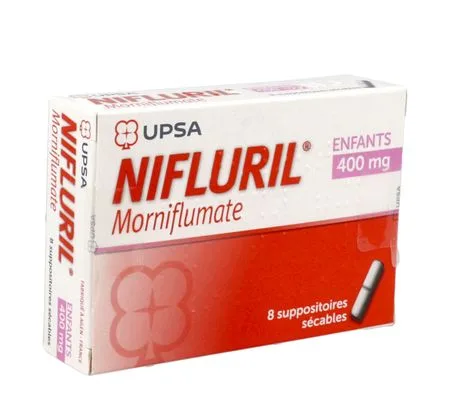
NIFLURIL CHILDREN 400 mg, scored suppository
Composition
Morniflumate............................................................................................................................400 mg
For one scored suppository.
Solid semi-synthetic glycerides type Suppocire BM®.
Indications
Reserved for children from 6 months to 12 years.
They derive from the anti-inflammatory activity of niflumic acid, the significance of the intolerance reactions to which the drug gives rise, and its place among the anti-inflammatory products currently available.
They are limited to:
- long-term symptomatic treatment of juvenile rheumatoid arthritis,
- symptomatic treatment of pain during inflammatory conditions in the ENT and stomatological fields.
This is an adjunctive therapy for non-rheumatological conditions; the risks incurred, in particular the spread of a concomitant septic process, are those of NSAIDs. They must be evaluated against the expected analgesic benefit.
Dosage and administration
Dosage
Paediatric population
The occurrence of undesirable effects can be minimised by using the lowest possible dose for the shortest treatment duration necessary to relieve symptoms (see section Warnings and precautions).
• From 6 to 30 months: 1/2 suppository, i.e. 200 mg of morniflumate, 2 times a day.
• From 30 months to 12 years: 1 suppository, i.e. 400 mg of morniflumate, per 10 kg of body weight and per day, without exceeding 3 suppositories per day.
In ENT and stomatological indications, treatment must not exceed 4 to 5 days.
Method of administration
Rectal route.
Duration of treatment
The rectal route should be used for the shortest possible time because of the risk of local toxicity added to the risks of the oral route.
Contraindications
This medicine is contraindicated in the following situations:
• hypersensitivity to the active substance or to any of the excipients listed in section Composition,
• history of allergy or asthma triggered by taking morniflumate or substances of similar activity such as other NSAIDs, acetylsalicylic acid (aspirin),
• history of gastrointestinal bleeding or perforation during previous treatment with NSAIDs,
• active peptic ulcer, history of peptic ulcer or recurrent haemorrhage (2 or more distinct documented episodes of haemorrhage or ulceration),
• severe hepatocellular insufficiency,
• severe renal impairment,
• severe heart failure,
• recent history of proctitis or rectal bleeding,
• in combination with mifamurtide (see section Interactions),
• child under 6 months.
• pregnancy, from the beginning of the 6th month (24 weeks of amenorrhoea) (see section Fertility, pregnancy and breastfeeding),
Warnings and precautions
Risk of fetal death
NIFLURIL CHILDREN 400 mg, scored suppository exposes to a risk of fetal death even after a single dose due to its cardiopulmonary toxicity (constriction of the ductus arteriosus and the occurrence of oligohydramnios see section Contraindications).
Effects on the unborn child
NIFLURIL CHILDREN 400 mg, scored suppository also exposes the newborn to a risk of renal impairment (renal failure), premature closure of the ductus arteriosus and pulmonary hypertension. See section Fertility, pregnancy and breastfeeding).
NIFLURIL CHILDREN 400 mg, scored suppository is contraindicated in pregnant women from the beginning of the 6th month of pregnancy (24 weeks of amenorrhea).
In case of planned pregnancy or during the first 5 months (before 24 weeks of amenorrhea), NIFLURIL CHILDREN 400 mg, scored suppository should only be prescribed in cases of absolute necessity.
Special warnings
Concomitant use of NIFLURIL CHILDREN 400 mg, scored suppository with other NSAIDs, including selective cyclooxygenase 2 (cox-2) inhibitors, should be avoided.
The occurrence of undesirable effects can be minimised by using the lowest possible dose for the shortest treatment duration necessary to relieve symptoms (see section Dosage and administration and paragraphs "Gastrointestinal effects", "Cardiovascular and cerebrovascular effects" and "Functional renal insufficiency" below).
Patients with asthma associated with chronic rhinitis, chronic sinusitis and/or nasal polyposis have a higher risk of allergic manifestation when taking acetylsalicylic acid and/or non-steroidal anti-inflammatory drugs than the rest of the population.
Administration of this specialty may cause an asthma attack, particularly in certain subjects allergic to acetylsalicylic acid or an NSAID (see section Contraindications).
Elderly subject
Elderly subjects have an increased risk of undesirable effects with NSAIDs, in particular gastrointestinal haemorrhage and perforations that may be fatal (see below). Renal, hepatic and cardiac functions should be closely monitored.
Gastrointestinal effects
Gastrointestinal bleeding, ulceration or perforation, which can be fatal, has been reported with all NSAIDs at any time during treatment, with or without warning symptoms or a history of serious gastrointestinal events.
The risk of gastrointestinal bleeding, ulceration or perforation increases with increasing dose in patients with a history of ulcer, particularly if complicated with bleeding or perforation (see section Contraindications) as well as in elderly subjects. In these patients, treatment should be started at the lowest possible dose. Mucosal protective treatment (for example misoprostol or a proton pump inhibitor) should be considered for these patients, as for patients requiring low-dose acetylsalicylic acid treatment or treated with other medicinal products likely to increase the gastrointestinal risk (see below and section Interactions).
Patients with a history of gastrointestinal disorders, especially elderly patients, should report any unusual abdominal symptoms (particularly gastrointestinal bleeding), especially at the start of treatment.
Particular attention should be paid to patients receiving concomitant treatments that may increase the risk of ulceration or haemorrhage, such as oral corticosteroids, oral anticoagulants such as warfarin, selective serotonin reuptake inhibitors (SSRIs), antiplatelet agents such as acetylsalicylic acid, heparins, nicorandil, cobimetinib, deferasirox and mixed adrenergic-serotonergic agents (see section Interactions).
If bleeding or ulceration occurs in a patient receiving NIFLURIL CHILDREN 400 mg, scored suppository, treatment should be stopped.
NSAIDs should be administered with caution and under close supervision in patients with a history of gastrointestinal disease (haemorrhagic proctocolitis, Crohn's disease), due to the risk of aggravation of the condition (see section Adverse effects).
Cardiovascular and cerebrovascular effects
Appropriate monitoring and advice are required in patients with a history of hypertension and/or mild to moderate heart failure, as cases of fluid retention and oedema have been reported in association with NSAID treatment.
Clinical studies and epidemiological data suggest that the use of certain NSAIDs (especially when used at high doses and over a long duration) may be associated with a slight increase in the risk of arterial thrombotic events (for example, myocardial infarction or stroke). Data are currently insufficient to rule out this increased risk for morniflumate.
Patients with uncontrolled hypertension, congestive heart failure, ischaemic heart disease, peripheral arterial disease, and/or a history of stroke (including transient ischaemic attack) should only be treated with morniflumate after careful evaluation of the benefit/risk ratio.
Similar attention should be paid before initiating long-term treatment in patients with risk factors for cardiovascular disease (such as hypertension, hyperlipidaemia, diabetes or smoking).
Blood pressure must be closely monitored at the start and throughout treatment.
Patients must be informed of the signs of serious cardiovascular adverse effects (for example, chest pain, shortness of breath, weakness, speech disorders) and of the measures to take if they occur.
Caution is needed when using NIFLURIL CHILDREN 400 mg, scored suppository, in patients undergoing coronary artery bypass graft (CABG) surgery, or immediately before or after cardiac surgery, taking into account in particular concomitant medications.
Skin effects
Serious skin reactions, some of them fatal, including exfoliative dermatitis, Stevens-Johnson syndrome and Lyell syndrome have been very rarely reported during NSAID treatment (see section Adverse effects).
The incidence of these undesirable effects appears to be higher at the start of treatment, with the onset occurring, in most cases, during the first month of treatment. NIFLURIL CHILDREN 400 mg, scored suppository must be stopped as soon as a skin rash, mucosal lesions or any other sign of hypersensitivity appears.
Chickenpox may exceptionally lead to serious cutaneous and soft tissue infectious complications. To date, the potential contributing role of NSAIDs in worsening these infections cannot be ruled out. It is therefore prudent to avoid the use of NIFLURIL CHILDREN 400 mg, scored suppository in cases of chickenpox (see section Adverse effects).
Functional renal failure
NSAIDs, by inhibiting the vasodilatory action of renal prostaglandins, may cause functional renal insufficiency through decreased glomerular filtration. This adverse effect is dose-dependent.
At the start of treatment or after a dose increase, monitoring of diuresis and renal function is recommended in patients with the following risk factors:
• elderly subjects,
• associated medicinal products such as: ACE inhibitors, sartans, diuretics, pemetrexed, ciclosporin, tacrolimus, tenofovir disoproxil (see section Interactions),
• hypovolaemia regardless of its cause,
• heart failure,
• chronic renal failure,
• nephrotic syndrome,
• lupus nephropathy,
• decompensated hepatic cirrhosis.
Hepatic effects
Asymptomatic increases in liver function test values and, in rare cases, increases in liver function test values three times above the upper limit of normal, with or without serious hepatic adverse effects, may occur in a small percentage of patients treated with NSAIDs.
Patients taking NIFLURIL CHILDREN 400 mg, scored suppository, must be monitored for signs or symptoms of clinically significant hepatic reactions. If such signs or symptoms develop, treatment with NIFLURIL CHILDREN 400 mg, scored suppository, must be discontinued.
Fluid and sodium retention
Fluid and sodium retention with possible oedema, hypertension or worsening of hypertension, worsening of heart failure. Clinical monitoring is necessary from the start of treatment in cases of hypertension or heart failure. A decrease in the effect of antihypertensives is possible (see section Interactions).
Hyperkalaemia
Hyperkalaemia promoted by diabetes or concomitant treatment with potassium-raising medicinal products (see section Interactions).
Regular monitoring of serum potassium should be carried out in these circumstances.
Precautions for use
Morniflumate, like any medicine that inhibits the synthesis of cyclooxygenases and prostaglandins, may impair fertility. Its use is not recommended in women who wish to conceive a child.
This product should be used with caution in conditions of an infectious nature or involving an infectious risk, even if well controlled. Indeed,
• morniflumate may be likely to reduce the body's natural defences against infection,
• morniflumate may be likely to mask the usual signs and symptoms of infection.
This medicine is available in other dosages which may be more suitable.
Interactions
Risk related to hyperkalaemia:
Certain medicines or therapeutic classes may promote the occurrence of hyperkalaemia: potassium salts, potassium-sparing diuretics, angiotensin-converting enzyme inhibitors, angiotensin II antagonists, non-steroidal anti-inflammatory drugs, heparins (low molecular weight or unfractionated), immunosuppressants such as ciclosporin and tacrolimus, trimethoprim.
The combination of these medicinal products increases the risk of hyperkalaemia. This risk is particularly important with potassium-sparing diuretics, especially when they are combined with each other or with potassium salts, whereas the combination of an ACE inhibitor and an NSAID, for example, carries a lower risk provided the recommended precautions are implemented.
To learn about the risks and the levels of constraint specific to hyperkalaemic medicines, refer to the interactions specific to each substance.
However, certain substances, such as trimethoprim, are not subject to specific interactions with regard to this risk. Nevertheless, they may act as contributing factors when combined with other medicinal products such as those mentioned above.
Simultaneous administration of morniflumate with the following products requires close monitoring of the patient's clinical and biological condition:
Contraindicated combination
+ Mifamurtide
At high doses of NSAIDs, risk of reduced efficacy of mifamurtide.
Combinations not recommended
+ Other non-steroidal anti-inflammatory drugs
Increased risk of ulcerogenic and digestive hemorrhage.
+ Acetylsalicylic acid at anti-inflammatory doses (≥ 1 g per dose and/or ≥ 3 g per day), and at analgesic or antipyretic doses (≥ 500 mg per dose and/or < 3 g per day)
Increased risk of ulcerogenic and digestive hemorrhage.
+ Oral anticoagulants
Increased bleeding risk with the oral anticoagulant (aggression of the gastroduodenal mucosa by non-steroidal anti-inflammatory drugs).
If the combination cannot be avoided, close clinical monitoring, and even biological monitoring, is required.
+ Heparins (therapeutic doses and/or elderly subject)
Increased bleeding risk (damage to the gastroduodenal mucosa by non-steroidal anti-inflammatory drugs).
If the combination cannot be avoided, close clinical monitoring.
+ Lithium
Increase in lithium levels that may reach toxic values (decreased renal excretion of lithium).
If the combination cannot be avoided, closely monitor lithaemia and adjust the lithium dosage during the combination and after stopping the non-steroidal anti-inflammatory drug.
+ Methotrexate, used at doses above 20 mg/week
Increased haematological toxicity of methotrexate (decreased renal clearance of methotrexate by anti-inflammatory drugs).
+ Nicorandil
Increased risk of ulcerogenic and digestive hemorrhage.
+ Pemetrexed (patients with low to moderate renal function, creatinine clearance between 45 ml / min and 80 ml / min)
Risk of increased toxicity of pemetrexed (decreased renal clearance of it by NSAIDs).
Associations requiring precautions for use
+ Angiotensin II receptor antagonists
Acute renal failure in at-risk patients (elderly subjects, dehydration, concomitant treatment with diuretics, impaired renal function), due to decreased glomerular filtration secondary to decreased synthesis of renal prostaglandins. These effects are generally reversible. In addition, reduction of the antihypertensive effect.
Hydrate the patient and monitor renal function at the start of treatment and regularly during the combination.
+ Ciclosporin, tacrolimus
Risk of additive nephrotoxic effects, particularly in elderly subjects.
Monitor renal function at the start of treatment with the NSAID.
+ Cobimetinib
Increased risk of bleeding.
Clinical monitoring.
+ Diuretics, angiotensin-converting enzyme (ACE) inhibitors
Acute renal failure in at-risk patients (elderly, dehydrated, on diuretics, with impaired renal function) due to decreased glomerular filtration secondary to decreased synthesis of renal prostaglandins. These effects are generally reversible. In addition, reduction of the antihypertensive effect.
Hydrate the patient and monitor renal function at the start of treatment and regularly during the combination.
+ Methotrexate, used at low doses (less than or equal to 20 mg/week)
Increased haematological toxicity of methotrexate (decreased renal clearance of methotrexate by anti-inflammatory drugs).
Weekly monitoring of the blood count during the first weeks of the combination.
Increased monitoring in case of impairment (even slight) of renal function, as well as in elderly subjects.
+ Pemetrexed (patients with normal renal function)
Risk of increased toxicity of pemetrexed (decreased renal clearance of it by NSAIDs).
Biological monitoring of renal function.
+ Tenofovir disoproxil
Risk of increased nephrotoxicity of tenofovir, particularly with high doses of the anti-inflammatory or in the presence of risk factors for renal insufficiency.
In case of combination, monitor renal function.
Associations to be taken into account
+ Acetylsalicylic acid at antiplatelet doses (from 50 mg to 375 mg per day in 1 or several intakes)
Increased risk of ulcerogenic and digestive hemorrhage.
+ Platelet aggregation inhibitors
Increased risk of bleeding, particularly gastrointestinal.
+ Beta-blockers (except esmolol) (including eye drops)
Reduction of antihypertensive effect (inhibition of vasodilatory prostaglandins by non-steroidal anti-inflammatory drugs).
+ Deferasirox
Increased risk of ulcerogenic and digestive hemorrhage.
+ Glucocorticoids (except hydrocortisone)
Increased risk of ulceration and gastrointestinal bleeding (see section Warnings and precautions).
+ Heparins (prophylactic doses)
Increased risk of bleeding.
+ Selective serotonin reuptake inhibitors (SSRIs)
Increased bleeding risk.
+ Mixed adrenergic-serotonergic agents
Increased risk of bleeding.
Fertility, pregnancy and breastfeeding
Pregnancy
From the beginning of the 6th months of pregnancy (24 weeks of amenorrhoea): any intake of NIFLURIL CHILDREN 400 mg, scored suppository, even a single one, is contraindicated. Even a single intake from 24 weeks of amenorrhoea justifies cardiac and renal ultrasound monitoring of the foetus and/or newborn.
Unless absolutely necessary,, NIFLURIL CHILDREN 400 mg, scored suppository must not be prescribed to a woman who is planning a pregnancy or during the first 5 months of pregnancy (before 24 weeks of amenorrhoea). If so, the dose should be as low as possible and the duration of treatment as short as possible. Prolonged use is strongly discouraged.
In case of intake from the 20th weeks of amenorrhea, cardiac and renal monitoring of the fetus may prove necessary.
In case of occurrence of oligohydramnios, or constriction of the ductus arteriosus, treatment with NIFLURIL CHILDREN 400 mg, scored suppository must be discontinued.
Inhibition of prostaglandin synthesis by NSAIDs may affect the course of pregnancy and/or the development of the embryo or foetus.
Risks associated with use during the 1st trimester
Epidemiological studies suggest that treatment with a prostaglandin synthesis inhibitor during the 1st trimester of pregnancy is associated with an increased risk of miscarriage.
For certain NSAIDs, an increased risk of cardiac malformations and abdominal wall defects (gastroschisis) is also described. The absolute risk of foetal cardiovascular malformation rose from less than 1% to approximately 1,5% with exposure during the 1er trimester. The risk appears to increase with dose and duration of treatment.
In animals, administration of a prostaglandin synthesis inhibitor during the organogenesis phase causes increased pre- and post-implantation loss, increased embryo-foetal lethality and a higher incidence of certain malformations, including cardiovascular ones.
Risks associated with use during the 2th and 3th trimester
• From the 12th week of amenorrhoea
Maternal intake of an NSAID exposes the fetus to a risk of functional renal impairment:
- In utero (onset of fetal diuresis): oligoamnios may occur shortly after the start of treatment. This is generally reversible upon discontinuation of treatment. It may progress to anamnios, particularly with prolonged exposure to an NSAID.
- At birth: renal failure (reversible or not) may be observed, or may even persist, especially in cases of late and prolonged exposure, with a risk of delayed severe hyperkalaemia.
• From the 20th week of amenorrhoea:
In addition to renal functional impairment (see above), maternal intake of an NSAID exposes the foetus to a risk of constriction of the ductus arteriosus (most often reversible on discontinuation of treatment).
• From the 24th week of amenorrhoea:
The risk of cardiopulmonary toxicity (premature closure of the ductus arteriosus and pulmonary arterial hypertension) becomes greater and may lead to foetal or neonatal right heart failure or even foetal death in utero. This risk is all the greater and less reversible the closer the intake is to term. This effect exists even with a single intake
In late pregnancy (close to term), NSAID intake also exposes the mother and the newborn to:
- prolonged bleeding time due to an antiaggregant action, which may occur even after administration of very low doses of the medicinal product;
- inhibition of uterine contractions resulting in delayed labour or prolonged delivery.
Breast-feeding
As NSAIDs pass into breast milk, this medicine is not recommended for women who are breastfeeding.
Fertility
As with all NSAIDs, the use of this medicine may temporarily impair female fertility by affecting ovulation; it is therefore not recommended for women wishing to conceive a child. In women having difficulty conceiving or undergoing fertility testing, discontinuation of treatment should be considered.
Adverse effects
Undesirable effects are classified by system organ class. Their frequencies are defined as follows:
• Very common (≥1/10)
• Frequent (≥1/100 to <1/10)
• Uncommon (≥1/1 000 to <1/100)
• Rare (≥1/10 000 to <1/1 000)
• Very rare (<1/10 000)
• Frequency not known (cannot be estimated from the available data)
Blood and lymphatic system disorders
Rarely, thrombocytopenia.
Immune system disorders
• Dermatological: rash, urticaria and worsening of chronic urticaria, pruritus, purpura and erythema.
• Respiratory: asthma attacks may occur in certain subjects, particularly those allergic to aspirin and other non-steroidal anti-inflammatory drugs.
• General: anaphylactic shock, angioedema.
Nervous system disorders
Rare dizziness.
Cardiac disorders and vascular disorders
Rarely reported: tachycardia, chest pain, arrhythmia, palpitations, general malaise with hypotension.
Heart failure, hypertension and oedema have also been reported in association with NSAID treatment.
Clinical studies and epidemiological data suggest that the use of certain NSAIDs (especially when used at high doses and over a long duration) may be associated with a slight increase in the risk of arterial thrombotic events (for example, myocardial infarction or stroke) (see section Warnings and precautions).
Gastrointestinal disorders
The most frequently observed adverse effects are gastrointestinal in nature. Peptic ulcers, perforations or gastrointestinal bleeding, sometimes fatal, may occur, particularly in elderly patients (see section Warnings and precautions).
Nausea, vomiting, diarrhoea, flatulence, constipation, dyspepsia, ulcerative stomatitis, abdominal pain, melaena, haematemesis, exacerbation of colitis or Crohn's disease (see section Warnings and precautions) have been reported following administration of NSAIDs. Less frequently, gastritis has been observed.
Hepatobiliary disorders
Rarely, abnormalities in liver function tests.
Skin and subcutaneous tissue disorders
Very rarely, bullous reactions (including Stevens Johnson syndrome and Lyell's syndrome) have been observed.
Rare possibility of photosensitisation.
Exceptionally, occurrence of serious cutaneous and soft tissue infectious complications during varicella (see section Warnings and precautions).
Musculoskeletal and systemic disorders
A few cases of skeletal fluorosis have been described after treatments lasting several years at high doses.
Renal and urinary disorders
Interstitial nephritis, acute renal failure, rare nephrotic syndromes.
General disorders and administration site conditions
Risk of local toxicity, which is more frequent and intense the longer the duration of treatment, and the higher the frequency of administration and dosage.
Reporting of suspected adverse reactions
Reporting suspected adverse reactions after authorisation of the medicinal product is important. It allows continued monitoring of the benefit/risk balance of the medicinal product. Healthcare professionals are asked to report any suspected adverse reaction via the national reporting system: National Agency for the Safety of Medicines and Health Products (ANSM) and the network of Regional Centres of Pharmacovigilance - Website: https://signalement.social-sante.gouv.fr.
Overdose
Signs of intoxication:
The symptomatology of acute niflumic acid poisoning is usually benign.
Signs of gastrointestinal irritation are the most frequently observed. The other disorders observed result in drowsiness (5 percent of cases), headaches.
In a subject who had ingested 7,5 g of niflumic acid, acute glomerulonephritis occurred, reversible without sequelae.
At higher toxicity levels, elevated BUN, creatinine and liver function tests, an increase in prothrombin time, thrombocytopenia, bradycardia or hypotension may occur. Acute drowsiness is often associated with metabolic acidosis.
Severe toxicity induced by massive intake is characterised by renal failure, metabolic acidosis and neurological symptoms including seizures, drowsiness progressing to coma, and visual and auditory disturbances. Gastrointestinal haemorrhage is rarely associated with acute overdose.
Mild symptoms of an NSAID overdose are usually self-limiting. Checks of the full blood count, serum electrolytes, liver and renal function and clotting time are necessary in patients presenting with symptoms or in cases of known significant ingestion. Checks of metabolic acidosis on arterial blood gases are performed in patients presenting with neurological symptoms or in cases of known significant ingestion. The correlation between plasma NSAID levels and clinical signs of toxicity is poor. If the possibility of concomitant or combined ingestion of another product cannot be excluded, plasma levels of paracetamol, salicylates and opioids are checked as needed.
Treatment of symptomatic patients is mainly supportive and includes administration of activated charcoal within one hour of ingestion and fluid therapy to restore fluid and electrolyte balance. For more advanced toxicity, symptom-specific treatment, such as intravenous sodium bicarbonate for persistent metabolic acidosis, anticonvulsants, respiratory and cardiovascular support, antiemetics and antacids are initiated according to the individual needs of the patients.
Action to be taken:
Immediate transfer to a hospital setting.
Activated charcoal to reduce the reabsorption of niflumic acid and thereby reduce serum levels.
Symptomatic treatment.
Pharmacodynamics
Pharmacotherapeutic class: NON-STEROIDAL ANTI-INFLAMMATORY AND ANTIRHEUMATIC DRUGS, ATC code: M01AX22.
Mechanism of action
Morniflumate is a non-steroidal anti-inflammatory drug, the morpholinoethyl ester of niflumic acid. It has the following properties:
• analgesic property,
• antipyretic property,
• anti-inflammatory property,
• short-term inhibitory property on platelet functions.
All of these properties are linked to inhibition of prostaglandin synthesis.
Pharmacokinetics
Absorption
Absorption through the rectal mucosa.
Marked individual variability in bioavailability.
Distribution
The elimination half-life is short, on the order of 4 to 6 hours.
Passage into breast milk is low; concentrations of niflumic acid represent approximately 1 percent of plasma concentrations.
Binding to plasma proteins is greater than 90 percent.
Biotransformation
Niflumic acid is transformed essentially into two metabolites: 5-hydroxyniflumic acid and 4-hydroxyniflumic acid. These metabolites are inactive.
Elimination
If the predominant route of elimination of niflumic acid and its metabolites, in free form or as glucuro- and sulfo-conjugates, is urinary, fecal excretion also occurs to a non-negligible extent (approximately 30 percent).
There is no accumulation after repeated administration.
Pathophysiological variations
Renal insufficiency does not modify the pharmacokinetic parameters of niflumic acid.
Kinetics in elderly subjects have not been studied, nor has the variation of plasma concentrations as a function of administered doses.
Prescription, supply and reimbursement
| Marketing authorisation (AMM) |
|
| Price: |
|
Collection.
3 RUE JOSEPH MONIER
92500 RUEIL-MALMAISON
Tel: 01 71 23 95 00 Tel (green number): 0810 410 500
infomed@bms.com
https://www.upsa.com/
Source: VIDAL · Updated on 11/11/2026. This information does not replace advice from a healthcare professional.