
Medicines
SmPC of 07/02/2024
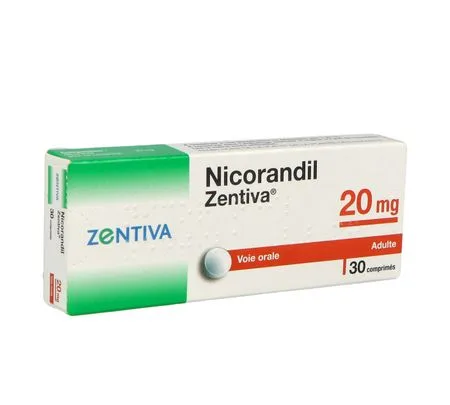
NICORANDIL ZENTIVA 20 mg, tablet
Composition
Nicorandil........................................................................................................................................................20 mg
For one tablet.
Mannitol, maize starch, croscarmellose sodium, stearic acid.
Indications
NICORANDIL ZENTIVA is indicated for the symptomatic treatment of adult patients with stable angina who are inadequately controlled or who have a contraindication or intolerance to first-line anti-anginal treatments (such as beta-blockers and/or calcium antagonists).
Dosage and administration
Dosage
The usual dose is 10 to 20 mg twice daily. The usual initial dose is 10 mg twice daily, preferably in the morning and evening. It is recommended to gradually increase the dose according to the patient's needs, response and tolerance, up to 40 mg twice daily if necessary. A lower initial dose of 5 mg twice daily may be considered in patients who are particularly prone to headaches.
Elderly patients
There is no specific dosage for elderly patients; however, as for all medicines, it is recommended to use the lowest effective dose.
Patients with hepatic and/or renal impairment
There is no specific dosage for patients with hepatic impairment and/or renal impairment.
Paediatric population
NICORANDIL ZENTIVA is not recommended in children because the safety and efficacy of this medicine have not been established in this patient group.
Method of administration
NICORANDIL ZENTIVA is administered orally.
The tablets must be swallowed whole, morning and evening, with a little liquid.
This medicine may be taken during or outside meals.
Contraindications
• Hypersensitivity to nicorandil or to any of the excipients listed in section Composition.
• Shock (including cardiogenic shock), severe hypotension, or left ventricular dysfunction associated with a low filling pressure or cardiac decompensation.
• Use of phosphodiesterase 5 inhibitors, as these may cause a significant drop in blood pressure (see section Interactions).
• Use of soluble guanylate cyclase stimulator(s) (such as riociguat), as these may cause a significant drop in blood pressure (see section Interactions).
• Hypovolemia.
• Acute pulmonary oedema.
Warnings and precautions
Ulcerations
Gastrointestinal, skin and mucosal ulcerations have been reported with nicorandil (see section Adverse effects).
Gastrointestinal ulcerations
Ulcerations at different sites of the body induced by nicorandil may occur in the same patient. They are refractory to treatment and, in most cases, respond only to discontinuation of nicorandil treatment. If one or more ulceration(s) appear, nicorandil should be permanently discontinued (see section Adverse effects). Healthcare professionals must be alerted to the importance of prompt diagnosis of nicorandil-induced ulcerations and of promptly stopping nicorandil treatment in case of ulcerations. Based on available data, ulcerations may occur shortly after nicorandil treatment is started but also up to several years after nicorandil treatment has begun.
Gastrointestinal haemorrhages secondary to gastrointestinal ulceration have been reported with nicorandil. Patients treated concomitantly with acetylsalicylic acid or NSAIDs (non-steroidal anti-inflammatory drugs) are at increased risk of severe complications such as gastrointestinal haemorrhage. Caution is therefore required when concomitant use of acetylsalicylic acid or NSAIDs with nicorandil is considered (see section Interactions).
At an advanced stage, gastrointestinal ulcerations may progress to perforation, fistula formation or abscess. Patients with diverticular disease are at particular risk of fistula formation or intestinal perforation during nicorandil treatment.
Gastrointestinal perforations have been reported with concomitant use of nicorandil with corticosteroids. Caution is therefore required when concomitant use with corticosteroids is considered.
Ocular ulcerations
Conjunctivitis, conjunctival ulcer and corneal ulcer have been reported with nicorandil. Patients must be informed of the signs and symptoms of corneal ulcerations and must be closely monitored. If one or more ulcerations develop, nicorandil must be stopped (see section Adverse effects).
Lowering of blood pressure
Caution is recommended when using nicorandil with other antihypertensive medicinal products (see sections Interactions and Adverse effects).
Heart failure
Due to the lack of data, caution is recommended when using nicorandil in patients with NYHA class III or IV heart failure.
Hyperkalaemia
Cases of severe hyperkalaemia have been very rarely reported with nicorandil. Nicorandil must be used with caution when combined with other medicinal products likely to increase potassium levels, particularly in cases of moderate or severe renal impairment (see sections Interactions and Adverse effects).
Desiccant agent
The tablets are sensitive to moisture; patients must be informed that the tablets must be kept in their blister until the time of taking. In addition to the nicorandil tablets, each blister contains silica gel tablets without active substance in a separate identified area used as a desiccant agent. Patients must be informed not to swallow these tablets. Accidental ingestion of this desiccant agent generally has no consequences; however, it could disrupt the schedule for taking the active tablets.
Paediatric population
NICORANDIL ZENTIVA is not recommended in children because the safety and efficacy of this medicine have not been established in this patient group.
G6PD deficiency
NICORANDIL ZENTIVA must be used with caution in patients with glucose-6-phosphate dehydrogenase deficiency. Nicorandil acts in part through its organic nitrate group. The metabolism of organic nitrates may lead to the formation of nitrites which may trigger methaemoglobinaemia in patients with glucose-6-phosphate dehydrogenase deficiency.
Interactions
Concomitant use of nicorandil with a phosphodiesterase 5 inhibitor, such as sildenafil, tadalafil and vardenafil, is contraindicated as it may cause a significant drop in blood pressure (synergistic effect).
Concomitant use of a soluble guanylate cyclase stimulator (such as riociguat) is contraindicated as it may cause a significant drop in blood pressure.
At therapeutic doses, nicorandil may have a hypotensive effect.
If nicorandil is used concomitantly with antihypertensives or other medicinal products with a hypotensive effect (e.g. vasodilators, tricyclic antidepressants or alcohol), the hypotensive effect may be increased.
Dapoxetine must be prescribed with caution in patients taking nicorandil due to a possible reduction in orthostatic tolerance.
Gastrointestinal perforations have been reported with concomitant use of nicorandil with corticosteroids. Caution is required when concomitant use is considered.
In case of concomitant intake with an NSAID, including acetylsalicylic acid, whether for cardiovascular prevention or at anti-inflammatory doses, the risk of severe complications such as gastrointestinal ulcerations, perforations and haemorrhages is increased (see section Warnings and precautions).
Caution is recommended when nicorandil is combined with other medicinal products likely to increase potassium levels (see sections Warnings and precautions and Adverse effects).
The metabolism of nicorandil is not significantly affected by cimetidine (a CYP inhibitor) or rifampicin (a CYP3A4 inducer). Nicorandil does not affect the pharmacodynamics of acenocoumarol.
Fertility, pregnancy and breastfeeding
Pregnancy
There are no or limited data on the use of nicorandil in pregnant women.
Animal studies have not shown direct or indirect harmful effects on reproduction (see section Preclinical safety).
As a precaution, it is preferable to avoid use of NICORANDIL ZENTIVA 20 mg, tablet during pregnancy.
Breast-feeding
Animal studies have shown that nicorandil is excreted in small amounts in breast milk. As it is not known whether nicorandil passes into breast milk, the administration of NICORANDIL ZENTIVA is not recommended during breast-feeding.
Fertility
Fertility data are insufficient to estimate the risk in men (see section Preclinical safety).
Driving and using machines
NICORANDIL ZENTIVA has an influence on the ability to drive vehicles and use machines. Indeed, as with other vasodilators, the hypotensive effects as well as dizziness and the feeling of weakness induced by nicorandil may reduce the ability to drive vehicles or use machines. This effect may be increased in case of combination with alcohol or other medicinal products having a hypotensive effect (e.g. vasodilators or tricyclic antidepressants) (see section Interactions). Patients should therefore be informed that they must not drive or use machines if these symptoms occur.
Adverse effects
Summary of the safety profile
The most frequently reported adverse reaction in clinical trials was headache, occurring in more than 30 % of patients, particularly during the first days of treatment, and which is responsible for the majority of treatment discontinuations in clinical trials. A gradual increase in dosage could reduce the frequency of these headaches (see section Dosage and administration).
In addition, serious adverse reactions, including ulcerations and their complications (see section Warnings and precautions), have been reported during post-marketing surveillance of nicorandil.
Tabulated summary of adverse reactions
The frequencies of adverse reactions reported with nicorandil are presented in the following table by system organ class (MedDRA) and by frequency. Frequencies are defined as follows: very common (≥ 1/10), common (≥ 1/100, < 1/10), uncommon (≥ 1/1 000, < 1/100), rare (≥ 1/10 000, < 1/1 000), very rare (< 1/10 000), not known (cannot be estimated from the available data). Within each frequency grouping, adverse reactions are presented in order of decreasing seriousness.
|
|
Very common |
Common |
Uncommon |
Rare |
Very rare |
Frequency not known |
|
Infections and infestations |
|
Abscess (skin abscess)* (see section Warnings and precautions) |
Abscess (genital, anal or other gastrointestinal sites)* (see section Warnings and precautions) |
|
|
|
|
Metabolism and nutrition disorders |
|
|
|
|
Hyperkalaemia (see sections Warnings and precautions and Interactions) |
|
|
Nervous system disorders |
Headache |
Vertigo |
|
|
|
Paralysis of the 3 cranial nerve, paralysis of the 6 cranial nerve often associated with headache
|
|
Eye disorders |
|
|
Corneal ulcer*, conjunctival ulcer, conjunctivitis (see section Warnings and precautions) |
|
|
Diplopia, ophthalmoplegia often associated with headache |
|
Cardiac disorders |
|
Increase in heart rate |
|
|
|
|
|
Vascular disorders |
|
Cutaneous vasodilation with flushing |
Decrease in blood pressure (see section Warnings and precautions) |
|
|
|
|
Gastrointestinal disorders |
|
Diverticulitis*, gastrointestinal haemorrhage*, gastrointestinal ulcerations (stomatitis, aphthous stomatitis, mouth ulcer, tongue ulcer, small intestine ulcer, large intestine ulcer, anal ulcer)* (see section Warnings and precautions), vomiting, nausea |
Gastrointestinal perforation*. Fistula (anal, genital, gastrointestinal and cutaneous fistula) *(see section Warnings and precautions) |
|
|
|
|
Hepatobiliary disorders |
|
|
|
|
Hepatic disorders such as hepatitis, cholestasis or jaundice |
|
|
Skin and subcutaneous tissue disorders |
|
Ulcerations of the skin and mucous membranes (mainly perianal ulcerations, genital ulcerations and peristomal ulcerations)* (see section Warnings and precautions) |
|
Skin rash, pruritus |
Angioedema |
|
|
Musculoskeletal and systemic disorders |
|
|
|
Myalgia |
|
|
|
General disorders and administration site conditions |
|
Feeling of weakness |
|
|
|
|
*: Frequencies were calculated based on the results of the post-authorisation safety study (PASS), which is a retrospective cohort study conducted using the United Kingdom Clinical Practice Research Datalink (CPRD) database. Therefore, the frequencies represent those of the British population.
Description of selected adverse reactions
Gastrointestinal ulcerations
Complications of the gastrointestinal ulceration type have been reported, such as perforation, fistula or abscess formation, sometimes resulting in gastrointestinal haemorrhage and weight loss (see section Warnings and precautions).
Additional information
In addition, the following adverse reactions have been reported at different frequencies in the IONA study (Impact of Nicorandil in Angina), in which nicorandil was used in addition to standard therapy in patients with stable angina and a high risk of cardiovascular events (see section Pharmacodynamics).
|
|
Common |
Uncommon |
Very rare |
|
Gastrointestinal disorders |
Rectal haemorrhage |
Oral ulcer |
Abdominal pain |
|
Skin and subcutaneous tissue disorders |
|
Angioedema |
|
|
Musculoskeletal and systemic disorders |
|
Myalgia |
|
Reporting of suspected adverse reactions
Reporting suspected adverse reactions after authorisation of the medicinal product is important. It allows continued monitoring of the benefit/risk balance of the medicinal product. Healthcare professionals are asked to report any suspected adverse reaction via the national reporting system: National Agency for the Safety of Medicines and Health Products (ANSM) and the network of Regional Centres of Pharmacovigilance - Website: https://signalement.social-sante.gouv.fr.
Overdose
Symptoms
In case of overdose, the expected symptoms are peripheral vasodilation with a fall in blood pressure and reflex tachycardia.
Management
Monitoring of cardiac function and supportive measures are recommended. If these measures are not sufficient, it is recommended to increase the circulating plasma volume by administering a plasma expander. If life-threatening, the administration of vasopressors should be considered.
Pharmacodynamics
Pharmacotherapeutic class: Other vasodilators used in cardiac diseases, ATC code: C01DX16.
Mechanism of action
Nicorandil, an ester of nicotinamide, is a vasodilator with a dual mechanism of action, which causes relaxation of the tonic smooth vascular muscles at both the venous and arterial levels of the vessels.
It has a potassium channel opening effect. This activation of potassium channels induces hyperpolarisation of vascular cell membranes accompanied by an arterial myorelaxant effect, and therefore arterial vasodilation and a reduction in afterload. In addition, activation of potassium channels results in cardioprotection by reproducing ischaemic preconditioning.
Thanks to its nitrate moiety, nicorandil also has a relaxant effect on vascular smooth muscle, particularly in the venous system, through an increase in intracellular cyclic guanosine monophosphate (cGMP). This results in an increase in vascular capacity associated with a decrease in preload.
Pharmacodynamic effects
It has been shown that nicorandil exerts a direct effect on the coronary arteries, on both normal and stenosed segments, without causing a coronary steal phenomenon. In addition, the reduction in telediastolic pressure and wall tension induces a decrease in the extravascular component of vascular resistance. This results in improved myocardial oxygenation and increased blood flow in post-stenotic myocardial areas.
Furthermore, nicorandil has demonstrated spasmolytic activity in both in vitro and in vivo studies and relieves coronary spasm induced by methacholine or noradrenaline.
Nicorandil has no direct effect on myocardial contractility.
Clinical efficacy and safety
The IONA study was a randomised, double-blind, placebo-controlled study conducted in 5 126 patients aged over 45 years with chronic stable angina, treated with standard anti-anginal therapy and at high risk of cardiovascular events defined by one of the following: 1) history of myocardial infarction, or 2) coronary artery bypass grafting, or 3) coronary artery disease confirmed by angiography or a positive exercise test within the previous two years, combined with one of the following criteria: left ventricular hypertrophy on ECG, left ventricular dysfunction (left ventricular ejection fraction ≤45 %, or a telediastolic diameter of >55 mm), age ≥65 years, diabetes, hypertension, peripheral arterial disease or cerebrovascular disease. Patients receiving treatment with sulfonylureas were not included in the study because it was considered that these patients might not benefit from the treatment; (sulfonylureas can potentially close potassium channels and therefore have effects opposing some of those of nicorandil). Follow-up for the endpoint analysis lasted between 12 and 36 months, with a mean of 1,6 year.
The primary composite endpoint (death from coronary artery disease, non-fatal myocardial infarction or unplanned hospitalisation for cardiac chest pain) was reached in 337 (13,1 %) patients treated with nicorandil at 20 mg twice daily compared with 389 (15,5 %) patients receiving placebo (relative risk 0,83; confidence interval (CI) at 95 % 0,72 to 0,97; p = 0,014).
Pharmacokinetics
Pharmacokinetics are linear at doses of 5 mg to 40 mg.
Absorption
After oral administration, nicorandil is rapidly and completely absorbed from the gastrointestinal tract, independently of food intake. Absolute bioavailability is approximately 75 %. There is no significant hepatic first-pass effect.
The maximum plasma concentrations (Cmax) are reached in approximately 30 to 60 minutes. Plasma concentration (and area under the curve [AUC]) is linearly related to the ingested dose.
Steady state is reached rapidly (in 4 to 5 days) with repeated oral administration (according to a regimen of 2 doses per day).
At steady state, the accumulation ratio (based on AUC) is around 2 for 20 mg tablets taken 2 times a day and 1,7 for 10 mg tablets taken 2 times a day.
Distribution
Within the therapeutic range, the distribution parameters of the product in the body remain stable regardless of the dose.
The volume of distribution of nicorandil after intravenous (IV) injection is 1,04 l/kg of body weight. Nicorandil is only weakly bound to plasma proteins (estimated bound fraction around 25 %).
Biotransformation
Nicorandil is mainly metabolised in the liver by denitration into a series of compounds devoid of cardiovascular activity. In plasma, unchanged nicorandil represented 45,5 % of the radioactive AUC, and N‑(2‑hydroxyethyl)‑nicotinamide, the hydroxylated metabolite, represented 40,5 %. The other metabolites represented the remaining 20 % of the radioactive AUC.
Nicorandil is mainly eliminated via the urine as metabolites, the parent product constituting less than 1 % of the administered dose in human urine (0 to 48 hours). N‑(2‑hydroxyethyl)‑nicotinamide is the most abundant metabolite (approximately 8,9 % of the administered dose within 48 hours), followed by nicotinuric acid (5,7 %), nicotinamide (1,34 %), N‑methyl-nicotinamide (0,61 %) and nicotinic acid (0,40 %). These metabolites represent the main pathway of nicorandil transformation.
Elimination
The decline in plasma concentrations occurs in two phases:
• a rapid phase, with a half-life of approximately 1 hour, representing 96 % of plasma exposure;
• a slow elimination phase occurring approximately 12 hours after administration of the oral dose of 20 mg taken 2 times a day.
After intravenous administration of 4 to 5 mg (infusion over 5 min), total body clearance was approximately 40 - 55 l/hour.
Nicorandil and its metabolites are mainly eliminated via the urine, with faecal elimination being very low.
Particular patient groups
No clinically relevant change in the pharmacokinetic profile of nicorandil has been established in at-risk populations such as elderly people, patients with hepatic impairment, or patients with chronic renal failure.
Pharmacokinetic interactions
The metabolism of nicorandil does not appear to be significantly modified by cimetidine or rifampicin, which are respectively an inhibitor and an inducer of hepatic mixed-function microsomal oxidases.
Preclinical safety
Non-clinical data from conventional safety pharmacology, repeated-dose toxicity, genotoxicity and carcinogenicity studies did not reveal any particular risk for humans.
Impairment of fertility
Fertility studies did not show any effect on the mating capacity of male or female rats, but a decrease in the number of live fetuses and implantation sites was observed at high doses. Histopathological changes in the testes (decrease in spermatogenic cells) were observed in repeated-dose toxicity studies. Further in-depth studies on testicular toxicity showed a decrease in testicular blood flow and a reduction in blood testosterone levels. These findings suggest that the testicular toxicity due to nicorandil is associated with a sustained decrease in blood flow caused by reduced cardiac output. After treatment discontinuation, disappearance of nicorandil-induced testicular toxicity was observed after 4 weeks, indicating that the observed changes are reversible.
Embryotoxicity and peri- and postnatal toxicity
After administration of radiolabelled nicorandil, radioactivity was observed in the placenta of pregnant rats.
Following exposure to nicorandil at maternally toxic doses, an embryotoxic effect was observed in rats and rabbits. No teratogenic effect (in rats and rabbits), nor abnormal pre- or postnatal physical or behavioural development (in rats), was observed.
Special storage precautions
Store at a temperature not exceeding 25°C.
To be stored in the original outer packaging, protected from moisture.
Prescription, supply and reimbursement
| Marketing authorisation (AMM) |
|
| Price: |
|
Collection.
35 RUE DU VAL DE MARNE CS 91439
75214 PARIS CEDEX 13
Tel: 0 800 089 219 https://www.zentiva.com/
Source: VIDAL · Updated on 11/11/2026. This information does not replace advice from a healthcare professional.