
Medicines
Update of 25/04/2025
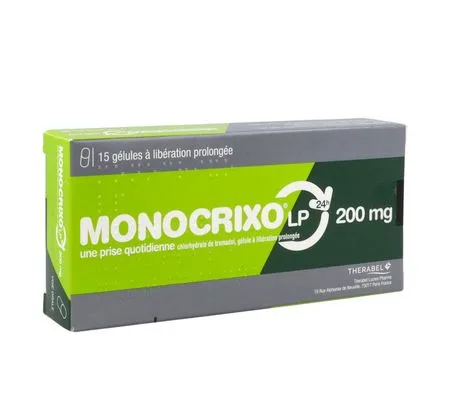
MONOCRIXO® LP one daily intake
tramadol
Forms and presentations
Prolonged-release capsule at 100 mg (turquoise), at 150 mg (turquoise and white) or at 200 mg (turquoise and transparent): Boxes of 15, under blister packs.Composition
| per capsule | |
| Tramadol hydrochloride
|
100 mg |
| or | 150 mg |
| or | 200 mg |
Excipient with known effect: sucrose stearate: 7 mg/capsule of 100 mg, 10,5 mg/capsule of 150 mg, 14 mg/capsule of 200 mg.
Indications
Treatment of moderate to severe pain (see examples in section Pharmacodynamics).Dosage and administration
DosageMonocrixo capsules must be administered every 24 hours.
The dosage of tramadol should be adapted to the intensity of the pain and to each patient's individual response. The appropriate dosage is the one that relieves pain for 24 hours without having undesirable effects or with undesirable effects at an acceptable level. The lowest effective analgesic dose must always be used.
For patients previously treated with immediate-release tramadol, their total daily dose must be calculated, and treatment must be initiated with the closest Monocrixo dose. The dosage must be increased slowly in order to minimise as far as possible the occurrence of transient undesirable effects.
Monocrixo must under no circumstances be administered for a period longer than that absolutely necessary (see also Warnings and precautions). If, given the nature and severity of the disease, repeated or long-term treatment with tramadol is necessary, careful and regular monitoring should then be carried out (interspersing therapeutic breaks if possible) in order to check whether continuation of treatment is truly necessary.
The total daily dose of tramadol must not exceed 400 mg, except in particular clinical circumstances.
Dosage for particular patient groups:- Adults and children over 12 years:
- The usual initial dosage is one capsule of 100 or 200 mg per day. If this dosage is not effective, it must be increased until pain relief is obtained.
- Elderly patients:
- Dose adjustment is generally not necessary in patients up to 75 years of age with normal renal and hepatic function. In patients aged over 75 years, elimination may be delayed. Therefore, if necessary, the interval between doses may be extended according to the patient's needs.
- Patients with renal impairment/dialysis:
- In patients with renal impairment, elimination of tramadol may be delayed. In these patients, the interval between doses should be carefully assessed according to the patient's needs. Tramadol is not recommended for patients with moderate to severe renal impairment (creatinine clearance < 30 ml/min) (see Warnings and Precautions for Use).
- Patients with hepatic impairment:
- In patients with hepatic impairment, elimination of tramadol may be delayed. In these patients, the interval between doses should be carefully assessed according to the patient's needs. Tramadol is contraindicated in patients with severe hepatic impairment (see also Contraindications). In patients with moderate hepatic impairment, tramadol is not recommended (see Warnings and Precautions for Use).
- Child under 12 years:
- Not recommended.
Method of administration:
Capsules must be swallowed whole, without chewing them.
Treatment objectives and discontinuation:Before starting treatment with Monocrixo, a therapeutic strategy including the duration and goals of treatment, as well as a plan for the end of treatment, must be agreed with the patient, in accordance with pain management recommendations. During treatment, frequent contacts must take place between the physician and the patient to assess the need to continue treatment, to consider discontinuation or to adjust the treatment dose if necessary. When a patient no longer requires treatment with tramadol, it is advised to gradually reduce the dose to avoid withdrawal symptoms. In the absence of adequate pain control, the possibility of hyperalgesia, tolerance and progression of the underlying disease should be considered (see Warnings and Precautions for Use).
Contraindications
- Hypersensitivity to the active substance or to any of the excipients listed in section Composition.
- Acute intoxication with alcohol, hypnotic drugs, central analgesics, opioids or psychotropic drugs.
- Patients treated concurrently or who have been treated within the previous 14 days with monoamine oxidase inhibitors (see Interactions).
- Severe hepatic insufficiency.
- Epilepsy not controlled by treatment (see Warnings and Precautions for Use).
- Breastfeeding, if long-term treatment is necessary (see Fertility/Pregnancy/Breastfeeding).
Warnings and precautions
Warnings:
- In case of respiratory insufficiency, tramadol is not recommended.
- Tramadol is not recommended in patients with moderate or severe renal impairment and in patients with moderate hepatic impairment.
- Tramadol is not suitable for substitution treatment in patients with opioid dependence. Although an opioid agonist, tramadol cannot correct the symptoms of morphine withdrawal.
- Convulsions have been reported in patients treated with tramadol who are susceptible to convulsions or who receive other treatments that lower the seizure threshold, in particular selective serotonin reuptake inhibitors, tricyclic antidepressants, antipsychotics, central analgesics or local anaesthetics. Epileptic patients controlled by treatment or patients susceptible to convulsions should only be treated with tramadol in cases of absolute necessity. Cases of convulsions have been reported in patients receiving tramadol at the recommended doses. The risk of convulsions is increased if tramadol doses exceed the recommended dose (400 mg).
- Concomitant use of opioid agonist-antagonists (nalbuphine, buprenorphine, pentazocine) is not recommended (see Interactions).
- Risk associated with concomitant use of gabapentinoids or sedatives such as benzodiazepines or related drugs:
Concomitant use of Monocrixo and gabapentinoids (gabapentin and pregabalin) or sedatives such as benzodiazepines or related drugs may result in respiratory depression, hypotension, profound sedation, coma or death. Given these risks, concomitant prescription with these gabapentinoids or sedatives is reserved for patients for whom no other therapeutic alternative can be considered. If Monocrixo is prescribed in combination with gabapentinoids or sedatives, the lowest effective dose must be used and the duration of treatment must be as short as possible.
Patients must be closely monitored for any signs or symptoms of respiratory depression or sedation. In this context, it is strongly recommended to inform patients and their caregivers of these symptoms (see Interactions). - Metabolism by CYP2D6:
Tramadol is metabolised via a hepatic enzyme, CYP2D6. In case of deficiency or complete absence of this enzyme in the patient, the expected analgesic effect may not be achieved. It is estimated that up to 7 % of the Caucasian population could have this deficiency. However, if the patient is an ultra-rapid metaboliser, there is a risk, even at the recommended dose, of occurrence of adverse effects related to opiate toxicity.
General symptoms of opioid toxicity include mental confusion, drowsiness, shallow breathing, constricted pupils, nausea, vomiting, constipation and loss of appetite. In severe cases, patients may present with symptoms of circulatory and respiratory failure that may be life-threatening and, in very rare cases, may lead to a fatal outcome.
The estimated prevalences of ultra-rapid metabolisers in different populations are summarised below:
Population % prevalence African/Ethiopian 29 % Afro-American from 3,4 % to 6,5 % Asian from 1,2 % to 2 % Caucasian from 3,6 % to 6,5 % Greek 6,0 % Hungarian 1,9 % Northern European from 1 % to 2 % - Postoperative use in children:
The literature reports cases of tramadol administered to children post-operatively following tonsillectomy and/or adenoidectomy as part of the treatment of obstructive sleep apnoea, leading to rare but potentially life-threatening adverse events. The administration of tramadol to children for the relief of post-operative pain must be approached with the greatest caution and must be accompanied by close monitoring of symptoms related to opioid toxicity, in particular respiratory depression. - Children with impaired respiratory function:
The use of tramadol is not recommended in children with impaired respiratory function, in particular in cases of neuromuscular deficiency, severe cardiac or respiratory conditions, infections of the upper airways or lungs, polytrauma or major surgical procedures. These factors are likely to aggravate the symptoms of opioid toxicity. - Sleep-related breathing disorders:
Opioids may cause sleep-related breathing disorders, including central sleep apnoea (CSA) and sleep-related hypoxaemia. The risk of CSA increases with the opioid dose used. In patients with CSA, a reduction in the total opioid dose should be considered. - Adrenal insufficiency:
Opioid analgesics may occasionally cause reversible adrenal insufficiency requiring monitoring and glucocorticoid replacement therapy. Symptoms of acute or chronic adrenal insufficiency may include, e.g., severe abdominal pain, nausea and vomiting, arterial hypotension, extreme fatigue, decreased appetite and weight loss.
- Tramadol should be used with caution in patients predisposed to epileptic seizures, or presenting with biliary disorders, in patients dependent on opioids and in patients presenting with head trauma, an alteration of the state of consciousness without obvious cause, central respiratory disorders or respiratory function disorders, or an increase in intracranial pressure.
- At therapeutic doses, tramadol may cause withdrawal symptoms.
- Withdrawal symptoms, similar to those noted during opiate withdrawal, may occur, such as agitation, anxiety, nervousness, insomnia, hyperkinesia, tremors and gastrointestinal symptoms.
- At the recommended doses, tramadol is unlikely to induce clinically relevant respiratory depression. Caution should nevertheless be exercised when administering tramadol to patients with respiratory depression or excessive bronchial secretion and in patients also receiving central nervous system depressants.
- This medicine contains sucrose. Patients with fructose intolerance, glucose-galactose malabsorption syndrome or sucrase/isomaltase deficiency (rare hereditary diseases) must not take this medicine.
- Tolerance and opioid use disorder (abuse and drug dependence):
Repeated administration of opioids such as Monocrixo may lead to tolerance, physical and psychological dependence and an opioid use disorder (OUD). Repeated use of Monocrixo may induce an opioid use disorder (OUD). The higher the dose and the longer the duration of opioid treatment, the greater the risk of developing an OUD. Intentional abuse or misuse of Monocrixo may lead to overdose and/or death. The risk of developing an OUD is increased in patients with a personal or family history (parents or siblings) of substance use disorders (including alcoholism), in active smokers, or in patients with a personal history of mental health problems (e.g. major depression, anxiety and personality disorder).
Before initiating treatment with Monocrixo and throughout the duration of treatment, therapeutic goals and a treatment discontinuation plan should be agreed with the patient (see Posology and Method of administration). Before and during treatment, the patient should also be informed of the risks and signs of OUD. If these signs appear, patients are advised to contact their physician.
Patients should be monitored for signs of excessive medicine use (e.g. requests for early refills). This includes review of concomitant opioids and psychoactive medicines (such as benzodiazepines). For patients with signs and symptoms of OUD, consultation with an addiction specialist should be considered. - Serotonin syndrome:
Serotonin syndrome, a potentially fatal condition, has been reported in patients treated with tramadol in combination with other serotonergic agents or with tramadol alone (see InteractionsAdverse effectsOverdose).
If concomitant treatment with other serotonergic agents is clinically justified, careful observation of the patient is advised, particularly during initiation of treatment and dose increases.
Symptoms of serotonin syndrome may include changes in mental state, autonomic instability, neuromuscular abnormalities and/or gastrointestinal symptoms. If serotonin syndrome is suspected, a dose reduction or discontinuation of treatment should be considered, depending on the severity of the symptoms. Withdrawal of serotonergic medicinal products generally brings about rapid improvement.
Interactions
Drug interactionsContraindicated:
- Non-selective MAOIs: risk of serotonin syndrome: diarrhoea, tachycardia, sweating, tremor, confusion, even coma.
- Selective MAO-A inhibitors, by extrapolation from non-selective MAOIs: risk of serotonin syndrome: diarrhoea, tachycardia, sweating, tremor, confusion, even coma.
- Selective MAO-B inhibitors: manifestations of central excitation suggestive of serotonin syndrome: diarrhoea, tachycardia, sweating, tremor, confusion, even coma.
In case of recent treatment with MAOIs, a period of 2 weeks must be observed before starting treatment with tramadol (see Contraindications).
Not recommended:
- Alcohol: alcohol increases the sedative effect of morphine-type analgesics. The effect on alertness may make driving vehicles and using machinery dangerous. Avoid taking alcoholic beverages and medicinal products containing alcohol.
- Carbamazepine and other enzyme inducers: risk of decreased analgesic effect and duration of effect due to decreased plasma concentrations of tramadol.
- Opioid agonists-antagonists (buprenorphine, nalbuphine, pentazocine): decreased analgesic effect through competitive receptor blockade, with risk of onset of withdrawal syndrome.
To be taken into account:
- The combination of tramadol-based medicinal products and serotonergic medicinal products, such as selective serotonin reuptake inhibitors (SSRIs), serotonin and noradrenaline reuptake inhibitors (SNRIs), MAO inhibitors (see Contraindications), tricyclic antidepressants and mirtazapine may cause serotonin syndrome, a potentially fatal condition (see Warnings and Precautions for UseAdverse effects).
- Other morphine derivatives (including antitussive medicinal products and substitution treatments), and barbiturates: increased risk of respiratory depression, which may be fatal in case of overdose.
- Other central nervous system depressants, such as other morphine derivatives (including antitussives and substitution treatments), barbiturates, benzodiazepines, other anxiolytics, hypnotics, sedating antidepressants, sedating antihistamines, neuroleptics, centrally acting antihypertensives, gabapentinoids, thalidomide and baclofen: increased central depression. Impairment of alertness may make driving vehicles and using machinery dangerous.
- Gabapentinoids or sedatives such as benzodiazepines or related medicinal products: concomitant use of opioids with gabapentinoids (gabapentin or pregabalin) or sedatives such as benzodiazepines or related medicinal products may result in respiratory depression, hypotension, profound sedation, coma or death due to its additive central depressant effect. The dose and duration of concomitant treatment should be limited (see Warnings and Precautions for Use).
- Depending on clinical needs, prothrombin time should be assessed periodically when tramadol is co-administered with warfarin derivatives, as prolongation of INR has been reported.
- Other CYP3A4 inhibitor medicinal products, such as ketoconazole and erythromycin: inhibition of tramadol metabolism (N-demethylation) and probably also of the metabolism of the active O-demethylated metabolite. The clinical significance of such an interaction has not been studied.
- Tramadol may cause convulsions and increase the risk of convulsions with various treatments such as selective serotonin reuptake inhibitors (SSRIs), serotonin and noradrenaline reuptake inhibitors (SNRIs), tricyclic antidepressants, antipsychotics and medicinal products that lower the seizure threshold (such as bupropion, mirtazapine and tetrahydrocannabinol).
- In a limited number of studies, pre- or post-operative use of the antiemetic 5-HT3 antagonist ondansetron increased the need for tramadol in patients suffering from postoperative pain.
Fertility, pregnancy and breastfeeding
Pregnancy:It is preferable not to use Monocrixo during the first trimester of pregnancy. From the second trimester onwards, cautious use is occasionally possible.
In humans, there are insufficient data to assess the teratogenic effect of tramadol during the first trimester of pregnancy. Animal studies have not shown a teratogenic effect, but foetotoxicity due to maternal toxicity (see Preclinical safety).
- As with other opioid analgesics, during the first trimester, chronic use of tramadol may induce, regardless of the dose, withdrawal syndrome in the newborn. At the end of pregnancy, high doses, even for short-term treatment, may cause respiratory depression in the newborn.
Breastfeeding:
Approximately 0,1 % of the tramadol dose administered to the mother is excreted in breast milk. During the immediate postpartum period, an oral daily intake of up to 400 mg of tramadol by the mother corresponds to an average quantity of tramadol ingested by the breastfed infant of 3 % of the dose taken by the mother, adjusted for body weight. Thus, it is advisable either not to use tramadol during lactation or to interrupt breastfeeding during treatment with tramadol. Interruption of breastfeeding is generally not necessary following a single dose of tramadol.
Driving and using machines
Tramadol may cause drowsiness, which may be potentiated by alcohol and other central nervous system depressants. If the patient experiences this effect, they must not drive or use machines.Adverse effects
The most frequently reported treatment-related adverse effects are nausea and dizziness, which occur in more than 10 % of patients.
The effects are classified as follows:
- very common (≥ 1/10) ;
- frequent (between 1/100 and 1/10);
- infrequent (between 1/1000 and 1/100);
- rare (between 1/10 000 and 1/1000), including isolated cases.
- Cardiovascular disorders:
-
- Infrequent (≥ 1/1000, < 1/100): effect on cardiovascular regulation (palpitations, tachycardia, orthostatic arterial hypotension or cardiovascular collapse). These adverse effects may occur particularly after intravenous administration and in patients subjected to physical stress.
- Rare (≥ 1/10 000, < 1/1000): bradycardia, increased blood pressure.
- Infrequent (≥ 1/1000, < 1/100): effect on cardiovascular regulation (palpitations, tachycardia, orthostatic arterial hypotension or cardiovascular collapse). These adverse effects may occur particularly after intravenous administration and in patients subjected to physical stress.
- Nervous system disorders:
-
- Very frequent (≥ 1/10): dizziness.
- Frequent (≥ 1/100 and < 1/10): headache, drowsiness.
- Rare (≥ 1/10 000, < 1/1000): changes in appetite, paresthesia, tremors, respiratory depression, epileptiform convulsions, involuntary muscle contractions, coordination abnormalities, syncope. If the recommended doses are largely exceeded and other central depressants are administered concomitantly (see Interactions), respiratory depression may occur.
Epileptiform convulsions have occurred mainly after administration of high doses of tramadol or after concomitant treatment with medicinal products that may lower the convulsion threshold (see Warnings and Precautions for UseInteractions). - Undetermined: serotonergic syndrome.
- Very frequent (≥ 1/10): dizziness.
- Psychiatric disorders:
-
- Rare (≥ 1/10 000, < 1/1000): hallucinations, confusion, sleep disorders, anxiety and nightmares.
- Rare (≥ 1/10 000, < 1/1000): hallucinations, confusion, sleep disorders, anxiety and nightmares.
- Undesirable psychiatric reactions may occur after administration of Monocrixo, which vary individually in intensity and nature (depending on individual reactivity and duration of treatment). These include mood disorders (usually elation, occasionally dysphoria), changes in activity (usually a decrease, occasionally an increase) and changes in cognitive and sensory abilities (for example, decision-making capacity, perception disorders). Dependence may develop.
- Visual disturbances:
-
- Rare (≥ 1/10 000, < 1/1000): blurred vision.
- Rare (≥ 1/10 000, < 1/1000): blurred vision.
- Respiratory, thoracic and mediastinal disorders:
-
- Rare (≥ 1/10 000, < 1/1000): dyspnea.
- An aggravation of asthma has been reported, although a causal relationship has not been established.
- Undetermined: hiccups.
- Rare (≥ 1/10 000, < 1/1000): dyspnea.
- Gastrointestinal disorders
-
- Very frequent (≥ 1/10): nausea.
- Frequent (≥ 1/100 and < 1/10): vomiting, constipation, dry mouth.
- Infrequent (≥ 1/1000 and < 1/100): retching, gastrointestinal irritation (sensation of gastric heaviness, bloating), diarrhea.
- Very frequent (≥ 1/10): nausea.
- Skin and subcutaneous tissue disorders:
-
- Frequent (≥ 1/100 and < 1/10): sweating.
- Uncommon (≥ 1/1000 and < 1/100): skin reactions (for example pruritus, rash, urticaria).
- Frequent (≥ 1/100 and < 1/10): sweating.
- Musculoskeletal disorders:
-
- Rare (≥ 1/10 000, < 1/1000): muscle weakness.
- Rare (≥ 1/10 000, < 1/1000): muscle weakness.
- Hepatobiliary system disorders:
-
- In a few cases, an increase in liver enzymes has been reported during therapeutic use of tramadol.
- In a few cases, an increase in liver enzymes has been reported during therapeutic use of tramadol.
- Renal and urinary system disorders:
-
- Rare (≥ 1/10 000, < 1/1000): micturition disorders (difficulty urinating, dysuria and urinary retention).
- Rare (≥ 1/10 000, < 1/1000): micturition disorders (difficulty urinating, dysuria and urinary retention).
- General disorders:
-
- Frequent (≥ 1/100 and < 1/10): fatigue.
- Rare (≥ 1/10 000, < 1/1000): allergic reactions (for example, dyspnoea, bronchospasm, wheezing, angioneurotic oedema) and anaphylaxis; withdrawal syndromes, similar to those occurring during opiate withdrawal, may occur, such as agitation, anxiety, nervousness, insomnia, hyperkinesia, tremor and gastrointestinal symptoms.
- Frequent (≥ 1/100 and < 1/10): fatigue.
- Other symptoms rarely observed upon discontinuation of treatment with tramadol are: panic attacks, severe anxiety, hallucinations, paraesthesia, tinnitus and unusual symptoms.
- Metabolism and nutrition disorders:
-
- Frequency not determinable: hypoglycaemia.
- Frequency not determinable: hypoglycaemia.
- Drug dependence:
- Repeated use of Monocrixo may lead to drug dependence (pharmacodependence), even at therapeutic doses. The risk of pharmacodependence may vary depending on the patient's individual risk factors, the dosage and the duration of opioid treatment (see Warnings and Precautions for Use).
Reporting suspected adverse reactions after authorisation of the medicinal product is important. It allows continuous monitoring of the benefit/risk balance of the medicinal product. Healthcare professionals should report any suspected adverse reaction via the national reporting system: National Agency for the Safety of Medicines and Health Products (ANSM) and the network of Regional Pharmacovigilance Centres. Website: https://signalement.social-sante.gouv.fr.
Overdose
As with other opioid analgesics, the typical symptoms of overdose are: miosis, vomiting, cardiovascular collapse, sedation, coma, convulsions and respiratory depression.
Supportive measures must be taken: treatment of an overdose requires maintenance of adequate ventilation and cardiovascular function. In case of respiratory depression, naloxone may be used. Diazepam may be used in case of convulsions.
Tramadol is poorly eliminated by haemodialysis or haemofiltration.
Consequently, haemodialysis and haemofiltration alone are not appropriate treatments for acute tramadol intoxication.
Removal of unabsorbed medicinal product by gastric lavage is useful, particularly for prolonged-release forms.
Serotonin syndrome has also been reported.
Pharmacodynamics
Pharmacotherapeutic class: Opioid analgesic, ATC code: N02AX02.
Tramadol is a centrally acting analgesic. Tramadol is a pure, non-selective agonist of the μ, δ and κ morphine receptors, with higher affinity for μ receptors. Other mechanisms contributing to the analgesic effects are inhibition of neuronal reuptake of noradrenaline and increased release of serotonin.
Tramadol has antitussive activity. Unlike morphine, a wide range of analgesic doses of tramadol does not produce respiratory depressant effects. Gastrointestinal motility is also not affected. Effects on the cardiovascular system are minimal. The estimated potency of tramadol is 6 to 10 times lower than that of morphine.
The analgesic efficacy of Monocrixo has been demonstrated in patients suffering from osteoarthritis.
Pharmacokinetics
- Absorption:
- After oral administration, tramadol is almost completely absorbed, and the absolute bioavailability is approximately 70 %. Tramadol is metabolised to O-desmethyltramadol, which has an analgesic effect in rodents. The elimination half-life of tramadol is approximately 6 hours. The elimination half-life is prolonged up to 9 hours with Monocrixo capsules, taking into account the absorption time.
- After oral administration of Monocrixo 200 mg fasting, the maximum plasma concentration (Cmax) is 299,59 ng/ml (240 - 300 ng/ml). The median Tmax is 9,59 hours (9 - 12 hours).
- The bioavailability of Monocrixo is complete and corresponds, at identical dosage, to that of an oral form of 50 mg immediate-release.
- The pharmacokinetics of Monocrixo are not modified by food intake.
- Furthermore, at steady state, one Monocrixo 200 mg capsule has a bioavailability profile that would correspond to an immediately absorbed product (capsules at 50 mg of tramadol immediate-release). The dispersion of patients participating in the study was not greater than that of the reference group.
- Distribution:
- Tramadol has a high tissue affinity with an apparent volume of distribution of 203 litres ± 40 after oral administration in healthy volunteers. Plasma protein binding is of the order of 20 %.
- Biotransformation:
- In humans, tramadol is mainly metabolised by N- and O-demethylation followed by conjugation of the O-demethylated products with glucuronic acid. Only O-desmethyltramadol is pharmacologically active. There are large quantitative inter-individual differences between the other metabolites. Currently, 11 metabolites have been identified in urine. In animals, O-desmethyltramadol is more active than the parent molecule by a factor of 2 to 4. Its half-life T1/2 ß (in 6 healthy volunteers) is 7,9 h (5,4 to 9,6 h), approximately that of tramadol.
- Inhibition of one or both of the cytochromes CYP3A4 and CYP2D6 involved in the biotransformation of tramadol may modify the plasma concentration of tramadol or of its active metabolites.
- Disposal:
- Tramadol and its metabolites are almost entirely excreted by the renal route. Urinary excretion represents 90 % of the total radioactive dose administered. In cases of hepatic or renal impairment, the half-life may be slightly prolonged. In patients with liver cirrhosis, elimination half-lives of 13,3 ± 4,9 h (tramadol) and 18,5 ± 9,4 h (O-desmethyltramadol) have been observed, with an extreme case of 22,3 hours and 36 hours, respectively. In patients with renal impairment (creatinine clearance < 5 ml/min), the values were 11 ± 3,2 h and 16,9 ± 3 h with, in an extreme case, 19,5 h and 43,2 h respectively.
- Linearity/non-linearity:
Tramadol and its O-demethylated metabolite have a linear pharmacokinetic profile within the therapeutic dose range, confirmed by a single-dose proportionality study of 100 mg, 150 mg and 200 mg capsules.
The relationship between plasma concentration and analgesic effect is dose-dependent but may vary considerably in particular cases. A plasma concentration of 100 to 300 ng/ml is usually effective.
Preclinical safety
Preclinical data show no particular risk for humans based on standard studies of pharmacology, repeated-dose toxicity, genotoxicity or carcinogenesis studies.
Studies of tramadol in rats and rabbits did not reveal a teratogenic effect. However, embryotoxicity was noted in the form of delayed ossification. Fertility, reproductive capacity and offspring development were not affected.
Storage conditions
Shelf life 3 years.
No special precautions for storage.
HANDLING/DISPOSAL INSTRUCTIONS
No special requirements.
Prescription, supply and reimbursement
LIST I| Prescription written out in full on a secure prescription. Prescription limited to 12 weeks. | |
| Marketing authorisation (AMM) | 3400936247123 (2003, SmPC rev 19.03.2025) 100 mg. |
| 3400936247642 (2003, SmPC rev 19.03.2025) 150 mg. | |
| 3400936248182 (2003, SmPC rev 19.03.2025) 200 mg. | |
| Price: | 3,28 euros (15 LP capsules 100 mg). |
| 4,48 euros (15 LP capsules 150 mg). | |
| 5,71 euros (15 LP capsules 200 mg). | |
| Reimbursed by Social Security at 65 %. Collective. | |
Marketing authorisation holder: Therabel Lucien Pharma, 18, rue Camille-Pelletan, 92300 Levallois-Perret.
CSP
76-78, avenue du Midi. CS 30077
63808 Cournon d'Auvergne cdx
Tel: 04 73 69 28 28. Fax: 04 73 69 93 15
Medical information and pharmacovigilance: Tel: 01 47 04 80 46
Source: VIDAL · Updated on 11/11/2026. This information does not replace advice from a healthcare professional.