
Medicines
SmPC of 24/04/2025
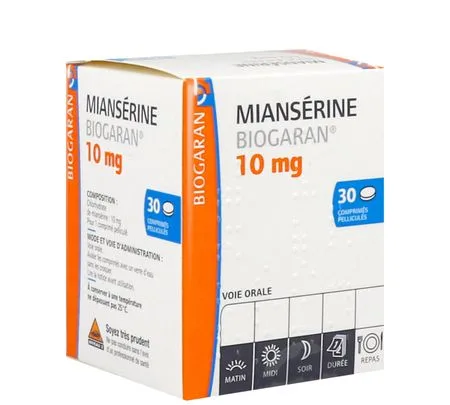
MIANSERINE BIOGARAN 10 mg, film-coated tablet
Composition
Mianserin hydrochloride ............................................................................................................10 mg
For a film-coated tablet.
Calcium hydrogen phosphate dihydrate, methylcellulose, anhydrous colloidal silica, magnesium stearate, maize starch.
Coating:
SEPIFILM (hypromellose, microcrystalline cellulose, polyoxyl 40 stearate, titanium dioxide (E 171)), macrogol 8000.
Dosage and administration
Dosage
The dosage is to be adjusted to each case and may vary between 30 mg and 90 mg per day.
Adults: treatment will start with 3 tablets per day.
In some patients, depending on their individual sensitivity, the dosage will be introduced gradually (over one week).
Elderly subjects: in elderly subjects, it is recommended to reduce the dosage; half the average dosage may be sufficient.
Paediatric population
Children and adolescents under 18 years: the tolerability and efficacy of mianserin have not been established in children. Mianserin is not recommended in children and adolescents under 18 years (see section Warnings and precautions).
Method of administration
Tablets to be swallowed without chewing.
The daily dose may be either divided over the course of the day, or preferably administered in the evening at bedtime (in this case, a single dose should not exceed 60 mg).
Duration of treatment
Antidepressant treatment is symptomatic.
Treatment of an episode lasts several months (usually of the order of 6 months) in order to prevent the risk of relapse of the depressive episode.
Contraindications
Due to the increased serious risk of ventricular rhythm disorders, in particular torsades de pointes, the use of mianserin is contraindicated with another medicinal product likely to prolong the QT interval, such as for example amiodarone, citalopram, disopyramide, domperidone, dronedarone, erythromycin, escitalopram, hydroquinidine, hydroxyzine, mequitazine, moxifloxacin, quinidine, sotalol, spiramycin IV and oral route.
Hypersensitivity to the active substance or to any of the excipients listed in section Composition.
Severe hepatic disease.
Warnings and precautions
Special warnings
QT interval prolongation / ventricular tachycardia
Cases of QT interval prolongation and ventricular tachycardia have been reported since the marketing of mianserin. The majority of cases occurred in the context of overdose or in patients presenting other risk factors for prolongation of the QTc interval, including concomitant use of medicinal products that prolong the QTc interval (see sections Interactions and Overdose). Caution is recommended when mianserin is prescribed to patients with known cardiovascular disease or a family history of QTc interval prolongation, in cases of hypokalaemia, as well as in combination with other medicinal products likely to prolong the QTc interval.
Suicides/suicidal ideation or clinical worsening
Depression is associated with an increased risk of suicidal ideation, self-harm and suicide (suicide-related behaviour). This risk persists until significant remission is achieved. As clinical improvement may not occur before several weeks of treatment, patients should be closely monitored until such improvement occurs. Clinical experience shows that suicide risk may increase at the very beginning of recovery.
Patients with a history of suicide-related behaviour or those exhibiting significant suicidal ideation prior to starting treatment are at a higher risk of suicidal ideation or suicide-related behaviour and should be closely monitored during treatment. A meta-analysis of placebo-controlled clinical trials of antidepressants in adults with psychiatric disorders showed an increased risk of suicide-related behaviour in patients under 25 years treated with antidepressants compared to those receiving placebo. Close monitoring of patients, particularly those at high risk, should accompany drug treatment, especially at the start of treatment and when doses are changed. Patients (and their carers) should be advised to monitor for the occurrence of clinical worsening, emergence of suicidal ideation/behaviour and any unusual changes in behaviour, and to seek medical advice immediately if such symptoms occur.
Given the suicidal risk, particularly at the start of treatment, the smallest deliverable quantity of MIANSERINE BIOGARAN film-coated tablets, compatible with good patient management, should be prescribed to the patient.
Paediatric population
The use of MIANSERINE BIOGARAN is not recommended in children and adolescents under 18 years of age. Suicidal-type behaviours (suicide attempts and suicidal ideation) and hostile-type behaviours (mainly aggressiveness, oppositional behaviour and anger) were more frequently observed in clinical studies in children and adolescents treated with antidepressants compared with those treated with placebo. If, in case of clinical necessity, the decision to treat is nevertheless taken, the patient should be closely monitored for the appearance of suicidal symptoms. In addition, no long-term safety data are available in children and adolescents concerning growth, maturation and cognitive and behavioural development.
Agranulocytosis
Exceptional cases of agranulocytosis have been reported, particularly in people over 65 years of age. A check of the blood count is therefore recommended, particularly when the patient presents with fever, sore throat or other signs of infection.
Precautions for use
Insomnia or nervousness at the beginning of treatment may justify transitory symptomatic treatment.
In epileptic patients or patients with a history of epilepsy, it is prudent to reinforce clinical and electroencephalographic monitoring, due to the possibility of lowering of the epileptogenic threshold. The occurrence of convulsive seizures requires discontinuation of treatment.
Mianserin should be used with caution in patients with unstabilised diabetes: monitor blood glucose.
Interactions
Combinations not recommended
Due to a delicate therapeutic substitution with certain medicinal products likely to prolong the QT interval, the combination with the following medicinal products is not recommended:
• certain antiparasitic medicinal products likely to cause torsades de pointes (such as chloroquine, halofantrine, lumefantrine, pentamidine, hydroxychloroquine),
• certain neuroleptic medicinal products likely to cause torsades de pointes (such as chlorpromazine, haloperidol, pimozide, …)
• arsenic trioxide
• methadone
• crizotinib
• or cotrimoxazole,
Precautions for use
As hypokalaemia and bradycardia are factors that can increase the risk of cardiac rhythm disorders, the combination of hypokalaemic medicinal products (such as betamethasone, clopamide, cortisone, dexamethasone, furosemide, hydrochlorothiazide,…) or bradycardic medicinal products (such as atenolol, betaxolol, bisoprolol, crizotinib, digoxin, diltiazem, thalidomide, verapamil, …) requires precautions for use, including clinical and electrocardiographic monitoring during the combination.
Alcohol
Alcohol increases the sedative effect of these substances. Impaired alertness may make driving vehicles and using machines dangerous.
Avoid taking alcoholic beverages and medicines containing alcohol.
CYP3A4 inducing antiepileptics
Concomitant administration of CYP3A4 inducing antiepileptic medicinal products (such as phenytoin and carbamazepine) may decrease plasma levels of mianserin. A dose adjustment should be considered when combination with these medicinal products is initiated or discontinued.
Associations to be taken into account
Other central nervous system depressants
Morphine derivatives (analgesics, antitussives and substitution treatments); barbiturates; benzodiazepines; anxiolytics other than benzodiazepines: carbamates, captodiame, etifoxine; hypnotics; neuroleptics; sedating H1 antihistamines; central antihypertensives; baclofen; thalidomide.
Increased central depression. Impaired alertness may make driving vehicles and using machines dangerous.
Fertility, pregnancy and breastfeeding
Pregnancy
Maintaining good maternal psychological balance is desirable throughout pregnancy. If drug treatment is necessary to ensure this balance, it should be instituted or continued at an effective dose throughout pregnancy and, if possible, as monotherapy.
Animal data are reassuring but clinical data are still insufficient.
In view of these data, it is preferable to avoid mianserin during pregnancy, whatever the term. If it proves essential to initiate or maintain treatment with mianserin during pregnancy, take into account the pharmacological profile of the molecule when monitoring the newborn.
Breast-feeding
Due to the low passage of mianserin into breast milk, breastfeeding is not recommended for the duration of treatment.
Driving and using machines
Attention is drawn, particularly to vehicle drivers and machine operators, to the risks of drowsiness associated with the use of this medicinal product.
Adverse effects
The adverse effects in the table below were collected during clinical trials with mianserin and since the marketing of medicinal products containing mianserin. Adverse effects are classified by system organ class by applying the following conventions:
• very common (≥ 1/10),
• common (≥ 1/100, < 1/10),
• uncommon (≥ 1/1 000, < 1/100),
• rare (≥ 1/10 000, < 1/1 000),
• very rare (< 1/10 000),
• frequency not known (cannot be estimated from the available data).
The adverse effects most frequently reported with mianserin are weight gain, somnolence, elevation of liver enzymes and oedema.
|
System Organ Classes Cardiac disorders |
|
|
Frequency not known |
Bradycardia QTc interval prolongation and ventricular tachycardia |
|
Blood and lymphatic system disorders |
|
|
Frequency not known |
Agranulocytosis (see section Warnings and precautions) |
|
Skin and subcutaneous tissue disorders |
|
|
Frequency not known |
Exanthema |
|
Nervous system disorders |
|
|
Very common |
Somnolence |
|
Frequency not known |
Convulsions Hyperkinesia |
|
Gastrointestinal disorders |
|
|
Frequency not known |
Constipation Dry mouth |
|
Hepatobiliary disorders |
|
|
Frequency not known |
Increased liver enzymes Abnormal liver function Jaundice Hepatitis |
|
Musculoskeletal and systemic disorders |
|
|
Frequency not known |
Arthralgia and myalgia |
|
Vascular disorders |
|
|
Frequency not known |
Hypotension |
|
Metabolism and nutrition disorders |
|
|
Very common |
Weight gain |
|
General disorders and administration site conditions |
|
|
Frequency not known |
Edema |
Certain adverse events may be related to the nature of the depressive disease itself:
• lifting of psychomotor inhibition, with suicidal risk;
• mood inversion with onset of manic episodes;
• reactivation of delusions in psychotic subjects;
• paroxysmal manifestations of anxiety (for psychostimulant antidepressants).
Cases of suicidal ideation and behaviour have been reported during treatment with MIANSERINE BIOGARAN or shortly after its discontinuation (see section Warnings and precautions).
Reporting of suspected adverse reactions
Reporting suspected adverse reactions after authorisation of the medicinal product is important. It allows continued monitoring of the benefit/risk balance of the medicinal product. Healthcare professionals are asked to report any suspected adverse reaction via the national reporting system: National Agency for the Safety of Medicines and Health Products (ANSM) and the network of Regional Centres of Pharmacovigilance - Website: https://signalement.social-sante.gouv.fr/.
Overdose
An overdose generally causes drowsiness. Cases of prolongation of the QTc interval have been reported in cases of mianserin overdose.
There is no specific antidote for mianserin.
Treatment in case of overdose consists of rapid evacuation of gastric contents, correction of fluid and electrolyte disorders and maintenance of vital functions until the product is eliminated. This elimination is not enhanced by haemodialysis.
Pharmacodynamics
Pharmacotherapeutic class: OTHER ANTIDEPRESSANTS, ATC code: N06AX03.
Mianserin, the active substance of MIANSERINE BIOGARAN, is an antidepressant distinct from tricyclic antidepressants.
Its properties and side effects are different: it increases the release of central noradrenaline through a presynaptic α2 antagonist effect. It inhibits noradrenaline reuptake more weakly. In addition, interactions with central serotonergic and antihistaminic receptors have been described.
Studies in humans have shown that mianserin, in addition to its antidepressant properties, has an anxiolytic and sedative action and a sleep-regulating effect.
They have also shown the absence of anticholinergic and cardiovascular effects of mianserin at therapeutic doses.
Pharmacokinetics
Mianserin is rapidly absorbed by the digestive route. The maximum plasma concentration is obtained in 2 to 3 hours and steady state in approximately 6 days. The mean elimination half-life is close to 40 hours, and may vary between 21 and 61 hours.
The bioavailability is approximately 20 %. Mianserin is bound to 95 % of plasma proteins, and this binding is not modified by concomitant administration of antidepressants, neuroleptics or anxiolytics.
The major biotransformation pathways are demethylation and oxidation, followed by conjugation. These metabolites are excreted (on average 70% in the urine and the remainder in the feces (up to 30%).
Prescription, supply and reimbursement
| Marketing authorisation (AMM) |
|
| Price: |
|
Collection.
15 BOULEVARD CHARLES DE GAULLE
92707 COLOMBES CEDEX
Tel: 01 55 72 41 00 contact@biogaran.fr
https://www.biogaran.fr
Source: VIDAL · Updated on 11/11/2026. This information does not replace advice from a healthcare professional.