
Medicines
RCP of 11/05/2026
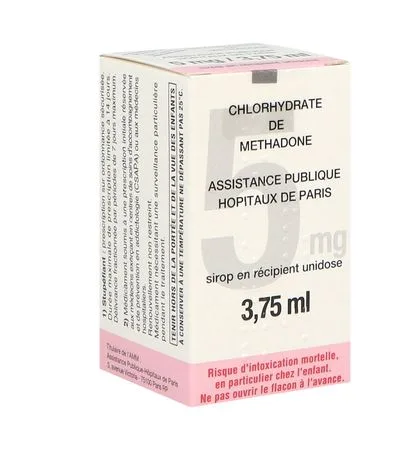
METHADONE AP-HP 5 mg/3,75 ml, syrup in single-dose container
Composition
Methadone hydrochloride.....................................................................................................................5,00 mg
For one single-dose container.
Excipients with known effect : Sucrose, ethanol (alcohol).
Sorbic acid, glycerol, D-xylose, sucrose, bitter orange syrup concentrate, purified water.
Indications
Substitution treatment for major opioid drug dependence within the framework of medical, social and psychological care.
The treatment is reserved for adults and adolescents over 15 years of age.
A patient is considered stabilised if follow-up of the management of their addiction is regular, with no recent recreational use of psychoactive substances, with negative urinary tests for opioids, an ability to manage their treatment autonomously, and restoration of balance in their personal and social life.
Dosage and administration
Dosage
• Initiation of treatment: the first daily dose is usually 20 to 40 mg depending on the level of physical dependence, the clinical assessment and the patient's history, and must be administered at least ten hours after the last opioid intake.
• Dose adjustment: the dose is gradually adjusted up to 40 to 60 mg over one to two weeks, in increments of 5 to 10 mg every 3 to 5 days, taking into account the half-life of methadone, depending on the clinical response, to prevent withdrawal signs or possible overdose.
• Maintenance dose: it is obtained by increasing by 10 mg per week and is usually between 60 and 100 mg/day. Higher doses may be necessary. Dose modifications are then determined after clinical reassessment and associated care.
Method of administration
• The treatment is administered as a single daily intake (see section Conditions of prescription and dispensing).
• Do not keep an opened or partially used single-dose vial.
The vial is fitted with a safety cap. Because of the fatal risk in case of accidental ingestion, particularly by a child or a person who is opioid-naive or little dependent, patients must be advised to keep the vials secure, never to open the vials in advance, to keep them out of reach of children, and not to take this medicine in front of children. An emergency service must be contacted immediately in case of accidental ingestion or suspected ingestion. (see sections Warnings and precautions and Adverse effects).
It is recommended to systematically co-prescribe naloxone when initiating or renewing methadone treatment. Indeed, patients may be exposed to a risk of opioid overdose during initiation or titration of methadone (see section Warnings and precautions).
Procedures for progressive discontinuation of treatment
• Discontinuation of the substitution treatment must be done by gradually decreasing the dose by 5 to 10 mg, in steps spaced at least one week apart. Particular caution is essential throughout this period. Patient follow-up will be close in order to detect, on the one hand, any clinical symptom suggestive of a withdrawal syndrome for which an immediate return to the previous step is necessary, and on the other hand, any resumption of addictive behaviours which exposes the patient to a risk of opioid overdose.
• In case of discontinuation then resumption of treatment, the same precautions as during the initial initiation of treatment and the gradual dose increase must be taken because of the reduced tolerance.
CONDITIONS FOR PRESCRIBING AND DISPENSING METHADONE
The treatment is reserved for adults and adolescents over 15 years of age who volunteer to accept the rules of the treatment.
The conditions for prescribing and dispensing methadone syrup are as follows:
1) Narcotic: prescription on a secure prescription form.
Maximum prescription duration limited to 14 days.
Staggered dispensing in periods of 7 days maximum. The prescriber may specify on the prescription the duration of each fraction, or exclude staggered dispensing by writing on the prescription the words "dispensing in one go", or specify that dispensing must be done daily.
For outpatient management, dispensing is carried out by a community pharmacy or by a CSAPA. The name of the pharmacist chosen by the patient must be stated on the prescription.
For management in a healthcare establishment, for hospitalised patients, or within management in a prison establishment, the treatment is dispensed daily under medical or nursing supervision.
2) Medicinal product subject to an initial prescription reserved for doctors working in addiction care and prevention centres (CSAPA) or for hospital doctors on the occasion of a hospitalisation, a consultation, or in a prison setting.
Unrestricted renewal.
Medicine requiring particular monitoring during treatment.
Initiation of treatment:
Patients are volunteers and must accept the rules of care:
• To be followed regularly within the healthcare establishment or within the CSAPA,
• Urine tests to be carried out at the initiation of treatment.
These will verify the actual recent consumption of opioids and the absence of methadone intake containing a specific tracer and covered by this marketing authorisation. This urine test ensures that the same patient does not receive two follow-ups with methadone prescriptions.
Treatment monitoring:
Subsequent urine tests may be carried out on a case-by-case basis to verify the patient's compliance with the protocol and to measure the effectiveness of the treatment on the intake of illicit opioids or other narcotics. The tests cover: methadone, natural and/or synthetic opioids, cocaine, amphetamine, amphetamine derivatives, cannabis, LSD, as well as alcohol. Testing and quantification of the listed products are not systematic but are performed on the prescriber's request.
Handover
During management in a CSAPA, the centre doctor will determine, in collaboration with the care team, whether it is appropriate to refer the patient to a General Practitioner for continuation of treatment.
During initial management in a healthcare establishment or a prison establishment, the handover to be put in place at the end of the hospitalisation or detention, either to a General Practitioner or to a CSAPA, must be considered with the patient from the start of treatment.
This General Practitioner will be chosen by agreement between the patient and the initial prescriber.
At the time of handover, the initial prescriber's prescription must state the name of the chosen General Practitioner.
The decision for such a referral will be based on treatment stabilisation criteria, in particular:
• Regular follow-up of the management of their addiction,
• Without recent recreational use of psychoactive substances,
• The patient's ability to manage their treatment autonomously,
• A stabilised methadone dosage,
• Restoration of balance in their personal and social life,
• Negative urine tests for opioids.
Subsequent urine tests may be proposed by the General Practitioner.
Contraindications
• Hypersensitivity to the active substance or to any of the excipients listed in section Composition.
• Children and adolescents under 15 years of age (see section Dosage and administration).
• Situation at high risk of respiratory depression, in particular: patients with severe respiratory insufficiency.
• Patients presenting with established paralytic ileus.
• In combination with a mixed opioid agonist-antagonist (buprenorphine, nalbuphine), with a partial opioid antagonist (naltrexone, nalmefene), with citalopram, escitalopram, domperidone, hydroxyzine, St John's wort, sodium oxybate or piperaquine (see section Interactions).
Warnings and precautions
Special warnings
This medicine is a morphine derivative whose prescription is reserved exclusively for opioid substitution treatment.
The success of treatment is strongly correlated with the dosage and with the associated medico-psychological and socio-educational measures.
Treatment may reveal psychiatric disorders requiring multidisciplinary management, adapted to each patient.
CNS and respiratory depression
Cases of death from respiratory depression have been reported with methadone. The risk of respiratory depression and death is greater during the initiation period of treatment and when treatment is resumed after a period of withdrawal (loss of tolerance).
Taking methadone with alcohol or central nervous system depressants (such as tranquillisers, sedatives, hypnotics) may increase the risk of central nervous system depression.
Monitoring and assessment of patients during the first week are essential. Indeed, when methadone is administered, steady state is reached late, with in particular a risk of increased plasma concentration between the 4th and 6th day, hence increased clinical vigilance during this period.
Concomitant use of methadone and sedative medicines such as benzodiazepines or related medicines may result in sedation, respiratory depression, coma and death. Therefore, patients receiving central nervous system depressants and methadone must be monitored even more closely for signs of respiratory depression, sedation and hypotension.
Because of these risks, concomitant prescription of these sedative medicines should be reserved for patients for whom no other therapeutic options exist.
Where a decision is taken to prescribe methadone at the same time as sedative medicines, the lowest effective dose should be used and the duration of treatment should be as short as possible (see section Interactions).
The patient should be closely monitored for signs and symptoms of respiratory depression and sedation. Therefore, it is strongly recommended to inform the patient and their entourage to be attentive to these symptoms (see section Interactions).
Concomitant intake of methadone with alcoholic beverages or medicines containing alcohol is not recommended (see section Interactions).
Addiction/Tolerance/Dependence/Opioid use disorder (abuse and dependence)
Methadone is an opioid analgesic and is intrinsically highly addictive. It has a long half-life and can therefore accumulate. A single dose providing symptom relief may, with daily intake, lead to accumulation and potentially death.
As with other opioids, tolerance as well as physical and/or psychological dependence may develop with repeated administration of methadone.
Intentional abuse or misuse of METHADONE AP-HP may lead to overdose and/or death.
The risk of developing an opioid use disorder is higher in patients with a personal and/or family history (parent or sibling) of substance-related disorders (in particular alcohol use disorder), in smokers, and in patients with a personal history of other mental disorders (e.g., major depressive disorder, anxiety and personality disorders).
The appearance of signs of drug-seeking behaviour (e.g., early request for prescription renewal) should be monitored. This includes review of concomitant use of opioids and psychoactive medicines (e.g., benzodiazepines). In patients with signs and symptoms of OUD, consultation with an addiction specialist should be considered.
Withdrawal syndrome
Physical and psychological dependence may develop during treatment with methadone. Abrupt discontinuation of treatment leads to the onset of an opioid withdrawal syndrome and a decrease in acquired tolerance.
The withdrawal syndrome may manifest as the following symptoms: agitation, lacrimation, sneezing, rhinorrhoea, yawning, sweating, chills, tremor, mydriasis, irritability, anxiety, pain in the extremities, back pain, arthralgia, myalgia, muscle contracture, muscle spasm, weakness, abdominal cramps, insomnia, nausea, anorexia, vomiting, diarrhoea, increased blood pressure, respiratory rate or heart rate, piloerection and fever.
Occurrence of this withdrawal syndrome will be avoided by a gradual reduction of doses.
When reintroducing substitution treatment, the recommendations encourage a medical reassessment of the dosage. This is a high-risk situation for the patient, who must be informed of the risk of overdose in the event of renewed opioid use (regardless of the dose).
Misuse / Diversion
The risk of misuse of this medicine should be monitored. Diversion may lead to serious adverse effects that can be fatal. It is recommended, at each consultation, to check that the patient is not engaging in injection practices.
Accidental ingestion
The lethal dose of methadone is of the order of 1 mg/kg for children and for persons naive or little dependent on opioids. To avoid any risk of accidental ingestion, patients must be advised to keep the vials in a safe place, never to open vials in advance, to keep them out of reach and out of sight of children, and not to take this medicine in front of children. An emergency service must be contacted immediately in case of accidental ingestion or suspected ingestion. (see section Adverse effects).
Provision of naloxone
When initiating or renewing methadone treatment, in cases of planned discontinuation (due to loss of pharmacodynamic tolerance) or resumption of methadone, or in any situation of abnormal use (accidental ingestion, particularly by a child or a person who is opioid-naive or minimally dependent), it is recommended to systematically provide patients and their entourage with a ready-to-use naloxone kit, available with or without a prescription. These individuals may be exposed to a risk of opioid overdose (see section Dosage and administration).
The systematic co-prescription of naloxone must be accompanied by appropriate education of the patient and/or entourage in case of overdose: risk situations, signs/symptoms, appropriate use of naloxone for resuscitation, and instructions for directing to emergency care (see section Overdose).
QT interval prolongation and torsades de pointes
Cases of QT interval prolongation and torsades de pointes that may lead to sudden cardiac death have been reported during treatment with methadone, mainly at high doses (> 120 mg/day). Methadone must be administered with caution, under clinical, electrolyte (close monitoring of potassium and magnesium levels) and ECG monitoring, in patients at risk of QT interval prolongation, i.e. in the case of:
• known history of QT prolongation (congenital or acquired),
• family history of sudden death,
• high dose, greater than 120 mg/day,
• advanced cardiac disease,
• of medicinal treatments known to cause hypokalaemia, or to cause bradycardia, or to significantly inhibit the metabolism of methadone (see section Interactions).
• drug treatments likely to cause torsades de pointes: class Ia antiarrhythmics (disopyramide, hydroquinidine, quinidine), class III antiarrhythmics (amiodarone, dronedarone, sotalol), certain antiparasitics (chloroquine, halofantrine, lumefantrine, pentamidine), arsenic trioxide, certain macrolides (intravenous erythromycin, spiramycin), certain neuroleptics (amisulpride, chlorpromazine, cyamemazine, droperidol, flupentixol, fluphenazine, haloperidol, levomepromazine, pimozide, pipamperone, pipotiazine, quetiapine, sulpiride, tiapride, zuclopenthixol), crizotinib, delamanid, hydroxychloroquine, moxifloxacin, mequitazine, prucalopride, sulfamethoxazole + trimethoprim, toremifene, vandetanib, intravenous vincamine.
Cocaine use during methadone treatment is not recommended, as it exposes patients to an increased risk of ventricular rhythm disorders, in particular torsades de pointes, which may cause sudden death or cardiac arrest (see section Interactions).
For patients presenting risk factors for QT interval prolongation, an ECG must be performed at the initiation of methadone treatment as well as within 30 days following it. Additional ECGs should be performed each year or whenever the methadone dose exceeds 120 mg/day.
For patients presenting with a marked prolongation of the QT interval (> 500 ms) or another conduction disorder, the opinion of a cardiologist is recommended before initiating treatment. If this abnormality is discovered during treatment with methadone, a reassessment of the benefit/risk ratio should be considered. A reduction in the methadone dose, a modification of concomitant treatment likely to cause torsades de pointes, as well as the elimination of other risk factors may be necessary.
Adrenal insufficiency
Opioid analgesics may cause reversible adrenal insufficiency requiring monitoring and glucocorticoid replacement therapy. Symptoms of adrenal insufficiency may include nausea, vomiting, loss of appetite, fatigue, weakness, dizziness or arterial hypotension.
Decreased sex hormones and increased prolactin
Long-term use of opioid analgesics may be associated with a decrease in sex hormone levels and an increase in prolactin. Symptoms may include decreased libido, impotence or amenorrhoea.
Hypoglycaemia
Hypoglycaemia has been observed in the context of methadone overdose or dose increase. Regular monitoring of blood glucose is recommended when the dose is increased (see sections Adverse effects and Overdose).
Serotonin syndrome
Concomitant use of methadone with certain medicinal products may lead to serotonin syndrome, justifying immediate discontinuation of treatment (see section Interactions). Serotonin syndrome manifests as the simultaneous or sequential (possibly abrupt) onset of a set of symptoms that may require hospitalisation and, exceptionally, may lead to death.
These symptoms may be of the following types:
• digestive (diarrhoea),
• neuropsychiatric (agitation, confusion, hypomania),
• motor (myoclonus, tremor, hyperreflexia, rigidity, hyperactivity),
• autonomic (variations in blood pressure, tachycardia, chills, hyperthermia, sweating, possibly coma).
Discontinuation of serotonergic substances usually results in rapid improvement. Treatment depends on the type and severity of symptoms.
Sleep-related breathing disorders
Opioids may cause sleep-related breathing disorders, including central sleep apnoea (CSA) and sleep-related hypoxaemia. Opioid use is associated with a dose-dependent risk of CSA. Reducing the total opioid dose should be considered in patients with CSA.
Hepatobiliary disorders
Methadone may cause dysfunction and spasm of the sphincter of Oddi, which increases the risk of biliary tract symptoms and pancreatitis. Therefore, methadone must be administered with caution in patients with pancreatitis and biliary tract diseases.
Excipients with known effect
This medicine contains 14 mg of ethanol (alcohol) per ml of syrup.
This medicine contains 1,6% by volume of ethanol (alcohol), i.e. up to 50 mg per vial, which is equivalent to 1,25 ml of beer or 0,5 ml of wine per vial. The use of this medicine is dangerous in alcoholic subjects and must be taken into account in pregnant or breast-feeding women and in high-risk groups such as patients with hepatic insufficiency or epilepsy.
This medicine contains sucrose. Its use is not recommended in patients with fructose intolerance, glucose-galactose malabsorption syndrome, or sucrase-isomaltase deficiency.
This medicine contains approximately 2 g of sucrose per single-dose container of 5 mg/3,75 ml, which must be taken into account in the daily ration in case of a low-sugar diet or diabetes.
Precautions for use
Constipation is a known undesirable effect of methadone. It is imperative to look for and manage constipation during treatment.
A significant weight loss during treatment must lead to careful monitoring to detect any sign of overdose that could be caused by a sudden release of methadone into the bloodstream.
Methadone should be used with caution in elderly subjects, pregnant women (see section Fertility, pregnancy and breastfeeding), patients with conditions such as asthma, severe respiratory, renal or hepatic insufficiency, and diabetes.
Opioids may increase cerebrospinal fluid pressure and cause convulsions: they must be used with caution in patients with head injury, intracranial lesions, other circumstances in which cerebrospinal fluid pressure may be increased, or in case of a history of epilepsy.
Opioids may cause orthostatic hypotension. Opioids must be used with caution in patients suffering from hypotension, hypovolaemia, prostatic hypertrophy or urethral stricture.
Opioid-induced miosis and changes in level of consciousness may interfere with the assessment of the patient or alter the diagnosis or course of a concomitant disease.
Opioids must be used with caution in patients with myxoedema, hypothyroidism, or adrenocortical insufficiency (for example Addison's disease).
Interactions
Substances liable to cause torsades de pointes
This serious cardiac rhythm disorder, liable to cause arrhythmias of the ventricular fibrillation type, may lead to sudden death or cardiac arrest. It may be caused by a number of medicines, whether antiarrhythmic or not. Hypokalaemia is a predisposing factor, as are bradycardia or a pre-existing prolongation of the QT interval, whether congenital or acquired.
The medicines responsible for this undesirable effect include in particular class Ia and III antiarrhythmics and certain neuroleptics.
Other substances not belonging to these classes are also implicated.
For erythromycin and vincamine, only the intravenously administered forms are concerned by this interaction.
The use of a torsadogenic medicine with another torsadogenic medicine is generally contraindicated. However, some of them, because of their essential nature, are an exception to the rule, being only not recommended with other torsadogenic agents. These are methadone, hydroxychloroquine, antiparasitics (chloroquine, halofantrine, lumefantrine, pentamidine), arsenic compounds, crizotinib, co-trimoxazole and neuroleptics.
However, citalopram, escitalopram, domperidone, hydroxyzine and piperaquine do not follow this relaxation and are contraindicated with all torsadogenic agents.
Sedative medicinal products
Concomitant use of sedative medicines with methadone increases the risk of sedation, respiratory depression, coma and death due to the additive depressant effect on the central nervous system (CNS).
Among sedative medicines: morphine derivatives (analgesics, antitussives and substitution treatments), neuroleptics, barbiturates, benzodiazepines, anxiolytics other than benzodiazepines (for example, meprobamate), hypnotics, sedative antidepressants (amitriptyline, doxepin, mianserin, mirtazapine, trimipramine), sedating H1 antihistamines, centrally acting antihypertensives, baclofen and thalidomide.
The dosage and duration of treatment in case of concomitant use must be restricted (see section Warnings and precautions).
Serotonergic medicines
Serotonin syndrome may occur when methadone is administered concomitantly with pethidine, monoamine oxidase (MAO) inhibitors and serotonergic agents such as selective serotonin reuptake inhibitors (SSRIs), serotonin and noradrenaline reuptake inhibitors (SNRIs) and tricyclic antidepressants (TCAs). Symptoms of serotonin syndrome may include changes in mental state, autonomic nervous system instability, neuromuscular abnormalities and/or gastrointestinal symptoms.
Contraindicated combinations
(see section Contraindications)
+ Mixed agonist-antagonist opioids: nalbuphine, buprenorphine
Reduction of the effect of methadone through competitive receptor blockade.
+ Partial opioid antagonists: naltrexone, nalmefene
Risk of onset of a withdrawal syndrome.
+ Citalopram, escitalopram
Increased risk of ventricular rhythm disorders, in particular torsades de pointes.
+ Domperidone
Increased risk of ventricular rhythm disorders, in particular torsades de pointes.
+ Hydroxyzine
Increased risk of ventricular rhythm disorders, in particular torsades de pointes.
+ St John's wort
Decreased methadone concentrations due to St John's wort, with risk of withdrawal syndrome.
+ Sodium oxybate
Increased risk of respiratory depression, which may be fatal in the event of overdose.
+ Piperaquine
Increased risk of ventricular rhythm disorders, in particular torsades de pointes.
Combinations not recommended
(see section Warnings and precautions)
+ Alcohol (beverage or excipient)
Alcohol increases the sedative effect of methadone.
Impaired alertness may make driving vehicles and using machines dangerous.
Avoid taking alcoholic beverages and medicines containing alcohol.
+ Apalutamide
Risk of a very marked decrease in methadone concentrations and loss of efficacy due to increased hepatic metabolism of methadone by apalutamide.
+ Cocaine
Increased risk of ventricular rhythm disorders, in particular torsades de pointes, which may cause sudden death or cardiac arrest.
+ Cotrimoxazole (sulfamethoxazole + trimethoprim)
Risk of ventricular disorders, in particular torsades de pointes.
If the combination cannot be avoided, regular clinical and electrocardiographic monitoring.
+ Substances liable to cause torsades de pointes: Class Ia antiarrhythmics (quinidine, hydroquinidine, disopyramide), class III antiarrhythmics (amiodarone, dronedarone, sotalol), certain antiparasitics* (halofantrine, lumefantrine, pentamidine, chloroquine), arsenic, certain macrolides (intravenous erythromycin, spiramycin), certain neuroleptics (amisulpride, chlorpromazine, cyamemazine, droperidol, flupentixol, fluphenazine, haloperidol, levomepromazine, pimozide, pipamperone, pipotiazine, quetiapine, sulpiride, tiapride, zuclopenthixol), crizotinib**, delamanid**, hydroxychloroquine, moxifloxacin, mequitazine, prucalopride, toremifene, vandetanib, intravenous vincamine.
Increased risk of ventricular rhythm disorders, in particular torsades de pointes.
Clinical and electrocardiographic monitoring during the combination.
* If possible, discontinue one of the 2 treatments. If the combination cannot be avoided, prior QT check and monitored ECG surveillance.
** If the combination cannot be avoided, regular clinical and electrocardiographic monitoring.
Associations requiring precautions for use
+ Anagrelide
Increased risk of ventricular rhythm disorders, in particular torsades de pointes.
Clinical and electrocardiographic monitoring during the combination.
+ Azithromycin, clarithromycin, roxithromycin
Increased risk of ventricular rhythm disorders, in particular torsades de pointes. Clinical and electrocardiographic monitoring during the combination.
+ Beta-blockers in heart failure: bisoprolol, carvedilol, metoprolol, nebivolol
Increased risk of ventricular rhythm disorders, in particular torsades de pointes. Clinical and electrocardiographic monitoring during the combination.
+ Bradycardic agents: class Ia antiarrhythmics, certain class III antiarrhythmics, bradycardic calcium antagonists (diltiazem, verapamil), anticholinesterases, beta-blockers, digoxin, pilocarpine, etc…
Increased risk of ventricular rhythm disorders, in particular torsades de pointes.
Clinical and electrocardiographic monitoring during the combination.
+ Cimetidine
Increased plasma concentrations of methadone with overdose and increased risk of QT interval prolongation and ventricular rhythm disorders, in particular torsades de pointes.
Enhanced clinical and electrocardiographic monitoring: if appropriate, adjust the methadone dosage during treatment with cimetidine and after its discontinuation.
+ Ciprofloxacin, levofloxacin, norfloxacin
Increased risk of ventricular rhythm disorders, in particular torsades de pointes.
Clinical and electrocardiographic monitoring during the combination.
+ Fluconazole
Increased serum methadone concentrations due to decreased metabolism of methadone.
+ Fluvoxamine
Increased plasma concentrations of methadone with overdose and increased risk of QT interval prolongation and ventricular rhythm disorders, in particular torsades de pointes.
Enhanced clinical and electrocardiographic monitoring: if appropriate, adjust the methadone dosage during treatment with the antidepressant and after its discontinuation.
+ Potassium-lowering agents: intravenous amphotericin B, glucocorticoids, potassium-lowering diuretics alone or in combination, stimulant laxatives, liquorice, rhubarb, castor oil, tetracosactide
Increased risk of ventricular rhythm disorders, in particular torsades de pointes.
Correct any hypokalaemia before administering methadone and carry out clinical, electrolyte and electrocardiographic monitoring.
+ Enzyme inducers: carbamazepine, phenobarbital, oxcarbazepine, primidone, phenytoin, fosphenytoin, rifabutin, rifampicin, efavirenz, nevirapine, dabrafenib, enzalutamide, eslicarbamazepine, lumacaftor, pitolisant
Decreased plasma concentrations of methadone, with risk of onset of withdrawal syndrome, due to increased hepatic metabolism.
Increase the frequency of methadone intakes (2 to 3 times per day instead of once per day).
+ Ritonavir-boosted protease inhibitors
Decreased plasma concentrations of methadone with risk of onset of withdrawal syndrome due to increased hepatic metabolism caused by ritonavir.
Regular clinical monitoring and possible adjustment of the methadone dosage.
+ Ondansetron
Increased risk of ventricular rhythm disorders, in particular torsades de pointes. Clinical and electrocardiographic monitoring during the combination.
+ Voriconazole
Increased plasma concentrations of methadone with risk of overdose and increased risk of QT prolongation and ventricular rhythm disorders, in particular torsades de pointe.
Clinical and electrocardiographic monitoring and possible adjustment of the methadone dosage.
Associations to be taken into account
+ Morphine-like antitussives (dextromethorphan, noscapine, pholcodine), true morphinic antitussives (codeine, ethylmorphine)
Increased risk of respiratory depression and increased risk of sedation, coma and death due to potentiation of the depressant effect on the central nervous system. The dose and duration of concomitant use must be limited (see section Warnings and precautions).
+ Other sedative medicines
Increased central depression: impaired alertness may make driving vehicles and using machines dangerous (see section Driving and using machines).
+ Barbiturates
Increased risk of sedation and respiratory depression which may lead to coma and death, particularly in the elderly. Doses and duration of the combination should be limited as far as possible.
+ Benzodiazepines and related drugs
Increased risk of sedation and respiratory depression which may lead to coma and death, particularly in the elderly. Doses and duration of the combination should be limited as far as possible.
+ Cannabidiol
Concomitant administration of cannabidiol may increase plasma concentrations of methadone.
+ Gabapentinoids (gabapentin and pregabalin)
Concomitant use of opioids and gabapentinoids (gabapentin and pregabalin) increases the risk of opioid overdose, respiratory depression and death.
+ Nicotine replacement therapies
Risk of overdose when replacing tobacco with replacement therapy.
+ Anticholinergic medicines
Significant risk of colonic akinesia, with severe constipation.
+ Other medicines causing serotonergic syndrome (amitriptyline, methylene blue, bupropion, citalopram, clomipramine, duloxetine, escitalopram, fluoxetine, fluvoxamine, imipramine, iproniazid, linezolid, lithium, St John's wort, milnacipran, moclobemide, oxitriptan, paroxetine, pethidine, sertraline, tramadol, trimipramine, tryptophan, venlafaxine)
Risk of onset or worsening of serotonergic syndrome when these medicines are combined.
+ Quetiapine
Possible increase in methadone concentrations, with signs of overdose.
Fertility, pregnancy and breastfeeding
Pregnancy
Methadone crosses the placental barrier. Given the available data and the maternal and fetal benefit, use of methadone is possible during pregnancy, regardless of the stage of gestation.
During pregnancy, higher doses of methadone are sometimes needed to maintain treatment balance.
Chronic methadone use by the mother late in pregnancy, whatever the dose, may cause opioid withdrawal syndrome in the newborn, the onset of which may be delayed by several hours to a few days.
In case of regular use during pregnancy, neonatal monitoring must be carried out to prevent the risk of respiratory depression or withdrawal syndrome in the newborn.
Some observational studies have reported that in-utero exposure to methadone as part of opioid substitution treatment could be linked to an increased risk of congenital malformations and neurodevelopmental disorders compared with women not exposed to methadone or women treated with buprenorphine during pregnancy. However, due to the limitations of these studies and the presence of maternal, familial and socio-environmental confounding factors associated with opioid use disorders, no conclusion can be drawn regarding the specific contribution of methadone.
Breast-feeding
Small amounts of methadone are excreted in breast milk. The decision to recommend breastfeeding must take into account the advice of a specialist. Consideration should be given to whether the woman receives a stable maintenance dose of methadone and whether she continues to use illicit substances.
If breastfeeding is considered, the methadone dose should be as low as possible. Prescribers must advise breastfeeding women to monitor the infant for any signs of sedation and respiratory depression and to contact an emergency medical service immediately if these occur.
Although the amount of methadone excreted in breast milk is not sufficient to completely prevent withdrawal symptoms in breastfed infants, it may reduce the severity of neonatal withdrawal syndrome. If breastfeeding must be stopped, this should be done gradually, as abrupt weaning could increase withdrawal symptoms in the infant.
Fertility
Chronic opioid use may lead to reduced fertility in women and men of reproductive age.
Studies in men included in methadone substitution programmes have shown that methadone decreases serum testosterone and markedly reduces ejaculate volume and sperm motility.
Driving and using machines
Methadone has a major influence on the ability to drive or use machines during and after treatment. If taken with alcohol or central nervous system depressants, the effect is likely to be more pronounced (see sections Warnings and precautions and Interactions). The time after which these activities can be safely resumed is highly patient-dependent and must be decided by the physician.
Adverse effects
In opioid-dependent subjects at the start of methadone treatment, The most frequent adverse effects are: euphoria, dizziness, drowsiness, nausea, vomiting, constipation, sedation, hyperhidrosis, dysuria, oedema.
In opioid-dependent subjects treated with methadone during the maintenance phase, the most frequent adverse effects are: hyperhidrosis, nausea, constipation.
Since the marketing of METHADONE AP-HP capsules, fatal cases of accidental ingestion, particularly in children, have been reported (see section Warnings and precautions).
The adverse effects below are classified by system organ class and by frequency. Frequencies derived from clinical trials are classified as: very common (≥1/10), common (≥1/100 to <1/10), uncommon (≥1/1 000 to <1/100), rare (≥ 1/10 000 to < 1/1 000), very rare (< 1/10 000), not known (frequency cannot be estimated from the available data).
The frequency of the adverse effects listed below is not known:
|
System Organ Class |
Adverse effects |
|
Blood and lymphatic system disorders |
Thrombocytopenia1 |
|
Endocrine disorders |
Hyperprolactinaemia2 |
|
Metabolism and nutrition disorders |
Decreased appetite Hypoglycaemia |
|
Psychiatric disorders |
Euphoric mood3 Insomnia Agitation Decreased libido Confusional state Dependence Disorientation Hallucination |
|
Nervous system disorders |
Somnolence3 Sedation3 Headache Vertigo3 Syncope Convulsion |
|
Endocrine disorders |
Hypogonadism Adrenal insufficiency |
|
Eye disorders |
Visual defects Miosis |
|
Cardiac disorders |
Cardiac arrest4 Bradycardia Palpitations Torsade de pointes Tachycardia Arrhythmia |
|
Vascular disorders |
Hypotension4, 6 Shock4 Congestive flush |
|
Respiratory, thoracic and mediastinal disorders |
Respiratory depression4 Respiratory arrest4 Central sleep apnoea syndrome |
|
Gastrointestinal disorders |
Dry mouth Nausea3, 5 Vomiting3 Constipation3, 5 Abdominal pain Subacute pancreatitis |
|
Hepatobiliary disorders |
Biliary pain Dysfunction of the hepatopancreatic ampulla sphincter |
|
Skin and subcutaneous tissue disorders |
Hyperhidrosis3, 5 Pruritus Rash Urticaria |
|
Renal and urinary disorders |
Dysuria3 Urinary retention |
|
Disorders of the reproductive system and breast |
Gynaecomastia Amenorrhea Dysmenorrhea Erectile dysfunction Galactorrhoea |
|
General disorders and administration site conditions |
Oedema3 Asthenia Fatigue Malaise Peripheral oedema |
|
Investigations |
Prolonged QT interval on electrocardiogram Weight increased Blood testosterone decreased |
1 : Reversible cases of thrombocytopenia have been reported in opioid-dependent patients with chronic hepatitis
2 : Elevation of prolactin with long-term administration
3 : Most frequent adverse reactions in opioid-pharmacodependent subjects when methadone treatment is initiated
4 : Most severe adverse reactions
5 : Most frequent adverse reactions in opioid-pharmacodependent subjects treated with methadone during the maintenance phase
6 : Symptomatic
Reporting of suspected adverse reactions
Reporting suspected adverse reactions after authorisation of the medicinal product is important. It allows continued monitoring of the benefit/risk balance of the medicinal product. Healthcare professionals are asked to report any suspected adverse reaction via the national reporting system: National Agency for the Safety of Medicines and Health Products (ANSM) and the network of Regional Centres of Pharmacovigilance - Website: https://signalement.social-sante.gouv.fr.
Overdose
An opioid overdose may occur in case of intake of quantities greater than prescribed, when associated with other medicinal products (see section Interactions), when opioids are resumed after a reduction or cessation of use (loss of tolerance), in case of a history of opioid overdose, or in any abnormality of opioid use. Accidental or voluntary ingestion by an opioid-naive person (family or entourage) may also lead to an overdose.
Symptoms
The main symptom requiring medical intervention in case of overdose is respiratory depression resulting from central nervous system depression, as it may lead to respiratory arrest and death (see section Warnings and precautions). The maximal respiratory depressant effect of methadone may occur later and persist longer than its maximal pharmacological effect (see section Pharmacokinetics).
Other signs of overdose include nausea, vomiting, hypoglycaemia, sedation, miosis, arterial hypotension, bradycardia, severe bradypnoea, pulmonary oedema, and severe drowsiness that may progress to stupor or even coma.
These signs have been observed in fatal cases of accidental ingestion, particularly in children (see section Warnings and precautions).
In some cases, coma may be associated with hypothermia or hypoglycaemia.
Rare cases of hearing loss, most often reversible, have been reported in the context of methadone overdose.
As with other opioids, cases of encephalopathy have been reported.
Cases of toxic leukoencephalopathy have been observed in the context of methadone overdose.
Management in case of suspected overdose or accidental ingestion
After immediately contacting an emergency service, rapid use of ready-to-use naloxone must be initiated in case of suspected overdose (see section Warnings and precautions).
Treatment
Symptomatic treatment of respiratory depression and hypotension must involve the usual resuscitation measures.
Opioid overdose is treated by administration of an opioid receptor antagonist, such as naloxone.
This antidote is available with or without a prescription as a ready-to-use kit. If the person in overdose does not respond to the first dose of naloxone within 2 to 3 minutes, a second dose must be administered. Additional doses may be administered if needed, in accordance with the recommendations for the specialty used.
As methadone has a longer duration of action (up to 47h) than naloxone (20 minutes to about 2h depending on the route of administration), symptoms of overdose may reappear after an initial improvement and may require repeated administration of naloxone. The person must therefore be monitored while awaiting emergency services, which must always be alerted.
After medical management, monitoring of the patient's state of sedation and respiratory depression is necessary and must be adapted to the clinical context of each patient.
Pharmacodynamics
Pharmacotherapeutic class: MEDICINES USED IN OPIATE DEPENDENCE, ATC code: N07BC02.
Methadone is a potent, full, long-acting agonist without ceiling effect at opioid receptors, like morphine, which acts mainly on µ receptors. Like other opioids, it has analgesic and antitussive properties and causes a syndrome of pharmacological dependence. However, its euphoric properties are weak at effective therapeutic doses and with long-term use.
Pharmacokinetics
Absorption
Due to its lipophilic nature, methadone administered orally is well absorbed by the digestive tract, with peak plasma concentration observed 2,5 to 4 hours after administration.
It undergoes a hepatic first-pass effect. Plasma concentrations reach steady state in about 5 days (5 ½ half-lives). Before steady state is reached, release of methadone from tissue reservoirs may lead to an increase in serum levels and toxicity even without a change in dose.
Distribution
Methadone binds to albumin and other plasma and tissue proteins, which may explain its cumulative effects and slow elimination rate (its plasma protein binding rate is 60% to 90%). Tissue concentrations of methadone (lung, liver, kidney) are higher than the plasma concentration. It crosses the placenta and is excreted in milk.
Inter-individual variations in plasma concentrations are observed in opioid-dependent subjects. For patients receiving 100 or 120 mg/day of methadone, the plasma half-life of the product is highly variable, ranging from 13 to 47 hours (mean 25 hours). It is therefore important to increase methadone doses gradually in steps, respecting a minimum interval of 5 days.
Biotransformation
Methadone is metabolised mainly in the liver, where it undergoes N-demethylation and cyclisation without conjugation. The metabolites are inactive.
Studies in vitro and in vivo have shown that cytochrome P3A4 has little influence on the distribution, metabolism and clearance of methadone. Furthermore, cytochromes CYP2B6 and CYP2C19 have stereoselective effects on its metabolism, CYP2B6 preferentially metabolising S-methadone and CYP2C19 R-methadone. Methadone metabolism depends mainly on the isoenzyme CYP2B6; the clinical relevance of the effect of substances inhibiting this isoenzyme is uncertain.
Elimination
Methadone is excreted by glomerular filtration and then undergoes renal reabsorption. Its renal clearance decreases with increasing urinary pH.
Urinary excretion is dose-dependent and represents the main route of elimination. After administration of a single dose of methadone, 20 % is excreted in urine unchanged and 13 % as metabolites. 20 to 40 % of the initial dose is also excreted in faeces as metabolites via in bile. Methadone can be found in sweat and saliva.
Preclinical safety
The LD50 in rats is 95 mg/kg (oral route).
The LD50 in mice by the IV route is 20 mg/kg.
Chronic toxicity
In a one-year toxicity study in dogs, methadone administered in capsules at daily doses between 5 and 20 mg/kg caused reduced weight gain, dose-related sedation, excessive salivation and vomiting, hyperirritability, and increased heart rate and ventricular complex. These changes disappeared during the recovery period. At the highest dose, electrocardiogram changes were still perceptible after 6 weeks of recovery. No histopathological changes of the heart were observed at the time of sacrifice. After 6 and 12 months of treatment, no abnormality was observed in organ weight, pathology or histopathology at any dose.
Carcinogenesis
A carcinogenesis study in mice showed a significant increase in pituitary adenomas at 15 mg/kg/day, but not at 60 mg/kg/day.
A carcinogenesis study in rats did not show an increase in the incidence of treatment-related tumours in either male or female rats.
Mutagenesis
Methadone showed some genotoxic activity in in vitro assays, but mainly in tests that were not validated and/or at an excessive level of toxicity. It appeared to be mutagenic in in vivo assays in mice, but not in rats. No final conclusion can be drawn regarding genotoxic potential, and extrapolation of these data to humans is difficult.
Fertility
Published studies show that treatment of male rats with methadone may impair reproductive function. Methadone produces a significant regression of the secondary sex organs and testes of male mice and rats.
SPECIAL PRECAUTIONS FOR DISPOSAL AND OTHER HANDLING
The bottle must never be opened in advance. The syrup must be completely drunk immediately after opening the bottle.
Do not keep an opened or partially consumed bottle.
INSTRUCTIONS FOR THE PREPARATION OF RADIOPHARMACEUTICALS
Not applicable.
Detailed information about this medicine is available on the ANSM – France website.
Prescription, supply and reimbursement
Prescription duration limited to 14 day(s) in the substitution treatment of major opioid drug dependence according to its marketing authorisation provided for in article L. 5121-8 of the French Public Health Code. The prescriber may specify on the prescription the duration of each fraction, or exclude fractionation, or specify that dispensing must be done daily. For outpatient care, dispensing is carried out by a community pharmacy or by a CSAPA. For care in a healthcare establishment, for hospitalised patients, or in the context of care in a prison establishment, the treatment is dispensed daily under medical or nursing supervision.
Fractionated dispensing of 7 days maximum, unless expressly stated by the prescriber "dispensing in one go".
Prescription on a secure prescription form (meeting the specifications set by the order of 31 March 1999).
Mandatory inscription of the pharmacist's name on the prescription.
Medicine requiring particular monitoring during treatment.
Medicine subject to initial hospital prescription: reserved for doctors working in addiction support and prevention centres (CSAPA) or for hospital doctors during a hospitalisation, a consultation or in a prison setting.
Unrestricted renewal
Renewal possible on a secure prescription form
Prescription overlap prohibited unless expressly stated on the initial prescription
Mandatory repackaging if the waiting period has been exceeded
Keep a copy of the prescription for 3 years
| Marketing authorisation (AMM) |
|
| Price: |
|
Collection.
LABORATOIRES BOUCHARA-RECORDATI S.A.S. TOUR HEKLA - 52 AVENUE DU GÉNÉRAL DE GAULLE
92800 PUTEAUX
Tel: 01 45 19 10 00 infomed@recordati.com
https://recordati.com/
Source: VIDAL · Updated on 10/11/2026. This information does not replace advice from a healthcare professional.