
Medicines
Update of 03/02/2025
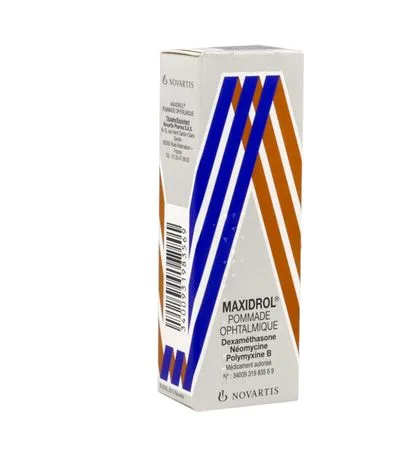
MAXIDROL® ophthalmic ointment
dexamethasone, neomycin, polymyxin B
Forms and presentations
Ophthalmic ointment: Tube of 3,5 g.Composition
| per tube | |
| Dexamethasone (INN)
|
3,5 mg |
| Neomycin (INN) sulfate
|
12 250 IU |
| Polymyxin B (INN) sulfate
|
21 000 IU |
Excipients with known effect: methyl parahydroxybenzoate (E 218), propyl parahydroxybenzoate (E 216), lanolin (wool fat).
Indications
Local anti-inflammatory and antibacterial treatment of the eye and its adnexa:- following ophthalmic surgery;
- infections due to germs sensitive to neomycin and polymyxin B with an inflammatory component.
Dosage and administration
Dosage1 to 2 applications per day.
Apply an amount equivalent to a grain of wheat of ointment into the lower conjunctival sac of the affected eye, or affected eyes, and optionally onto the eyelid margin.
To do so, pull the eyelid down while looking upward and place the ointment between the eyelid and the eyeball.
- Paediatric population:
- No data are available.
Method of administration:
For ophthalmic use only.
Do not touch the eye or eyelids with the tip of the tube.
Replace the cap on the ointment tube after use.
Duration of treatment: on average 7 days.
A longer treatment may be prescribed under strict ophthalmological supervision.
Contraindications
- Hypersensitivity to the active substances or to any of the excipients listed in section Composition.
- Keratitis due to Herpes simplex.
- Vaccinia, varicella, and other viral infections of the cornea or conjunctiva.
- Fungal diseases of ocular structures, or untreated parasitic ocular infections.
- Mycobacterial ocular infections.
Warnings and precautions
Warnings:
For ophthalmic use only
Do not swallow.
Sensitivity to aminoglycosides such as neomycin, administered topically, may occur in some patients. The severity of hypersensitivity reactions may vary, ranging from local effects to generalised reactions, such as erythema, itching, urticaria, skin rash, anaphylaxis, anaphylactic reactions, or bullous reactions. If hypersensitivity develops during use of this medicine, treatment must be discontinued.
In addition, topical use of neomycin may cause skin sensitisation.
Cross-hypersensitivity to other aminoglycosides may occur, and the possibility that patients who have become sensitised to topical neomycin may also be sensitive to other topical and/or systemic aminoglycosides must be considered.
Serious adverse effects, including neurotoxicity, ototoxicity and nephrotoxicity, have occurred in patients receiving neomycin systemically or applied topically to open wounds or damaged skin. Nephrotoxic and neurotoxic reactions have also occurred with systemic polymyxin B.
Although these effects have not been reported after topical ocular use of this product, caution is recommended when systemic aminoglycosides or polymyxin B treatment is administered concomitantly.
Prolonged use of ophthalmic corticosteroids may cause ocular hypertension and/or glaucoma with optic nerve damage, decreased visual acuity and visual field defects, and the formation of posterior subcapsular cataract. In patients receiving prolonged treatment with ophthalmic corticosteroids, intraocular pressure should be checked regularly and frequently. This is particularly important in children, since the risk of corticosteroid-induced ocular hypertension may be greater in children and may occur earlier than in adults.
The risk of corticosteroid-induced elevation of intraocular pressure and/or cataract formation is increased in predisposed patients (diabetic patients, for example).
Cushing's syndrome and/or inhibition of adrenal function associated with systemic absorption of ophthalmic dexamethasone may occur after intensive continuous or long-term treatment in predisposed patients, including children and patients treated with CYP3A4 inhibitors (including ritonavir and cobicistat). In this case, treatment must be discontinued gradually.
Corticosteroids may decrease resistance to bacterial, fungal, parasitic or viral infections, contribute to their occurrence, and mask the clinical signs of infection.
The possibility of a fungal infection must be considered in patients presenting with persistent corneal ulceration. If a fungal infection occurs, corticosteroid treatment must be discontinued.
As with other anti-infective agents, prolonged use of antibiotics such as neomycin and polymyxin may result in the proliferation of resistant microorganisms, including fungi. In case of superinfection, discontinue use and institute alternative therapy.
- Visual disturbances:
- Visual disturbances may occur during systemic or local corticosteroid therapy. In case of blurred vision or the appearance of any other visual symptom during corticosteroid therapy, an ophthalmological examination is required to look for, in particular, cataract, glaucoma, or a rarer lesion such as central serous chorioretinopathy, described with the administration of systemic or local corticosteroids.
In the absence of rapid improvement or in case of prolonged treatment, regular medical monitoring including bacteriological tests with study of the germ's sensitivity allows detection of resistance to the product and possible adjustment of treatment.
Topical ophthalmic corticosteroids may slow corneal healing. Topical NSAIDs are also known to slow or delay healing. Concomitant use of topical NSAIDs and topical corticosteroids may increase the risk of problems during healing (see Interactions).
In conditions causing thinning of the cornea or sclera, perforations have been reported with the use of topical corticosteroids.
This medicine contains methyl parahydroxybenzoate (E 218) and propyl parahydroxybenzoate (E 216), and may cause allergic reactions (possibly delayed), such as irritation of the skin, eyes and mucous membranes.
This medicine contains lanolin and may cause local skin reactions (for example: eczema).
Contact lens wear should be avoided during treatment due to the risk of adsorption of the corticosteroid (dexamethasone). Furthermore, in case of eye inflammation/infection, contact lens wear is not recommended for the entire duration of treatment.
Athletes' attention is drawn to the fact that this medicinal product contains an active ingredient (dexamethasone) that may induce a positive reaction in tests carried out during anti-doping controls.
- Paediatric population:
- The use of this medicine should be avoided in infants.
Interactions
No interaction studies have been performed.
If another ophthalmic ointment or eye drops are used, it is recommended to wait at least 5 minutes between each medicine. Ophthalmic ointments should be administered last.
Concomitant use of topical corticosteroids and topical NSAIDs may increase the risk of corneal healing problems.
In patients treated with ritonavir, plasma concentrations of dexamethasone may be increased (see Warnings and Precautions for Use).
CYP3A4 inhibitors (including ritonavir and cobicistat) may decrease the clearance of dexamethasone, resulting in increased effects and inhibition of adrenal function/Cushing's syndrome. The combination should be avoided, unless the benefit outweighs the increased risk of systemic corticosteroid side effects, in which case patients should be monitored for systemic corticosteroid effects.
Although the amount of dexamethasone passing into the systemic circulation is low after ocular application, the interactions observed with systemically administered dexamethasone should be taken into account.
- Medicines causing torsades de pointes (astemizole, bepridil, erythromycin IV, halofantrine, pentamidine, sparfloxacin, sultopride, terfenadine, vincamine): torsades de pointes (hypokalaemia is a predisposing factor, as are bradycardia and a pre-existing long QT interval).
Use substances that do not carry the disadvantage of causing torsades de pointes in case of hypokalaemia.
- Acetylsalicylic acid systemically and, by extrapolation, other salicylates: decreased salicylaemia during corticosteroid treatment and risk of salicylate overdose after its discontinuation, due to increased elimination of salicylates by corticosteroids.
Adjust salicylate doses during the combination and after discontinuation of corticoid treatment. - Antiarrhythmics causing torsades de pointes (amiodarone, bretylium, disopyramide, quinidine-like drugs, sotalol): torsades de pointes (hypokalaemia is a predisposing factor, as are bradycardia and a pre-existing long QT interval).
Prevent hypokalaemia, correct it if necessary; monitor the QT interval. In case of torsades, do not administer antiarrhythmics (electrical overdrive pacing). - Oral anticoagulants: possible impact of corticosteroid therapy on the metabolism of the oral anticoagulant and on that of coagulation factors.
Haemorrhagic risk specific to corticosteroid therapy (digestive mucosa, vascular fragility) at high doses or during prolonged treatment exceeding 10 days.
When the combination is justified, reinforce monitoring: biological check at 8e day, then every 15 days during corticotherapy and after its discontinuation. - Other hypokalaemic agents (hypokalaemic diuretics alone or in combination, stimulant laxatives, intravenous amphotericin B): increased risk of hypokalaemia through additive effect.
Monitor serum potassium and correct if necessary, especially in cases of digitalis therapy. - Digitalis glycosides: hypokalemia favoring the toxic effects of digitalis glycosides.
Monitor serum potassium, correct if necessary, and possibly ECG. - Parenteral heparins: aggravation by heparin of the haemorrhagic risk specific to corticosteroid therapy (gastrointestinal mucosa, vascular fragility) at high doses or during prolonged treatment exceeding 10 days.
The combination must be justified; reinforce monitoring. - Enzyme inducers (carbamazepine, phenobarbital, phenytoin, primidone, rifabutin, rifampicin): decreased plasma levels and efficacy of corticosteroids due to increased hepatic metabolism. The consequences are particularly significant in patients with Addison's disease and in transplantation.
Clinical and biological monitoring, adjustment of the corticosteroid dosage during the combination and after discontinuation of the enzyme inducer. - Insulin, metformin, sulfonylureas: elevated blood glucose, sometimes with ketosis (decreased glucose tolerance caused by corticosteroids). Inform the patient and reinforce blood and urine self-monitoring, especially at the start of treatment. Adjust the antidiabetic dose as needed during corticosteroid treatment and after its discontinuation.
- Isoniazid (described for prednisolone): decreased plasma levels of isoniazid. Proposed mechanism: increased hepatic metabolism of isoniazid and decreased metabolism of glucocorticoids.
Clinical and biological monitoring. - Gastrointestinal topicals: magnesium, aluminium and calcium salts, oxides and hydroxides (described for prednisolone and dexamethasone): decreased digestive absorption of glucocorticoids.
Take gastrointestinal topicals at a distance from glucocorticoids (more than 2 hours if possible).
- Antihypertensives: decreased antihypertensive effect (sodium and water retention by corticosteroids).
- Interferon alfa: risk of inhibition of the action of interferon.
- Praziquantel: possible decrease in plasma concentrations of praziquantel.
- Live attenuated vaccines: risk of generalised disease, possibly fatal. This risk is increased in subjects already immunosuppressed by the underlying disease.
Use an inactivated vaccine where one exists (poliomyelitis).
Many cases of increased activity of oral anticoagulants have been reported in patients receiving antibiotics. A marked infectious or inflammatory context, age and general condition of the patient appear to be risk factors. In these circumstances, it is difficult to distinguish between the infectious disease and its treatment in the occurrence of the INR imbalance. However, certain classes of antibiotics are more involved: these include fluoroquinolones, macrolides, cyclines, cotrimoxazole and certain cephalosporins.
Fertility, pregnancy and breastfeeding
In case of ocular administration, systemic absorption is not negligible. However, compared with an eye drop form, systemic absorption from an ointment form is probably very low.
The presence of neomycin determines the course of action in case of pregnancy and in case of breastfeeding.
Pregnancy:There is little or no sufficient data on the use of dexamethasone, neomycin sulfate or polymyxin B sulfate in pregnant women. Aminoglycoside antibiotics, such as neomycin, cross the placenta after intravenous administration in pregnant women. Non-clinical and clinical systemic exposure to aminoglycosides has shown that they induce ototoxicity and nephrotoxicity. At the low dose administered by this topical route, no ototoxicity or nephrotoxicity due to neomycin exposure is expected in utero. In a rat model with oral administration of neomycin up to 25 mg/kg up to twice daily, no maternal toxicity, foetotoxicity or teratogenicity was observed. Prolonged or repeated use of corticosteroids during pregnancy has been associated with an increased risk of intrauterine growth retardation. Newborns born to mothers who received substantial doses of corticosteroids during pregnancy should be carefully monitored for signs of hypoadrenalism (see Warnings and Precautions for Use). Animal studies have shown reproductive toxicity after systemic and ocular administration of dexamethasone (see Preclinical safety). There is no data available concerning the safety of polymyxin B in pregnant females.
Consequently, the use of this medicine is not recommended during pregnancy.
Breastfeeding:
It is unknown whether dexamethasone, neomycin sulfate or polymyxin B sulfate are excreted in breast milk following topical ocular administration. Aminoglycosides are excreted in human breast milk after systemic administration. There is no data available on the passage of dexamethasone and polymyxin B into breast milk. However, it is likely that the concentrations of dexamethasone, neomycin and polymyxin B are not detectable in breast milk and are not able to produce clinical effects in the newborn after appropriate use of this topical product in the mother.
A risk to the breastfed infant cannot be excluded. A decision must be made to stop breastfeeding or to stop treatment, taking into account the benefit of breastfeeding for the child and the benefit of treatment for the woman.
Given the pharmacokinetic properties of neomycin and the digestive immaturity of the newborn, prescription of this medicinal product is not recommended during breastfeeding.
Fertility:There are no data concerning the effects of neomycin and polymyxin B on male or female fertility. There are limited clinical data on the assessment of the effect of dexamethasone on male or female fertility. Dexamethasone did not induce any adverse effect on fertility in a chorionic gonadotrophin rat model.
Driving and using machines
Maxidrol, ophthalmic ointment has no or negligible effect on the ability to drive vehicles or use machines.However, temporary blurred vision or other visual disturbances may affect the ability to drive vehicles or use machines. If blurred vision occurs after use, the patient should wait for their vision to return to normal before driving a vehicle or using a machine.
Adverse effects
The following adverse reactions have been reported during clinical trials with Maxidrol, ophthalmic ointment and are classified according to the following convention: very common (≥ 1/10), common (≥ 1/100 to < 1/10), uncommon (≥ 1/1 000 to < 1/100), rare (≥ 1/10 000 to < 1/1 000) or very rare (< 1/10 000). Within each frequency group, adverse reactions are presented in decreasing order of seriousness.
| System organ class | MedDRA preferred terms (v.18.0) |
| Eye disorders | Uncommon: keratitis, increased intraocular pressure, ocular pruritus, ocular discomfort, eye irritation |
Additional adverse reactions have been identified from post-marketing surveillance and are listed in the following table. Frequencies cannot be estimated from the available data. Within each system organ class, adverse reactions are presented in order of decreasing seriousness.
| System organ classes | MedDRA preferred terms (v.18.0) |
| Immune system disorders | Hypersensitivity |
| Nervous system disorders | Headache |
| Eye disorders | Ulcerative keratitis, blurred vision (see Warnings and Precautions for Use), photophobia, mydriasis, eyelid ptosis, ocular pain, eye swelling, foreign body sensation in the eyes, ocular hyperaemia, lacrimation |
| Skin and subcutaneous tissue disorders | Stevens-Johnson syndrome |
| Endocrine disorders | Cushing's syndrome, inhibition of adrenal function (see Warnings and Precautions for Use) |
Reporting suspected adverse reactions after authorisation of the medicinal product is important. It allows continuous monitoring of the benefit/risk balance of the medicinal product. Healthcare professionals should report any suspected adverse reaction via the national reporting system: National Agency for the Safety of Medicines and Health Products (ANSM) and the network of Regional Pharmacovigilance Centres. Website: https://signalement.social-sante.gouv.fr.
Overdose
No cases of overdose have been reported.
An ocular overdose of Maxidrol may be rinsed with sterile 0,9 % sodium chloride solution.
Due to the characteristics of this preparation, no additional toxic effect is expected in the event of an acute ocular overdose with this product, nor in the event of accidental ingestion of the contents of the tube.
Pharmacodynamics
Pharmacotherapeutic class: Corticosteroid and anti-infective in combination (ATC code: S01CA01).
Dexamethasone base is a steroidal anti-inflammatory agent.
Polymyxin is an antibiotic of the polypeptide family.
Neomycin is an antibiotic of the aminoglycoside family.
- Dexamethasone:
- The exact mechanism of the anti-inflammatory action of dexamethasone is not known. It inhibits inflammatory cytokines and produces glucocorticoid and mineralocorticoid effects.
- Polymyxin B:
- Cyclic lipopeptide that penetrates the cell barrier of Gram-negative bacilli to destabilise the cytoplasmic membrane. Polymyxin B is generally less active against Gram-positive bacteria.
- Neomycin:
- Aminoglycoside antibiotic that exerts its effect mainly on bacterial cells by inhibiting the assembly and synthesis of polypeptides at the level of the ribosome.
Resistance of bacteria to polymyxin B is of chromosomal origin and is uncommon. A modification of the phospholipids of the cytoplasmic membrane appears to play a role in this resistance. Resistance to neomycin occurs by several different mechanisms including (1) alterations of the ribosomal subunit in the bacterial cell; (2) interference with the transport of neomycin into the cell, and (3) inactivation by a set of adenylation, phosphorylation and acetylation enzymes. The genetic information for the production of inactivating enzymes may be carried on the bacterial chromosome or on plasmids.
- Polymyxin B:
- Critical concentrations separate susceptible strains from strains of intermediate susceptibility, and the latter from resistant ones:
- S ≤ 2 mg/L and R > 2 mg/L.
- The prevalence of acquired resistance can vary according to geography and time for certain species. It is therefore useful to have information on local resistance prevalence, especially for the treatment of severe infections. These data can only provide guidance on the probabilities of the susceptibility of a bacterial strain to this antibiotic.
- When the variability of resistance prevalence in France is known for a bacterial species, the frequency of acquired resistance in France (> 10 %; extreme values) is indicated in parentheses.
-
Susceptible species:
- Aerobic Gram-negative: Acinetobacter, Aeromonas, Alcaligenes, Citrobacter freundii, Citrobacter koseri, Enterobacter, Enterobacter coli, Klebsiella, Moraxella, Pseudomonas aeruginosa, Salmonella, Shigella, Stenotrophomonas maltophilia (0 - 30 %).
- Aerobic Gram-negative: Acinetobacter, Aeromonas, Alcaligenes, Citrobacter freundii, Citrobacter koseri, Enterobacter, Enterobacter coli, Klebsiella, Moraxella, Pseudomonas aeruginosa, Salmonella, Shigella, Stenotrophomonas maltophilia (0 - 30 %).
-
Resistant species:
- Gram-positive aerobes: cocci and bacilli.
- Aerobic Gram-negative: Branhamella catarrhalis, Brucella, Burkholderia cepacia, Burkholderia pseudomallei, Campylobacter, Chryseobacterium meningosepticum, Legionella, Morganella, Neisseria, Proteus, Providencia, Serratia, Vibrio cholerae El Tor.
- Anaerobes: cocci and bacilli.
- Others: mycobacteria.
- Gram-positive aerobes: cocci and bacilli.
- Neomycin:
- The prevalence of acquired resistance can vary according to geography and time for certain species. It is therefore useful to have information on local resistance prevalence, especially for the treatment of severe infections. These data can only provide guidance on the probabilities of the susceptibility of a bacterial strain to this antibiotic.
- When the variability of resistance prevalence in France is known for a bacterial species, the frequency of acquired resistance in France (> 10 %; extreme values) is indicated in parentheses.
-
Susceptible species:
- Aerobic Gram-positive: Corynebacterium, Listeria monocytogenes, Staphylococcus methicillin-S.
- Aerobic Gram-negative: Acinetobacter, essentially Acinetobacter baumannii (50 - 75 %), Branhamella catarrhalis, Campylobacter, Citrobacter freundii (20 - 25 %), Citrobacter koseri, Enterobacter aerogenes (?), Enterobacter cloacae (10 - 20 %), Escherichia coli (15 - 25 %), Haemophilus influenzae (25 - 35 %), Klebsiella (10 - 15 %), Morganella morganii (10 - 20 %), Proteus mirabilis (20 - 50 %), Proteus vulgaris (?),Providencia rettgeri (?), Salmonella (?), Serratia (?), Shigella (?), Yersinia (?).
- Aerobic Gram-positive: Corynebacterium, Listeria monocytogenes, Staphylococcus methicillin-S.
-
Moderately susceptible species (in vitro of intermediate susceptibility):
- Aerobic Gram-negative: Pasteurella.
- Aerobic Gram-negative: Pasteurella.
-
Resistant species:
- Gram-positive aerobes: enterococci, Nocardia asteroides, Staphylococcus spp. methicillin-R*, Streptococcus.
- Aerobic Gram-negative: Alcaligenes denitrificans, Burkholderia, Flavobacterium sp., Providencia stuartii, Pseudomonas aeruginosa, Stenotrophomonas maltophilia.
- Anaerobes: strict anaerobic bacteria.
- Others: Chlamydia, mycoplasmas, rickettsiae.
- Gram-positive aerobes: enterococci, Nocardia asteroides, Staphylococcus spp. methicillin-R*, Streptococcus.
-
* The frequency of methicillin resistance is approximately 30 to 50 % of all staphylococci and is found mainly in hospital settings.
Remark : These spectra correspond to those of the systemic forms of these antibiotics. With the local pharmaceutical presentations, the concentrations obtained in situ are much higher than plasma concentrations. Some uncertainties remain regarding the kinetics of the concentrations in situ, on the local physicochemical conditions which may modify the activity of the antibiotic and on the stability of the product in situ.
Dexamethasone is one of the most potent corticosteroids, with a relative anti-inflammatory potency better than that of prednisolone or hydrocortisone.
PK/PD ratio : A pharmacodynamic/pharmacokinetic ratio following topical ocular administration has not been established.
There have been no recent clinical studies conducted with Maxidrol, ophthalmic ointment.
Pharmacokinetics
Dexamethasone : After topical instillation into the conjunctival sac, corticosteroids such as dexamethasone are absorbed into the aqueous humour and systemic absorption may occur. However, since the dosage of topical ophthalmic corticosteroids is lower than that of systemically administered medicines, there is no clinical evidence of systemic absorption. The oral bioavailability of dexamethasone ranged from 70 to 80 % in normal patients and subjects.
Neomycin : Studies in rabbits suggest that neomycin is slowly absorbed into the aqueous humour after topical administration. Absorption increases if the cornea is abraded. Oral absorption of neomycin was low, with a mean of 2,5 %.
Polymyxin B : It is suggested that polymyxin B is not absorbed from the conjunctival sac. Systemically administered polymyxin B does not distribute into the aqueous humour of the eye, even in the presence of inflammation. Systemic absorption was undetectable after ocular administration. Polymyxin B is not absorbed orally and is generally administered topically or intravenously.
Dexamethasone : The volume of distribution at steady state after intravenous administration of dexamethasone was 0,58 L/kg. In vitro, no change in binding to human plasma proteins was observed with dexamethasone concentrations of 0,04 to 4 µg/mL, with a mean plasma protein binding of 77,4 %.
Neomycin : The volume of distribution of neomycin is 0,25 L/kg with low plasma protein binding of 20 %.
Polymyxin B : Polymyxin B has a low volume of distribution (0,07 - 0,2 L/kg) in severely ill patients. Polymyxin B is moderately bound to plasma proteins in normal subjects (56 %); however, this percentage increases to 90 % in severely ill patients, where the plasma protein to which polymyxin B binds, α1-glycoprotein, may increase up to fivefold in the blood serum due to stress.
Dexamethasone : After oral administration, 60 % of the dose is recovered as 6ß-hydroxydexamethasone and 5-10 % is recovered as an additional metabolite, the 6ß-hydroxy-20-dihydrodexamethasone.
Neomycin : Negligible metabolism occurs with neomycin.
Polymyxin B : not known.
Dexamethasone : After intravenous administration, the systemic clearance was 0,125 L/h/kg. The half-life was reported as 3-4 hours but was found to be slightly longer in males. This observed difference was not attributed to changes in systemic clearance but to differences in volume of distribution and body weight. After systemic administration, 2,6 % of the parent drug was recovered unchanged in the urine
Neomycin : Systemically absorbed neomycin is excreted mainly unchanged in the faeces (97 %) and urine (1 %).
Polymyxin B : The total clearance of polymyxin B is 0,27-0,81 mL/min/kg in severely ill patients (for example during septicaemia), with less than 1 % of an intravenous dose recovered in the urine as unchanged drug, suggesting a non-renal elimination route, and produces a long half-life in plasma. Polymyxin B does not appear to be a substrate or inhibitor of the major cytochromes P450.
Preclinical safety
Non-clinical data reveal no particular risk for humans from topical exposure to dexamethasone, neomycin or polymyxin B based on conventional studies of repeated-dose toxicity, genotoxicity or carcinogenicity. In non-clinical reproduction and developmental studies with dexamethasone, effects were observed only at exposures considered sufficiently greater than the maximum human ocular dose, indicating little relevance to the short-term, low-dose clinical use of this treatment.
There is little or no data available on the safety of neomycin and polymyxin B in non-clinical reproduction and developmental studies.
Dexamethasone has been shown to be negative in the Ames test, but positive in the chromosome aberration test in vitro with human peripheral lymphocytes and the micronucleus test in vivo in mice.
Long-term studies have not been conducted to evaluate the carcinogenic potential of dexamethasone.
In mice, corticosteroids have been shown to produce foetal resorptions, palatoschisis and alterations in neurological development that ultimately lead to complex behavioural abnormalities.
The systemic toxicity profile of dexamethasone is well established, and systemic exposure may be associated with effects of glucocorticoid metabolism imbalance.
Neomycin sulfate was not shown to be genotoxic in tests in vitro and in vivo. A carcinogenesis study of 2 years in rats did not show an increase in the incidence of tumours. In a cancer promotion study in rats, neomycin sulfate was observed to stimulate the development of colon tumours initiated by azoxymethane at doses far exceeding the possible systemic exposure with topical ophthalmic formulations.
Animal reproductive toxicity studies have not been conducted with neomycin sulfate.
Neomycin is generally associated with delayed hypersensitivity. Many neomycin formulations contain a corticosteroid, which may mask hypersensitivity. It has been shown in non-clinical and clinical studies that systemic exposure to aminoglycosides induces ototoxicity and nephrotoxicity.
Polymyxin B was not shown to be genotoxic in tests in vitro. Long-term animal studies to assess carcinogenic potential have not been conducted with polymyxin B sulfate.
Animal reproductive toxicity studies have not been conducted with polymyxin B sulfate.
It has been shown in non-clinical and clinical studies that systemic exposure to polymyxin B sulfate induces neurotoxicity.
Storage conditions
- Shelf life before opening:
- 3 years.
Store at a temperature not exceeding 25 °C.
- After opening:
- 15 days.
HANDLING/DISPOSAL INSTRUCTIONS
Any unused medicinal product or waste material should be disposed of in accordance with local requirements.
Prescription, supply and reimbursement
LIST I| Marketing authorisation (AMM) | 3400931983569 (1976/97, SmPC rev 16.01.2025). |
| Price: | 1,44 euros (tube of 3,5 g). |
| Social Security reimbursement at 30%. Collect. | |
Novartis Pharma SAS
8/10, Rue Henri-Sainte-Claire-Deville. CS 40150. 92563 Rueil-Malmaison cdx
Tel: 01 55 47 60 00
Medical Information and Communication:
Tel: 01 55 47 66 00
E-mail: icm.phfr@novartis.com
http://www.novartis.fr
Source: VIDAL · Updated on 11/11/2026. This information does not replace advice from a healthcare professional.