
Medicines
SmPC of the 16/04/2026
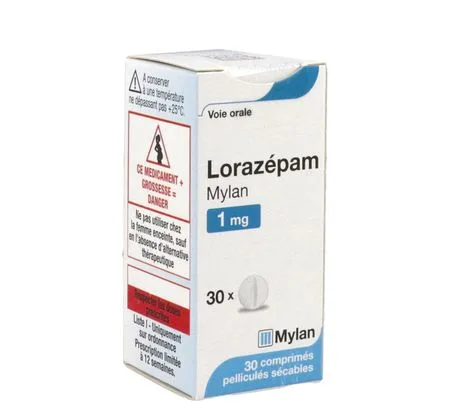
LORAZEPAM VIATRIS 1 mg, scored film-coated tablet
Composition
Lorazepam..................................................................................................................................................1,00 mg
For one scored film-coated tablet.
Excipient with known effect: lactose (68,60 mg)
For the full list of excipients, see section Composition.
Lactose monohydrate, microcrystalline cellulose, magnesium stearate, polymethacrylate, talc, titanium dioxide, macrogol 6000.
Indications
• Symptomatic treatment of severe and/or disabling anxiety manifestations,
• Prevention and treatment of delirium tremens and other manifestations of alcohol withdrawal.
Dosage and administration
The use of lorazepam is not recommended in children, in the absence of studies. In addition, the tablet is not a form suitable for children under 6 years (risk of choking).
Dose
In all cases, treatment will be initiated at the lowest effective dose and the maximum dose will not be exceeded.
The usual dosage in adults is:
• the first few days of treatment:
1/2 tablet in the morning (0,5 mg)
1/2 tablet at midday (0,5 mg)
1 tablet in the evening (1 mg)
• the following days: the dosage will be gradually adjusted according to the response (average daily dosage: 2 to 4 tablets, i.e. 2 to 4 mg per day).
In children, elderly subjects, patients with renal impairment or hepatic impairment : it is recommended to reduce the dosage, by half for example.
In severe cases and in psychiatry, where higher dosages may be justified, use the tablets dosed at 2,5 mg.
Elderly and debilitated patients
In elderly and debilitated patients, reduce the initial dose by approximately 50 % and adjust the dose as needed and according to tolerance (see section Warnings and precautions).
Paediatric population
Not applicable.
Duration
Treatment should be as brief as possible. The indication will be reassessed regularly, especially in the absence of symptoms. The overall duration of treatment should not exceed 8 to 12 weeks for the majority of patients, including the dose reduction period (see section Warnings and precautions).
In some cases, it may be necessary to extend treatment beyond the recommended periods. This requires precise and repeated assessments of the patient's condition.
Prevention and treatment of delirium tremens and other manifestations of alcohol withdrawal : brief treatment of approximately 8 to 10 days.
Method of administration
Oral use.
Contraindications
This medicine must never be used in the following situations:
• hypersensitivity to the active substance or to any of the excipients listed in section Composition,
• severe respiratory insufficiency,
• sleep apnoea syndrome,
• severe hepatic insufficiency, acute or chronic (risk of occurrence of encephalopathy),
• myasthenia.
Warnings and precautions
Special warnings
This medicine contains lactose. Patients with galactose intolerance, total lactase deficiency or glucose-galactose malabsorption syndrome (rare hereditary diseases) must not take this medicine.
Risk in case of concomitant use of opioids :
Concomitant use of LORAZEPAM VIATRIS 1 mg, scored film-coated tablet and opioids may result in sedation, respiratory depression, coma and death. Because of these risks, concomitant prescription of sedative medicinal products such as benzodiazepines or related medicinal products such as LORAZEPAM VIATRIS 1 mg, scored film-coated tablet with opioids should be reserved for patients for whom no alternative treatment options are possible. If the decision is taken to prescribe LORAZEPAM VIATRIS 1 mg, scored film-coated tablet concomitantly with opioids, the lowest effective dose should be used and the duration of treatment should be as short as possible (see also the general dosage recommendations in section Dosage and administration).
Patients should be closely monitored for signs and symptoms of respiratory depression and sedation. In this respect, it is strongly recommended to inform patients and their carers (where applicable) so that they are aware of these symptoms (see section Interactions).
Pharmacological tolerance
The anxiolytic effect of benzodiazepines and related medicines may gradually decrease despite use of the same dose when administered over several weeks.
Dependence
Any treatment with benzodiazepines and related medicinal products, and particularly with prolonged use, may lead to a state of physical and psychological drug dependence.
Various factors appear to favour the occurrence of dependence:
• duration of treatment,
• dose,
• history of other drug or non-drug dependence, including alcohol dependence.
Drug dependence may occur at therapeutic doses and/or in patients without any individualised risk factor.
This state may lead to a withdrawal phenomenon upon discontinuation of treatment.
Certain symptoms are common and appear trivial: insomnia, headaches, significant anxiety, myalgia, muscle tension, irritability.
Other symptoms are rarer: agitation or even confusional episode, paraesthesia of the extremities, hyperreactivity to light, noise and physical contact, depersonalisation, derealisation, hallucinatory phenomena, convulsions.
Withdrawal symptoms may appear within the days following discontinuation of treatment. For short-acting benzodiazepines, and especially if given at high doses, symptoms may even appear in the interval between two doses.
The combination of several benzodiazepines risks, whatever the anxiolytic or hypnotic indication, increasing the risk of drug dependence.
Cases of abuse have also been reported.
Rebound phenomenon
This transient syndrome may manifest as an exacerbation of the anxiety that had prompted treatment with benzodiazepines and related drugs.
Amnesia and impairment of psychomotor functions
Anterograde amnesia as well as impairments of psychomotor functions may occur within hours after intake.
Behavioural disorders
In certain subjects, benzodiazepines and related products may cause a syndrome associating, to varying degrees, an alteration of the state of consciousness and behavioural and memory disorders:
The following may be observed:
• worsening of insomnia, nightmares, agitation, nervousness,
• delusional ideas, hallucinations, confusional-dreamlike state, psychotic-type symptoms,
• disinhibition with impulsivity,
• euphoria, irritability,
• anterograde amnesia,
• suggestibility.
This syndrome may be accompanied by disorders that are potentially dangerous for the patient or for others, such as:
• behaviour unusual for the patient,
• auto- or hetero-aggressive behaviour, particularly if those around the patient attempt to restrain the patient's activity,
• automatic behaviour with post-event amnesia.
These manifestations require discontinuation of treatment.
Risk of accumulation
Benzodiazepines and related products (like all medicines) persist in the body for a period of the order of 5 half-lives (see section Pharmacokinetics).
In elderly patients or those suffering from renal or hepatic impairment, the half-life may be considerably prolonged. On repeated administration, the medicine or its metabolites reach the steady-state plateau much later and at a much higher level. Only after a steady-state plateau has been reached is it possible to assess both the efficacy and the safety of the medicine.
A dose adjustment may be necessary (see section Dosage and administration).
Elderly subject
Lorazepam should be used with caution in elderly individuals because of the risk of sedation and/or musculoskeletal weakness, which may increase the risk of falls, with consequences often serious in this population. Elderly patients should receive a reduced dose (see section Dosage and administration Dosage
Precautions for use
The greatest caution is recommended in cases of a history of alcoholism or other dependencies, drug-related or not (see section Interactions).
In subjects with a major depressive episode
Benzodiazepines and related drugs should not be prescribed alone, as they allow depression to progress on its own, with persistence or increase of suicidal risk.
Procedures for progressive discontinuation of treatment
These must be stated to the patient precisely.
In addition to the need for gradual dose reduction, patients should be warned of the possibility of a rebound phenomenon, in order to minimise the anxiety that could arise from symptoms related to this discontinuation, even if gradual.
The patient must be warned that this phase may be uncomfortable.
Child
Even more so than in adults, the benefit/risk ratio will be scrupulously evaluated and the duration of treatment kept as short as possible. No clinical study has been conducted in children with lorazepam.
Elderly subject, renal or hepatic impairment
The risk of accumulation leads to reducing the dose, by half for example (see section Warnings and precautions).
Respiratory insufficiency
In patients with respiratory insufficiency, the depressant effect of benzodiazepines and related products should be taken into account (all the more so as anxiety and agitation may be signs of an alert to decompensation of respiratory function which justifies transfer to an intensive care unit).
Interactions
Combinations not recommended
Alcohol (beverage or excipient):
Alcohol increases the sedative effect of these substances.
Impaired alertness may make driving vehicles and using machines dangerous.
Avoid taking alcoholic beverages and medicines containing alcohol.
+ Sodium oxybate
Increased central depression.
Impairment of alertness may make driving vehicles and using machinery dangerous.
Associations to be taken into account
• Other sedative medicinal products:
Morphine derivatives (analgesics, antitussives and substitution treatments other than buprenorphine); neuroleptics; barbiturates; benzodiazepines; anxiolytics other than benzodiazepines; hypnotics; sedative antidepressants such as: amitriptyline, doxepin, mianserin, mirtazapine, trimipramine; sedative H1 antihistamines; central antihypertensives; others: baclofen; thalidomide; pizotifen.
Increased central depression. Impaired alertness may make driving vehicles and using machines dangerous.
• Barbiturates:
• Increased risk of sedation and respiratory depression, which may lead to coma and death, particularly in elderly subjects. Doses and the duration of the combination should be limited as much as possible. Buprenorphine:
With buprenorphine used as substitution treatment: increased risk of respiratory depression, which may be fatal. Carefully evaluate the benefit/risk ratio of this combination. Inform the patient of the need to respect the prescribed doses.
+ Clozapine
Increased risk of collapse with respiratory and/or cardiac arrest.
+ Morphine derivatives
Increased risk of sedation and respiratory depression, which may lead to coma and death, particularly in elderly subjects. Doses and the duration of the combination should be limited as much as possible.
Fertility, pregnancy and breastfeeding
Pregnancy
Numerous data from cohort studies have not demonstrated the occurrence of malformative effects following exposure to benzodiazepines during the 1er trimester of pregnancy. However, in certain epidemiological case-control studies, an increase in the occurrence of cleft lip and palate has been observed with benzodiazepines. According to these data, the incidence of cleft lip and palate in newborns would be less than 2/1 000 after exposure to benzodiazepines during pregnancy, whereas the expected rate in the general population is 1/1 000.
In case of intake of high doses of benzodiazepines during the 2th and/or 3th trimesters of pregnancy, a decrease in active fetal movements and variability of the fetal heart rate have been described. Treatment with benzodiazepines at the end of pregnancy, even at low doses, may be responsible for signs of exposure in the newborn such as axial hypotonia and feeding disorders leading to low weight gain. These signs are reversible, but may last 1 to 3 weeks depending on the half-life of the prescribed benzodiazepine. At high doses, respiratory depression or apnea and hypothermia may occur in the newborn. Furthermore, neonatal withdrawal syndrome is possible, even in the absence of signs of exposure. It is characterized in particular by hyperexcitability, agitation and tremors in the newborn occurring at a distance from delivery. The time of onset depends on the elimination half-life of the drug and may be significant when this is long.
Given these data, as a precaution, the use of lorazepam is not recommended during pregnancy, regardless of the stage of pregnancy.
If lorazepam is prescribed to a woman of childbearing potential, she should be advised of the need to contact her doctor if pregnancy is planned or begun so that the benefit of the treatment can be reassessed.
At the end of pregnancy, if it proves truly necessary to initiate treatment with lorazepam, avoid prescribing high doses and take into account, for monitoring the newborn, the effects previously described.
Breast-feeding
The use of this medicine during breastfeeding is not recommended.
Driving and using machines
Warn drivers of vehicles and users of machinery of the possible risk of drowsiness.
Association with other sedative medicines should be discouraged or taken into account when driving or operating machinery (see section Interactions).
If the duration of sleep is insufficient, the risk of impaired alertness is further increased.
Adverse effects
They are related to the dose ingested and the individual sensitivity of the patient.
• Very common: ≥ 10 %
• Common: ≥ 1 %
• Uncommon: ≥ 0,1 % and < 1 %
• Rare: ≥ 0,01 % and < 0,1 %
• Very rare: < 0,01 %
• Frequency not known (cannot be estimated from the available data)
Skin and subcutaneous tissue disorders
• frequency not known: skin rashes, pruritic or not
Immune system disorders
• frequency not known: hypersensitivity, anaphylactic or anaphylactoid reactions
Nervous system disorders
• very common: decreased alertness, drowsiness (particularly in elderly subjects)
• common: ataxia
• frequency not known: coma, extrapyramidal effects, tremor, convulsions, feeling of drunkenness, headache, vertigo, dysarthria, speech disorders
Endocrine system disorders
• frequency not known: inappropriate antidiuretic hormone secretion
Gastrointestinal disorders
• frequency undetermined: nausea, constipation
Blood and lymphatic system disorders
• frequency undetermined: thrombocytopenia, agranulocytosis, pancytopenia
Hepatobiliary disorders
• frequency undetermined: jaundice
Musculoskeletal and systemic disorders
• common: hypotonia
Eye disorders
• frequency undetermined: diplopia
Psychiatric disorders
• common: confusional state
• uncommon: disorder of libido
• frequency undetermined: hallucinations, depression, suicidal ideation, suicide attempt, insomnia, nightmares, nervous tension, anterograde amnesia (which may occur at therapeutic doses, the risk increasing in proportion to the dose, see section Warnings and precautions), behavioural disorders (see section Warnings and precautions), changes in consciousness, irritability, aggressiveness, agitation, physical and psychological dependence (even at therapeutic doses, with withdrawal or rebound syndrome upon discontinuation of treatment, see section Warnings and precautions)
Respiratory, thoracic and mediastinal disorders
• frequency undetermined: apnoea, respiratory depression, worsening of sleep apnoea, worsening of chronic obstructive pulmonary disease
Vascular disorders
• frequency undetermined: hypotension
Investigations
• frequency undetermined: increased transaminases, increased alkaline phosphatase, increased bilirubin
Metabolism and nutrition disorders:
• frequency undetermined: hyponatraemia
General disorders and administration site conditions
• common: asthenia
• frequency undetermined: hypothermia
Reporting of suspected adverse reactions
Reporting suspected adverse reactions after authorisation of the medicinal product is important. It allows continued monitoring of the benefit/risk balance of the medicinal product. Healthcare professionals are asked to report any suspected adverse reactions via the national reporting system: National Agency for the Safety of Medicines and Health Products (ANSM) and the network of Regional Pharmacovigilance Centres - Website: https://signalement.social-sante.gouv.fr/.
Overdose
The vital prognosis may be threatened, particularly in cases of polyintoxication involving other central nervous system depressants (including alcohol).
In case of massive ingestion, signs of overdose manifest mainly as depression of the central nervous system ranging from drowsiness to coma, depending on the amount ingested.
Mild cases manifest as signs of mental confusion and lethargy.
More serious cases manifest as ataxia, hypotonia, hypotension, respiratory depression, and, exceptionally, death.
In case of oral overdose within 1 hour, induction of vomiting will be performed if the patient is conscious or, failing that, gastric lavage with protection of the airways. After this time, administration of activated charcoal may help reduce absorption.
Particular monitoring of cardiorespiratory functions in a specialised setting is recommended.
Administration of flumazenil may be useful for the diagnosis and/or treatment of an intentional or accidental benzodiazepine overdose.
Antagonism of the effect of benzodiazepines by flumazenil may promote the occurrence of neurological disorders (convulsions), particularly in epileptic patients.
Pharmacodynamics
Pharmacotherapeutic class: anxiolytics, ATC code: N05BA06.
(N: central nervous system).
Lorazepam belongs to the class of 1-4 benzodiazepines and has a pharmacodynamic activity qualitatively similar to that of the other compounds in this class:
• muscle relaxant,
• anxiolytic,
• sedative,
• hypnotic,
• anticonvulsant,
• amnestic.
These effects are related to a specific agonist action on a central receptor forming part of the "GABA-OMEGA macromolecular receptor" complex, also called BZ1 and BZ2, and modulating the opening of the chloride channel.
Pharmacokinetics
Absorption
Lorazepam absorption is rapid: the tmax is between 0,5 and 4 hours. Bioavailability is high, of the order of 90 %, and it is not altered in the case of intramuscular administration.
Distribution
The volume of distribution is 1 l/kg. The total plasma clearance of lorazepam is 55 ml/min.
Protein binding is high, on average 93 %.
The plasma elimination half-life of lorazepam is between 10 and 20 hours. The steady state of plasma concentrations is reached in approximately 3 days.
A concentration-effect relationship could not be established for this class of products, due to the intensity of their metabolism and the development of tolerance.
Benzodiazepines cross the blood-brain barrier as well as the placenta and breast milk.
Metabolism and Elimination
The liver plays a major role in the metabolism of benzodiazepines, which explains the negligible percentage (< 10 %) of unchanged lorazepam found in the urine. Inactivation of lorazepam occurs by glucuroconjugation, resulting in water-soluble substances eliminated in the urine.
At-risk populations
• Elderly subject : the pharmacokinetic parameters are not modified.
• Hepatic insufficiency (cirrhosis) : a doubling of the half-life is noted.
• Renal insufficiency : slowing of the elimination of glucuroconjugated metabolites but without an increase in the half-life of lorazepam.
• Haemodialysis : it allows partial elimination of lorazepam.
Prescription, supply and reimbursement
Prescription duration limited to 84 day(s).
| Marketing authorisation (AMM) |
|
| Price: |
|
Collection.
1 RUE DE TURIN
69007 LYON
Tel: 04 37 25 75 00 https://www.viatris.fr/
Source: VIDAL · Updated on 11/11/2026. This information does not replace advice from a healthcare professional.