
Medicines
SmPC of the 09/02/2026
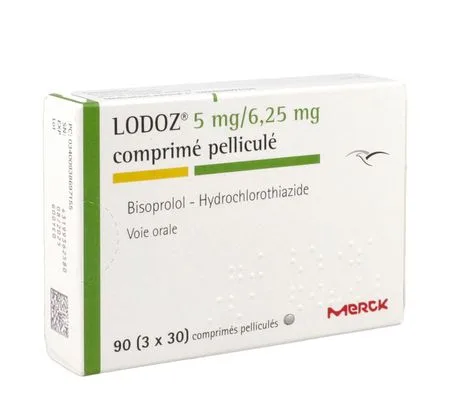
LODOZ 5 mg/6,25 mg, film-coated tablet
Forms and presentations
Film-coated tablet (pastel pink, round, biconvex, with a raised heart on one side, and the number 5 raised on the other side).
Box of 30 or 90, blister packs.
Composition
For a film-coated tablet:
Bisoprolol fumarate: 5,00 mg
Hydrochlorothiazide: 6,25 mg
Tablet core:
Anhydrous colloidal silica, magnesium stearate, microcrystalline cellulose, maize starch, anhydrous calcium hydrogen phosphate.
Tablet coating:
Yellow iron oxide (E172), red iron oxide (E172), polysorbate 80, macrogol 400, titanium dioxide (E171), hypromellose.
Dosage and administration
Dosage
To individually adjust the dosage, LODOZ is available in the following strengths:
LODOZ 2,5 mg/6,25 mg, film-coated tablets,
LODOZ 5 mg/6,25 mg, film-coated tablets,
LODOZ 10 mg/6,25 mg, film-coated tablets,
The initial dose is one tablet containing 2,5 mg of bisoprolol/6,25 mg of hydrochlorothiazide once a day.
In case of insufficient response to treatment, the dosage will be increased to one tablet containing 5 mg of bisoprolol/6.25 mg of hydrochlorothiazide in a single intake per day. If the efficacy of this latter dose is insufficient, the dosage may be increased to one tablet containing 10 mg of bisoprolol/6.25 mg of hydrochlorothiazide once per day.
If it is necessary to interrupt treatment, a gradual withdrawal of bisoprolol treatment is recommended, as sudden withdrawal of bisoprolol may indeed lead to a serious deterioration of the patient's condition, particularly in patients with ischaemic heart disease.
Renal or hepatic impairment:
No dose adjustment is necessary in cases of mild to moderate hepatic impairment or mild to moderate renal impairment (creatinine clearance > 30 mL/min).
Elderly:
No dose adjustment is usually necessary (see section Warnings and precautions).
Paediatric population:
Experience with LODOZ in the paediatric population is limited; therefore, its use is not recommended in this population.
Method of administration
LODOZ should be taken in the morning, and may be taken with food. The film-coated tablets should be swallowed with a little liquid and must not be chewed.
Contraindications
LODOZ is contraindicated in the following cases:
- hypersensitivity to bisoprolol, hydrochlorothiazide, other thiazides, sulfonamides or to any of the excipients listed in the section Composition ;
- acute heart failure or during episodes of decompensated heart failure requiring intravenous inotropic therapy;
- cardiogenic shock;
- atrioventricular block of 2nd or 3rd degree;
- sick sinus syndrome;
- sino-atrial block;
- symptomatic bradycardia;
- severe asthma;
- severe forms of occlusive peripheral arterial disease and Raynaud's phenomenon;
- untreated pheochromocytoma;
- severe renal impairment (creatinine clearance ≤ 30 mL/min);
- severe hepatic failure;
- metabolic acidosis;
- persistent hypokalaemia.
Warnings and precautions
Warnings
RELATED TO BISOPROLOL
Never abruptly interrupt treatment in patients with coronary artery disease (angina pectoris); abrupt withdrawal may lead to serious rhythm disorders, myocardial infarction or sudden death.
Diabetic patients
Diabetes with significant fluctuations in blood glucose: the symptoms of hypoglycaemia may be masked. Beta-blockers may further increase the risk of severe hypoglycaemia when used concomitantly with sulfonylureas. Diabetic patients should be advised to monitor their blood glucose carefully (see section Interactions).
RELATED TO HYDROCHLOROTHIAZIDE
LODOZ should be used with caution in patients with impaired renal function.
In case of hepatic impairment, thiazide diuretics and related drugs may induce hepatic encephalopathy. In this case, administration of diuretics must be stopped immediately.
This treatment must not be taken during breast-feeding (see section Fertility, pregnancy and breastfeeding).
Precautions for use
RELATED TO BISOPROLOL
Asthma and chronic obstructive pulmonary disease
Although beta-blockers β-1-cardioselective agents have less effect on pulmonary function than non-selective beta-blockers, these should be avoided, as with all beta-blockers, in patients with obstructive airway disease, unless there are medical reasons requiring their use. If so, LODOZ should be used with caution. In patients with obstructive airway disease, treatment with bisoprolol should be initiated at the lowest possible dose. These patients should be closely monitored for any new symptoms (such as dyspnoea, exercise intolerance, cough). In asthma or other chronic obstructive pulmonary diseases that may become symptomatic, a bronchodilator treatment may be administered concomitantly. In asthmatic patients, an increase in airway resistance may occur, requiring an increase in the dose of beta-2 stimulants.
Heart failure
In compensated heart failure patients and when necessary, bisoprolol will be administered at very low doses, gradually increased, and under strict medical supervision.
First-degree atrioventricular block
Given their negative dromotropic effect, beta-blockers should be administered with caution to patients presenting with first-degree atrioventricular block.
Prinzmetal's angina
Beta-blockers may increase the number and duration of attacks in patients suffering from Prinzmetal's angina. Cases of coronary vasospasm have been observed. Although bisoprolol is highly beta-1 selective, anginal attacks cannot be completely excluded when administered to patients suffering from Prinzmetal's angina. The use of a beta-blocker β1 selective is possible, in its minor and associated forms, on condition that a vasodilator is administered concomitantly.
Peripheral arterial occlusive disorders
In patients suffering from peripheral arterial occlusive disorders (PAOD) or Raynaud's syndrome, beta-blockers may cause an worsening of these disorders. In these situations, a selective beta-blocker should be preferred. β1 selective.
Pheochromocytoma
In patients presenting with pheochromocytoma, LODOZ must not be administered before alpha-blocker treatment.
Blood pressure must be closely monitored.
Elderly patients
No dose adjustment is normally necessary. However, elderly patients should be monitored more closely (see section: fluid and electrolyte balance).
Psoriasis
Since disease worsening has been reported under beta-blockers, bisoprolol should only be prescribed in cases of real necessity.
Allergic reactions
In patients who may experience a severe anaphylactic reaction, regardless of its origin, in particular when using iodinated contrast media (see section Interactions) or during specific immunotherapy treatment (desensitisation), beta-blocker treatment may worsen the anaphylactic reaction and resistance to its treatment with adrenaline at usual doses.
General anaesthesia
In patients under general anaesthesia, beta-blockers reduce the incidence of arrhythmias and myocardial ischaemia during induction of anaesthesia and intubation, and in the post-operative period. It is currently recommended to maintain beta-blocker treatment during the perioperative period. The anaesthetist must be informed that the patient is taking beta-blocker treatment because of potential interactions with other medicinal products, resulting in bradyarrhythmias, attenuation of reflex tachycardia and decreased capacity for reflex compensation in case of blood loss. If discontinuation of beta-blocker treatment is considered necessary before surgery, withdrawal should be gradual and completed approximately 48 hours before anaesthesia.
Thyrotoxicosis
Beta-blockers may mask the cardiovascular signs of hyperthyroidism.
Athletes
Athletes are advised that this specialty contains an agent that may induce a positive result in tests carried out during anti-doping controls.
Strict fasting
LODOZ should be used with caution in patients observing a strict fast.
Combination with verapamil, diltiazem or bepridil
Such a combination should only be given under close clinical and ECG monitoring, particularly in the elderly and at the start of treatment (see section Interactions).
RELATED TO HYDROCHLOROTHIAZIDE
Hydro-electrolyte balance
During long-term treatment with LODOZ, periodic monitoring of serum electrolytes (particularly potassium, sodium, calcium), creatinine and urea, serum lipids (cholesterol and triglycerides), uric acid, and blood glucose is recommended.
Continuous long-term administration of hydrochlorothiazide may induce hydro-electrolyte disturbances, in particular hypokalaemia and hyponatraemia, as well as hypomagnesaemia, hypochloraemia, and hypercalcaemia.
Sodium level
It should be checked before starting treatment, then at regular intervals thereafter. Any diuretic treatment may indeed cause hyponatraemia, with sometimes serious consequences.
Since a drop in sodium levels may initially be asymptomatic, regular monitoring is therefore essential and should be even more frequent in at-risk populations, represented by elderly subjects and cirrhotic patients.
Kalaemia
Potassium depletion with hypokalaemia constitutes the major risk of thiazide diuretics and related agents.
The risk of hypokalaemia (< 3,5 mmol/L) must be prevented in certain at-risk populations, represented by elderly subjects and/or undernourished patients and/or patients on polypharmacy, coronary patients, and patients with heart failure. Indeed, in this case, hypokalaemia increases the cardiac toxicity of digitalis and the risk of arrhythmias.
Subjects with a long QT interval are also at risk, whether the origin is congenital or iatrogenic. Hypokalemia (as well as bradycardia) then acts as a factor favoring the occurrence of severe rhythm disorders, in particular torsades de pointes, which are potentially fatal.
In all cases, more frequent monitoring of kalaemia is necessary. The first check of plasma potassium should be carried out within the week following the start of treatment.
Calcemia
Thiazide diuretics and related agents may decrease urinary calcium excretion and cause a slight and transient increase in calcaemia. Marked hypercalcaemia may be related to unrecognised hyperparathyroidism. Interrupt treatment before investigating parathyroid function.
Association with lithium
This combination should be avoided due to the presence of a diuretic (see section Interactions).
Blood glucose
Monitoring of blood glucose in diabetic patients is important, particularly in the presence of hypokalaemia.
Uric acid
In hyperuricaemic patients, the tendency to gout attacks may be increased: the dosage should be adjusted according to plasma uric acid concentrations.
Renal function and diuretics
Thiazide diuretics are only fully effective when renal function is normal or only slightly impaired (creatininemia < 25 mg/L, i.e. 220 μmol/L for an adult).
Creatininemia must be adjusted according to the patient's age, weight and sex, using the Cockcroft-Gault formula, for example:
* CrCl = (140 - age) x weight/0.814 x creatininemia
|
with: |
age expressed in years, |
|
weight in kg, |
|
|
creatininemia in μmol/L. |
This formula allows calculation of CrCl (creatinine clearance) for male subjects, and must be corrected for female subjects by multiplying the result by 0.85.
Hypovolaemia, secondary to the loss of water and sodium induced by the diuretic at the start of treatment, leads to a reduction in glomerular filtration. This may result in an increase in blood urea and serum creatinine.
This transient functional renal insufficiency is without consequence in subjects with normal renal function but may worsen pre-existing renal insufficiency.
Antihypertensive combinations
It is advised to reduce the dosage when combined with another antihypertensive agent, at least initially.
Photosensitivity
Photosensitivity reactions may occur with thiazide diuretics in rare cases (see section Adverse effects). If a photosensitivity reaction occurs during treatment, it is recommended to stop treatment. If re-administration of the treatment is considered necessary, it is recommended to protect areas exposed to the sun or to artificial UVA.
Non-melanoma skin cancer
An increased risk of non-melanoma skin cancer (NMSC) [basal cell carcinoma (BCC) and squamous cell carcinoma (SCC)] with an increasing cumulative dose of exposure to hydrochlorothiazide (HCTZ) was observed in two epidemiological studies from the Danish Cancer Registry. The photosensitising actions of HCTZ could constitute a possible mechanism of NMSC.
Patients taking HCTZ should be informed of the risk of NMSC and be advised to regularly check their skin for any new lesions and to promptly report any suspicious skin lesions. Possible preventive measures such as limited exposure to sunlight and UV rays and, when exposed, adequate protection should be advised to patients in order to minimise the risk of skin cancer. Suspicious skin lesions should be examined promptly, including possibly by histological examination of biopsies. The use of HCTZ may also need to be reconsidered in patients who have previously experienced NMSC (see also section Adverse effects).
Athletes
Athletes are advised that this specialty contains an agent that may induce a positive result in tests carried out during anti-doping controls.
Choroidal effusion, acute myopia and secondary angle-closure glaucoma
Hydrochlorothiazide, a sulfonamide, can cause an idiosyncratic reaction resulting in choroidal effusion with visual field defect, transient acute myopia and acute angle-closure glaucoma. Symptoms include sudden onset of decreased visual acuity or eye pain and generally occur within hours to weeks after initiation of treatment. Untreated acute angle-closure glaucoma can lead to permanent loss of vision. The primary treatment is to discontinue hydrochlorothiazide as rapidly as possible. If intraocular pressure remains uncontrolled, urgent medical or surgical treatment should be considered. A history of allergy to sulfonamides or penicillin should be considered as a risk factor for the development of acute angle-closure glaucoma.
Acute respiratory toxicity
Very rare serious cases of acute respiratory toxicity, including acute respiratory distress syndrome (ARDS), have been reported after taking hydrochlorothiazide. Pulmonary oedema generally develops a few minutes to a few hours after taking hydrochlorothiazide. Initially, the symptoms include dyspnoea, fever, pulmonary deterioration and hypotension. If a diagnosis of ARDS is suspected, LODOZ must be withdrawn and appropriate treatment must be administered. Hydrochlorothiazide must not be administered to patients who have already presented ARDS following intake of hydrochlorothiazide.
Interactions
Combinations not recommended
+ Lithium
LODOZ may increase the cardiotoxic and neurotoxic effect of lithium by decreasing lithium excretion.
+ Calcium antagonists of the verapamil or diltiazem type
Negative effect on contractility and atrioventricular conduction. Intravenous administration of verapamil in patients taking beta-blockers may induce severe hypotension and atrioventricular block.
+ Centrally acting antihypertensives
Decreased heart rate and cardiac output, and vasodilation. Abrupt discontinuation of treatment may increase the risk of 'rebound hypertension'.
Associations requiring precautions for use
+ Calcium antagonists of the dihydropyridine type
An increased risk of hypotension and a risk of deterioration of ventricular function in patients suffering from heart failure cannot be excluded.
+ Other antihypertensives, or other medicinal products that may induce hypotension
The risk of hypotension may be increased.
+ Angiotensin-converting enzyme (ACE) inhibitors, angiotensin II receptor antagonists
Risk of sudden arterial hypotension and/or acute renal failure when initiating treatment with an angiotensin-converting enzyme inhibitor in the case of pre-existing sodium depletion (particularly in subjects with renal artery stenosis).
Where prior diuretic treatment may have caused sodium depletion, either the diuretic should be discontinued 3 days before starting ACE inhibitor treatment, or a reduced initial dose of the ACE inhibitor should be administered.
+ Class I antiarrhythmics
The effect on atrioventricular conduction time may be potentiated and the negative inotropic effect increased.
+ Class III antiarrhythmics
The effect on atrioventricular conduction time may be increased.
+ Antiarrhythmic medicinal products that may cause torsades de pointes
Hypokalaemia may favour the occurrence of torsades de pointes.
+ Non-antiarrhythmic medicinal products that may cause torsades de pointes
Hypokalaemia may favour the occurrence of torsades de pointes.
+ Parasympathomimetic medicinal products
The atrioventricular conduction time and the risk of bradycardia may be increased.
+ Topical beta-blockers (for example, eye drops for the treatment of glaucoma)
The systemic effects of bisoprolol may be potentiated.
+ Insulin and oral antidiabetics
Increase in the hypoglycaemic effect. Blockade of beta-adrenoceptors is likely to mask the signs of hypoglycaemia. Concomitant use of beta-blockers with sulfonylureas could increase the risk of severe hypoglycaemia (see section Warnings and precautions).
+ Anaesthetics
Reduction of reflex tachycardia and increased risk of hypotension.
+ Digitalis glycosides
Increased atrioventricular conduction time, decreased heart rate.
If hypokalaemia and/or hypomagnesaemia develops during treatment with LODOZ, the myocardium may show increased sensitivity to cardiac glycosides, leading to an increase in glycoside effects and adverse effects.
+ Non-steroidal anti-inflammatory drugs (NSAIDs)
The hypotensive action of bisoprolol may be reduced.
In patients developing hypovolaemia, the combination with NSAIDs may cause acute renal failure.
Medicines β-sympathomimetics
The combination with bisoprolol may reduce the effect of both medicinal products.
+ Sympathomimetic medicines that activate receptors α and β-adrenergic
The combination with bisoprolol may lead to hypertension. These interactions are considered more likely with non-selective beta-blockers.
+ Potassium-depleting medicinal products
An increase in potassium losses may occur.
+ Methyldopa
Isolated cases of haemolysis due to antibody formation with hydrochlorothiazide have been described.
+ Uricosuric medicinal products
The effect of these medicines may be reduced in combination with LODOZ.
+ Cholestyramine, colestipol
Reduce the absorption of the hydrochlorothiazide component of LODOZ.
Associations to be taken into account
+ Mefloquine
Increased risk of bradycardia.
+ Corticosteroids
Reduction of the antihypertensive effect
Fertility, pregnancy and breastfeeding
Pregnancy
LODOZ is not recommended during pregnancy.
RELATED TO BISOPROLOL
Bisoprolol has pharmacological properties that may cause harmful effects on pregnancy and/or the foetus/newborn. In general, beta-blockers reduce placental perfusion; this effect has been associated with growth retardation, intrauterine deaths, abortions or preterm labour. Adverse effects (for example hypoglycaemia and bradycardia) may occur in the foetus and newborn. If treatment with beta-blockers is necessary, beta-1 selective agents should be preferred.
RELATED TO HYDROCHLOROTHIAZIDE
Experience with the use of hydrochlorothiazide during pregnancy is limited, particularly during the first trimester. Animal studies are insufficient.
Hydrochlorothiazide crosses the placenta. Based on the pharmacological mechanism of action of hydrochlorothiazide, its use during the second and third trimesters of pregnancy may compromise fetoplacental perfusion and may cause fetal or neonatal effects, such as jaundice, disturbance of electrolyte balance, and thrombocytopenia.
Hydrochlorothiazide must not be used in cases of gestational edema, gestational hypertension or pre-eclampsia, due to the risk of reduced plasma volume and placental hypoperfusion, without a beneficial effect on the course of the disease.
Hydrochlorothiazide must not be used in the case of essential hypertension in pregnant women, except in rare situations in which no other treatment is possible.
Breast-feeding
LODOZ is not recommended during breastfeeding. Hydrochlorothiazide may inhibit the production of breast milk.
Fertility
No data are available regarding the effects of LODOZ 5 mg/6,25 mg on fertility in humans.
Driving and using machines
Depending on the patient's reaction to treatment with LODOZ, the ability to drive vehicles and use machines may be impaired. This must be particularly taken into account at the start of treatment and in combination with alcohol.
Adverse effects
List of adverse reactions:
Adverse events are listed below according to the MedDRA system organ classification and by decreasing frequency. Frequencies are defined as follows: common (≥ 1/100, < 1/10), uncommon (≥ 1/1 000, < 1/100), rare (≥ 1/10 000, < 1/1 000), very rare (< 1/10 000), frequency not known (cannot be estimated from the available data).
Benign, malignant and unspecified neoplasms (including cysts and polyps):
Frequency not known: non-melanoma skin cancer (basal cell carcinoma and squamous cell carcinoma).
Blood and lymphatic system disorders:
Rare: leukopenia, thrombocytopenia.
Very rare: agranulocytosis.
Metabolism and nutrition disorders:
Uncommon: loss of appetite, hyperglycaemia, hyperuricaemia, disturbances of hydro-electrolytic balance (in particular hypokalaemia and hyponatraemia, also hypomagnesaemia and hypochloraemia, as well as hypercalcaemia).
Very rare: metabolic alkalosis.
Psychiatric disorders:
Uncommon: depression, sleep disorders.
Rare: nightmares, hallucinations.
Nervous system disorders:
Common: dizziness*, headache*.
Eye disorders:
Rare: dry eye (to be considered in patients wearing contact lenses), vision disorders.
Very rare: conjunctivitis.
Frequency unknown: choroidal effusion, acute myopia, acute angle-closure glaucoma
Ear and labyrinth disorders:
Rare: hearing disorders.
Cardiac disorders:
Uncommon: bradycardia, atrioventricular conduction disorders, worsening of pre-existing heart failure.
Vascular disorders:
Common: sensation of cold or numbness in the extremities.
Uncommon: orthostatic hypotension.
Rare: syncope.
Respiratory, thoracic and mediastinal disorders:
Uncommon: bronchospasm in patients with asthma or a history of obstructive airway disorders.
Rare: allergic rhinitis.
Very rare: acute respiratory distress syndrome (ARDS) (see section Warnings and precautions).
Frequency not known: interstitial lung disease.
Gastrointestinal disorders:
Common: gastrointestinal disorders such as nausea, vomiting, diarrhoea, constipation.
Uncommon: abdominal pain.
Very rare: pancreatitis.
Hepatobiliary disorders:
Rare: hepatitis, jaundice.
Skin and subcutaneous tissue disorders:
Rare: hypersensitivity reactions such as pruritus, flushing, rash and angioedema, photosensitivity, purpura, urticaria.
Very rare: anaphylactic reactions, toxic epidermal necrolysis (Lyell's syndrome), alopecia, cutaneous lupus erythematosus. Beta-blockers may cause or worsen psoriasis or induce a psoriasiform rash.
Musculoskeletal and systemic disorders:
Uncommon: muscle weakness, cramps.
Reproductive system and breast disorders:
Rare: erectile dysfunction.
General disorders:
Common: fatigue*.
Uncommon: asthenia.
Very rare: chest pain.
Investigations:
Uncommon: increased amylase, reversible increase in serum creatinine and urea, increased triglycerides and cholesterol, glycosuria.
Rare: elevation of hepatic enzymes (AST, ALT).
* These symptoms mainly appear at the start of treatment. They are generally mild and most of the time disappear within one to two weeks.
Description of certain adverse effects:
Non-melanoma skin cancer: according to available data from epidemiological studies, a cumulative dose-dependent association between hydrochlorothiazide and non-melanoma skin cancer has been observed (see also sections Warnings and precautions and Pharmacodynamics).
Reporting of suspected adverse reactions
Reporting suspected adverse reactions after authorisation of the medicinal product is important. It allows continued monitoring of the benefit/risk balance of the medicinal product. Healthcare professionals are asked to report any suspected adverse reactions via the national reporting system: National Agency for the Safety of Medicines and Health Products (ANSM) and the network of Regional Pharmacovigilance Centres - Website: https://signalement.social-sante.gouv.fr
Overdose
The most common signs of overdose with a beta-blocker are bradycardia, hypotension, bronchospasm, acute heart failure and hypoglycaemia. Large inter-individual variations in sensitivity to a single high dose of bisoprolol are observed, and patients with heart failure are probably very sensitive.
The clinical picture in cases of acute or chronic overdose of hydrochlorothiazide is characterised by the extent of hydro-electrolytic loss.
The most frequent signs are dizziness, nausea, drowsiness, hypovolaemia, hypotension, hypokalaemia.
Generally, in case of overdose, discontinuation of LODOZ and supportive and symptomatic treatment are recommended.
Bradycardia: administer atropine intravenously. If the response is inadequate, isoprenaline or another agent with positive chronotropic properties may be given with caution. In some cases, insertion of a transvenous pacemaker may be necessary.
Hypotension: vascular filling and vasopressive substances should be administered intravenously.
Atrioventricular block (second or third degree): patients must be monitored and treated with an isoprenaline infusion or insertion of an intravenous pacemaker.
Acute worsening of heart failure: administer diuretics, inotropic agents, vasodilator agents IV.
Bronchospasm: administer a bronchodilator treatment such as isoprenaline, beta-2 sympathomimetic substances and/or aminophylline.
Hypoglycaemia: administer glucose intravenously.
Limited data suggest that bisoprolol is poorly dialysable. The degree of elimination of hydrochlorothiazide by haemodialysis has not been established.
Pharmacodynamics
Pharmacotherapeutic class: COMBINATION OF A BETA-BLOCKER (β1 SELECTIVE) AND A THIAZIDE DIURETIC, ATC code: C07BB07.
Clinical trials have demonstrated the additive effect of the antihypertensive effects of the 2 active ingredients of the combination; the efficacy of the lowest dose: 2,5 mg/6,25 mg in the treatment of mild to moderate essential hypertension has been demonstrated.
Pharmacodynamic effects such as hypokalaemia (hydrochlorothiazide) and bradycardia, asthenia and headache (bisoprolol) are dose-dependent.
The combination of the two active ingredients, at a quarter or half of the doses used in monotherapy (2,5 mg/6,25 mg), aims to reduce these effects.
Bisoprolol is a potent and β1-selective adrenergic inhibitor, devoid of intrinsic sympathomimetic activity and not possessing significant membrane-stabilising effects.
As with other beta-receptor antagonists β1, the mode of action of bisoprolol in hypertension is poorly understood, but it has been shown that this product markedly decreases plasma renin levels and slows heart rate.
Hydrochlorothiazide is a thiazide diuretic that has an antihypertensive action. Its diuretic effect is due to inhibition of the active transport of Na+ from the renal tubules into the blood, preventing the reabsorption of Na+.
Non-melanoma skin cancer (NMSC):
Based on available data from epidemiological studies, a cumulative dose-dependent association between hydrochlorothiazide (HCTZ) and NMSC has been observed. One study included a population composed of 71 533 cases of basal cell carcinoma (BCC) and 8 629 cases of squamous cell carcinoma (SCC) matched to 1 430 833 and 172 462 population controls, respectively. High use of HCTZ (cumulative dose ≥ 50 000 mg) was associated with an adjusted odds ratio (OR) of 1,29 (95% confidence interval: 1,23-1,35) for BCC and of 3,98 (95% confidence interval: 3,68-4,31) for SCC. A clear relationship between the cumulative dose-response relationship was observed for BCC and SCC. Another study showed a possible association between lip cancer (SCC) and exposure to HCTZ: 633 cases of lip cancer were matched to 63 067 population controls, using a risk-set sampling strategy. A cumulative dose-response relationship was demonstrated with an adjusted OR of 2,1 (95% confidence interval: 1,7-2,6), rising to an OR of 3,9 (3,0-4,9) for high use (~25 000 mg) and an OR of 7,7 (5,7-10,5) for the highest cumulative dose (~100 000 mg) (see also section Warnings and precautions).
Pharmacokinetics
RELATED TO BISOPROLOL
- Absorption: the Tmax varies from 1 to 4 hours.
- Bioavailability is high (88%), with a very low first-pass hepatic effect, and is not modified by food intake. Kinetics are linear for doses between 5 and 40 mg.
- Distribution: bisoprolol is 30% bound to plasma proteins and the volume of distribution is high (approximately 3 L/kg).
- Metabolism: bisoprolol is metabolised 40% in the liver. The metabolites formed are inactive.
- Elimination: the plasma elimination half-life is 11 hours.
- Renal and hepatic clearances are roughly equivalent, and half of the administered dose is recovered unchanged in the urine, along with the metabolites. Total clearance is approximately 15 L/h.
RELATED TO HYDROCHLOROTHIAZIDE
- Absorption: the bioavailability of hydrochlorothiazide varies between subjects between 60 and 80%. The Tmax varies between 1,5 and 5 hours, the mean lying at approximately 4 hours.
- Distribution: binding to plasma proteins is 40%.
- Elimination: hydrochlorothiazide is not metabolised, and it is excreted almost entirely unchanged by glomerular filtration and active tubular secretion. The elimination half-life of hydrochlorothiazide is approximately 8 hours.
- In patients with renal and cardiac insufficiency, the renal clearance of hydrochlorothiazide is decreased and the elimination half-life is increased. The same applies to elderly subjects, with in addition an increase in the maximum plasma concentration (Cmax).
- There is transfer across the placenta and into breast milk.
Preclinical safety
Bisoprolol and hydrochlorothiazide have not been shown to be harmful in humans during standard preclinical toxicity tests (long-term toxicity, mutagenic, genotoxic or carcinogenic potential). As with other beta-blockers, bisoprolol administered at high doses in animal studies showed toxic effects in the mother (decreased food intake and weight gain), and in the embryo and/or foetus (increased number of late abortions, reduced birth weight of offspring, delayed physical development until the end of lactation). However, bisoprolol, as well as hydrochlorothiazide, showed no teratogenic effect. No aggravation of toxicity was observed when the two active substances were administered simultaneously.
Prescription, supply and reimbursement
| Marketing authorisation (AMM) |
|
| Price: |
|
Collection.
MERCK SERONO
37, rue Saint-Romain. 69379 Lyon cdx 08
Tel: 04 72 78 25 25
Medical information/Pharmacovigilance:
E-mail: infoqualit@merckgroup.com
Website: www.merckserono.fr
Source: VIDAL · Updated on 11/11/2026. This information does not replace advice from a healthcare professional.