
Medicines
SmPC of 05/06/2026
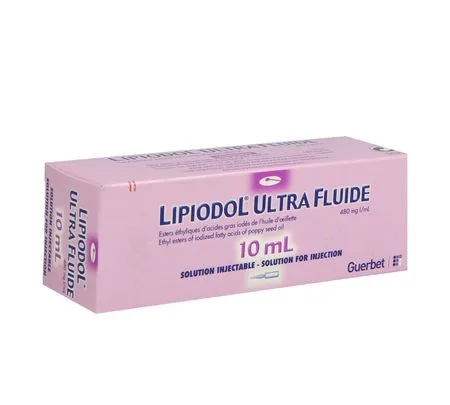
LIPIODOL ULTRA FLUIDE 480 mg/ml, injectable solution
Composition
Corresponding to an iodine content of …......……………………………………………….……480 mg/ml
In the form of ethyl esters of iodinated fatty acids of poppy seed oil for.……......……….………1 ml
One ampoule of 10 mL contains……………………......………………………………..……4800 mg of Iodine
One ampoule of 5 mL contains.............………………………………………………..………2400 mg of Iodine
Viscosity at 15°C: 70 cP (centipoise)
Viscosity at 37°C: 25 cP
Relative density at 15°C: 1,280
This medicine does not contain any excipient.
This medicine does not contain any excipient.
Indications
In diagnostic radiology :
• Lymphography.
• Diagnosis of liver lesions.
Diagnosis by selective hepatic arterial route of hepatic extension of malignant or non-malignant hepatic lesions.
In interventional radiology :
• Visualisation, localisation and vectorisation during trans-arterial chemoembolisation of intermediate-stage hepatocellular carcinoma, in adults.
• In interventional radiology, as part of peripheral and central vascular embolisation procedures with cyanoacrylate-based surgical glues compatible with LIPIODOL ULTRA FLUIDE and approved for endovascular use, to allow visualisation of the procedure and adjustment of the polymerisation time.
In combination with surgical glues during vascular embolisations.
In endocrinology :
The use of Lipiodol in prevention of iodine deficiency should be exclusively reserved for countries where it is impossible to implement other supplementation methods, in particular iodisation of salt and/or drinking water.
Dosage and administration
Dosage
In diagnostic radiology :
• Lymphography
The usual dose is 5 to 7 mL by strict intralymphatic route for opacification of a limb (adjusted according to the size of the subject), i.e. 10 to 14 mL for bilateral pedal lymphography. The dose must be reduced proportionally in children. In infants aged 1 to 2 years, a dose of 1 mL per limb is sufficient.
• Diagnosis of liver lesions
The usual dose varies according to the size of the lesions and may range from 2 to 10 mL per patient. LIPIODOL ULTRA FLUIDE is sometimes mixed with small amounts of water-soluble iodinated contrast agents. The CT scan must be performed 7 to 15 days after selective injection to allow elimination of LIPIODOL ULTRA FLUIDE from non-tumoral liver.
Paediatric population
The dose must be reduced proportionally in children.
Patients with underweight
The dose must be reduced proportionally in this population.
Elderly patients
The product must be administered with caution in patients over 65 years with underlying pathologies of the cardiovascular system, respiratory tract or nervous system. Since part of the product temporarily embolises the pulmonary capillaries, the presence of cardio-respiratory insufficiency in elderly patients may require dose adjustment after assessment of the benefit-risk ratio.
In interventional radiology :
• Transarterial chemoembolisation of hepatocellular carcinoma
The dose of LIPIODOL ULTRA FLUIDE depends on the extent of the lesion but should generally not exceed a total dose of 15 mL in adults.
Paediatric population:
The efficacy and safety of LIPIODOL ULTRA FLUIDE in transarterial chemoembolisation of hepatocellular carcinomas have not been established in children.
Elderly patients:
The product must be administered with caution in patients aged over 65 years and suffering from underlying pathologies of the cardiovascular, respiratory or nervous systems.
The injected dose must not exceed 10 mL to prevent non-targeted pulmonary embolism that may occur during hepatic chemoembolisation.
• Peripheral and central vascular embolisation
The procedure must be performed by a physician trained in the use of the mixture of LIPIODOL ULTRA FLUIDE and glue for endovascular embolisation, and within an interventional radiology department equipped with appropriate equipment. The ratio of glue to LIPIODOL ULTRA FLUIDE may vary from 1:1 to 1:8, in order to adjust the polymerisation time according to whether the embolisation is proximal or distal. For proximal targets, the ratio is most often between 1:1 and 1:3, while higher dilutions (1:4 to 1:8) are used for distal target lesions.
Adjusting the glue/LIPIODOL ULTRA FLUIDE ratio allows the polymerisation time to be modulated according to the diameter of the target vessel and the speed of blood flow.
The injected volume of LIPIODOL ULTRA FLUIDE must not exceed 15 mL.
The recommendations given in the instructions for use of the surgical glue must be strictly followed.
Elderly :
The medicinal product must be administered with caution in patients aged over 65 years with underlying cardiovascular, respiratory or neurological pathology.
Paediatric population :
Data on the efficacy and safety of LIPIODOL ULTRA FLUIDE in vascular embolisation in the paediatric population are limited.
In endocrinology :
Adults and children over 4 years: 1 mL every 3 years.
Children under 4 years: 0,5 mL every 2 years without exceeding 3 mL.
In case of thyroid nodule, the dosage is 0,2 mL.
Method of administration
LIPIODOL ULTRA FLUIDE must be administered by slow injection or catheterisation, using a suitable glass syringe or other administration devices for which compatibility with LIPIODOL ULTRA-FLUIDE has been demonstrated. The instructions for use of these devices must be followed (see section Incompatibilities).
In diagnostic radiology :
• Lymphography
Administration is performed by lymphatic catheterisation. It may be preceded by injection of a dye to locate the lymphatic vessels.
• Diagnosis of liver lesions
Strict intra-arterial route.
In interventional radiology :
• Transarterial chemoembolisation of hepatocellular carcinoma
Administration is carried out by selective intra-arterial catheterisation of the hepatic artery. The procedure must be performed in an interventional radiology room with appropriate equipment.
LIPIODOL ULTRA FLUIDE may be mixed with anticancer drugs such as cisplatin, doxorubicin, epirubicin and mitomycin.
The instructions and precautions for use relating to anticancer drugs must be strictly followed.
Instructions for preparing the mixture of LIPIODOL ULTRA FLUIDE with an anticancer drug:
• Prepare two syringes large enough to contain the total volume of the mixture. The first syringe containing the anticancer drug solution, the second syringe containing LIPIODOL ULTRA FLUIDE.
• Connect the two syringes to a 3-way stopcock.
• Perform 15 to 20 back-and-forth passes between the two syringes to obtain a homogeneous mixture. It is recommended to start by pushing the syringe containing the anticancer drug.
• The mixture must be prepared extemporaneously and must be used immediately after preparation (within 3 hours). If necessary, the mixture may be homogenised again as described above during the interventional radiology procedure.
• When the appropriate mixture is obtained, use a 1 to 3 ml syringe to inject into the microcatheter.
The procedure may be repeated every 4 to 8 weeks depending on the tumour response and the patient's condition.
• Peripheral and central vascular embolisation
Administration for vascular embolisation with surgical glues is performed by selective intravascular catheterisation or percutaneously into the lesion to be embolised.
Instructions for preparing the mixture of LIPIODOL ULTRA FLUIDE with a cyanoacrylate-based surgical glue:
• When preparing the mixture, particular care must be taken to avoid contamination by ionic solutions, such as blood or physiological saline, as this contamination may accelerate polymerisation and result in too proximal deposition of glue and/or an increased risk of catheter retention. Injection must be stopped immediately in this case.
• The mixture is prepared by injecting the glue into the desired volume of LIPIODOL ULTRA FLUIDE using a compatible syringe. The two components are then carefully homogenised using a three-way stopcock until a homogeneous mixture is obtained.
• The preparation must be administered immediately, using a catheter previously flushed with a 5% dextrose solution in order to completely eliminate any ionic solution inside.
In endocrinology :
Strictly intramuscular route.
Contraindications
• Hypersensitivity to LIPIODOL ULTRA FLUIDE (iodinated fatty acid ethyl esters of poppy seed oil).
• Pregnant woman
• Established hyperthyroidism.
• Traumatic lesions, recent haemorrhages or bleeding (risk of extravasation or embolism).
• Bronchography (the product would rapidly flood the bronchioles and alveoli).
Specific contraindications to use in interventional radiology :
• Trans-arterial chemoembolisation:
Mixing with LIPIODOL ULTRA FLUIDE for the treatment of hepatocellular carcinoma may cause both ischaemic and toxic effects on the bile ducts. Administration is therefore contraindicated in liver areas where the bile ducts are dilated, unless post-procedure drainage can be performed.
Intra-arterial injection of LIPIODOL ULTRA FLUIDE is likely to result in complete occlusion of the hepatic artery and complete suppression of arterial flow. It should only be performed after ensuring, by CT scan or angiography, the presence of at least partial portal vascular flow.
• Embolisation with surgical glues.
There are no particular contraindications other than those of embolisation, in particular the presence of portal vein thrombosis.
The contraindications mentioned in the instructions for use of the surgical glue must be taken into account.
Specific contraindications to use in endocrinology :
• Large multinodular goitre in persons aged over 45 years, due to the significant risk of hyperthyroidism.
• During breastfeeding.
Warnings and precautions
LIPIODOL ULTRA FLUIDE must not be administered by systemic intravascular or intrathecal route.
There is a risk of hypersensitivity, regardless of the dose administered.
Warnings
Warnings common to all therapeutic indications
Hypersensitivity
All iodinated contrast media may cause minor or major hypersensitivity reactions, which may be life-threatening. These hypersensitivity reactions are allergic in nature (so-called anaphylactic reactions if severe) or non-allergic. They may be immediate (within 60 min) or delayed (up to 7 days). Anaphylactic reactions are immediate and may result in death. They are dose-independent, may occur with the first administration of the product and are often unpredictable.
The risk of a major reaction requires that the means necessary for emergency resuscitation be immediately available.
Patients who have already had a reaction during a previous administration of LIPIODOL ULTRA FLUIDE or who have a history of iodine hypersensitivity are at increased risk of a new reaction if the product is readministered. They are therefore considered to be at-risk patients.
Injection of LIPIODOL ULTRA FLUIDE may worsen the symptoms of existing asthma. In patients whose asthma is not controlled by treatment, the decision to use LIPIODOL ULTRA FLUIDE must carefully weigh the benefit/risk ratio beforehand.
Thyroid
Because of their free iodine content, iodinated contrast media may alter thyroid function and thus cause hyperthyroidism in predisposed patients. At-risk patients are those with latent hyperthyroidism and those with autonomous thyroid function. Iodism occurs more frequently with LIPIODOL ULTRA FLUIDE than with water-soluble organic iodine derivatives.
See also the section Warnings and precautions "Warnings specific to lymphography".
Embolic and thrombotic complications
Uncontrolled migration of LIPIODOL ULTRA-FLUIDE into the arteriovenous system may cause temporary occlusion of small vessels (fat embolism) in various organs. Signs of such embolism are uncommon and generally immediate, but they may also be delayed and appear a few hours or a few days later. They are generally transient. However, cases of pulmonary embolism and cerebral embolism (possibly associated with cerebral infarction) that are life-threatening or fatal have been reported with LIPIODOL ULTRA-FLUIDE, in all its therapeutic indications. Patients must be informed of the possible signs of embolism and must contact their physician or hospital if symptoms appear. The benefit/risk ratio must be carefully assessed before the examination, particularly in patients with a right-to-left cardiac shunt or a known intratumoral vascular shunt. The recommended dose must not be exceeded and the administration procedures must be respected.
Warnings specific to lymphography
Pulmonary embolism occurs in the majority of patients undergoing lymphography with injection of LIPIODOL ULTRA FLUIDE, part of the product temporarily embolising the pulmonary capillaries. This is why doses must be adjusted or the examination cancelled in subjects with impaired respiratory function, cardiorespiratory insufficiency or pre-existing right cardiac overload, particularly if the patient is elderly. Doses must also be reduced after anticancer chemotherapy or radiotherapy because the lymph nodes decrease significantly and therefore retain only little contrast product. It is recommended that the injection be performed under radiological or fluoroscopic control.
Pulmonary embolisation can be minimised by obtaining radiological confirmation that the injection is indeed intralymphatic (and not intravenous) and by stopping the examination as soon as the contrast product becomes visible in the thoracic duct or when a lymphatic obstruction is observed.
Lymphography saturates the thyroid with iodine for several months, and it is therefore necessary to perform a thyroid assessment before the radiological examination.
Warnings specific to transarterial chemoembolisation
Transarterial chemoembolisation is not recommended in patients with decompensated liver cirrhosis (Child-Pugh ≥ 8), severe hepatic dysfunction, macroscopic invasion of the portal vein, portal thrombosis (partial or total) and/or extrahepatic spread of the tumour.
A hepatic intra-arterial procedure may lead to irreversible hepatic failure in patients with severe hepatic dysfunction and/or treated by several closely spaced sessions. Tumour involvement greater than 50% of the liver, a bilirubin level above 2 mg/dL, a lactate dehydrogenase level above 425 mg/dL, an aspartate aminotransferase level above 100 IU/L and decompensated cirrhosis have been described as being associated with an increased post-procedure mortality.
Oesophageal varices must be carefully monitored as they may rupture immediately after treatment. If a risk of rupture is identified, sclerotherapy/endoscopic ligation must be performed before the transarterial chemoembolisation procedure.
The risk of iodinated contrast agent-induced renal failure must be prevented by systematic hydration before and after the procedure.
The risk of superinfection in the treated area may be prevented by the administration of antibiotics.
Warnings specific to embolisation with surgical glue
An early polymerisation reaction may exceptionally occur between LIPIODOL ULTRA FLUIDE and certain surgical glues, or even certain batches of glue. Before any use of new batches of LIPIODOL ULTRA FLUIDE or surgical glue, it is necessary to ensure in vitro the compatibility between LIPIODOL ULTRA FLUIDE and the glue.
Uncontrolled migration, into the arteriovenous system, of LIPIODOL ULTRA-FLUIDE combined with surgical glue may occur in the context of selective embolisation. Given the inherent embolising effect of the glue and its prolonged resorption time, the embolic and thrombotic complications observed with administration of LIPIODOL ULTRA-FLUIDE with surgical glue are likely to be more long-lasting (several weeks or even months after administration) and more severe than those observed with other modes of administration of LIPIODOL ULTRA-FLUIDE.
Non-targeted embolisation of different parts of the body may also occur in the context of selective embolisation performed in combination with a surgical glue (see section "Embolic and thrombotic complications").
The intrinsic properties of the glue (polymerisation capacity and resorption time) must be taken into account in the embolisation process.
In order to detect any embolic complication, patients must be closely monitored in an appropriate care setting.
The safety risks mentioned in the instructions for use of the surgical glue must be taken into account.
Precautions for use
Hypersensitivity
Before the examination:
Identify at-risk patients through a detailed inquiry into their medical history.
Corticosteroids and H1 antihistamines have been proposed as premedication in patients at greatest risk of intolerance reactions (known intolerance to a contrast agent). However, they do not prevent the occurrence of a severe or fatal anaphylactic shock.
During the examination, the following must be ensured:
• Medical supervision,
• Maintenance of an intravenous access line.
After the examination:
After administration of a contrast medium, the patient must remain under observation for at least 30 minutes, as the majority of serious adverse effects occur within this time.
The patient must be warned of the possibility of delayed reactions (up to 7 days after administration) (see section Adverse effects Adverse effects
Thyroid
It is imperative to look for possible thyroid risk factors in order to prevent any metabolic disorder. If an iodinated contrast agent is planned to be administered to such at-risk patients, an assessment of thyroid function must be performed prior to the examination.
Transarterial chemoembolisation / Embolisation
Iodinated contrast agents may cause a transient impairment of renal function or worsen pre-existing renal insufficiency. The preventive measures are as follows:
• Identify at-risk patients: dehydrated or renally insufficient patients, diabetics, patients with severe heart failure, patients with monoclonal gammopathy (multiple myeloma, Waldenström macroglobulinaemia), subjects with a history of renal insufficiency after administration of iodinated contrast agents, children under one year of age, elderly subjects with atheromatous disease.
• Hydrate before and after the procedure.
• Avoid combining nephrotoxic medicinal products. If such a combination is necessary, renal biological monitoring must be reinforced. The medicinal products concerned include in particular aminoglycosides, organoplatinums, high-dose methotrexate, pentamidine, foscarnet and certain antivirals [aciclovir, ganciclovir, valaciclovir, adefovir, cidofovir, tenofovir], vancomycin, amphotericin B, immunosuppressants such as ciclosporin or tacrolimus, ifosfamide.
• Observe an interval of at least 48 hours between two radiological examinations or interventions involving injection of iodinated contrast agents, or postpone any new examination or intervention until the initial renal function has been restored.
• Prevent lactic acidosis in diabetic patients treated with metformin, based on serum creatinine. Normal renal function: treatment with metformin must be interrupted before injection of the contrast agent for a period of at least 48 hours or until normal renal function has returned. Abnormal renal function: metformin is contraindicated. In an emergency, if the examination is essential, precautions must be put in place, namely discontinuation of metformin, hydration, monitoring of renal function and watching for signs of lactic acidosis.
• Cardiovascular and/or pulmonary risk factors must be assessed before initiating a transarterial chemoembolisation procedure.
Miscellaneous
Injection into certain fistulas requires the greatest caution in order to avoid any vascular penetration, given the risk of fat embolism.
Care should be taken not to inject the product into a haemorrhagic or traumatised area.
The indications for use of LIPIODOL ULTRA-FLUIDE must be carefully evaluated in patients with primary lymphoedema, as the oedema may be exacerbated.
Interactions
Drug interactions
• Metformin
In diabetic patients, intra-arterial administration of LIPIODOL ULTRA FLUIDE may cause lactic acidosis triggered by functional renal insufficiency. In patients due to undergo embolisation or transarterial chemoembolisation, treatment with metformin must be suspended 48 hours before the procedure and may only be resumed 2 days later.
Associations to be taken into account
• Beta-blockers, vasomotor substances, angiotensin-converting enzyme inhibitors, angiotensin receptor antagonists
These medicinal products lead to a reduction in the efficacy of cardiovascular compensatory mechanisms for blood pressure disorders: the physician must be informed before administration of LIPIODOL ULTRA FLUIDE and must have resuscitation facilities available.
• Diuretics
Since diuretics may induce dehydration, the risk of acute renal failure is increased, particularly when contrast media are administered at high doses.
Precautions for use: rehydration before intra-arterial administration of LIPIODOL ULTRA FLUIDE for embolisation.
• Interleukin II
There is a risk of an increased reaction to contrast media in case of recent treatment with interleukin II (IV route): skin rash or, more rarely, hypotension, oliguria, or even renal failure.
Interference with diagnostic tests
As LIPIODOL ULTRA FLUIDE remains in the body for several months, diagnostic results relating to the thyroid may be distorted for up to two years after a lymphography.
Fertility, pregnancy and breastfeeding
Pregnancy
LIPIODOL ULTRA FLUIDE must not be used in pregnant women because of the transplacental passage of iodine over a long period, which probably interferes with fetal thyroid function, with a potential risk of brain damage and permanent hypothyroidism.
Breast-feeding
Pharmacokinetic studies reveal significant excretion of iodine into breast milk after intramuscular administration of LIPIODOL ULTRA FLUIDE. Iodine has been shown to pass into the vascular system of the breastfed infant via the digestive tract, and this may interfere with its thyroid function. Breastfeeding should therefore be suspended if LIPIODOL ULTRA FLUIDE is to be used.
Driving and using machines
The effects of LIPIODOL ULTRA FLUIDE on the ability to drive vehicles and use machines have not been evaluated.
Adverse effects
Most adverse effects are dose-related, and the dosage should therefore be as low as possible.
The use of LIPIODOL ULTRA FLUIDE causes a foreign-body reaction with the formation of macrophages and foreign-body giant cells, and the occurrence of sinus catarrh, plasmacytosis, and, as a consequence, remodelling of the connective tissue of the lymph nodes. Healthy lymph nodes tolerate the resulting reduction in transport capacity. In the case of lesions or hypoplasia of the lymph nodes, these changes may exacerbate an existing lymphatic stasis.
Hypersensitivity reactions are possible. These reactions include one or more effects, occurring concomitantly or successively, most often including cutaneous, respiratory and/or cardiovascular manifestations, each of which may be a precursor of an evolving state of shock and, in very rare cases, may lead to death.
Cases of pulmonary embolism and cerebral embolism (possibly associated with cerebral infarction) threatening life or with a fatal outcome have been reported with LIPIODOL ULTRA-FLUIDE, in all its therapeutic indications.
In diagnostic radiology :
• Lymphography:
A marked rise in temperature followed by fever between 38 and 39°C may be noted within 24 hours following the examination.
Fatty micro-emboli may occur with or without symptoms. In very rare cases, they may resemble emboli of organic origin in their appearance and size. They most often present as punctate opacities on chest radiographs of the lungs.
Transient increases in temperature are possible. Fatty micro-emboli most often occur following an overdose of the contrast medium or an infusion that is too rapid. Anatomical abnormalities such as lymphovenous fistulas, or a reduced capacity of the lymph nodes to retain the contrast medium (in elderly subjects or after radiotherapy or cytostatic treatment), favour their occurrence.
Patients with a right-to-left cardiac shunt and those with massive pulmonary embolism are particularly exposed to the occurrence of fatty micro-emboli in the brain.
• Diagnosis of hepatic lesions:
A rise in temperature is frequently observed; other, rarer complications may be observed: nausea, vomiting and diarrhoea.
In interventional radiology :
• Trans-arterial chemoembolisation:
Most adverse effects are not caused by LIPIODOL ULTRA FLUIDE, but are due to the anticancer drugs or to the embolisation itself.
The most frequent adverse effects of transarterial chemoembolisation treatment are post-embolisation syndrome (fever, abdominal pain, nausea, vomiting) and transient changes in liver function tests.
Worsening of pre-existing hepatocellular insufficiency may occur following use of Lipiodol in the context of an intra-arterial hepatic procedure, and may lead to the onset of serious and potentially fatal complications such as hepatic encephalopathy, oedematous-ascitic decompensation, hepatic necrosis, hepatic abscess, pancreatitis, or even necrotising pancreatitis.
• Peripheral and central vascular embolisation:
No adverse effects directly specific to LIPIODOL ULTRA FLUIDE have been described. However, serious, potentially fatal thromboembolic adverse effects have been associated with uncontrolled dissemination of the mixture containing LIPIODOL ULTRA-FLUIDE and surgical glue. The causal role of LIPIODOL ULTRA-FLUIDE, as a component of the mixture, must therefore be considered (see section Warnings and precautions).
• In endocrinology:
Hyperthyroidism (see section Warnings and precautions).
The adverse effects are presented in the table below, by system organ class and by frequency according to the following categories: very common (≥ 1/10), common (≥ 1/100, < 1/10), uncommon (≥ 1/1000, < 1/100), rare (≥ 1/10 000, < 1/1000), very rare (< 1/10 000), frequency not known (cannot be estimated from the available data).
|
System organ class |
Frequency: adverse effect |
|
Immune system disorders |
Frequency not known: Hypersensitivity, anaphylactic reaction. |
|
Endocrine disorders |
Frequency not known: Hyperthyroidism. |
|
Nervous system disorders |
Frequency not known: Cerebral embolism, cerebral infarction, hepatic encephalopathya |
|
Respiratory, thoracic and mediastinal disorders |
Frequency not known: Pulmonary embolism, pulmonary oedema, pleural effusion, acute respiratory distress syndrome, diffuse interstitial lung disease |
|
Gastrointestinal disorders |
Frequency not known: Vomiting, diarrhoea, nausea, pancreatitisa, ascitesa |
|
Hepatobiliary disorders |
Frequency not known: Cholecystitisa, bilomaa, hepatic insufficiencya, liver infarctiona |
|
General disorders and administration site conditions |
Frequency not known: Fever, pain. |
|
Injury, poisoning and procedural complications |
Rare: Spinal cord lesions. Frequency not known: Fat embolism. |
|
Infections and infestations |
Frequency not known: Liver abscessa |
|
Skin and subcutaneous tissue disorders |
Frequency not known: Skin necrosisa |
a: in the context of transarterial chemoembolisation and transarterial embolisation.
Adverse reactions in children
The nature of the expected adverse effects in relation to LIPIODOL ULTRA FLUIDE is identical to that of the effects reported in adults. Their frequency cannot be estimated from the available data.
Reporting of suspected adverse reactions
Reporting suspected adverse effects after marketing authorisation of the medicinal product is important. It allows continued monitoring of the benefit/risk balance of the medicinal product. Healthcare professionals are asked to report any suspected adverse effects via the national reporting system – National Agency for the Safety of Medicines and Health Products (ANSM) and the network of Regional Pharmacovigilance Centres - Website: www.signalement.social-sante.gouv.fr.
Overdose
An overdose may cause respiratory, cardiac or cerebral complications that may lead to death. The frequency of micro-embolisms may be increased in the context of an overdose.
The total dose of LIPIODOL ULTRA FLUIDE administered must not exceed 20 ml.
Management of an overdose aims to institute symptomatic treatment and ensure maintenance of vital functions as quickly as possible. Establishments performing examinations with contrast products must have the medicines and equipment necessary for emergency care.
Pharmacodynamics
Pharmacotherapeutic class: Non-water-soluble contrast products, ATC code: V08AD01
In conventional chemoembolisation by selective intra-arterial hepatic injection, LIPIODOL ULTRA FLUIDE, as an oily contrast agent, allows visualisation and control of the procedure thanks to its opacifying properties; as a vehicle, it transports and elutes anticancer drugs into hepatocellular carcinoma nodules; and, as a transient embolic agent, it contributes to the vascular embolisation induced during the procedure. As a selective procedure by intra-arterial hepatic injection, conventional chemoembolisation combines the effect of a locoregionally targeted anticancer agent with ischaemic necrosis induced by dual arterio-portal embolisation. The opacifying properties and the tropism for hepatic tumours of LIPIODOL ULTRA FLUIDE allow post-procedure imaging over several months for effective patient follow-up.
In peripheral and central vascular embolisation, when mixed with a cyanoacrylate-based surgical glue, LIPIODOL ULTRA FLUIDE is used as a radiopaque agent that delays polymerisation. On contact with biological fluids or tissues, the surgical glue polymerises into a solid material. The quantity of LIPIODOL ULTRA FLUIDE used allows the polymerisation time to be modulated. As an oily contrast agent, LIPIODOL ULTRA FLUIDE allows visualisation and control of the procedure thanks to its opacifying properties.
A systematic review and literature analysis showed a high and consistent technical success rate of vascular embolisation with LIPIODOL ULTRA FLUIDE in combination with a cyanoacrylate-based glue, across various indications (such as active haemorrhages, tumours or vascular anomalies). A meta-analysis including 150 studies and more than 8 900 patients showed an overall technical success rate of 95,8 % [95 % confidence interval: 95,4 % ; 96,3 %] when LIPIODOL is used in combination with a glue for vascular embolisation. This rate was either significantly superior to, or comparable with, that of other embolisation techniques (ligation, shunt, sclerotherapy and microparticles) reported in 7 randomised controlled trials.
Pharmacokinetics
After intralymphatic injection
LIPIODOL ULTRA FLUIDE is released into the blood, taken up by the liver and lungs, where the lipid droplets are degraded in the pulmonary alveoli, and by the spleen and adipose tissue.
After uptake of the product in retention tissues and organs, resorption varies from a few days to several months or years. It is continuous and regular, and iodide can be detected in the urine for as long as an opaque spot persists on the radiographs.
After intramuscular injection
Part of the oil accumulates in the muscle and adjacent tissues. Another part is deiodinated via the metabolic pathway, the iodine being used to compensate for iodine losses from the thyroid gland.
Urinary elimination of iodides is massive and early (within the first hours following injection) but continues over the following months.
Urinary iodine excretion falls to 50 µg/day in adults aged 3 to 5 years.
After selective intra-arterial injection
Iodine remains mainly eliminated via the urinary route. After selective injection into the hepatic artery for the diagnosis of hepatic lesions or in transarterial chemoembolisation of hepatocellular carcinomas, LIPIODOL ULTRA FLUIDE is significantly more concentrated in the tumour than in the surrounding healthy hepatic tissue.
Preclinical safety
Preclinical data from conventional safety pharmacology, single and repeated dose toxicology, genotoxicity, and reproductive and developmental function studies did not reveal any particular risk for humans.
INCOMPATIBILITIES
LIPIODOL ULTRA FLUIDE is poorly preserved in plastic materials. Use plastic administration devices only if their compatibility with LIPIODOL ULTRA-FLUIDE has been demonstrated, and strictly follow their instructions for use.
SPECIAL PRECAUTIONS FOR DISPOSAL AND OTHER HANDLING
Any unused product or waste must be disposed of in accordance with the regulations in force.
LIPIODOL ULTRA FLUIDE may be mixed with cyanoacrylate-based surgical glues. The instructions for use of the surgical glue used for vascular embolisation must be strictly followed.
Prescription, supply and reimbursement
| Marketing authorisation (AMM) |
|
Collection.
IMMEUBLE RIMBAUD 22 AVENUE DES NATIONS
93420 VILLEPINTE
Tel: 01 45 91 50 00 ww.guerbet.com/fr-fr
Source: VIDAL · Updated on 11/11/2026. This information does not replace advice from a healthcare professional.