

Medicines
SmPC of 24/03/2026
LEVODOPA/CARBIDOPA/ENTACAPONE TEVA 200 mg/50 mg/200 mg, film-coated tablet
Forms and presentations
Film-coated tablet.
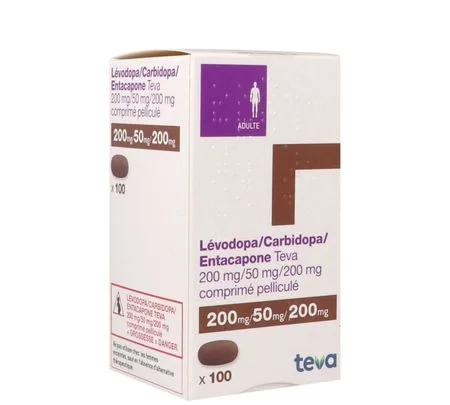
Brown, oblong, biconvex tablet, marked with a score line on one side, the other side being smooth and approximately 17 x 9 mm in size.
Composition
Levodopa......................................................................................................................................................200 mg
Carbidopa.......................................................................................................................................................50 mg
Entacapone..................................................................................................................................................200 mg
For a film-coated tablet.
Excipient with known effect:
Each film-coated tablet contains 80 mg of lactose.
For the full list of excipients, see section Composition.
Tablet core :
Microcrystalline cellulose, lactose, low-substituted hyprolose, povidone (K-30), anhydrous colloidal silica, magnesium stearate.
Film coating :
Titanium dioxide (E171), hypromellose, glycerol (E422), yellow iron oxide (E172), polysorbate 80, red iron oxide (E172), black iron oxide (E172), magnesium stearate.
Indications
LEVODOPA/CARBIDOPA/ENTACAPONE TEVA is indicated for the treatment of adult patients with Parkinson's disease and end-of-dose motor fluctuations that cannot be stabilised with levodopa/dopa decarboxylase (DDC) inhibitor combination.
Dosage and administration
Dosage
The optimal daily dose must be determined by careful adjustment of levodopa in each patient. The daily dose should be optimised preferably using one of the seven current tablet strengths (50 mg/12,5 mg/200 mg, 75 mg/18,75 mg/200 mg, 100 mg/25 mg/ 200 mg, 125 mg/31,25 mg/200 mg, 150 mg/37,5 mg/200 mg, 175 mg/43,75 mg/200 mg or 200 mg/ 50 mg/200 mg of levodopa/carbidopa/entacapone).
Patients should be instructed to take only one tablet of LEVODOPA/CARBIDOPA/ENTACAPONE TEVA per dose. Patients receiving less than 70-100 mg of carbidopa per day are more likely to experience nausea and vomiting. Although there is little experience with total daily doses above 200 mg of carbidopa, the recommended maximum daily dose of entacapone is 2000 mg and, consequently, the maximum dose is 10 tablets per day for the 50 mg/12,5 mg/200 mg, 75 mg/18,75 mg/200 mg, 100 mg/25 mg/200 mg, 125 mg/31,25 mg/200 mg and 150 mg/37,5 mg/200 mg strengths. Ten tablets of LEVODOPA/CARBIDOPA/ENTACAPONE TEVA 150 mg/37,5 mg/200 mg correspond to 375 mg of carbidopa per day. Because of this quantity, the recommended maximum dose of LEVODOPA/CARBIDOPA/ENTACAPONE TEVA 175 mg/43,75 mg/200 mg is 8 tablets per day and the recommended maximum dose of LEVODOPA/CARBIDOPA/ENTACAPONE TEVA 200 mg/50 mg/200 mg is 7 tablets per day.
In general, LEVODOPA/CARBIDOPA/ENTACAPONE TEVA should be used in patients treated with equivalent doses of immediate-release levodopa/DDC inhibitor and entacapone formulations.
How to switch patients taking levodopa/DDC inhibitor (carbidopa or benserazide) combinations and entacapone tablets to LEVODOPA/CARBIDOPA/ENTACAPONE TEVA
a. Patients taking entacapone and an immediate-release levodopa/carbidopa formulation at doses equivalent to the LEVODOPA/CARBIDOPA/ENTACAPONE TEVA strengths may be switched directly to the corresponding LEVODOPA/CARBIDOPA/ENTACAPONE TEVA tablets.
For example, a patient taking one 50 mg/12,5 mg levodopa/carbidopa tablet and one 200 mg entacapone tablet four times daily may take one LEVODOPA/CARBIDOPA/ENTACAPONE TEVA 50 mg/12,5 mg/200 mg tablet four times daily in place of their usual doses of levodopa/carbidopa and entacapone.
b. For initiation of LEVODOPA/CARBIDOPA/ENTACAPONE TEVA in patients taking entacapone and levodopa/carbidopa at doses that differ from the LEVODOPA/CARBIDOPA/ENTACAPONE TEVA tablet strengths 50 mg/12,5 mg/200 mg (or 75 mg/18,75 mg/200 mg or 100 mg/25 mg/200 mg or 125 mg/31,25 mg/200 mg or 150 mg/37,5 mg/200 mg or 175 mg/43,75 mg/200 mg or 200 mg/50 mg/200 mg), the dose of the latter should be adjusted carefully so as to optimise the clinical response. At the start of treatment, LEVODOPA/CARBIDOPA/ENTACAPONE TEVA should be adjusted so as to be as close as possible to the daily dose of levodopa currently being used.
c. For initiation of LEVODOPA/CARBIDOPA/ENTACAPONE TEVA in patients taking entacapone and an immediate-release levodopa/benserazide formulation, administration of levodopa/benserazide should be stopped the previous night and LEVODOPA/CARBIDOPA/ENTACAPONE TEVA started the following morning. The starting dose of LEVODOPA/CARBIDOPA/ENTACAPONE TEVA should provide the same amount of levodopa or slightly more (5-10 %).
How to switch to LEVODOPA/CARBIDOPA/ENTACAPONE TEVA in patients not currently taking entacapone
Initiation of treatment with LEVODOPA/CARBIDOPA/ENTACAPONE TEVA at doses corresponding to the current treatment may be considered in certain patients with Parkinson's disease and end-of-dose motor fluctuations who are not stabilised on their immediate-release levodopa/DDC inhibitor formulation. However, it is preferable to avoid switching directly from the levodopa/DDC inhibitor combination to LEVODOPA/CARBIDOPA/ENTACAPONE TEVA in patients presenting with dyskinesias or whose daily levodopa dose is greater than 800 mg. In these patients, it is preferable to introduce entacapone separately (entacapone tablets) and possibly adjust the levodopa dose before switching to LEVODOPA/CARBIDOPA/ENTACAPONE TEVA.
Entacapone potentiates the effects of levodopa. It may therefore be necessary, especially in patients presenting with dyskinesias, to reduce the levodopa dosage by 10-30 % during the first days or first weeks following the start of treatment with LEVODOPA/CARBIDOPA/ENTACAPONE TEVA. The daily levodopa dose may be decreased by lengthening the interval between doses and/or by reducing the amount of levodopa per dose, depending on the patient's clinical condition.
Dose adjustment during treatment
When a higher dose of levodopa is required, consideration should be given to increasing the frequency of doses and/or using another strength of LEVODOPA/CARBIDOPA/ENTACAPONE TEVA following the dosage recommendations.
If less levodopa is required, the total daily dose of LEVODOPA/CARBIDOPA/ENTACAPONE TEVA must be decreased, either by reducing the frequency of intakes by lengthening the interval between them, or by decreasing the strength of LEVODOPA/CARBIDOPA/ENTACAPONE TEVA per intake.
If other forms of levodopa are taken at the same time as a tablet of LEVODOPA/CARBIDOPA/ENTACAPONE TEVA, the recommendations for maximum dosage should be followed.
Discontinuation of treatment with LEVODOPA/CARBIDOPA/ENTACAPONE TEVA: If treatment with LEVODOPA/CARBIDOPA/ENTACAPONE TEVA is discontinued and the patient has been switched to a levodopa/DDC inhibitor combination without entacapone, it is necessary to adjust the dosage of other antiparkinsonian treatments, levodopa in particular, so as to achieve an adequate level of control of parkinsonian symptoms.
Paediatric population : The safety and efficacy of levodopa/carbidopa/entacapone in children under 18 years of age have not been established. No data are available.
Elderly : No dosage adjustment of LEVODOPA/CARBIDOPA/ENTACAPONE TEVA is necessary in elderly patients.
Hepatic impairment : Caution is recommended when administering LEVODOPA/CARBIDOPA/ENTACAPONE TEVA to patients with mild to moderate hepatic impairment. A dose reduction may be necessary (see section Pharmacokinetics).
In cases of severe hepatic impairment, see section Contraindications.
Renal impairment : Renal impairment does not alter the pharmacokinetics of entacapone.
No specific study has been carried out on the pharmacokinetics of levodopa and carbidopa in patients with renal impairment, and caution is therefore required when administering to patients with severe renal impairment, including those undergoing dialysis (see section Pharmacokinetics).
Method of administration
The tablets must be administered orally, during or outside meals (see section Pharmacokinetics). One tablet corresponds to one dose and must under no circumstances be divided.
Contraindications
• Hypersensitivity to the active substances or to any of the excipients listed in section Composition.
• Severe hepatic impairment.
• Angle-closure glaucoma.
• Pheochromocytoma.
• Combination with non-selective monoamine oxidase inhibitors (MAO-A and MAO-B) (for example, phenelzine, tranylcypromine).
• Combination with a selective MAO-A inhibitor and a selective MAO-B inhibitor (see section Interactions).
• History of neuroleptic malignant syndrome (NMS) and/or non-traumatic rhabdomyolysis.
Warnings and precautions
• LEVODOPA/CARBIDOPA/ENTACAPONE TEVA is not recommended for the treatment of drug-induced extrapyramidal syndromes.
• Levodopa/carbidopa/entacapone should be administered with caution to patients with ischaemic heart disease, severe cardiovascular or pulmonary disorders, asthma, renal or endocrine disorders, or with a history of gastroduodenal ulcer or convulsions.
• In patients with a history of myocardial infarction presenting with residual atrial, nodal or ventricular rhythm disorders, cardiac function should be closely monitored during the period of initial dose adjustments.
• All patients treated with LEVODOPA/CARBIDOPA/ENTACAPONE TEVA must be closely monitored for changes in their mental state, depression with suicidal ideation and other serious antisocial behaviours. Patients with a history of psychosis or a current psychotic episode must be treated with caution.
• Concomitant administration of dopamine receptor-blocking antipsychotics, in particular D2, requires caution and the patient must be closely monitored for loss of the antiparkinsonian effect or worsening of parkinsonian symptoms.
• Patients with chronic open-angle glaucoma may be treated with LEVODOPA/CARBIDOPA/ENTACAPONE TEVA with caution, if intra-ocular pressure is well controlled, and regular monitoring for variations in intra-ocular pressure must be carried out.
• LEVODOPA/CARBIDOPA/ENTACAPONE TEVA may cause orthostatic hypotension. LEVODOPA/CARBIDOPA/ENTACAPONE TEVA must therefore be administered with caution to patients taking other medicinal products likely to cause orthostatic hypotension.
• In combination with levodopa, entacapone has been associated with drowsiness and episodes of sudden onset of sleep in patients with Parkinson's disease, and caution is therefore advised when driving vehicles or using machines (see section Driving and using machines).
• In clinical studies, undesirable dopaminergic reactions, dyskinesias for example, were more frequent in patients receiving entacapone combined with dopamine agonists (such as bromocriptine), selegiline or amantadine than in those receiving a combination with placebo. Adjustment of the doses of other antiparkinsonian agents may be necessary when switching to levodopa/carbidopa/entacapone in a patient not treated with entacapone.
• Rare cases of rhabdomyolysis secondary to severe dyskinesias or to neuroleptic malignant syndrome (NMS) have been observed in patients with Parkinson's disease. Consequently, any sudden dose reduction or abrupt withdrawal of levodopa must be closely monitored, particularly in patients also receiving neuroleptics. NMS, with rhabdomyolysis and hyperthermia, is characterised by motor symptoms (rigidity, myoclonus, tremor), mental disorders (for example agitation, mental confusion, coma), hyperthermia, autonomic disorders (tachycardia, blood pressure variation) and elevated serum creatine phosphokinase. Depending on the case, only some of these symptoms and/or biological abnormalities may appear. Early diagnosis is essential for appropriate treatment of NMS. A syndrome resembling neuroleptic malignant syndrome, with muscular rigidity, hyperthermia, mental disorders and elevated serum creatine phosphokinase, has been reported in association with abrupt withdrawal of antiparkinsonian agents. No cases of NMS or entacapone-related rhabdomyolysis have been reported in controlled trials upon abrupt withdrawal of entacapone. Since the introduction of entacapone onto the market, isolated cases of NMS have been reported, particularly following a sudden dose reduction or abrupt withdrawal of entacapone and other dopaminergic medicinal products. If necessary, replacement of LEVODOPA/CARBIDOPA/ENTACAPONE TEVA with levodopa/DDC inhibitor without entacapone or with another dopaminergic treatment must be carried out gradually, and an increase in the levodopa dose may be necessary.
• If general anaesthesia must be performed, levodopa/carbidopa/entacapone may be continued for as long as the patient is permitted to take liquids and oral medicinal products. If treatment must be temporarily interrupted, LEVODOPA/CARBIDOPA/ENTACAPONE TEVA may be restarted at the previous dose as soon as oral treatment can be resumed.
• Regular monitoring of hepatic, haematopoietic, cardiovascular and renal function is recommended during prolonged treatment with LEVODOPA/CARBIDOPA/
• ENTACAPONE TEVA.
• For patients presenting with diarrhoea, weight monitoring is recommended in order to avoid potential excessive weight loss. Prolonged or persistent diarrhoea occurring during entacapone intake may be a sign of colitis. In cases of prolonged or persistent diarrhoea, the medicinal product must be discontinued and appropriate medical treatment and investigations should be considered.
• Patients must be regularly monitored for the appearance of impulse control disorders. Patients and carers must be informed that impulse control disorders including pathological gambling, increased libido, hypersexuality, compulsive spending or buying, excessive eating and compulsive eating may occur in patients treated with dopamine agonists and/or other levodopa-containing dopaminergic treatments such as LEVODOPA/CARBIDOPA/ENTACAPONE TEVA. A review of treatment is recommended if such symptoms occur.
• Dopamine Dysregulation Syndrome (DDS) is an addictive disorder resulting in
misuse of the product, observed in some patients treated with carbidopa/levodopa.
Before initiating treatment, patients and carers must be warned of the potential risk
of developing DDS (see also section Adverse effects).
• In patients presenting with progressive anorexia, asthenia and weight loss over a relatively short period, a general medical examination, including an assessment of hepatic function, should be considered.
• Levodopa/carbidopa may give false positive results for ketone bodies on urine dipstick testing, and this reaction is not altered by boiling the urine sample. The use of glucose oxidase-based methods may give false negative results for glycosuria.
• LEVODOPA/CARBIDOPA/ENTACAPONE TEVA contains lactose. Patients with galactose intolerance, total lactase deficiency or glucose-galactose malabsorption syndrome (rare hereditary disorders) must not take this medicinal product.
Interactions
Other antiparkinsonian agents: To date, there are no data on a potential interaction when conventional antiparkinsonian agents are used concomitantly with levodopa/carbidopa/entacapone.
High doses of entacapone may affect the absorption of carbidopa. However, no interaction has been observed with the recommended dosage regimen (200 mg of entacapone up to 10 times a day). Studies of interactions between entacapone and selegiline in repeated-dose studies conducted in patients with Parkinson's disease treated with levodopa/DDC inhibitor were negative. In combination with LEVODOPA/ CARBIDOPA/ENTACAPONE TEVA, the daily dose of selegiline must not exceed 10 mg.
Caution is advised when the following active substances are combined with levodopa:
Antihypertensives: symptomatic orthostatic hypotension may occur when levodopa is added to the treatment of patients already taking antihypertensives. Adjustment of the dose of the antihypertensive agent may be necessary.
Antidepressants: A few rare cases of reaction involving high blood pressure and dyskinesias have been reported with concomitant use of tricyclic antidepressants and levodopa/carbidopa. Single-dose studies in healthy volunteers investigated possible interactions between entacapone and imipramine, and between entacapone and moclobemide. No pharmacodynamic interaction was observed. A large number of patients with Parkinson's disease have been treated with a combination of levodopa, carbidopa and entacapone plus various active substances, including MAO-A inhibitors, tricyclic antidepressants, noradrenaline reuptake inhibitors such as desipramine, maprotiline and venlafaxine, as well as drugs metabolised by COMT (for example, substances with a catechol structure, paroxetine). No pharmacodynamic interaction was observed. Caution is nevertheless advised when these medicines are used concomitantly with LEVODOPA/CARBIDOPA/ENTACAPONE TEVA (see sections Contraindications and Warnings and precautions).
Other active substances: Dopaminergic antagonists (for example, certain antipsychotics and antiemetics), phenytoin and papaverine may reduce the therapeutic effect of levodopa. Patients taking these medicines and LEVODOPA/CARBIDOPA/ENTACAPONE TEVA should be closely monitored for loss of therapeutic response.
Given the affinity in vitro of entacapone for the 2C9 isoform of cytochrome P450 (see section Pharmacokinetics), LEVODOPA/CARBIDOPA/ENTACAPONE TEVA may possibly interfere with active substances whose metabolism depends on this isoenzyme, S-warfarin for example. However, in an interaction study conducted in healthy volunteers, entacapone did not change plasma levels of S-warfarin, whereas the AUC of R-warfarin increased on average by 18% [CI90 11-26%]. INR values increased on average by 13% [CI90 6-19%]. INR monitoring is therefore recommended when LEVODOPA/ CARBIDOPA/ENTACAPONE TEVA is introduced in patients receiving warfarin.
Other forms of interactions: As levodopa competes with certain amino acids, absorption of LEVODOPA/CARBIDOPA/ENTACAPONE TEVA may be impaired in some patients on a high-protein diet.
Levodopa and entacapone may form chelates with iron in the digestive tract. LEVODOPA/CARBIDOPA/ENTACAPONE TEVA and iron preparations should therefore be taken at least 2-3 hours apart (see section Adverse effects).
In vitro data: Entacapone binds to site II of human albumin binding, which also binds several other medicines, including diazepam and ibuprofen. According to studies in vitro, no significant displacement is expected to occur at therapeutic drug concentrations. Consequently, no such interaction has been reported to date.
Fertility, pregnancy and breastfeeding
Pregnancy
There are no sufficiently relevant data on the use of the combination of levodopa/carbidopa/entacapone in pregnant women. Animal studies have demonstrated reproductive toxicity of the various components (see section Preclinical safety). The potential clinical risk is not known.
LEVODOPA/CARBIDOPA/ENTACAPONE TEVA must not be used during pregnancy, unless its benefits to the mother outweigh the potential risks to the foetus.
Breast-feeding
Levodopa is excreted in breast milk. Breastfeeding has been shown to be inhibited during treatment with levodopa. Carbidopa and entacapone have been excreted in breast milk in animals, but it is not known whether this is also the case in humans. The safety of levodopa, carbidopa and entacapone in the newborn has not been established. Women must not breastfeed during treatment with LEVODOPA/CARBIDOPA/ENTACAPONE TEVA.
Fertility
No effects on fertility were observed in preclinical studies with entacapone, carbidopa or levodopa alone. Fertility studies in animals have not been conducted with the combination of entacapone, levodopa and carbidopa.
Driving and using machines
LEVODOPA/CARBIDOPA/ENTACAPONE TEVA is likely to have a major influence on the ability to drive vehicles and use machines. In combination, levodopa, carbidopa and entacapone may cause dizziness and symptomatic orthostatic hypotension. Caution is therefore recommended when driving vehicles or using machines.
Patients treated with LEVODOPA/CARBIDOPA/ENTACAPONE TEVA who experience somnolence and/or episodes of sudden onset sleep must be informed that they must not drive vehicles or engage in activities where impaired alertness could expose them or others to a risk of serious injury or death (for example, operating machinery) until these recurrent episodes resolve (see section Warnings and precautions).
Adverse effects
a. Summary of the safety profile
The most frequently reported adverse reactions during treatment with levodopa/carbidopa/entacapone are: dyskinesia, in approximately 19 % of patients; gastrointestinal symptoms, notably nausea and diarrhoea, in respectively nearly 15 % and 12 % of patients; muscle, musculoskeletal and connective tissue pain, in approximately 12 % of patients; and finally, brownish-red discolouration of the urine that is not clinically significant (chromaturia), in approximately 10 % of patients. Serious events, such as gastrointestinal haemorrhage (uncommon) and angioedema (rare), occurred during clinical trials with levodopa/carbidopa/entacapone or entacapone associated with levodopa/DDC inhibitor. Severe hepatitis, mainly of the cholestatic type, rhabdomyolysis and neuroleptic malignant syndrome may occur under levodopa/carbidopa/entacapone, although no cases were identified among the clinical trial data.
b. Tabulated list of adverse reactions
Table 1 below lists the adverse reactions, derived from pooled data from eleven double-blind clinical trials involving 3 230 patients (1 810 treated with levodopa/carbidopa/entacapone or entacapone associated with levodopa/DDC inhibitor, and 1 420 patients who received a placebo associated with levodopa/DDC inhibitor or cabergoline associated with levodopa/DDC inhibitor), and from pharmacovigilance data collected since the marketing authorisation of entacapone associated with levodopa/DDC inhibitor.
Adverse reactions are classified in decreasing order of frequency, using the following conventions: Very common (≥ 1/10); common (≥ 1/100 to < 1/10); uncommon (≥ 1/1 000 to < 1/100); rare (≥ 1/10 000 to < 1/1 000); very rare (< 1/10 000); frequency not known (cannot be estimated from the available data, since no valid estimate can be made on the basis of clinical or epidemiological studies).
Table 1. Adverse effects
Blood and lymphatic system disorders
Common: Anaemia
Uncommon: Thrombocytopenia
Metabolism and nutrition disorders
Common: Weight loss*, loss of appetite*
Psychiatric disorders
Common: Depression, hallucinations, mental confusion*, abnormal dreams*, anxiety, insomnia
Uncommon: Psychosis, agitation*
Not known: Suicidal behaviour, dopamine dysregulation syndrome
Nervous system disorders
Very common: Dyskinesia*
Common: Worsening of extrapyramidal syndrome (bradykinesia, for example)*, tremor, on-off phenomenon, dystonia, mental disorders (memory disorders, dementia, for example), somnolence, dizziness*, headache
Not known: Neuroleptic malignant syndrome*
Eye disorders
Common: Blurred vision
Cardiac disorders
Common: Manifestations of ischaemic heart disease other than myocardial infarction (angina, for example)**, cardiac arrhythmias
Uncommon: Myocardial infarction**
Vascular disorders
Common: Orthostatic hypotension, arterial hypertension
Uncommon: Gastrointestinal haemorrhage
Respiratory, thoracic and mediastinal disorders
Common: Dyspnoea
Gastrointestinal disorders
Very common: Diarrhoea*, nausea*
Common: Constipation*, vomiting*, dyspepsia, abdominal pain and discomfort*, dry mouth*
Uncommon: Colitis*, dysphagia
Hepatobiliary disorders
Uncommon: Abnormal liver function tests*
Not known: Hepatitis with predominantly cholestatic pattern (see section Warnings and precautions)*
Skin and subcutaneous tissue disorders
Common: Skin rash*, hyperhidrosis
Uncommon: Discolouration other than of urine (skin, nails, hair, sweat, for example)*
Rare: Angioedema
Not known: Urticaria*
Musculoskeletal and systemic disorders
Very common: Muscle pain, musculoskeletal and connective tissue pain*
Common: Muscle spasms, arthralgia
Not known: Rhabdomyolysis*
Renal and urinary disorders
Very common: Chromaturia*
Common: Urinary tract infection
Uncommon: Urinary retention
General disorders and administration site conditions
Common: Chest pain, peripheral oedema, falls, gait disturbances, asthenia, fatigue
Uncommon: Malaise
* Adverse effects mainly attributable to entacapone or more frequent (difference of at least 1% between clinical trial data) with entacapone than with levodopa/DDC inhibitor alone.
See paragraph c.
** The incidences of myocardial infarction and other manifestations of ischaemic heart disease (0,43% and 1,54% respectively) derive from an analysis of 13 double-blind studies involving 2 082 patients with end-of-dose motor fluctuations receiving entacapone.
c. Description of selected adverse reactions
Table 1 of section Adverse effectsb indicates with an asterisk the adverse effects mainly attributable to entacapone or more frequent with entacapone than with levodopa/DDC inhibitor alone. Some of these effects are linked to increased dopaminergic activity (dyskinesias, nausea and vomiting, for example) and most often occur at the beginning of treatment. Reducing the levodopa dose decreases the severity and frequency of these dopaminergic reactions. A few rare adverse effects are directly attributable to entacapone, the active substance, such as diarrhoea and reddish-brown discolouration of urine. In some cases, entacapone may also cause discolouration of the skin, nails, hair and sweat. The other adverse effects marked with an asterisk in table 1 of section Adverse effectsb reflect a higher frequency (difference of at least 1% between entacapone and levodopa/DDC inhibitor alone) observed in clinical trials or individual case reports of tolerability (pharmacovigilance) received after entacapone was placed on the market.
Convulsions have rarely been reported with levodopa/carbidopa; however, no cause-and-effect relationship has been established with this treatment.
Impulse control disorders: Pathological gambling, increased libido, hypersexuality, compulsive spending or buying, excessive eating and compulsive eating may occur in patients treated with dopamine agonists and/or other dopaminergic treatments containing levodopa such as LEVODOPA/CARBIDOPA/ENTACAPONE TEVA (see section Warnings and precautions).
Dopamine dysregulation syndrome (DDS) is an addictive disorder observed in
some patients treated with carbidopa/levodopa. Patients with such a syndrome show
compulsive misuse of the dopaminergic medicinal product beyond the doses needed
to control motor symptoms, which may in some cases lead to dyskinesias
severe in particular (see also section Warnings and precautions).
Administered with levodopa, entacapone has been associated with isolated cases of excessive daytime sleepiness and episodes of narcolepsy.
Reporting of suspected adverse reactions
Reporting suspected adverse reactions after authorisation of the medicinal product is important. It allows continued monitoring of the benefit/risk balance of the medicinal product. Healthcare professionals are asked to report any suspected adverse reactions via the national reporting system: National Agency for the Safety of Medicines and Health Products (ANSM) and the network of Regional Pharmacovigilance Centres - Website: https://signalement.social-sante.gouv.fr/
Overdose
Post-marketing data include isolated cases of overdose, in which the maximum reported daily doses of levodopa and entacapone exceeded 10 000 mg and 40 000 mg, respectively.
The acute signs and symptoms of these overdose cases were the following: agitation, confusion, coma, bradycardia, ventricular tachycardia, Cheyne-Stokes respiration, changes in colouration of the skin, tongue and conjunctiva, and chromaturia. The treatment of an acute overdose of levodopa/carbidopa/entacapone is the same as that of an acute overdose of levodopa. However, pyridoxine does not manage to inhibit the effects of levodopa/carbidopa/entacapone.
Hospitalisation is recommended and general supportive measures must be taken: immediate gastric lavage and repeated administration of charcoal. These measures may accelerate the elimination of entacapone, in particular by reducing its absorption and gastrointestinal reabsorption. The respiratory, circulatory and renal function parameters must be carefully monitored and appropriate supportive measures taken. ECG monitoring is necessary and the patient must be closely monitored for possible cardiac rhythm disturbances.
If necessary, appropriate treatment must be instituted. It should be considered that the patient may have taken other active substances in addition to LEVODOPA/CARBIDOPA/ENTACAPONE TEVA. The usefulness of dialysis in the treatment of overdose has not been established.
Pharmacodynamics
Pharmacotherapeutic class: antiparkinsonian agents, dopa and dopa derivatives, ATC code: N04BA03.
According to current knowledge, the symptoms of Parkinson's disease are related to a dopamine deficiency in the striatum. Dopamine does not cross the blood-brain barrier. Levodopa, the precursor of dopamine, crosses this barrier and alleviates the symptoms of the disease. Due to the extensive peripheral metabolism of levodopa, only a small fraction of a given dose reaches the central nervous system when levodopa is administered without inhibitors of metabolic enzymes.
Carbidopa and benserazide are peripheral DDC inhibitors that reduce the peripheral conversion of levodopa to dopamine, so that a greater quantity of levodopa is available for the brain. When decarboxylation of levodopa is reduced by co-administration of a DDC inhibitor, a lower dose of levodopa can be used, which reduces the frequency of adverse effects such as nausea.
With decarboxylase inhibition by a DDC inhibitor, catechol-O-methyltransferase (COMT) becomes the main peripheral metabolic pathway catalysing the conversion of levodopa to 3-O-methyldopa (3-OMD), a potentially harmful metabolite of levodopa. Entacapone is a specific, reversible COMT inhibitor acting essentially in the periphery, designed to be associated with levodopa. Entacapone slows the blood clearance of levodopa, resulting in an increase in the area under the curve (AUC) of the pharmacokinetic profile of levodopa. The clinical response to each dose of levodopa is therefore enhanced and prolonged.
The evidence for the therapeutic effects of levodopa/carbidopa/entacapone is based on two phase III, double-blind studies in which 376 patients with Parkinson's disease and end-of-dose motor fluctuations received entacapone or placebo with each dose of levodopa/DDC inhibitor. The daily duration of ON periods with and without entacapone was recorded in daily diaries kept at home by the patients. In the first study, entacapone increased the mean daily ON time by 1 h 20 min (CI95 % 45 min, 1 h 56 min) compared with baseline, corresponding to an increase of 8,3 % in the proportion of daily ON periods. The corresponding decrease in daily OFF periods was 24 % in the entacapone group and 0 % in the placebo group. In the second study, the mean percentage of daily ON periods increased by 4,5 % (CI95 % 0,93 % ; 7,97 %) compared with baseline, which resulted in a mean increase of 35 min in daily ON periods. Consequently, daily OFF periods decreased by 18 % with entacapone and by 5 % with placebo. As the effects of levodopa/carbidopa/entacapone tablets are equivalent to those of entacapone tablets at 200 mg administered together with immediate-release carbidopa/levodopa marketed formulations, at equivalent doses, these results may also be used to describe the effects of levodopa/carbidopa/entacapone.
Pharmacokinetics
General characteristics of the active substances
Absorption/distribution : There are considerable inter- and intra-individual variations in the absorption of levodopa, carbidopa and entacapone. Levodopa and entacapone are rapidly absorbed and eliminated. Carbidopa is absorbed and eliminated somewhat more slowly than levodopa.
When administered separately, without the other two active substances, the bioavailability of levodopa is 15-33 %, that of carbidopa is 40-70 % and that of entacapone is 35 % after an oral dose of 200 mg. Meals rich in large neutral amino acids may delay and reduce the absorption of levodopa. Food does not significantly change the absorption of entacapone. The volume of distribution of levodopa (Vd 0,36-1,6 l/kg) and of entacapone (Vdss 0,27 l/kg) is relatively low, whereas no data are available for carbidopa.
Levodopa is only weakly bound to plasma proteins (approximately 10-30%); the binding of carbidopa is of the order of 36%, while entacapone is strongly bound to plasma proteins (approximately 98%), essentially serum albumin. At therapeutic concentrations, entacapone does not displace other strongly bound active substances (for example warfarin, salicylic acid, phenylbutazone or diazepam) and it is not significantly displaced by any of these substances at therapeutic or higher concentrations.
Biotransformation and elimination : Levodopa is extensively degraded into various metabolites, the main pathways being decarboxylation by dopa decarboxylase (DDC) and O-methylation by catechol-O-methyltransferase (COMT).
Carbidopa is metabolised into two main metabolites which are excreted in the urine in the form of glucuronides and unconjugated compounds. Unchanged carbidopa represents 30% of total urinary excretion.
Entacapone is almost entirely metabolised before being excreted via the urine (10 to 20%) or via the bile (80 to 90%). The main metabolic pathway is glucuroconjugation of entacapone and of its active metabolite, the cis isomer, which represents approximately 5% of the total plasma quantity.
The total clearance of levodopa is of the order of 0,55-1,38 l/kg/h and that of entacapone of the order of 0,70 l/kg/h. The elimination half-life (t1/2The elimination half-life (t) is 0,6-1,3 hours for levodopa, 2-3 hours for carbidopa and 0,4-0,7 hours for entacapone, all three being administered separately.
Due to the short elimination half-lives, no true accumulation of levodopa or entacapone occurs with repeated administration.
Results of in vitro studies using human liver microsome preparations indicate that entacapone inhibits the 2C9 isoform of cytochrome P450 (IC50 ~ 4 μM). Entacapone induced little or no inhibition of the other P450 isoenzyme types (CYP1A2, CYP2A6, CYP2D6, CYP2E1, CYP3A and CYP2C19) (see section Interactions).
Characteristics in particular populations
Elderly : In the absence of carbidopa and entacapone, levodopa absorption is greater and its elimination is slower in elderly subjects than in young patients. However, after co-administration of carbidopa with levodopa, the absorption of the latter is identical in elderly and young patients, but the AUC remains 1,5 times higher in elderly patients due to decreased DDC activity and decreased clearance associated with ageing. No significant difference in the AUC of carbidopa and entacapone was observed between young patients (45-64 years) and elderly patients (65-75 years).
Sex : The bioavailability of levodopa is significantly greater in women than in men. In studies of the pharmacokinetics of levodopa/carbidopa/entacapone, the bioavailability of levodopa is greater in women than in men, essentially due to the difference in body weight, whereas there is no sex-related difference for carbidopa and entacapone.
Hepatic impairment : The metabolism of entacapone is slowed in patients with mild to moderate hepatic impairment (Child-Pugh classes A and B), resulting in an increase in its plasma concentration during the absorption and elimination phases (see sections Dosage and administration and Contraindications).
No specific study of the pharmacokinetic parameters of carbidopa and levodopa has been reported in patients with hepatic impairment, but caution is advised when administering levodopa/carbidopa/entacapone to patients with mild or moderate hepatic impairment.
Renal impairment : Renal impairment does not alter the pharmacokinetics of entacapone. No particular study of the pharmacokinetics of levodopa and carbidopa has been carried out in patients with renal impairment. It is, however, possible to consider lengthening the interval between doses in patients on levodopa/carbidopa/entacapone undergoing dialysis (see section Dosage and administration).
Preclinical safety
Non-clinical data from conventional safety pharmacology, repeated-dose toxicity, genotoxicity and carcinogenic potential studies of levodopa, carbidopa and entacapone, evaluated alone or in combination, did not reveal any particular risk for humans. Studies of toxicity after repeated administration of entacapone revealed anaemia, most likely due to the iron-chelating properties of this molecule. Regarding the reproductive toxicity of entacapone, a decrease in foetal weight and a slight delay in bone development were observed in rabbits exposed to systemic levels close to therapeutic concentrations. Levodopa and carbidopa/levodopa combinations caused visceral and skeletal malformations in rabbits.
SPECIAL PRECAUTIONS FOR DISPOSAL AND OTHER HANDLING
Any unused medicinal product or waste material should be disposed of in accordance with local requirements.
Prescription, supply and reimbursement
| Marketing authorisation (AMM) |
|
| Price: |
|
- Indication(s) appearing in the marketing authorisation at the date of publication of this decree
Collection.
COEUR DEFENSE 100-110 ESPLANADE DU GAL DE GAULLE
92931 PARIS LA DEFENSE CEDEX
Tel: 01 55 91 78 00 www.teva-sante.fr
Source: VIDAL · Updated on 11/11/2026. This information does not replace advice from a healthcare professional.