
Medicines
Update of 01/02/2025
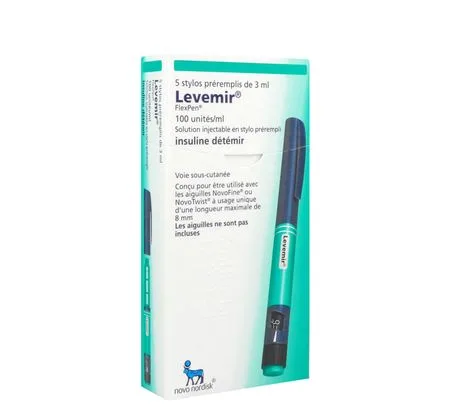
LEVEMIR®
insulin detemir
Forms and presentations
SC injectable solution at 100 units/ml (clear, colourless and aqueous):Cartridges (Penfill) of 3 ml, box of 5.
Cartridges of 3 ml in disposable multi-dose prefilled pen (FlexPen or InnoLet), box of 5.
Composition
| p cartridge or p pen | |
| Insulin detemir*
|
300 units |
1 ml of solution contains 100 units of insulin detemir (equivalent to 14,2 mg).
* Insulin detemir is produced in Saccharomyces cerevisiae by recombinant DNA technology.Indications
Levemir is indicated in the treatment of diabetes in adults, adolescents and children from 1 year of age.Dosage and administration
DosageThe insulin content of insulin analogues, including insulin detemir, is expressed in units, whereas the insulin content of human insulin is expressed in international units. 1 unit of insulin detemir corresponds to 1 international unit of human insulin.
Levemir can be used alone as a basal insulin or in combination with a bolus insulin. Levemir can also be used in combination with oral antidiabetics and/or GLP-1 receptor agonists.
When Levemir is used in combination with oral antidiabetics or as an add-on to GLP-1 receptor agonists, it is recommended to use Levemir once daily, initially at a dose of 0,1-0,2 units/kg or 10 units in adult patients. The dose of Levemir must be adjusted according to the individual needs of the patient.
When a GLP-1 receptor agonist is added to Levemir, it is recommended to reduce the dose of Levemir by 20% in order to minimise the risk of hypoglycaemia. Subsequently, the dose should be adjusted individually.
It is advised to follow the following two titration recommendations for individual dose adjustment in adults :
| Mean self-monitored blood glucose before breakfast | Adjustment of Levemir dose |
| > 10,0 mmol/l (180 mg/dl) | + 8 units |
| 9,1-10,0 mmol/L (163-180 mg/dL) | + 6 units |
| 8,1-9,0 mmol/L (145-162 mg/dL) | + 4 units |
| 7,1-8,0 mmol/L (127-144 mg/dL) | + 2 units |
| 6,1-7,0 mmol/L (109-126 mg/dL) | + 2 units |
| 4,1-6,0 mmol/L (73-108 mg/dL) | No dose change (target) |
| If a single self-monitored blood glucose result is: | |
| 3,1-4,0 mmol/L (56-72 mg/dL) | - 2 units |
| < 3,1 mmol/L (< 56 mg/dL) | - 4 units |
| Mean self-monitored blood glucose before breakfast | Adjustment of Levemir dose |
| > 6,1 mmol/L (> 110 mg/dL) | + 3 units |
| 4,4-6,1 mmol/L (80-110 mg/dL) | No dose change (target) |
| < 4,4 mmol/L (< 80 mg/dL) | - 3 units |
When Levemir is used as part of a basal-bolus regimen, Levemir should be administered once or twice daily depending on the patient's needs. The dose of Levemir should be adjusted individually.
A dose adjustment may be necessary if the patient increases physical activity, changes their usual diet or in case of concomitant illness.
Patients should be informed of the signs of hypoglycaemia when adjusting their dose in order to improve their glycaemic control.
- Elderly subjects (≥ 65 years):
- Levemir may be used in elderly patients. Glycaemic control should be intensified and the dose of Levemir should be adjusted individually in elderly patients.
- Renal or hepatic impairment:
- Renal or hepatic impairment may reduce the patient's insulin requirements.
- Glycaemic control should be intensified and the dose of Levemir should be adjusted individually in patients with renal or hepatic impairment.
- Paediatric population:
- Levemir may be used in adolescents and children from 1 year (see Pharmacodynamics). When switching from basal insulin to Levemir, a reduction in the basal and bolus insulin dose should be considered on an individual basis in order to reduce the risk of hypoglycaemia (see Warnings and Precautions for Use).
- Intensified glycaemic control and individual dose adjustment of Levemir are necessary in children and adolescents.
- The safety and efficacy of Levemir in children under the age of 1 year have not been established. No data are available.
When replacing other intermediate-acting or long-acting insulins, an adjustment of the dose and timing of administration may be necessary (see Warnings and Precautions for Use).
Close blood glucose monitoring is recommended during the change of treatment and during the first weeks (see Warnings and Precautions for Use).
Adjustment of concomitant antidiabetic treatment (dose and/or timing of administration of oral antidiabetics or short/rapid-acting insulins) may be necessary.
Method of administration:
Levemir is a long-acting insulin analogue used as a basal insulin. Levemir must be administered by subcutaneous route only. Levemir must not be administered intravenously due to the risk of severe hypoglycaemia. Intramuscular administration should also be avoided. Levemir must not be used in insulin infusion pumps.
Levemir is administered by subcutaneous injection into the abdominal wall, thigh, upper arm, deltoid region or buttock. Rotation of injection sites within the same region should always be performed in order to reduce the risk of developing lipodystrophy and cutaneous amyloidosis (see Warnings and Precautions for UseAdverse effects). The duration of action varies depending on the dose, injection site, blood flow, temperature and intensity of physical activity. The injection can be performed at any time of the day but at the same time each day. In patients requiring two injections per day to optimise glycaemic control, the evening dose may be administered in the evening or at bedtime.
For more detailed instructions for use, please refer to the package leaflet.
Levemir Penfill: administration with an insulin delivery system:
Levemir Penfill is designed to be used with Novo Nordisk insulin delivery systems and NovoFine or NovoTwist needles. Levemir Penfill is only suitable for subcutaneous injections administered by means of a reusable pen. If administration by syringe is necessary, a vial should be used.
Levemir FlexPen: administration with FlexPen.
Levemir FlexPen is a colour-coded prefilled pen designed to be used with single-use NovoFine or NovoTwist needles of a maximum length of 8 mm. FlexPen allows injection of 1 to 60 units in steps of 1 unit. Levemir FlexPen is only suitable for subcutaneous injections. If administration by syringe is necessary, a vial should be used.
Levemir InnoLet: administration with InnoLet.
Levemir InnoLet is a prefilled pen designed to be used with single-use NovoFine or NovoTwist needles of a maximum length of 8 mm. InnoLet allows injection of 1 to 50 units in steps of 1 unit. Levemir InnoLet is only suitable for subcutaneous injections. If administration by syringe is necessary, a vial should be used.
Contraindications
Hypersensitivity to the active substance or to any of the excipients (see Composition).Warnings and precautions
Before travelling to countries with different time zones, the patient should consult their doctor as they may need to take their insulin and meals at different times.
- Hyperglycaemia:
- Inadequate dosing or discontinuation of treatment, particularly in patients with type 1 diabetes, may lead to hyperglycaemia and diabetic ketoacidosis. Generally, the first symptoms of hyperglycaemia develop gradually, over a few hours or a few days. These include thirst, increased urination, nausea, vomiting, drowsiness, dry and flushed skin, dry mouth, loss of appetite and acetone-smelling breath. In type 1 diabetes, untreated hyperglycaemic episodes may eventually lead to potentially fatal diabetic ketoacidosis.
- Hypoglycaemia:
- Skipping a meal or unplanned strenuous physical exercise may lead to hypoglycaemia. In children, insulin doses (particularly in a basal-bolus regimen) should be adjusted according to food intake and physical activities in order to minimise the risk of hypoglycaemia.
- Hypoglycaemia may occur if the insulin dose is too high for the patient's insulin requirements. In case of hypoglycaemia or suspected hypoglycaemia, Levemir must not be injected. After stabilisation of the patient's blood glucose, dose adjustment should be considered (see Undesirable effects and Overdose).
- Patients whose glycaemic control is markedly improved, for example as part of intensified insulin therapy, may experience a change in the usual warning signs of hypoglycaemia and should be made aware of this possibility. The usual warning signs may disappear in patients with long-standing diabetes.
- Concomitant diseases, particularly infections and febrile conditions, generally increase the patient's insulin requirements. Concomitant diseases affecting the kidneys, liver, or adrenal, pituitary or thyroid glands may require adjustment of the insulin dose.
- If the patient changes insulin type, the warning symptoms of hypoglycaemia may be altered or become less pronounced than those experienced with their previous insulin.
- Replacing other insulins:
- When changing insulin type or brand, the patient should be closely monitored by a physician. Changes in concentration, brand (manufacturer), type, origin (animal insulin, human insulin or human insulin analogue) and/or manufacturing method (recombinant DNA or animal-origin insulin) may require a change in dose. Patients switching to Levemir from another type of insulin may require a dose adjustment compared with their usual insulins. If an adjustment proves necessary, it may be made with the first dose or during the first weeks or first months.
- Injection site reactions:
- As with all insulin therapy, injection site reactions may occur, manifesting as pain, redness, urticaria, inflammation, bruising, swelling and pruritus. Continuous rotation of injection sites within a given area may help to reduce or avoid these reactions. These reactions usually disappear within a few days to a few weeks. In rare cases, injection site reactions may necessitate discontinuation of Levemir.
- Skin and subcutaneous tissue disorders:
- Patients should be instructed to continuously rotate injection sites in order to reduce the risk of developing lipodystrophy and cutaneous amyloidosis. There is a potential risk of delayed insulin absorption and worsening glycaemic control following insulin injections at sites showing these reactions. A sudden change of injection site to an unaffected area has been reported to cause hypoglycaemia. Blood glucose monitoring is recommended after changing the injection site from an affected to an unaffected area, and adjustment of the dose of antidiabetic medicinal products may be considered.
- Hypoalbuminaemia:
- Data on patients with severe hypoalbuminaemia are limited. Close monitoring of these patients is recommended.
- Association of Levemir with pioglitazone:
- Cases of heart failure have been reported when pioglitazone was used in combination with insulin, particularly in patients with risk factors for the development of heart failure. This should be taken into account if treatment combining pioglitazone and Levemir is considered. If such a combination is initiated, these patients should be monitored for signs and symptoms of heart failure, weight gain and oedema. Pioglitazone should be discontinued if worsening of heart failure symptoms occurs.
- To prevent accidental confusion/medication errors:
- Patients should be instructed to always check the insulin label before each injection in order to avoid accidental confusion between Levemir and other insulins.
- Traceability:
- In order to improve the traceability of biological medicinal products, the name and batch number of the product administered must be clearly recorded.
Interactions
A number of medicinal products are known to interact with glucose metabolism.
- The following substances may reduce the patient's insulin requirements: oral antidiabetic medicinal products, GLP-1 receptor agonists, monoamine oxidase inhibitors (MAOIs), beta-blockers, angiotensin-converting enzyme (ACE) inhibitors, salicylates, anabolic steroids and sulfonamides.
- The following substances may increase the patient's insulin requirements: oral contraceptives, thiazides, glucocorticoids, thyroid hormones, sympathomimetics, growth hormone and danazol.
- Beta-blockers may mask the symptoms of hypoglycaemia.
- Octreotide and lanreotide may either increase or decrease insulin requirements.
- Alcohol may either intensify or reduce the hypoglycaemic effect of insulin.
Fertility, pregnancy and breastfeeding
Pregnancy:The use of Levemir in pregnant women with diabetes has been evaluated in a clinical trial and in a prospective non-interventional post-authorisation safety study (see Pharmacodynamics). Post-marketing data in pregnant women using Levemir, with more than 4 500 pregnancy outcomes, do not indicate an increased risk of malformative or foetal/neonatal toxicity. Treatment with Levemir may be considered during pregnancy, if clinically necessary.
In pregnant women with diabetes, intensified glycaemic control and monitoring are recommended throughout pregnancy and when planning a pregnancy. Insulin requirements usually decrease during the first trimester and then increase during the second and third trimesters. After delivery, insulin requirements generally return rapidly to pre-pregnancy levels.
Breastfeeding:
It is not known whether insulin detemir is excreted in human milk. No metabolic effect of ingested insulin detemir is expected in breastfed newborns/infants, since insulin detemir, like any peptide, is broken down into amino acids in the human gastrointestinal tract.
Breastfeeding women may require adjustments of their insulin dose and diet.
Fertility:Animal studies have not shown any harmful effects on fertility.
Driving and using machines
The patient's concentration abilities and reflexes may be reduced in case of hypoglycaemia. This could pose a risk in situations where these abilities are essential (for example driving vehicles or using machines).Patients must be informed of the precautions to take in order to avoid any hypoglycaemia while driving vehicles. This is particularly important in patients who are little or poorly familiar with the warning signs of hypoglycaemia or who are prone to frequent hypoglycaemic episodes. In such circumstances, the ability to drive vehicles must be evaluated.
Adverse effects
The adverse reactions observed in patients treated with Levemir are mainly due to the pharmacological action of insulin. The overall percentage of treated patients likely to experience adverse reactions is estimated at 12 %.
The adverse reaction most frequently reported during treatment is hypoglycaemia, see below "Description of selected adverse reactions".
Clinical studies show that major hypoglycaemia, defined as requiring the intervention of a third party, occurs in approximately 6 % of patients treated with Levemir.
Injection site reactions are more frequently observed during treatment with Levemir compared with human insulin. These reactions manifest as pain, redness, urticaria, inflammation, bruising, swelling and pruritus at the injection site. Most injection site reactions are minor and transient, i.e. they generally disappear with continued treatment within a few days to a few weeks.
At the start of insulin treatment, refraction abnormalities and oedema may occur; these reactions are usually transient. Rapid improvement in glycaemic control may be associated with acute painful neuropathy, which is usually reversible. Intensification of insulin therapy with a sudden improvement in glycaemic control may be associated with a transient worsening of diabetic retinopathy, whereas long-term improvement in glycaemic control decreases the risk of progression of diabetic retinopathy.
The adverse reactions listed below are derived from clinical trial data and classified by MedDRA frequency and by system organ class. Frequency categories are defined according to the following conventions: very common (≥ 1/10), common (≥ 1/100 and < 1/10), uncommon (≥ 1/1000 and < 1/100), rare (≥ 1/10 000 and < 1/1000), very rare (< 1/10 000), not known (frequency cannot be estimated from the available data).
| Immune system disorders | Uncommon: allergic reactions, potentially allergic reactions, urticaria, rash, eruptions* |
| Very rare: anaphylactic reactions* | |
| Metabolism and nutrition disorders | Very common: hypoglycaemia* |
| Nervous system disorders | Rare: peripheral neuropathy (painful neuropathy) |
| Eye disorders | Uncommon: refraction disorders, diabetic retinopathy |
| Skin and subcutaneous tissue disorders | Uncommon: lipodystrophy* |
| Not known: cutaneous amyloidosis*(a) | |
| General disorders and administration site conditions | Common: injection site reactions |
| Uncommon: oedema |
(a) ADRs derived from post-marketing data.
- Allergic reactions, potentially allergic reactions, urticaria, rash, eruptions:
Allergic reactions, potentially allergic reactions, urticaria, rash and eruptions are uncommon when Levemir is used in a basal-bolus regimen. However, in combination with oral antidiabetic agents, three clinical studies showed a common frequency (allergic reactions and potentially allergic reactions were observed with a frequency of 2,2 %). - Anaphylactic reactions:
The occurrence of generalised hypersensitivity reactions (including generalised skin rash, pruritus, sweating, gastrointestinal disorders, angioneurotic oedema, breathing difficulties, palpitations and decrease in blood pressure) is very rare, but these reactions may potentially be life-threatening. - Hypoglycaemia:
The most frequently reported adverse reaction is hypoglycaemia. This occurs when the insulin dose is too high in relation to the insulin requirement. Severe hypoglycaemia can cause loss of consciousness and/or convulsions and may lead to temporary or permanent impairment of brain function, or even death. Symptoms of hypoglycaemia usually occur suddenly. They may include: cold sweats, cold pale skin, fatigue, nervousness or tremor, anxiety, unusual asthenia or weakness, confusion, difficulty concentrating, drowsiness, excessive hunger, visual disturbances, headache, nausea and palpitations. - Skin and subcutaneous tissue disorders:
Lipodystrophy (including lipohypertrophy, lipoatrophy) and cutaneous amyloidosis may occur at the injection site and delay the local absorption of insulin. Continuous rotation of injection sites within a given area may help to reduce or avoid these reactions (see Warnings and Precautions for Use).
Since marketing and during clinical trials, the frequency, type and severity of adverse reactions observed in the paediatric population show no differences compared with the greater experience gained in the general diabetic population.
Since marketing and during clinical trials, the frequency, type and severity of adverse reactions observed in elderly patients and in patients with renal or hepatic impairment show no differences compared with the greater experience gained in the general diabetic population.
Reporting of suspected adverse reactions:Reporting suspected adverse reactions after authorisation of the medicinal product is important. It allows continuous monitoring of the benefit/risk balance of the medicinal product. Healthcare professionals should report any suspected adverse reaction via the national reporting system: National Agency for the Safety of Medicines and Health Products (ANSM) and the network of Regional Pharmacovigilance Centres. Website: https://signalement.social-sante.gouv.fr.
Overdose
For insulins, there is no specific definition of overdose. However, hypoglycaemia may develop through successive stages if doses that are too high in relation to the patient's needs are administered:
- Episodes of moderate hypoglycaemia can be treated by oral administration of glucose or sugary foods. Diabetic patients are therefore advised to always carry sugary foods with them.
- Episodes of severe hypoglycaemia, with loss of consciousness, can be treated by intramuscular or subcutaneous administration of glucagon (0,5 to 1 mg) by a person trained for this purpose, or by intravenous administration of glucose by a healthcare professional. If the patient does not respond to glucagon within 10 to 15 minutes, glucose should be administered intravenously. As soon as the patient has regained consciousness, oral intake of carbohydrates is recommended to prevent relapse.
Pharmacodynamics
Pharmacotherapeutic class: Drugs used in diabetes; insulins and analogues for injection, long-acting (ATC code: A10AE05).
- Mechanism of action and pharmacodynamic effects:
- Levemir is a soluble long-acting insulin analogue used as a basal insulin.
- The glucose-lowering effect of Levemir is due to the binding of insulin to receptors on muscle and fat cells, thereby facilitating glucose uptake, and to the simultaneous inhibition of hepatic glucose production.
- The time-action profile of Levemir is statistically significantly less variable and therefore more predictable than that of NPH (Neutral Protamine Hagedorn) insulin, as shown by the intra-individual Coefficients of Variation (CV) of the total and maximum pharmacodynamic effects, presented in table 1.
-
Table 1: Intra-individual variability of the time-action profile of Levemir and NPH insulin Pharmacodynamic evaluation criteria Levemir
CV (%)NPH insulin
CV (%)AUC GIR, 0-24h* 27 68 GIRmax** 23 46 -
* AUC = area under the curve.
-
** GIR = glucose infusion rate, p-value < 0,001 for all comparisons with Levemir.
- The prolonged action of Levemir results from strong self-association of insulin detemir molecules at the injection site and their binding to albumin via the fatty acid side chain. Insulin detemir is distributed more slowly than NPH insulin to peripheral target tissues. All these prolongation mechanisms give insulin detemir an absorption and action profile that is more reproducible than that of NPH insulin.
-
Figure 1: Activity profiles of Levemir in patients with type 1 diabetes
- Depending on the dose, the duration of action can reach 24 hours, allowing administration once or twice daily. In the case of twice-daily administration, steady state will be reached after 2 or 3 administrations. For doses between 0,2 and 0,4 units/kg (U/kg), Levemir exerts more than 50% of its maximum effect from 3-4 hours and up to approximately 14 hours after dose administration.
- The observed pharmacodynamic response (maximum effect, duration of action and overall effect) after subcutaneous injection is proportional to the dose.
- Long-term clinical trials have shown that the day-to-day variability of fasting plasma glucose was lower during treatment with Levemir than with NPH insulin.
- Studies in patients with type 2 diabetes treated with basal insulin in combination with oral antidiabetic agents have shown that glycaemic control (HbA1c) achieved with Levemir is comparable to that achieved with NPH insulin and insulin glargine, and is associated with less weight gain, see table 2 below. In the study versus insulin glargine, Levemir could be administered in one or two injections per day whereas insulin glargine was administered in one injection per day, 55 % of patients treated with Levemir completed the 52-week study with two injections per day.
-
Table 2: Changes in weight after insulin treatment Study duration Levemir 1 times per day Levemir 2 times per day NPH insulin Insulin glargine 20 weeks + 0,7 kg + 1,6 kg 26 weeks + 1,2 kg + 2,8 kg 52 weeks + 2,3 kg + 3,7 kg + 4,0 kg - In trials in combination with oral antidiabetic drugs, treatment with Levemir showed a reduction of 61 to 65 % in the risk of minor nocturnal hypoglycaemia compared with NPH insulin.
- An open-label randomised clinical trial was conducted in patients with type 2 diabetes inadequately controlled with oral antidiabetic drugs. The trial began with a pre-inclusion period of 12 weeks with liraglutide + metformin, at the end of which 61 % of patients had achieved an HbA1c < 7 %. The 39 % of patients not at target were randomised to receive either Levemir once daily as an add-on, or to remain on the liraglutide + metformin combination for 52 weeks. Addition of Levemir achieved a further reduction in HbA1c from 7,6 % to 7,1 % after 52 weeks. There were no episodes of major hypoglycaemia. A major hypoglycaemic episode is defined as an episode during which the patient was unable to treat themselves and if glucagon or intravenous glucose was required (see table 3).
-
Table 3: Clinical trial data - Levemir as add-on to liraglutide + metformin Weeks studied Randomised group: Levemir + liraglutide + metformin
n = 160Randomised group: Liraglutide + metformin
n = 149p-value Mean change in HbA1c from baseline (%) 0-26 weeks - 0,51 0,02 < 0,0001 0-52 weeks - 0,50 0,01 < 0,0001 Percentage of patients who achieved an HbA1c < 7 % (%) 0-26 weeks 43,1 16,8 < 0,0001 0-52 weeks 51,9 21,5 < 0,0001 Change in weight from baseline (kg) 0-26 weeks - 0,16 - 0,95 0,0283 0-52 weeks - 0,05 - 1,02 0,0416 Minor hypoglycaemia episodes (per patient-year) 0-26 weeks 0,286 0,029 0,0037 0-52 weeks 0,228 0,034 0,0011 - A 26-week, randomised, double-blind clinical trial was conducted to evaluate the efficacy and safety of adding liraglutide (1,8 mg) versus placebo in patients with type 2 diabetes insufficiently controlled by basal insulin with or without metformin. The insulin dose was reduced by 20 % in patients with an HbA1c ≤ 8,0 % at baseline in order to minimise the risk of hypoglycaemia. Subsequently, patients were allowed to increase their insulin dose up to a dose not exceeding the pre-randomisation dose. Levemir was the basal insulin used by 33 % (n = 147) of patients (97,3 % were on metformin). In these patients, the addition of liraglutide resulted in a greater reduction in HbA1c compared with those on placebo (up to 6,93 % versus up to 8,24 %), a greater reduction in fasting plasma glucose (up to 7,20 mmol/l versus up to 8,13 mmol/l) and a greater reduction in body weight (- 3,47 kg versus - 0,43 kg). Baseline values for these parameters were similar in both groups. The observed rates of minor hypoglycaemic episodes were similar, and no severe hypoglycaemic episodes were observed in either group.
- Long-term trials in patients with type 1 diabetes treated with a basal-bolus regimen show that fasting plasma glucose was improved with Levemir compared with NPH insulin. The glycaemic control (HbA1c) achieved with Levemir was comparable to that achieved with NPH insulin, with a reduced risk of nocturnal hypoglycaemia and no associated weight gain.
- In clinical trials using a basal-bolus regimen, the overall rate of hypoglycaemia observed with Levemir was similar to that of NPH insulin. Analyses of nocturnal hypoglycaemia in patients with type 1 diabetes showed a significantly lower risk of minor nocturnal hypoglycaemia (the patient being able to self-treat, and confirmed by a capillary blood glucose not exceeding 2,8 mmol/l or, for plasma glucose, 3,1 mmol/l) compared with NPH insulin, whereas no difference was observed in type 2 diabetes.
- Antibody development has been observed with the use of Levemir. However, this apparently has no influence on glycaemic control.
- Pregnancy:
- In a prospective, non-interventional post-authorisation safety study, pregnant women with type 1 or type 2 diabetes exposed to Levemir (n = 727, 680 live-born infants) or to other basal insulins (n = 730, 668 live-born infants) were followed up for pregnancy outcomes.
- No statistically significant difference was observed between Levemir and other basal insulins regarding the components of the malformation endpoint (induced abortion due to major congenital malformations, major congenital malformations or minor congenital malformations). The study results indicate that Levemir is not associated with an excess risk of adverse pregnancy outcome, compared with other basal insulins, in women with pre-existing diabetes.
- Levemir was studied in a randomised, open-label, controlled clinical trial in which pregnant women with type 1 diabetes (n = 310) received a basal-bolus regimen, with Levemir (n = 152) or NPH insulin (n = 158) as basal insulin, in combination with NovoRapid.
- Measurement of HbA1c at 36 weeks of gestation (WG) showed that Levemir was non-inferior to NPH insulin, and that the mean reduction in HbA1c during pregnancy was similar.
- Paediatric population:
- The efficacy and safety of Levemir were studied over a period of up to 12 months, in three randomised controlled clinical trials in adolescents and children (n = 1045 in total); these trials included a total of 167 children aged 1 to 5 years. These trials demonstrated that, in a basal-bolus regimen, the glycaemic control (HbA1c) achieved with Levemir is comparable to that achieved with NPH insulin and insulin degludec, with a non-inferiority margin of 0,4 %. In the trial comparing Levemir with insulin degludec, the rate of hyperglycaemic episodes associated with ketosis was significantly higher with Levemir, at 1,09 and 0,68 episodes per patient-year of exposure, respectively. Less weight gain was observed with Levemir compared with NPH insulin (SDS score, weight adjusted for age and sex).
- The trial including children from 2 years of age was extended by 12 months (data from 24 months of treatment) to assess antibody development after long-term treatment with Levemir. After an increase during the first year, anti-insulin antibodies decreased during the second year to reach a level slightly higher than the initial level. The results showed that antibody development had no negative effect on glycaemic control or on the Levemir dose.
- Efficacy and safety data in adolescent patients with type 2 diabetes were extrapolated from data in child, adolescent and adult patients with type 1 diabetes and adult patients with type 2 diabetes. The results support the use of Levemir in adolescent patients with type 2 diabetes.
Pharmacokinetics
- Absorption:
- Maximum serum concentration is reached between 6 and 8 hours after administration.
- When the dose must be administered twice daily, steady-state serum concentrations are reached after 2 or 3 administrations.
- Intra-individual variability in absorption is lower with Levemir than with other basal insulins.
- The absolute bioavailability of insulin detemir administered subcutaneously is approximately 60 %.
- Distribution:
- The apparent volume of distribution of Levemir (approximately 0,1 l/kg) indicates that a large proportion of insulin detemir circulates in the blood.
- The results of studies in vitro and in vivo of protein binding suggest that there is no clinically significant interaction between insulin detemir and fatty acids or with other protein-binding medicinal products.
- Biotransformation:
- The degradation of insulin detemir is similar to that of human insulin; all metabolites formed are inactive.
- Disposal:
- The terminal half-life after subcutaneous administration is determined by the rate of absorption from subcutaneous tissue. The terminal half-life is between 5 and 7 hours depending on the dose.
- Linearity:
- Serum concentrations observed after subcutaneous injection (maximum concentration, extent of absorption) are proportional to the dose within the therapeutic dose range.
- No pharmacokinetic or pharmacodynamic interaction has been observed between liraglutide and Levemir when a single dose of 0,5 units/kg of Levemir is administered with 1,8 mg of liraglutide at steady state in patients with type 2 diabetes.
- Special populations:
-
- Elderly subjects (≥ 65 years):
- No clinically significant difference in the pharmacokinetics of Levemir has been observed between young and elderly patients.
-
- Renal or hepatic impairment:
- No clinically significant difference in the pharmacokinetics of Levemir has been observed between patients with renal or hepatic impairment and healthy subjects. As the pharmacokinetics of Levemir have not been studied on a large scale in these populations, close monitoring of blood glucose is advised in such patients.
-
- Sex:
- No clinically significant difference has been observed in the pharmacokinetic properties of Levemir between male and female patients.
- Paediatric population:
- The pharmacokinetic properties of Levemir have been studied in young children (aged 1 to 5 years), children (aged 6 to 12 years) and adolescents (aged 13 to 17 years), and compared with those of adults with type 1 diabetes. No clinically significant difference in pharmacokinetic properties has been demonstrated between young children, children, adolescents and adults.
Preclinical safety
Non-clinical data from conventional safety pharmacology, repeated-dose toxicity, genotoxicity, and reproductive and developmental toxicity studies revealed no particular risk for humans. Data on receptor affinity and mitogenicity tests in vitro did not reveal greater mitogenic potential than human insulin.
INCOMPATIBILITIES
Certain substances mixed with Levemir may cause degradation of insulin detemir, for example if the medicine contains thiols or sulfites. Levemir must not be added to infusion solutions.
This medicine must not be mixed with other medicines.
Storage conditions
- Shelf life before opening:
- 30 months.
Before opening:
Store in a refrigerator (between 2 °C and 8 °C). Keep away from the cooling element. Do not freeze.
During use or carried as a spare:
The product may be kept for a maximum of 6 weeks.
- Levemir Penfill: store at a temperature not exceeding 30 °C. Do not refrigerate. Do not freeze. Keep the cartridge in the outer packaging, protected from light.
- Levemir FlexPen: store at a temperature not exceeding 30 °C. May be stored in a refrigerator (between 2 °C and 8 °C). Do not freeze. Keep the cap on the pen, protected from light.
- Levemir InnoLet: store at a temperature not exceeding 30 °C. Do not refrigerate. Do not freeze. Keep the cap on the pen, protected from light.
HANDLING/DISPOSAL INSTRUCTIONS
Do not use this medicine if you notice that the solution is not clear, colourless and aqueous.
Levemir must not be used if it has been frozen.
The patient will be advised that they must discard the needle after each injection.
Any unused medicinal product or waste material should be disposed of in accordance with local requirements.
Needles, cartridges and prefilled pens must not be shared.
The cartridge must not be refilled.
Prescription, supply and reimbursement
LIST II| Marketing authorisation (AMM) | EU/1/04/278/002 ; CIP 3400936511811 (SmPC rev 09.04.2021) Penfill cartridge. |
| EU/1/04/278/005 ; CIP 3400936511989 (SmPC rev 09.04.2021) FlexPen pen. | |
| EU/1/04/278/008 ; CIP 3400936512061 (SmPC rev 09.04.2021) InnoLet pen. |
| Price: | 42,03 euros (5 cartridges or pens). |
| Reimbursed by Social Security at 65 %. Collective. | |
Marketing authorisation holder: Novo Nordisk A/S, Denmark.
Local representative:
NOVO NORDISK
12, cours Michelet. 92800 Puteaux
Medical and pharmaceutical information:
Tel:
or 01 41 97 65 00 (free service and calls)
Fax:
E-mail: infomed@novonordisk.com
http://www.novonordisk.fr
Source: VIDAL · Updated on 11/11/2026. This information does not replace advice from a healthcare professional.