
Medicines
SmPC of 23/06/2025
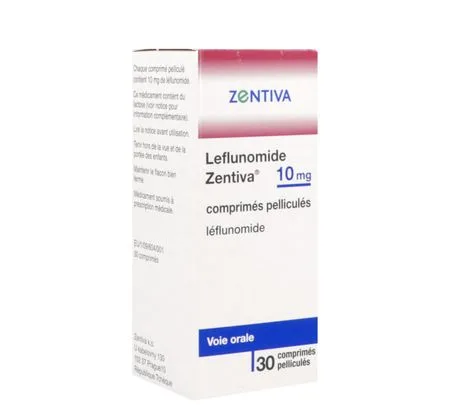
LEFLUNOMIDE ZENTIVA 10 mg, film-coated tablets
Forms and presentations
Film-coated tablet.
White to practically white, round, film-coated tablet, printed with ZBN on one side.
Composition
Each tablet contains 10 mg of leflunomide.
Excipient with known effect
Each tablet contains 78 mg of lactose monohydrate.
Core:
Maize starch
Povidone (E1201)
Crospovidone (E1202)
Anhydrous colloidal silica
Magnesium stearate (E470b)
Lactose monohydrate.
Film coating:
Talc (E553b)
Hypromellose (E464)
Titanium dioxide (E171)
Macrogol 8 000
Indications
Leflunomide is indicated in adults:
- in active rheumatoid arthritis, as a disease-modifying treatment,
- in the treatment of active psoriatic arthritis.
Recent or concomitant treatment with another hepatotoxic or haematotoxic disease-modifying treatment (for example methotrexate) may lead to an increased risk of serious adverse effects; therefore, when initiating treatment with leflunomide, this benefit/risk aspect should be carefully evaluated.
Furthermore, replacing leflunomide with another disease-modifying treatment without following the washout procedure (see section Warnings and precautions), may increase the possibility of additive risks of adverse effects, even long after leflunomide has been stopped.
Dosage and administration
Treatment should only be initiated and monitored by specialist physicians with good experience in the treatment of rheumatoid arthritis and psoriatic arthritis.
Alanine aminotransferase (ALT) or serum glutamopyruvate transaminase (SGPT) and complete blood count, including white blood cell count with differential and platelet count, must be monitored at the same time and with the same regularity:
- before starting treatment with leflunomide,
- every 2 weeks during the first 6 months of treatment, and
- then every 8 weeks (see section Warnings and precautions).
Dosage
- In rheumatoid arthritis: treatment with leflunomide is generally started with a loading dose of 100 mg once daily for 3 days. Omitting the loading dose may reduce the risk of occurrence of adverse effects (see section Pharmacodynamics).
The recommended maintenance dose is 10 to 20 mg of leflunomide once daily depending on the severity (activity) of the disease. - In psoriatic arthritis: treatment with leflunomide is started with a loading dose of 100 mg once daily for 3 days.
The recommended maintenance dose is 20 mg of leflunomide once daily (see section Pharmacodynamics).
The therapeutic effect usually begins after 4 to 6 weeks and may improve further up to 4 to 6 months of treatment.
No dose adjustment is recommended in patients with mild renal impairment.
No dose adjustment is required in subjects over 65 years of age.
Paediatric population
Leflunomide Zentiva is not recommended in patients under 18 years of age, as its efficacy and tolerability in juvenile idiopathic arthropathy have not been demonstrated (see sections Pharmacodynamics and Pharmacokinetics).
Method of administration
Leflunomide Zentiva tablets are for oral use. The tablets must be swallowed whole with a sufficient quantity of liquid. The absorption of leflunomide is not affected by the simultaneous ingestion of food.
Contraindications
- Hypersensitivity (in particular a history of Stevens-Johnson syndrome, Lyell syndrome or erythema multiforme) to the active substance, to the main active metabolite teriflunomide or to any of the excipients mentioned in section Composition.
- Patients with hepatic impairment.
- Patients with a severe immunodeficiency state, for example patients with AIDS.
- Patients with severe bone marrow dysfunction, or with anaemia, leukopenia, neutropenia, or profound thrombocytopenia of origin other than rheumatoid arthritis or psoriatic arthritis
- Patients suffering from severe infections (see section Warnings and precautions).
- Patients with moderate to severe renal impairment, due to insufficient clinical experience in this patient group.
- Patients with severe hypoproteinaemia, for example in cases of nephrotic syndrome.
- Pregnant women or women of childbearing potential not using a reliable contraceptive method during treatment with leflunomide and for as long as plasma levels of the active metabolite of leflunomide are above 0,02 mg/L. (see section Fertility, pregnancy and breastfeeding). The existence of a pregnancy must be excluded before starting treatment with leflunomide.
- Breastfeeding (see section Fertility, pregnancy and breastfeeding).
Warnings and precautions
The concomitant administration of hepatotoxic or haematotoxic disease-modifying treatments (for example methotrexate) is not advisable.
The active metabolite of leflunomide, A771726, has a long half-life, usually of 1 to 4 weeks. Serious adverse reactions may occur (for example: hepatotoxic, haematotoxic or allergic reactions, see below), even after discontinuation of treatment with leflunomide. Therefore, when such toxic effects occur or when, for any other reason, A771726 must be rapidly eliminated, the washout procedure should be followed. This elimination procedure may be repeated depending on the patient's clinical condition.
Regarding the washout procedure and the measures recommended in case of a desired or undesired pregnancy, see section Fertility, pregnancy and breastfeeding.
Hepatic reactions
Rare cases of severe hepatic injury, including cases with a fatal outcome, have been reported during treatment with leflunomide. Most cases occurred during the first 6 months of treatment. Other hepatotoxic products were frequently co-prescribed. It is therefore essential to strictly follow the recommended monitoring guidelines.
ALAT (SGPT) must be monitored before the start of treatment with leflunomide, then with the same regularity as the complete blood count every 2 weeks during the first 6 months of treatment and then every 8 weeks.
In case of elevation of ALAT (SGPT) between 2 and 3 times the upper limit of normal, a reduction of the dose from 20 to 10 mg may be considered and monitoring must be performed every week. If the elevation of ALAT (SGPT) persists at more than 2 times the upper limit of normal or if ALAT rises to more than 3 times the upper limit of normal, leflunomide must be discontinued and a washout procedure must be initiated. It is recommended to maintain monitoring of liver enzymes after discontinuation of leflunomide treatment, until liver enzyme levels have normalised.
Due to possible additive hepatotoxic effects, it is recommended to avoid consuming alcohol during treatment with leflunomide.
A771726, the active metabolite of leflunomide, being highly bound to plasma proteins and eliminated by hepatic metabolism and biliary excretion, plasma levels of A771726 may be higher in patients with hypoproteinaemia. Leflunomide Zentiva is contraindicated in patients with severe hypoproteinaemia or hepatic impairment (see section Contraindications).
Haematological reactions
Together with ALT, a complete blood count, including a white blood cell count with differential and a platelet count, must be performed before starting treatment with leflunomide, then every 2 weeks during the first 6 months, and then every 8 weeks.
In patients with pre-existing anaemia, leucopenia and/or thrombocytopenia, as well as in patients with abnormalities of bone marrow function or a risk of bone marrow failure, the risk of haematological abnormalities is increased. If such effects occur, a washout procedure should be considered (see below) to reduce the plasma levels of A771726.
In case of severe haematological reactions, including pancytopenia, Leflunomide Zentiva and any associated immunosuppressive treatment must be stopped and a leflunomide washout procedure must be started.
Combinations with other treatments
The use of leflunomide in combination with antimalarials used in rheumatic disorders (for example chloroquine or hydroxychloroquine), oral or intramuscular gold salts, D-penicillamine, azathioprine or other immunosuppressants including tumour necrosis factor alpha inhibitors (anti-TNF alpha), has not been sufficiently studied to date in randomised clinical trials (with the exception of methotrexate, see section Interactions). The risk associated with a combination of basic treatments, particularly during long-term treatment, is unknown. Since such therapy may lead to additive or even synergistic toxicity (example: hepato- or haematotoxicity), combination with another basic treatment (for example methotrexate) is not advisable.
The concomitant administration of teriflunomide and leflunomide is not recommended, as leflunomide is the parent compound of teriflunomide.
Replacement with other treatments
Leflunomide, which persists for a long time in the body, its replacement by another disease-modifying treatment (for example methotrexate) without performing the washout procedure (see below) may present additive risks, even long after stopping leflunomide (for example: pharmacokinetic interaction, organ-specific toxicity).
Likewise, recent treatment with hepatotoxic or haematotoxic medicines (for example methotrexate) could increase side effects; therefore, starting leflunomide treatment should be considered with caution, taking these benefit/risk aspects into account, and closer monitoring is recommended at the start of the switch treatment with leflunomide.
Skin reactions
In case of ulcerative stomatitis, leflunomide administration must be stopped.
Very rare cases of Stevens-Johnson syndrome or Lyell syndrome and DRESS syndrome (drug hypersensitivity syndrome with eosinophilia and systemic symptoms) have been reported in patients treated with leflunomide. As soon as a skin or mucosal reaction is observed, leading to suspicion of this type of serious reaction, Leflunomide Zentiva and any other associated treatment that may be implicated must be stopped and a washout procedure must be started immediately. A complete washout of leflunomide is essential in such cases.
In such cases, re-exposure to leflunomide is contraindicated (see section Contraindications).
Pustular psoriasis and worsening of psoriasis have been reported after the use of leflunomide. Discontinuation of treatment may be considered depending on the patient's disease and history.
Skin ulcers may occur in patients treated with leflunomide. If a skin ulcer associated with leflunomide is suspected or if skin ulcers persist despite appropriate treatment, discontinuation of leflunomide and a washout procedure should be considered. The decision to resume treatment with leflunomide following skin ulcers should be based on a clinical assessment demonstrating adequate wound healing.
Impaired wound healing after surgery may occur in patients treated with leflunomide. After individual assessment, interruption of leflunomide treatment may be considered during the perisurgical period, followed by an accelerated elimination procedure as described further below in this section. In case of treatment interruption, the decision to resume leflunomide treatment must be based on a clinical assessment showing adequate wound healing.
Infections
Treatments with an immunosuppressive aim - such as leflunomide - may increase patients' susceptibility to infections, including opportunistic infections. Infections may be more severe and, consequently, may require early and vigorous treatment. In case of a severe uncontrolled infection occurring, it may be necessary to interrupt treatment with leflunomide and accelerate its elimination by the washout procedure described below.
Rare cases of progressive multifocal leukoencephalopathy (PML) have been reported in patients receiving leflunomide among other immunosuppressants.
Before starting treatment, screening for active and inactive ("latent") tuberculosis must be carried out in all patients, according to local recommendations. This may include medical history, any previous contact with tuberculosis, and/or appropriate screening such as a chest X-ray, a tuberculin skin test and/or an interferon-gamma release assay, where appropriate. Prescribers are reminded that there is a risk of false-negative results in the tuberculin skin test, particularly in severely ill or immunocompromised patients. Patients with a history of tuberculosis must be closely monitored because of the possibility of reactivation of the infection.
Respiratory reactions
Cases of interstitial lung disease, as well as rare cases of pulmonary hypertension, have been reported during treatment with leflunomide (see section Adverse effects). The risk of occurrence may be increased in patients with a history of interstitial lung disease.
Interstitial lung disease may lead to death, which may occur abruptly during treatment. The onset of pulmonary symptoms, such as cough and dyspnoea, may be a reason to stop treatment and to carry out appropriate investigations.
Peripheral neuropathy
Cases of peripheral neuropathy have been reported in patients treated with leflunomide. Most patients improved after leflunomide was stopped. However, there is significant variability in the final outcome: in some patients the neuropathy disappeared, while others had persistent symptoms. An age over 60 years, concomitant administration of neurotoxic medicinal products and diabetes may increase the risk of peripheral neuropathy. If a patient treated with Leflunomide Zentiva develops peripheral neuropathy, discontinuation of treatment with Leflunomide Zentiva and initiation of the washout procedure should be considered (see section Warnings and precautions).
Colitis
Cases of colitis, including microscopic colitis, have been reported in patients treated with leflunomide. In patients treated with leflunomide who present with unexplained chronic diarrhoea, appropriate diagnostic procedures should be performed.
Blood pressure
Blood pressure should be checked before starting treatment with leflunomide and then regularly.
Procreation (recommendations for men)
Male patients should be warned of possible foetal toxicity transmitted by the father. Effective contraception should be ensured during treatment with leflunomide.
There are no specific data on the risk of foetal toxicity of paternal origin.
No specific animal study has been conducted to evaluate this risk. In order to reduce any possible risk, men wishing to father a child should consider interrupting treatment with leflunomide and taking cholestyramine at a dose of 8 g, 3 times a day, for 11 days, or powdered activated charcoal at a dose of 50 g, 4 times a day, for 11 days.
In each case, plasma concentrations of A771726 are measured a first time. Then, plasma levels of A771726 should be checked after a period of at least 14 days. If in both assays the plasma concentrations are below 0,02 mg/L, and after a waiting period of at least 3 months, the risk of foetal toxicity is very low.
Washout procedure
Either by administration of 8 g of colestyramine, 3 times per day, or by administration of 50 g of powdered activated charcoal, 4 times per day. The duration of a complete washout procedure is usually 11 days. This duration may be modified depending on clinical findings or biological parameters.
Lactose
Leflunomide Zentiva contains lactose. Patients with galactose intolerance, total lactase deficiency or glucose-galactose malabsorption syndrome (rare hereditary diseases) should not take this medicine.
Interference with the determination of ionised calcium levels
Measurement of ionised calcium levels may lead to falsely lower values under treatment with leflunomide and/or teriflunomide (the active metabolite of leflunomide), depending on the type of ionised calcium analyser used (for example, blood gas analyser). Therefore, the plausibility of lower ionised calcium levels observed in patients treated with leflunomide or teriflunomide needs to be questioned. In case of doubtful results, it is recommended to determine the total serum calcium concentration corrected for albumin.
Interactions
Interaction studies have been performed in adults.
An increase in side effects may occur in case of recent or concomitant administration of hepatotoxic or haematotoxic medicinal products, or when treatment with leflunomide is started after administration of these medicinal products without a washout period in between (see also the management in case of combination with other treatments, section Warnings and precautions). Therefore, careful monitoring of liver enzymes and haematological parameters is recommended at the start of the switch treatment with leflunomide.
Methotrexate
In a study conducted in 30 patients examining the combination of leflunomide (at a dose of 10 to 20 mg per day) with methotrexate (at a dose of 10 to 25 mg per week), an increase in liver enzymes of 2 to 3 times above the upper limit of normal was observed in 5 of 30 patients. These abnormalities were reversible, in 2 patients in whom the medicinal products were continued and in 3 patients in whom leflunomide alone was discontinued.
An increase in liver enzymes to more than 3 times the upper limit of normal was observed in 5 other patients. All these enzyme elevations were reversible, 2 of them while the 2 medicinal products were continued and the 3 others after leflunomide was stopped.
In patients with rheumatoid arthritis, no pharmacokinetic interaction was demonstrated between leflunomide (at a dose of 10 to 20 mg per day) and methotrexate (at a dose of 10 to 25 mg per week).
Vaccinations
No clinical data on the efficacy and safety of vaccinations during treatment with leflunomide are available. However, vaccinations with live attenuated vaccines are not recommended. The prolonged half-life of leflunomide must be taken into account before considering vaccination with a live attenuated vaccine after stopping treatment with leflunomide.
Warfarin and other coumarin anticoagulants
Cases of increased prothrombin time have been reported when leflunomide and warfarin were co-administered. A pharmacodynamic interaction with warfarin was observed with A771726 during a clinical pharmacology study (see below). Therefore, in case of concomitant administration of warfarin or another coumarin anticoagulant, it is recommended to closely monitor and check the international normalised ratio (INR, International Normalised Ratio).
NSAIDs/corticosteroids
If the patient is already being treated with non-steroidal anti-inflammatory drugs (NSAIDs) and/or corticosteroids, these may be continued after starting treatment with leflunomide.
Effect of other medicinal products on leflunomide:
Cholestyramine or activated charcoal
Patients treated with leflunomide are advised to avoid taking colestyramine or powdered activated charcoal, as these products cause a rapid and significant decrease in plasma levels of A771726 (the active metabolite of leflunomide; see also section Interactions). The mechanism presumably involves interruption of the enterohepatic cycle and/or the occurrence of gastrointestinal dialysis of A771726.
CYP450 inhibitors and inducers
Inhibition studies in vitro on human liver microsomes suggest that cytochromes P450 (CYP) 1A2, 2C19 and 3A4 are involved in the metabolism of leflunomide. An interaction study in vivo with leflunomide and cimetidine (a weak non-specific inhibitor of cytochrome P 450 (CYP)) did not show a significant impact on exposure to A771726. After administration of a single dose of leflunomide to subjects receiving multiple doses of rifampicin (a non-specific inducer of cytochrome P 450), plasma levels of A771726 were increased by approximately 40%, without significant change in areas under the curve. The mechanism involved is not clearly explained.
Effect of leflunomide on other medicinal products:
Oral contraceptives
In a study in which healthy female volunteers received leflunomide combined with a triphasic oral contraceptive pill containing 30 μg of ethinylestradiol, no reduction in the contraceptive activity of the pill was observed, and the pharmacokinetics of A771726 remained within expected limits. A pharmacokinetic interaction with oral contraceptives was observed with A771726 (see below).
The following pharmacokinetic and pharmacodynamic interaction studies were conducted with A771726 (main active metabolite of leflunomide). As a similar drug interaction cannot be ruled out with leflunomide at the recommended doses, the results of the following studies as well as the following recommendations must be taken into account in patients treated with leflunomide:
Effect on repaglinide (substrate of CYP2C8)
Repeated administrations of A771726 resulted in an increase in mean Cmax and mean AUC (area under the curve) of repaglinide (1,7 and 2,4 times, respectively), suggesting that A771726 is an inhibitor of CYP2C8 in vivo. Therefore, it is recommended to monitor patients concomitantly treated with medicinal products metabolised by CYP2C8, such as repaglinide, paclitaxel, pioglitazone or rosiglitazone, as exposure to these medicinal products may be greater.
Effect on caffeine (substrate of CYP1A2)
Repeated administrations of A771726 decreased mean Cmax and AUC of caffeine (substrate of CYP1A2) by 18% and 55% respectively, suggesting that A771726 may be a weak inducer of CYP1A2 in vivo. Therefore, medicinal products metabolised by CYP1A2 (such as duloxetine, alosetron, theophylline and tizanidine) should be used with caution during treatment, as this could lead to a reduction in the efficacy of these products.
Effect on substrates of the organic anion transporter 3 (organic anion transporter 3, OAT3)
Repeated administrations of A771726 resulted in an increase in mean Cmax and mean AUC of cefaclor (1,43 and 1,54 times, respectively), suggesting that A771726 is an inhibitor of OAT3 in vivo. Therefore, caution is recommended when co-administered with OAT3 substrates such as cefaclor, benzylpenicillin, ciprofloxacin, indomethacin, ketoprofen, furosemide, cimetidine, methotrexate and zidovudine.
Effect on breast cancer resistance protein (BCRP, Breast Cancer Resistance Protein) and/or on substrates of the organic anion transporting polypeptides B1 and B3 (OATP1B1/B3)
Repeated administrations of A771726 resulted in an increase in mean Cmax and mean AUC of rosuvastatin (2,65 and 2,51 times, respectively). However, there was no apparent impact of this increase in plasma exposure to rosuvastatin on HMG-CoA reductase activity. In case of concomitant use, the dose of rosuvastatin must not exceed 10 mg once daily. For other substrates of BCRP (e.g., methotrexate, topotecan, sulfasalazine, daunorubicin, doxorubicin) and the OATP family, in particular HMG-CoA reductase inhibitors (e.g., simvastatin, atorvastatin, pravastatin, methotrexate, nateglinide, repaglinide, rifampicin), concomitant administration should also be carried out with caution. Signs and symptoms of excessive drug exposure should be closely monitored in patients and a dose reduction of these medicinal products should be considered if necessary.
Effect on oral contraceptives (0,03 mg of ethinylestradiol and 0,15 mg of levonorgestrel)
Repeated administrations of A771726 resulted in an increase in mean Cmax and of ASC0-24 mean ethinylestradiol (1,58 and 1,54 times, respectively) and Cmax and of ASC0-24 mean levonorgestrel (1,33 and 1,41 times, respectively). Although this interaction is not expected to have an unfavourable impact on the efficacy of oral contraceptives, the type of oral contraceptive used should be taken into consideration.
Effect on warfarin (substrate of CYP2C9)
Repeated administrations of A771726 had no effect on the pharmacokinetics of S-warfarin, which indicates that A771726 is not an inhibitor or an inducer of CYP2C9. However, a decrease of 25% in the peak INR (International Normalised Ratio) was observed when A771726 was co-administered with warfarin compared with warfarin alone. Therefore, in case of co-administration with warfarin, it is recommended to follow and closely monitor the INR.
Fertility, pregnancy and breastfeeding
Pregnancy
The active metabolite of leflunomide, A771726, may cause serious malformations in the child when administered during pregnancy.
Leflunomide Zentiva is contraindicated during pregnancy (see section Contraindications).
Women of childbearing potential must use effective contraception during treatment and for up to 2 years after treatment discontinuation (see "waiting period" below) or up to 11 days after treatment discontinuation (see "washout period" below).
Patients must be informed that in case of a menstrual delay, or any other reason suspecting pregnancy, they must immediately inform their physician so that a pregnancy test can be performed. If positive, the physician and the patient must discuss the risk for the ongoing pregnancy.
If the washout procedure described below is started as soon as a menstrual delay is observed, the rapid decrease in blood levels of the active metabolite may reduce the risk that leflunomide may pose to the foetus.
In a prospective study conducted in 64 patients who accidentally became pregnant while being treated with leflunomide, with leflunomide exposure of at most 3 weeks after conception, and who followed an active metabolite elimination procedure, no significant difference (p = 0,13) was observed in the rate of major structural abnormalities (5,4%) compared with the other groups (4,2% in the corresponding diseased group [n = 108] and 4,2% in the group of healthy pregnant women [n = 78]).
In women treated with leflunomide who wish to have a child, one of the following procedures is recommended to ensure that the foetus is not exposed to toxic concentrations of A771726 (threshold concentration below 0,02 mg/L):
Waiting period
Plasma concentrations of A771726 may remain above 0,02 mg/L for a prolonged period. Concentrations can be expected to decrease below 0,02 mg/L approximately 2 years after discontinuation of leflunomide treatment.
After a waiting period of 2 years, plasma concentrations of A771726 are measured for the first time.
Thereafter, plasma levels of A771726 must be checked again after an interval of at least 14 days. If, at the 2 measurements, concentrations are below 0,02 mg/L, the teratogenic risk is negligible.
For further information on the control tests, contact the marketing authorisation holder or its local representative (see section Driving and using machines).
Washout procedure
After discontinuation of leflunomide treatment:
- Either by administration of 8 g of cholestyramine 3 times per day for a period of 11 days
- Or by administration of 50 g of powdered activated charcoal 4 times per day for a period of 11 days.
Whatever the procedure, plasma levels will be checked twice at an interval of at least 14 days and a waiting period of one and a half months will be observed between the 1er level below 0,02 mg/L and pregnancy.
Women of childbearing potential must be informed of the need for a waiting period of 2 years after treatment discontinuation before considering pregnancy. If a period of approximately 2 years under reliable contraception is not feasible, washout prophylaxis may be advised.
Since colestyramine and powdered activated charcoal may influence the absorption of estrogens and progestogens, it cannot be guaranteed that such contraception will be effective during the washout period with colestyramine or powdered activated charcoal. It is recommended to use another contraceptive method.
Breast-feeding
Animal studies indicate that leflunomide or its metabolites pass into breast milk. Therefore, breastfeeding women must not be treated with leflunomide.
Fertility
Results of animal fertility studies showed no effect on male and female fertility, but secondary effects on male reproductive organs were observed in repeated-dose toxicity studies (see section Preclinical safety).
Driving and using machines
The occurrence of side effects such as dizziness may impair the patient's ability to concentrate and react appropriately. In this case, patients should avoid driving or using machines.
Adverse effects
Summary of the safety profile
The most frequently reported adverse reactions with leflunomide are: moderate increase in blood pressure, leukopenia, paraesthesia, headache, dizziness, diarrhoea, nausea, vomiting, oral mucosal lesions (for example aphthous stomatitis or mouth ulcers), abdominal pain, accentuated natural hair loss, eczema, rash (including maculopapular rash), pruritus, dry skin, tenosynovitis, increased CPK, anorexia, weight loss (generally not significant), asthenia, moderate allergic reactions and elevation of liver parameters [transaminases (particularly ALT), less frequently gamma-GT, alkaline phosphatases, bilirubin].
Classification of expected frequencies:
Very common (≥ 1/10); common (≥ 1/100, < 1/10); uncommon (≥ 1/1 000, < 1/100); rare (≥ 1/10 000, < 1/1 000); very rare (< 1/10 000), frequency not known (cannot be estimated from the available data).
Within each frequency grouping, undesirable effects are presented in order of decreasing seriousness.
|
Infections and infestations |
|
|
Rare: |
severe infections, including septic states that may be fatal. |
As with other potentially immunosuppressive products, leflunomide may increase susceptibility to infections, including opportunistic infections (see also section Warnings and precautions). Thus the overall incidence of infections may increase (notably rhinitis, bronchitis and pneumonia).
Benign, malignant and unspecified tumours (including cysts and polyps)
The risk of malignant conditions, and notably lymphoproliferative syndromes, is increased with the use of certain immunosuppressant products.
|
Blood and lymphatic system disorders |
|
|
Common: |
leukopenia (with leukocytes > 2 G/L) |
|
Uncommon: |
anaemia, moderate thrombocytopenia (platelets < 100 G/L) |
|
Rare: |
pancytopenia (probably by an anti-proliferative mechanism), leukopenia (with leukocytes < 2 G/L), eosinophilia |
|
Very rare: |
agranulocytosis |
Recent, concomitant or consecutive use of potentially myelotoxic products may be associated with an increased risk of haematological effects.
|
Immune system disorders |
|
|
Common: |
moderate allergic reactions |
|
Very rare: |
serious anaphylactic/anaphylactoid reactions, vasculitis, including necrotising cutaneous vasculitis |
|
Metabolism and nutrition disorders |
|
|
Common: |
increased CPK |
|
Uncommon: |
hypokalaemia, hyperlipidaemia, hypophosphataemia |
|
Rare: |
increased LDH |
|
Frequency not known: |
hypouricaemia |
|
Psychiatric disorders |
|
|
Uncommon: |
anxiety |
|
Nervous system disorders |
|
|
Common: |
headache, dizziness, paraesthesia, peripheral neuropathy |
|
Cardiac disorders |
|
|
Common: |
moderate increase in blood pressure |
|
Rare: |
severe arterial hypertension |
|
Respiratory, thoracic and mediastinal disorders |
|
|
Rare: |
interstitial lung disease (including interstitial pneumonitis), which may be fatal. |
|
Frequency not known: |
pulmonary hypertension. |
|
Gastrointestinal disorders |
|
|
Common: |
colitis, including microscopic colitis such as lymphocytic colitis and collagenous colitis, diarrhoea, nausea, vomiting, oral mucosal lesions (for example aphthous stomatitis or mouth ulcers), abdominal pain |
|
Uncommon: |
taste disturbances |
|
Very rare: |
pancreatitis |
|
Hepato-biliary disorders |
|
|
Common: |
increase in liver parameters [transaminases (in particular ALT), more rarely gamma-GT, alkaline phosphatases, or bilirubin] |
|
Rare: |
hepatitis, jaundice/cholestasis |
|
Very rare: |
severe liver disorders including acute liver failure and acute hepatic necrosis, which may be fatal |
|
Skin and subcutaneous tissue disorders |
|
|
Common: |
accentuation of the natural hair loss, rash (notably maculopapular rash), pruritus, eczema, dry skin |
|
Uncommon: |
urticaria |
|
Very rare: |
Stevens-Johnson syndrome, Lyell's syndrome, erythema multiforme |
|
Frequency not known: |
cutaneous lupus erythematosus, pustular psoriasis or worsening of psoriasis, DRESS syndrome (drug hypersensitivity syndrome with eosinophilia and systemic symptoms), skin ulcers |
|
Musculoskeletal and connective tissue disorders |
|
|
Common: |
tenosynovitis |
|
Uncommon: |
tendon rupture |
|
Renal and urinary disorders |
|
|
Frequency not known: |
renal failure |
|
Disorders of the reproductive system and breast |
|
|
Frequency not known: slight and reversible decrease in sperm concentration, sperm count and sperm motility |
|
|
General disorders and administration site conditions |
|
|
Common: |
anorexia, weight loss (generally not significant), asthenia |
Reporting of suspected adverse reactions
The reporting of suspected adverse reactions after marketing authorisation of the medicinal product is important. It allows continuous monitoring of the benefit/risk balance of the medicinal product. Healthcare professionals report any suspected adverse reaction via the national reporting system-see Appendix V.
Overdose
Symptoms
Cases of prolonged overdose in patients who took up to 5 times the recommended daily dose of leflunomide every day, as well as cases of acute overdose in adults and children, have been reported. In the majority of these cases, no adverse effects were reported. The following adverse effects were observed, not differing from the usual tolerability profile of leflunomide: abdominal pain, nausea, diarrhoea, elevation of liver enzymes, anaemia, leukopenia, pruritus and rash.
Management
In case of overdose or toxicity, it is advised to administer cholestyramine or activated charcoal to accelerate elimination. Cholestyramine administered orally at a dose of 8 g three times a day for 24 hours to three healthy volunteers reduced plasma levels of A771726 by about 40 % within 24 hours and by 49 to 65 % within 48 hours.
Administration of activated charcoal (powder suspended) orally or via nasogastric tube (50 g every 6 hours for 24 hours) has been shown to lower plasma levels of the active metabolite A771726 by 37% within 24 hours and by 48% within 48 hours.
These elimination measures may be repeated depending on the clinical condition of the person.
Studies conducted in both haemodialysed patients and patients on CAPD (continuous ambulatory peritoneal dialysis) show that A771726, the main metabolite of leflunomide, is not dialysable.
Pharmacodynamics
Pharmacotherapeutic class: selective immunosuppressants,
ATC code: L04AK01.
Human pharmacology
Leflunomide is a disease-modifying treatment for rheumatoid arthritis with antiproliferative properties.
Animal pharmacology
Leflunomide is effective in animal models of arthritis, as well as in autoimmune diseases and in transplantation, mainly when administered during the sensitisation phase. It has immunomodulatory/immunosuppressive characteristics, behaves as an antiproliferative agent and possesses anti-inflammatory properties. In animal models, leflunomide showed the best protective effects against autoimmune diseases when administered at the early phase of disease progression. In vivo, it is rapidly and almost completely metabolized to A771726, active in vitro, and which is believed to be responsible for the therapeutic effect.
Mechanism of action
The active metabolite of leflunomide, A771726, inhibits the human enzyme dihydroorotate dehydrogenase (DHODH) and has an anti-proliferative action.
Clinical efficacy and safety
Rheumatoid arthritis
The efficacy of leflunomide in the treatment of rheumatoid arthritis has been demonstrated in 4 controlled studies (1 phase II and 3 phase III). The phase II study, randomised study YU203, included 402 subjects with active rheumatoid arthritis, treated with placebo (n = 102), leflunomide 5 mg (n = 95), 10 mg (n = 101) or 25 mg/day (n = 104). The duration of treatment was 6 months.
All patients on leflunomide in the phase III trials received an initial dose of 100 mg for 3 days.
The randomised study MN301 included 358 patients with active rheumatoid arthritis, treated with leflunomide 20 mg/day (n = 133), sulfasalazine 2 g/day (n = 133) or placebo (n = 92). The duration of treatment was 6 months.
Study MN303 was an optional continuation of study MN301, blinded, over 6 months, without a placebo arm, thus allowing a comparison over 12 months of leflunomide versus sulfasalazine.
The randomised study MN302 included 999 patients with active rheumatoid arthritis, treated with leflunomide 20 mg/day (n = 501) or methotrexate at 7,5 mg/week, increased up to 15 mg/week (n = 498). Folic acid supplementation was optional and used only in 10% of patients. The duration of treatment was 12 months.
The randomised study US301 included 482 patients with active rheumatoid arthritis, treated with leflunomide 20 mg/day (n = 182), methotrexate at 7,5 mg/week, increased up to 15 mg/week (n = 182) or placebo (n = 118). All patients received folates at a dose of 1 mg twice daily. The duration of treatment was 12 months.
Leflunomide at a daily dose of at least 10 mg (10 to 25 mg in study YU203, 20 mg in study MN301 and US301) was significantly superior to placebo in reducing the signs and symptoms of rheumatoid arthritis in the 3 controlled trials versus placebo. The ACR (American College of Rheumatology) response rate in study YU203 was 27,7% for placebo, 31,9% for leflunomide 5 mg, 50,5% for leflunomide 10 mg and 54,5% for leflunomide 25 mg/day. In the phase III trials, the ACR response rates for leflunomide 20 mg/day versus placebo were respectively 54,6% versus 28,6 % (study MN301), and 49,4 % versus 26,3 % (study US301). After 12 months of active treatment, ACR response rates in patients on leflunomide were 52,3 % (studies MN301/303), 50,5 % (study MN302) and 49,4 % (study US301), compared with 53,8 % (study MN301/303) in patients on sulfasalazine, 64,8 % (study MN302) and 43,9 % (study US301) in patients on methotrexate. In study MN302, leflunomide was significantly less effective than methotrexate. However, in study US301, no significant difference was observed between leflunomide and methotrexate on the primary efficacy criteria. No difference was observed between leflunomide and sulfasalazine (study MN301). The effect of treatment with leflunomide is significant at 1 month, stabilised between 3 and 6 months and continues throughout treatment.
A randomised, double-blind, parallel-group non-inferiority study compared the relative efficacy of two daily maintenance doses of leflunomide, 10 mg and 20 mg.
The results indicate that the maintenance dose of 20 mg/day was more effective and that the maintenance dose of 10 mg/day was better tolerated.
Paediatric population
Leflunomide was evaluated in a multicentre, randomised, double-blind, controlled study in 94 patients (47 per arm) with juvenile idiopathic arthritis. Patients were aged 3 to 17 years with juvenile idiopathic arthritis, regardless of the mode of onset of the disease, and without prior treatment with methotrexate or leflunomide. In this study, loading and maintenance doses of leflunomide were established according to three weight categories: < 20 kg, between 20 and 40 kg and > 40 kg. After 16 weeks of treatment, the difference in response rate was statistically significant in favour of methotrexate according to the DOI (Definition Of Improvement ≥ 30%) (p = 0.02). In responding patients, the improvement was maintained for 48 weeks (see section Dosage and administration).
The tolerability profiles of leflunomide and methotrexate appear to be comparable, but the doses used in patients of low body weight led to relatively low exposure (see section Pharmacokinetics). These data do not allow a effective and safe dose to be recommended.
Psoriatic arthritis
The efficacy of leflunomide was demonstrated in a randomised, double-blind, controlled study, study 3L01, in 188 patients with psoriatic arthritis treated with leflunomide 20 mg/day.
The duration of treatment was 6 months.
Leflunomide 20 mg/day was significantly superior to placebo in reducing disease symptoms in patients with psoriatic arthritis: the PsARC (Psoriatic Arthritis Response Criteria) responder rate was 59% in the leflunomide group and 29,7% in the placebo group at 6 months (p < 0,0001). The effect of leflunomide on improving functional capacity and on reducing skin lesions was modest.
Post-marketing studies
A randomised study assessed the response rate in terms of clinical efficacy in patients with early rheumatoid arthritis, naive to disease-modifying antirheumatic drug therapy (n = 121), who received 20 mg or 100 mg of leflunomide in two parallel groups, during the initial three-day double-blind period. The initial period was followed by a three-month open-label maintenance period, during which both groups received 20 mg of leflunomide per day. No additional overall benefit was observed in the population studied with the use of the loading dose. The tolerability data obtained for both treatment groups were consistent with the known tolerability profile of leflunomide; however, the incidence of gastrointestinal adverse effects and elevations of liver enzymes tended to be higher in patients who received the loading dose of 100 mg of leflunomide.
Pharmacokinetics
Leflunomide is rapidly converted to an active metabolite, A771726, by first-pass metabolism (ring opening) in the intestinal wall and the liver. In a study using radiolabelled leflunomide with ¹⁴C in three healthy volunteers, no unchanged leflunomide was detected in plasma, urine or faeces. 14C in three healthy volunteers, no unchanged leflunomide was detected in plasma, urine or faeces. In other studies, however, unchanged leflunomide levels were rarely detected in plasma, at plasma levels on the order of ng/ml. The only radiolabelled plasma metabolite detected was A771726. This metabolite is responsible for most of the activity in vivo of leflunomide.
Absorption
Excretion data obtained in the study with radiolabelled leflunomide show that at least 82 to 95% of the dose is absorbed. The time required to reach peak plasma concentrations of A771726 is highly variable. Peak plasma levels may be reached between 1 and 24 hours after a single administration. Leflunomide may be administered with meals, the amount absorbed being comparable fasting and postprandially. Because of the very long half-life of A771726 (approximately 2 weeks), a loading dose of 100 mg per day for 3 days was used to reach steady-state plasma levels of A771726 more rapidly. Without a loading dose, it is estimated that a treatment period of approximately 2 months may be needed to reach steady-state concentrations.
In repeated-dose studies conducted in patients with rheumatoid arthritis, the pharmacokinetic parameters of A771726 were linear for doses between 5 and 25 mg. In these studies, the clinical effect was found to be closely related to plasma levels of A771726 and to the daily dose of leflunomide. At a dose of 20 mg/day, the mean steady-state plasma concentration of A771726 is approximately 35 μg/ml. Steady-state plasma levels after repeated doses are 33 to 35 times those observed after a single dose.
Distribution
In human plasma, A771726 is extensively bound to proteins (to albumin). The unbound fraction of A771726 is 0,62%. Binding of A771726 is linear over therapeutic plasma concentrations. Plasma binding of A771726 appeared slightly decreased and more variable in patients with rheumatoid arthritis or chronic renal insufficiency. The extensive protein binding of A771726 may result in displacement of other highly protein-bound drugs. Interaction studies at the level of plasma protein binding, performed in vitro with warfarin at concentrations equivalent to those obtained clinically, however, showed no interaction. Similar studies showed that ibuprofen and diclofenac did not displace A771726, whereas the unbound fraction of A771726 was doubled or tripled in the presence of tolbutamide. A771726 displaced ibuprofen, diclofenac and tolbutamide, but the unbound fraction of these drugs was increased only by 10 to 50%. There is no evidence that these effects are clinically significant. In accordance with its high protein binding, A771726 showed a small apparent volume of distribution (approximately 11 litres). There is no preferential uptake by erythrocytes.
Biotransformation
Leflunomide is metabolised to one main metabolite (A771726) and several minor metabolites, including TFMA (4-trifluoromethylaniline). The metabolic biotransformation of leflunomide to A771726 and the subsequent metabolism of A771726 are not controlled by a single enzyme and take place in the microsomal and cytosolic cell fractions. Interaction studies with cimetidine (non-specific cytochrome P450 inhibitor) and rifampicin (non-specific cytochrome P450 inducer) show thatin vivoCYP enzymes are only weakly involved in the metabolism of leflunomide.
Elimination
Elimination of A771726 is slow and characterised by an apparent clearance of approximately 31 ml/h. The elimination half-life in patients is approximately 2 weeks. After administration of a radiolabelled leflunomide dose, radioactivity was recovered in equal parts in the faeces, probably via biliary excretion, and in the urine. A771726 was still detectable in urine and faeces 36 days after a single administration. The main urinary metabolites were glucuroconjugated derivatives of leflunomide (mainly in samples from 0 to 24 hours) and an oxanilic acid derivative of A771726. The main faecal component was A771726.
In humans, oral administration of an activated charcoal powder suspension or cholestyramine has been shown to cause a rapid and significant increase in the elimination of A771726 and a decrease in plasma concentrations (see section Overdose). This is assumed to involve gastrointestinal dialysis and/or interruption of the enterohepatic cycle.
Renal insufficiency
Leflunomide was administered as a single oral dose of 100 mg to 3 haemodialysed patients and 3 patients on continuous ambulatory peritoneal dialysis (CAPD). The pharmacokinetic parameters of A771726 in patients on CAPD appear to be similar to those observed in healthy volunteers. Faster elimination of A771726 was observed in haemodialysed patients, which was not due to extraction of the drug into the dialysate.
Hepatic impairment
No data are available on the treatment of patients with hepatic impairment. The active metabolite A771726 is extensively protein-bound and is eliminated by hepatic metabolism and biliary secretion. These processes are likely to be affected by hepatic dysfunction.
Paediatric population
The pharmacokinetics of A771726, after oral administration of leflunomide, were evaluated in 73 patients aged 3 to 17 years, presenting with juvenile idiopathic arthropathy. The results of a population kinetic analysis demonstrated that patients with a body weight ≤ 40 kg have a reduced plasma concentration of A771726 (steady-state concentration) compared with adult patients with rheumatoid arthritis (see section Dosage and administration).
Elderly subject
There are few pharmacokinetic data available in elderly subjects (> 65 years), but all are consistent with those observed in younger subjects.
Preclinical safety
Leflunomide, administered orally or intraperitoneally, was evaluated in acute toxicity studies in mice and rats. Repeated oral administration of leflunomide to mice for up to 3 months, to rats and dogs for up to 6 months, and to monkeys for up to 1 month showed that the main target organs for toxicity were bone marrow, blood, the digestive tract, skin, spleen, thymus and lymph nodes. The main effects observed were anaemia, leucopenia, decreased platelet count and overall bone marrow insufficiency, reflecting the mode of action of the product (inhibition of DNA synthesis). In rats and dogs, Heinz and/or Howell-Jolly bodies were observed. Other effects observed on the heart, liver, cornea and respiratory system could be explained by infections due to immunosuppression. Toxicity in animals was observed at doses equivalent to human therapeutic doses.
Leflunomide was not mutagenic. However, the minor metabolite TFMA (4-trifluoromethylaniline) was found to be clastogenic and mutagenic in vitro, without sufficient information to conclude on this potential effect in vivo.
Leflunomide showed no carcinogenic potential in a carcinogenicity study in rats. In a study of carcinogenic potential in mice, an increased incidence of malignant lymphomas was observed in males in the highest-dose group, considered to be due to the immunosuppressive action of leflunomide. In female mice, a dose-dependent increased incidence of bronchioloalveolar adenomas and lung cancers was observed. The relevance of these findings in mice to the clinical use of leflunomide is uncertain.
Leflunomide was not shown to be antigenic in animal models.
Leflunomide is embryotoxic and teratogenic in rats and rabbits at doses corresponding to human therapeutic doses, and it showed toxic effects on male reproductive organs in repeated-dose toxicity studies. Fertility was not reduced.
Special storage precautions
|
Thermoformed blisters: |
Store in the original outer packaging. |
|
Vial: |
Keep the bottle tightly closed. |
Prescription, supply and reimbursement
Prescription restricted to specialists in internal medicine and rheumatology.
Medicine requiring particular monitoring during treatment.
| Marketing authorisation (AMM) |
|
| Price: |
|
Collection.
35 RUE DU VAL DE MARNE CS 91439
75214 PARIS CEDEX 13
Tel: 0 800 089 219 https://www.zentiva.com/
Source: VIDAL · Updated on 11/11/2026. This information does not replace advice from a healthcare professional.