
Medicines
SmPC of 26/08/2026
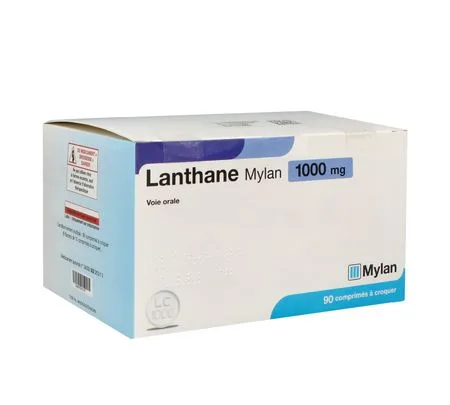
LANTHANE VIATRIS 1000 mg, chewable tablet
Forms and presentations
Chewable tablet.
White to off-white, round, flat tablet with bevelled edges, bearing the inscription "M" on one side of the tablet and " LC " on " 1000 " on the other side. Each tablet is approximately 19 mm in diameter.
Composition
Each chewable tablet contains lanthanum carbonate octahydrate equivalent to 1000 mg of lanthanum.
Hypromellose, microcrystalline cellulose and guar gum, microcrystalline cellulose, hydroxypropylcellulose, anhydrous colloidal silica, acesulfame potassium [E950], magnesium stearate.
Indications
LANTHANE VIATRIS is a phosphate binding agent indicated for the control of hyperphosphataemia in adult patients with chronic kidney disease on haemodialysis or on continuous ambulatory peritoneal dialysis (CAPD).
LANTHANE VIATRIS is also indicated in adult patients with chronic kidney disease not on dialysis with serum phosphate levels ≥ 1,78 mmol/L and in whom a low-phosphate diet alone is insufficient to control serum phosphate.
Dosage and administration
Dosage
Oral use.
The tablets must be chewed completely and must not be swallowed whole. If necessary, crush the tablet beforehand.
Other pharmaceutical forms are available on the market for patients who have difficulty chewing tablets.
Adults including elderly subjects (> 65 years)
LANTHANE VIATRIS should be taken with or immediately after a meal, the daily dose being divided between the main meals. Patients should follow the diet recommended to them to control phosphate intake and fluid intake.
LANTHANE VIATRIS is presented as a chewable tablet, which avoids the need to consume additional liquid. Serum phosphate levels should be monitored and the lanthanum carbonate dose adjusted every two to three weeks until an acceptable serum phosphate level is reached, with regular follow-up thereafter.
Control of serum phosphate was obtained from a dose of 750 mg per day. In a small number of patients, the maximum dose encountered in clinical trials was 3 750 mg, most responding patients having reached an acceptable serum phosphate level with a dose of 1 500 to 3 000 mg of lanthanum per day.
Paediatric population
The safety and efficacy of LANTHANE VIATRIS in children and adolescents under the age of 18 years have not been established (see sections Warnings and precautions and Pharmacodynamics).
Hepatic impairment
The consequences of hepatic impairment on the pharmacokinetics of LANTHANE VIATRIS have not been evaluated. Because of its mechanism of action and because it is not metabolised by the liver, it is not necessary to modify doses in hepatic impairment. However, patients should be closely monitored (see sections Adverse effects and Pharmacokinetics). The data currently available are described in sections Pharmacodynamics and Pharmacokinetics, but no dosage recommendation can be made.
Contraindications
• Hypersensitivity to the active substance or to any of the excipients listed in section Composition.
• Hypophosphataemia.
• Intestinal obstruction.
Warnings and precautions
Tissue deposition of lanthanum has been reported with lanthanum carbonate in animal studies. In 105 bone biopsies performed in patients treated with lanthanum carbonate, over a period of up to 4 years and a half, an increase in lanthanum concentrations over time was observed (see section Pharmacodynamics). Cases of lanthanum deposition on the gastrointestinal mucosa, notably after prolonged use, have been reported. Lanthanum deposition in the gastroduodenal mucosa is demonstrated at endoscopy by whitish lesions of varying sizes and shapes. Various pathological features have also been identified on the gastroduodenal mucosa with lanthanum deposition, such as chronic or active inflammation, glandular atrophy, regenerative changes, foveolar hyperplasia, and intestinal metaplasia and neoplasia.
Clinical study data regarding the use of lanthanum carbonate for more than 2 years remain currently limited. Nevertheless, no change in the benefit/risk profile has been observed in subjects treated with lanthanum carbonate for a period of up to 6 years.
Cases of gastrointestinal obstruction, ileus, subileus and gastrointestinal perforation, some requiring surgical intervention or hospitalisation, have been reported in association with lanthanum (see section Adverse effects).
Treatment with lanthanum in patients predisposed to gastrointestinal obstruction, ileus, subileus and perforations, for example patients with alterations of the digestive tract anatomy (for example diverticulosis, peritonitis, history of gastrointestinal surgery, gastrointestinal cancer and gastrointestinal ulceration), hypomotility disorders (for example constipation, diabetic gastroparesis) and in patients taking medicinal products known to potentiate these effects, should only be used after rigorous assessment. In subjects with ongoing intestinal obstruction, treatment with lanthanum is contraindicated (see section Contraindications).
For all subjects, physicians and patients should remain attentive to signs and symptoms of gastrointestinal disorders, in particular constipation and abdominal pain/distension that may indicate intestinal obstruction, ileus or subileus during treatment with lanthanum carbonate.
Discontinuation of treatment with lanthanum carbonate is recommended in patients who develop severe constipation or other serious gastrointestinal signs and symptoms, regardless of predisposing conditions.
Patients with acute gastroduodenal ulcer, ulcerative colitis, Crohn's disease or intestinal obstruction were not included in clinical studies of lanthanum carbonate.
LANTHANE VIATRIS tablets must be chewed completely and must not be swallowed whole in order to reduce the risk of serious gastrointestinal complications (see section Dosage and administration). Serious gastrointestinal complications have been reported in association with unchewed or incompletely chewed food.
Patients with renal insufficiency are at risk of developing hypocalcaemia. LANTHANE VIATRIS does not contain calcium. Serum calcium should therefore be monitored at regular intervals in this patient population and calcium supplementation should be administered in case of hypocalcaemia.
Lanthanum is not metabolised by hepatic enzymes, but it is very probably eliminated via bile. Conditions leading to a marked reduction in biliary secretion may be associated with slower elimination of lanthanum, which may result in a higher plasma level and increased tissue deposition of lanthanum (see sections Pharmacokinetics and Preclinical safety). As the liver is the main organ of elimination of absorbed lanthanum, monitoring of hepatic function is recommended.
Treatment with LANTHANE VIATRIS must be discontinued if the patient develops hypophosphataemia.
Abdominal X-rays of patients treated with LANTHANE VIATRIS may show radio-opacity similar to that of an imaging agent.
Interactions
Hydrated lanthanum carbonate may increase gastric pH. It is recommended not to take products known to interact with antacids within two hours of taking LANTHANE VIATRIS (for example chloroquine, hydroxychloroquine or ketoconazole).
In healthy subjects, the absorption and pharmacokinetic parameters of lanthanum were not modified by concomitant administration of citrate.
In clinical studies, serum levels of the fat-soluble vitamins A, D, E and K were not affected by administration of lanthanum carbonate.
Studies conducted in healthy volunteers showed that concomitant administration of lanthanum carbonate and digoxin, warfarin or metoprolol does not result in clinically significant changes in the pharmacokinetic profiles of these medicinal products.
In a simulated gastric fluid, hydrated lanthanum carbonate did not form insoluble complexes with warfarin, digoxin, furosemide, phenytoin, metoprolol or enalapril, suggesting a low potential to alter the absorption of these medicines.
However, interactions with medicinal products such as tetracycline and doxycycline are theoretically possible. In case of concomitant administration, it is recommended not to take them within two hours before or after taking LANTHANE VIATRIS.
The oral bioavailability of ciprofloxacin was reduced by approximately 50% when administered with lanthanum carbonate in a single-dose study conducted in healthy volunteers. It is recommended to take oral fluoroquinolone doses at least 2 hours before or 4 hours after LANTHANE VIATRIS.
Phosphate binders (including lanthanum carbonate) reduce the absorption of levothyroxine. Therefore, thyroid hormone replacement therapy should not be taken within 2 hours before or after taking LANTHANE VIATRIS, and close monitoring of TSH levels is recommended in patients receiving both medicinal products.
Hydrated lanthanum carbonate is not a substrate of cytochrome P450 and does not significantly inhibit the activities of the main human cytochrome P450 isoenzymes, CYP1A2, CYP2D6, CYP3A4, CYP2C9 and CYP2C19 in vitro.
Fertility, pregnancy and breastfeeding
Pregnancy
There are no sufficiently relevant data on the use of lanthanum carbonate in pregnant women.
A study in rats showed foetotoxicity (delayed eye opening and sexual maturation) and reduced pup weight at high doses (see section Preclinical safety). The potential clinical risk is not known. LANTHANE VIATRIS is not recommended during pregnancy.
Breast-feeding
It is not known whether lanthanum is excreted into human milk. The passage of lanthanum into breast milk has not been studied in animals. Caution should be exercised when deciding whether to continue or not to continue breast-feeding or treatment with LANTHANE VIATRIS, taking into account the potential benefit of breast-feeding for the child and the potential benefit of LANTHANE VIATRIS for the breast-feeding mother.
Fertility
There are no data concerning the effect of lanthanum carbonate on fertility in humans. In toxicology studies in rats, lanthanum carbonate had no deleterious effects on fertility.
Driving and using machines
LANTHANE VIATRIS may cause dizziness and vertigo that may impair the ability to drive vehicles and use machines.
Adverse effects
The most frequently reported adverse effects are gastrointestinal in nature, with the exception of headache and cutaneous allergic reactions. These effects are reduced if LANTHANE VIATRIS is taken during a meal and are generally attenuated over time as treatment continues (see section Dosage and administration).
The following convention has been adopted for the frequency of adverse drug reactions:
Very common (≥ 1/10);
Frequent (≥ 1/100, < 1/10);
Uncommon (≥ 1/1 000, < 1/100);
Rare (≥ 1/10 000, < 1/1 000);
Very rare (< 1/10 000);
Frequency not determinable (cannot be estimated from the available data).
|
Infections and infestations |
|
|
Uncommon |
Gastroenteritis, laryngitis |
|
Blood and lymphatic system disorders |
|
|
Uncommon |
Eosinophilia |
|
Endocrine disorders |
|
|
Uncommon |
Hyperparathyroidism |
|
Metabolism and nutrition disorders |
|
|
Common |
Hypocalcaemia |
|
Uncommon |
Hypercalcaemia, hyperglycaemia, hyperphosphataemia, hypophosphataemia, anorexia, increased appetite |
|
Nervous system disorders |
|
|
Very common |
Headache |
|
Uncommon |
Dizziness, taste disturbance |
|
Ear and labyrinth disorders |
|
|
Uncommon |
Vertigo |
|
Gastrointestinal disorders |
|
|
Very common |
Abdominal pain, diarrhoea, nausea, vomiting |
|
Common |
Constipation, dyspepsia, flatulence |
|
Uncommon |
Ileus, subileus, intestinal obstruction, irritable bowel syndrome, oesophagitis, stomatitis, soft stools, indigestion, gastrointestinal disorders NOS (not otherwise specified), dry mouth, dental disorders, eructation |
|
Rare |
Intestinal perforation |
|
Skin and subcutaneous tissue disorders |
|
|
Uncommon |
Alopecia, excessive sweating |
|
Musculoskeletal and systemic disorders |
|
|
Uncommon |
Arthralgia, myalgia, osteoporosis |
|
General disorders and administration site conditions |
|
|
Uncommon |
Asthenia, chest pain, fatigue, malaise, peripheral oedema, pain, thirst |
|
Investigations |
|
|
Uncommon |
Increased blood aluminium levels, increased gamma GT, increased hepatic transaminases, increased alkaline phosphatases, weight loss. |
|
Frequency not known |
Presence of product residue1 |
1See Deposition of lanthanum in the gastrointestinal mucosa in the section Warnings and precautions
Post-marketing experience:
During post-marketing use of lanthanum carbonate, allergic skin reactions (including rash, urticaria and pruritus) with a close temporal relationship to lanthanum carbonate have been identified. In clinical studies, allergic skin reactions were observed very frequently (≥ 1/10) in both the lanthanum carbonate group and the placebo/active comparator group.
Among the other isolated reported adverse reactions, none was considered unexpected in this patient population.
Transient changes in the QT interval have been observed. However, they were not associated with an increase in cardiac adverse events.
Paediatric population
The frequency, type and severity of adverse reactions in children have not been fully established. In particular, there is uncertainty regarding accumulation in bone and the risk of growth retardation with treatment in children.
Reporting of suspected adverse reactions
Reporting suspected adverse reactions after authorisation of the medicinal product is important. It allows continued monitoring of the benefit/risk balance of the medicinal product. Healthcare professionals are asked to report any suspected adverse reaction via the national reporting system: National Agency for the Safety of Medicines and Health Products (ANSM) and the network of Regional Centres of Pharmacovigilance - Website: https://signalement.social-sante.gouv.fr.
Overdose
No cases of overdose have been reported. The maximum daily dose of lanthanum administered to healthy volunteers in Phase I studies was 4 718 mg administered for 3 days. The adverse events observed were of mild to moderate intensity and consisted of nausea and headache.
Pharmacodynamics
Pharmacotherapeutic class: Medicinal products for the treatment of hyperkalaemia and hyperphosphataemia, ATC code: V03AE03
LANTHANE VIATRIS contains lanthanum carbonate hydrate. The activity of lanthanum carbonate hydrate as a phosphate binder results from the high affinity of lanthanum ions, released by the carbonate salt in the acidic environment of the stomach, for dietary phosphate. Insoluble lanthanum phosphate is formed, which reduces phosphate absorption from the gastrointestinal tract.
In total, 1130 patients with chronic renal failure on maintenance haemodialysis or CAPD were studied in two Phase II studies and two Phase III studies: three studies were controlled versus placebo (1 fixed-dose study and 2 studies with dose titration) and one study versus comparator, calcium carbonate. In these studies, 1 016 patients received lanthanum carbonate, 267 received calcium carbonate and 176 received placebo.
Two randomised controlled versus placebo studies involved dialysis patients after a washout period from previous phosphate binders. After titration of lanthanum carbonate to achieve a serum phosphate level between 1,3 and 1,8 mmol/L in one study (doses up to 2 250 mg/day), or ≤ 1,8 mmol/L in a second study (doses up to 3 000 mg/day), patients were randomised into two maintenance treatment groups: lanthanum carbonate or placebo. At the end of 4 weeks, in both randomised, controlled versus placebo studies serum phosphate concentration had increased from 0,5 to 0,6 mmol/L in the placebo group, compared with patients treated with lanthanum carbonate. 61 % of patients treated with lanthanum carbonate maintained their response versus 23 % of patients on placebo.
The comparator study showed that serum phosphate levels had reached the target level of 1,8 mmol/L at the end of the 5-week titration period in 51 % of patients in the lanthanum group versus 57 % of patients in the calcium carbonate group. After 25 weeks of treatment, the proportions of randomised patients with controlled serum phosphate levels were similar in both treatment groups, namely 29 % of patients on lanthanum and 30 % of patients on calcium carbonate (method used: missing data = failure). Mean serum phosphate levels were reduced to similar extents in both treatment groups.
Other long-term extension studies have demonstrated maintenance of phosphataemia control in some patients after continued administration of lanthanum carbonate for at least 2 years.
Hypercalcaemia was reported in 0,4 % of patients treated with lanthanum carbonate versus 20,2 % of patients treated with calcium-based phosphate binders in the comparative studies. Serum PTH (parathyroid hormone) levels may fluctuate according to the patient's serum calcium, phosphate and vitamin D levels. Lanthanum carbonate had no direct effect on serum PTH levels.
In the long-term bone studies, a trend towards increasing bone lanthanum concentrations over time was observed in the control population based on the mean of observed data, with the median concentration multiplied by 3 from 24 months onwards, starting from an initial level of 53 µg/kg. In patients treated with lanthanum carbonate, bone lanthanum concentrations increased during the first 12 months of treatment with lanthanum carbonate, reaching a median concentration of 1 328 µg/kg (concentrations ranging from 122 to 5 513 µg/kg). Median concentrations and concentration ranges at 18 and 24 months were similar to those observed at 12 months. The median concentration at 54 months was 4 246 µg/kg (concentrations ranging from 1 673 to 9 792 µg/kg).
In paired bone biopsies (at baseline and after one or two years) performed in patients randomised to receive either lanthanum carbonate or calcium carbonate in one study, and in patients randomised to receive either lanthanum carbonate or an alternative treatment in a second study, no difference between groups was observed regarding the development of mineralisation defects.
Paediatric population
An open-label study was conducted to evaluate the efficacy and safety of lanthanum carbonate in paediatric patients with hyperphosphataemia and chronic kidney disease on dialysis. This study did not reach the initially planned sample size required for a statistical non-inferiority comparison with calcium carbonate, so only a descriptive analysis was performed on the final data. Among the 52 patients in the SAF population, who were exposed to lanthanum carbonate in combined parts 2b and 3: 51 enrolled and 10 discontinued in part 2B; 42 patients included and 7 discontinued in part 3; total exposure was 26,4 patient-years; and observation time was 36,8 patient-years.
After 8 weeks of treatment with lanthanum carbonate, 35 % of subjects included in the primary analysis population reached the target serum phosphorus levels specified by the Kidney Disease Outcomes Quality Initiative (KDOQI) (i.e. < 1,94 mmol/L for age < 12 years; < 1,78 mmol/L for age between 12 and 18 years).
No new significant safety issues with lanthanum carbonate were identified in this study in paediatric subjects with chronic kidney disease who were on dialysis, at a mean daily dose of 1 705 mg (median of 1 500 mg).
Pharmacokinetics
As lanthanum binding to dietary phosphate occurs in the lumen of the stomach and the upper small intestine, the therapeutic efficacy of lanthanum carbonate does not depend on plasma lanthanum levels.
Lanthanum is present in the environment. Measurement of baseline levels in patients with chronic kidney disease not treated with hydrated lanthanum carbonate during the Phase III clinical trials revealed concentrations below 0,05 to 0,90 ng/mL in plasma and below 0,006 to 1,0 µg/g in bone biopsy samples.
Absorption
Hydrated lanthanum carbonate is poorly soluble in water (< 0,01 mg/mL at pH 7,5) and its absorption is minimal after oral administration. Absolute oral bioavailability is estimated at less than 0,002 % in humans.
In healthy subjects, plasma AUC and Cmax increase with dose, but less than proportionally, after single oral doses of 250 to 1 000 mg of lanthanum, which is consistent with limited dissolution-limited absorption. The apparent plasma elimination half-life in healthy subjects was 36 hours.
In renal dialysis patients treated for 10 days with 1 000 mg of lanthanum 3 times daily, the mean maximum plasma concentration (± standard deviation) was 1,06 (± 1,04) ng/mL, and the AUClast mean was 31,1 (± 40,5) ng.h/mL. Regular monitoring of blood levels in 1707 renal dialysis patients treated with hydrated lanthanum carbonate for up to 2 years revealed no increase in plasma lanthanum concentrations over this period.
Distribution
No accumulation of lanthanum was observed in the plasma of patients or animals after repeated oral administration of lanthanum carbonate hydrate. After oral administration, the small fraction of lanthanum that is absorbed is strongly bound to plasma proteins (> 99,7 %). In animal studies, it was generally observed to be widely distributed in systemic tissues, mainly bone, liver and the gastrointestinal tract, including the mesenteric lymph nodes. In long-term animal studies, lanthanum concentrations in several tissues, notably the gastrointestinal tract, bone and liver, increased over time to levels several times higher than those found in plasma. An apparent steady state of lanthanum concentrations was reached in some tissues, for example the liver, while levels found in the gastrointestinal tract increased with the duration of treatment. The change in tissue lanthanum levels after treatment cessation differed between tissues. A relatively high proportion of lanthanum was retained in tissues for more than six months after treatment cessation (median % of lanthanum retained in bone ≤ 100 % (rat) and ≤ 87 % (dog) and in liver ≤ 6 % (rat) and ≤ 82 % (dog)).
No adverse effects were associated with the tissue deposition of lanthanum observed in long-term studies in animals treated with high oral doses of lanthanum carbonate (see section Preclinical safety) (see section Pharmacodynamics for further information on changes in lanthanum concentrations in bone biopsies taken from dialysis patients after one year of treatment with lanthanum-containing phosphate binders versus those containing calcium).
The mean Cmax and AUC of lanthanum in children (<12 years) receiving a single dose of 500 mg of lanthanum carbonate were about one third of those in adolescents (≥12 years) receiving 1000 mg of lanthanum carbonate (mean Cmax 0,214 ng/mL versus 0,646 ng/mL and mean AUC of 2,57 ng·h/mL versus 8,31 ng·h/mL, respectively).
Biotransformation
Lanthanum is not metabolised.
No study has been conducted in patients with chronic renal failure and hepatic impairment. In patients with co-existing hepatic impairment at inclusion in Phase III clinical studies, no evidence of increased plasma lanthanum exposure or worsening of liver function was found after treatment with lanthanum carbonate over periods of up to 2 years.
Elimination
Lanthanum is eliminated mainly in faeces, with only about 0,000031 % of an oral dose being eliminated in urine in healthy subjects (renal clearance of about 1 mL/min, representing less than 2 % of total plasma clearance).
After intravenous administration to animals, lanthanum is excreted mainly in faeces (74 % of the dose), both via bile and by direct transfer across the intestinal wall. Renal excretion was a minor route of elimination.
Preclinical safety
Non-clinical data from conventional safety pharmacology, repeated-dose toxicity, fertility and genotoxicity studies did not reveal any particular risk for humans.
A safety pharmacology study conducted in rats showed a decrease in gastric acidity after administration of lanthanum carbonate hydrate.
In rats given high doses of lanthanum carbonate hydrate from day 6 of gestation to day 20 post-partum, no maternal toxicity was observed. A decrease in pup weight and a delay in certain developmental markers of some organs (eye and vaginal opening) were observed. In rabbits given high daily doses of lanthanum carbonate hydrate during gestation, maternal toxicity with reduced food consumption and decreased maternal weight gain, an increase in pre- and post-implantation losses and a decrease in pup weight were observed.
Lanthanum carbonate hydrate was not shown to be carcinogenic in mice or rats. In mice, an increase in gastric glandular adenomas was observed in the high-dose group (1 500 mg/kg/day). The neoplastic response in mice is considered to be related to an exacerbation of spontaneous gastric pathological changes and of little clinical significance.
Studies conducted in animals showed deposition of lanthanum in tissues, mainly the gastrointestinal tract, mesenteric lymph nodes, liver and bone (see section Pharmacokinetics). However, lifelong studies conducted in healthy animals showed no risk that could be associated with the use of lanthanum carbonate in humans. No specific immunotoxicity study has been performed.
Special storage precautions
This medicinal product does not require any special storage precautions. Store in the original package in order to protect from light.
SPECIAL PRECAUTIONS FOR DISPOSAL AND OTHER HANDLING
Any unused medicinal product or waste material should be disposed of in accordance with local requirements.
Prescription, supply and reimbursement
| Marketing authorisation (AMM) |
|
| Price: |
|
- Hyperphosphataemia in adults on haemodialysis or peritoneal dialysis
Collection.
1 RUE DE TURIN
69007 LYON
Tel: 04 37 25 75 00 https://www.viatris.fr/
Source: VIDAL · Updated on 11/11/2026. This information does not replace advice from a healthcare professional.