
Medicines
SmPC of the 03/03/2026
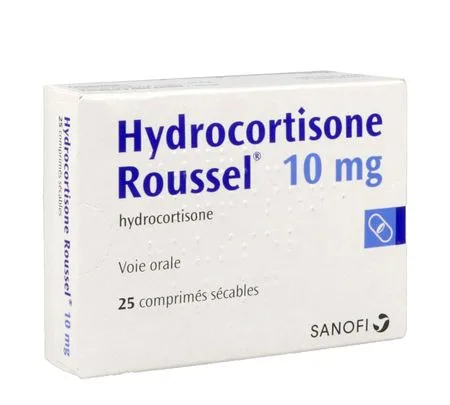
HYDROCORTISONE ROUSSEL 10 mg, scored tablet
Forms and presentations
Scored tablet.
Box of 25, under blisters.
Box of 50, under blisters (hospital model).
Composition
For a scored tablet:
Hydrocortisone: 10,00 mg
Excipient(s) with known effect: lactose
Pregelatinized maize starch, lactose monohydrate, magnesium stearate, talc.
Indications
Glucocorticoid replacement therapy during adrenal insufficiency:
- primary adrenal insufficiency: Addison's disease, adrenalectomy,
- adrenal insufficiency of pituitary origin: Sheehan's syndrome, pituitary insufficiencies of various causes,
- congenital adrenal hyperplasia with or without salt-wasting syndrome (Debré-Fibiger syndrome).
Dosage and administration
Dosage
Maintenance treatment (chronic adrenal insufficiency, adrenal hyperplasia) :
Adult : 20 to 40 mg/day to be divided between morning, noon and 16 h.
Child : 12 to 20 mg/m2/day to be divided between morning, noon and 16 h. In children under 6 years, the tablets should be crushed and mixed with food.
Higher doses are needed in case of intercurrent infection, high fever, trauma, surgical intervention, serious illness and significant heat (see sections Warnings and precautions and Interactions).
In all cases and particularly in children, the minimum effective dose should be sought through successive steps. Dose adjustment is based on clinical data (general condition, pulse, standing and lying blood pressure…) and possibly electrolytes.
In primary adrenal insufficiency, a mineralocorticoid treatment must be associated.
Contraindications
The usual contraindications of systemic corticosteroid therapy do not apply to the use of this form for the indications of replacement corticosteroid therapy.
- Hypersensitivity to the active substance or to any of the excipients listed in section Composition.
- Any untreated infectious state of bacterial, viral, tuberculous or fungal origin.
- Vaccination with live attenuated virus vaccines when hydrocortisone is used at immunosuppressive doses or for long-term treatments (this contraindication does not apply to emergency treatment and treatment of cortisol deficiency).
Warnings and precautions
Special warnings
At the recommended replacement doses for this product, the precautions for use and warnings for corticosteroids are not justified (infectious risks...).
The fluid and electrolyte balance must be maintained and the diet normally salted.
In periods of stress: intercurrent infection, high fever, trauma, surgical intervention, serious illness, the dosage must be temporarily increased (doubled for example) to quickly return to the previous dosage once the acute episode has passed.
In case of surgical intervention, the product must be administered parenterally and at higher doses, for example 300 mg per day on the day of the intervention with progressive tapering. In case of significant heat, the dosage may also need to be increased and especially salt intake must be increased, as well as mineralocorticoid intake in case of primary adrenal insufficiency. In case of digestive disorders preventing oral intake, parenteral replacement at a higher dose is necessary.
Replacement treatment must not be interrupted: risk of acute adrenal insufficiency. Patients must carry an adrenal insufficiency card with mention of their treatment (in case of accident).
Long-term treatment should be avoided in children due to the possibility of corticoadrenal suppression and growth retardation.
Cases of pheochromocytoma crisis, which can be fatal, have been reported after administration of corticosteroids. Corticosteroids should only be administered to patients in whom a pheochromocytoma has been suspected or identified after appropriate assessment of the benefit/risk ratio (see section Adverse effects).
Oral or injectable corticosteroids may promote the occurrence of tendinopathy, or even tendon rupture (exceptional). This risk is increased when co-prescribed with fluoroquinolones and in dialysed patients with secondary hyperparathyroidism or who have undergone renal transplantation.
Athletes' attention should be drawn to the fact that this specialty contains hydrocortisone and that this active ingredient is listed as a doping substance.
Since marketing, tumor lysis syndrome (TLS) has been reported in patients with malignant hemopathies following the use of HYDROCORTISONE ROUSSEL 10 mg, scored tablet alone or in combination with other chemotherapy agents. Patients at high risk of TLS, such as patients with a high proliferation rate, high tumor burden and high sensitivity to cytotoxic agents, must be closely monitored and appropriate precautions must be taken (see section Adverse effects).
Visual disturbances:
Corticosteroids should be used with caution in patients with ocular herpes simplex due to the risk of corneal perforation.
Visual disturbances may occur during systemic or local corticosteroid therapy. In case of blurred vision or onset of any other visual symptom occurring during corticosteroid therapy, an ophthalmological examination is required to look especially for cataract, glaucoma, or a rarer lesion such as central serous chorioretinopathy, described after administration of systemic or local corticosteroids. Central serous chorioretinopathy may lead to retinal detachment.
The risk of secondary fungal and viral eye infections may also be increased in patients receiving corticosteroids.
Cardiac disorders:
The undesirable effects of corticosteroids on the cardiovascular system, such as dyslipidemia and hypertension, may predispose treated patients with existing cardiovascular risk factors to additional cardiovascular effects if high doses and prolonged courses are used. Therefore, corticosteroids should be used with caution in these patients and only if strictly necessary. Particular attention should be paid to changes in cardiovascular risk and additional cardiac monitoring should be implemented. In case of congestive heart failure, systemic corticosteroids should be used with caution and only if strictly necessary.
Endocrine disorders:
Pharmacological doses of corticosteroids administered over prolonged periods may cause hypothalamic-pituitary-adrenal (HPA) suppression (secondary adrenal insufficiency). The degree and duration of adrenal insufficiency vary from patient to patient and depend on the dose, frequency, timing of administration and duration of corticosteroid treatment.
Corticosteroids may induce or worsen Cushing's syndrome; corticosteroids should be avoided in patients with Cushing's disease.
Thyrotoxic periodic paralysis (TPP) may occur in patients with hyperthyroidism and hydrocortisone-induced hypokalemia. TPP should be suspected in patients treated with hydrocortisone who present signs or symptoms of muscle weakness, particularly in patients with hyperthyroidism.
In case of suspected TPP, blood potassium levels must be immediately checked and appropriate management must be provided to ensure a return to normal kalemia.
Psychiatric disorders :
Patients should be warned that potentially severe psychiatric adverse reactions may occur with systemic steroids (see section Adverse effects). The risk of occurrence of these disorders appears to be dose-dependent and may also occur at low doses. Patients should be encouraged to seek medical advice if worrying psychological symptoms appear, especially if depressed mood or suicidal ideas are suspected.
Particular attention is required when using systemic corticosteroids in patients and/or their relatives who have or have a history of severe affective disorders. These may include depressive or manic-depressive illness and previous steroid-related psychosis.
Immunosuppressive effects/Increased sensitivity to infections:
Corticosteroids may increase susceptibility to infections, mask certain signs of infection, and new infections may appear during their use. Suppression of the inflammatory response and immune function increases sensitivity to fungal, viral and bacterial infections and their severity. The clinical picture may often be atypical and may reach an advanced stage before being recognized.
Non-live or inactivated vaccines may be administered to patients receiving immunosuppressive doses of corticosteroids; however, the response to these vaccines may be diminished.
Corticosteroids decrease the immune response to vaccines.
Specific viral diseases:
Patients should avoid any contact with individuals with chickenpox or measles. Specific viral diseases (chickenpox, measles) may be particularly severe in patients treated with corticosteroids.
If they are exposed to such infections during treatment with HYDROCORTISONE ROUSSEL, they should contact a doctor immediately even if there are no symptoms.
Chickenpox is a serious concern because this disease, usually mild, can be fatal in immunosuppressed patients. Patients (or parents of children) without a history of chickenpox are advised to avoid close personal contact with chickenpox or shingles.
If chickenpox is confirmed, the disease requires specialised care and urgent treatment.
Immunosuppression :
Corticosteroids inhibit antibody formation. Parenteral corticosteroid treatment has been associated with a significant increase in the risk of severe hypogammaglobulinaemia. With long-term treatment, IgG subclass deficiencies may be aggravated.
The immunosuppressive properties of corticosteroids increase the risk of tuberculosis and other AIDS-related diseases (for example Kaposi's sarcoma or cytomegalovirus infection).
Cases of Kaposi's sarcoma have been reported in patients receiving corticosteroid treatment.
Skin reactions (hypersensitivity reactions):
Allergic reactions may occur. Rare skin and anaphylactic/anaphylactoid reactions have been reported following parenteral hydrocortisone treatment. Physicians using this medicine should be prepared to deal with such an eventuality. Appropriate precautions should be taken before administration, particularly when the patient has a history of drug allergy.
Gastrointestinal effects:
Corticosteroid treatment may mask the symptoms of gastroduodenal ulcer, so that perforation or haemorrhage may occur without significant pain. Corticosteroid treatment may mask peritonitis or other signs or symptoms associated with gastrointestinal disorders such as perforation, obstruction or pancreatitis.
Vascular disorders:
Thromboses, including venous thromboembolism (VTE), have been reported with corticosteroids. Corticosteroids should be used with caution in patients who have or may be predisposed to thromboembolic disorders.
Nervous system disorders:
Serious medical events have been reported in association with intrathecal/epidural routes of administration. Cases of epidural lipomatosis have been reported in patients taking corticosteroids, generally with long-term use at high doses.
Systemic corticosteroids are not indicated for the treatment of head injuries or strokes and should therefore not be used, as they are unlikely to be beneficial and may even be harmful. For head injuries, a multicentre study revealed an increase in mortality at 2 weeks and 6 months after head injury in patients who received methylprednisolone sodium succinate compared with placebo.
Infants and children on prolonged corticosteroid therapy are at particular risk of increased intracranial pressure.
Musculoskeletal and connective tissue disorders:
Osteoporosis is generally associated with long-term use and high doses of corticosteroids. Corticosteroids should be used with caution in female patients with osteoporosis (postmenopausal women are particularly at risk).
Laboratory test abnormalities:
Hydrocortisone may have an increased effect in patients with liver disease, as the metabolism and elimination of hydrocortisone are significantly reduced in these patients.
Corticosteroids should be used with caution in patients with the following conditions:
- recent intestinal anastomoses, diverticulitis, gastrointestinal ulceration,
- history of corticosteroid-induced myopathy,
- patients with renal insufficiency,
- patients with convulsive disorders.
Close clinical monitoring of these patients is necessary.
Use in elderly people:
Frequent adverse effects of systemic corticosteroids may be associated with more serious consequences in elderly people, in particular osteoporosis, hypertension, hypokalaemia, diabetes, susceptibility to infections and skin thinning. Close clinical monitoring is necessary to avoid reactions that may be life-threatening.
As the complications of corticosteroid treatment are dependent on the dose and the duration of treatment, a decision must be taken individually based on the benefit/risk ratio to determine the dose, the duration of treatment and whether a daily or intermittent treatment should be taken.
The lowest possible dose of corticosteroids should be used to control the disease under treatment, and when a dose reduction is possible, it should be gradual.
Excipients with known effects
This medicine contains lactose. Patients with galactose intolerance, total lactase deficiency or glucose-galactose malabsorption syndrome (rare hereditary diseases) must not take this medicine.
Precautions for use
Hypertrophic cardiomyopathy has been reported after administration of hydrocortisone in prematurely born infants. An appropriate diagnostic assessment and monitoring of cardiac function and structure should therefore be carried out.
Discontinuation of corticosteroids after prolonged treatment must be done gradually. The risks associated with abrupt discontinuation of treatment are exacerbation or recurrence of the underlying disease, acute adrenal insufficiency (particularly in stressful situations, for example during infections, after an accident, during intense physical exertion) or corticosteroid withdrawal syndrome. Corticosteroid withdrawal syndrome may present with a set of symptoms, the most typical of which are fever, anorexia, nausea, lethargy, malaise, arthralgia, skin desquamation, asthenia, hypotension and weight loss.
Interactions
Hypokalaemia-inducing medicines
Hypokalaemia is a factor favouring the occurrence of cardiac rhythm disorders (torsades de pointes, in particular) and increasing the toxicity of certain medicines, for example digoxin. Monitoring and correction of blood potassium may be considered if necessary.
Consequently, medicines that may cause hypokalaemia are involved in a large number of interactions. These include hypokalaemic diuretics, alone or in combination, stimulant laxatives, glucocorticoids, tetracosactide and amphotericin B (intravenous route).
Combinations not recommended
+ Live attenuated vaccines
Risk of generalised, potentially fatal vaccine-related disease (see section Contraindications)
Associations requiring precautions for use
+ Other potassium-lowering agents
Increased risk of hypokalaemia.
Monitoring of serum potassium with correction if necessary.
+ Digitalis glycosides
Hypokalaemia favouring the toxic effects of digitalis.
Correct any hypokalemia beforehand and carry out clinical, electrolyte and electrocardiographic monitoring.
Clinical and biological monitoring.
+ Medicines likely to cause torsades de pointes:
Increased risk of ventricular rhythm disorders, in particular torsades de pointes.
Correct any hypokalaemia beforehand before administering the product and carry out clinical, electrolyte and electrocardiographic monitoring.
+ Enzyme inducers
Risk of decreased efficacy of hydrocortisone (increased metabolism); the consequences are particularly serious when hydrocortisone is administered as replacement therapy or in cases of transplantation.
Clinical and biological monitoring; adjustment of the hydrocortisone dosage during the combination and after discontinuation of the enzyme inducer.
+ CYP3A inhibitors
Treatment in combination with CYP3A inhibitors, including medicines containing cobicistat, could increase the risk of systemic side effects. The combination should be avoided, unless the benefits outweigh the increased risk of systemic side effects of corticosteroids; in that case, patients should be monitored for these effects.
+ Insulin, metformin, hypoglycaemic sulfonylureas
Increase in blood glucose with occasional ketoacidosis due to decreased glucose tolerance induced by corticosteroids.
Inform patients and reinforce blood glucose and urine self-monitoring, particularly at the start of treatment. Adjust the dose of the antidiabetic medicine if necessary during corticosteroid treatment and after its discontinuation.
Important interactions/effects of medicines or substances with hydrocortisone
+ Cholestyramine
Cholestyramine may increase the clearance of corticosteroids.
+ Oral anticoagulants
The effect of corticosteroids on oral anticoagulants is variable. Both increased and decreased effects of anticoagulants have been reported when they are administered in combination with corticosteroids. Therefore, coagulation markers should be monitored to maintain the desired anticoagulant effects.
+ Anticholinergics (neuromuscular blocking agents)
Corticosteroids may have an effect on anticholinergics.
Acute myopathy has been reported with concomitant use of high doses of corticosteroids and anticholinergics, such as neuromuscular blocking medicines (see section Warnings and precautions for more information).
An antagonism of the neuromuscular blocking effects of pancuronium and vecuronium has been reported in patients taking corticosteroids. This interaction may be expected with all competitive neuromuscular antagonists.
+ Non-steroidal anti-inflammatory drugs
Increased risk of gastrointestinal ulceration and haemorrhage.
+ Acetylsalicylic acid (high doses)
Corticosteroids may increase the clearance of high-dose aspirin, which may lead to a decrease in serum salicylate levels. Discontinuation of corticosteroid treatment may lead to an increase in serum salicylate levels, which may result in an increased risk of salicylate toxicity.
Fertility, pregnancy and breastfeeding
Pregnancy
In animals, experimentation has demonstrated a teratogenic effect, which varies according to species.
An increased incidence of cleft palate was observed in animal studies (see section Preclinical safety).
According to data from an epidemiological study, the use of glucocorticoids during the first trimester may increase the risk of cleft lip and/or cleft palate.
HYDROCORTISONE ROUSSEL 10 mg, scored tablet should be used during pregnancy only if the benefits for the mother outweigh the risks, including those for the foetus.
Maternal adrenal insufficiency should be treated during pregnancy, adjusting the dose of hydrocortisone to the clinical picture if needed.
During chronic diseases requiring treatment throughout pregnancy, a slight intrauterine growth retardation is possible. Neonatal adrenal insufficiency has been exceptionally observed after high-dose corticosteroid therapy. It seems justified to observe a period of clinical (weight, diuresis) and biological (blood glucose) monitoring of the newborn.
Breast-feeding
Hydrocortisone is excreted in breast milk; breastfeeding is not recommended. Available data appear to show good tolerance in the infant; however, the biological or clinical impact of long-term maternal treatment has not been evaluated to date.
Driving and using machines
HYDROCORTISONE ROUSSEL has a major influence on the ability to drive vehicles and use machines. Adverse effects, such as dizziness and convulsions, are possible after corticosteroid treatment. If these effects occur, patients must not drive or use machines.
Adverse effects
The adverse effects reported during clinical trials and from post-marketing experience, through spontaneously reported cases or cases reported in the literature, are presented below. Frequencies have been defined using the following convention: very common (≥ 1/10); common (≥ 1/100 to < 1/10); uncommon (≥ 1/1 000 to < 1/100); rare (≥ 1/10 000 to < 1/1 000); very rare (< 1/10 000); frequency not known (cannot be estimated from the available data). Within each frequency group, adverse effects must be presented in order of decreasing seriousness.
|
MedDRA
|
Adverse Effect |
Frequency |
|
Congenital, familial and genetic disorders |
Hypertrophic cardiomyopathies in infants born prematurely. |
Not known |
|
Eye disorders |
Blurred vision (see section Warnings and precautions), chorioretinopathies, glaucoma, exophthalmos, cataract. |
Not known |
|
General disorders and administration site conditions |
Asthenia, facial swelling, delayed wound healing. |
Not known |
|
Immune system disorders |
Drug hypersensitivity, anaphylactic reaction, anaphylactoid reactions. |
Not known |
|
Injury, poisoning and procedural complications |
Tendon rupture (particularly of the Achilles tendon). |
Not known |
|
Investigations |
Weight gain secondary to adrenal suppression (long-term use), decreased glucose tolerance, increased urinary calcium, decreased kalaemia, increased alanine aminotransferase, increased aspartate aminotransferase, increased blood alkaline phosphatases. |
Not known |
|
Metabolism and nutrition disorders |
Hyperkalaemia, hypokalaemia, hypokalaemic alkalosis, fluid retention in tissues (hydrosodium retention), dyslipidaemias; cases of tumour lysis syndrome have been reported in patients with malignant haemopathies (see section Warnings and precautions). |
Not known |
|
Psychiatric disorders |
Agitation, sleep disorders, affective disorders (including depression, euphoric mood, affective lability, suicidal ideation), psychotic disorder (including mania, delusions, hallucinations), mental disorder, personality change, confusional state, anxiety, mood swings, insomnia, irritability. |
Not known |
|
Endocrine disorders |
Steroid withdrawal syndrome (a "withdrawal syndrome" may also occur, including fever, rhinitis, conjunctivitis, painful cutaneous nodules with itching and weight loss) (see section Warnings and precautions), adrenergic crisis associated with pheochromocytoma (class effect of corticosteroids) (see section Warnings and precautions), Cushing's syndrome, hypopituitarism. |
Not known |
|
Disorders of the reproductive system and breast |
Menstrual irregularities. |
Not known |
|
Skin and subcutaneous tissue disorders |
Skin atrophy, ecchymoses, acne, allergic dermatitis, localised or generalised urticaria, angioedema, skin striae, hirsutism, skin hypopigmentation. |
Not known |
|
Vascular disorders |
Thrombosis including embolism, pulmonary embolism, orthostatic hypotension, arterial hypertension. |
Not known |
|
Blood and lymphatic system disorders |
Leukocytosis. |
Not known |
|
Benign, malignant and unspecified tumours (including cysts and polyps) |
Kaposi's sarcoma. |
Not known |
|
Cardiac disorders |
Congestive heart failure (in predisposed patients), myocardial rupture following myocardial infarction, hypertension. |
Not known |
|
Infections and infestations |
Opportunistic infection. |
Not known |
|
Musculoskeletal and connective tissue disorders |
Muscle weakness, myalgia, myopathy, muscle atrophy, osteonecrosis, pathological fracture, growth retardation, osteoporosis, vertebral compression fracture. |
Not known |
|
Nervous system disorders |
Epidural lipomatosis; an increase in intracranial pressure with papilledema in children (pseudotumor cerebri) has been reported, generally after discontinuation of hydrocortisone treatment; benign intracranial hypertension, convulsions, amnesia, cognitive disorder, headache. |
Not known |
|
Gastrointestinal disorders |
Gastroduodenal ulcer (with possible perforation of gastroduodenal ulcer and gastroduodenal ulcer haemorrhage), intestinal perforation, gastric haemorrhage, pancreatitis, oesophageal ulceration, oesophageal candidiasis. |
Not known |
|
Ear and labyrinth disorders |
Vertigo. |
Not known |
|
Infections and infestations |
Opportunistic infection. |
Not known |
In case of underdosage, the following may be observed: asthenia, orthostatic hypotension, hyperkalaemia.
Reporting of suspected adverse reactions
Reporting suspected adverse reactions after authorisation of the medicinal product is important. It allows continued monitoring of the benefit/risk balance of the medicinal product. Healthcare professionals are asked to report any suspected adverse reactions via the national reporting system: National Agency for the Safety of Medicines and Health Products (ANSM) and the network of Regional Pharmacovigilance Centres - Website: https://signalement.social-sante.gouv.fr/
Overdose
Fluid and electrolyte disorders: hypokalaemia, hypokalaemic alkalosis, sodium and water retention with arterial hypertension.
Endocrine and metabolic disorders: weight gain, facial swelling. Decreased glucose tolerance. Occasionally menstrual irregularities.
Skin disorders: skin atrophy. Delayed wound healing. Ecchymoses, acne.
Neuropsychiatric disorders: overexcitation with euphoria and sleep disturbances.
Musculoskeletal disorders: a few cases of tendon rupture have exceptionally been described, particularly with concomitant prescription of fluoroquinolones.
Pharmacodynamics
Pharmacotherapeutic class: GLUCOCORTICOIDS, ATC code: H02AB09 (H: Systemic hormonal preparations, excluding sex hormones)
Physiological hormone of the adrenal cortex.
Pharmacokinetics
Absorption
After oral absorption, the maximum blood level is obtained in 1 hour.
Distribution
It is reduced by 50% one and a half hours later.
Biotransformation
Hepatic and renal.
Elimination
Urinary elimination mainly in the form of conjugated glucuronides.
Preclinical safety
Animal studies in which glucocorticoids were administered to pregnant mice, rats and rabbits showed an increased incidence of cleft palate in litters.
SPECIAL PRECAUTIONS FOR DISPOSAL AND OTHER HANDLING
No special requirements.
Any unused medicinal product or waste material should be disposed of in accordance with local requirements.
Prescription, supply and reimbursement
| Marketing authorisation (AMM) |
|
| Price: |
|
Plq/50: Collect.
CSP
76-78, avenue du Midi. CS 30077
63808 Cournon d'Auvergne cdx
Tel: 04 73 69 28 28. Fax: 04 73 69 93 15
Medical information and pharmacovigilance: Tel: 01 47 04 80 46
Source: VIDAL · Updated on 10/11/2026. This information does not replace advice from a healthcare professional.