
Medicines
SmPC of 24/05/2022
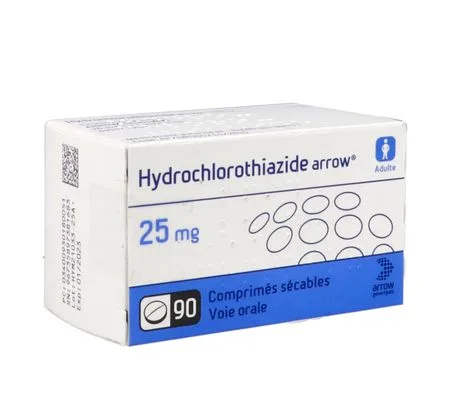
HYDROCHLOROTHIAZIDE ARROW 25 mg, scored tablet
Forms and presentations
Scored tablet.
Round tablet (6,4 mm in diameter), scored, white to off-white, flat with bevelled edges, engraved "HC 25" on one side and with a score line on the other side.
The tablet can be divided into two equal doses.
Composition
Hydrochlorothiazide...............................................................................................................................................25 mg
For a scored tablet.
Excipient with known effect: each tablet contains 54,250 mg of lactose monohydrate.
Lactose monohydrate, calcium hydrogen phosphate dihydrate, pregelatinised maize starch, maize starch, anhydrous colloidal silica, magnesium stearate.
Indications
HYDROCHLOROTHIAZIDE ARROW 25 mg, scored tablet is indicated in adults for the treatment of the following conditions:
- Oedema of cardiac or renal origin.
- Oedema of hepatic origin, most often in combination with a potassium-sparing diuretic.
- Arterial hypertension.
Dosage and administration
Dosage
Oral use.
As with all other diuretics, treatment should be initiated with the smallest possible dose. This dose should be established according to the individual response of the patient in order to achieve the maximum therapeutic benefit while minimising the occurrence of undesirable effects. The daily dose of HYDROCHLOROTHIAZIDE ARROW may be administered in one or two doses, with or without food.
Oedema
The initial dosage is 50 to 100 mg/day, possibly 200 mg/day. The lowest effective dose should be identified by titration and should be administered only for limited periods.
The maintenance dosage is 25 to 50 mg/day or 1 day on 2.
Arterial hypertension
The doses currently recommended in arterial hypertension are 12,5 or 25 mg/day.
For a given dosage, the maximum effect is reached in 3 to 4 weeks. If blood pressure is not sufficiently lowered with a dose of 25 mg/day, combination treatment with another antihypertensive medicinal product is recommended. Sodium and/or volume depletion should be corrected before using HYDROCHLOROTHIAZIDE ARROW in combination with an ACE inhibitor, an angiotensin II receptor antagonist or a direct renin inhibitor. Otherwise, treatment should be initiated under close medical supervision.
Special populations
Renal impairment
No adjustment of the initial dose is necessary in patients with mild to moderate renal impairment (see section Pharmacokinetics).
HYDROCHLOROTHIAZIDE ARROW is contraindicated in subjects with anuria and in patients with severe renal impairment.
Hepatic impairment
No adjustment of the initial dose is necessary in patients with mild to moderate hepatic impairment (see section Pharmacokinetics).
HYDROCHLOROTHIAZIDE ARROW should be used with caution in patients with severe hepatic impairment (see section Warnings and precautions).
Elderly subjects (over 65 years)
In elderly subjects, attention should be paid to possible impairment of renal function.
Severe cardiac decompensation
In patients with severe cardiac decompensation, absorption of hydrochlorothiazide may be significantly limited.
Paediatric population
The safety and efficacy of hydrochlorothiazide in children and adolescents aged under 18 years have not been established. No data are available. Therefore, use in children and adolescents is not recommended.
Method of administration
The tablet should be swallowed with a sufficient quantity of liquid.
Duration of treatment
The duration of treatment is not limited. It depends on the condition and its severity. After long-term treatment, hydrochlorothiazide should be discontinued gradually.
Contraindications
- hypersensitivity to the active substance or to any of the excipients mentioned in section Composition ;
- anuria;
- severe renal insufficiency (creatinine clearance less than 30 ml/min).
Warnings and precautions
Non-melanoma skin cancer
An increased risk of non-melanoma skin cancer (NMSC) [basal cell carcinoma (BCC) and squamous cell carcinoma (SCC)] with an increasing cumulative dose of exposure to hydrochlorothiazide (HCTZ) was observed in two epidemiological studies from the Danish Cancer Registry. The photosensitising actions of HCTZ could constitute a possible mechanism of NMSC.
Patients taking HCTZ should be informed of the risk of NMSC and be advised to regularly check their skin for any new lesions and to promptly report any suspicious skin lesions. Possible preventive measures such as limited exposure to sunlight and UV rays and, when exposed, adequate protection should be advised to patients in order to minimise the risk of skin cancer. Suspicious skin lesions should be examined promptly, including possibly by histological examination of biopsies. The use of HCTZ may also need to be reconsidered in patients who have previously experienced NMSC (see also section Adverse effects).
Acute respiratory toxicity
Very rare severe cases of acute respiratory toxicity, including acute respiratory distress syndrome (ARDS), have been reported after taking hydrochlorothiazide. Pulmonary oedema generally develops a few minutes to a few hours after taking hydrochlorothiazide. Initially, symptoms include dyspnoea, fever, pulmonary deterioration and hypotension. If a diagnosis of ARDS is suspected, HYDROCHLOROTHIAZIDE ARROW must be withdrawn and appropriate treatment must be administered. Hydrochlorothiazide must not be administered to patients who have previously developed ARDS following taking hydrochlorothiazide.
Special warnings
This medicine is generally not recommended in cases of bilateral renal artery stenosis or in a functionally single kidney, and in cases of hypokalaemia.
Chronic abuse of diuretics may lead to a pseudo-Bartter syndrome resulting in oedema. The oedema results in an increase in renin with consequent secondary hyperaldosteronism.
Hydrochlorothiazide is a sulfonamide. The possibility of cross-allergy with other sulfonamides, particularly antibacterials, remains theoretical and has not been validated clinically.
Hepatic impairment
Thiazide diuretics, like other diuretics, may induce electrolyte imbalance, hepatic encephalopathy or hepatorenal syndrome when used to treat cirrhotic ascites. Hydrochlorothiazide should be used with caution, particularly in subjects with severe hepatic impairment.
Cases of photosensitivity reactions have been reported with the use of thiazide diuretics (see section Adverse effects).
If a photosensitivity reaction occurs during treatment, it is recommended to discontinue treatment. If re-administration of the treatment is essential, it is recommended to protect areas exposed to sunlight or artificial UVA.
Precautions for use
Hydro-electrolyte balance
Sodium level
Serum sodium should be checked before starting treatment, and then at regular intervals thereafter.
Thiazide diuretics may cause hyponatraemia or exacerbate pre-existing hyponatraemia. In subjects with a marked decrease in serum sodium and/or significant volume depletion, as observed in patients receiving high doses of diuretics, symptomatic hypotension may occur in rare cases after initiation of treatment with hydrochlorothiazide.
As the decrease in natremia may initially be asymptomatic, regular monitoring is therefore essential and must be even more frequent in at-risk populations represented by elderly subjects, especially malnourished ones, and cirrhotic patients (see sections Adverse effects and Overdose).
Particular monitoring should be carried out in patients with ascites related to hepatic cirrhosis, and in patients with oedema related to nephrotic syndrome.
Isolated cases of hyponatraemia accompanied by neurological symptoms (nausea, progressive disorientation, apathy) have been observed. Thiazide diuretics should only be used after normalisation of potassium levels, without existing symptoms of sodium and/or volume depletion or severe hypoalbuminaemia and/or hypovolaemia. Otherwise, treatment will be initiated under close medical supervision.
Kalaemia
Thiazide and related diuretics can cause the occurrence of hypokalaemia or exacerbate pre-existing hypokalaemia. Thiazide diuretics must be administered with caution in patients suffering from a condition that may cause significant potassium loss, such as in nephropathies with salt loss or disorders of renal function of pre-renal (cardiogenic) origin.
The risk of occurrence of hypokalaemia (< 3,5 mmol/l) must be prevented in certain at-risk populations represented by elderly and/or undernourished and/or polymedicated subjects, cirrhotic patients with oedema and ascites, coronary patients, and heart failure patients. Indeed, in this case, hypokalaemia increases the cardiac toxicity of digitalis and the risk of arrhythmias.
Patients presenting with a long QT interval on ECG are also at risk, whether the origin is congenital or drug-induced. Hypokalaemia (as well as bradycardia) then acts as a factor favouring the occurrence of severe arrhythmias, in particular torsades de pointes, potentially fatal, especially in the presence of bradycardia.
Normalisation of hypokalaemia and of any accompanying hypomagnesaemia is recommended before initiating treatment with thiazide diuretics.
The first control of plasma potassium must be carried out during the week following the initiation of treatment.
Subsequently, regular monitoring of serum potassium is recommended. Electrolyte balance, particularly that of potassium, must be monitored in all patients receiving thiazide diuretics.
In cases of chronic treatment, serum potassium must be monitored at the initiation of treatment. A check at 3-4 weeks could be considered depending on risk factors. Subsequently, regular monitoring should be recommended, particularly in at-risk patients.
Uric acid
Hydrochlorothiazide, like other diuretics, can lead to an increase in plasma uric acid concentrations, due to a decrease in its urinary excretion, and consequently promote the onset of hyperuricaemia or worsen pre-existing hyperuricaemia, which may trigger gout attacks in predisposed patients.
The dosage will be adjusted according to plasma uric acid concentrations.
Metabolic effects
Calcemia
Thiazide diuretics decrease urinary calcium excretion and may cause a slight and transient increase in serum calcium in the absence of known calcium metabolism abnormalities. Hydrochlorothiazide should be used with caution in patients with hypercalcaemia and should only be administered after correction of any pre-existing hypercalcaemia. Hydrochlorothiazide must be discontinued if hypercalcaemia occurs during treatment. Serum calcium must be monitored regularly during treatment with thiazide diuretics. Marked hypercalcaemia may be a sign of masked hyperparathyroidism. Thiazide diuretics should be stopped before investigating parathyroid function.
During treatment with hydrochlorothiazide, patients must ensure an adequate fluid intake and, due to increased potassium loss, eat potassium-rich foods (for example bananas, vegetables, nuts).
Blood glucose and lipids
Thiazide diuretics, including hydrochlorothiazide, may decrease glucose tolerance and increase serum cholesterol and triglyceride levels. Adjustment of the dose of insulin or oral hypoglycaemic agents may be necessary in diabetic patients.
Renal function and diuretics
Thiazide diuretics are only fully effective when renal function is normal or only mildly impaired (assessed for example by calculating creatinine clearance from serum creatinine). In elderly subjects, the creatinine clearance value must be readjusted according to the patient's age, weight and sex, using the Cockcroft formula, for example:
CrCl = (140 - age) x weight/0,814 x serum creatinine
Where:
- age expressed in years,
- weight in kg,
- creatinine level in micromol/l.
This formula is valid for elderly male subjects, and must be corrected for women by multiplying the result by 0,85.
Hypovolaemia, secondary to the loss of water and sodium induced by the diuretic at the start of treatment, leads to a reduction in glomerular filtration. This may result in an increase in blood urea and serum creatinine.
This transient functional renal insufficiency may worsen pre-existing renal insufficiency.
Choroidal effusion, acute myopia and secondary acute angle-closure glaucoma
Sulfonamides or their derivatives may cause an idiosyncratic reaction which may lead to choroidal effusion with visual field abnormality, transient acute myopia and acute angle-closure glaucoma. Symptoms include sudden onset of reduced visual acuity or eye pain and generally occur within hours or weeks of starting treatment. Untreated acute angle-closure glaucoma may cause permanent loss of vision. The first measure to be taken is to discontinue treatment as quickly as possible. Rapid recourse to medical or surgical treatment may be necessary if intraocular pressure remains uncontrolled. Risk factors for the occurrence of acute angle-closure glaucoma may include a history of allergy to sulfonamides or penicillin.
Other
Antihypertensive combinations
It is advised to reduce the dosage when combined with another antihypertensive agent, at least initially.
The antihypertensive effect of ACE inhibitors, angiotensin II antagonists or renin inhibitors is potentiated by treatments that increase plasma renin activity (diuretics).
Caution is recommended when an ACE inhibitor, an angiotensin II antagonist or a direct renin inhibitor is administered together with HYDROCHLOROTHIAZIDE ARROW, and particularly in patients with significant sodium and/or volume depletion.
Athletes
Athletes are advised that this specialty contains an active substance that may induce a positive reaction in tests carried out during anti-doping controls.
Other
Lupus erythematosus: cases of exacerbation or activation of disseminated lupus erythematosus have been reported with thiazide diuretics, including hydrochlorothiazide.
Hypersensitivity reactions to hydrochlorothiazide are more frequent in allergic and asthmatic patients.
This medicine contains lactose. Patients with galactose intolerance, total lactase deficiency or glucose-galactose malabsorption syndrome (rare hereditary diseases) must not take this medicine.
Interactions
Concomitant administration of HYDROCHLOROTHIAZIDE ARROW with the following medicinal products may lead to interactions.
Hypokalaemia-inducing medicines
Hypokalaemia is a factor favouring the occurrence of heart rhythm disorders (torsades de pointes, in particular) and increasing the toxicity of certain medicines, for example digoxin. Therefore, medicines that may cause hypokalaemia are involved in a large number of interactions. These include potassium-depleting diuretics, alone or combined, stimulant laxatives, glucocorticoids, tetracosactide and amphotericin B (IV route).
Hyponatremic medicinal products
Certain medicines are more frequently involved in the occurrence of hyponatremia. These are diuretics, desmopressin, serotonin reuptake inhibitor antidepressants, carbamazepine and oxcarbazepine. The combination of these medicines increases the risk of hyponatremia.
Combinations not recommended
+ Lithium
Increase in lithium levels with signs of lithium overdose, as with a sodium-restricted diet (decreased renal excretion of lithium).
If the combination cannot be avoided, strict monitoring of lithemia and adjustment of the lithium dose.
Associations requiring precautions for use
+ Acetylsalicylic acid
For anti-inflammatory doses of acetylsalicylic acid (≥ 1 g per dose and/or ≥ 3 g per day) or for analgesic or antipyretic doses (≥ 500 mg per dose and/or < 3 g per day):
Acute renal failure in dehydrated patients, due to decreased glomerular filtration secondary to decreased synthesis of renal prostaglandins. In addition, reduction of the antihypertensive effect.
Hydrate the patient and monitor renal function at the start of treatment.
+ Non-steroidal anti-inflammatory drugs
Acute renal failure in at-risk patients (elderly subjects and/or dehydrated) due to decreased glomerular filtration (inhibition of vasodilatory prostaglandins due to non-steroidal anti-inflammatory drugs). Furthermore, reduction of the antihypertensive effect.
Hydrate the patient and monitor renal function at the start of treatment.
+ Carbamazepine
Risk of symptomatic hyponatraemia. Clinical and biological monitoring. If possible, use another class of diuretics.
+ Chelating resins
Taking a chelating resin may decrease intestinal absorption and, potentially, the efficacy of other medicines taken simultaneously. In general, the resin should be taken at a distance from other medicines, with an interval of more than 2 hours, if possible.
+ Digitalis glycosides
Hypokalaemia favouring the toxic effects of digitalis.
Correct any hypokalaemia beforehand, and carry out clinical, electrolyte and electrocardiographic monitoring.
+ Potassium-sparing diuretics (alone or in combination)
The rational combination, useful for certain patients, does not exclude the occurrence of hypokalaemia or, particularly in renally impaired and diabetic patients, hyperkalaemia.
Monitor serum potassium, possibly ECG, and, if necessary, reconsider the treatment.
+ Angiotensin-converting enzyme inhibitors (ACEI), angiotensin II antagonist
Risk of abrupt arterial hypotension and/or acute renal failure upon initiation or dose increase of a treatment with an angiotensin-converting enzyme inhibitor or an angiotensin II antagonist in the case of pre-existing hydrosodium depletion.
In arterial hypertension, when prior diuretic treatment may have caused hydrosodium depletion, one must:
- either stop the diuretic before starting treatment with the angiotensin II antagonist or the ACEI, and reintroduce a potassium-lowering diuretic later if necessary;
- or administer reduced initial doses of angiotensin II antagonist or ACE inhibitor and gradually increase the dosage.
In congestive heart failure treated with diuretics, start with a very low dose of ACEI or angiotensin II antagonist, possibly after reducing the dose of the associated potassium-lowering diuretic.
In all cases, monitor renal function (serum creatinine) during the first weeks of treatment with the ACE inhibitor or angiotensin II antagonist.
+ Medicinal products liable to induce torsades de pointes (amiodarone, amisulpride, arsenic trioxide, artenimol, chloroquine, chlorpromazine, citalopram, cyamemazine, diphemanil, disopyramide, dofetilide, dolasetron, domperidone, dronedarone, droperidol, erythromycin, escitalopram, flupentixol, fluphenazine, halofantrine, haloperidol, hydroquinidine, hydroxyzine, ibutilide, levofloxacin, levomepromazine, lumefantrine, mequitazine, methadone, mizolastine, moxifloxacin, pentamidine, pimozide, pipamperone, piperaquine, pipotiazine, prucalopride, quinidine, sotalol, spiramycin, sulpiride, sultopride, tiapride, toremifene, vandetanib, vincamine, zuclopenthixol)
Increased risk of ventricular arrhythmias, in particular torsades de pointes.
Correct any hypokalaemia before administering the product and carry out clinical, electrolyte and electrocardiographic monitoring.
+ Other potassium-lowering agents
Increased risk of hypokalaemia. Monitor potassium levels with correction if needed.
+ Iodinated contrast agents
In case of dehydration caused by diuretics, increased risk of acute functional renal insufficiency, in particular when high doses of iodinated contrast media are used.
Rehydration before administration of the iodinated product.
Associations to be taken into account
+ Alpha-blockers for urological use (alfuzosin, doxazosin, prazosin, silodosin, tamsulosin, terazosin)
Increase of the hypotensive effect. Increased risk of orthostatic hypotension.
+ Alpha-blocking antihypertensives
Increase of the hypotensive effect. Increased risk of orthostatic hypotension.
+ Medicinal products causing orthostatic hypotension
In addition to antihypertensives, many medicinal products may cause orthostatic hypotension. This is notably the case with nitrates, phosphodiesterase type 5 inhibitors, alpha-blockers for urological use, imipramine-type antidepressants and phenothiazine neuroleptics, dopamine agonists, levodopa, baclofen, amifostine….
Risk of increased hypotension, in particular orthostatic hypotension.
+ Ion exchange resins
The absorption of thiazide diuretics, such as hydrochlorothiazide, is reduced by cholestyramine and colestipol. However, this interaction could potentially be attenuated if the doses of hydrochlorothiazide and resin are increased such that hydrochlorothiazide is administered at least 4 hours before or 4 to 6 hours after administration of the resins.
+ Calcium
Risk of hypercalcemia due to decreased urinary elimination of calcium.
+ Ciclosporin
Risk of increased serum creatinine without change in blood concentrations of ciclosporin, even in the absence of hydrosodium depletion. Also risk of hyperuricemia and complications such as gout.
+ Nitro derivatives and related substances
Increased risk of hypotension, particularly orthostatic hypotension.
+ Pressor amines
Hydrochlorothiazide may reduce the response to pressor amines such as noradrenaline, but the clinical significance of this effect is not sufficient to prevent its use.
Fertility, pregnancy and breastfeeding
Pregnancy
Data on the use of hydrochlorothiazide during pregnancy are limited, especially during the first trimester. Animal studies are insufficient.
Hydrochlorothiazide crosses the placental barrier. Based on the pharmacological mechanism of action of hydrochlorothiazide, its use during the second and third trimesters of pregnancy may decrease fetoplacental perfusion and cause fetal and neonatal effects such as jaundice, electrolyte imbalances and thrombocytopenia.
Hydrochlorothiazide must not be used in cases of gestational edema, gestational hypertension or proteinuria, or pre-eclampsia (gestosis), due to the risk of decreased plasma volume and placental hypoperfusion, without beneficial effect on the course of the disease.
Hydrochlorothiazide must not be used in the treatment of essential hypertension in pregnant women, except in rare cases where no other treatment can be used.
Breast-feeding
Hydrochlorothiazide is excreted in breast milk in small quantities. Thiazide diuretics at high doses causing significant diuresis may inhibit lactation.
The use of hydrochlorothiazide during breastfeeding is not recommended. If hydrochlorothiazide is used during breastfeeding, the doses administered should remain as low as possible.
Fertility
There are no data on the effect of hydrochlorothiazide on fertility in humans.
In studies conducted in animals, hydrochlorothiazide has no effect on fertility or conception (see section Preclinical safety).
Driving and using machines
HYDROCHLOROTHIAZIDE ARROW has a minor or moderate influence on the ability to drive vehicles and use machines.
This should be taken into account particularly at the initiation of treatment, in case of dose reduction, if the medicinal product is replaced, or if it is taken at the same time as alcohol.
Adverse effects
Adverse events (Table 1) are classified by frequency, starting with the most frequent, according to the following convention: very common (> 1/10); common (> 1/100, <1/10); uncommon (> 1/1 000, < 1/100); rare (> 1/10 000, < 1/1 000); very rare (< 1/10 000) and frequency not known (cannot be estimated from the available data).
|
Benign, malignant and unspecified tumours (including cysts and polyps) |
|
|
Frequency not known |
Non-melanoma skin cancer (basal cell carcinoma and squamous cell carcinoma) |
|
Blood and lymphatic system disorders |
|
|
Rare |
Thrombocytopenia (sometimes with purpura) |
|
Very rare |
Bone marrow failure, haemolytic anaemia, leukopenia, agranulocytosis |
|
Frequency not known |
Bone marrow aplasia |
|
Immune system disorders |
|
|
Very rare |
Hypersensitivity reaction |
|
Metabolism and nutrition disorders |
|
|
Very common |
Hypokalaemia, hyperlipidaemia |
|
Common |
Hyperuricemia, hypomagnesemia, hyponatremia |
|
Rare |
Hypercalcemia, hyperglycemia, glycosuria, worsening of metabolic diabetes |
|
Very rare |
Hypochloraemic alkalosis |
|
Psychiatric disorders |
|
|
Rare |
Depression, sleep disorders |
|
Nervous system disorders |
|
|
Rare |
Headaches, dizziness, paresthesias |
|
Eye disorders |
|
|
Rare |
Visual disorders |
|
Frequency not known |
Acute myopia and acute angle-closure secondary glaucoma, choroidal effusion |
|
Cardiac disorders |
|
|
Rare |
Arrhythmias |
|
Vascular disorders |
|
|
Common |
Orthostatic hypotension |
|
Respiratory, thoracic and mediastinal disorders |
|
|
Very rare |
Acute respiratory distress syndrome (ARDS) (see section Warnings and precautions) |
|
Gastrointestinal disorders |
|
|
Common |
Diarrhea, loss of appetite, nausea and vomiting |
|
Rare |
Abdominal discomfort, constipation |
|
Very rare |
Pancreatitis |
|
Hepatobiliary disorders |
|
|
Rare |
Intrahepatic cholestasis, jaundice |
|
Skin and subcutaneous tissue disorders |
|
|
Common |
Urticaria and other forms of skin rash |
|
Rare |
Photosensitivity reaction |
|
Very rare |
Lupus erythematosus-like reaction, reactivation of lupus erythematosus, necrotizing vasculitis and toxic epidermal necrolysis |
|
Frequency not known |
Erythema multiforme |
|
Musculoskeletal and systemic disorders |
|
|
Frequency not known |
Muscle spasms |
|
Renal and urinary disorders |
|
|
Uncommon |
Acute renal failure |
|
Frequency not known |
Renal function disorder |
|
Disorders of the reproductive organs and breast |
|
|
Common |
Impotence |
|
General disorders and administration site conditions |
|
|
Frequency not known |
Asthenia, fever |
Description of certain adverse effects:
Non-melanoma skin cancer: based on available data from epidemiological studies, a cumulative dose-dependent association between HCTZ and NMSC has been observed (see also sections Warnings and precautions and Pharmacodynamics).
Reporting of suspected adverse reactions
Reporting suspected adverse reactions after authorisation of the medicinal product is important. It allows continued monitoring of the benefit/risk balance of the medicinal product. Healthcare professionals are asked to report any suspected adverse reaction via the national reporting system: National Agency for the Safety of Medicines and Health Products (ANSM) and the network of Regional Centres of Pharmacovigilance - Website: www.signalement-sante.gouv.fr.
Overdose
Symptoms
Symptoms of acute and chronic overdose depend on the extent of fluid and electrolyte losses.
In cases of significant fluid and electrolyte loss, overdose may manifest with the following signs: thirst, weakness, dizziness, vomiting, muscle pain and muscle cramps (such as calf cramps), headache, tachycardia, hypotension and orthostatic hypotension. Dehydration and hypovolemia may lead to hemoconcentration, convulsions, lethargy, confusion, collapse and acute renal failure. Electrolyte disturbances with arrhythmias may occur.
Hypokalemia may cause fatigue, muscle weakness, paresthesia, paresis, apathy, meteorism, constipation or arrhythmias. Severe potassium loss may lead to paralytic ileus or loss of consciousness and hypokalemic coma.
Management
At the first signs of overdose, hydrochlorothiazide treatment must be stopped immediately.
In the case of a recent overdose, attempts may be made to reduce systemic absorption of hydrochlorothiazide by primary elimination of the medicinal product (induced vomiting, gastric lavage) or by reducing absorption (activated charcoal).
Vital signs should be monitored. In addition, fluid and electrolyte balance, acid-base metabolism and blood glucose should be checked regularly. A clinical urine analysis should be performed. Deviations from normal values should be corrected.
Therapeutic measures
- in case of hypovolemia: volume replacement
- in case of hypokalemia: potassium replacement
- IN CASE OF COLLAPSE: TRENDELENBURG POSITION, SHOCK TREATMENT, IF NECESSARY.
Treatment
- Supportive care should be applied in all cases of overdose.
Pharmacodynamics
Pharmacotherapeutic class: diuretics of the distal convoluted tubule, ATC code: C03AA03
Mechanism of action
Hydrochlorothiazide is a benzothiadiazide diuretic.
Thiazide diuretics act mainly at the distal tubule of the kidney (initial part of the distal convoluted tubule) by inhibiting the reabsorption of sodium chloride (by blocking the NaCl co-transporter).
Increased release of Na+ and water into the cortical collecting tubule and/or increased flow leads to increased secretion and excretion of K+ and H+. Inhibition of NaCl reabsorption also indirectly stimulates the reabsorption of Ca2+.
Diuretic and natriuretic effects appear within 1 to 2 hours after oral administration of hydrochlorothiazide. This activity is maximal after 4 to 6 hours and may persist for 10 to 12 hours.
The diuresis induced by thiazide diuretics initially leads to a decrease in plasma volume, cardiac output and systemic blood pressure. The renin-angiotensin-aldosterone system may be activated. With continuous administration, the hypotensive effect is maintained, probably due to decreased peripheral vascular resistance; cardiac output returns to pre-treatment values, plasma volume sometimes remains reduced and plasma renin activity may be increased.
Hydrochlorothiazide is not effective in patients with chronic renal insufficiency (creatinine clearance < 30 ml/min and/or serum creatinine > 1,8 mg/100 ml).
Hypertension
During chronic administration, the antihypertensive effect of hydrochlorothiazide is dose-dependent in most patients, for doses ranging from 12,5 mg/day up to 50-75 mg/day.
The therapeutic effect of thiazide diuretics remains on a plateau beyond a certain dose, while adverse effects continue to increase: if treatment is ineffective, it is not useful, and often poorly tolerated, to increase doses beyond the recommended posologies (see section Dosage and administration).
In patients with nephrogenic diabetes insipidus, hydrochlorothiazide decreases urine volume and increases urinary osmolality.
Non-melanoma skin cancer
Based on available data from epidemiological studies, a cumulative dose-dependent association between HCTZ and NMSC has been observed.
One study included a population composed of 71 533 cases of BCC and 8 629 cases of SCC matched to 1 430 833 and 172 462 population controls, respectively. High HCTZ use (cumulative dose ≥50 000 mg) was associated with an adjusted odds ratio (OR) of 1,29 (95% confidence interval: 1,23-1,35) for BCC and of 3,98 (95% confidence interval: 3,68-4,31) for SCC. A clear relationship between cumulative dose-response was observed for BCC and SCC.
Another study showed a possible association between lip cancer (SCC) and exposure to HCTZ: 633 cases of lip cancer were matched to 63 067 population controls, using a risk-set sampling strategy.
A cumulative dose-response relationship was demonstrated with an adjusted OR of 2,1 (95% confidence interval: 1,7-2,6) rising to an OR of 3,9 (3,0-4,9) for high use (~25 000 mg) and an OR of 7,7 (5,7-10,5) for the highest cumulative dose (~100 000 mg) (see also section Warnings and precautions).
Pharmacokinetics
Absorption
After oral administration, hydrochlorothiazide is absorbed rapidly (Tmax of approximately 2 hours). The increase in mean AUC is linear and dose-proportional within the therapeutic range.
The effect of food intake on the absorption of hydrochlorothiazide has little clinical impact. After oral administration, the absolute bioavailability of hydrochlorothiazide is 70%.
In patients with congestive heart failure, absorption of hydrochlorothiazide is decreased.
Continuous administration does not modify the metabolism of hydrochlorothiazide. After 3 months of treatment with a daily dose of 50 mg hydrochlorothiazide, absorption, elimination or excretion are similar to those observed with short-term treatments.
Distribution
Hydrochlorothiazide accumulates in erythrocytes, reaching its maximum concentration 4 hours after oral administration. After 10 hours, the concentration in erythrocytes is approximately 3 times higher than in plasma. Plasma protein binding of approximately 40-70% has been reported, and an apparent volume of distribution estimated at 4-8 L/kg.
The half-life is highly variable from one subject to another: it ranges between 6 and 25 hours.
Elimination
Hydrochlorothiazide is eliminated from plasma mainly unchanged with a half-life of approximately 6 to 15 h in the terminal elimination phase. In 72 h, 60 to 80% of a single oral dose is excreted in urine, 95% unchanged, and 4% as the hydrolysate 2-amino-4-chloro-m-benzenedisulfonamide (ABCS). Up to 24% of the oral dose is recovered in feces and a negligible amount is excreted in bile.
In patients with renal and cardiac insufficiency, renal clearance of hydrochlorothiazide is decreased and the elimination half-life increased. The same applies to elderly subjects, with in addition an increase in maximum plasma concentration.
The time to onset of hypotensive activity is approximately 3 to 4 days.
Preclinical safety
Although some experimental models have equivocally demonstrated a genotoxic or carcinogenic effect, extensive experience with hydrochlorothiazide in humans has not shown a link between its use and an increase in the number of neoplasms.
Hydrochlorothiazide showed no teratogenic effects and had no effect on fertility and conception in mice and rats.
Special storage precautions
This medicine does not require any particular storage precautions.
Blisters: store the blister in the carton, protected from light.
Bottles: store in the original packaging, protected from light.
SPECIAL PRECAUTIONS FOR DISPOSAL AND OTHER HANDLING
No special requirements.
Any unused medicinal product or waste material should be disposed of in accordance with local requirements.
Prescription, supply and reimbursement
| Marketing authorisation (AMM) |
|
| Price: |
|
- Indication(s) listed in the marketing authorisation (AMM) on the date of publication of this decree (Plq/30, Plq/90)
Collection.
26 AVENUE TONY GARNIER
69007 LYON
Tel: 04 72 72 60 72 Tel (toll-free): 0811 65 27 76
contact@laboratoire-arrow.com
http://www.laboratoire-arrow.com/
Source: VIDAL · Updated on 10/11/2026. This information does not replace advice from a healthcare professional.