
Medicines
SmPC of 26/03/2026
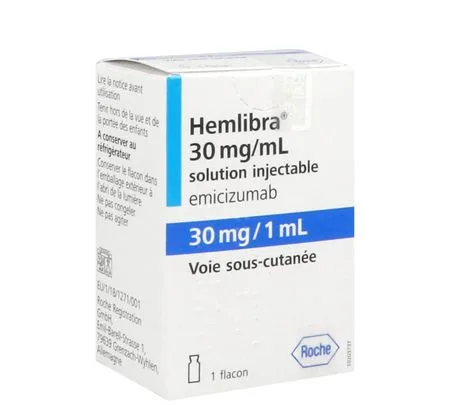
HEMLIBRA 30 mg/mL, solution for injection
Forms and presentations
Marketed products
HEMLIBRA 150 mg/mL, solution for injection
HEMLIBRA 30 mg/mL, solution for injection
Solution for injection.
Colourless to slightly yellow solution.
Composition
Hemlibra 30 mg/mL solution for injection
Each mL of solution contains 30 mg of emicizumab*
Each vial of 0,4 mL contains 12 mg of emicizumab at a concentration of 30 mg/mL.
Each vial of 1 mL contains 30 mg of emicizumab at a concentration of 30 mg/mL.
Hemlibra 150 mg/mL solution for injection
Each mL of solution contains 150 mg of emicizumab*
Each vial of 0,4 mL contains 60 mg of emicizumab at a concentration of 150 mg/mL.
Each vial of 0,7 mL contains 105 mg of emicizumab at a concentration of 150 mg/mL.
Each vial of 1 mL contains 150 mg of emicizumab at a concentration of 150 mg/mL.
Each vial of 2 mL contains 300 mg of emicizumab at a concentration of 150 mg/mL.
* Emicizumab is a humanized, modified immunoglobulin G4 (IgG4) monoclonal antibody, produced by recombinant DNA technology in Chinese hamster ovary (chinese hamster ovary, CHO) cells.
L-Arginine
L-Histidine
L-Aspartic Acid
Poloxamer 188
Water for injections
Indications
Hemlibra is indicated for prophylaxis to prevent bleeding episodes in patients with hemophilia A (congenital factor VIII deficiency):
- with anti-factor VIII inhibitors
- without anti-factor VIII inhibitors who have:
- a severe form (FVIII < 1 %)
- a moderate form (FVIII ≥ 1 % and ≤ 5 %) with a severe bleeding phenotype.
Hemlibra can be used in all age groups.
Dosage and administration
Treatment must be initiated under the supervision of a physician experienced in the treatment of haemophilia and/or haemostatic disorders.
Dosage
Treatment (including prophylaxis) with bypassing agents (e.g., activated prothrombin complex concentrate [aPCC] and recombinant activated human FVII [rFVIIa]) must be discontinued the day before initiation of Hemlibra treatment (see section Warnings and precautions).
Prophylaxis with factor VIII (FVIII) may be continued during the first 7 days of Hemlibra treatment.
The recommended dose is 3 mg/kg once weekly during the first four weeks (loading dose), followed by a maintenance dose starting from week 5, either 1,5 mg/kg once weekly, or 3 mg/kg every 2 weeks, or 6 mg/kg every 4 weeks, all doses being administered by subcutaneous injection.
The loading dose is the same regardless of the maintenance dosing regimen chosen.
The maintenance dosing regimen should be chosen based on the preference of the physician and the patient/caregiver in order to promote adherence.
The dose (in mg) and volume (in mL) should be calculated as follows:
- Loading dose (3 mg/kg) once weekly for the first 4 weeks:
Patient body weight (kg) x dose (3 mg/kg) = total amount (mg) of emicizumab to be administered - Followed by a maintenance dose starting from week 5, either 1,5 mg/kg once weekly, or 3 mg/kg every 2 weeks, or 6 mg/kg every 4 weeks:
Patient body weight (kg) x dose (1,5 or 3 or 6 mg/kg) = total amount (mg) of emicizumab to be administered
The total volume of Hemlibra to be injected subcutaneously is calculated as follows:
Total amount (mg) of emicizumab to be administered ÷ vial concentration (mg/mL) = total volume of Hemlibra (mL) to be injected.
Vials of different concentrations of Hemlibra (30 mg/mL and 150 mg/mL) must not be combined in the same syringe when preparing the total volume to be administered.
Do not administer a volume greater than 2 mL per injection.
Examples:
Patients with a body weight of 16 kg, at a maintenance dose of 1,5 mg/kg once weekly:
- Example of loading dose (first 4 weeks): 16 kg x 3 mg/kg = 48 mg of emicizumab required for the loading dose.
- To calculate the volume to be administered, divide the calculated dose of 48 mg by 150 mg/mL: 48 mg of emicizumab ÷ 150 mg/mL = 0,32 mL of Hemlibra at a concentration of 150 mg/mL to be injected.
- Choose the appropriate dosage and volume from the available vials.
- Example of maintenance dose (starting from week 5): 16 kg x 1,5 mg/kg = 24 mg of emicizumab required for the maintenance dose.
- To calculate the volume to be administered, divide the calculated dose of 24 mg by 30 mg/mL: 24 mg of emicizumab ÷ 30 mg/mL = 0,8 mL of Hemlibra at a concentration of 30 mg/mL to be injected once weekly.
- Choose the appropriate dosage and volume from the available vials.
Patients with a body weight of 40 kg, at a maintenance dose of 3 mg/kg every two weeks:
- Example of loading dose (first 4 weeks): 40 kg x 3 mg/kg = 120 mg of emicizumab required for the loading dose.
- To calculate the volume to be administered, divide the calculated dose of 120 mg by 150 mg/mL: 120 mg of emicizumab ÷ 150 mg/mL = 0,8 mL of Hemlibra at a concentration of 150 mg/mL to be injected.
- Choose the appropriate dosage and volume from the available vials.
- Example of maintenance dose (starting from week 5): 40 kg x 3 mg/kg = 120 mg of emicizumab required for the maintenance dose.
- To calculate the volume to be administered, divide the calculated dose of 120 mg by 150 mg/mL: 120 mg of emicizumab ÷ 150 mg/mL = 0,8 mL of Hemlibra at a concentration of 150 mg/mL to be injected every two weeks.
- Choose the appropriate dosage and volume from the available vials.
Patients with a body weight of 60 kg, at a maintenance dose of 6 mg/kg every four weeks:
- Example of loading dose (first 4 weeks): 60 kg x 3 mg/kg = 180 mg of emicizumab required for the loading dose.
- To calculate the volume to be administered, divide the calculated dose of 180 mg by 150 mg/mL: 180 mg of emicizumab ÷ 150 mg/mL = 1,20 mL of Hemlibra at a concentration of 150 mg/mL to be injected.
- Choose the appropriate dosage and volume from the available vials.
- Example of maintenance dose (starting from week 5): 60 kg x 6 mg/kg = 360 mg of emicizumab required for the maintenance dose.
- To calculate the volume to be administered, divide the calculated dose of 360 mg by 150 mg/mL: 360 mg of emicizumab ÷ 150 mg/mL = 2,4 mL of Hemlibra at a concentration of 150 mg/mL to be injected every four weeks.
- Choose the appropriate dosage and volume from the available vials.
Duration of treatment
Hemlibra is intended for long-term prophylactic treatment.
Dose adjustments during treatment
No dose adjustment is recommended for Hemlibra.
Missed or delayed doses
If a patient misses a scheduled subcutaneous injection of Hemlibra, the patient should be instructed to inject the missed dose as soon as possible, no later than the day before the next originally scheduled dose. The patient should then inject the next dose on the originally scheduled day. The patient must not inject two doses on the same day to compensate for a missed dose.
Special populations
Paediatric population
No dose adjustment is recommended in the paediatric population (see section Pharmacokinetics). No data are available in patients under 1 year of age.
Elderly patients
No dose adjustment is recommended in patients aged ≥ 65 years (see sections Pharmacodynamics and Pharmacokinetics). No data are available in patients over 77 years of age.
Renal and hepatic impairment
No dose adjustment is recommended in patients with mild renal or hepatic impairment (see section Pharmacokinetics). There are limited data on the use of Hemlibra in patients with moderate renal or hepatic impairment. Emicizumab has not been studied in patients with severe renal or hepatic impairment.
Perioperative management
The safety and efficacy of emicizumab have not been formally evaluated during surgery.
Patients underwent surgical procedures without interrupting emicizumab prophylaxis in clinical studies.
If bypassing agents (e.g., aPCC and rFVIIa) are required during the perioperative period, please refer to the dosing recommendations for the use of bypassing agents in section Warnings and precautions.
If FVIII is required during the perioperative period, please refer to section Interactions.
For biological monitoring of the patients' haemostatic activity, please refer to section Warnings and precautions for laboratory tests not modified by emicizumab.
Immune tolerance induction (ITI)
The safety and efficacy of emicizumab in patients currently undergoing immune tolerance induction have not yet been established. No data are available.
Method of administration
Hemlibra must be administered by subcutaneous route only and must be administered using appropriate aseptic technique (see section Disposal and handling).
Administration should be limited to the recommended injection sites: abdomen, upper outer arms and thighs (see section Pharmacokinetics).
Administration of Hemlibra by subcutaneous injection in the upper outer arm must be performed by a caregiver or healthcare professional.
Varying the injection site may help prevent or reduce injection site reactions (see section ). Subcutaneous injection of Hemlibra must not be performed in areas where the skin is red, bruised, tender or indurated, nor in regions that present naevi or scars. Adverse effects). Subcutaneous injection of Hemlibra must not be performed in areas where the skin is red, bruised, tender or indurated, nor in regions that present naevi or scars.
During treatment with Hemlibra, other medicinal products administered subcutaneously should preferably be injected at different anatomical sites.
Administration by the patient and/or a carer
Hemlibra is intended to be used under the supervision of a healthcare professional. After appropriate training in the subcutaneous injection technique, a patient may self-inject Hemlibra, or the carer may administer Hemlibra to the patient, if the physician considers this appropriate.
The physician and the carer must determine whether self-administration of Hemlibra by a child is appropriate. However, self-injection is not recommended for children under 7 years of age.
For complete instructions on administering Hemlibra, please refer to section Disposal and handling and to the package leaflet of the medicinal product.
Contraindications
Hypersensitivity to the active substance or to any of the excipients listed in section Composition.
Warnings and precautions
Traceability
In order to improve the traceability of biological medicinal products, the name of the product and the batch number of the product administered must be clearly recorded in the patient's file.
Thrombotic microangiopathy associated with Hemlibra and aPCC
Cases of thrombotic microangiopathy (TMA) have been reported in a clinical study conducted in patients receiving prophylaxis with Hemlibra, when a mean cumulative dose > 100 U/kg/24 hours of aPCC was administered over 24 hours or more (see section Adverse effects). Treatment of TMA included symptomatic treatment with or without plasmapheresis and haemodialysis. Signs of improvement of TMA were observed within the week following discontinuation of aPCC and interruption of Hemlibra. This rapid improvement differs from the usual clinical course observed in atypical haemolytic uraemic syndrome and classical TMA, in particular thrombotic thrombocytopenic purpura (see section Adverse effects). After resolution of TMA, Hemlibra was reintroduced in one patient, who continued to be treated safely.
The possible development of TMA must be monitored when administering aPCC to patients receiving prophylaxis with Hemlibra. The physician must immediately stop aPCC and interrupt treatment with Hemlibra if clinical symptoms and/or laboratory results suggestive of TMA occur, and initiate appropriate management. Physicians and patients/carers should assess on a case-by-case basis the benefits and risks of resuming prophylaxis with Hemlibra after complete resolution of TMA. Where a bypassing agent is indicated in a patient receiving prophylaxis with Hemlibra, please refer to the paragraph below on dosage recommendations for the use of bypassing agents.
Precautions must be taken when treating patients who are at high risk of TMA (for example, patients with a personal or family history of TMA), or those receiving concomitant medicinal products known to be a risk factor for developing TMA (for example ciclosporin, quinine, tacrolimus).
Thromboembolism associated with Hemlibra and aPCC
Serious thrombotic events have been reported during a clinical study conducted in patients receiving prophylaxis with Hemlibra when a mean cumulative dose > 100 U/kg/24 hours of aPCC was administered over 24 hours or more (see section Adverse effects). No case required anticoagulant treatment. After discontinuation of aPCC and interruption of Hemlibra, signs of improvement or resolution were observed within the following month (see section Adverse effects). Hemlibra was reintroduced in one patient after resolution of the thrombotic event, who continued to be treated safely.
The possible development of thromboembolism must be monitored in patients receiving prophylaxis with Hemlibra during administration of aPCC. The physician must immediately stop aPCC and interrupt treatment with Hemlibra if clinical symptoms, imaging results and/or laboratory results suggestive of thrombotic events occur, and must initiate appropriate management. Physicians and patients/carers should review on a case-by-case basis the benefits and risks of resuming prophylaxis with Hemlibra after complete resolution of thrombotic events. Where a bypassing agent is indicated in a patient receiving prophylaxis with Hemlibra, please refer to the paragraph below on dosage recommendations for the use of bypassing agents.
Recommendations for the use of bypassing agents in patients receiving prophylaxis with Hemlibra
Treatment with bypassing agents must be discontinued the day before initiation of treatment with Hemlibra.
Physicians must systematically discuss with their patients and/or carers the exact dose and dosing schedule of bypassing agents to be used, should they prove necessary during prophylaxis with Hemlibra.
Hemlibra increases the patient's coagulation capacity. The dose of bypassing agent required may therefore be lower than that used in the absence of prophylaxis with Hemlibra. The dosage and duration of treatment with bypassing agents will depend on the location and severity of the bleeding and the clinical condition of the patient. The use of aPCC should be avoided, unless no other option or therapeutic alternative is available. If aPCC is used in a patient receiving prophylaxis with Hemlibra, the initial dose must not exceed 50 U/kg and laboratory monitoring (including at least monitoring of renal function and platelet count as well as assessment of thrombosis) is recommended. If bleeding is not controlled with an initial dose of aPCC ≤ 50 U/kg, additional doses of aPCC must be administered under medical supervision or control, including laboratory monitoring in order to diagnose TMA or any thrombotic event. Monitoring of the bleeding site(s) is necessary before any further administration of aPCC. The total dose of aPCC must not exceed 100 U/kg during the first 24 hours of treatment. Physicians must carefully weigh the risks of TMA and thromboembolism against the bleeding risk if they consider continuing treatment with aPCC beyond the maximum dose of 100 U/kg during the first 24 hours.
During clinical studies, no cases of TMA or thrombotic events were observed with the use of rFVIIa alone in patients receiving prophylaxis with Hemlibra.
Dosing recommendations for bypassing agents should continue to be followed for at least 6 months after discontinuation of Hemlibra prophylaxis (see section Pharmacokinetics).
Immunogenicity
The development of neutralising anti-emicizumab antibodies associated with a decrease in emicizumab concentration leading to loss of efficacy was observed infrequently in clinical studies (see sections Adverse effects and Pharmacodynamics). Patients presenting with clinical signs of loss of efficacy (for example, increase in intercurrent bleeding events) should be promptly evaluated to determine the aetiology, and other therapeutic options should be considered if neutralising anti-emicizumab antibodies are suspected.
Effects of emicizumab on coagulation tests
Emicizumab restores the cofactor activity of activated factor VIII (FVIIIa) missing in the formation of the tenase complex. Coagulation tests based on the intrinsic coagulation pathway, including the activated clotting time (ACT) and the activated partial thromboplastin time (aPTT), measure total clotting time, including the time required for activation of FVIII to FVIIIa by thrombin. These tests exploring the intrinsic pathway give markedly shortened clotting times in the presence of emicizumab, since they do not require activation by thrombin. This markedly shortened intrinsic pathway clotting time then interferes with all aPTT-based differential coagulation factor assays, including the one-stage clotting assay of FVIII activity (see section Warnings and precautions, Table 1). However, differential coagulation factor assays using chromogenic or immunological methods are not disturbed by emicizumab. They can therefore be used to assess coagulation parameters during treatment, with particular attention to chromogenic FVIII activity measurement tests, as indicated below.
Chromogenic FVIII activity measurement tests may use human or bovine coagulation proteins. Tests using human-origin coagulation factors react to emicizumab and may overestimate the clinical haemostatic potential of emicizumab. In contrast, tests using bovine-origin coagulation factors are insensitive to emicizumab (no activity measured) and can be used to monitor endogenous or infused FVIII activity, or to titrate anti-FVIII inhibitors.
Emicizumab remains active in the presence of anti-FVIII inhibitors and will thus lead to a falsely negative result in tests using Bethesda methods based on functional inhibition of FVIII (one-stage clotting assay). In contrast, the Bethesda method adapted to measure chromogenic FVIII activity (chromogenic Bethesda method) with bovine-origin reagents is insensitive to emicizumab and may be used.
These two pharmacodynamic markers do not reflect the actual haemostatic effect of emicizumab in vivo (the aPTT is markedly shortened and the reported FVIII activity may be overestimated), but provide a relative indication of the pro-coagulant effect of emicizumab.
In summary, in patients treated with Hemlibra, results of laboratory tests based on the intrinsic coagulation pathway should not be used to monitor emicizumab activity, nor to determine replacement factor or anticoagulant factor dosing, nor to titrate anti-FVIII inhibitors. Precautions must be taken if laboratory tests based on the intrinsic coagulation pathway are used, due to the risk of misinterpreting these results, which could lead to suboptimal management of patients with bleeding episodes, potentially resulting in severe bleeding or life-threatening bleeding.
Biological tests modified and not modified by emicizumab are presented in Table 1 below. Given the prolonged half-life of emicizumab, these effects on coagulation tests may persist up to 6 months after the last dose (see section Pharmacokinetics).
|
Results modified by emicizumab |
Results not modified by emicizumab |
|
- Activated partial thromboplastin time (aPTT)
|
- Detection and titration of anti-FVIII inhibitor by the Bethesda method using a chromogenic test with bovine-origin reagents
|
1 For important considerations regarding chromogenic FVIII assays, see section Warnings and precautions.
Paediatric population :
No data are available in infants aged < 1 year. As the development of the haemostatic system in newborns and infants is dynamic and evolving, the relative concentrations of pro- and anticoagulant proteins in these patients should be taken into account when assessing the benefit-risk balance, which should also consider the potential risk of thrombosis (for example, implantable port thrombosis).
Educational material
All physicians likely to prescribe, use or supervise the administration of Hemlibra must ensure they have received and read the educational material intended for them. Physicians must explain and discuss the benefits and risks of Hemlibra treatment with the patient and their caregivers, and ensure that the patient card and the patient/caregiver guide are provided to them. The patient/caregiver must be informed to keep the patient card on them at all times and to show it to other healthcare professionals they may consult.
Interactions
No adequate or well-controlled interaction study has been conducted with emicizumab.
Clinical experience indicates the existence of a drug interaction between emicizumab and aPCC (see sections Warnings and precautions and Adverse effects).
There is a possibility of hypercoagulability when rFVIIa or FVIII is administered with emicizumab, based on preclinical experiments. Emicizumab increases the coagulation capacity; therefore, the dose of rFVIIa or FVIII required to achieve haemostasis may be lower than that used in the absence of prophylaxis with Hemlibra.
In the event of a thrombotic complication, the physician should consider discontinuing rFVIIa or FVIII and interrupting prophylaxis with Hemlibra depending on the clinical picture. Management must be adapted to the individual clinical circumstances, considering that:
- The decision to modify the dose must take into account the elimination half-life of the medicinal products; in particular, interruption of emicizumab may not have an immediate effect.
- Monitoring using a chromogenic FVIII assay may guide the administration of coagulation factors, and testing for thrombophilia markers may be considered.
Data are limited regarding the concomitant administration of antifibrinolytics and aPCC or rFVIIa in patients receiving Hemlibra prophylaxis. However, the possibility of thrombotic events should be considered when systemic antifibrinolytics are used in combination with aPCC or rFVIIa in patients treated with emicizumab.
Fertility, pregnancy and breastfeeding
Women of childbearing potential/Contraception
Women of childbearing potential receiving Hemlibra must use effective contraception during and for at least 6 months after discontinuation of Hemlibra treatment (see section Pharmacokinetics).
Pregnancy
No clinical study on the use of emicizumab has been conducted in pregnant women. No reproductive toxicity study has been conducted in animals with Hemlibra. It is not established whether emicizumab can cause harm to the foetus when administered to a pregnant woman or whether it can affect reproductive capacity. Hemlibra should be used during pregnancy only if the potential benefit to the mother outweighs the potential risk to the foetus. It should be taken into account that the risk of thrombosis is increased during pregnancy and after delivery, and that several pregnancy complications are associated with a higher risk of disseminated intravascular coagulation (DIC).
Breast-feeding
It has not been established that emicizumab is excreted in human milk. No study has been conducted to assess the impact of emicizumab on milk production or its presence in breast milk. It is established that human IgG is present in breast milk. The decision to discontinue breastfeeding or not to initiate/to interrupt treatment with Hemlibra must be made taking into account the benefit of breastfeeding for the child and the benefit of treatment for the mother.
Fertility
Animal studies show no direct or indirect harmful effect regarding reproductive toxicity (see section Preclinical safety). No fertility data are available in humans. Therefore, the effects of emicizumab on male and female fertility are unknown.
Driving and using machines
Hemlibra has no or negligible effect on the ability to drive vehicles and use machines.
Adverse effects
Summary of the safety profile
The overall safety profile of Hemlibra is based on data from clinical studies and post-marketing surveillance. The most serious adverse reactions reported during clinical studies with Hemlibra were episodes of thrombotic microangiopathy (TMA) and thrombotic events, including cavernous sinus thrombosis and superficial vein thrombosis concomitant with skin necrosis (see below and section Warnings and precautions).
The most frequently reported adverse reactions, reported in at least 10 % of patients who received at least one dose of Hemlibra, were: injection site reactions (19,4 %), arthralgia (14,2 %) and headache (14,0 %).
A total of three patients (0,7 %) receiving Hemlibra prophylaxis during clinical studies discontinued treatment due to the following adverse reactions: TMA, skin necrosis concomitant with superficial thrombophlebitis, and headache.
Table of adverse reactions
The following adverse reactions are derived from post-marketing surveillance and pooled data from five phase III clinical studies (three studies conducted in adults and adolescents [BH29884 - HAVEN 1, BH30071 - HAVEN 3, and BO39182 - HAVEN 4], one study conducted in patients of all age groups [BO41423 - HAVEN 6] and one paediatric study [BH29992 - HAVEN 2]), in which a total of 444 patients with haemophilia A received at least one dose of Hemlibra prophylaxis (see section Pharmacodynamics). Three hundred and seven (69,1 %) clinical study participants were adults (including two women), 61 (13,7 %) were adolescents (≥ 12 to < 18 years), 71 (16,0 %) were children (aged ≥ 2 to < 12 years) and five (1,1 %) were infants and young children (aged 1 month to < 2 years). The median duration of exposure during the studies was 32 weeks (ranging from 0,1 to 94,3 weeks).
Adverse reactions occurring in the phase III clinical studies and post-marketing surveillance are presented by MedDRA system organ class (Table 2). The corresponding frequency categories for each adverse reaction are defined as follows: very common (≥ 1/10), common (≥ 1/100 to < 1/10), uncommon (≥ 1/1 000 to < 1/100), rare (≥ 1/10 000 to < 1/1 000), very rare (< 1/10 000) and not known (cannot be estimated from the available data).
|
System Organ Class (SOC) |
Adverse effects
|
Frequency |
|
Blood and lymphatic system disorders |
Thrombotic microangiopathy |
Uncommon |
|
Nervous system disorders |
Headache |
Very common |
|
Vascular disorders |
Superficial thrombophlebitis |
Uncommon |
|
Cavernous sinus thrombosisa |
Uncommon |
|
|
Gastrointestinal disorders |
Diarrhoea |
Common |
|
Skin and subcutaneous tissue disorders |
Skin necrosis |
Uncommon |
|
Angioedema |
Uncommon |
|
|
Urticaria |
Common |
|
|
Rash |
Common |
|
|
Musculoskeletal and connective tissue disorders |
Arthralgia |
Very common |
|
Myalgia |
Common |
|
|
General disorders and administration site conditions |
Injection site reaction |
Very common |
|
Pyrexia |
Common |
|
|
Decreased therapeutic responseb |
Uncommon |
|
|
Immune system disorders |
Hypersensitivity |
Uncommon |
|
a "Vascular disorders" is a secondary SOC for cavernous sinus thrombosis. b A loss of efficacy (decreased therapeutic response) manifesting as an increase in intercurrent bleeding has been reported with neutralising anti-emicizumab antibodies associated with a decrease in emicizumab concentration (see description of selected adverse reactions and sections Warnings and precautions and Pharmacodynamics). |
||
Description of selected adverse reactions
Thrombotic microangiopathy
Across the phase III clinical studies, TMA was reported in less than 1 % of patients (3/444) and in 9,7 % of patients (3/31) who received at least one dose of aPCC during treatment with emicizumab. The 3 cases of TMA occurred when a mean cumulative dose of aPCC greater than 100 U/kg/24 hours was administered for 24 hours or more to treat a bleeding episode (see section Warnings and precautions). Patients presented with thrombocytopenia, microangiopathic haemolytic anaemia and acute renal failure, without severe deficiency of ADAMTS13 activity. One patient resumed treatment with Hemlibra following resolution of the TMA, without recurrence of the TMA.
Thrombotic events
In the overall phase III clinical studies, serious thrombotic events were reported in fewer than 1 % of patients (2/444) and in 6,5 % of patients (2/31) who received at least one dose of aPCC during treatment with emicizumab. The 2 cases of serious thrombotic events occurred when a mean cumulative dose of aPCC greater than 100 U/kg/24 hours was administered for 24 hours or more to treat a bleeding episode. One patient resumed treatment with Hemlibra following resolution of the thrombotic events, without recurrence of these events (see section Warnings and precautions).
Characterisation of the interaction between emicizumab and aPCC treatment in the pivotal clinical studies
Of the 82 aPCC* treatment episodes in patients treated with Hemlibra prophylaxis, eight (10 %) consisted of administration of a mean cumulative dose of aPCC > 100 U/kg/24 hours for 24 hours or more. Two of these 8 treatment episodes were associated with thrombotic events, and 3 of these 8 episodes were associated with thrombotic microangiopathy (TMA) (Table 3). No TMA or thrombotic events were observed in the other aPCC treatment episodes. Among all aPCC treatment episodes, 68 % consisted of a single infusion of less than 100 U/kg.
|
Duration of aPCC treatment |
Mean cumulative dose of aPCC over 24 hours
|
||
|
< 50 |
50-100 |
> 100 |
|
|
< 24 hours |
9 |
47 |
13 |
|
24-48 hours |
0 |
3 |
1b |
|
> 48 hours |
1 |
1 |
7a,a,a,b |
* An aPCC treatment episode is defined as all doses of aPCC received by a patient, for whatever reason, ending as soon as the treatment interruption exceeds 36 hours. All aPCC treatment episodes are included, with the exception of those received in the first 7 days of Hemlibra treatment and those administered within 30 days after discontinuation of Hemlibra treatment.
a Thrombotic microangiopathy
b Thrombotic event
Injection site reactions
Injection site reactions were reported very frequently (19,4 %) across the overall phase III clinical studies ("pooled data"). All injection site reactions observed in the clinical studies of Hemlibra were considered non-serious and of mild to moderate intensity, and 94.9 % resolved without treatment. The symptoms most frequently reported as associated with these reactions were: injection site erythema (10,6 %), injection site pain (4,1 %), injection site pruritus (2,9 %) and injection site swelling (2,7 %).
Immunogenicity
Across the overall phase III clinical studies conducted with Hemlibra ("pooled data"), the development of neutralising anti-emicizumab antibodies associated with a decrease in emicizumab concentration was uncommon (see section Pharmacodynamics). One patient, who developed neutralising anti-emicizumab antibodies with a decrease in emicizumab concentration, experienced a loss of efficacy (manifested by intercurrent bleeding) after five weeks of treatment and subsequently discontinued Hemlibra treatment (see sections Warnings and precautions and Pharmacodynamics).
Paediatric population
The paediatric population studied comprises a total of 137 patients, of whom 5 (3,6 %) were infants and young children (1 month to < 2 years), 71 (51,8 %) children (≥ 2 years to < 12 years) and 61 (44,5 %) adolescents (≥ 12 years to < 18 years). The safety profile of Hemlibra was overall similar in infants, children, adolescents and adults.
Reporting of suspected adverse reactions
The reporting of suspected adverse reactions after marketing authorisation of the medicinal product is important. It allows continuous monitoring of the benefit/risk balance of the medicinal product. Healthcare professionals report any suspected adverse reaction via the national reporting system-see Appendix V.
Overdose
Cases of overdose with Hemlibra are limited.
Symptoms
Accidental overdose may result in hypercoagulability.
Management
Patients who have had an accidental overdose should contact their doctor immediately and undergo close monitoring.
Pharmacodynamics
Pharmacotherapeutic group: antihaemorrhagics, other systemic haemostatics, ATC code: B02BX06
Mechanism of action
Emicizumab is a modified humanised immunoglobulin G4 (IgG4) monoclonal antibody with a bispecific structure.
Emicizumab binds to activated factor IX and factor X to restore the function of the missing activated factor VIII, needed for effective haemostasis.
Emicizumab has no structural relationship or sequence homology with FVIII, and therefore it does not induce or promote the development of inhibitors directed against FVIII.
Pharmacodynamic effects
Prophylactic treatment with Hemlibra shortens the activated partial thromboplastin time and increases the reported FVIII activity (determined by a chromogenic assay using human-derived coagulation factors). These two pharmacodynamic markers do not reflect the actual haemostatic effect of emicizumab in vivo (the aPTT is markedly shortened and the reported FVIII activity may be overestimated), but provide a relative indication of the pro-coagulant effect of emicizumab.
Clinical efficacy and safety
The efficacy of Hemlibra prophylaxis in patients with haemophilia A was evaluated in five clinical studies (three studies in adults and adolescents with haemophilia A with or without anti-FVIII inhibitors [HAVEN 1, HAVEN 3 and HAVEN 4], one study in children with haemophilia A with anti-FVIII inhibitors [HAVEN 2] and one study in patients across all age groups with mild or moderate haemophilia A without anti-FVIII inhibitors [HAVEN 6]).
Clinical studies in adults and adolescents with haemophilia A with or without anti-FVIII inhibitors
Patients (aged ≥ 12 years and > 40 kg) with haemophilia A without anti-FVIII inhibitors (study BH30071 - HAVEN 3)
The HAVEN 3 study was an open-label, multicentre, randomised phase III clinical study conducted in 152 adult and adolescent male patients (aged ≥ 12 years and > 40 kg) with severe haemophilia A without anti-FVIII inhibitors who had previously received on-demand or prophylactic FVIII treatment. Patients received Hemlibra by subcutaneous injection, 3 mg/kg once weekly for the first four weeks, then 1,5 mg/kg once weekly (arms A and D) or 3 mg/kg every two weeks (arm B), or no prophylaxis (arm C). Patients in arm C could switch to Hemlibra (3 mg/kg every two weeks) after a period of at least 24 weeks without prophylaxis. For arms A and B, a dose increase up to 3 mg/kg per week was permitted after 24 weeks in patients who experienced at least two prespecified bleeds (i.e. spontaneous and clinically significant bleeds occurring at steady state). Patients in arm D could increase their dose after the second prespecified bleed. At the primary analysis, five patients received a dose increase of their maintenance dose.
Eighty-nine patients who had previously received on-demand FVIII were randomised in a ratio of 2:2:1 to receive Hemlibra once weekly (arm A; N = 36), once every two weeks (arm B; N = 35) or no prophylaxis (arm C; N = 18), stratified by prior bleed rate over the previous 24 weeks (< 9 or ≥ 9). Sixty-three patients who had previously received FVIII prophylaxis were enrolled in arm D to receive Hemlibra (1,5 mg/kg once weekly).
The primary objective of the study was to evaluate, in patients who had previously received on-demand FVIII, the efficacy of weekly (arm A) or every-two-week (arm B) Hemlibra prophylaxis compared with no prophylaxis (arm C), based on the number of bleeds requiring treatment with coagulation factors (see table 4). Other study objectives included evaluating the randomised comparison of arms A or B with arm C to determine the efficacy of Hemlibra prophylaxis in reducing the number of bleeds of all types (treated and untreated), spontaneous bleeds, joint bleeds and target joint bleeds (see table 4), as well as assessing patient treatment preferences using a preference questionnaire.
The efficacy of Hemlibra prophylaxis was also compared with prior FVIII prophylactic treatment (arm D) in patients who had participated in a non-interventional study (NIS) before enrolment (see table 5). Only NIS patients were included in this comparison, as bleeding and treatment data were collected with the same level of granularity as in the HAVEN 3 study.
The NIS is an observational study whose primary objective is to collect detailed clinical data on bleeding episodes and use of haemophilia medicines in patients with haemophilia A outside the setting of an interventional study.
Patients (aged ≥ 12 years) with haemophilia A who had developed anti-FVIII inhibitors (Study BH29884 - HAVEN 1)
The HAVEN 1 study was an open-label, multicentre, randomised study conducted in 109 adolescent and adult male patients (aged ≥ 12 years) with haemophilia A who had developed anti-FVIII inhibitors and had previously received on-demand or prophylactic treatment with bypassing agents (aPCC and rFVIIa). In this study, patients received once-weekly Hemlibra prophylaxis (arms A, C and D) - 3 mg/kg once weekly for four weeks, followed by 1,5 mg/kg once weekly - or no prophylaxis (arm B). Patients randomised to arm B could switch to Hemlibra prophylaxis after a period of at least 24 weeks without prophylaxis. A dose increase up to 3 mg/kg once weekly was permitted after 24 weeks of Hemlibra prophylaxis for patients who experienced at least two prespecified bleeds (i.e. spontaneous and clinically verified significant bleeds occurring at steady state). At the time of the primary analysis, two patients received a dose increase of their maintenance dose up to 3 mg/kg once weekly.
Fifty-three patients previously treated on demand with bypassing agents were randomised in a ratio of 2:1 to receive Hemlibra prophylaxis (arm A) or no prophylaxis (arm B), stratified by bleed rate (< 9 or ≥ 9) over the preceding 24 weeks.
Forty-nine patients who had previously received prophylactic treatment with bypassing agents were enrolled in arm C to receive Hemlibra prophylaxis. Seven patients previously treated on demand with bypassing agents, who had participated in the NIS before enrolment but were unable to join the HAVEN 1 study before arms A and B were closed, were enrolled in arm D to receive Hemlibra prophylaxis.
The primary objective of the study was to evaluate, in patients previously treated episodically ("on demand") with bypassing agents, the effect of weekly prophylaxis with Hemlibra, compared with no prophylaxis (Arm A vs Arm B), on the number of bleeds requiring treatment with coagulation factors over a given period of time (at least 24 weeks or until the date of discontinuation) (see table 6). The secondary objectives of the randomised comparison of Arms A and B were the efficacy of weekly Hemlibra prophylaxis in reducing the number of bleeds of all types (treated and untreated), spontaneous bleeds, joint bleeds and bleeds in target joints (see table 6), as well as the assessment of health-related quality of life (HRQoL) and patients' health status (see tables 10 and 11). The mean exposure time (standard deviation) for all patients studied was 21,38 weeks (12,01). For each treatment arm, the mean exposure times (SD) were 28,86 weeks (8,37) for Arm A, 8,79 weeks (3,62) for Arm B, 21,56 weeks (11,85) for Arm C and 7,08 weeks (3,89) for Arm D. One patient in Arm A withdrew from the study before Hemlibra was initiated.
The study also evaluated the efficacy of weekly Hemlibra prophylaxis compared with prior episodic ("on demand") or prophylactic treatment with bypassing agents (separate comparisons) in patients who had participated in the non-interventional study before enrolment (Arms A and C, respectively) (see table 7).
Patients (aged ≥ 12 years) with haemophilia A with or without anti-FVIII inhibitor (study BO39182 - HAVEN 4)
Hemlibra was the subject of a multicentre, single-arm, phase III clinical study conducted in 41 male adults and adolescents (aged ≥ 12 years and > 40 kg) with haemophilia A with anti-FVIII inhibitors or severe haemophilia A without anti-FVIII inhibitor, who had previously received episodic ("on demand") or prophylactic treatment with bypassing agents or FVIII. Patients received Hemlibra prophylaxis - 3 mg/kg once weekly for four weeks, followed by 6 mg/kg every four weeks.
The primary objective of the study was to evaluate the efficacy of Hemlibra prophylaxis administered every four weeks in maintaining bleed control, as measured by treated bleeds. Other objectives assessed the clinical efficacy of Hemlibra prophylaxis on bleeds of all types (treated and untreated), treated spontaneous bleeds, treated joint bleeds and treated target joint bleeds (see table 8). Patients' treatment preference was also assessed using a dedicated questionnaire.
Patients (all ages) with mild or moderate haemophilia A without anti-FVIII inhibitor (study BO41423 - HAVEN 6)
The HAVEN 6 study was a multicentre, open-label, single-arm, phase III clinical study conducted in 71 patients treated with emicizumab (all ages) with mild haemophilia A (n = 20 [28,2 %]) or moderate haemophilia A (n = 51 [71,8 %]) without anti-FVIII inhibitor for whom prophylaxis was indicated, according to the investigator's assessment. The majority of patients were male (69 patients [97,2 %]) and 2 were female (2,8 %). At study entry, 34 patients (47,9 %) were receiving episodic ("on demand") treatment and 37 patients (52,1 %) were receiving prophylactic FVIII treatment. Patients received a subcutaneous injection of Hemlibra, 3 mg/kg once weekly for the first four weeks, then the maintenance dosing regimen according to their preference among the following regimens, starting from week 5: 1,5 mg/kg once weekly (n = 24 [33,8 %]), 3 mg/kg every two weeks (n = 39 [54,9 %]) or 6 mg/kg every four weeks (n = 8 [11,3 %]). A dose increase up to 3 mg/kg per week was permitted after 24 weeks in patients who experienced at least two predefined bleeds (i.e., spontaneous and clinically significant bleeds occurring at steady state). At the interim analysis, no patient had their maintenance dose increased.
The primary efficacy objective of the study was to evaluate the efficacy of Hemlibra prophylaxis in terms of the number of bleeds requiring treatment with coagulation factors over time (i.e., the treated bleed rate, see table 9). The other objectives were to evaluate the efficacy of Hemlibra prophylaxis in terms of the number of bleeds of all types (treated and untreated), spontaneous bleeds, joint bleeds and bleeds in target joints over time, and to evaluate health-related quality of life (HRQoL) reported by patients using the questionnaire Comprehensive Assessment Tool of Challenges in Haemophilia (CATCH) over time.
Efficacy results
HAVEN 3 study
The efficacy results of Hemlibra prophylaxis compared with no prophylaxis on the rate of treated bleeds, bleeds of all types (treated and untreated), treated spontaneous bleeds, treated joint bleeds and treated target joint bleeds are presented in table 4.
|
Endpoints |
Arm C:
|
Arm A:
|
Arm B:
|
|
|
Treated bleeds |
||||
|
ABR (CI 95 %) |
38,2 (22,9 ; 63,8) |
1,5 (0,9 ; 2,5) |
1,3 (0,8 ; 2,3) |
|
|
% reduction (RR), p-value |
NA |
96 % (0,04), < 0,0001 |
97 % (0,03), < 0,0001 |
|
|
% of patients with zero bleeds (CI 95 %) |
0,0 (0,0 ; 18,5) |
55,6 (38,1 ; 72,1) |
60,0 (42,1 ; 76,1) |
|
|
Median ABR (IQR) |
40,4 (25,3 ; 56,7) |
0 (0 ; 2,5) |
0 (0 ; 1,9) |
|
|
All bleeds |
||||
|
ABR (CI 95 %) |
47,6 (28,5 ; 79,6) |
2,5 (1,6 ; 3,9) |
2,6 (1,6 ; 4,3) |
|
|
% reduction (RR), p-value |
NA |
95 % (0,05), < 0,0001 |
94 % (0,06), < 0,0001 |
|
|
% of patients with zero bleeds (CI 95 %) |
0 (0,0 ; 18,5) |
50 (32,9 ; 67,1) |
40 (23,9 ; 57,9) |
|
|
Treated spontaneous bleeds |
||||
|
ABR (CI 95 %) |
15,6 (7,6 ; 31,9) |
1,0 (0,5 ; 1,9) |
0,3 (0,1 ; 0,8) |
|
|
% reduction (RR), p-value |
NA |
94 % (0,06), < 0,0001 |
98 % (0,02), < 0,0001 |
|
|
% of patients with zero bleeds (CI 95 %) |
22,2 (6,4 ; 47,6) |
66,7 (49,0 ; 81,4) |
88,6 (73,3 ; 96,8) |
|
|
Treated joint bleeds |
||||
|
ABR (CI 95 %) |
26,5 (14,67 ; 47,79) |
1,1 (0,59 ; 1,89) |
0,9 (0,44 ; 1,67) |
|
|
% reduction (RR), p-value |
NA |
96 % (0,04), < 0,0001 |
97 % (0,03), < 0,0001 |
|
|
% of patients with zero bleeds (CI 95 %) |
0 (0 ; 18,5) |
58,3 (40,8 ; 74,5) |
74,3 (56,7 ; 87,5) |
|
|
Treated target joint bleeds |
||||
|
ABR (CI 95 %) |
13,0 (5,2 ; 32,3) |
0,6 (0,3 ; 1,4) |
0,7 (0,3 ; 1,6) |
|
|
% reduction (RR), p-value |
NA |
95 % (0,05), < 0,0001 |
95 % (0,05), < 0,0001 |
|
|
% of patients with zero bleeds (CI 95 %) |
27,8 (9,7 ; 53,5) |
69,4 (51,9 ; 83,7) |
77,1 (59,9 ; 89,6) |
|
|
The rate ratio and confidence interval (CI) derived from a negative binomial regression (NBR) model and the p-value are calculated using a stratified Wald test, comparing the annualised bleeding rate (ABR) between the specified arms.
|
||||
In the within-patient analysis of the HAVEN 3 clinical study, prophylaxis with Hemlibra resulted in a statistically significant reduction in the rate of treated bleeds (68%, p < 0,0001), compared with prior FVIII prophylaxis collected in the NIS before enrolment (see table 5).
|
Endpoints |
Arm D NIS:
|
Arm D:
|
|
Median efficacy period (weeks) |
30,1 |
33,7 |
|
Treated bleeds |
||
|
ABR (CI 95 %) |
4,8 (3,2 ; 7,1) |
1,5 (1 ; 2,3) |
|
% reduction (RR), p-value |
68 % (0,32), < 0,0001 |
|
|
% of patients with zero bleeds (CI 95 %) |
39,6 (25,8 ; 54,7) |
54,2 (39,2 ; 68,6) |
|
Median ABR (IQR) |
1,8 (0 ; 7,6) |
0 (0 ; 2,1) |
|
The rate ratio and confidence interval (CI) derived from a negative binomial regression (NBR) model and the p-value are calculated using a stratified Wald test, comparing the annualised bleeding rate (ABR) between the specified arms. |
||
|
Within-patient comparison data from the non-interventional study (NIS). Only patients who participated in both the NIS and the HAVEN 3 study were included. |
||
|
For patients whose dose was increased, only data preceding this increase were included. |
||
|
Treated bleeds: bleeds treated with FVIII.
|
||
|
Although better adherence to emicizumab prophylaxis was observed compared with prior FVIII prophylaxis, no difference in annualised bleeding rates could be identified for patients who were adherent to ≥ 80% or < 80% of their FVIII prophylaxis dose according to the marketing authorisation labelling (data should be interpreted with caution given the small sample sizes). |
||
|
Due to the short half-life of FVIII, no residual effect is expected after its discontinuation. |
||
|
Only the first five doses of emicizumab had to be administered under supervision to ensure safety and mastery of the injection technique. As with FVIII prophylaxis, home self-administration was permitted for all subsequent doses of emicizumab. |
||
|
All patients were treated by haemophilia experts, who confirmed that adequate FVIII prophylaxis had been administered to the patients included in the within-patient comparison, which justified equivalent standard prophylaxis management across centres and patients. |
||
HAVEN 1 study
The efficacy results of Hemlibra prophylaxis compared with no prophylaxis on the rate of treated bleeds, bleeds of all types (treated and untreated), treated spontaneous bleeds, treated joint bleeds and treated target joint bleeds are presented in table 6.
|
Endpoints |
Arm B: no prophylaxis |
Arm A: 1,5 mg/kg of Hemlibra per week |
|
N = 18 |
N = 35 |
|
|
Treated bleeds |
||
|
ABR (CI 95 %) |
23,3 (12,33 ; 43,89) |
2,9 (1,69 ; 5,02) |
|
% reduction (RR), p-value |
87 % (0,13), < 0,0001 |
|
|
% of patients with zero bleeds (CI 95 %) |
5,6 (0,1 ; 27,3) |
62,9 (44,9 ; 78,5) |
|
Median ABR (IQR) |
18,8 (12,97 ; 35,08) |
0 (0 ; 3,73) |
|
All bleeds |
||
|
ABR (CI 95 %) |
28,3 (16,79 ; 47,76) |
5,5 (3,58 ; 8,60) |
|
% reduction (RR), p-value |
80 % (0,20), < 0,0001 |
|
|
% of patients with zero bleeds (CI 95 %) |
5,6 (0,1 ; 27,3) |
37,1 (21,5 ; 55,1) |
|
Treated spontaneous bleeds |
||
|
ABR (CI 95 %) |
16,8 (9,94 ; 28,30) |
1,3 (0,73 ; 2,19) |
|
% reduction (RR), p-value |
92 % (0,08), < 0,0001 |
|
|
% of patients with zero bleeds (CI 95 %) |
11,1 (1,4 ; 34,7) |
68,6 (50,7 ; 83,1) |
|
Treated joint bleeds |
||
|
ABR (CI 95 %) |
6,7 (1,99 ; 22,42) |
0,8 (0,26 ; 2,20) |
|
% reduction (RR), p-value |
89 % (0,11) ; 0,0050 |
|
|
% of patients with zero bleeds (CI 95 %) |
50,0 (26,0 ; 74,0) |
85,7 (69,7 ; 95,2) |
|
Treated target joint bleeds |
||
|
ABR (CI 95 %) |
3,0 (0,96 ; 9,13) |
0,1 (0,03 ; 0,58) |
|
% reduction (RR), p-value |
95 % (0,05) ; 0,0002 |
|
|
% of patients with zero bleeds (CI 95 %) |
50,0 (26,0 ; 74,0) |
94,3 (80,8 ; 99,3) |
|
The rate ratio and confidence interval (CI) derived from a negative binomial regression (NBR) model and the p-value are calculated using a stratified Wald test, comparing the annualised bleeding rate (ABR) between the specified arms.
|
||
In the HAVEN 1 intra-patient analysis, Hemlibra prophylaxis led to a statistically (p = 0,0003) and clinically significant (79 %) reduction in the bleeding rate for treated bleeds, compared with the results observed with previous prophylaxis with bypassing agents during the non-interventional study preceding enrolment (see Table 7).
|
Endpoint |
Arm CNIS : previous prophylaxis with bypassing agent |
Arm C: Hemlibra 1,5 mg/kg per week |
|
N = 24 |
N = 24 |
|
|
Treated bleeds |
||
|
ABR (CI 95 %) |
15,7 (11,08 ; 22,29) |
3,3 (1,33 ; 8,08) |
|
% of patients with zero bleeds (CI 95 %) |
12,5 (2,7 ; 32,4) |
70,8 (48,9 ; 87,4) |
|
Median ABR (IQR) |
12,0 (5,73 ; 24,22) |
0,0 (0,00 ; 2,23) |
|
% reduction |
79 % |
|
|
(RR), p-value |
(0,21) ; 0,0003 |
|
|
The rate ratio and confidence interval (CI) derived from a negative binomial regression (NBR) model and the p-value are calculated using a stratified Wald test, comparing the annualised bleeding rate (ABR) between the specified arms.
|
||
|
Although better adherence to emicizumab prophylaxis was observed compared with previous bypassing agent prophylaxis, no difference in annualised bleeding rates could be identified for patients who were adherent to ≥ 80 % or < 80 % of their bypassing agent prophylaxis dose according to the marketing authorisation labelling (data should be interpreted with caution given the small sample sizes). |
||
|
Due to the short half-life of bypassing agents, no residual effect is expected after their discontinuation. |
||
|
Only the first five doses of emicizumab had to be administered under supervision to ensure safety and mastery of the injection technique. As with bypassing agent prophylaxis, home self-administration was permitted for all subsequent doses of emicizumab. |
||
HAVEN 4 Study
The results of the primary efficacy analysis of Hemlibra prophylaxis every four weeks on the rate of treated bleeds, bleeds of all types (treated and untreated), treated spontaneous bleeds, treated joint bleeds and treated target joint bleeds are presented in table 8. Efficacy was assessed in forty-one patients aged ≥ 12 years with a median observation time of 25,6 weeks (range: 24,1 to 29,4).
|
Hemlibra 6 mg/kg every 4 weeks |
|||
|
Endpoints |
aABR (CI 95 %) |
bMedian ABR (IQR) |
% of patients with zero bleeds
|
|
N |
41 |
41 |
41 |
|
Treated bleeds |
2,4 (1,4 ; 4,3) |
0,0 (0,0 ; 2,1) |
56,1 (39,7 ; 71,5) |
|
All bleeds |
4,5 (3,1 ; 6,6) |
2,1 (0,0 ; 5,9) |
29,3 (16,1 ; 45,5) |
|
Treated spontaneous bleeds |
0,6 (0,3 ; 1,5) |
0,0 (0,0 ; 0,0) |
82,9 (67,9 ; 92,8) |
|
Treated joint bleeds |
1,7 (0,8 ; 3,7) |
0,0 (0,0 ; 1,9) |
70,7 (54,5 ; 83,9) |
|
Treated target joint bleeds |
1,0 (0,3 ; 3,3) |
0,0 (0,0 ; 0,0) |
85,4 (70,8 ; 94,4) |
|
a Calculated using a negative binomial regression (NBR) model b Calculated ABR Bleeding definitions are based on ISTH criteria (International Society on Thrombosis and Haemostasis).
|
|||
HAVEN 6 study (interim analysis)
Efficacy was assessed in fifty-one patients with moderate haemophilia A aged 2 to 56 years with a median observation time of 30,4 weeks (range: 17,4-61,7).
The results of the interim efficacy analysis of Hemlibra prophylaxis in patients with moderate haemophilia A (see section Indications) on the rate of treated bleeds, all bleeds (treated and untreated), treated spontaneous bleeds, treated joint bleeds and treated target joint bleeds are presented in Table 9.
|
cHemlibra 1,5 mg/kg once weekly, 3 mg/kg every 2 weeks or 6 mg/kg every 4 weeks |
|||
|
Endpoints |
aABR (CI 95 %) |
bMedian ABR (IQR) |
% of patients with zero bleeds (CI 95 %) |
|
N |
51 |
51 |
51 |
|
Treated bleeds |
0,9 [0,43 ; 1,89] |
0,0 [0,00 ; 0,00] |
78,4 [64,7 ; 88,7] |
|
All bleeds |
2,6 [1,81 ; 3,81] |
1,7 [0,00 ; 3,90] |
43,1 [29,3 ; 57,8] |
|
Treated spontaneous bleeds |
0,1 [0,03 ; 0,30] |
0,0 [0,00 ; 0,00] |
94,1 [83,8 ; 98,8] |
|
Treated joint bleeds |
0,3 [0,10 ; 0,84] |
0,0 [0,00 ; 0,00] |
90,2 [78,6 ; 96,7] |
|
Treated target joint bleeds |
0,1 [0,02 ; 0,26] |
0,0 [0,00 ; 0,00] |
96,1 [86,5 ; 99,5] |
|
a Calculated using a negative binomial regression (NBR) model b Calculated ABR Bleeding definitions are based on ISTH criteria (International Society on Thrombosis and Haemostasis).
c 1,5 mg/kg once weekly (n = 16); 3 mg/kg every 2 weeks (n = 30); 6 mg/kg every 4 weeks (n = 5). |
|||
Health-related outcome measures
The HAVEN clinical studies assessed health-related quality of life (QoL) and health status using clinical outcome assessment measures. HAVEN 1 and 2 used the Haemophilia-specific Quality of Life questionnaire (Haem-A-QoL) for adults (≥ 18 years) and for adolescents (Haem-A-QoL-SF, from 8 to < 18 years), respectively, for which the physical health score (i.e., painful swelling, presence of joint pain, pain on movement, difficulty walking far and needing more time to get ready) and the total score (summary of all scores) were parameters of interest defined in the protocol. HAVEN 2 also used the questionnaire Adapted InhibQoL with Aspects of Caregiver Burden completed by caregivers to obtain a QoL assessment in children under 12 years. HAVEN 6 assessed QoL in adults and children, as well as in caregivers of children, using the questionnaire Comprehensive Assessment Tool of Challenges in Haemophilia (CATCH). The sections on perception of risks and of the impact of haemophilia on daily activities, social activities, leisure activities and work/school activities, as well as concern and treatment burden, were examined. To measure changes in health status, the Index Utility score (IUS) and the Visual Analogue Scale (VAS) of the five-dimension, five-level EuroQoL questionnaire (EQ-5D-5L) were examined.
HAVEN 1 study: health status results
In this study, at baseline, the total scores (mean = 41,14 and 44,58, respectively) and physical health scale scores (mean = 52,41 and 57,19, respectively) were similar for the Hemlibra prophylaxis and no-prophylaxis arms. Table 10 presents a summary of the comparison between the Hemlibra prophylaxis arm (arm A) and the no-prophylaxis arm (arm B) on the Haem-A-QoL total score scale and the physical health scale after 24 weeks of treatment (results adjusted for baseline value). Weekly Hemlibra prophylaxis showed a statistically and clinically significant improvement compared with the no-prophylaxis arm for the following prespecified endpoints: Physical Health Scale score (Physical Health Scale) of the Haem-A-QoL questionnaire at the week 25 assessment.
|
Haem-A-QoL at week 25 |
Arm B: no prophylaxis
|
Arm A: Hemlibra
|
|
Physical health score (interval from 0 to 100) |
||
|
Adjusted mean |
54,17 |
32,61 |
|
Difference in adjusted means (95% CI) |
21,55 (7,89 ; 35,22) |
|
|
p-value |
0,0029 |
|
|
Total score (interval from 0 to 100) |
||
|
Adjusted mean |
43,21 |
29,2 |
|
Difference in adjusted means (95% CI) |
14,01 (5,56 ; 22,45) |
|
|
Arm B: includes only patients who did not receive prophylaxis.
|
||
HAVEN 1 Study: Health status outcomes
Table 11 presents a summary of the comparison between the Hemlibra prophylaxis arm (arm A) and the no-prophylaxis arm (arm B) on the EQ-5D-5L utility index and the visual analogue scale [VAS] after 24 weeks of treatment (results adjusted for baseline value).
|
|
|
|
|
Visual analogue scale |
||
|
Adjusted mean |
74,36 |
84,08 |
|
Difference in adjusted means (95% CI) |
-9,72 (-17,62 ; -1,82) |
|
|
Utility index |
||
|
Adjusted mean |
0,65 |
0,81 |
|
Difference in adjusted means (95% CI) |
-0,16 (-0,25 ; -0,07) |
|
|
Arm B: includes only patients who did not receive prophylaxis.
|
||
HAVEN 6 Study: Health status outcomes
In the HAVEN 6 study, health-related quality of life (QoL) in patients of all ages with moderate hemophilia A was assessed at week 25 using the CATCH questionnaire. The CATCH questionnaire (version 1.0) is a validated instrument that evaluates the effect of hemophilia and its treatment. Several versions of the questionnaire exist, for adults, for children and for caregivers of children. Health-related quality of life in patients receiving Hemlibra prophylaxis remained globally stable, with a systematic improvement in items relating to treatment burden in the CATCH questionnaire across the different responder categories.
Paediatric population
Children (aged < 12 years, or aged 12 to 17 years and weighing less than 40 kg) with hemophilia A who developed an anti-FVIII inhibitor (Study BH29992 - HAVEN 2)
Weekly Hemlibra prophylaxis was evaluated in an open-label, multicenter, single-arm, pediatric clinical study conducted in patients aged < 12 years, or aged 12 to 17 years and weighing less than 40 kg with hemophilia A who developed an anti-FVIII inhibitor. Patients received Hemlibra prophylaxis at a dose of 3 mg/kg once weekly for the first 4 weeks, followed by 1,5 mg/kg once weekly.
The study evaluated pharmacokinetic (PK) properties, safety and efficacy, including the efficacy of weekly Hemlibra prophylaxis compared with previous curative or prophylactic treatments with a bypassing agent, in patients who participated in the non-interventional study before enrollment (intra-patient comparison).
Efficacy results
HAVEN 2 Study (interim analysis)
At the time of the interim analysis, efficacy was assessed in 59 patients aged < 12 years receiving weekly Hemlibra prophylaxis for at least 12 weeks, including four patients aged less than 2 years, 17 patients aged 2 to < 6 years and 38 patients aged 6 to < 12 years. The annualized bleeding rate and the percentage of patients without bleeding were calculated (see table 12). The median observation period for these patients was 29,6 weeks (range: 18,4 to 63,0 weeks).
|
Efficacy criterion |
aABR (CI 95 %)
|
cMedian ABR (IQR)
|
% Zero bleeding
|
|
Treated bleeds |
0,3 (0,1 ; 0,5) |
0 (0 ; 0) |
86,4 (75 ; 94) |
|
All bleeds |
3,8 (2,2 ; 6,5) |
0 (0 ; 3.4) |
55,9 (42,4 ; 68,8) |
|
Treated spontaneous bleeds |
0 (0 ; 0,2) |
0 (0 ; 0) |
98,3 (90,9 ; 100) |
|
Treated joint bleeds |
0,2 (0,1 ; 0,4) |
0 (0 ; 0) |
89,8 (79,2 ; 96,2) |
|
Treated target joint bleeds |
0,1 (0 ; 0,7) |
0 (0 ; 0) |
96,6 (88,3 ; 99,6) |
|
ABR: Annualized bleeding rate; CI: confidence interval; IQR: interquartile range, 25e percentile at 75e percentile. a Calculated using a negative binomial regression (NBR) model. b Efficacy data for patients aged < 12 years who participated in the HAVEN 2 study for at least 12 weeks (N = 59), as the study was primarily designed to investigate the effect of treatment by age. c Calculated ABR Bleeding definitions are based on ISTH criteria (International Society on Thrombosis and Haemostasis).
|
|||
In the within-patient analysis, weekly prophylaxis with Hemlibra resulted in a clinically significant reduction (98%) in treated bleeds in 18 pediatric patients after at least 12 weeks of Hemlibra prophylaxis, compared with their bleeding rate collected during the non-interventional study prior to enrollment (table 13).
|
Endpoint |
Prior bypassing agent treatment* (N = 18) |
Hemlibra prophylaxis (N = 18) |
|
Treated bleeds |
||
|
ABR (CI 95 %) |
19,8 (15,3 ; 25,7) |
0,4 (0,15 ; 0,88) |
|
% reduction (RR) |
98 %
|
|
|
% patients with zero bleeds (CI at 95%) |
5,6 (0,1 ; 27,3) |
77,8 (52,4 ; 93,6) |
|
Mean ABR (IQR) |
16,2 (11,49 ; 25,78) |
0 (0 ; 0) |
|
* Prior prophylactic treatment for 15 of 18 patients; prior episodic ("on-demand") treatment for 3 patients. The rate ratio and confidence interval (CI) derived from a negative binomial regression (NBR) model and the p-value are calculated using a stratified Wald test, comparing the annualised bleeding rate (ABR) between the specified arms. |
||
|
Within-patient comparison data from the NIS.
|
||
|
Although better adherence to emicizumab prophylaxis was observed compared with previous bypassing agent prophylaxis, no difference in annualised bleeding rates could be identified for patients who were adherent to ≥ 80 % or < 80 % of their bypassing agent prophylaxis dose according to the marketing authorisation labelling (data should be interpreted with caution given the small sample sizes). |
||
|
Due to the short half-life of bypassing agents, no residual effect is expected after their discontinuation. |
||
|
Only the first five doses of emicizumab had to be administered under supervision to ensure safety and mastery of the injection technique. As with bypassing agent prophylaxis, home self-administration was permitted for all subsequent doses of emicizumab. |
||
Health-related outcomes in pediatrics
HAVEN 2 Study: Health-related outcomes
In the HAVEN 2 study, health-related quality of life (HRQoL) in patients aged ≥ 8 to < 12 years was assessed at week 25 using the Haemo-QoL-SF for children questionnaire (see table 14). The Haemo-QoL-SF is a valid and reliable measure of HRQoL.
HRQoL of patients aged under 12 years was also assessed at week 25 using the Adapted InhibQoL with Aspects of Caregiver Burden completed by caregivers (see table 14). The adapted InhibQoL is a valid and reliable measure of HRQoL.
|
Haemo-QoL-SF |
|
|
Physical health score (interval from 0 to 100)a |
|
|
Mean baseline score (CI at 95%) (n = 18) |
29,5 (16,4-42,7) |
|
Mean change from baseline (CI at 95%) (n = 15) |
-21,7 (-37,1 - -6,3) |
|
InhibQoL adapted with caregiver burden aspects |
|
|
Physical health score (interval from 0 to 100)a |
|
|
Mean baseline score (CI at 95%) (n = 54) |
37,2 (31,5-42,8) |
|
Mean change from baseline (CI at 95%) (n = 43) |
-32,4 (-38,6 - -26,2) |
|
a Lower scores (negative score changes) reflect better functioning. Analyses are based on data from individuals who provided responses at baseline and at week 25. |
|
The experience with the use of bypassing agents or FVIII during surgical interventions and invasive procedures is limited.
The use of bypassing agents or FVIII during surgical interventions and invasive procedures was carried out at the discretion of the investigator.
In case of intercurrent bleeding, patients receiving emicizumab prophylaxis must be treated with the available treatments. For recommendations on bypassing agents, see section Warnings and precautions.
Immunogenicity
As with all therapeutic proteins, there is a risk of an immune response in patients treated with emicizumab. In total, 739 patients were tested for the formation of anti-emicizumab antibodies across all clinical studies. Thirty-six patients (4,9%) developed anti-emicizumab antibodies. In 19 patients (2,6%), the anti-emicizumab antibodies were neutralizing in vitro. Among these 19 patients, the neutralizing anti-emicizumab antibodies did not have a clinically significant impact on the pharmacokinetics or efficacy of Hemlibra in 15 patients, while a decrease in plasma emicizumab concentrations was observed in four patients (0,5%). One patient (0,1%) with neutralizing anti-emicizumab antibodies and a decrease in plasma emicizumab concentrations showed loss of efficacy after five weeks of treatment and discontinued Hemlibra. Overall, the safety profile of Hemlibra was similar between patients with anti-emicizumab antibodies (including neutralizing antibodies) and those without (see sections Warnings and precautions and Adverse effects).
Elderly population
The use of Hemlibra in patients aged 65 years and older with hemophilia A is supported by the HAVEN 1, HAVEN 3, HAVEN 4 and HAVEN 6 studies. Based on limited data, there is no evidence indicating a difference in efficacy or tolerability in patients aged 65 years or older.
Pharmacokinetics
The pharmacokinetic properties of emicizumab were determined using non-compartmental analysis in healthy subjects, and using a population pharmacokinetic analysis on a database composed of 389 patients with hemophilia A.
Absorption
Following subcutaneous administration in patients with hemophilia A, the absorption half-life was 1,6 day.
Following multiple subcutaneous injections of 3 mg/kg once weekly during the first 4 weeks in patients with hemophilia A, mean (± SD) residual plasma concentrations of emicizumab reached 52,6 ± 13,6 μg/mL during week 5.
The predicted mean Cmin and Cmax values (±SD) and the steady-state Cmax/Cmin ratios for the recommended maintenance doses of 1,5 mg/kg once weekly, 3 mg/kg every two weeks or 6 mg/kg every four weeks are shown in table 15.
|
Maintenance dose |
|||
|
Parameters |
1,5 mg/kg |
3 mg/kg |
6 mg/kg |
|
weekly |
every 2 weeks |
every 4 weeks |
|
|
Cmax, ss (μg/mL) |
54,9 ± 15,9 |
58,1 ± 16,5 |
66,8 ± 17,7 |
|
Cmean, ss (μg/mL) |
53,5 ± 15,7 |
53,5 ± 15,7 |
53,5 ± 15,7 |
|
Cmin, ss (μg/mL) |
51,1 ± 15,3 |
46,7 ± 16,9 |
38,3 ± 14,3 |
|
Cmax/Cmin |
1,08 ± 0,03 |
1,26 ± 0,12 |
1,85 ± 0,46 |
|
Cmean, ss : mean steady-state concentration; Cmax, ss : maximum steady-state concentration; Cmin, ss : minimum steady-state concentration. Pharmacokinetic parameters derived from the population pharmacokinetic model. |
|||
Similar pharmacokinetic profiles were observed after administration of a weekly dose (3 mg/kg/week for 4 weeks, followed by 1,5 mg/kg/week) in adults/adolescents (≥ 12 years) and children (< 12 years) (see figure 1).
Figure 1: Mean plasma concentration (CI at ±95%) of emicizumab over time in patients aged ≥ 12 years (HAVEN 1 and HAVEN 3 studies) compared with patients aged < 12 years (HAVEN 2 study)
In healthy subjects, the absolute bioavailability after subcutaneous administration of 1 mg/kg ranged between 80,4% and 93,1%, depending on the injection site. Similar pharmacokinetic profiles were observed after subcutaneous administration in the abdomen, upper arm and thigh. Emicizumab can be administered interchangeably at these anatomical sites (see section Dosage and administration).
Distribution
After a single intravenous dose of 0,25 mg/kg of emicizumab in healthy subjects, the volume of distribution at steady state was 106 mL/kg (i.e. 7,4 L for an adult of 70 kg).
The apparent volume of distribution (V/F), estimated from the population pharmacokinetic analysis in patients with haemophilia A after multiple subcutaneous doses of emicizumab, was 10,4 L.
Biotransformation
The metabolism of emicizumab has not been studied. IgG antibodies are mainly catabolised by lysosomal proteolysis, then eliminated or reused by the body.
Elimination
After intravenous administration of 0,25 mg/kg in healthy subjects, the total clearance of emicizumab was 3,26 mL/kg/day (i.e. 0,228 L/day for an adult of 70 kg) and the mean terminal half-life was 26,7 days.
After a single subcutaneous injection in healthy subjects, the elimination half-life was approximately 4 to 5 weeks.
After multiple subcutaneous injections in patients with haemophilia A, the apparent clearance was 0,272 L/day and the apparent elimination half-life was 26,8 days.
Dose linearity
Emicizumab showed dose-proportional pharmacokinetic properties in patients with haemophilia A over a dosing range between 0,3 and 6 mg/kg, after the first dose of Hemlibra. The exposure (Css avg) of multiple doses is comparable between 1,5 mg/kg/week, 3 mg/kg every 2 weeks and 6 mg/kg every 4 weeks.
Special populations
Paediatric population
The effect of age on the pharmacokinetic properties of emicizumab was evaluated in a population pharmacokinetic analysis that included 5 infants (aged 1 month to < 2 years), 55 children (aged under 12 years) and 50 adolescents (aged 12 to < 18 years) with haemophilia A.
Age did not affect the pharmacokinetic properties of emicizumab in the paediatric population.
Elderly patients
The effect of age on the pharmacokinetic properties of emicizumab was evaluated in a population pharmacokinetic analysis that included thirteen subjects aged 65 years and older (no subject was older than 77 years). Relative bioavailability decreased with age, but no clinically important difference was observed in the pharmacokinetic properties of emicizumab between subjects aged under 65 years and subjects aged 65 years and older.
Ethnic origin
Population pharmacokinetic analyses in patients with haemophilia A showed that ethnic origin did not affect the pharmacokinetic properties of emicizumab. No dose adjustment is necessary for this demographic factor.
Sex
Available data in women are too limited to draw conclusions.
Renal impairment
No specific study on the effect of renal impairment on the pharmacokinetic properties of emicizumab has been performed.
In the population pharmacokinetic analysis, the majority of patients with haemophilia A had normal renal function (N = 332; creatinine clearance [CLcr] ≥ 90 mL/min) or mild renal impairment (N = 27; CLcr of 60 to 89 mL/min). Mild renal impairment did not impact the pharmacokinetic properties of emicizumab.
There are limited data on the use of Hemlibra in patients with moderate renal impairment (only 2 patients with a CLcr of 30 to 59 mL/min), and no data in patients with severe renal impairment. No conclusion can be drawn on the impact of moderate and severe renal impairment on the pharmacokinetic properties of emicizumab.
Emicizumab is a monoclonal antibody that is eliminated by catabolism rather than renal excretion; therefore a dose adjustment should not be necessary in patients with renal impairment.
Hepatic impairment
No specific study on the effect of hepatic impairment on the pharmacokinetic properties of emicizumab has been performed. Most patients with haemophilia A in the population pharmacokinetic analysis showed normal hepatic function (bilirubin and AST ≤ ULN (upper limit of normal), N = 300) or mild hepatic impairment (bilirubin ≤ ULN and AST > ULN, or bilirubin of 1,0 to 1,5 x ULN, regardless of AST value, N = 51). Only 6 patients had moderate hepatic impairment (1,5 x ULN < bilirubin ≤ 3 x ULN and regardless of AST value).
Mild hepatic impairment did not affect the pharmacokinetic properties of emicizumab (see section Dosage and administration). The safety and efficacy of emicizumab have not been studied in patients with hepatic impairment. Patients with mild and moderate hepatic impairment were included in the clinical studies. No data are available on the use of Hemlibra in patients with severe hepatic impairment.
Emicizumab is a monoclonal antibody that is eliminated by catabolism rather than by hepatic metabolism; therefore, dose adjustment should not be necessary in patients with hepatic impairment.
Other special populations
Modelling shows that less frequent dosing in patients with hypoalbuminaemia and low body weight for their age results in lower exposure to emicizumab; simulations indicate that these patients would still benefit from clinically significant bleeding control. No patients with such characteristics were included in the clinical studies.
Preclinical safety
Preclinical data reveal no particular risk for humans based on acute and repeated-dose toxicity studies, including safety pharmacology and reproductive toxicology parameters.
Fertility
Emicizumab caused no changes in male or female reproductive organs in cynomolgus monkeys up to the maximum tested dose of 30 mg/kg/week (equivalent to 11 times the human exposure at the maximum dose of 3 mg/kg/week based on area under the curve).
Teratogenicity
No studies are available regarding the potential side effects of emicizumab on embryo-foetal development.
Injection site reactions
Haemorrhage of favourable course, perivascular mononuclear cell infiltration, degeneration/necrosis and inflammation of the hypodermis were observed in animals after subcutaneous injection.
INCOMPATIBILITIES
No incompatibility was observed between Hemlibra and polypropylene or polycarbonate syringes and stainless steel needles.
In the absence of compatibility studies, this medicinal product must not be mixed with other medicinal products.
Shelf life
Unopened vial
Hemlibra 30 mg/mL solution for injection
2 years.
Hemlibra 150 mg/mL solution for injection
2 years.
Once removed from the refrigerator, unopened vials may be stored at room temperature (temperature < 30 °C) for a maximum period of 7 days.
After storage at room temperature, unopened vials may be returned to the refrigerator. If the vial is removed and then returned to the refrigerator, the total cumulative time out of the refrigerator must not exceed 7 days. Vials must never be exposed to temperatures above 30 °C. Vials that have been stored at room temperature for more than 7 days or exposed to temperatures above 30 °C must be discarded.
Punctured vial and filled syringe
From a microbiological point of view, once the medicinal product has been transferred from the vial into the syringe, it should be used immediately. If not used immediately, in-use storage times and conditions are the responsibility of the user.
Special storage precautions
Store in a refrigerator (between 2 °C and 8 °C).
Do not freeze.
Store the vial in the outer carton in order to protect from light.
For storage conditions of the medicinal product after first opening, see section Shelf life.
SPECIAL PRECAUTIONS FOR DISPOSAL AND OTHER HANDLING
Hemlibra is a sterile, preservative-free, ready-to-use solution for subcutaneous injection, without prior dilution.
Hemlibra must be visually inspected to ensure the absence of particles or discolouration before administration. Hemlibra is a colourless to slightly yellow solution. The solution should be discarded if visible particles or discolouration of the product are observed.
Do not shake.
Hemlibra solution for injection vials are for single use only.
A syringe, a transfer needle with filter or a vial adaptor with filter, and an injection needle are required to withdraw the Hemlibra solution from the vial and inject it subcutaneously.
Please see below for the recommended characteristics:
A 1 mL syringe must be used to administer an injection of a maximum volume of 1 mL of Hemlibra solution, while a 2 to 3 mL syringe must be used for an injection of a volume greater than 1 mL and up to 2 mL.
Refer to the Hemlibra "Instructions for Use" for handling instructions when combining vials into one syringe. Vials of different Hemlibra concentrations (30 mg/mL and 150 mg/mL) must not be combined into a single injection to administer the prescribed dose.
1 mL syringe
Criteria: Transparent polypropylene or polycarbonate syringe fitted with a Luer-lock tip, bearing graduations of 0,01 mL.
Syringe of 2 to 3 mL
Criteria: Transparent polypropylene or polycarbonate syringe fitted with a Luer-lock tip, bearing graduations of 0,1 mL.
Transfer needle with filter
Criteria for the transfer needle with filter: Stainless steel, fitted with a Luer-lock connection, gauge 18 G, length of 35 mm (1½″), containing a filter of 5 micrometers and preferably with a semi-blunt tip.
Vial adapter with filter
Criteria for the vial adapter with filter: Polypropylene, fitted with a Luer-lock connection, incorporating a filter of 5 micrometers, adaptable to a vial having a neck with an outer diameter of 15 mm.
Injection needle
Criteria: Stainless steel, fitted with a Luer-lock connection, gauge 26 G (acceptable range: 25-27 gauge), preferably a length of 9 mm (3/8″) or a maximum of 13 mm (½″), preferably including a safety device.
Please refer to the section Dosage and administration and to the package leaflet (Section 7 Instructions for use) for any additional information regarding administration.
Any unused medicinal product or waste material should be disposed of in accordance with local requirements.
Prescription, supply and reimbursement
Medicine subject to hospital prescription.
| Marketing authorisation (AMM) |
|
| Price: |
|
- Haemorrhage in moderate haemophilia A without factor VIII inhibitor, prophylactic treatment (of) (Fl/1ml, Fl/0,4ml)
- Haemorrhage in severe haemophilia A without factor VIII inhibitor, prophylactic treatment (of) (Fl/1ml, Fl/0,4ml)
- Haemorrhage in haemophilia A with factor VIII inhibitor, prophylactic treatment (of) (Fl/1ml, Fl/0,4ml)
Collection.
Listed on the dispensing-only (retrocession) list with reimbursement at 100% (Fl/1ml, Fl/0,4ml).
Listed on the list of specialties reimbursed in addition to the GHS.
Medicine subject to hospital prescription.
| Marketing authorisation (AMM) |
|
| Price: |
|
- Haemorrhage in moderate haemophilia A without factor VIII inhibitor, prophylactic treatment (of) (Fl/0,4ml, Fl/0,7ml, Fl/1ml, Fl/2ml)
- Haemorrhage in severe haemophilia A without factor VIII inhibitor, prophylactic treatment (of) (Fl/0,4ml, Fl/0,7ml, Fl/1ml, Fl/2ml)
- Haemorrhage in haemophilia A with factor VIII inhibitor, prophylactic treatment (of) (Fl/0,4ml, Fl/0,7ml, Fl/2ml)
- Haemorrhage in haemophilia A with factor VIII inhibitor, prophylactic treatment for 2 intention (of) (Fl/1ml)
Collection.
Listed on the retrocession list with reimbursement at 100% (Fl/0,4ml, Fl/0,7ml, Fl/1ml, Fl/2ml).
Listed on the list of specialties reimbursed in addition to the GHS.
4 COURS DE L'ILE SEGUIN
92650 BOULOGNE-BILLANCOURT CEDEX
Tel: 01 47 61 40 00 www.roche.com
Source: VIDAL · Updated on 10/11/2026. This information does not replace advice from a healthcare professional.