
Medicines
Update of 02/04/2024
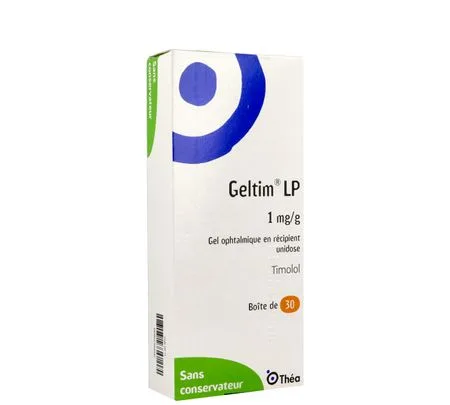
GELTIM LP®
timolol
Forms and presentations
Ophthalmic gel at 1 mg/g (colourless to slightly yellow opalescent): Single-dose containers of 0,4 g, box of 30 in sachet of 10.Composition
| single-dose p | |
| Timolol (INN) maleate expressed as timolol
|
0,4 mg |
Indications
Reduction of elevated intraocular pressure in the following conditions:- Intraocular hypertension.
- Chronic open-angle glaucoma.
Dosage and administration
Ophthalmic use.
Dosage- Adults: the recommended dose is 1 drop of Geltim LP 1 mg/g in the affected eye(s), once a day, in the morning.
- Elderly patients: timolol in ophthalmic preparation is widely used in elderly patients. The dosage mentioned above reflects the clinical data derived from this experience.
- Children and adolescents: there are no experimental data in children and adolescents. The use of this ophthalmic gel is therefore not recommended in these patients.
The ophthalmologist may, if he or she deems it necessary, combine Geltim LP 1 mg/g, ophthalmic gel in single-dose container with one or more other antiglaucoma treatments (topical and/or systemic).
However, the combination of two beta-blocker eye drops is not recommended (see Warnings and Precautions for Use).
Other eye drops must be administered at least 15 minutes before Geltim LP 1 mg/g, ophthalmic gel in single-dose container. The ophthalmic gel must be administered last.
However, normalisation of intraocular pressure with Geltim LP 1 mg/g, ophthalmic gel in single-dose container sometimes requires several weeks, so treatment evaluation should include a measurement of intraocular pressure after a treatment period of approximately 4 weeks.
Method of administration:
The timolol ophthalmic gel must be instilled into the conjunctival sac.
A single-dose container contains a sufficient quantity of gel to treat both eyes.
For single use only.
Patients are advised:
- to avoid contact of the tip with the eye or eyelids;
- to use the ophthalmic gel immediately after first opening the single-dose container and to discard the single-dose container after use.
The systemic passage may be reduced by lacrimal occlusion or by closing the eyelids for 2 minutes. This method may help decrease systemic side effects and increase local activity.
- Substitution of a previous treatment:
- When Geltim LP 1 mg/g, ophthalmic gel in single-dose container is to replace another antiglaucoma eye drop, that eye drop should be stopped at the end of a complete day of treatment, and Geltim LP 1 mg/g, ophthalmic gel in single-dose container should be administered the following day at a dose of one drop in the affected eye(s) once daily, in the morning.
- If Geltim LP 1 mg/g, ophthalmic gel in single-dose container is to be substituted for several concomitant antiglaucoma medicines, the withdrawals should concern only one medicine at a time.
- When substituting an antiglaucoma medicine other than a beta-blocker eye drop, continue the previous medicine and add one drop of Geltim LP 1 mg/g, ophthalmic gel in single-dose container in the affected eye(s), once daily. The following day, stop the previous medicine completely.
- When substituting miotic eye drops with Geltim LP 1 mg/g, ophthalmic gel in single-dose container, a refraction examination may be necessary once the effects of the miotics have disappeared.
- The medical prescription will be accompanied by monitoring of intraocular pressure, especially when initiating treatment.
Contraindications
As with all products containing beta-blockers, timolol is contraindicated in patients with:- Hypersensitivity to the active substance (timolol maleate) or to any of the excipients listed in the section Composition.
- Reactive respiratory disease including bronchial asthma or a history of bronchial asthma, or severe chronic obstructive pulmonary disease.
- Sinus bradycardia, sick sinus syndrome, sinoatrial block, second- or third-degree atrioventricular block not fitted with a pacemaker.
- Overt heart failure, cardiogenic shock.
- Untreated pheochromocytoma.
- Corneal dystrophy.
Warnings and precautions
As with other topically administered ophthalmic medicines, timolol maleate is absorbed into the systemic circulation. Due to the beta-adrenergic activity of timolol maleate, the same types of cardiovascular, pulmonary and other adverse reactions as those seen with systemically administered beta-blockers may occur.
The incidence of systemic adverse reactions after ocular instillation is lower than with systemic administration. To reduce systemic absorption, see Posology and Method of administration.
As with any glaucoma treatment, regular monitoring of intraocular pressure and the condition of the cornea is recommended.
Where Geltim LP 1 mg/g, ophthalmic gel in single-dose container is used to lower intraocular pressure in patients with angle-closure glaucoma, a miotic must be used in combination.
Indeed, in these patients the immediate aim of treatment is to reopen the angle, which requires the use of a miotic to obtain pupillary constriction, timolol maleate having little or no effect on the pupil.
- Cardiac disorders:
- In patients with cardiovascular disease (for example coronary heart disease, Prinzmetal's angina and heart failure) and hypotension, treatment with beta-blockers should be critically evaluated and treatment with other active substances should be considered.
- Patients with cardiovascular diseases should be monitored for signs of worsening of the disease and of adverse reactions.
- Due to their negative dromotropic effect, beta-blockers should be administered only with caution in patients with first-degree heart block.
- If the heart rate falls below 50-55 beats per minute at rest and the patient presents symptoms related to bradycardia, the dose must be reduced.
- Beta-blockers may increase the risk of rebound hypertension.
- Vascular disorders:
- Caution is required in patients with severe disorders/conditions of the peripheral circulation (severe forms of Raynaud's disease or Raynaud's syndrome).
- Treated pheochromocytoma:
- In these patients, beta-blockers should be prescribed only in combination with treatment blocking alpha-adrenoreceptors.
- Respiratory disorders:
- Respiratory reactions, including deaths due to bronchospasm in patients with asthma, have been reported following administration of certain beta-blockers by the ophthalmic route.
- Geltim LP 1 mg/g, eye gel in single-dose container should be used with caution in patients with mild or moderate chronic obstructive pulmonary disease (COPD) and only if the potential benefit outweighs the potential risk.
- Hypoglycaemia/diabetes/hyperthyroidism:
- Beta-blockers should be administered with caution in patients prone to spontaneous episodes of hypoglycaemia or in patients with unstable diabetes, as beta-blockers may mask the signs and symptoms of acute hypoglycaemia.
- Beta-blockers may also mask the signs of hyperthyroidism.
- Metabolic diseases:
- Treatment should be given with caution in patients with metabolic acidosis.
- Corneal disorders:
- Ophthalmic beta-blockers may induce ocular dryness. Caution is required in patients with corneal disorders.
- Contact lens wearers:
- There is a risk of contact lens intolerance due to decreased tear secretion, generally associated with beta-blockers. This timolol eye gel has not been studied in contact lens wearers. Therefore, wearing of contact lenses should be avoided during use of Geltim LP 1 mg/g, eye gel in single-dose container.
- Other beta-blockers:
- The effect on intraocular pressure or the known effects of systemic beta-blockers may be potentiated when timolol is administered to patients already receiving a systemic beta-blocker.
- The response should be closely monitored in these patients. The combination of two topical beta-blockers is not recommended (see Interactions).
- Anaphylactic reactions:
- During treatment with beta-blockers, patients with a history of atopy or severe anaphylactic reaction to various allergens may be more sensitive to repeated exposure to these allergens and may not respond to the usual dose of adrenaline used to treat anaphylactic reactions.
- Choroidal detachment:
- Choroidal detachment has been reported with administration of therapy aimed at reducing aqueous humour secretion (for example timolol, acetazolamide) following filtering surgery.
- Psoriasis:
- Worsening of the disease has been reported under beta-blocker treatment, so the indication should be weighed carefully.
- Discontinuation of treatment:
- As with systemic beta-blockers, if treatment must be discontinued, the dose should be gradually reduced in patients with coronary artery disease.
- Elderly patients, patients with renal and/or hepatic impairment:
- In these at-risk patients and when a beta-blocker is administered orally, dose adjustment is often necessary.
- General anaesthesia:
- Ophthalmic beta-blockers may inhibit the effects of beta-adrenergic agonists, for example adrenaline. The anaesthetist should be informed that the patient is being treated with timolol.
Interactions
No specific interaction study has been performed with timolol.
Although the amounts of beta-blocker passing into the systemic circulation are low following ocular instillation, the risk of drug interactions exists.
Therefore, interactions observed with systemically administered beta-blockers should be taken into account.
There is a risk of additive effects resulting in hypotension and/or marked bradycardia when oral calcium channel inhibitors, beta-adrenergic blocking agents, antiarrhythmics (including amiodarone), digitalis glycosides, parasympathomimetics, or guanethidine are co-administered with ophthalmic solutions containing beta-blockers.
Potentiation of systemic beta-adrenergic blockade (for example reduced heart rate, depression) has been reported when CYP2D6 inhibitors (for example quinidine, fluoxetine, paroxetine) are combined with timolol.
Occasional cases of mydriasis have been reported with concomitant administration of beta-blockers and adrenaline (epinephrine).
- Combinations not recommended:
-
- Bepridil: disorders of automaticity (excessive bradycardia, sinus arrest), sino-atrial and atrioventricular conduction disorders, and increased risk of ventricular rhythm disorders (torsades de pointes) as well as cardiac failure. Such a combination should only be given under close clinical and ECG monitoring, particularly in elderly subjects or at the start of treatment.
- Diltiazem: disorders of automaticity (excessive bradycardia, sinus arrest), sino-atrial and atrioventricular conduction disorders, and cardiac failure. Such a combination should only be given under close clinical and ECG monitoring, particularly in elderly subjects or at the start of treatment.
- Verapamil: disorders of automaticity (excessive bradycardia, sinus arrest), sino-atrial and atrioventricular conduction disorders, and cardiac failure (synergistic effects). Such a combination should only be given under close clinical and ECG monitoring, particularly in elderly subjects or at the start of treatment.
- Fingolimod: potentiation of bradycardic effects may have fatal consequences. Beta-blockers are all the more at risk as they prevent the adrenergic compensatory mechanism. Continuous clinical monitoring and ECG checks for 24 hours after the first administration.
- Bepridil: disorders of automaticity (excessive bradycardia, sinus arrest), sino-atrial and atrioventricular conduction disorders, and increased risk of ventricular rhythm disorders (torsades de pointes) as well as cardiac failure. Such a combination should only be given under close clinical and ECG monitoring, particularly in elderly subjects or at the start of treatment.
- Associations subject to precautions for use:
-
- Amiodarone: disorders of automaticity and conduction (suppression of compensatory sympathetic mechanisms). Clinical and ECG monitoring is recommended.
- Class I antiarrhythmics (except lidocaine): disorders of contractility, automaticity and conduction (suppression of compensatory sympathetic mechanisms). Clinical and ECG monitoring is recommended.
- Halogenated volatile anesthetics: reduction of compensatory cardiovascular reactions by beta-blockers. Beta-adrenergic inhibition may be reversed during surgery by beta-mimetics. As a general rule, do not stop beta-blocker treatment and, in any case, avoid abrupt withdrawal. Inform the anesthetist of this treatment.
- Baclofen: increased risk of hypotension, particularly orthostatic hypotension. Monitoring of blood pressure and adjustment of the antihypertensive dose if necessary.
- Centrally acting antihypertensives: marked increase in blood pressure in case of abrupt withdrawal of the centrally acting antihypertensive treatment. Avoid abrupt withdrawal of centrally acting antihypertensive treatment. Clinical monitoring.
- Insulin, oral hypoglycemic agents, glinides, gliptins: all beta-blockers may mask certain symptoms of hypoglycemia: palpitations and tachycardia. Inform the patient and reinforce blood glucose self-monitoring, especially at the start of treatment.
- Lidocaine, with lidocaine administered intravenously: increased plasma concentrations of lidocaine with possible neurological and cardiac adverse effects (decreased hepatic clearance of lidocaine). Clinical monitoring, ECG and possibly monitoring of plasma lidocaine concentrations during the combination and after withdrawal of the beta-blocker. Adjust the lidocaine dose if necessary.
- Medicinal products likely to cause torsades de pointes: increased risk of ventricular rhythm disorders, in particular torsades de pointes. Clinical and ECG monitoring is recommended.
- Propafenone: disorders of contractility, automaticity and conduction (suppression of compensatory sympathetic mechanisms). Clinical and ECG monitoring is recommended.
- Amiodarone: disorders of automaticity and conduction (suppression of compensatory sympathetic mechanisms). Clinical and ECG monitoring is recommended.
- Associations to be taken into account:
-
- Alpha-blockers for urological use, alpha-blocking antihypertensives: increased hypotensive effect. Increased risk of orthostatic hypotension.
- Amifostine: increased risk of hypotension, particularly orthostatic hypotension.
- Imipramine-type antidepressants: increased risk of hypotension, particularly orthostatic hypotension.
- Neuroleptics: increased risk of hypotension, particularly orthostatic hypotension. Vasodilatory effect and risk of hypotension, particularly orthostatic hypotension (additive effect).
- Non-steroidal anti-inflammatory drugs: reduction of the antihypertensive effect (inhibition of vasodilatory prostaglandins by NSAIDs and sodium and water retention with phenylbutazone).
- Other bradycardic agents: risk of excessive bradycardia (additive effect).
- Dihydropyridines: hypotension, cardiac failure in patients with latent or uncontrolled heart failure (addition of negative inotropic effects). The beta-blocker may also minimize the reflex sympathetic reaction brought into play in case of excessive hemodynamic repercussion.
- Dipyridamole, with dipyridamole administered intravenously: increased antihypertensive effect.
- Pilocarpine (for systemic use): risk of excessive bradycardia (cumulation of bradycardic effects).
- Nitrates and related compounds: increased risk of hypotension, particularly orthostatic hypotension.
- Alpha-blockers for urological use, alpha-blocking antihypertensives: increased hypotensive effect. Increased risk of orthostatic hypotension.
Fertility, pregnancy and breastfeeding
Pregnancy:There are no sufficiently relevant data on the use of timolol in pregnant women. Timolol should not be used during pregnancy unless absolutely necessary. To reduce systemic absorption, see Posology and Method of administration.
Epidemiological studies have not revealed malformative effects but show a risk of intrauterine growth retardation when beta-blockers are administered orally. Furthermore, signs and symptoms of beta-adrenergic blockade (for example bradycardia, hypotension, respiratory distress and hypoglycemia) have been observed in newborns of mothers treated with beta-blockers up to delivery. If Geltim LP 1 mg/g, ophthalmic gel in single-dose container is administered up to delivery, the newborn should be closely monitored during the first days of life.
Breastfeeding:
Beta-blockers are excreted in breast milk. However, at therapeutic doses of timolol contained in the eye drops, it is unlikely that sufficient quantities would be present in breast milk to induce clinical symptoms of beta-adrenergic blockade in the infant. To reduce systemic absorption, see Posology and Method of administration.
Fertility:No effect of timolol maleate on fertility has been observed in animal studies (see Preclinical safety).
Driving and using machines
Geltim LP 1mg/g, ophthalmic gel in single-dose container has a minor influence on the ability to drive vehicles and use machines.No study on the effects of this medicine on the ability to drive has been performed. When driving a vehicle or using a machine, it should be known that visual disturbances, including changes in refraction, diplopia, ptosis, may occasionally occur, as well as frequent, mild and transient episodes of blurred vision, and less frequent episodes of dizziness or fatigue.
Adverse effects
As with other locally administered ophthalmic medicines, timolol maleate is absorbed into the systemic circulation. This may cause side effects similar to those seen with systemic beta-blockers. The incidence of systemic side effects after local instillation is lower than with systemic administration.
The side effects listed include those observed with the ophthalmic beta-blocker class.
- Immune system disorders:
- Disseminated lupus erythematosus, systemic allergic reactions including angioedema, urticaria, localised and generalised rash, pruritus, anaphylactic reaction.
- Metabolism and nutrition disorders:
- Hypoglycaemia.
- Psychiatric disorders:
- Insomnia, depression, nightmares, memory loss, hallucination.
- Nervous system disorders:
- Syncope, cerebrovascular accident, cerebral ischaemia, increase in signs and symptoms of myasthenia gravis, dizziness, paraesthesia and headache.
- Eye disorders:
- Signs and symptoms of ocular irritation (for example burning, stinging, lacrimation, redness), blepharitis, conjunctival hyperaemia, conjunctivitis, keratitis, blurred vision and choroidal detachment following filtering surgery (see Warnings and Precautions for Use), decreased corneal sensitivity, dry eye, corneal erosion, ptosis, diplopia, changes in refraction (sometimes due to discontinuation of treatment with miotics).
- Cardiac disorders:
- Bradycardia, chest pain, palpitations, oedema, arrhythmia, congestive heart failure, atrioventricular block, cardiac arrest, heart failure, claudication.
- Vascular disorders:
- Hypotension, Raynaud's phenomenon, coldness of hands and feet.
- Respiratory, thoracic and mediastinal disorders:
- Bronchospasm (especially in patients with pre-existing bronchospastic disease), dyspnoea, cough.
- Gastrointestinal disorders:
- Dysgeusia, nausea, dyspepsia, diarrhoea, dry mouth, abdominal pain, vomiting.
- Skin and subcutaneous tissue disorders:
- Alopecia, psoriasiform eruptions or worsening of psoriasis, rash.
- Musculoskeletal and systemic disorders:
- Myalgia.
- Reproductive system and breast disorders:
- Sexual dysfunction, decreased libido, impotence.
- General disorders and administration site conditions:
- Asthenia/fatigue.
- Investigations:
- Antinuclear antibodies positive.
Reporting suspected adverse reactions after authorisation of the medicinal product is important. It allows continuous monitoring of the benefit/risk balance of the medicinal product. Healthcare professionals should report any suspected adverse reaction via the national reporting system: National Agency for the Safety of Medicines and Health Products (ANSM) and the network of Regional Pharmacovigilance Centres. Website: https://signalement.social-sante.gouv.fr.
Overdose
No specific data for this formulation is available. The most common side effects observed during an overdose with beta-blockers are symptomatic bradycardia, hypotension, bronchospasm and acute heart failure.
In case of overdose, the following measures should be considered:- Administration of activated charcoal, if the preparation has been taken orally. Studies have shown that timolol maleate cannot be removed by haemodialysis.
- Symptomatic bradycardia: administer atropine sulfate intravenously at a dose of 0,25 to 2 mg, so as to induce vagal blockade. If the bradycardia persists, isoprenaline hydrochloride should be administered intravenously with caution. In refractory cases, the use of a cardiac pacemaker should be considered.
- Hypotension: administer a sympathomimetic agent such as dopamine, dobutamine or noradrenaline. In refractory cases, administration of glucagon hydrochloride has proved useful.
- Bronchospasm: use isoprenaline hydrochloride. Concomitant treatment with aminophylline may be considered.
- Acute heart failure: conventional treatment with digitalis, diuretics and oxygen should be started immediately. In refractory cases, intravenous administration of aminophylline is recommended. This may be followed, if necessary, by administration of glucagon hydrochloride, which has proved useful.
- Heart block: use isoprenaline hydrochloride or a cardiac pacemaker.
Pharmacodynamics
Pharmacotherapeutic class: Antiglaucoma and miotic agents, beta-blockers, ATC code: S01ED01.
- General:
-
Timolol is characterised by three pharmacological properties:
- non-cardioselective beta-blocker,
- absence of partial agonist activity or absence of intrinsic sympathomimetic activity (ISA),
- non-significant membrane-stabilising effect (local anaesthetic or quinidine-like).
- non-cardioselective beta-blocker,
- Ocular:
-
- Timolol maleate ophthalmic gel lowers intraocular pressure, whether or not associated with glaucoma.
- Its activity becomes apparent about 20 minutes after instillation, reaches its maximum at 1 to 2 hours and is still present after 24 hours.
- There is practically no change in pupil diameter or accommodation.
- Timolol maleate ophthalmic gel lowers intraocular pressure, whether or not associated with glaucoma.
Pharmacokinetics
Geltim LP 1 mg/g ophthalmic gel is a formulation without preservative.
Negligible systemic exposure has been observed in patients treated with Geltim LP 1 mg/g ophthalmic gel administered once daily. Recent data from a comparative pharmacokinetic study (LOQ = 0,146 ng/mL) have shown that plasma concentration is generally below the limit of quantification (LOQ).
Preclinical safety
None of the mutagenicity studies performed in vivo and in vitro with timolol revealed any mutagenic potential. A carcinogenic potential of timolol has been demonstrated in animals, at exposure levels far higher than those observed clinically during treatment with Geltim LP 1 mg/g.
Reproductive toxicity studies did not reveal any teratogenic effect in mice, rats and rabbits. Only a delay in ossification was observed in rats, at exposure levels far higher than those observed clinically during treatment with Geltim LP 1 mg/g. No effect on fertility was observed in rats.
Instillation in rabbits of a single or repeated dose over 28 days of Geltim LP 1 mg/g did not cause local or systemic intolerance, nor any local anaesthetic effect.
Storage conditions
- Shelf life
- 30 months.
Store the single-dose containers in the sachet and carton box, protected from light.
- After opening the single-dose container:
- Use the single-dose container immediately and discard it after use.
- After opening the sachet:
- Use the single-dose containers within a maximum period of one month.
HANDLING/DISPOSAL INSTRUCTIONS
No special requirements.
Prescription, supply and reimbursement
LIST I| Marketing authorisation (AMM) | 3400937068291 (2006, SmPC rev 24.12.2019). |
| Price: | 6,42 euros (30 single-dose containers). |
| Reimbursed by Social Security at 65 %. Collective. | |
THÉA PHARMA
37, rue Georges-Besse
63100 Clermont-Ferrand
http://www.theapharma.fr
Source: VIDAL · Updated on 10/11/2026. This information does not replace advice from a healthcare professional.