
Medicines
SmPC of 14/10/2022
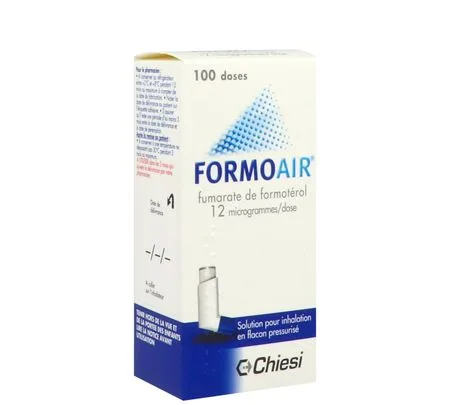
FORMOAIR 12 micrograms/dose, solution for inhalation in pressurised container
Forms and presentations
Solution for inhalation.
Pressurised container of 100 doses, with metering valve, actuator and protective cap.
Composition
For one metered dose:
Formoterol fumarate dihydrate: 12 micrograms
The dose delivered at the mouthpiece is 10,1 micrograms.
Excipient with known effect: anhydrous ethanol.
FORMOAIR 12 micrograms/dose contains a small amount of alcohol (ethanol), 8.9 mg per inhalation, which is equivalent to 0.25 mg/kg for the dose of two inhalations per day in adults and is equivalent to 0,44 mg/kg for the dose of two inhalations per day in adolescents.
Norflurane, anhydrous ethanol, hydrochloric acid.
Indications
Continuous symptomatic treatment of persistent, moderate to severe asthma, in patients requiring daily bronchodilator use; in combination with continuous anti-inflammatory treatment (inhaled and/or oral glucocorticoids).
The associated corticosteroid therapy should be maintained on a regular basis.
Symptomatic treatment of bronchial obstruction in chronic obstructive pulmonary disease.
Dosage and administration
Dosage
The dosage depends on the severity of the disease.
The medicinal product should not be used more than 3 months after the date of dispensing to the patient by the pharmacist (see section Special storage precautions).
Although Formoair acts rapidly, it is a long-acting inhaled bronchodilator and must therefore be reserved for regular continuous treatment.
ASTHMA
Adults (including elderly subjects) and adolescents aged 12 years and over
Usual dose: one puff morning and evening (i.e. 24 micrograms of formoterol fumarate dihydrate per day).
In severe cases: up to two puffs morning and evening at most (i.e. 48 micrograms of formoterol fumarate dihydrate per day).
The maximum daily dose is 4 puffs (48 micrograms of formoterol fumarate dihydrate).
Children aged under 12 years
The efficacy and tolerability of Formoair in children aged under 12 years have not yet been established; therefore Formoair must not be used in these children.
Formoair is not the treatment for an acute asthma attack.
For the treatment of acute asthma attacks, it is recommended to use a bronchodilator β2 inhaled short-acting sympathomimetic.
Patients should be advised not to stop or modify their corticosteroid therapy when starting treatment with Formoair.
The persistence or worsening of symptoms, or their insufficient control with the recommended doses of Formoair, indicates instability of the underlying disease.
CHRONIC OBSTRUCTIVE PULMONARY DISEASE (COPD)
Adults (aged 18 years and older)
The usual dose is 1 inhalation 2 times a day (1 inhalation in the morning and 1 inhalation in the evening, i.e. 24 micrograms of formoterol fumarate per day).
In continuous treatment, the daily dose must not exceed 2 inhalations.
If needed, additional inhalations may nevertheless be taken occasionally to relieve symptoms, without however exceeding a maximum total dose of 4 inhalations per day (including continuous treatment and additional inhalations). Do not exceed more than 2 inhalations per administration.
Hepatic and renal impairment
No clinical study has been carried out in these populations; however, the existing data do not suggest the need for dose adjustment in cases of renal or hepatic impairment.
Method of administration
To limit the risk of the patient mishandling the device, it is useful for the doctor or a healthcare professional to ensure that the patient uses the inhaler correctly.
Before the first use of the inhaler and after three days or more of non-use, one puff will be released into the air to ensure the device is working properly.
Where possible, patients should be in an upright position, standing or sitting, when actuating the inhaler.
- Remove the protective cap from the mouthpiece.
- Breathe out away from the device as deeply as possible.
- Hold the cartridge upright, with the base pointing upwards, and place the mouthpiece between tightly closed lips.
- Breathe in deeply through the mouth while pressing down on the base of the cartridge (at the top) to release one puff.
- Hold your breath for as long as possible without effort, and finally remove the inhaler from the mouth.
If another puff must be inhaled, keep the inhaler in an upright position for about 30 seconds, then repeat steps 2 to 5.
Always close after use using the protective cap.
IMPORTANT: steps 2 to 4 must not be carried out too quickly.
If some of the gas escapes from the upper part of the inhaler or from the side of the mouthpiece, start again from step 2.
For patients with impaired grip, the inhaler should be held with both hands. In this case, the upper part of the inhaler should be held between the two index fingers and the lower part between the two thumbs.
If the patient has difficulty synchronising inhalation with the activation of the device, an inhalation chamber should be used. However, no clinical data are available on the use of Formoair with an inhalation chamber.
Contraindications
Hypersensitivity to the active substance or to any of the excipients listed in section Composition.
Warnings and precautions
Formoair should not be used (and is not sufficient) as first-line treatment in asthma.
Asthma patients requiring treatment with long-acting ß2-agonists must also receive optimal maintenance anti-inflammatory treatment with corticosteroids. Therefore, patients should be advised to continue taking their anti-inflammatory treatment after starting formoterol treatment, even when symptoms improve. Persistence of symptoms or the need to increase treatment with ß2-agonists indicates worsening of the underlying condition and should prompt reassessment of maintenance treatment. Although Formoair may be introduced as additional treatment when inhaled corticosteroids do not provide adequate control of asthma symptoms, Formoair treatment must not be initiated during a severe acute asthma exacerbationë of asthma, or during a significant acute worsening or deteriorationë of asthma.
Serious asthma-related adverse effects and exacerbations may occur during Formoair treatment. Patients should be informed of the need to continue their treatment but to seek medical advice if asthma symptoms remain uncontrolled or worsen after starting Formoair treatment.
The recommended dosages must be observed (see section Dosage and administration). When asthma symptoms are controlled, a regular reduction of the Formoair dose may be considered. It is important to regularly review patients whose treatment has been reduced. The minimum effective dose of Formoair should be used.
The maximum daily dose must not be exceeded.
Urgent medical advice is required in case of rapid or sudden worsening of asthma, as the vital prognosis may be at risk in the short term.
The use of single or daily doses significantly higher than those recommended should be avoided due to the possibility of harmful effects on the heart (arrhythmias, increased blood pressure) and the occurrence of electrolyte disorders.
Associated conditions:
Caution is required when treating patients with third-degree atrioventricular block, refractory diabetes, thyrotoxicosis, pheochromocytoma, obstructive hypertrophic cardiomyopathy, idiopathic subvalvular aortic stenosis, severe hypertension, aneurysm, or any other severe cardiovascular disease, such as ischaemic heart disease, tachyarrhythmia or severe heart failure, and occlusive vasculopathies, in particular arteriosclerosis.
Formoterol may induce prolongation of the QTc interval. Caution is advised when treating patients with prolongation of the QTc interval, whether congenital or drug-induced (QTc > 0,44 seconds), and in patients treated with medicinal products affecting the QTc interval (see section Interactions).
Due to the hyperglycaemic effects of ß2-agonists, additional monitoring of blood glucose is recommended initially in diabetic patients.
Formoair should not be administered within at least 12 hours before anaesthesia with halogenated anaesthetics.
Paradoxical bronchospasm
As with all inhaled treatments, the risk of paradoxical bronchospasm must be considered. If paradoxical bronchospasm occurs, treatment must be stopped immediately and an alternative treatment must be instituted (see section Adverse effects).
Hypokalaemia
Treatment with ß2-agonists may induce potentially serious hypokalaemia. Particular caution is recommended in cases of acute severe asthma, as the associated risk may be increased by hypoxia. The hypokalaemic effect may be potentiated by concomitant treatment with xanthine derivatives, corticosteroids or diuretics. Blood potassium levels should therefore be monitored.
In subjects with initially low plasma potassium levels or associated risk factors, serum potassium should be measured regularly. This recommendation applies even in the absence of a history of hypokalaemia during previous treatments. Potassium supplementation should be considered if necessary.
The effects of digitalis are accentuated by a decrease in serum potassium.
Excipient with known effect
The quantity for the dose of two inhalations of this medicinal product is equivalent to less than 1 ml of beer or wine.
The small amount of alcohol contained in this medicinal product is not likely to cause any noticeable effect.
Interactions
No specific interaction study has been carried out with formoterol.
If other medicinal products known to prolong the QTc interval are administered concomitantly, there is a theoretical risk of pharmacodynamic interaction with formoterol and an increased risk of ventricular arrhythmia. These medicinal products include, for example, certain antihistamines (terfenadine, astemizole, mizolastine), certain antiarrhythmics (quinidine, disopyramide, procainamide), erythromycin and tricyclic antidepressants.
Concomitant administration of other sympathomimetic substances such as other β2-agonists or ephedrine may potentiate the undesirable effects of Formoair and may require dose adjustment.
Concomitant administration of formoterol and theophylline potentiates the risk of occurrence of undesirable effects such as rhythm disorders. Substances with intrinsic sympathomimetic activity, such as levodopa, levothyroxine, oxytocin or alcohol, may also interfere with the autonomic regulatory system when administered at the same time as formoterol.
Caution is required when Formoair is combined simultaneously with monoamine oxidase inhibitors or tricyclic antidepressants, due to the risk of potentiation of the effects β2-adrenergic on the cardiovascular system.
Concomitant administration of xanthine derivatives, corticosteroids or diuretics such as thiazide diuretics and loop diuretics may potentiate the rare hypokalaemic undesirable effect of β2-agonists. Hypokalaemia may increase the risk of arrhythmias in patients receiving digitalis glycosides.
The risk of arrhythmia is higher in patients receiving concomitant anaesthesia with halogenated hydrocarbons.
The bronchodilator effects of formoterol may be increased by anticholinergic medicinal products.
Beta-blockers may weaken or inhibit the beta-stimulating effects of Formoair and should therefore not, unless absolutely necessary, be administered at the same time (including in the form of eye drops).
Fertility, pregnancy and breastfeeding
Pregnancy
There are no data or limited data on the use of formoterol in pregnant women. In animal studies, formoterol caused implantation losses as well as a decrease in early postnatal survival and birth weight. The effects appeared at systemic concentrations considerably higher than those achieved during clinical use of formoterol. Treatment with formoterol may be considered at all stages of pregnancy if it is essential for controlling asthma and if the expected benefits for the mother outweigh the possible risks to the foetus. The potential risk in humans is unknown.
Breast-feeding
It is not known whether formoterol is excreted in human milk. In rats, small amounts of formoterol have been detected in breast milk. Administration of formoterol to breast-feeding women should only be considered if the expected benefits to the mother outweigh the possible risks to the child.
The risk to newborns/infants cannot be excluded.
Driving and using machines
Formoair has no effect on the ability to drive vehicles and use machines.
Adverse effects
The most frequent adverse events observed during treatment with β2-agonists, such as tremors and palpitations, tend to be mild and disappear a few days after the start of treatment.
Adverse reactions associated with formoterol are presented below by system organ class and frequency. Frequency is defined according to the following convention: Very common (≥ 1/10), common (≥ 1/100, < 1/10), uncommon (≥ 1/1 000, < 1/100), rare (≥ 1/10 000, < 1/1 000), very rare (< 1/10 000).
|
System organ class |
Adverse reaction |
Frequency |
|
Blood and lymphatic system disorders |
Thrombocytopenia |
Very rare |
|
Immune system disorders |
Hypersensitivity reaction, for example angioedema, bronchospasm, exanthema, urticaria, pruritus. |
Rare |
|
Metabolism and nutrition disorders |
Hypokalaemia, hyperglycaemia |
Uncommon |
|
Psychiatric disorders |
Agitation, restlessness, sleep disorders |
Uncommon |
|
Abnormal behaviour, hallucination |
Very rare |
|
|
Nervous system disorders |
Tremor, headache |
Common |
|
Dizziness, taste disorders |
Uncommon |
|
|
Stimulation of the central nervous system |
Very rare |
|
|
Cardiac disorders |
Palpitations |
Common |
|
Tachycardia |
Uncommon |
|
|
Cardiac arrhythmias, for example, atrial fibrillation, supraventricular tachycardia, extrasystoles, angina pectoris |
Rare |
|
|
QTc interval prolongation |
Very rare |
|
|
Vascular disorders |
变化 blood pressure variation |
Rare |
|
Respiratory, thoracic and mediastinal disorders |
Cough |
Common |
|
Throat irritation |
Uncommon |
|
|
Paradoxical bronchospasm (see section Warnings and precautions) |
Rare |
|
|
Dyspnoea, exacerbation of asthma |
Very rare |
|
|
Gastrointestinal disorders |
Nausea |
Uncommon |
|
Skin and subcutaneous tissue disorders |
Hyperhidrosis |
Uncommon |
|
Musculoskeletal and connective tissue disorders |
Muscle cramps, myalgia |
Uncommon |
|
Renal and urinary disorders |
Nephritis |
Rare |
|
General disorders and administration site conditions |
Peripheral oedema |
Very rare |
Nausea, dysgeusia, throat irritation, hyperhidrosis, agitation, headache, dizziness and muscle cramps may disappear spontaneously after 1 to 2 weeks of treatment.
Stimulation of the central nervous system, manifesting as hyperexcitability, has been reported sporadically following inhalation of ß2-sympathomimetics. This effect has been observed mainly in children up to the age of 12 years.
Treatment with ß2-agonists may cause an increase in blood levels of insulin, free fatty acids, glycerol and ketone bodies.
Reporting of suspected adverse reactions
Reporting suspected adverse reactions after authorisation of the medicinal product is important. It allows continued monitoring of the benefit/risk balance of the medicinal product. Healthcare professionals are asked to report any suspected adverse reactions via the national reporting system: National Agency for the Safety of Medicines and Health Products (ANSM) and the network of Regional Pharmacovigilance Centres - Website: https://signalement.social-sante.gouv.fr.
Overdose
Clinical data available on the management of overdose are limited. An overdose of Formoair is likely to cause the typical effects of ß-adrenergic agonists β2-adrenergic agonists: headache, tremor, palpitations. Symptoms described in isolated cases include tachycardia, prolongation of the QTc interval, ventricular arrhythmia, metabolic acidosis, hypokalaemia, hyperglycaemia, nausea, vomiting and drowsiness.
Treatment of overdose
Monitoring and symptomatic treatment. Hospitalisation should be considered in severe cases.
The use of cardioselective beta-blockers may be considered, but with extreme caution because of the risk of bronchoconstriction they induce. Monitoring of serum potassium is recommended.
Pharmacodynamics
Pharmacotherapeutic class: Adrenergics for inhalation. Selective beta2-adrenergic agonists ATC code: R03BA02
Mechanism of action and pharmacodynamic effects
Formoterol is a selective beta2-stimulant. It exerts a bronchodilator effect in patients with reversible obstructive respiratory syndrome. After inhalation of a single dose, the bronchodilator effect appears within 1 to 3 minutes. A marked bronchodilator effect still persists within 12 hours following inhalation. In humans, formoterol has shown efficacy in preventing methacholine-induced bronchospasm.
Pharmacokinetics
Absorption
As with other substances administered by inhalation, 90 % of the administered dose of formoterol is swallowed and absorbed through the gastrointestinal tract. The pharmacokinetic characteristics of oral administration can therefore be extended to inhaled administration.
Absorption is rapid and complete: after inhalation of a therapeutic dose (12 micrograms) of Formoair pressurised metered-dose inhaler solution in asthmatic patients, the maximum plasma concentration (Cmax) of formoterol is reached after approximately 15 minutes, i.e. more rapidly than with formoterol dry powder for inhalation. In general, the rate of absorption should be taken into account when replacing one formoterol formulation with another.
Absorption of formoterol is linear after inhalation of 12 to 96 μg of formoterol fumarate dihydrate.
Oral doses of up to 300 micrograms of formoterol are rapidly absorbed through the gastrointestinal tract. The maximum plasma concentration of the unchanged molecule is reached after 30 minutes to 1 hour. More than 65 % of an oral dose of 80 micrograms is absorbed. Linearity of dose-plasma concentration is established over the range of oral doses administered from 20 to 300 μg. Due to a short half-life, there is no accumulation after repeated daily administration of doses ranging from 40-160 micrograms. No significant difference according to sex has been demonstrated.
Distribution
Plasma protein binding is 61 to 64 % (albumin: 34 %); no saturation of binding sites has been demonstrated at therapeutic doses.
Biotransformation
Formoterol is mainly metabolised by direct glucuronidation and is completely eliminated. Another metabolic pathway consists of O-demethylation followed by glucuronidation and complete elimination. The CYP 450 isoenzymes: 2D6, 2C19, 2C9 and 2A6, are involved in the metabolism of formoterol, and the risk of kinetic drug interaction remains low. The kinetics of formoterol are not modified after single and repeated administration, eliminating the possibility of auto-induction or inhibition of metabolism.
Elimination
Elimination of formoterol appears as a multiphasic process interfering with the half-life observed over time. Based on plasma or blood concentrations measured 6, 8 or 12 hours after oral administration, the elimination half-life is estimated at 2 to 3 hours.
The half-life calculated on the basis of renal excretion between 3 and 16 hours after inhalation is 5 hours.
The active substance and its metabolites are completely eliminated, two-thirds of an oral dose being eliminated in urine and one-third in faeces. After inhalation of formoterol, 6 to 9 % of the dose (on average) is eliminated unchanged in urine. The renal clearance of formoterol is 150 ml/min.
Preclinical safety
In rats and dogs, the effects of formoterol were observed mainly in the cardiovascular system and consisted of an accentuation of the known pharmacological effects with high doses of agonists β2.
A slight reduction in fertility was found in male rats exposed to the highest doses.
In vitro and in vivo studies showed no genotoxic effects of formoterol. In female rats and mice, a slight increase in the incidence of benign uterine leiomyomas was observed. This effect is considered a class effect in rodents, following prolonged exposure to high doses of agonists β2.
Special storage precautions
For the pharmacist:
To be stored in a refrigerator (between 2 °C and 8 °C) for a maximum of 15 months.
After dispensing to the patient:
To be stored at a temperature not exceeding 30 °C (for a maximum of 3 months).
SPECIAL PRECAUTIONS FOR DISPOSAL AND OTHER HANDLING
For pharmacies:
Write the date of dispensing to the patient on the box.
Ensure that there are at least three months between the date of dispensing to the patient and the expiry date printed on the box.
Any unused product or waste must be disposed of in accordance with the regulations in force.
Prescription, supply and reimbursement
| Marketing authorisation (AMM) |
|
| Price: |
|
CHIESI SAS
17, avenue de l'Europe. 92270 Bois-Colombes
Tel: 01 47 68 88 99. Fax: 01 47 68 48 08
Medical information and pharmacovigilance:
Source: VIDAL · Updated on 10/11/2026. This information does not replace advice from a healthcare professional.