
Medicines
SmPC of 12/01/2026
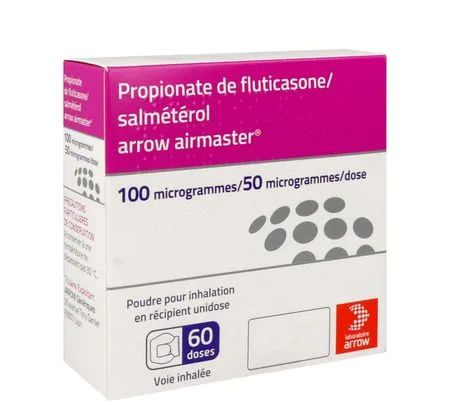
FLUTICASONE PROPIONATE/SALMETEROL ARROW AIRMASTER 100 micrograms/50 micrograms/dose, inhalation powder in single-dose container
Forms and presentations
Inhalation powder in single-dose container.
Device (dispenser) made of molded plastic containing a heat-sealed film of 60 regularly spaced blisters. Each blister contains a pre-measured dose of white to off-white inhalation powder.
Composition
Fluticasone propionate......................................................................................................100 micrograms
Salmeterol..................................................................................................................................50 micrograms
As salmeterol xinafoate
Per metered dose
That is
Fluticasone propionate........................................................................................................92 micrograms
Salmeterol..................................................................................................................................47 micrograms
As salmeterol xinafoate
For a dose delivered at each inhalation at the mouthpiece level
Excipient with known effect :
Each delivered dose contains approximately 13 milligrams of lactose (monohydrate).
For the full list of excipients, see section Composition.
Lactose monohydrate (containing milk proteins).
Indications
FLUTICASONE PROPIONATE/SALMETEROL ARROW AIRMASTER is indicated in adults and adolescents aged at least 12 years.
Asthma
FLUTICASONE PROPIONATE/SALMETEROL ARROW AIRMASTER is indicated for the continuous treatment of asthma, in situations where administration by inhalation of a medicine combining a corticosteroid and a short-acting β2 agonist bronchodilator is justified:
• in patients insufficiently controlled by inhaled corticosteroid therapy and the use of an inhaled short-acting β2 agonist bronchodilator by inhalation "on demand";
or
• in patients controlled by inhaled corticosteroid therapy combined with continuous treatment with a long-acting inhaled β2 agonist.
Note: the 100 microgram/50 microgram/dose strength of FLUTICASONE PROPIONATE/SALMETEROL ARROW AIRMASTER is not suitable for the treatment of severe asthma in adults and children.
Dosage and administration
Dosage
The patient should be informed that to observe an optimal effect of the treatment, FLUTICASONE PROPIONATE/SALMETEROL ARROW AIRMASTER must be administered daily, even in the absence of symptoms.
The physician should regularly verify that the prescribed dosage of FLUTICASONE PROPIONATE/SALMETEROL ARROW AIRMASTER is well adapted to the patient's clinical condition. It should only be modified on medical advice. The minimum effective dosage should always be sought. When symptoms are controlled by the lowest recommended dosage in two intakes per day, administration of an inhaled corticosteroid alone will then be considered. It may also be considered to reduce the dosage of FLUTICASONE PROPIONATE/SALMETEROL ARROW AIRMASTER to one intake per day, if the physician deems it necessary to maintain treatment with a long-acting β2 mimetic for symptom control. The timing of the intake of FLUTICASONE PROPIONATE/SALMETEROL ARROW AIRMASTER will then depend on the frequency of symptom occurrence. If symptoms predominantly occur at night, FLUTICASONE PROPIONATE/SALMETEROL ARROW AIRMASTER will be administered in the evening; if they occur predominantly during the day, FLUTICASONE PROPIONATE/SALMETEROL ARROW AIRMASTER will be administered in the morning.
The dosage of FLUTICASONE PROPIONATE/SALMETEROL ARROW AIRMASTER prescribed to the patient should correspond to the dose of fluticasone propionate adapted to the severity of their asthma. If the available dosages of this fixed combination do not meet the needs to adjust dosages according to the patient's condition, β2 agonists and/or corticosteroids should be prescribed individually.
Recommended dosage
Asthma
Adults and adolescents aged 12 years and older:
• one inhalation of 100 micrograms of fluticasone propionate and 50 micrograms of salmeterol 2 times per day;
or
• one inhalation of 250 micrograms of fluticasone propionate and 50 micrograms of salmeterol 2 times per day.
FLUTICASONE PROPIONATE/SALMETEROL ARROW AIRMASTER may be considered as an initiation treatment during a short trial period in adults and adolescents with moderate persistent asthma (defined by the presence of daytime symptoms, daily use of a short-acting bronchodilator as rescue symptomatic treatment, and moderate to severe bronchial obstruction) and in whom rapid asthma control is considered essential. In these cases, the recommended initial dose is one inhalation of 50 micrograms of salmeterol and 100 micrograms of fluticasone propionate, twice daily. Once asthma control is achieved, treatment should be reassessed in order to consider reducing treatment to an inhaled corticosteroid alone. It is important that patients are monitored regularly during the treatment reduction period.
No clear benefit has been established of fluticasone propionate/salmeterol used as initiation treatment compared to inhaled fluticasone propionate alone, when 1 to 2 of the severity criteria mentioned above are not present. In the majority of cases, first-line treatment remains administration of inhaled corticosteroids alone.
FLUTICASONE PROPIONATE/SALMETEROL ARROW AIRMASTER is not intended as first-line treatment for mild asthma. The strength 100 micrograms/50 micrograms per dose of FLUTICASONE PROPIONATE/SALMETEROL ARROW AIRMASTER is not suitable for adults and children with severe asthma; the appropriate dose of inhaled corticosteroids should be individually adjusted before initiating treatment with a fixed-combination product in patients with severe asthma.
Paediatric population
FLUTICASONE PROPIONATE/SALMETEROL ARROW AIRMASTER is not recommended in children aged less than 12 years. The safety and efficacy of fluticasone propionate/salmeterol in children aged less than 12 years have not been established.
At-risk populations
No dose adjustment is required in elderly subjects or patients with renal impairment.
No data are available regarding the use of fluticasone propionate/salmeterol in patients with hepatic impairment.
Method of administration
Inhalation route.
Training required
FLUTICASONE PROPIONATE/SALMETEROL ARROW AIRMASTER must be used correctly in order to obtain effective treatment. All patients should be asked to read the leaflet carefully and to follow the instructions for use described in the leaflet. All patients must be trained by the prescribing healthcare professional in the use of FLUTICASONE PROPIONATE/SALMETEROL ARROW AIRMASTER, in particular if it is their first use of this inhaler. This ensures that they understand well how to use it correctly.
The use of FLUTICASONE PROPIONATE/SALMETEROL ARROW AIRMASTER follows three simple steps, described below:
1. The device is opened by pressing the red safety catch and is primed by sliding the light pink cap of the mouthpiece until a "click" is heard.
2. The patient must first exhale. The mouthpiece is then placed between the lips. The dose can then be inhaled by breathing in regularly and deeply. The inhaler is then removed from the mouth and the patient should hold their breath for approximately 10 seconds or as long as possible without strain.
3. The patient should then be asked to exhale gently and close the inhaler cover until a "click" is heard.
Patients should also be asked to subsequently rinse their mouth with water and spit it out, and/or brush their teeth after inhalation.
Contraindications
Hypersensitivity to the active substances or to any of the excipients listed in section Composition.
Warnings and precautions
Deterioration of the disease
FLUTICASONE PROPIONATE/SALMETEROL ARROW AIRMASTER is not suitable for treating asthma attacks and episodes of paroxysmal dyspnoea. In these situations, the patient should use a fast-acting, short-duration bronchodilator to treat acute symptoms. The patient will be informed that they must therefore always have a fast-acting, short-duration bronchodilator medication available for use in case of an asthma attack.
Treatment with FLUTICASONE PROPIONATE/SALMETEROL ARROW AIRMASTER must not be initiated during an exacerbation phase, nor in case of significant worsening or acute deterioration of asthma.
Serious asthma-related adverse events and exacerbations may occur during treatment with fluticasone propionate/salmeterol. Patients should be informed that if asthma symptoms persist or worsen during treatment with fluticasone propionate/salmeterol, they must continue their treatment but seek advice from their doctor.
An increase in the use of fast-acting, short-duration bronchodilator medicines (so-called "rescue medicines") or a decrease in the response to them is a sign of destabilisation of the disease. In this case, the patient should consult their doctor.
A more or less rapid deterioration in symptom control should raise concern for progression to severe acute asthma that may be life-threatening and therefore requires urgent medical consultation. Consideration should then be given to increasing corticosteroid therapy.
As soon as the symptoms of asthma are controlled, a gradual reduction of the dose of FLUTICASONE PROPIONATE/SALMETEROL ARROW AIRMASTER should be considered. It is important that patients are monitored regularly during the period of treatment reduction. The minimum effective dose of FLUTICASONE PROPIONATE/SALMETEROL ARROW AIRMASTER should be used (see section Dosage and administration).
Discontinuation of treatment
In asthmatic patients, treatment with FLUTICASONE PROPIONATE/SALMETEROL ARROW AIRMASTER should not be stopped abruptly due to the risk of exacerbation. Furthermore, the minimum effective dose should always be sought under medical supervision.
Precautions with particular diseases
As with other corticosteroids intended for inhaled administration, FLUTICASONE PROPIONATE/SALMETEROL ARROW AIRMASTER should be used with caution in patients with active or quiescent pulmonary tuberculosis, fungal and viral infections, or other respiratory tract infections. Appropriate treatment should be initiated promptly if necessary.
Cardiovascular effects
Rarely, fluticasone propionate/salmeterol may cause cardiac rhythm disturbances such as supraventricular tachycardia, extrasystoles and atrial fibrillation, as well as a moderate and transient decrease in serum potassium at high therapeutic doses. FLUTICASONE PROPIONATE/SALMETEROL ARROW AIRMASTER should be used with caution in cases of severe cardiovascular disease or cardiac rhythm disorders and in patients with diabetes, hyperthyroidism, uncorrected hypokalaemia, or at risk of hypokalaemia.
Hyperglycaemia
Increases in blood glucose have very rarely been reported (see section Adverse effects). This must be taken into account when prescribing to diabetic patients.
Paradoxical bronchospasm
As with other inhaled treatments, paradoxical bronchospasm may occur, characterised by an increase in wheezing and breathlessness occurring immediately after administration. Paradoxical bronchospasm must be treated immediately with a fast-acting, short-acting bronchodilator. Administration of FLUTICASONE PROPIONATE/SALMETEROL ARROW AIRMASTER should then be stopped, the patient's condition assessed, and, if necessary, an alternative treatment initiated.
Beta-adrenoceptor agonists 2
The pharmacological adverse effects of β2 agonists, such as tremor, palpitations and headache have been reported, but these effects are generally transient and diminish with regular treatment.
Excipients
FLUTICASONE PROPIONATE/SALMETEROL ARROW AIRMASTER contains approximately 13 milligrams of lactose monohydrate per dose. Patients with rare hereditary problems of galactose intolerance, total lactase deficiency or glucose-galactose malabsorption should not take this medicine.
Systemic effects of corticosteroid therapy
Inhaled corticosteroid therapy may cause systemic effects, particularly during long-term treatment at high doses. However, the occurrence of these effects is less likely than during oral corticosteroid therapy. Cushing's syndrome, Cushingoid features, inhibition of adrenal function, decreased bone mineral density, cataract and glaucoma may be observed and, more rarely, various psychological or behavioural effects including psychomotor hyperactivity, sleep disorders, anxiety, depression or aggressiveness (particularly in children) (see the sub-section "Paediatric population" below for more information on the systemic effects of inhaled corticosteroids in children and adolescents). Consequently, the patient will be monitored regularly and the minimum effective dose should always be sought.
Adrenal function
Prolonged administration of high doses of inhaled corticosteroids may cause inhibition of adrenal function and acute adrenal insufficiency. Cases of inhibition of adrenal function and acute adrenal insufficiency have also been very rarely described with doses of fluticasone propionate between 500 and 1 000 micrograms. Episodes of adrenal insufficiency may be triggered by trauma, surgery, infection or any rapid reduction in dose. The clinical picture is generally atypical and may include anorexia, abdominal pain, weight loss, fatigue, headache, nausea, vomiting, hypotension, impaired consciousness, hypoglycaemia and convulsions. In cases of stress or when surgery is planned, supplementary systemic corticosteroid therapy may be necessary.
Administration of inhaled fluticasone propionate helps reduce the need for oral corticosteroids to treat asthma, but it does not prevent the risk of adrenal insufficiency occurring when patients on long-term oral corticosteroid therapy are withdrawn. Therefore, these patients should be treated with caution and their adrenal function regularly monitored. This risk also exists in patients who have received high doses of corticosteroids in emergency situations. The risk of persistent inhibition of adrenal function must be kept in mind in emergency situations and/or during planned surgical procedures likely to trigger a stress state. Appropriate substitutive corticosteroid therapy should be considered. Specialist advice may be required before planned surgery depending on the severity of the adrenal insufficiency.
Interactions with other medicinal products
Ritonavir may considerably increase plasma concentrations of fluticasone propionate. Therefore, unless the expected benefit for the patient outweighs the risk of systemic corticosteroid side effects, concomitant administration should be avoided. The risk of systemic corticosteroid effects is also increased with concomitant administration of fluticasone propionate with other potent inhibitors of cytochrome P450 3A4 (see section Interactions).
Concomitant systemic administration of ketoconazole significantly increases systemic exposure to salmeterol, which may lead to an increased risk of systemic effects (for example: QTc interval prolongation and palpitations). Therefore, concomitant administration of ketoconazole or other potent inhibitors of cytochrome P450 3A4 should be avoided unless the expected benefits outweigh the potential risk of systemic salmeterol adverse events (see section Interactions).
Visual disorders
Visual disturbances may occur with systemic or topical corticosteroid therapy. In case of blurred vision or any other visual symptom appearing during corticosteroid therapy, an ophthalmological examination is required to look for, in particular, cataract, glaucoma, or a rarer lesion such as central serous chorioretinopathy (CSCR), described with systemic or topical corticosteroid administration.
Paediatric population
PROPIONATE DE FLUTICASONE/SALMETEROL ARROW AIRMASTER is not recommended in children under 12 years of age (see section Dosage and administration).
Adolescents under 16 years of age receiving high doses of fluticasone propionate (generally ≥ 1 000 micrograms per day) are at particular risk. Systemic effects may occur, particularly with long-term high-dose treatments. Cushing's syndrome, Cushingoid features, adrenal suppression, acute adrenal insufficiency and growth retardation may be observed in adolescents and, more rarely, various psychological or behavioural effects including psychomotor hyperactivity, sleep disorders, anxiety, depression or aggression. The child or adolescent should then be referred to a paediatrician specialised in pulmonology.
The growth of adolescents receiving long-term inhaled corticosteroid therapy should be regularly monitored. Inhaled corticosteroid therapy should be reduced to the lowest dose ensuring effective asthma control.
Interactions
Adrenergic β-blockers may reduce or antagonise the effect of salmeterol. β-blockers, whether selective or non-selective, should be avoided in patients with asthma unless absolutely necessary. Potentially severe hypokalaemia may occur following treatment with β-agonists2. Particular attention is recommended in cases of severe acute asthma because of the risk of aggravation of this hypokalaemia by concomitant treatment with xanthine derivatives, steroids and diuretics.
Concomitant administration of other β-adrenergic medicinal products may potentiate the effects of β2-mimetics.
Fluticasone propionate
Under normal conditions of use, plasma concentrations of fluticasone propionate achieved after inhaled administration are low due to a significant presystemic first-pass effect (hepatic and intestinal) and high plasma clearance through extensive metabolism mediated by cytochrome CYP3A4. Therefore, the risk of clinically significant interactions with other active substances mediated by fluticasone propionate appears low.
Nevertheless, an interaction study in healthy volunteers receiving intranasal fluticasone propionate showed that ritonavir (a very potent inhibitor of cytochrome CYP3A4) at a dose of 100 mg twice daily increased plasma concentrations of fluticasone propionate several hundredfold, resulting in a marked decrease in plasma cortisol concentrations.
There is no data documenting the interaction with inhaled fluticasone propionate, but a significant increase in plasma concentrations is expected; cases of Cushing's syndrome and adrenal suppression have been reported. Concomitant administration of fluticasone propionate and ritonavir should therefore be avoided, unless the benefit outweighs the increased risk of systemic corticosteroid effects.
A small study conducted in healthy volunteers showed that ketoconazole, a slightly less potent inhibitor of CYP3A4, increased the systemic exposure of a dose of inhaled fluticasone propionate by 150%. The reduction in plasma cortisol was greater than that observed after administration of fluticasone propionate alone. An increase in systemic exposure and in the risk of systemic adverse effects is expected with concomitant administration of other potent CYP3A4 inhibitors (for example: itraconazole and cobicistat-containing medicinal products) and moderate CYP3A4 inhibitors (for example: erythromycin). Concomitant administration should be avoided unless the expected benefits outweigh the increased risk of systemic corticosteroid side effects. In that case, patients should be monitored for possible systemic corticosteroid side effects.
Salmeterol
Potent inhibitors of CYP3A4
Concomitant administration of ketoconazole (400 mg orally once daily) and salmeterol (50 µg by inhalation twice daily) in 15 healthy volunteers for 7 days resulted in a significant increase in plasma concentrations of salmeterol (maximum concentration (Cmax) increased by a factor of 1,4 and area under the curve (AUC) increased by a factor of 15). This observation therefore suggests an increased risk of systemic salmeterol effects, such as QT interval prolongation and palpitations, compared with administration of salmeterol or ketoconazole alone (see section Warnings and precautions).
No clinically significant effect on blood pressure, heart rate, blood glucose and serum potassium was observed. Concomitant administration of ketoconazole did not result in prolongation of the elimination half-life of salmeterol nor its accumulation after repeated administration.
Association of ketoconazole with salmeterol treatment should be avoided unless the expected benefits outweigh the potential risk of systemic salmeterol effects. A similar risk of interaction is expected with other potent inhibitors of cytochrome P450 3A4 (for example, itraconazole, telithromycin, ritonavir).
Moderate inhibitors of CYP3A4
Concomitant administration of erythromycin (500 mg orally three times daily) and salmeterol (50 micrograms inhaled twice daily) in 15 healthy volunteers for 6 days resulted in a slight, but not statistically significant, increase in plasma salmeterol concentrations (Cmax increased by a factor of 1,4 and AUC increased by a factor of 1,2). No serious adverse effects were associated with concomitant administration with erythromycin.
Fertility, pregnancy and breastfeeding
Fertility
There are no data in humans. However, studies in animals showed no effect of salmeterol or fluticasone propionate on fertility.
Pregnancy
A large amount of data obtained in pregnant women (more than 1 000 documented pregnancies) does not report malformative or foeto/neonatal toxicity related to salmeterol and fluticasone propionate. Animal studies on reproductive function have demonstrated toxicity of β2 mimetics and glucocorticoids (see section Preclinical safety).
The use of FLUTICASONE PROPIONATE/SALMETEROL ARROW AIRMASTER during pregnancy should only be considered if the expected benefit to the mother outweighs any potential risk to the foetus.
In pregnant women, the minimum effective dose of fluticasone propionate providing satisfactory control of asthma symptoms should always be sought.
Breast-feeding
It is not known whether salmeterol and fluticasone propionate and their metabolites pass into human breast milk.
Studies have shown that salmeterol and fluticasone propionate, and their metabolites, are excreted in the milk of lactating rats.
A risk to breastfed newborns/infants cannot be excluded. The decision to discontinue breastfeeding or treatment with fluticasone propionate/salmeterol will be made based on the expected benefit of breastfeeding for the child versus that of treatment for the breastfeeding woman.
Driving and using machines
PROPIONATE DE FLUTICASONE/SALMÉTÉROL ARROW has no or negligible effect on the ability to drive vehicles and use machines.
Adverse effects
Summary of the safety profile
FLUTICASONE PROPIONATE/SALMETEROL ARROW AIRMASTER contains salmeterol and fluticasone propionate, whose adverse effects are known. No new adverse effects have emerged with concomitant administration of the two active substances in the same formulation.
Adverse effects associated with fluticasone propionate/salmeterol are listed below, by system organ class and frequency. Frequencies are defined as follows: very common (≥ 1/10), common (≥ 1/100 to < 1/10), uncommon (≥ 1/1 000 to < 1/100), rare (< 1/10 000 to < 1/1 000) and frequency not known (cannot be estimated from the available data). Frequencies were defined based on clinical trials. The corresponding incidence in the placebo arm was not taken into consideration.
|
System organ classes |
Adverse effects |
Frequency |
|
Infections and infestations |
Oral and pharyngeal candidiasis |
Common |
|
Oesophageal candidiasis |
Rare |
|
|
Immune system disorders |
Hypersensitivity reactions with the following manifestations: |
|
|
• Hypersensitivity skin reactions |
Uncommon |
|
|
• Angioedema (mainly facial and oropharyngeal oedema) |
Rare |
|
|
• Respiratory symptoms (dyspnoea) |
Uncommon |
|
|
• Respiratory symptoms (bronchospasm) |
Rare |
|
|
• Anaphylactic reactions including anaphylactic shock |
Rare |
|
|
Endocrine disorders |
Cushing's syndrome, Cushingoid appearance, inhibition of adrenal function, slowing of growth in children and adolescents, decreased bone mineral density |
Rare2 |
|
Metabolism and nutrition disorders |
Hyperglycaemia |
Uncommon2 |
|
Psychiatric disorders |
Anxiety |
Uncommon |
|
Sleep disturbances |
Uncommon |
|
|
Behavioral changes including psychomotor hyperactivity and irritability (mainly in children) |
Rare |
|
|
Depression, aggressiveness (mainly in children) |
Frequency not known |
|
|
Nervous system disorders |
Headache |
Very common1 |
|
Tremors |
Uncommon |
|
|
Eye disorders |
Cataract |
Uncommon |
|
Glaucoma |
Rare2 |
|
|
Blurred vision (see also section Warnings and precautions) |
Frequency not known2 |
|
|
Cardiac disorders |
Palpitations |
Uncommon |
|
Tachycardia |
Uncommon |
|
|
Cardiac arrhythmias (including supraventricular tachycardia and extrasystoles) |
Rare |
|
|
Atrial fibrillation |
Uncommon |
|
|
Angina pectoris |
Uncommon |
|
|
Respiratory, thoracic and mediastinal disorders |
Pharyngeal discomfort |
Common |
|
Hoarseness of voice/dysphonia |
Common |
|
|
Paradoxical bronchospasm |
Rare2 |
|
|
Musculoskeletal and systemic disorders |
Muscle cramps |
Common |
|
Arthralgia |
Common |
|
|
Myalgia |
Common |
1. Frequently reported in the placebo groups.
2. See section Warnings and precautions.
Description of selected adverse reactions
Undesirable effects related to the pharmacological β2 mimetic properties of salmeterol, such as tremor, palpitations and headache, have been reported. They are most often transient and decrease with continued treatment.
As with other inhaled treatments, paradoxical bronchospasm may occur, characterised by an increase in wheezing and breathlessness occurring immediately after administration. Paradoxical bronchospasm must be treated immediately with a fast-acting, short-acting bronchodilator. Administration of FLUTICASONE PROPIONATE/SALMETEROL ARROW AIRMASTER should then be stopped, the patient's condition assessed, and, if necessary, an alternative treatment initiated.
Undesirable effects associated with fluticasone propionate such as hoarseness of the voice and oral and pharyngeal candidiasis (thrush), and rarely oesophageal candidiasis, may occur in some patients. Hoarseness and candidiasis may be reduced by rinsing the mouth with water and/or brushing the teeth after use of FLUTICASONE PROPIONATE/SALMETEROL ARROW AIRMASTER. Symptomatic oral and pharyngeal candidiasis may be treated with local antifungals while continuing treatment with FLUTICASONE PROPIONATE/SALMETEROL ARROW AIRMASTER.
Paediatric population
Systemic effects, such as Cushing's syndrome, cushingoid appearance, suppression of adrenal function and growth retardation in children and adolescents, are possible (see section Warnings and precautions). Anxiety, sleep disorders and behavioural changes, including hyperactivity and irritability, may also occur in children.
Reporting of suspected adverse reactions
Reporting suspected adverse reactions after authorisation of the medicinal product is important. It allows continued monitoring of the benefit/risk balance of the medicinal product. Healthcare professionals are asked to report any suspected adverse reaction via the national reporting system: National Agency for the Safety of Medicines and Health Products (ANSM) and the network of Regional Centres of Pharmacovigilance - Website: https://signalement.social-sante.gouv.fr/
Overdose
No overdose has been described in clinical trials conducted with fluticasone propionate/salmeterol. Nevertheless, signs of overdose are known for each of the active substances:
Salmeterol
The signs and symptoms of an overdose of salmeterol are dizziness, an increase in systolic blood pressure, tremor, headache and tachycardia. If treatment with FLUTICASONE PROPIONATE/SALMETEROL ARROW AIRMASTER must be interrupted due to excessive exposure to β2 mimetics, it will be replaced by a corticosteroid alone. If hypokalaemia occurs, it should be corrected by appropriate potassium supplementation and serum potassium should be monitored.
Fluticasone propionate
Acute overdose : administration of fluticasone propionate by inhalation at doses higher than those recommended may lead to temporary suppression of adrenal function. No emergency measure is required, as adrenal function recovers within a few days, as shown by plasma cortisol measurements.
Chronic overdose of inhaled fluticasone propionate : adrenal function should be monitored and systemic corticosteroid treatment may then be necessary. Once stabilised, treatment should be continued with an inhaled corticosteroid at the recommended dose. Refer to section Warnings and precautions "Risk of adrenal suppression".
In case of acute or chronic overdose of fluticasone propionate, treatment with FLUTICASONE PROPIONATE/SALMETEROL ARROW AIRMASTER should be continued, adjusting the dose to levels sufficient for optimal control of asthma symptoms.
Pharmacodynamics
Pharmacotherapeutic class: adrenergics in combination with corticosteroids or other drugs, excluding anticholinergics, ATC code: R03AK06.
Mechanism of action and pharmacodynamic effects
FLUTICASONE PROPIONATE/SALMETEROL ARROW AIRMASTER contains salmeterol and fluticasone propionate, which have different modes of action. The respective mechanisms of action of these two active substances are presented below.
Salmeterol
Salmeterol is a selective long-acting (12 hours) agonist of β2‑adrenergic receptors. It has a long side chain that binds it to the exo-site of the receptor.
Salmeterol produces bronchodilation that persists for approximately 12 hours. This duration is longer than that generally observed with short-acting β2 mimetics administered at usual doses.
Fluticasone propionate
Fluticasone propionate administered by inhalationat the recommended doses exerts a glucocorticoid activity resulting in a local anti-inflammatory effect on the bronchial mucosa. As a consequence, asthma symptoms and exacerbations are reduced, while systemic undesirable effects are limited compared with the administration of systemic corticosteroids.
Clinical efficacy and safety
The studies described below (GOAL and SMART) were carried out with the same fixed-dose combination, salmeterol xinafoate and fluticasone propionate, but studied a previously authorised product; the studies described were not carried out with PROPIONATE DE FLUTICASONE/SALMETEROL ARROW AIRMASTER.
Clinical studies conducted with fluticasone propionate/salmeterol in asthma
A 12-month study (Gaining Optimal Asthma controL, GOAL), carried out in 3 416 adult and adolescent patients with persistent asthma, compared the safety and efficacy of fluticasone propionate/salmeterol with inhaled corticosteroid alone (fluticasone propionate) in order to assess the possibility of achieving the objectives of asthma management. The treatment dose was increased every 12 weeks until a total control** was obtained or the highest dose of the study drug was reached. GOAL showed that more patients achieved asthma control when treated with fluticasone propionate/salmeterol than with inhaled corticosteroids alone, this control being obtained with a lower dose of corticosteroids.
A good control* of asthma was achieved more rapidly in patients treated with fluticasone propionate/salmeterol than in patients treated with an inhaled corticosteroid alone. The time needed for 50 % of the subjects included in the study to reach their first week of good control* was 16 days for subjects treated with fluticasone propionate/salmeterol and 37 days for those treated with inhaled corticosteroids (ICS). In the subgroup of asthma patients not previously treated with inhaled corticosteroids, this time was 16 days with fluticasone propionate/salmeterol and 23 days with ICS, respectively.
The overall results of the study were as follows:
|
Percentage of patients achieving Good Control* (GC) and Total Control** (TC) of asthma over 12 months |
||||
|
Treatment before study inclusion |
Fluticasone propionate (FP)/Salmeterol |
FP |
||
|
GC |
TC |
GC |
TC |
|
|
No ICS (β2 SABA alone) |
78 % |
50 % |
70 % |
40 % |
|
Low-dose ICS (≤ 500 µg of fluticasone dipropionate (BDP) or equivalent per day) |
75 % |
44 % |
60 % |
28 % |
|
Medium-dose ICS (> 500 to 1 000 µg of BDP or equivalent per day) |
62 % |
29 % |
47 % |
16 % |
|
Overall results (regardless of prior treatment) |
71 % |
41 % |
59 % |
28 % |
* Good asthma control: maximum of 2 days per week with a symptom score greater than 1 (a symptom score of 1 is defined as "presence of symptoms for a short period during the day"), use of a short-acting beta-2 agonist bronchodilator (β2 SABA): maximum of 2 days per week and maximum of 4 times per week, morning peak expiratory flow value ≥ 80 % of the predicted value, no nocturnal awakening, no exacerbation, and no adverse effect leading to a change in treatment.
** Total asthma control: no symptoms, no use of a short-acting beta-2 agonist bronchodilator, morning peak expiratory flow value greater than or equal to 80 % of the predicted value, no nocturnal awakening, no exacerbation, and no adverse effect leading to a change in treatment.
The results of this study suggest that fluticasone propionate/salmeterol 100/50 micrograms/dose, twice daily, may be considered as initiation of maintenance treatment in patients with moderate persistent asthma in whom rapid asthma control is essential (see section Dosage and administration).
A double-blind, randomised, parallel-group study conducted in 318 patients aged at least 18 years, with persistent asthma, evaluated the safety and tolerability of administering two inhalations twice daily (double dose) of fluticasone propionate/salmeterol for two weeks. This study showed that doubling the dose of fluticasone propionate/salmeterol (regardless of strength), over a period of up to 14 days, results in a slight increase in adverse effects related to beta-mimetic activity compared with administration of one inhalation twice daily.2 mimetic (tremor: 1 patient [1 %] vs 0, palpitations: 6 [3 %] vs 1 [< 1 %], muscle cramps: 6 [3 %] vs 1 [< 1 %]) and a similar incidence of adverse effects related to the inhaled corticosteroid (oral candidiasis: 6 [6 %] vs 16 [8 %], hoarseness of voice: 2 [2 %] vs 4 [2 %]). The small increase in adverse effects related to beta-mimetic activity should be taken into consideration if doubling the prescribed dose of fluticasone propionate/salmeterol is considered in adult patients who would require an increase in inhaled corticosteroid therapy for a short period (up to 14 days).
Asthma
Multicentre asthma trial with salmeterol ("Salmeterol Multi-Center Asthma Research Trial, SMART")
The SMART study (Salmeterol Multi-center Asthma Research Trial) was a 28-week study conducted in the United States in adult and adolescent patients to evaluate the safety of salmeterol compared with placebo added to usual treatment. Although no significant difference was observed for the primary endpoint, a combined endpoint associating the number of deaths from respiratory causes and the number of life-threatening respiratory events, the study showed a significant increase in the number of asthma-related deaths in patients receiving salmeterol (13 deaths among 13 176 patients treated with salmeterol compared with 3 deaths among 13 179 patients receiving placebo).
The study was not designed to evaluate the impact of concomitant inhaled corticosteroids; at inclusion, use of ICS was reported in only 47 % of patients.
Safety and efficacy of the combination fluticasone propionate/salmeterol versus fluticasone propionate monotherapy in asthma
Two 26-week multicentre studies were conducted to compare the safety and efficacy of the combination fluticasone propionate/salmeterol versus fluticasone propionate monotherapy: one in adult and adolescent patients (AUSTRI study) and the other in paediatric patients aged 4 to 11 years (VESTRI study). In both studies, included patients had moderate to severe persistent asthma, associated with a history of asthma-related hospitalisations or exacerbation episodes during the previous year. The primary endpoint of each study was to determine whether adding LABA to ICS therapy (fluticasone propionate/salmeterol) was non-inferior to ICS administered alone in terms of the risk of serious asthma-related adverse events (asthma-related hospitalisation, endotracheal intubation and death). A secondary efficacy objective of these studies was to assess whether the ICS/LABA combination (fluticasone propionate/salmeterol) was superior to ICS alone (fluticasone propionate) in terms of severe asthma exacerbation (defined as deterioration of asthma requiring the use of systemic corticosteroids for at least 3 days, or hospitalisation or emergency department visit for asthma requiring the use of systemic corticosteroids).
A total of 11 679 and 6 208 patients, respectively, were randomised to receive the treatment defined in the AUSTRI and VESTRI studies. Regarding the primary endpoint, non-inferiority was demonstrated in both studies (see table below).
Serious asthma-related adverse events reported in the 26 -week AUSTRI and VESTRI
|
|
AUSTRI |
VESTRI |
||
|
PF-Salmeterol (n = 5 834) |
PF monotherapy (n = 5 845) |
PF-Salmeterol (n = 3 107) |
PF monotherapy (n = 3 101) |
|
|
Composite efficacy endpoint (asthma-related hospitalisation, endotracheal intubation or death) |
34 (0,6 %) |
33 (0,6 %) |
27 (0,9 %) |
21 (0,7 %) |
|
PF-Salmeterol/PF Hazard ratio (CI 95 %) |
1 ,029 (0,638-1,662)a |
|
1,285 (0,726-2,272)b |
|
|
Deaths |
0 |
0 |
0 |
0 |
|
Asthma-related hospitalisation |
34 |
33 |
27 |
21 |
|
Endotracheal intubation |
0 |
2 |
0 |
0 |
a Obtaining an upper estimate of the 95% CI of the relative risk below 2,0 allowed the conclusion of non-inferiority.
b Obtaining an upper estimate of the 95% CI of the relative risk below 2,675 allowed the conclusion of non-inferiority.
For the secondary endpoint, a reduction in the time to first asthma exacerbation with the fluticasone propionate/salmeterol combination compared with fluticasone propionate alone was observed in both studies; however, this reduction was statistically significant only in the AUSTRI study.
|
|
AUSTRI |
VESTRI |
||
|
PF-Salmeterol (n = 5 834) |
PF monotherapy (n = 5 845) |
PF-Salmeterol (n = 3 107) |
PF monotherapy (n = 3 101) |
|
|
Number of subjects presenting an asthma exacerbation |
480 (8 %) |
597 (10 %) |
265 (9 %) |
309 (10 %) |
|
PF-Salmeterol/PF Hazard ratio (CI 95 %) |
0,787 (0,698 ; 0,888) |
0,859 (0,729 ; 1,012) |
||
Paediatric population
FLUTICASONE PROPIONATE/SALMETEROL ARROW AIRMASTER is not indicated in children aged less than 12 years (see section Dosage and administration). The studies described below were conducted with a previously authorised product; the studies described were not conducted with FLUTICASONE PROPIONATE/SALMETEROL ARROW AIRMASTER.
In the SAM101667 study, conducted in 158 children aged 6 to 16 years with symptomatic asthma, the fluticasone propionate/salmeterol combination was as effective as a double dose of fluticasone propionate in terms of symptom control and lung function. This study was not designed to study the effect on exacerbations.
In a 12-week study conducted in children aged 4 to 11 years [n = 257] treated with the fluticasone propionate/salmeterol combination 100/50 micrograms 2 times daily or with salmeterol 50 micrograms and fluticasone propionate 100 micrograms 2 times daily, a mean increase of 14% in peak expiratory flow (PEF or Peak Expiratory flow) as well as an improvement in symptom severity scores and a decrease in the use of so-called 'rescue' medication (salbutamol) were observed in both compared groups. No difference was observed between the two treatment groups. Likewise, no difference between the two treatment groups in terms of safety was shown.
A 12-week, randomised, parallel-group study whose primary objective was to assess safety was conducted in children aged 4 to 11 years [n = 203] with persistent asthma who remained symptomatic despite treatment with an inhaled corticosteroid. Children received either the fluticasone propionate/salmeterol combination (100/50 micrograms) or fluticasone propionate alone (100 micrograms) twice daily. Two children in the fluticasone propionate/salmeterol group and 5 children in the fluticasone propionate alone group discontinued the study due to worsening of their asthma. After 12 weeks, none of the children in either treatment group had abnormal urinary cortisol excretion over 24 hours. There was no difference in the safety profile between the two treatment groups.
Anti-asthma medicinal products containing fluticasone propionate used during pregnancy
A retrospective observational epidemiological cohort study was conducted based on electronic medical records from the United Kingdom to assess the risk of major congenital malformations (MCM) following exposure to inhaled fluticasone propionate alone and to the PF/salmeterol combination compared with treatment with ICS not containing fluticasone propionate, during the first trimester of pregnancy. No placebo comparator was included in this study.
Within the 'asthma' cohort of 5 362 pregnancies exposed to ICS during the first trimester, 131 diagnosed MCMs were identified; 1 612 (30%) pregnancies were exposed to fluticasone propionate or to the fluticasone propionate/salmeterol combination, among which 42 diagnosed MCMs were identified. The adjusted odds ratios for diagnosed MCMs within one year were 1,1 (95% CI; 0,5 – 2,3) for women with moderate asthma exposed to fluticasone propionate compared with ICS treatment without fluticasone propionate, and 1,2 (95% CI; 0,7 – 2,0) for women with severe asthma. No difference in the risk of MCM was identified following exposure to fluticasone propionate monotherapy during the first trimester of pregnancy compared with the fluticasone propionate/salmeterol combination. Absolute risks of MCM regardless of asthma severity ranged between 2,0 and 2,9 for 100 pregnancies exposed to fluticasone propionate, which is comparable to results from a study of 15 840 pregnancies not exposed to asthma treatment based on the General Practice Research Database (2,8 MCMs for 100 pregnancies).
Pharmacokinetics
The pharmacokinetics of each component may be considered separately.
Salmeterol
As salmeterol acts locally in the lung, plasma levels are not correlated with the therapeutic effect. Moreover, little data are available on the pharmacokinetics of salmeterol after inhaled administration because plasma concentrations observed at therapeutic doses are very low (at most 200 picograms/mL), and difficult to measure.
Fluticasone propionate
The absolute bioavailability after a single dose of inhaled fluticasone propionate in healthy volunteers varies approximately from 5 to 11% of the nominal dose depending on the inhalation device used. Lower systemic exposure to fluticasone propionate has been observed in asthmatic patients.
Absorption
Absorption is essentially pulmonary. It is rapid initially and then continues more slowly. The remainder of the inhaled dose may be swallowed but contributes only minimally to systemic exposure due to low aqueous solubility and extensive first-pass metabolism. Oral bioavailability is thus less than 1%. Systemic exposure increases linearly with increasing inhaled dose.
Distribution
The distribution of fluticasone propionate is characterised by a high plasma clearance (1 150 mL/min), a large volume of distribution at steady state (approximately 300 L) and a terminal half-life of approximately 8 hours. Plasma protein binding is 91%.
Biotransformation
Fluticasone propionate is eliminated very rapidly from the systemic circulation. The product is mainly metabolised to an inactive carboxylic acid derivative, by the isoenzyme CYP3A4 of cytochrome P450. Other unidentified metabolites are also found in faeces.
Elimination
Renal clearance of fluticasone propionate is negligible. Less than 5 % of the dose is excreted in the urine, mainly as metabolites. The majority of the dose is eliminated in the faeces as metabolites and as unchanged substance.
Paediatric population
ARROW AIRMASTER FLUTICASONE PROPIONATE/SALMETEROL is not indicated for children aged less than 12 years. The studies described below were carried out with a previously authorised product; the studies described were not carried out with ARROW AIRMASTER FLUTICASONE PROPIONATE/SALMETEROL.
In a population pharmacokinetic analysis pooling data from 9 controlled clinical studies conducted with different inhalation devices (dry powder inhaler, metered-dose inhaler) and including 350 patients with asthma aged 4 to 77 years (including 174 patients aged 4 to 11 years), systemic exposure to fluticasone propionate after treatment with the fluticasone/salmeterol 100/50 dry powder inhaler was higher compared with that of the fluticasone propionate 100 dry powder inhaler.
Geometric mean ratio [CI 90 %] of the AUC and Cmax for the fluticasone propionate/salmeterol dry powder inhaler compared with the fluticasone propionate dry powder inhaler. Comparison in the paediatric population versus the adult/adolescent population
|
Treatment (tested versus reference) |
Population |
AUC |
Cmax |
|
Fluticasone propionate/salmeterol dry powder inhaler 100/50 Fluticasone propionate dry powder inhaler 100 |
Children (4 – 11 years) |
1,20 [1,06 – 1,37] |
1,25 [1,11 – 1,41] |
|
Fluticasone propionate/salmeterol dry powder inhaler 100/50 Fluticasone propionate dry powder inhaler 100 |
Adolescent/Adult
|
1,52 [1,08 – 2,13] |
1,52 [1,08 – 2,16] |
The effect of 21 days of treatment with fluticasone/salmeterol 25/50 micrograms inhaler (2 inhalations twice daily with or without spacer) or with fluticasone/salmeterol 100/50 micrograms dry powder inhaler (1 inhalation twice daily) was evaluated in 31 children aged 4 to 11 years with mild asthma. Systemic exposure to salmeterol was similar for the pressurised metered-dose inhalation suspension, the fluticasone/salmeterol dry powder inhaler (126 picograms/h/mL [CI 95 %: 70; 225], 103 picograms/h/mL [CI 95 %: 54; 200]) and 110 picograms/h/mL [CI 95 %: 55; 219] respectively. Systemic exposure to fluticasone propionate was similar for the pressurised metered-dose inhalation suspension with spacer (107 picograms/h/mL [CI 95 %: 45,7; 252,2]) and for the fluticasone/salmeterol dry powder inhaler (138 picograms/h/mL [CI 95 %: 69,3; 273,2]) but lower for the pressurised metered-dose inhalation suspension (24 picograms/h/mL [CI 95 %: 9,6; 60,2]).
Preclinical safety
The results of safety studies conducted in animals with each of the active substances revealed effects related to an exacerbation of the pharmacodynamic activity of each of the products.
In animal reproduction studies, malformations were observed after administration of glucocorticoids (cleft palate, skeletal malformations). However, these experimental findings in animals do not appear to be predictive of a teratogenic effect in humans at the recommended doses. Studies conducted in animals with salmeterol showed embryofoetal toxicity only after exposure to high doses.
After concomitant administration of the two active substances, an increased frequency of transposition of the umbilical artery and incomplete ossification of the occipital bone was observed in rats receiving doses of glucocorticoids known to induce abnormalities. Neither salmeterol xinafoate nor fluticasone propionate showed any potential effect in terms of genetic toxicity.
Special storage precautions
Store at a temperature not exceeding 30°C.
Store in the original package in order to protect from moisture.
SPECIAL PRECAUTIONS FOR DISPOSAL AND OTHER HANDLING
ARROW AIRMASTER FLUTICASONE PROPIONATE/SALMETEROL delivers a powder that is inhaled into the lungs. On ARROW AIRMASTER FLUTICASONE PROPIONATE/SALMETEROL, a dose counter indicates the number of doses remaining. For detailed information, see the patient leaflet.
Any unused medicinal product or waste material should be disposed of in accordance with local requirements.
Prescription, supply and reimbursement
| Marketing authorisation (AMM) |
|
| Price: |
|
- Indication(s) appearing in the marketing authorisation at the date of publication of this decree
Collection.
26 AVENUE TONY GARNIER
69007 LYON
Tel: 04 72 72 60 72 Tel (toll-free): 0811 65 27 76
contact@laboratoire-arrow.com
http://www.laboratoire-arrow.com/
Source: VIDAL · Updated on 11/11/2026. This information does not replace advice from a healthcare professional.