
Medicines
SPC of 17/11/2025
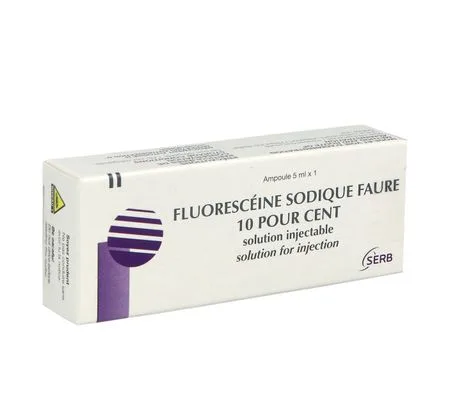
FAURE SODIUM FLUORESCEIN 10 PERCENT, injectable solution
Composition
Sodium fluorescein .................................................................................................................. 10,00 g
For 100 mL of injectable solution.
One ampoule of 5 mL contains 0,5 g of sodium fluorescein.
One ampoule of 5 mL contains 65,5 mg of sodium.
Anhydrous sodium hydroxide, water for injectable preparations.
Indications
Fluorescein angiography of the fundus of the eye.
This medicinal product is for diagnostic use only.
Dosage and administration
Dosage
1 ampoule of 5 mL (10 %) by intravenous injection.
Patients with renal impairment
Limited experience in patients with renal insufficiency suggests that dose adjustment is not necessary for these patients (see section Pharmacokinetics).
Patients with hepatic impairment
No studies have been conducted in patients with hepatic insufficiency.
Paediatric population
The safety and efficacy of FAURE SODIUM FLUORESCEIN 10 PERCENT in children and adolescents under 18 years of age have not been established. Therefore, FAURE SODIUM FLUORESCEIN 10 PERCENT must not be used.
Geriatric population (65 years and older)
Experience in geriatric patients suggests that no dose adjustment is necessary.
Method of administration
Intravenous use.
FAURE SODIUM FLUORESCEIN 10 PERCENT must not be mixed with other medicinal products (see section Incompatibilities and section Disposal and handling) and should preferably be injected into the antecubital vein, taking precautions to avoid extravasation (see section Warnings and precautions).
Contraindications
Hypersensitivity to the active substance or to any of the excipients listed in section Composition.
Use by intrathecal or arterial route.
Warnings and precautions
A detailed history of each patient must be taken before examination, including allergic history, history of cardiopulmonary disease, diabetes, concomitant treatments (in particular beta-blockers - including beta-blockers in eye drops). Beta-blockers may reduce vascular compensatory reactions and also reduce the efficacy of adrenaline in case of cardiovascular collapse.
Special warnings
Hypersensitivity
Sodium fluorescein can cause serious hypersensitivity reactions.
The benefit of fluorescein angiography must be weighed against the risk of severe hypersensitivity reactions (with a fatal outcome in some cases).
These hypersensitivity reactions are always unpredictable, but they are more frequent in patients who have had a poorly tolerated injection of sodium fluorescein (apart from nausea and vomiting) or who have a history of allergies: food or drug urticaria, asthma, eczema, hay fever; these hypersensitivity reactions may not be detected by the fluorescein test, which is useless and sometimes even dangerous. A specialist allergy consultation can clarify the diagnosis.
Premedication is proposed. However, it does not prevent the occurrence of severe accidents:
• it mainly consists of anti-H antihistamines1 by oral route, then corticosteroids before fluorescein injection;
• It is not currently considered useful to give this premedication to all patients given the low percentage of accidents.
The risk of hypersensitivity reactions requires, for the entire duration of the examination:
• fluorescein angiography must only be performed in facilities with staff trained in resuscitation, with suitable equipment and apparatus;
• close monitoring of the patient by the ophthalmologist performing the examination, throughout the examination and for at least 30 minutes after the examination;
• maintenance of the venous access for at least 5 minutes, to treat any accident without delay;
• availability of the means necessary for emergency resuscitation, which relies on placing a 2nd venous access, allowing fluid replacement (polyionic solution or colloid plasma substitute) and intravenous injection of adrenaline at an appropriate dose.
Cardiovascular complications
Severe cardiovascular complications such as chest pain, myocardial infarction and shock have occurred after administration of sodium fluorescein (see section Adverse effects).
Pre-existing conditions and concomitant treatments
The benefit of angiography must be assessed in patients with cardiovascular diseases, diabetes mellitus, and in polymedicated patients.
Extravasation
Due to the alkaline pH of the solution, care must be taken not to inject the fluorescein solution outside the vein; it is important to ensure that the needle is correctly inserted into the vein before starting the fluorescein injection; if the product infiltrates the surrounding tissues, the injection should be stopped immediately.
Interference with medical laboratory tests
Fluorescence may interfere with blood and urine parameter tests for 3 to 4 days. Interference from fluorescein has been reported when determining serum concentrations of digoxin and cortisol. Caution is recommended during monitoring of treatments with a narrow therapeutic margin.
Excipients with known effect
This medicine contains 65,5 mg of sodium per ampoule, which is equivalent to 3,3% of the maximum recommended daily dietary intake of 2 g of sodium per adult set by the WHO.
Interactions
No interaction study has been performed
A few cases of potential interactions with organic anion transporters have been described. Substances that inhibit or compete with the active transport of organic anions (such as probenecid) may influence the systemic profile of fluorescein.
Fertility, pregnancy and breastfeeding
Pregnancy
There are no data or limited data on the use of sodium fluorescein in pregnant women. Studies performed in animals have not shown direct or indirect harmful effects on reproduction (see section Preclinical safety).
As a precaution, it is preferable to avoid the use of sodium fluorescein during pregnancy.
Breast-feeding
Sodium fluorescein is excreted in breast milk. The effect of sodium fluorescein on newborns/infants is unknown.
Breastfeeding must be interrupted after treatment with sodium fluorescein for 7 days. Breast milk must be expressed and discarded during this period.
Fertility
There are no human data available on the effect of fluorescein on fertility. No animal studies have been carried out to assess the effect of intravenously administered fluorescein on fertility.
Driving and using machines
If mydriasis is necessary for fluorescence angiography examination, visual acuity is affected, which impairs the ability to react in traffic or to use machines. Therefore, it should be determined whether driving or using machines is advisable under these circumstances.
Adverse effects
Summary of the safety profile
The most frequently reported adverse reactions are nausea and vomiting.
Less frequent but more serious side effects have been reported shortly after injection, in particular angioedema, respiratory disorders (bronchospasm, laryngeal oedema, respiratory disorders), anaphylactic shock, hypotension, loss of consciousness, respiratory arrest and cardiac arrest.
Tabulated summary of adverse reactions
The following adverse reactions were assessed as treatment-related and are listed below by frequency: very common (≥ 1/10), common (≥ 1/100 to < 1/10), uncommon (≥ 1/1 000 to < 1/100), rare (≥ 1/10 000 to < 1/1 000), or very rare (< 1/10 000). Frequency not known (cannot be estimated from the available data).
|
MedDRA System organ class
|
MedDRA Preferred term (PT) |
Frequency |
|
Disorders haematological and lymphatic system |
Thrombocytopenia |
Very rare |
|
Immune system disorders1
|
Anaphylactic shock, Anaphylactic reaction, Hypersensitivity
|
Uncommon |
|
Anaphylactoid reaction
|
Rare |
|
|
Nervous system disorders |
Loss of consciousness
|
Uncommon |
|
Coma, syncope, convulsion, headache, dizziness, paraesthesia, dysgeusia, tremor
|
Rare |
|
|
Hypoaesthesia
|
Very rare |
|
|
Cerebrovascular accident, aphasia
|
Frequency not known |
|
|
Cardiac disorders
|
Cardiac arrest, myocardial infarction, circulatory collapse, bradycardia, tachycardia
|
Rare |
|
Vascular disorders
|
Hypotension
|
Uncommon |
|
Shock, pallor, hot flush
|
Rare |
|
|
Thrombophlebitis, hypertension
|
Frequency not known |
|
|
Respiratory, thoracic and mediastinal disorders |
Laryngeal oedema, asthma, dyspnoea, cough, throat irritation, sneezing, bronchospasm
|
Rare |
|
Respiratory arrest, pulmonary oedema |
Very rare |
|
|
Respiratory disorder, throat tightness
|
Frequency not known |
|
|
Gastrointestinal disorders |
Vomiting, nausea
|
Uncommon |
|
Abdominal pain
|
Rare |
|
|
Hypersalivation
|
Very rare |
|
|
Retching
|
Frequency not known |
|
|
Skin and subcutaneous tissue disorders |
Rash, erythema, urticaria, pruritus
|
Uncommon |
|
Dermatitis, hyperhidrosis, skin discolouration2
|
Rare |
|
|
Cold sweat
|
Very rare |
|
|
Renal and urinary disorders
|
Chromaturia3 |
Rare |
|
General disorders and administration site conditions
|
Extravasation4, malaise
|
Uncommon |
|
Chest pain, oedema, asthenia, sensation of heat, chills
|
Rare |
|
|
Thrombosis at injection site, pain
|
Frequency not known |
1 Hypersensitivity reactions, including rare cases of anaphylactic/anaphylactoid shock, which may be fatal.
2 A yellow colouration of the skin may appear after administration, but it generally disappears within 6-12 hours.
3 Urine, which may also show a bright yellow colouration, returns to normal colour after 24 to 36 hours.
4 Extravasation of the solution may cause intense pain that may be followed by tissue necrosis (see section Warnings and precautions).
Reporting of suspected adverse reactions
Reporting suspected adverse reactions after authorisation of the medicinal product is important. It allows continued monitoring of the benefit/risk balance of the medicinal product. Healthcare professionals are asked to report any suspected adverse reaction via the national reporting system: National Agency for the Safety of Medicines and Health Products (ANSM) and the network of Regional Centres of Pharmacovigilance - Website: https://signalement.social-sante.gouv.fr/.
Pharmacodynamics
Pharmacotherapeutic class: DIAGNOSTIC AGENTS, DYES, ATC code: S01JA01.
Sodium fluorescein exposed to blue light (465-490 nm) emits yellow-green fluorescence (520-530 nm). The fluorescence allows the visualisation of pathological changes in retinal circulation.
Pharmacokinetics
Distribution
After intravenous injection, fluorescein is rapidly distributed and appears in the retinal tissue within 15 to 20 seconds.
Approximately 80% of fluorescein is bound to plasma proteins (mainly albumin) and 15 to 17% to erythrocytes.
Biotransformation
After intravenous administration, fluorescein is rapidly transformed into fluorescein glucuronide, which also has fluorescent properties.
After 4 to 5 hours, almost all of the plasma fluorescence is due to fluorescein glucuronide.
The plasma pharmacokinetics of fluorescein are identical in diabetic and non-diabetic patients.
Elimination
Fluorescein is eliminated in the urine in unchanged form and as the fluorescein glucuronide metabolite within 24h-36h after administration. The urine may take on a bright yellow colour during this period.
The plasma elimination half-lives of fluorescein and fluorescein glucuronide are approximately 23,5 and 264 minutes, respectively.
Preclinical safety
Non-clinical data reveal no particular hazard for humans based on conventional safety pharmacology studies.
Genotoxicity studies in vitro and in vivo performed with sodium fluorescein were negative in the Ames test, the chromosomal aberration test and the mouse micronucleus test.
Positive results were obtained for the mouse lymphoma test, the sister chromatid exchange test in vitro on CHO cells, and in vivo on mouse bone marrow cells.
Fluorescein showed no embryotoxic or teratogenic effect in rats and rabbits.
INCOMPATIBILITIES
In the absence of compatibility studies, this medicinal product must not be mixed with other medicinal products.
Injectable solutions with an acidic pH (in particular antihistamines) may cause precipitation of fluorescein due to its alkaline pH and must not be injected simultaneously via the same intravenous access route. It is recommended to avoid mixing fluorescein with other solutions or using it concomitantly with intravenous solutions. A physico-chemical incompatibility cannot be excluded.
SPECIAL PRECAUTIONS FOR DISPOSAL AND OTHER HANDLING
Visually check for the absence of any particles and colour change.
In the syringe, do not mix or dilute with other solutions or other medicinal products.
The venous access route must be flushed before and after the injection in order to avoid incompatibility reactions.
FLUORESCEINE SODIQUE FAURE 10 POUR CENT is for single use. Any unused medicinal product or waste must be disposed of in accordance with current regulations.
Prescription, supply and reimbursement
| Marketing authorisation (AMM) |
|
Collection.
32 RUE DE MONCEAU
75008 PARIS
Tel: 01 73 03 20 00 info@serb-labo.com
www.serb.eu
Source: VIDAL · Updated on 10/11/2026. This information does not replace advice from a healthcare professional.