
Medicines
SmPC of the 30/11/2023
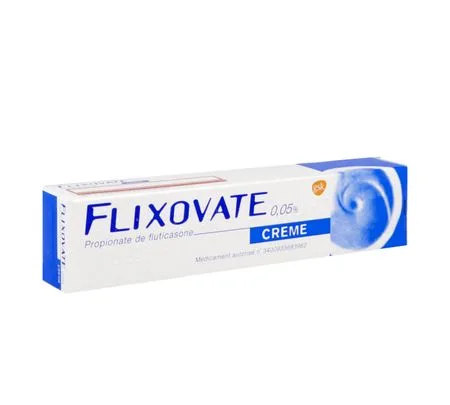
FLIXOVATE 0,05 %, cream
Composition
For 100 g:
Fluticasone propionate: 0,05 g
Excipients with known effect: cetostearyl alcohol, propylene glycol, imidurea (producing formaldehyde).
Liquid paraffin, isopropyl myristate, cetostearyl alcohol, polyoxyethylene glycol 1000 monocetyl ether, propylene glycol, imidurea, disodium hydrogen phosphate dodecahydrate, citric acid monohydrate, purified water.
Indications
Infants, from the age of 3 months:
- atopic dermatitis.
Adults, children from the age of 12 months:
1. Preferred indications where topical corticosteroid therapy is considered the best treatment:
- contact eczema,
- atopic dermatitis (curative treatment and prevention of recurrences, see paragraph Dosage and administration),
- lichenification.
2. Indications where topical corticosteroid therapy is one of the usual treatments:
- stasis dermatitis,
- psoriasis (excluding very extensive plaques),
- lichen,
- non-parasitic prurigo,
- dyshidrosis,
- genital lichen sclerosus et atrophicus,
- granuloma annulare,
- discoid lupus erythematosus,
- seborrhoeic dermatitis except the face,
- symptomatic treatment of pruritus in mycosis fungoides.
3. Circumstantial indications for a short duration:
- insect bites and parasitic prurigo after etiological treatment.
The cream form is particularly intended for acute, weeping lesions.
Note: each dermatosis must be treated with a corticosteroid of the most appropriate potency; depending on the results, it may be necessary to substitute a product of stronger or weaker activity on all or part of the lesions.
Dosage and administration
Dosage
- Treatment of atopic dermatitis :
Infants from the age of 3 months:
1 application per day.
- Treatment of inflammatory dermatoses:
Adults and children from the age of 12 months:
1 to 2 applications per day.
943 patients aged 3 months to 14 years were treated with fluticasone propionate (cream, lotion or ointment), including 63 children aged 3 months to 1 year treated for atopic dermatitis. The duration of treatment was less than or equal to 4 weeks. Efficacy and tolerability with longer treatment or in other dermatological conditions are poorly (or inadequately) known.
An increase in the number of daily applications would risk worsening adverse effects without improving therapeutic effects.
Certain dermatoses (psoriasis, atopic dermatitis...) make a gradual discontinuation desirable. This can be achieved by reducing the frequency of applications and/or by using a corticosteroid of lower potency or lower concentration.
- Prevention of atopic dermatitis recurrences:
1 application per day, 2 days per week.
After effectively treating the acute episode, Flixovate should be applied to previously affected areas or areas at risk of recurrence.
It is advised to combine this treatment with daily use of emollient products.
Efficacy and tolerability were evaluated in clinical trials with treatment durations ranging from 16 to 20 weeks.
Method of administration
In adults as well as in children and infants from 3 months of age, to better specify the amount of cream to apply to a given surface, the fingertip unit method may be used. A fingertip unit corresponds to the amount of cream dispensed in a continuous line along the entire length of the last phalanx of an adult's index finger. This amount dispensed allows treatment of a skin surface corresponding to the surface of 2 adult hands (i.e. approximately 250 to 300 cm2). One fingertip unit corresponds to 0,5 g of product. A tube of 30 grams contains 60 fingertip units.
Treatment of large areas requires monitoring of the number of tubes used.
Apply a thin layer to the area to be treated and massage gently until the cream is fully absorbed. Wash hands after application.
It is advised to apply the product in spaced dabs, then spread it by massaging lightly until it is completely absorbed.
Allow sufficient time for the product to be absorbed after each application before applying an emollient.
In case of worsening or absence of improvement after 2 to 4 weeks, the treatment and diagnosis must be re-evaluated.
When an acute episode has been effectively treated with continuous topical corticosteroid therapy, intermittent treatment may be considered. In cases of chronic intermittent use, the function of the hypothalamic-pituitary-adrenal axis should be evaluated regularly.
Contraindications
- Hypersensitivity to the active substance or to any of the excipients listed in section Composition,
- untreated viral skin infections (for example: Herpes simplex, chickenpox), bacterial (for example impetigo...), fungal or parasitic...,
- ulcerated lesions,
- acne,
- perioral dermatitis,
- perianal and genital pruritus,
- dermatoses in infants under three months of age, including dermatitis and diaper rash (erythema of the buttocks),
- rosacea.
- The use of this medicine is not indicated in the treatment of primary skin lesions caused by fungi or bacteria.
Warnings and precautions
Special warnings
Signs of hypercorticism (Cushing's syndrome) and reversible inhibition of the hypothalamic-pituitary-adrenal axis, leading to adrenocortical insufficiency (morning plasma cortisol below 5 micrograms/dL), may occur in some subjects due to increased systemic absorption of topical corticosteroids or when the topical corticosteroid is applied to more than 50 % of an adult's body surface area and more than 20 g per day.
In either case, the medicine should be gradually withdrawn by reducing the frequency of application, or by substituting a corticosteroid of lower potency. Abrupt discontinuation of treatment may lead to adrenal insufficiency (see section Adverse effects).
The factors likely to increase systemic effects are as follows:
- Activity and formulation of the topical corticosteroid,
- duration of exposure,
- application over a large area,
- occlusive cutaneous application (e.g., in intertriginous areas or under an occlusive dressing (in infants, diapers may have the same consequences as an occlusive dressing)),
- increased hydration of the stratum corneum,
- Application on thin skin surfaces such as the face,
- Application to skin lesions or other situations in which there is an impairment of the skin barrier,
- Compared with adults, children, particularly infants and young children, may absorb proportionally larger amounts of topical corticosteroids and are therefore more exposed to systemic adverse effects (Cushingoid syndrome and growth retardation). This is because children have an immature skin barrier and a larger body surface area to weight ratio compared with adults. These effects disappear when treatment is stopped, but abrupt discontinuation may be followed by acute adrenal insufficiency.
Precautions for use
Risk of infection under occlusion
In infants under the age of 3 months, it is preferable to avoid potent corticosteroids. Particular caution should be exercised regarding spontaneous occlusion that may occur in skin folds or under diapers.
Bacterial infection is promoted by heat and moisture present in skin folds or under an occlusive dressing. When using an occlusive dressing, the skin should be cleaned before each dressing change.
Use in psoriasis
Topical corticosteroids should be used with caution in psoriasis, as rebound effects, development of tolerance, a risk of generalised pustular psoriasis and local or systemic toxicity due to impaired skin barrier have been reported in some cases. Use in the treatment of psoriasis requires careful medical supervision.
Application on the face
Prolonged application to the face is not recommended, as this area is more prone to the risk of skin atrophy. Prolonged use of potent corticosteroids on the face exposes patients to the occurrence of corticosteroid-induced and paradoxically corticosteroid-sensitive dermatitis, with rebound after each discontinuation. A gradual withdrawal, which is particularly difficult, is then necessary.
Application to the eyelids
Prolonged application to the eyelids is not recommended due to the risk of cataract and glaucoma. If applied to this area, care should be taken to ensure that the topical corticosteroid does not enter the eye.
Concomitant infection
An appropriate antimicrobial treatment should be used whenever the treated inflammatory lesions become infected. Spread of the infection requires discontinuation of local corticosteroid therapy and administration of appropriate antimicrobial treatment.
Chronic leg ulcers
Topical corticosteroids are sometimes used to treat dermatitis surrounding chronic leg ulcers. This use may be associated with an increase in local hypersensitivity reactions and the risk of local infection.
Flammability risk: FLIXOVATE 0,05 % cream contains paraffin. Inform your patients not to smoke or approach naked flames because of the risk of severe burns. Fabrics (clothing, bedding, dressings, etc.) that have been in contact with this product burn more easily and may pose a fire risk. Washing clothing and bedding may reduce product buildup, but cannot eliminate it completely.
If local intolerance appears, treatment must be discontinued and the cause must be investigated.
Avoid any contact with the eyes and mucous membranes.
Visual disorders
Visual disturbances may occur with systemic or local corticosteroid therapy. In case of blurred vision or the appearance of any other visual symptom during corticosteroid therapy, an ophthalmological examination is required to look for cataract, glaucoma, or rarer lesions such as central serous chorioretinopathy, as described with systemic or local administration of corticosteroids.
Excipients
This medicine contains an excipient, imidurea, whose degradation produces trace amounts of formaldehyde. Formaldehyde may cause local skin reactions (for example: eczema).
This medicine contains cetostearyl alcohol and may cause local skin reactions (for example contact dermatitis).
This medicine contains 100 mg of propylene glycol in each gram of cream. Propylene glycol may cause skin irritation.
Interactions
Metabolic disorders such as decreased glucose tolerance have been observed with concomitant use of topical corticosteroids and antidiabetic agents. Advise the patient and reinforce blood glucose and urine self-monitoring, especially at the start of treatment.
Fertility, pregnancy and breastfeeding
Pregnancy
Administration of corticosteroids to pregnant animals may cause fetal abnormalities (see section Preclinical safety).
The relevance of this effect in humans has not been established. However, administration of fluticasone propionate during pregnancy should only be considered if the expected benefit to the mother outweighs the potential risks to the fetus. The minimum quantity should be used for the minimum duration.
Breast-feeding
The excretion of fluticasone propionate into human breast milk has not been studied.
Topically, the transdermal passage and therefore the risk of corticosteroid excretion into breast milk will depend on the treated surface area, the degree of epidermal damage and the duration of treatment.
Measurable concentrations of fluticasone propionate in lactating rats following subcutaneous administration of fluticasone propionate show that fluticasone propionate is excreted into breast milk.
However, plasma concentrations in patients after cutaneous application of fluticasone propionate at the recommended doses are likely to be low.
Administration of fluticasone propionate during breastfeeding is possible.
Prolonged contact of the infant with the treated skin area of the mother should be avoided.
In case of application to the breasts, the skin should be cleansed before each feed in order to avoid accidental ingestion by the infant.
Fertility
There are no data available to assess the effect of fluticasone propionate on human fertility.
Driving and using machines
No study evaluating the effect of fluticasone propionate on the ability to drive vehicles or use machines has been performed. An adverse effect on these activities cannot be anticipated based on the profile of known adverse effects of topical fluticasone propionate.
Adverse effects
Adverse effects are listed below by organ class and by frequency. Frequencies are defined as: very common (≥ 1/10), common (≥ 1/100 and < 1/10), uncommon (≥ 1/1 000 and < 1/100), rare (≥ 1/10 000 and < 1/1 000), very rare (< 1/10 000) including isolated reports, and not known (cannot be estimated from the available data).
Very common, common and uncommon adverse effects have generally been determined from clinical study data.
Placebo and comparator group frequencies were not taken into account when assigning frequencies of adverse effects from clinical trials because they were generally comparable to those of the active treatment group.
Following marketing, rare and very rare effects have been reported.
Infections and infestations
Very rare: secondary infections.
Secondary infections, particularly under occlusive dressings or in skin folds, have been reported with the use of topical corticosteroids.
Immune system disorders
Very rare: hypersensitivity.
If signs of hypersensitivity appear, treatment must be stopped immediately.
Endocrine disorders
Very rare : possibility of systemic effects (see section Warnings and precautions) through suppression of the hypothalamic-pituitary-adrenal axis.
Cushingoid syndrome (which notably manifests as a moon face and central obesity), and whose skin disorders are: skin atrophy, skin thinning, dry skin, striae, telangiectasia.
Vascular disorders
Very rare: telangiectasias.
Prolonged use of potent corticosteroids may cause telangiectasias (particularly to be feared on the face).
Skin and subcutaneous tissue disorders
Common: pruritus.
Uncommon: local skin burning.
Very rare: prolonged use of potent corticosteroids may cause skin atrophy, striae (particularly at the root of the limbs, and occurring more readily in adolescents), hypertrichosis, changes in pigmentation, ecchymotic purpura secondary to atrophy, skin fragility.
Acneiform or pustular eruptions, hypertrichosis, changes in pigmentation, skin eruptions, allergic contact dermatitis, exacerbations of underlying syndromes, erythema, urticaria, pustular psoriasis have been reported.
Local burning and pruritus have been reported; however, in clinical trials, the incidence of these adverse effects was generally comparable to the placebo and comparator groups.
On the face, corticosteroids may cause perioral dermatitis or worsen rosacea (see sections Warnings and precautions and Contraindications).
A delay in healing of atonic wounds, bedsores, and leg ulcers may be observed (see section Contraindications).
Exacerbations of the signs and symptoms of dermatoses and allergic contact dermatitis have been reported with the use of corticosteroids.
Treatment of psoriasis with a corticosteroid (or its discontinuation) may cause a pustular form of the disease.
Eye disorders
Frequency not determined: Blurred vision (see section Warnings and precautions)
Reporting of suspected adverse reactions
Reporting suspected adverse reactions after authorisation of the medicinal product is important. It allows continued monitoring of the benefit/risk balance of the medicinal product. Healthcare professionals are asked to report any suspected adverse reactions via the national reporting system: National Agency for the Safety of Medicines and Health Products (ANSM) and the network of Regional Pharmacovigilance Centres - Website: https://signalement.social-sante.gouv.fr/.
Overdose
Signs and symptoms
Absorption of locally applied fluticasone propionate may be sufficient to cause systemic effects. Acute overdose is very unlikely, but in case of chronic overdose or misuse, symptoms of hypercortisolism may appear (see section Adverse effects).
Treatment
In case of overdose, fluticasone propionate should be discontinued gradually, by reducing the frequency of application or by substituting a dermocorticoid of lower potency, due to the risk of adrenocortical insufficiency.
Pharmacodynamics
Pharmacotherapeutic class: Corticosteroid of strong potency (group III), ATC code: D07AC17
Topical corticosteroids are classified into 4 levels of activity according to skin vasoconstriction tests: very strong, strong, moderate, weak activity.
Fluticasone propionate, the active substance of FLIXOVATE 0,05 %, cream, is of strong potency.
Active on certain inflammatory processes (for example: contact hypersensitivity) and the associated pruritic effect. Vasoconstrictor. Inhibits cell proliferation.
Mechanism of action
Topical corticosteroids have anti-inflammatory properties based on multiple mechanisms; they inhibit the late phase of allergic reactions, notably reduce mast cell density, chemotaxis and eosinophil activation, reduce cytokine production by lymphocytes, monocytes, mast cells and eosinophils, and inhibit arachidonic acid metabolism.
Pharmacodynamic effects
Topical corticosteroids have anti-inflammatory, antipruritic and vasoconstrictive properties.
Pharmacokinetics
The extent of transdermal passage and systemic effects depends on the size of the treated surface area, the degree of epidermal damage and the duration of treatment. These effects are all the more to be feared the longer the treatment is prolonged.
Absorption
Topical corticosteroids can be absorbed through healthy skin and enter the systemic circulation. The extent of percutaneous absorption of topical corticosteroids depends on various factors, such as the vehicle and the integrity of the epidermal barrier. Occlusive application, inflammation and/or other cutaneous pathological processes may also increase percutaneous absorption.
Certain factors are likely to increase systemic effects (see section Warnings and precautions).
Metabolism
Once absorbed through the skin, topical corticosteroids follow the same pharmacokinetic pathways as corticosteroids administered systemically. They are metabolised mainly by the liver.
Elimination
Topical corticosteroids are excreted by the kidneys.
Preclinical safety
Reproduction studies suggest that administration of corticosteroids to pregnant animals may result in fetal developmental abnormalities including cleft palate or cleft lip. However, in humans, there is no conclusive data on congenital abnormalities such as cleft palate or cleft lip.
Subcutaneous administration of fluticasone propionate to pregnant mice (150 micrograms/kg/day), rats (100 micrograms/kg/day) or rabbits (300 micrograms/kg/day) resulted in fetal abnormalities, including cleft palate. Oral administration did not lead to fetal abnormalities, which is consistent with the low oral bioavailability of fluticasone propionate.
Prescription, supply and reimbursement
| Marketing authorisation (AMM) |
|
| Price: |
|
Infants aged 3 to 12 months: Social Security reimbursement at 65 % as second-line treatment of atopic dermatitis in cases of severe atopic dermatitis resistant to emollients and to dermocorticoids of moderate potency. These medicinal products must be used exceptionally, as short courses, over small areas, avoiding skin folds and genital areas, and must not be used on the face.
Collection.
GlaxoSmithKline Laboratories
23, rue François-Jacob. 92500 Rueil-Malmaison
Tel: 01 39 17 80 00
Medical information:
Tel: 01 39 17 84 44. Fax: 01 39 17 84 45
Website: www.fr.gsk.com
Source: VIDAL · Updated on 10/11/2026. This information does not replace advice from a healthcare professional.