
Medicines
SmPC of 05/03/2026
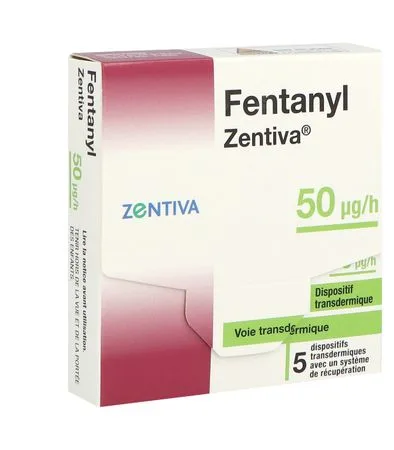
FENTANYL ZENTIVA 50 micrograms/hour, transdermal patch
Forms and presentations
Transdermal system.
Transparent and colourless patch bearing the wording “fentanyl 50 µg/h” in blue on the protective backing.
Composition
Fentanyl.......................................................................................................................................................8,25 mg
For a patch of 15 cm2 releasing 50 micrograms of fentanyl per hour.
Adhesive matrix : polyacrylate.
Protective backing : polypropylene sheet, blue printing ink.
Detachable protective liner : siliconised polyethylene terephthalate film.
Indications
In adults
• FENTANYL ZENTIVA is indicated for the treatment of severe chronic pain requiring continuous long-term administration of opioids.
In children
• FENTANYL ZENTIVA is indicated for the long-term treatment of severe chronic pain in children from 2 years of age receiving opioid therapy.
Dosage and administration
Dosage
The dose of FENTANYL ZENTIVA is to be individually adjusted according to the patient's condition and must be evaluated at regular intervals after application. The minimum effective dose should be used. The patches are intended to deliver approximately 12, 25, 50, 75 or 100 micrograms of fentanyl per hour into the systemic circulation, which corresponds respectively to approximately 0,3; 0,6; 1,2; 1,8 and 2,4 mg of fentanyl per day.
Determination of the initial dosage
The choice of the optimal dose of FENTANYL ZENTIVA must be based on the patient's current opioid treatment. It is recommended that FENTANYL ZENTIVA be used in patients who have demonstrated opioid tolerance. Other factors must be taken into account, such as the patient's current general condition and state of health, including body build, age, the degree of severity of the disease and the degree of opioid tolerance.
Adult
Opioid-tolerant patients
To replace oral or parenteral opioid treatment with FENTANYL ZENTIVA in opioid-tolerant patients, refer to the equianalgesic dose conversion below. If necessary, the dose may subsequently be increased or decreased in steps of 12 or 25 micrograms/hour in order to reach the optimal minimum dose of FENTANYL ZENTIVA, taking into account the response to treatment and the need for additional analgesics.
Opioid-naïve patients
In general, the transdermal route is not recommended in opioid-naive patients. Other routes of administration (oral, parenteral) should be considered. In order to avoid overdose, it is recommended that opioid-naive patients receive low doses of immediate-release opioids (such as morphine, hydromorphone, oxycodone, tramadol and codeine), to be adjusted until an analgesic dose equivalent to a FENTANYL ZENTIVA dose of 12 or 25 mcg/hour is reached. After which patients may switch to FENTANYL ZENTIVA treatment.
Where it is not possible to start with oral opioids and where FENTANYL ZENTIVA represents the only appropriate treatment option in opioid-naive patients, only use of the lowest initial dose (12 micrograms/hour) is considered acceptable. In this case, the patient must be closely monitored. There is a risk of severe or potentially fatal hypoventilation even when the lowest dose of FENTANYL ZENTIVA is used to initiate treatment in opioid-naive patients (see sections Warnings and precautions and Overdose).
Conversion of equianalgesic doses
In patients currently treated with opioid analgesics, the initial dose of FENTANYL ZENTIVA must be based on the daily dose of the previous opioid. To calculate the optimal initial dose of FENTANYL ZENTIVA, the steps below should be followed.
1. Calculate the dose per 24 hours (mg/day) of the opioid currently administered.
2. Convert the quantity thus obtained into an equianalgesic dose of oral morphine per 24 hours using the multiplication factors in table 1 for the appropriate route of administration.
3. In order to obtain the FENTANYL ZENTIVA dosage corresponding to the calculated equianalgesic dose of morphine per 24 hours, use the dose conversion tables 2 or 3 as follows:
a) Table 2 is intended for adult patients requiring opioid rotation or who are clinically less stable (the conversion ratio of oral morphine to transdermal fentanyl is approximately 150:1);
b) Table 3 is intended for adult patients whose opioid treatment is stable and well tolerated (the conversion ratio of oral morphine to transdermal fentanyl is approximately 100:1).
Table 1 : Conversion table – Multiplication factors for converting the daily dose of previous opioids to an equianalgesic dose of oral morphine per 24 hours (mg/day of previous opioid x Factor = equianalgesic dose of oral morphine per 24 hours)
|
Previous opioid |
Route of administration |
Multiplication factor |
|
|
|
|
|
Morphine |
oral |
1a |
|
|
parenteral |
3 |
|
Buprenorphine |
oral |
75 |
|
|
parenteral |
100 |
|
Codeine |
oral |
0,15 |
|
|
parenteral |
0,23b |
|
Diamorphine |
oral |
0,5 |
|
|
parenteral |
6b |
|
Hydromorphone |
oral |
- |
|
|
parenteral |
20b |
|
Ketobemidone |
oral |
1 |
|
|
parenteral |
3 |
|
Levorphanol |
oral |
7,5 |
|
|
parenteral |
15b |
|
Methadone |
oral |
1,5 |
|
|
parenteral |
3b |
|
Oxycodone |
oral |
1,5 |
|
|
parenteral |
3 |
|
Oxymorphone |
oral |
3 |
|
|
parenteral |
30b |
|
Pethidine |
oral |
- |
|
|
parenteral |
0,4b |
|
Tapentadol |
oral |
0,4 |
|
|
parenteral |
- |
|
Tramadol |
oral |
0,25 |
|
|
parenteral |
0,3 |
a The strength of oral/IM morphine is based on clinical experience in patients with chronic pain.
b Based on single-dose studies in which an IM dose of each listed active substance was compared with morphine to establish relative potency. The oral doses are those recommended when switching from a parenteral to an oral route.
Reference: Adapted from 1) Foley KM. The treatment of cancer pain. NEJM 1985; 313 (2): 84-95 and 2) McPherson ML. Introduction to opioid conversion calculations. In: Demystifying Opioid Conversion Calculations: A Guide for Effective Dosing. Bethesda, MD: American Society of Health-System Pharmacists; 2010:1-15.
Table 2 : Recommended initial dose of FENTANYL ZENTIVA based on the daily oral dose of morphine (for patients requiring opioid rotation or who are clinically less stable: conversion ratio of oral morphine to transdermal fentanyl of approximately 150:1)1.
|
Oral morphine dose every 24h (mg/day) |
Fentanyl dosage (mcg/h) |
|
< 90 |
12 |
|
90-134 |
25 |
|
135-224 |
50 |
|
225-314 |
75 |
|
315-404 |
100 |
|
405-494 |
125 |
|
495-584 |
150 |
|
585-674 |
175 |
|
675-764 |
200 |
|
765-854 |
225 |
|
855-944 |
250 |
|
945-1034 |
275 |
|
1035-1124 |
300 |
1 In clinical studies, these oral morphine dose ranges were used as the basis for conversion to FENTANYL ZENTIVA.
Table 3 : Recommended initial dose of FENTANYL ZENTIVA based on the daily oral morphine dose (for patients whose opioid treatment is stable and well tolerated: oral morphine to transdermal fentanyl conversion ratio of approximately 100:1)
|
Oral morphine dose every 24h (mg/day) |
Fentanyl dosage |
|
|
(mcg/h) |
|
≤ 44 |
12 |
|
45-89 |
25 |
|
90-149 |
50 |
|
150-209 |
75 |
|
210-269 |
100 |
|
270-329 |
125 |
|
330-389 |
150 |
|
390-449 |
175 |
|
450-509 |
200 |
|
510-569 |
225 |
|
570-629 |
250 |
|
630-689 |
275 |
|
690-749 |
300 |
The initial assessment of the maximal analgesic effect of FENTANYL ZENTIVA cannot be performed before 24 hours after patch application. Indeed, serum fentanyl concentrations increase progressively during the first 24 hours following application of the first patch.
Therefore, the previous analgesic treatment should be gradually discontinued after administration of the first dose, until the analgesic efficacy of FENTANYL ZENTIVA is achieved.
Dose adjustment and maintenance treatment
FENTANYL ZENTIVA must be replaced every 72 hours.
The dose should be adjusted on a case-by-case basis according to the average daily use of supplemental analgesics until a balance between analgesic efficacy and tolerability is achieved. Normally, dose adjustments should be made in steps of 12 or 25 micrograms/hour, although the need for supplemental analgesics (oral morphine 45 or 90 mg/day equivalent to FENTANYL ZENTIVA 12 or 25 micrograms/hour) and the intensity of the patient's pain must be taken into account. After a dose increase, up to 6 days may be required for the patient to reach equilibrium at the new dose. Therefore, after a dose increase, patients should wear the patch at the increased dose for 2 periods of 72 hours before making another dose increase.
More than 1 patches of FENTANYL ZENTIVA may be used for doses above 100 micrograms/hour. Patients may periodically require additional doses of a short-acting analgesic for breakthrough pain. Some patients may require additional or different opioid administration methods when the dose of FENTANYL ZENTIVA exceeds 300 micrograms/hour.
In the absence of adequate pain control, the possibility of hyperalgesia, tolerance and progression of the underlying disease should be considered (see section Warnings and precautions).
Only at the first application, if the analgesic effect is insufficient, the FENTANYL ZENTIVA patch may be replaced after 48 hours with a patch of the same dose, or the dose may be increased after 72 hours.
If the patch must be replaced (in particular if the patch comes off) before 72 hours, a patch of the same strength should be applied to a different area of skin. Such a situation may lead to increased serum concentrations (see section Pharmacokinetics) and the patient should be closely monitored.
Duration and objectives of treatment
Before initiating treatment with , a therapeutic strategy including the duration and goals of treatment, as well as a plan for the end of treatment, should be agreed upon with the patient, in accordance with pain management guidelines. During treatment, frequent contacts should take place between the physician and the patient to assess the need to continue treatment, consider discontinuation, and adjust doses if necessary. In the absence of adequate pain control, the possibility of hyperalgesia, tolerance, and progression of the underlying disease should be considered (see section Warnings and precautions).
Discontinuation of FENTANYL ZENTIVA
If it becomes necessary to discontinue treatment with FENTANYL ZENTIVA, replacement with other opioids should be gradual, starting with a low dose and then progressively increasing the doses.
Indeed, fentanyl concentrations gradually decrease after removal of the FENTANYL ZENTIVA patch. At least 20 hours are required for serum fentanyl concentrations to decrease by 50%. As a general rule, opioid analgesic treatment should be discontinued gradually to avoid withdrawal symptoms (see sections Warnings and precautions and Adverse effects).
It has been reported that abrupt discontinuation of opioid analgesics in opioid-physically dependent patients has led to significant withdrawal symptoms and uncontrolled pain. Dose reduction should be based on the individual dose, the duration of treatment, and the patient's response in terms of pain and withdrawal symptoms. Patients on long-term treatment would require a more gradual dose reduction. For patients whose treatment has been of short duration, a more rapid reduction may be considered.
Opioid withdrawal symptoms are possible in some patients after conversion or dose adjustment.
Tables 1, 2 and 3 should only be used for switching from other opioids to FENTANYL ZENTIVA and not for switching from FENTANYL ZENTIVA to other treatments, in order to avoid overestimating the new analgesic dose and causing a risk of overdose.
Special populations
Elderly patients
Elderly patients should be closely monitored and the dose should be adjusted individually according to the patient's condition (see sections Warnings and precautions and Pharmacokinetics).
In opioid-naive elderly patients, treatment should only be considered when benefits outweigh risks. In these cases, only FENTANYL ZENTIVA 12 micrograms/hour should be used to initiate treatment.
Hepatic and renal impairment
In case of hepatic or renal impairment, close monitoring is necessary and the dose must be adjusted individually according to the patient's condition (see sections Warnings and precautions and Pharmacokinetics).
In opioid-naive patients with renal or hepatic impairment, treatment should only be considered when benefits outweigh risks. In these cases, only FENTANYL ZENTIVA 12 micrograms/hour should be used to initiate treatment.
Paediatric population
Children aged 16 years and older
Refer to the adult posology.
Children aged 2 to 16 years
FENTANYL ZENTIVA must be administered only to children (aged 2 to 16 years) who are opioid-tolerant and already receiving an equivalent dose of at least 30 mg of oral morphine per day. To calculate the dose of FENTANYL ZENTIVA to be administered to children switching from oral or parenteral opioids, refer to the conversion of equianalgesic doses (Table 1) and to the recommended FENTANYL ZENTIVA dose based on the daily oral morphine dose (Table 4).
Table 4 : FENTANYL ZENTIVA dose in children1 based on the daily oral morphine dose2
|
Oral morphine dose per 24 hours (mg/day) |
Fentanyl dosage (µg/h) |
|
30 - 44 |
12 |
|
45 - 134 |
25 |
1 Conversion to FENTANYL ZENTIVA doses above 25 mcg/hour is the same for children and adults (see Table 2).
2 In clinical studies, these daily oral morphine dose ranges were used as the basis for conversion to FENTANYL ZENTIVA.
In 2 paediatric studies, the required dose of transdermal fentanyl was calculated conservatively: 30 mg to 44 mg of oral morphine per day or an equivalent dose of opioid were replaced by 1 FENTANYL ZENTIVA transdermal system 12 micrograms/hour. This paediatric conversion table applies only to switching from oral morphine (or its equivalent) to FENTANYL ZENTIVA. The conversion table must not be used for switching from FENTANYL ZENTIVA treatment to other opioids because of the risk of overdose.
The analgesic effect of the first dose of FENTANYL ZENTIVA will not be optimal during the first 24 hours. Therefore, it is recommended to continue previously used analgesics at regular doses for 12 hours following replacement with FENTANYL ZENTIVA. During the following 12 hours, these analgesics may be used as clinically needed.
Monitoring of the patient for adverse effects, which may include hypoventilation, is recommended for at least 48 hours after initiation of FENTANYL ZENTIVA treatment or after a dose increase (see section Warnings and precautions).
FENTANYL ZENTIVA must not be used in children aged less than 2 years because safety and efficacy have not been established.
Dose adjustment and maintenance treatment in children
The FENTANYL ZENTIVA patch must be replaced every 72 hours. The dose must be adjusted on a case-by-case basis until a balance between analgesic efficacy and tolerability is achieved. The dosage must not be increased in steps of less than 72 hours. If the analgesic effect of FENTANYL ZENTIVA is insufficient, it may be necessary to administer additional doses of morphine or another short-acting opioid. Depending on the additional analgesic needs and the child's pain state, it may be necessary to increase the dose. Dose adjustments must be made in steps of 12 mcg/hour.
Method of administration
FENTANYL ZENTIVA is for transdermal use.
FENTANYL ZENTIVA must be applied to non-irritated and non-irradiated skin, on a flat area of the upper body or on the upper arm.
In young children, the upper back is the preferred site to prevent the child from removing the patch.
Hair at the application site must be clipped (not shaved) before application (a hairless area of skin is preferable). If the FENTANYL ZENTIVA application site requires cleansing before patch application, this should be done with clean water. Soaps, oils, lotions or any other agent that may irritate the skin or alter its characteristics must not be used. The skin must be completely dry before applying the patch. Patches must be carefully examined before use. Any patch that is cut or damaged in any way must not be used.
FENTANYL ZENTIVA must be applied immediately after removing the patch from the sealed pouch. To remove the patch from its protective pouch, locate the pre-cut notch (indicated by an arrow on the patch packaging) at the edge of the seal. Fold the pouch at the notch and carefully tear the pouch. Then open the pouch on two sides by unfolding it like a book. The protective liner of the patch is cut. Fold the patch in the centre and remove each half of the liner separately. Avoid touching the adhesive side of the patch. Apply the patch to the skin, pressing lightly with the palm of the hand for about 30 seconds. Ensure that the edges of the patch adhere properly. Then wash hands with clean water.
FENTANYL ZENTIVA may be worn for 72 consecutive hours. After removal of the previous transdermal patch, the new patch must be applied to a different site. Wait several days before applying a new patch to the same area of skin.
Contraindications
• Hypersensitivity to the active substance or to any of the excipients listed in section Composition.
• Acute or postoperative pain, since there is no possibility of dose titration during short-term use and severe or potentially fatal hypoventilation could result.
• Severe respiratory depression.
Warnings and precautions
Patients who have experienced serious adverse events must be monitored for at least 24 hours after removal of FENTANYL ZENTIVA, or longer if clinical symptoms require, due to the gradual decline in serum fentanyl concentrations which, 20 to 27 hours later, are reduced by approximately 50 %.
Patients and their caregivers must be informed that FENTANYL ZENTIVA contains a quantity of active substance that may be fatal, particularly in children. Consequently, they must keep all patches out of sight and reach of children, both before and after use.
Due to the risks, including fatal ones, associated with accidental ingestion, misuse and abuse, patients and their caregivers must be informed to keep FENTANYL ZENTIVA in a safe and secure place, out of reach of others.
Opioid-naïve patients and opioid-intolerant patients
The use of a fentanyl transdermal patch to initiate opioid treatment in opioid-naive patients has been associated with very rare cases of significant and/or fatal respiratory depression, particularly in patients with non-cancer pain. The risk of severe or fatal hypoventilation exists even if the lowest dose of fentanyl transdermal patch is used to initiate treatment in opioid-naive patients, particularly in the elderly and in patients with hepatic or renal impairment. The tendency to develop tolerance varies considerably between individuals. It is recommended to use FENTANYL ZENTIVA in patients who have demonstrated opioid tolerance (see section Dosage and administration).
Respiratory depression
Some patients may experience significant respiratory depression with the fentanyl transdermal patch; patients must be monitored for this effect. Respiratory depression may persist after removal of the FENTANYL ZENTIVA patch. The incidence of respiratory depression increases with increasing doses of FENTANYL ZENTIVA (see section Overdose).
Opioids can cause sleep-related breathing disorders, including central sleep apnoea (CSA) and sleep-related hypoxia. Opioid use increases the risk of CSA in a dose-dependent manner. In patients presenting with CSA, reduction of the total opioid dose should be considered.
Chronic pulmonary disease
The transdermal fentanyl patch may cause more severe adverse effects in patients with chronic obstructive pulmonary disease or other lung disease. In these patients, opioids may decrease respiratory activity and increase airway resistance.
Long-term treatment effects and tolerance
In all patients, tolerance to analgesic effects, hyperalgesia, and physical and psychological dependence may develop after repeated administration of opioids, whereas incomplete tolerance develops for some adverse effects such as opioid-induced constipation. Particularly in patients with chronic non-cancer pain, it has been reported that they may not experience a significant improvement in pain intensity during long-term continuous opioid treatment. During treatment, frequent contacts should take place between the physician and the patient to assess the need to continue treatment (see section Dosage and administration).
When it is decided that there is no longer any benefit in continuing treatment, a gradual dose reduction should be applied to address withdrawal symptoms.
Do not abruptly discontinue FENTANYL ZENTIVA in a patient dependent on opioids. A withdrawal syndrome could occur if treatment is abruptly stopped or the dose is reduced.
It has been reported that a rapid dose reduction of FENTANYL ZENTIVA in a patient physically dependent on opioids may lead to significant withdrawal symptoms and uncontrolled pain (see section Dosage and administration and section Adverse effects). When a patient no longer requires treatment, it is recommended to gradually reduce the dose in order to minimise the risk of withdrawal symptoms. Reduction from a high dose may take weeks or even months.
The opioid withdrawal syndrome is characterised by some or all of the following symptoms: restlessness, lacrimation, rhinorrhoea, yawning, sweating, chills, myalgia, mydriasis and palpitations. Other symptoms may also develop, such as irritability, agitation, anxiety, hyperkinesia, tremor, weakness, insomnia, anorexia, abdominal cramps, nausea, vomiting, diarrhoea, as well as increased blood pressure, respiratory rate or pulse rate.
Opioid use disorder (abuse and dependence)
Repeated use of FENTANYL ZENTIVA may lead to opioid use disorder (OUD). A higher dose and longer duration of opioid treatment may increase the risk of developing OUD. Intentional abuse or misuse of FENTANYL ZENTIVA may result in overdose and/or death. The risk of developing OUD is increased in patients with a personal or family history (parents or siblings) of substance use disorders (including alcohol use), in current tobacco users, or in patients with a personal history of other mental health disorders (for example major depression, anxiety and personality disorders).
Before initiating treatment with, and during treatment, treatment goals and a discontinuation plan must be agreed upon with the patient (see section Dosage and administration). Before and during treatment, the patient should also be informed of the risks and signs of OUD. If these signs occur, patients should be advised to contact their physician.
Patients treated with opioid medicines should be monitored for signs of OUD, such as drug-seeking behaviour (for example, requests for early refills), particularly in patients at increased risk. This includes review of concomitant opioid and psychoactive medicines (such as benzodiazepines). For patients showing signs and symptoms of OUD, consultation with an addiction specialist should be considered. For discontinuation of opioid treatment, see section Warnings and precautions.
Central Nervous System disorders including increased intracranial pressure
Fentanyl transdermal system should be used with caution in patients who may be particularly sensitive to the intracranial effects of CO2 retention, for example patients showing signs of increased intracranial pressure, impaired consciousness, or patients in a coma. Fentanyl transdermal system should be used with caution in patients with brain tumours.
Heart disease
FENTANYL ZENTIVA may induce bradycardia and should therefore be used with caution in patients with bradyarrhythmias.
Hypotension
Opioids may cause hypotension, particularly in patients with severe hypovolaemia. Hypotension and/or underlying symptomatic hypovolaemia should be corrected before initiation of treatment with fentanyl transdermal patch.
Hepatic impairment
FENTANYL ZENTIVA is metabolised into inactive metabolites in the liver; hepatic impairment may delay its elimination. Patients with hepatic impairment who receive FENTANYL ZENTIVA should be carefully monitored for signs of fentanyl toxicity, and the dose of FENTANYL ZENTIVA should be reduced if necessary (see section Pharmacokinetics).
Renal impairment
Although renal impairment is not expected to alter the elimination of fentanyl in a clinically significant way, caution is recommended as the pharmacokinetics of fentanyl have not been evaluated in this patient population (see section Pharmacokinetics). Treatment should only be considered if the benefits outweigh the risks. Patients with renal impairment who receive FENTANYL ZENTIVA should be carefully monitored for signs of fentanyl toxicity, and the dose of FENTANYL ZENTIVA should be reduced if necessary. Additional restrictions apply to opioid-naive patients with renal impairment (see section Dosage and administration).
Fever/Exposure to external heat
Fentanyl concentrations may increase if skin temperature rises (see section Pharmacokinetics). Consequently, febrile patients should be monitored for opioid adverse effects, and the dose of FENTANYL ZENTIVA should be adjusted if necessary. The release of fentanyl from the device may be increased by temperature, possibly resulting in overdose and death.
All patients must be informed to avoid exposing the FENTANYL ZENTIVA application site to external heat sources such as heating pads, electric blankets, heated water beds, solar lamps or sunlamps, sunbathing, hot water bottles, prolonged hot baths, saunas and whirlpool hot tubs.
Interactions with other medicinal products
CYP3A4 inhibitors:
Concomitant use of fentanyl transdermal system with cytochrome P450 3A4 (CYP3A4) inhibitors may result in increased plasma concentrations of fentanyl, which may increase or prolong both the therapeutic and adverse effects, and cause severe respiratory depression. Therefore, concomitant use of fentanyl transdermal system with CYP3A4 inhibitors is not recommended unless the benefits outweigh the increased risk of adverse effects.
In general, a patient should wait 2 days after discontinuing treatment with a CYP3A4 inhibitor before applying the first patch of FENTANYL ZENTIVA. However, the duration of inhibition varies, and for some CYP3A4 inhibitors with a long elimination half-life, such as amiodarone, or for time-dependent inhibitors such as erythromycin, idelalisib, nicardipine and ritonavir, a longer wait may be necessary. Therefore, it is necessary to consult the product information of the CYP3A4 inhibitor regarding the half-life of the active substance and the duration of the inhibitory effect before applying the first patch of FENTANYL ZENTIVA.
A patient treated with FENTANYL ZENTIVA must wait at least 1 week after removal of the last patch before initiating treatment with a CYP3A4 inhibitor. If concomitant use of fentanyl transdermal system with a CYP3A4 inhibitor cannot be avoided, it is advised to closely monitor for signs or symptoms of increased or prolonged therapeutic and adverse effects of fentanyl (notably respiratory depression), and if necessary the dose of FENTANYL ZENTIVA should be reduced or treatment discontinued (see section Interactions).
Concomitant use of a mixed opioid agonist/antagonist
Concomitant use of buprenorphine, nalbuphine or pentazocine is not recommended (see also section Interactions).
Risk associated with concomitant use of central nervous system (CNS) depressants, including sedative medicines such as benzodiazepines or related medicines, alcohol and CNS-depressant narcotic medicines
Concomitant use of transdermal fentanyl device and sedative medicinal products such as benzodiazepines or related medicinal products, alcohol, or narcotic medicinal products that depress the CNS, may result in sedation, respiratory depression, coma and death. Because of these risks, concomitant prescription of sedative medicinal products should be reserved for patients for whom there are no other treatment options. If the decision is taken to prescribe FENTANYL ZENTIVA at the same time as sedative medicinal products, the lowest effective dose should be used and the duration of treatment should be as short as possible.
Patients should be closely monitored for signs and symptoms of respiratory depression and sedation. In this regard, it is strongly recommended to inform patients and their caregivers so that they are aware of these symptoms (see section Interactions).
Serotonin syndrome
Caution is advised when fentanyl transdermal system is co-administered with medicinal products affecting serotonergic neurotransmitter systems.
Development of a potentially life-threatening serotonin syndrome may occur with concomitant use of serotonergic active substances such as Selective Serotonin Reuptake Inhibitors (SSRIs), Serotonin and Noradrenaline Reuptake Inhibitors (SNRIs), and with active substances that impair serotonin metabolism (including Monoamine Oxidase Inhibitors [MAOIs]). This may occur at the recommended dose (see section Interactions).
Serotonin syndrome may include changes in mental status (for example: agitation, hallucinations, coma), autonomic nervous system instability (for example: tachycardia, unstable blood pressure, hyperthermia), neuromuscular abnormalities (for example: hyperreflexia, incoordination, rigidity) and/or gastrointestinal symptoms (for example: nausea, vomiting, diarrhoea).
If serotonin syndrome is suspected, treatment with FENTANYL ZENTIVA must be discontinued.
Accidental exposure through patch transfer
Accidental transfer of the fentanyl patch to the skin of an untreated third person (particularly a child) during sleep, or during close physical contact with a treated person, may result in opioid overdose in that untreated person. Patients should be informed that in the event of accidental exposure, the transferred patch must be removed immediately from the skin of the untreated person (see section Overdose).
Use in elderly patients
The results of studies conducted after intravenous administration of fentanyl suggest that the clearance of the product may be reduced and its half-life prolonged in elderly people. In addition, elderly patients may be more sensitive to the active substance than younger patients.
Elderly patients receiving FENTANYL ZENTIVA must be closely monitored for signs of fentanyl toxicity, and the dose of FENTANYL ZENTIVA should be reduced if necessary (see section Pharmacokinetics).
Gastrointestinal tract
Opioids increase the tone and decrease the propulsive contractions of the smooth muscle of the gastrointestinal tract. The resulting increase in gastrointestinal transit time may be responsible for the constipating effect of fentanyl. Patients should be informed of measures to prevent constipation, and prophylactic laxative treatment should be considered. Utmost caution is required in patients with chronic constipation. If paralytic ileus is present or suspected, treatment with FENTANYL ZENTIVA must be discontinued.
Patients with myasthenia gravis
Non-epileptic (myo)clonic reactions may occur. Caution is required when treating patients with myasthenia gravis.
Paediatric population
FENTANYL ZENTIVA must not be administered to opioid-naive children (see section Dosage and administration). There is a risk of severe or potentially fatal hypoventilation regardless of the dose of FENTANYL ZENTIVA transdermal device administered.
FENTANYL ZENTIVA has not been studied in children under 2 years of age. FENTANYL ZENTIVA should only be administered to children aged 2 years or older who are opioid-tolerant (see section Dosage and administration). To prevent accidental ingestion by children, choose the application site of FENTANYL ZENTIVA with care (see sections Dosage and administration and Disposal and handling) and carefully check that the patch is firmly adhered.
Opioid-induced hyperalgesia
Opioid-induced hyperalgesia (OIH) is a paradoxical response to an opioid, in which pain perception is increased, despite stable or increasing opioid exposure. It is distinct from tolerance, for which higher doses of opioids are needed to achieve the same analgesic effect or to treat recurrent pain. OIH may manifest as increased pain, more generalised (i.e., less topical) pain, or pain provoked by ordinary stimuli (i.e., non-painful; allodynia) without evidence of disease progression. If OIH is suspected, the opioid dose should be reduced or gradually tapered, if possible.
Endocrine effects
Opioids such as fentanyl may influence the hypothalamic-pituitary-adrenal or gonadal axes, particularly after prolonged use. Observed changes include an increase in serum prolactin levels and a decrease in plasma cortisol and testosterone levels. These hormonal changes may lead to the appearance of clinical signs and symptoms. In case of suspected endocrine effects such as hyperprolactinaemia or adrenal insufficiency, appropriate laboratory tests are recommended and discontinuation of treatment with FENTANYL ZENTIVA should be considered.
Interactions
Pharmacodynamic interactions
Centrally acting medicines/central nervous system (CNS) depressants, including alcohol and CNS-depressant narcotic medicines
Concomitant use of FENTANYL ZENTIVA with other central nervous system depressants (including benzodiazepines, other sedatives/hypnotics, opioids, general anaesthetics, phenothiazines, tranquillisers, sedating antihistamines, alcohol and CNS-depressant narcotic medicines), musculoskeletal relaxants and gabapentinoids (gabapentin and pregabalin) may result in respiratory depression, hypotension, profound sedation, coma or death. Concomitant prescription of CNS depressants and FENTANYL ZENTIVA should be reserved for patients for whom other treatment options are not possible. Concomitant use of any of these medicines with FENTANYL ZENTIVA requires close monitoring and observation of the patient.
The dose and duration of concomitant use with benzodiazepines and related medicines should be limited (see section Warnings and precautions).
Monoamine oxidase inhibitors (MAOIs)
The use of FENTANYL ZENTIVA is not recommended in patients requiring concomitant administration of an MAOI. Severe and unpredictable interactions with MAOIs, involving potentiation of opioid effects or serotonergic effects, have been reported. FENTANYL ZENTIVA must not be used within 14 days of stopping treatment with an MAOI.
Serotonergic medicines
Co-administration of fentanyl with serotonergic medicines, such as a Selective Serotonin Reuptake Inhibitor (SSRI), a Serotonin and Noradrenaline Reuptake Inhibitor (SNRI) or a Monoamine Oxidase Inhibitor (MAOI), may increase the risk of serotonin syndrome, which may be life-threatening. To be used with caution when concomitant. Observe the patient carefully, particularly at the start of treatment and during dose adjustment (see section Warnings and precautions).
Concomitant use of a mixed opioid agonist/antagonist
Concomitant use of buprenorphine, nalbuphine or pentazocine is not recommended. These have a high affinity for opioid receptors with relatively low intrinsic activity. Consequently, they partially antagonise the analgesic effect of fentanyl and may induce withdrawal symptoms in opioid-dependent patients (see section Warnings and precautions).
Concomitant administration with anticholinergics
Concomitant administration of fentanyl with anticholinergics or medicines with anticholinergic activity (for example, tricyclic antidepressants, antihistamines, antipsychotics, muscle relaxants, antiparkinsonian medicines) may result in an increase in anticholinergic adverse effects.
Pharmacokinetic interactions
Inhibitors of cytochrome P450 3A4 (CYP3A4)
Fentanyl, an active substance with high clearance, is rapidly and extensively metabolised, mainly by CYP3A4.
Concomitant use of transdermal fentanyl with inhibitors of cytochrome P450 3A4 (CYP3A4) may result in an increase in plasma concentrations of fentanyl, which may increase or prolong both its therapeutic and undesirable effects and cause severe respiratory depression. The interaction with potent inhibitors of CYP3A4 is expected to be greater than the interaction with weak or moderate inhibitors of CYP3A4. Cases of severe respiratory depression following co-administration of CYP3A4 inhibitors with transdermal fentanyl have been reported, including one fatal case following co-administration with a moderate CYP3A4 inhibitor. Concomitant use of FENTANYL ZENTIVA with CYP3A4 inhibitors is not recommended unless the patient is closely monitored (see section Warnings and precautions). Examples of active substances that may increase fentanyl concentrations include: amiodarone, cimetidine, clarithromycin, diltiazem, erythromycin, fluconazole, itraconazole, ketoconazole, nefazodone, ritonavir, verapamil and voriconazole (this list is not exhaustive). Following co-administration of weak, moderate or strong CYP3A4 inhibitors with intravenous fentanyl administered over a short duration, decreases in fentanyl clearance were generally ≤ 25%. However, with ritonavir (a potent CYP3A4 inhibitor), fentanyl clearance decreased on average by 67%. The magnitude of the interactions of CYP3A4 inhibitors with long-term administration of transdermal fentanyl is unknown, but may be greater than with short-term intravenous administration.
Inducers of cytochrome P450 3A4 (CYP3A4)
Concomitant use of transdermal fentanyl with CYP3A4 inducers may result in a decrease in plasma concentrations of fentanyl and a decrease in therapeutic effect. Caution is advised when CYP3A4 inducers and FENTANYL ZENTIVA are used concomitantly. It may be necessary to increase the dose of FENTANYL ZENTIVA or switch to another analgesic active substance. A decrease in the fentanyl dose and particular monitoring are necessary in anticipation of discontinuation of concomitant treatment with a CYP3A4 inducer. The effects of the inducer gradually decrease and may result in an increase in plasma concentrations of fentanyl, which may increase or prolong both its therapeutic and undesirable effects, and cause severe respiratory depression. Close monitoring must be maintained until the effects of the medicine stabilise. Examples of active substances that may decrease plasma concentrations of fentanyl: carbamazepine, phenobarbital, phenytoin and rifampicin (this list is not exhaustive).
Paediatric population
Interaction studies have only been performed in adults.
Fertility, pregnancy and breastfeeding
Pregnancy
There are no sufficient data on the use of FENTANYL ZENTIVA in pregnant women. Animal studies have shown reproductive toxicity (see section Preclinical safety). The potential risk in humans is not known, although it has been observed that fentanyl used as an intravenous anaesthetic crosses the placental barrier in pregnant women. Neonatal withdrawal syndrome has been reported in newborns whose mothers received prolonged treatment with FENTANYL ZENTIVA during pregnancy. FENTANYL ZENTIVA must not be used during pregnancy unless absolutely necessary.
The use of FENTANYL ZENTIVA during labour is not recommended as it must not be used in the treatment of acute or postoperative pain (see section Contraindications). In addition, as fentanyl crosses the placental barrier, use of FENTANYL ZENTIVA during labour could cause respiratory depression in the newborn.
Breast-feeding
Fentanyl is excreted in breast milk and may cause sedation/respiratory depression in the breastfed infant. Breastfeeding must therefore be interrupted during treatment with FENTANYL ZENTIVA and for at least 72 hours after removal of the patch.
Fertility
There are no clinical data concerning the effects of fentanyl on fertility. Studies in rats revealed a decrease in fertility and an increase in embryonic mortality at doses toxic to the mother (see section Preclinical safety).
Driving and using machines
The transdermal fentanyl patch may impair the mental and/or physical abilities required for the performance of potentially hazardous tasks such as driving and operating machinery.
Adverse effects
The safety of FENTANYL ZENTIVA was evaluated in 1 565 adult subjects and 289 children who participated in 11 clinical studies (1 double-blind, placebo-controlled; 7 open-label, active drug-controlled; 3 open-label, uncontrolled) concerning the treatment of chronic pain of cancer or non-cancer origin. These subjects received at least one dose of FENTANYL ZENTIVA and provided safety data. Based on the combined safety data from these clinical studies, the most frequently reported adverse reactions (frequency ≥10%) were: nausea (35,7%), vomiting (23,2%), constipation (23,1%), somnolence (15,0%), dizziness (13,1%) and headache (11,8%).
Adverse reactions reported with FENTANYL ZENTIVA from these clinical studies, including the adverse reactions mentioned above and those reported after marketing, are presented in table 5.
Frequency categories are defined as follows: very common (≥1/10), common (≥1/100 to <1/10), uncommon (≥1/1 000 to <1/100), rare (≥1/10 000 to <1/1 000) and not known (cannot be estimated from the available clinical data). Adverse reactions are listed by system organ class in order of decreasing seriousness within each frequency category.
|
Table 5: Adverse reactions in adult and paediatric patients |
||
|
System organ class |
Frequency category |
Adverse effects |
|
Immune system disorders |
Common |
Hypersensitivity |
|
|
Frequency not known |
Anaphylactic shock, anaphylactic reaction, anaphylactoid reaction |
|
Endocrine disorders |
Frequency not known |
Androgen deficiency |
|
Metabolism and nutrition disorders |
Common |
Anorexia |
|
Psychiatric disorders |
Common |
Insomnia, Depression, Anxiety, Confusional state, Hallucinations |
|
Uncommon |
Agitation, Disorientation, Euphoric mood |
|
|
Frequency not known |
Delirium, dependence |
|
|
Nervous system disorders |
Very common |
Somnolence, Dizziness, Headache |
|
|
Common |
Tremor, Paraesthesia |
|
|
Uncommon |
Hypoaesthesia, Convulsions (including clonic seizures and grand mal seizures), Amnesia, Decreased level of consciousness, Loss of consciousness |
|
Eye disorders |
Uncommon |
Blurred vision |
|
|
Rare |
Miosis |
|
Ear and labyrinth disorders |
Common |
Vertigo |
|
Cardiac disorders |
Common |
Palpitations, Tachycardia |
|
|
Uncommon |
Bradycardia, Cyanosis |
|
Vascular disorders |
Common |
Hypertension |
|
|
Uncommon |
Hypotension |
|
Respiratory, thoracic and mediastinal disorders |
Common |
Dyspnoea |
|
|
Uncommon |
Respiratory depression, Respiratory distress |
|
|
Rare |
Apnoea, Hypoventilation |
|
|
Frequency not known |
Bradypnoea |
|
Gastrointestinal disorders |
Very common |
Nausea, Vomiting, Constipation |
|
|
Common |
Diarrhoea, Dry mouth, Abdominal pain, Upper abdominal pain, Dyspepsia |
|
|
Uncommon |
Ileus, Dysphagia |
|
|
Rare |
Subileus |
|
Skin and subcutaneous tissue disorders |
Common |
Hyperhidrosis, Pruritus, Rash, Erythema |
|
|
Uncommon |
Eczema, Allergic dermatitis, Skin disorders, Dermatitis, Contact dermatitis contact |
|
Musculoskeletal and systemic disorders |
Common |
Muscle contractures |
|
|
Uncommon |
Muscle contractions |
|
Renal and urinary disorders |
Common |
Urinary retention |
|
Disorders of the reproductive system and breast |
Uncommon |
Erectile dysfunction, Sexual dysfunction |
|
General disorders and administration site conditions |
Common |
Fatigue, Peripheral edema, Asthenia, Malaise, Feeling cold |
|
|
Uncommon |
Application site reaction, Influenza-like illness, Sensation of body temperature change, Application site hypersensitivity, Withdrawal syndrome, Fever* |
|
|
Rare |
Application site dermatitis, Application site eczema |
|
|
Frequency not known |
Drug tolerance |
* The assigned frequency (uncommon) is based on frequency analyses including only adult and paediatric subjects from clinical studies presenting with pain of non-cancer origin.
Paediatric population
The safety of FENTANYL ZENTIVA was evaluated in 289 children (<18 years) who participated in 3 clinical studies on the treatment of chronic or continuous pain of cancerous or non-cancerous origin. These subjects received at least one dose of FENTANYL ZENTIVA and provided safety data (see section Pharmacodynamics).
The safety profile in children and adolescents treated with FENTANYL ZENTIVA was similar to that observed in adults. In children, no risk greater than that expected with the use of opioids in the treatment of pain associated with a serious disease was identified, and there does not appear to be any specific pediatric risk associated with the use of FENTANYL ZENTIVA in children from the age of 2 years onwards, provided it is used according to the defined recommendations.
Based on the combined safety data from these 3 clinical trials in children, the most frequently reported adverse reactions (frequency ≥10%) were: vomiting (33,9%), nausea (23,5%), headache (16,3%), constipation (13,5%), diarrhea (12,8%), and pruritus (12,8%).
Tolerance
Tolerance may develop with repeated use.
Drug dependence
Repeated use of the may lead to drug dependence (pharmacodependence), even at therapeutic doses. The risk of drug dependence may vary depending on the patient's risk factors, dosage and duration of opioid treatment (see section Warnings and precautions).
Opioid withdrawal symptoms
After switching from other opioid analgesics to FENTANYL ZENTIVA or after abrupt discontinuation of treatment, some patients may experience opioid withdrawal symptoms (such as nausea, vomiting, diarrhea, anxiety and chills) (see sections Dosage and administration and Warnings and precautions).
Neonatal withdrawal syndrome
There have been very rare cases of neonatal withdrawal syndrome in newborns whose mothers received prolonged treatment with FENTANYL ZENTIVA during pregnancy (see section Fertility, pregnancy and breastfeeding).
Serotonin syndrome
Cases of serotonin syndrome have been reported with fentanyl administered concomitantly with potent serotonergic medicinal products (see sections Warnings and precautions and Interactions).
Reporting of suspected adverse reactions
Reporting suspected adverse reactions after authorisation of the medicinal product is important. It allows continued monitoring of the benefit/risk balance of the medicinal product. Healthcare professionals are asked to report any suspected adverse reactions via the national reporting system: National Agency for the Safety of Medicines and Health Products (ANSM) and the network of Regional Pharmacovigilance Centres - Website: https://signalement.social-sante.gouv.fr/.
Overdose
Signs and symptoms
Manifestations of fentanyl overdose consist of an exacerbation of its pharmacological effects, the most serious being respiratory depression. Toxic leukoencephalopathy has also been observed in cases of fentanyl overdose.
Treatment
For the management of respiratory depression, the immediate measures to take include removal of the FENTANYL ZENTIVA patch and physical or verbal stimulation of the patient. These measures may be followed by administration of a specific opioid antagonist such as naloxone. Respiratory depression resulting from an overdose may persist longer than the effect of the opioid antagonist. The interval between IV doses of antagonist must be carefully chosen because of the possibility of re-narcotisation after removal of the patch; repeated administration or continuous infusion of naloxone may be necessary. Neutralisation of the narcotic effect may cause the onset of acute pain and release of catecholamines.
If the clinical situation warrants, the airway must be secured and maintained, if necessary using an oropharyngeal cannula or endotracheal tube, oxygen must be administered and, if needed, ventilation must be assisted or controlled. Adequate body temperature and fluid intake must be maintained.
If severe or persistent hypotension occurs, hypovolaemia must be considered and the condition must be managed by appropriate parenteral administration of fluids.
Pharmacodynamics
Pharmacotherapeutic class: Opioids; phenylpiperidine derivatives, ATC code: N02AB03.
Mechanism of action
Fentanyl is an opioid analgesic that acts mainly on µ opioid receptors. Its main therapeutic effects are analgesia and sedation.
Paediatric population
The safety of use of FENTANYL ZENTIVA was evaluated during 3 open-label studies in 289 children aged 2 to 17 years inclusive, presenting with chronic pain, among whom 80 children were aged 2 to 6 years inclusive. Of the 289 patients included in these 3 studies, 110 started treatment with FENTANYL ZENTIVA at a dose of 12 micrograms/hour. Of these 110 patients, 23 (20,9 %) had previously received a dose equivalent to < 30 mg of oral morphine per day, 66 (60,0 %) had received a dose equivalent to 30 to 44 mg of oral morphine per day and 12 (10,9 %) had received a dose equivalent to at least 45 mg of oral morphine per day (data not available for 9 [8,2 %] subjects). Initiation doses of 25 micrograms/hour and above were used in the remaining 179 subjects, of whom 174 (97,2 %) received opioid doses equivalent to at least 45 mg of oral morphine per day. Among the remaining 5 patients who received an initiation dose of at least 25 micrograms/hour with previous opioid doses equivalent to < 45 mg of oral morphine per day, 1 (0,6 %) had previously received a dose equivalent to < 30 mg of oral morphine per day and 4 (2,2 %) had received a dose equivalent to 30 to 44 mg of oral morphine per day (see section Adverse effects).
Pharmacokinetics
Absorption
Fentanyl allows continuous systemic release of fentanyl during application for 72 hours. After application of the fentanyl transdermal patch, fentanyl is absorbed through the skin located under the device and a fentanyl depot concentrates in the upper layers of the skin. Fentanyl then becomes accessible to the systemic circulation. Thanks to the polymer matrix and diffusion of fentanyl through the skin layers, the release rate remains relatively constant. The concentration gradient existing between the device and the lowest concentration in the skin drives release of the medicine. The mean bioavailability of fentanyl after application of the transdermal patch is 92 %.
After the first application of the fentanyl transdermal device, serum fentanyl concentrations increase progressively and generally reach a plateau after 12 to 24 hours, after which they remain relatively stable for the remainder of the 72 hours of application. The steady-state serum concentration is reached before the end of the second application of 72 hours and is maintained during subsequent applications of a patch of the same size. Due to accumulation, AUC and Cmax values between two doses are, at steady state, approximately 40 % higher than after a single application. Patients reach and maintain a steady-state serum concentration which is determined by individual variations in skin permeability and the body clearance of fentanyl. Considerable inter-individual variability in plasma concentrations has been observed.
A pharmacokinetic model indicated that serum fentanyl concentrations could increase by 14 % (range 0 to 26 %) if a new patch were applied after a delay of 24 hours rather than after the recommended application interval of 72 hours.
An increase in skin temperature may increase the absorption of transdermally applied fentanyl (see section Warnings and precautions). Raising skin temperature by applying a heating pad set at low temperature over the FENTANYL ZENTIVA patch during the first 10 hours of a single application multiplied the mean fentanyl AUC by 2,2 and increased the mean concentration at the end of heat exposure by 61 %.
Distribution
Fentanyl is rapidly distributed into various tissues and organs, as indicated by its large volume of distribution (3 to 10 L/kg after intravenous administration in patients). Fentanyl accumulates in skeletal muscle and fat and is slowly released into the blood.
In a study in cancer patients treated with fentanyl transdermal device, the mean plasma protein binding rate was 95 % (range 77 to 100 %). Fentanyl crosses the blood-brain barrier easily. Fentanyl also crosses the placenta and is excreted into breast milk.
Biotransformation
Fentanyl is an active substance with high clearance and is rapidly and extensively metabolised, mainly by CYP3A4, in the liver. The main metabolite, norfentanyl, and other metabolites are inactive. Fentanyl delivered transdermally does not appear to be metabolised in the skin. This observation was established by a test on human keratinocytes and by clinical studies in which 92 % of the dose released by the device was present as unchanged fentanyl, found in the systemic circulation.
Elimination
After application of the patch for 72 hours, the mean half-life of fentanyl varies from 20 to 27 hours. Due to the continued absorption of fentanyl from the skin depot after patch removal, the half-life of fentanyl after transdermal administration is approximately 2 to 3 times longer than after intravenous administration.
After intravenous administration, the mean total clearance of fentanyl in studies generally ranges between 34 and 66 L/h.
Within 72 hours following intravenous administration of fentanyl, approximately 75% of the dose is excreted in the urine and approximately 9% of the dose is recovered in the faeces. Excretion occurs mainly as metabolites, with less than 10% of the dose excreted as unchanged active substance.
Linearity/non-linearity
The serum fentanyl concentrations achieved are proportional to the size of the fentanyl transdermal patch. The pharmacokinetics of the fentanyl transdermal device are not altered by repeated applications.
Pharmacokinetic/pharmacodynamic relationships
There is considerable inter-individual variability in the pharmacokinetics of fentanyl, in the relationships between fentanyl concentrations, therapeutic effects and undesirable effects, and in opioid tolerance. The minimum effective concentration of fentanyl depends on the intensity of the pain and on prior opioid treatment use. The minimum effective concentration and the toxic concentration increase with tolerance. It is therefore not possible to establish an optimal therapeutic concentration range for fentanyl. Individual dose adjustment of fentanyl should be based on the patient's response and tolerance level. After application of the first patch and after a dose increase, a delay of 12 to 24 hours should be taken into account.
Special populations
Elderly
Data from studies with intravenously administered fentanyl suggest that clearance may be reduced and half-life prolonged in elderly patients. In addition, elderly patients may be more sensitive to the medicinal product than younger patients. In a study conducted with FENTANYL ZENTIVA in healthy elderly subjects, the pharmacokinetics of fentanyl did not differ significantly from that observed in healthy young subjects, although peak serum concentrations tended to be lower and mean half-life values were increased to approximately 34 hours. Elderly patients should be closely monitored for signs of fentanyl toxicity and the dose of FENTANYL ZENTIVA should be reduced if necessary (see section Warnings and precautions).
Paediatric population
Fentanyl concentrations were measured in more than 250 children aged 2 to 17 years who received transdermal fentanyl at a dose ranging from 12,5 to 300 micrograms/hour. Body-weight-adjusted clearance (L/h/kg) was found to be approximately 80% higher in children aged 2 to 5 years, and approximately 25% higher in children aged 6 to 10 years, compared with children aged 11 to 16 years, whose clearance is expected to be similar to that of adults. These results were taken into account in determining the dosage recommendations in children (see sections Dosage and administration and Warnings and precautions).
Hepatic impairment
Patients with hepatic impairment should be closely monitored for signs of fentanyl toxicity and the dose of fentanyl transdermal device should be reduced if necessary (see section Warnings and precautions). Data in cirrhotic patients and simulation data in patients with different degrees of hepatic impairment treated with fentanyl transdermal device indicate that fentanyl concentrations may be increased and fentanyl clearance may be decreased compared with subjects with normal liver function. Simulations indicate that the steady-state AUC of patients with Child-Pugh grade B hepatic impairment (Child-Pugh score = 8) would be 1,36 times higher than in patients with normal liver function (grade A; Child-Pugh score = 5,5). For patients with grade C hepatic impairment (Child-Pugh score = 12,5), the results indicate that fentanyl concentration accumulates with each administration, leading in these patients to a steady-state AUC 3,72 times greater.
Renal impairment
The effect of renal impairment on the pharmacokinetics of fentanyl is expected to be limited because urinary excretion of unchanged fentanyl is less than 10% and there are no known active metabolites eliminated by the kidney. However, as the effect of renal impairment on the pharmacokinetics of fentanyl has not been evaluated, caution is required (see sections Dosage and administration and Warnings and precautions).
Preclinical safety
Non-clinical data from conventional repeated-dose toxicity studies did not reveal any particular risk for humans.
Standard reproductive and developmental toxicity studies were conducted with parenterally administered fentanyl. In a study in rats, fentanyl had no effect on fertility in males. Studies in female rats showed reduced fertility and increased embryonic mortality.
The effects on the embryo were due to maternal toxicity and not to direct effects of the substance on embryonic development. No teratogenic effect was noted in studies performed in 2 species (rat and rabbit). In a pre- and post-natal development study, offspring survival was significantly reduced at doses that caused a slight decrease in maternal body weight. This effect could be due either to a change in maternal care or to a direct effect of fentanyl on the pups. No effects on somatic development or behaviour of the offspring were observed.
Mutagenicity tests in bacteria and in rodents gave negative results. In vitro, fentanyl induced mutagenic effects in mammalian cells comparable to those of other opioid analgesics. A mutagenic risk with use at therapeutic doses seems unlikely since these effects appeared only at high concentrations.
A carcinogenesis study (daily subcutaneous injections of fentanyl hydrochloride for 2 years in Sprague Dawley rats) gave no results indicating oncogenic potential.
SPECIAL PRECAUTIONS FOR DISPOSAL AND OTHER HANDLING
High amounts of fentanyl remain in transdermal devices even after use.
Used patches must be folded so that the adhesive side of the patch is folded onto itself and they must then be disposed of safely. Any unused medicine or waste must be disposed of in accordance with local requirements.
Prescription, supply and reimbursement
Prescription duration limited to 28 day(s).
Fractionated dispensing of maximum 14 days, unless expressly stated by the prescriber "dispensing in a single dose".
Prescription on a secure prescription form (meeting the specifications set by the order of 31 March 1999).
Prescription renewal not permitted
Keep a copy of the prescription for 3 years
Mandatory repackaging if the waiting period has been exceeded
| Marketing authorisation (AMM) |
|
| Price: |
|
- Chronic cancer pain, stable, severe or refractory to analgesics
Collection.
35 RUE DU VAL DE MARNE CS 91439
75214 PARIS CEDEX 13
Tel: 0 800 089 219 https://www.zentiva.com/
Source: VIDAL · Updated on 10/11/2026. This information does not replace advice from a healthcare professional.