
Medicines
Update of 02/01/2026
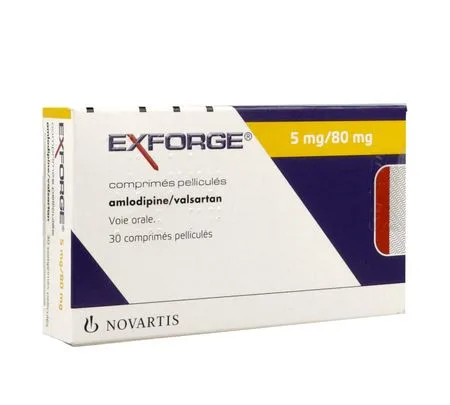
EXFORGE®
amlodipine, valsartan
Forms and presentations
Film-coated tablet at 5 mg/80 mg (round, bevelled edges, bearing the inscription "NVR" on one side and "NV" on the other side; dark yellow; approximate size: 8,20 mm in diameter), at 5 mg/160 mg (oval, bearing the inscription "NVR" on one side and "ECE" on the other side; dark yellow; approximate size: 14,2 mm [length] x 5,7 mm [width]) and at 10 mg/160 mg (oval, bearing the inscription "NVR" on one side and "UIC" on the other side; light yellow; approximate size: 14,2 mm [length] x 5,7 mm [width]): Boxes of 30 and 90, under thermoformed blister packs of 10.Composition
| per tablet | |||
| Amlodipine besilate expressed as amlodipine
|
5 mg | 5 mg | 10 mg |
| Valsartan
|
80 mg | 160 mg | 160 mg |
Indications
Treatment of essential arterial hypertension.Exforge is indicated in adult patients whose blood pressure is not sufficiently controlled on amlodipine or valsartan monotherapy.
Dosage and administration
DosageThe recommended dose of Exforge is one tablet per day.
- Exforge 5 mg/80 mg may be administered to patients whose blood pressure is not sufficiently controlled with amlodipine 5 mg or valsartan 80 mg alone.
- Exforge 5 mg/160 mg may be administered to patients whose blood pressure is not sufficiently controlled with amlodipine 5 mg or valsartan 160 mg alone.
- Exforge 10 mg/160 mg may be administered to patients whose blood pressure is not sufficiently controlled with amlodipine 10 mg or valsartan 160 mg alone or with Exforge 5 mg/160 mg.
Individual dose titration of each component (amlodipine and valsartan) is recommended before switching to the fixed-dose combination. Direct switching from monotherapy to the fixed-dose combination may be considered if clinically justified.
For convenience, patients who take valsartan and amlodipine separately, as tablets or capsules, may instead take the Exforge strength corresponding to the same doses of these two components.
- Impaired renal function:
- No clinical data are available in patients with severe renal impairment. No dose adjustment is necessary in patients with mild to moderate renal impairment. In case of moderate renal impairment, monitoring of potassium and creatinine levels is advised.
- Hepatic impairment:
- Exforge is contraindicated in patients with severe hepatic impairment (see Contraindications).
- Patients with hepatic impairment or disorders due to biliary obstruction should be given special attention when Exforge is administered (see Warnings and Precautions for Use). In patients with mild to moderate hepatic impairment without cholestasis, the maximum recommended dose of valsartan is 80 mg. Dosage recommendations for amlodipine have not been established in patients with mild to moderate hepatic impairment. When switching to amlodipine or Exforge in eligible hypertensive patients (see Indications) with hepatic impairment, the lowest available dose of amlodipine as monotherapy or amlodipine in a combination, respectively, should be used.
- Elderly subjects (65 years and older):
- Caution is required when increasing doses in elderly subjects. When switching to amlodipine or Exforge in eligible elderly hypertensive subjects (see Indications), the lowest available dose of amlodipine as monotherapy or amlodipine in a combination, respectively, should be used.
- Paediatric population:
- The safety and efficacy of Exforge in children under 18 years of age have not been established. No data are available.
Method of administration:
Oral use.
Exforge may be taken with or without meals.
It is recommended to take Exforge with water.
Contraindications
- Hypersensitivity to the active substances, to dihydropyridines, or to any of the excipients listed in section Composition.
- Severe hepatic impairment, biliary cirrhosis or cholestasis.
- Combination of Exforge with aliskiren-containing medicinal products in patients with diabetes or renal impairment (GFR < 60 ml/min/1,73 m2) (see InteractionsPharmacodynamics).
- 2e and 3e trimesters of pregnancy (see Warnings and Precautions for UseFertility, pregnancy and breastfeeding).
- Severe hypotension.
- Shock (including cardiogenic shock).
- Obstruction of the left ventricular outflow tract (for example, obstructive hypertrophic cardiomyopathy and high-grade aortic stenosis).
- Haemodynamically unstable heart failure following acute myocardial infarction.
Warnings and precautions
The safety and efficacy of amlodipine in hypertensive crisis have not been established.
- Pregnancy:
- Angiotensin II receptor antagonists (AIIRAs) must not be started during pregnancy. Patients planning a pregnancy should be switched to alternative antihypertensive treatments with an established safety profile for use during pregnancy, unless continued treatment with an AIIRA is considered essential. When pregnancy is diagnosed, treatment with an AIIRA should be stopped immediately and, if appropriate, alternative treatment should be started (see ContraindicationsFertility, pregnancy and breastfeeding).
- Sodium and/or volume depletion:
- Excessive hypotension was observed in 0,4 % of patients treated with Exforge for uncomplicated essential hypertension in placebo-controlled studies. Symptomatic hypotension may occur in patients with an activated renin-angiotensin system (such as patients with volume and/or sodium depletion receiving high doses of diuretics) who receive treatment with angiotensin receptor antagonists. It is recommended that this hypotension be corrected before Exforge is administered or that close medical supervision be instituted at the start of treatment.
- In case of hypotension occurring with Exforge, place the patient in the supine position and infuse physiological saline intravenously if needed. Treatment may be resumed once blood pressure has stabilised.
- Hyperkalaemia:
- Concomitant use of potassium supplements, potassium-sparing diuretics, potassium-containing salt substitutes, or other medicinal products that may increase serum potassium levels (heparin, etc.) should be undertaken with caution and be accompanied by frequent monitoring of serum potassium.
- Renal artery stenosis:
- Exforge should be used with caution to treat hypertension in patients with unilateral or bilateral renal artery stenosis or arterial stenosis in a solitary kidney, given the possible increase in blood urea and serum creatinine in such patients.
- Kidney transplantation:
- To date, there is no experience regarding the safety of use of Exforge in patients who have recently undergone renal transplantation.
- Hepatic impairment:
- Valsartan is essentially eliminated unchanged via the biliary route. The half-life of amlodipine is increased and its AUC (area under the curve) is greater in patients with hepatic impairment; dosage recommendations have not been established. When administering Exforge, particular monitoring should be instituted in patients with mild to moderate impairment of hepatic function or disorders due to biliary tract obstruction.
- In patients with mild to moderate hepatic impairment without cholestasis, the maximum recommended dose of valsartan is 80 mg.
- Impaired renal function:
- No dosage adjustment of Exforge is required in mild to moderate impairment of renal function (GFR > 30 ml/min/1,73 m2). In moderate renal impairment, it is advised to monitor potassium and creatinine levels.
- Primary hyperaldosteronism:
- Patients with primary hyperaldosteronism should not be treated with valsartan (an angiotensin II antagonist), as their renin-angiotensin system is impaired by this disease.
- Angioedema:
- Angioedema, including swelling of the larynx and glottis, resulting in airway obstruction and/or swelling of the face, lips, pharynx and/or tongue, has been reported in patients treated with valsartan. Some of these patients had a history of angioedema with other medicinal products, including ACE inhibitors. Exforge must be discontinued immediately in patients who develop angioedema and must not be readministered.
- Intestinal angioedema:
- Intestinal angioedema has been reported in patients treated with angiotensin II receptor antagonists, including valsartan (see Undesirable effects). These patients presented with abdominal pain, nausea, vomiting and diarrhoea. Symptoms resolved after discontinuation of angiotensin II receptor antagonists. If intestinal angioedema is diagnosed, valsartan must be stopped and appropriate monitoring must be instituted until complete resolution of symptoms.
- Heart failure/post-myocardial infarction:
- Due to inhibition of the renin-angiotensin-aldosterone system, changes in renal function are to be expected in susceptible individuals. In patients with severe heart failure whose renal function may depend on the activity of the renin-angiotensin-aldosterone system, treatment with ACE inhibitors or angiotensin receptor antagonists has been associated with oliguria and/or progressive increase in blood urea and (in rare cases) with acute renal failure and/or death. Similar results have been reported with valsartan. Assessment of patients with heart failure or post-myocardial infarction must always include assessment of renal function.
- In a long-term, placebo-controlled study of amlodipine (PRAISE-2) in patients with non-ischaemic heart failure of NYHA (New York Heart Association Classification) class III or IV, amlodipine was associated with an increased number of reported cases of pulmonary oedema; the incidence of worsening heart failure versus placebo was, however, not significant.
- Calcium channel blockers, including amlodipine, should be used with caution in patients with congestive heart failure because they may increase the risk of cardiovascular events and mortality.
- Aortic and mitral stenosis:
- As with all other vasodilators, patients with significant mitral stenosis or aortic stenosis that is not severe should be closely monitored.
- Dual blockade of the renin-angiotensin-aldosterone system (RAAS):
- It is established that the combination of ACE inhibitors, ARBs or aliskiren increases the risk of hypotension, hyperkalaemia and impairment of renal function (including the risk of acute renal failure). Consequently, dual blockade of the RAAS by the combination of ACE inhibitors, ARBs or aliskiren is not recommended (see InteractionsPharmacodynamics).
- Nevertheless, if such combination therapy is considered absolutely necessary, it should only be given under specialist supervision with close and frequent monitoring of renal function, blood electrolytes and blood pressure. ACE inhibitors and ARBs should not be used together in patients with diabetic nephropathy.
Exforge has only been studied in the population of hypertensive patients.
Interactions
No drug interaction studies have been carried out with Exforge and other medicinal products.
- Associations to be taken into account:
-
- Other antihypertensives: commonly used antihypertensives (e.g. alpha-blockers, diuretics) and other medicinal products that can cause hypotension as an undesirable effect (e.g. tricyclic antidepressants, alpha-blockers for the treatment of benign prostatic hyperplasia) may increase the antihypertensive effect of the combination.
- Other antihypertensives: commonly used antihypertensives (e.g. alpha-blockers, diuretics) and other medicinal products that can cause hypotension as an undesirable effect (e.g. tricyclic antidepressants, alpha-blockers for the treatment of benign prostatic hyperplasia) may increase the antihypertensive effect of the combination.
- Combination not recommended:
-
- Grapefruit or grapefruit juice: concomitant administration of amlodipine with grapefruit or grapefruit juice is not recommended because bioavailability may be increased in some patients, which may lead to an increase in hypotensive effects.
- Grapefruit or grapefruit juice: concomitant administration of amlodipine with grapefruit or grapefruit juice is not recommended because bioavailability may be increased in some patients, which may lead to an increase in hypotensive effects.
- Combinations requiring precautions for use:
-
- CYP3A4 inhibitors: concomitant use of amlodipine with strong or moderate CYP3A4 inhibitors (protease inhibitors, azole antifungals, macrolides such as erythromycin or clarithromycin, verapamil or diltiazem) may result in a significant increase in plasma concentration of amlodipine. The clinical translation of these pharmacokinetic variations may be more pronounced in elderly subjects. Consequently, clinical monitoring and dose adjustment may be necessary.
- CYP3A4 inducers (anticonvulsants [e.g. carbamazepine, phenobarbital, phenytoin, fosphenytoin, primidone], rifampicin, St John's wort extract): during co-administration of known CYP3A4 inducers, the plasma concentration of amlodipine may vary. Consequently, blood pressure should be monitored and dose adjustment should be considered during and after concomitant medicinal product use, in particular with potent CYP3A4 inducers (for example, rifampicin, St John's wort [Hypericum perforatum]).
- Simvastatin: concomitant administration of multiple doses of 10 mg amlodipine with 80 mg simvastatin resulted in a 77% increase in simvastatin exposure compared with simvastatin alone. It is recommended to limit the simvastatin dose to 20 mg per day in patients receiving amlodipine.
- Dantrolene (infusion): in animals, lethal ventricular fibrillation and cardiovascular collapse were observed in association with hyperkalaemia following administration of intravenous verapamil and dantrolene. Given the risk of hyperkalaemia, concomitant administration of calcium channel blockers such as amlodipine is recommended to be avoided in patients susceptible to malignant hyperthermia and in the management of malignant hyperthermia.
- Tacrolimus: there is a risk of increased blood levels of tacrolimus when administered with amlodipine. To avoid tacrolimus toxicity, administration of amlodipine to a patient receiving tacrolimus requires monitoring of tacrolimus blood levels and adjustment of the tacrolimus dose if necessary.
- CYP3A4 inhibitors: concomitant use of amlodipine with strong or moderate CYP3A4 inhibitors (protease inhibitors, azole antifungals, macrolides such as erythromycin or clarithromycin, verapamil or diltiazem) may result in a significant increase in plasma concentration of amlodipine. The clinical translation of these pharmacokinetic variations may be more pronounced in elderly subjects. Consequently, clinical monitoring and dose adjustment may be necessary.
- Associations to be taken into account:
-
- Others: in clinical interaction studies, amlodipine did not affect the pharmacokinetic properties of atorvastatin, digoxin, warfarin or ciclosporin.
- Others: in clinical interaction studies, amlodipine did not affect the pharmacokinetic properties of atorvastatin, digoxin, warfarin or ciclosporin.
- Combinations not recommended:
-
- Lithium: reversible increases in lithium levels, which may reach toxic values, have been reported with concomitant administration of lithium with angiotensin-converting enzyme inhibitors or angiotensin II receptor antagonists, including valsartan. Consequently, close monitoring of lithium levels is recommended with concomitant use. If a diuretic is also administered, the risk of lithium toxicity may be even greater with Exforge.
- Potassium-sparing diuretics, potassium supplements, potassium-containing salt substitutes and other substances that may increase potassium levels: monitoring of serum potassium is advised when a medicinal product altering potassium levels is combined with valsartan.
- Lithium: reversible increases in lithium levels, which may reach toxic values, have been reported with concomitant administration of lithium with angiotensin-converting enzyme inhibitors or angiotensin II receptor antagonists, including valsartan. Consequently, close monitoring of lithium levels is recommended with concomitant use. If a diuretic is also administered, the risk of lithium toxicity may be even greater with Exforge.
- Combinations requiring precautions for use:
-
- Non-steroidal anti-inflammatory drugs (NSAIDs), including selective COX-2 inhibitors, acetylsalicylic acid (> 3 g/day) and non-selective NSAIDs: a decrease in the antihypertensive effect is possible with concomitant administration of angiotensin II antagonists and NSAIDs. Therefore, concomitant use of angiotensin II antagonists and NSAIDs may lead to an increased risk of worsening renal function and an increase in serum potassium. Consequently, monitoring of renal function at the start of treatment and hydration of the patient is recommended.
- Inhibitors of the influx transporter (rifampicin, ciclosporin) or of the efflux transporter (ritonavir): the results of a study in vitro conducted on human liver tissue showed that valsartan is a substrate of the hepatic uptake transporter OATP1B1 and the hepatic efflux transporter MRP2. Concomitant administration of inhibitors of uptake transporters (rifampicin, ciclosporin) or efflux transporters (ritonavir) may increase the systemic exposure to valsartan.
- Dual blockade of the RAAS with ARBs, ACE inhibitors or aliskiren: data from clinical trials have shown that dual blockade of the RAAS through concomitant use of ACE inhibitors, ARBs or aliskiren is associated with a higher frequency of adverse events such as hypotension, hyperkalaemia and impaired renal function (including acute renal failure) compared with the use of a single agent acting on the RAAS (see ContraindicationsWarnings and precautionsPharmacodynamics).
- Others: no clinically significant interaction has been demonstrated between valsartan administered alone and the following substances: cimetidine, warfarin, furosemide, digoxin, atenolol, indomethacin, hydrochlorothiazide, amlodipine, glibenclamide.
- Non-steroidal anti-inflammatory drugs (NSAIDs), including selective COX-2 inhibitors, acetylsalicylic acid (> 3 g/day) and non-selective NSAIDs: a decrease in the antihypertensive effect is possible with concomitant administration of angiotensin II antagonists and NSAIDs. Therefore, concomitant use of angiotensin II antagonists and NSAIDs may lead to an increased risk of worsening renal function and an increase in serum potassium. Consequently, monitoring of renal function at the start of treatment and hydration of the patient is recommended.
Fertility, pregnancy and breastfeeding
Pregnancy:- Amlodipine:
- In women, the safety of amlodipine during pregnancy has not been established. In animal studies, reprotoxicity was observed at high doses (see Preclinical safety). Use during pregnancy is only recommended if no safer alternative is available and when the disease itself presents greater risks for the mother and foetus.
- Valsartan:
-
- The use of angiotensin II receptor antagonists (ARBs) is not recommended during the 1er trimester of pregnancy (see Warnings and Precautions for Use). The use of ARBs is contraindicated during the 2e and 3e trimesters of pregnancy (see ContraindicationsWarnings and precautions).
-
- Available epidemiological data on the risk of teratogenicity following exposure to ACE inhibitors during the 1er trimester of pregnancy do not allow a conclusion; however, a small increase in risk cannot be excluded. Although there are no controlled epidemiological data on the risk with angiotensin II receptor antagonists (ARB II), similar risks may exist for this class of medicinal products. Women planning a pregnancy should be switched to alternative antihypertensive treatments with an established safety profile for use during pregnancy, unless continuation of ARB II treatment is considered essential. Upon diagnosis of pregnancy, treatment with an ARB II should be stopped immediately and, if necessary, an alternative treatment should be started.
- In humans, exposure to ARB II treatment during the 2e and 3e trimesters of pregnancy is known to cause fetotoxicity (decreased renal function, oligohydramnios, delayed ossification of the skull bones) and toxicity in the newborn (renal failure, hypotension, hyperkalaemia): see Preclinical safety.
- In case of exposure to ARBs from the 2e trimester of pregnancy, an ultrasound is recommended to check renal function and the skull vault bones.
- Newborns of mothers treated with ARB II must be closely monitored for blood pressure (hypotension): see ContraindicationsWarnings and precautions.
Breastfeeding:
Amlodipine is excreted in breast milk. The proportion of the maternal dose received by the infant was estimated at an interquartile range of 3 to 7 %, with a maximum of 15 %. The effect of amlodipine on infants is unknown. As no information is available regarding the use of Exforge during breastfeeding, Exforge is therefore not recommended and alternative treatments with better established safety profiles during breastfeeding are preferable, particularly when breastfeeding a newborn or premature infant.
Fertility:There are no clinical studies of fertility with Exforge.
- Valsartan:
- Valsartan had no effect on the reproductive capacity of male or female rats at oral doses up to 200 mg/kg/day. This dose corresponds to 6 times the recommended human dose expressed in mg/m2 (the calculations assume an oral dose of 320 mg/day and a patient weight of 60 kg).
- Amlodipine:
- Reversible biochemical changes at the level of the sperm head have been reported in some patients treated with calcium channel blockers. Clinical data are insufficient regarding the potential effect of amlodipine on fertility. In a study conducted in rats, adverse effects were detected on male fertility (see Preclinical safety).
Driving and using machines
Patients receiving Exforge who drive motor vehicles or use machines should be informed that they may occasionally experience dizziness or fatigue.Amlodipine may have a minor or moderate influence on the ability to drive vehicles and use machines. If patients treated with amlodipine experience dizziness, headache, fatigue or nausea, their ability to react may be impaired.
Adverse effects
- Summary of the safety profile:
- The safety of Exforge was evaluated in five controlled clinical studies in 5175 patients, of whom 2613 received valsartan in combination with amlodipine. The following adverse effects occurred most frequently or were the most important or most severe: nasopharyngitis, influenza, hypersensitivity, headache, syncope, orthostatic hypotension, oedema, pitting oedema, facial oedema, peripheral oedema, fatigue, hot flushes, asthenia and flushing.
- Tabulated list of undesirable effects:
- Adverse effects are classified by frequency as follows: very common (≥ 1/10); common (≥ 1/100, < 1/10); uncommon (≥ 1/1000, < 1/100); rare (≥ 1/10 000, < 1/1000); very rare (< 1/10 000); frequency not known (cannot be estimated from the available data).
-
MedDRA System Organ Classes/
Adverse effectsFrequency Exforge Amlodipine Valsartan Infections and infestations Nasopharyngitis, influenza Common - - Blood and lymphatic system disorders Decreased haemoglobin and haematocrit - - Frequency not known Leukopenia - Very rare - Neutropenia - - Frequency not known Thrombocytopenia, sometimes with purpura - Very rare Frequency not known Immune system disorders Hypersensitivity Rare Very rare Frequency not known Metabolism and nutrition disorders Hyperglycaemia - Very rare - Hyponatraemia Uncommon - - Psychiatric disorders Depression - Uncommon - Anxiety Rare - - Insomnia/sleep disturbances, mood disorders - Uncommon - Confusion - Rare - Nervous system disorders Coordination disorders Uncommon - - Dizziness sensations Uncommon Common - Orthostatic dizziness sensations Uncommon - - Dysgeusia - Uncommon - Extrapyramidal syndrome - Frequency not known - Headache Common Common - Hypertonia - Very rare - Paresthesias Uncommon Uncommon - Peripheral neuropathy, neuropathy - Very rare - Somnolence Uncommon Common - Syncope, tremors, hypoesthesia - Uncommon - Eye disorders Visual disorders Rare Uncommon - Decreased vision Uncommon Uncommon - Ear and labyrinth disorders Tinnitus Rare Uncommon - Vertigo Uncommon - Uncommon Cardiac disorders Palpitations Uncommon Common - Syncope Rare - - Tachycardia Uncommon - - Arrhythmias (notably bradycardia, ventricular tachycardia and atrial fibrillation), myocardial infarction - Very rare - Vascular disorders Hot flushes - Common - Hypotension Rare Uncommon - Orthostatic hypotension Uncommon - - Vasculitis - Very rare Frequency not known Respiratory, thoracic and mediastinal disorders Cough Uncommon Very rare Uncommon Dyspnoea - Uncommon - Pharyngolaryngeal pain Uncommon - - Rhinitis - Uncommon - Gastrointestinal disorders Abdominal discomfort, upper abdominal pain Uncommon Common Uncommon Changes in intestinal transit - Uncommon - Constipation Uncommon - - Diarrhoea, dry mouth Uncommon Uncommon - Dyspepsia - Uncommon - Gastritis, gingival hyperplasia - Very rare - Nausea Uncommon Common - Pancreatitis - Very rare - Vomiting - Uncommon - Intestinal angioedema - - Very rare Hepatobiliary disorders Abnormal liver function test, including an increase in blood bilirubin level - Very rare* Frequency not known Hepatitis, intrahepatic cholestasis, jaundice - Very rare - Skin and subcutaneous tissue disorders Alopecia - Uncommon - Angioedema - Very rare Frequency not known Bullous dermatitis - - Frequency not known Erythema Uncommon - - Erythema multiforme - Very rare - Rash, hyperhidrosis Rare Uncommon - Photosensitivity reactions - Uncommon - Pruritus Rare Uncommon Frequency not known Purpura - Uncommon - Skin rash Uncommon Uncommon Frequency not known Skin discolouration - Uncommon - Urticaria and other forms of rash, exfoliative dermatitis, Stevens-Johnson syndrome, Quincke's oedema - Very rare - Toxic epidermal necrolysis - Frequency not known - Musculoskeletal and systemic disorders Arthralgia, back pain Uncommon Uncommon - Joint swelling Uncommon - - Muscle spasms Rare Uncommon - Myalgia - Uncommon Frequency not known Ankle swelling - Common - Sensation of heaviness Rare - - Renal and urinary disorders Increased blood creatinine level - - Frequency not known Micturition disorders, nocturia - Uncommon - Pollakiuria Rare Uncommon - Polyuria Rare - - Renal failure and impaired renal function - - Frequency not known Disorders of the reproductive system and breast Impotence - Uncommon - Erectile dysfunction Rare - - Gynaecomastia - Uncommon - General disorders and administration site conditions Asthenia Common Uncommon - Discomfort, malaise - Uncommon - Fatigue Common Common Uncommon Facial oedema Common - - Vasomotor flushes, hot flushes Common - - Non-cardiac chest pain - Uncommon - Oedema Common Common - Peripheral oedema Common - - Pain - Uncommon - Oedema with positive pitting sign Common - - Investigations Increased blood potassium level - - Frequency not known Weight gain, weight loss - Uncommon - -
* Generally suggestive of cholestasis.
- Additional information on the combination:
- Peripheral oedema, a known adverse reaction to amlodipine, was generally observed at a lower incidence in patients who received the amlodipine/valsartan combination than in those who received amlodipine alone. In double-blind, controlled clinical trials, the incidence of peripheral oedema by dose was as follows:
-
% of patients who presented with peripheral oedema Valsartan (mg) 0 40 80 160 320 Amlodipine
(mg)0 3,0 5,5 2,4 1,6 0,9 2,5 8,0 2,3 5,4 2,4 3,9 5 3,1 4,8 2,3 2,1 2,4 10 10,3 NA NA 9,0 9,5 - The mean incidence of peripheral oedema, calculated from data obtained at each dose, was 5,1 % with the amlodipine/valsartan combination.
- Additional information on the individual components:
- Adverse reactions previously reported with either individual component (amlodipine or valsartan) may also be potential adverse reactions with Exforge, even if they were not observed in clinical trials or during marketing.
-
Amlodipine:
- Common: somnolence, dizziness, palpitations, abdominal pain, nausea, ankle oedema.
- Uncommon: insomnia, mood changes (including anxiety), depression, tremor, dysgeusia, syncope, hypoaesthesia, visual disturbance (including diplopia), tinnitus, hypotension, dyspnoea, rhinitis, vomiting, dyspepsia, alopecia, purpura, skin discolouration, hyperhidrosis, pruritus, rash, myalgia, muscle cramps, pain, micturition disorder, increased urinary frequency, impotence, gynaecomastia, chest pain, malaise, weight increased, weight decreased.
- Rare: confusion.
- Very rare: leukocytopenia, thrombocytopenia, allergic reactions, hyperglycaemia, hypertonia, peripheral neuropathy, myocardial infarction, arrhythmia (including bradycardia, ventricular tachycardia and atrial fibrillation), vasculitis, pancreatitis, gastritis, gingival hyperplasia, hepatitis, jaundice, elevation of liver enzymes*, angioedema, erythema multiforme, urticaria, exfoliative dermatitis, Stevens-Johnson syndrome, Quincke's oedema, photosensitivity.
- Not determined: toxic epidermal necrolysis.
- Common: somnolence, dizziness, palpitations, abdominal pain, nausea, ankle oedema.
- Exceptional cases of extrapyramidal syndrome have been reported.
-
* Generally suggestive of cholestasis.
-
Valsartan:
- Not determined: decreased haemoglobin, decreased haematocrit, neutropenia, thrombopenia, increased serum potassium, increased liver function values (including increased bilirubinaemia), renal failure and impaired renal function, increased serum creatinine, angioedema, myalgia, vasculitis, hypersensitivity (including serum sickness).
- Not determined: decreased haemoglobin, decreased haematocrit, neutropenia, thrombopenia, increased serum potassium, increased liver function values (including increased bilirubinaemia), renal failure and impaired renal function, increased serum creatinine, angioedema, myalgia, vasculitis, hypersensitivity (including serum sickness).
Reporting suspected adverse reactions after authorisation of the medicinal product is important. It allows continuous monitoring of the benefit/risk balance of the medicinal product. Healthcare professionals should report any suspected adverse reaction via the national reporting system: National Agency for the Safety of Medicines and Health Products (ANSM) and the network of Regional Pharmacovigilance Centres. Website: https://signalement.social-sante.gouv.fr.
Overdose
- Symptoms:
- There are no data on overdose with Exforge. The clinical picture of overdose with valsartan would probably be dominated by marked hypotension with dizziness. Overdose with amlodipine could cause significant peripheral vasodilation and, possibly, reflex tachycardia. Marked and probably prolonged systemic hypotension, including fatal shock, has been reported with amlodipine.
- Cases of non-cardiogenic pulmonary oedema have rarely been reported following amlodipine overdose, which may appear in a delayed manner (24-48 hours after ingestion) and require ventilatory assistance. Early resuscitation measures (including fluid overload) to maintain perfusion and cardiac output may be triggering factors.
- Treatment:
- In case of recent ingestion, the possibility of inducing vomiting and performing gastric lavage should be considered. Administration of activated charcoal to healthy volunteers immediately after ingestion of amlodipine or within 2 hours thereafter significantly decreased the absorption of amlodipine. In case of clinically significant hypotension due to overdose with Exforge, active cardiovascular supportive treatment should be instituted, with frequent monitoring of cardiac and respiratory function, elevation of the extremities, and control of blood volume and urine output. A vasoconstrictor may be used to restore vascular tone and blood pressure, provided there is no contraindication to its use. Intravenous calcium gluconate may be useful in reversing the effects of calcium channel blockade.
- It is unlikely that valsartan and amlodipine can be removed by haemodialysis.
Pharmacodynamics
Pharmacotherapeutic group: Agents acting on the renin-angiotensin system; angiotensin II antagonists, combinations; angiotensin II antagonists and calcium channel blockers (ATC code: C09DB01).
Exforge combines two antihypertensives with complementary mechanisms for controlling blood pressure in patients with essential hypertension: amlodipine belongs to the class of calcium channel blockers and valsartan to the class of angiotensin II antagonists. The combination of these substances has a synergistic antihypertensive effect, reducing blood pressure to a greater extent than either component administered alone.
- Amlodipine/valsartan:
- The combination of amlodipine and valsartan results in a dose-dependent and additive reduction in blood pressure over the whole therapeutic dose range. The antihypertensive effect of a single dose of the combination persisted for 24 hours.
-
- Placebo-controlled trials:
- More than 1400 hypertensive patients received Exforge once daily in two placebo-controlled trials. Adults with mild to moderate uncomplicated essential hypertension (mean sitting diastolic blood pressure ≥ 95 and < 110 mm Hg) were included. Patients with high cardiovascular risk (heart failure, type I diabetes and poorly controlled type II diabetes, and a history of myocardial infarction or stroke within the previous year) were excluded.
-
- Active-controlled trials in patients not responding to monotherapy:
- A multicentre, randomised, double-blind, active-controlled, parallel-group trial demonstrated normalisation of blood pressure (residual seated diastolic blood pressure < 90 mm Hg at the end of the trial) in patients insufficiently controlled on valsartan 160 mg in 75% of patients treated with amlodipine/valsartan 10 mg/160 mg and in 62% of patients treated with amlodipine/valsartan 5 mg/160 mg, versus 53% of patients who remained on valsartan 160 mg. The addition of amlodipine 10 mg and 5 mg resulted in an additional reduction in systolic/diastolic blood pressure of 6,0/4,8 mm Hg and 3,9/2,9 mm Hg respectively compared with patients who remained on valsartan 160 mg alone.
- A multicentre, randomised, double-blind, active-controlled, parallel-group trial demonstrated normalisation of blood pressure (residual seated diastolic blood pressure < 90 mm Hg at the end of the trial) in patients insufficiently controlled on amlodipine 10 mg in 78% of patients treated with amlodipine/valsartan 10 mg/160 mg versus 67% of patients who remained on amlodipine 10 mg. The addition of valsartan 160 mg resulted in an additional reduction in systolic/diastolic blood pressure of 2,9/2,1 mm Hg compared with patients who remained on amlodipine 10 mg alone.
- Exforge was also studied in an active-controlled study in 130 hypertensive patients with mean sitting diastolic blood pressure ≥ 110 mm Hg and < 120 mm Hg. In this study (baseline blood pressure 171/113 mm Hg), treatment with Exforge 5 mg/160 mg increased to 10 mg/160 mg reduced sitting blood pressure by 36/29 mm Hg versus 32/28 mmHg with treatment with lisinopril/hydrochlorothiazide 10 mg/12,5 mg increased to 20 mg/12,5 mg.
- In two long-term follow-up studies, the effect of Exforge was maintained for more than one year. Abrupt withdrawal of Exforge was not associated with a rapid increase in blood pressure.
- No influence of age, sex, ethnic origin or body mass index (≥ 30 kg/m2, < 30 kg/m2) was observed during treatment with Exforge.
- Exforge has not been studied in populations other than hypertensive patients. Valsartan has been studied in patients with post-myocardial infarction and heart failure. Amlodipine has been studied in patients with stable chronic angina, vasospastic angina and coronary artery disease documented by angiography.
- Amlodipine:
- The amlodipine contained in Exforge inhibits the transmembrane entry of calcium ions into cardiac muscle and vascular smooth muscle. The mechanism of the antihypertensive action of amlodipine is related to a direct relaxant effect on vascular smooth muscle, leading to a decrease in peripheral vascular resistance and blood pressure. Experimental data suggest that amlodipine binds to binding sites of both dihydropyridines and non-dihydropyridines. Contraction of cardiac muscle and vascular smooth muscle depends on the entry of extracellular calcium ions into these cells through specific ion channels.
- After administration of therapeutic doses to hypertensive patients, amlodipine causes vasodilation resulting in a reduction of blood pressure values in the supine or standing position. These decreases in blood pressure are not accompanied by a significant change in heart rate or plasma catecholamine levels with long-term administration.
- Plasma concentrations are correlated with the effect in both young and elderly patients.
- In hypertensive patients with normal renal function, therapeutic doses of amlodipine caused a decrease in renal vascular resistance and an increase in glomerular filtration rate and effective renal plasma flow, without change in filtration fraction or proteinuria.
- In patients with normal ventricular function treated with amlodipine, haemodynamic measurements of cardiac function at rest and during exercise (or stimulation) have generally shown a slight increase in cardiac index, without significant influence on dP/dt or on left ventricular diastolic pressure or volume, as with other calcium inhibitors. In haemodynamic studies, amlodipine was not associated with a negative inotropic effect when administered at therapeutic doses to animals and healthy volunteers, even when co-administered with beta-blockers in humans.
- Amlodipine does not modify sinus node function or atrioventricular conduction in animals or healthy volunteers. In clinical studies in which amlodipine was administered in combination with beta-blockers to patients with either hypertension or angina, no adverse effects were observed on electrocardiographic parameters.
-
- Use in hypertensive patients:
- A randomised, double-blind morbidity-mortality study entitled Antihypertensive and Lipid-Lowering treatment to prevent Heart Attack Trial (ALLHAT) was conducted to compare recent treatments: amlodipine 2,5-10 mg/day (calcium inhibitor) or lisinopril 10-40 mg/day (ACE inhibitor) as first-line treatments, against a thiazide diuretic, chlorthalidone 12,5-25 mg/day in mild to moderate hypertension.
- In total, 33 357 hypertensive patients aged 55 years or older were randomised and followed for an average duration of 4,9 years. Patients had at least one other risk factor for coronary heart disease, including: history of myocardial infarction or stroke (more than 6 months before inclusion) or other confirmed atherosclerotic cardiovascular disease (total 51,5 %), type 2 diabetes (36,1 %), HDL-cholesterol < 35 mg/dl or < 0,906 mmol/l (11,6 %), left ventricular hypertrophy diagnosed by electrocardiography or echocardiography (20,9 %), smoking (21,9 %).
- The primary endpoint was a composite criterion of fatal coronary heart disease or non-fatal myocardial infarction. No significant difference was observed for the primary endpoint between amlodipine-based and chlorthalidone-based treatments: relative risk (RR) 0,98, CI at 95 % (0,90-1,07), p = 0,65. Among secondary endpoints, the incidence of heart failure (a component of a composite criterion of combined cardiovascular events) was significantly higher in the amlodipine group than in the chlorthalidone group (10,2 % versus 7,7 %, RR 1,38, CI at 95 % [1,25-1,52], p < 0,001). However, there was no significant difference in all-cause mortality between amlodipine-based and chlorthalidone-based treatments: RR 0,96, CI at 95 % [0,89-1,02], p = 0,20.
- Valsartan:
- Valsartan is an orally active, potent and specific angiotensin II receptor antagonist. It acts selectively on the AT1 responsible for the known effects of angiotensin II. The increase in plasma angiotensin II levels after blockade of the AT1 receptor by valsartan may stimulate the unblocked AT2 receptor, which appears to counterbalance the effect of the AT1. Valsartan has no partial agonist activity at the AT1 and has a much greater affinity (about 20 000 times) for the AT1 than for the AT2.
- Valsartan does not inhibit the converting enzyme, also known as kininase II, which converts angiotensin I to angiotensin II and degrades bradykinin. Angiotensin II antagonists are not expected to cause cough since they do not act on the converting enzyme and do not potentiate the action of bradykinin or substance P. Clinical studies comparing valsartan and an ACE inhibitor showed that the incidence of dry cough was significantly lower (p < 0,05) with valsartan than with an ACE inhibitor (2,6 % versus 7,9 % respectively). In a clinical study including patients with a history of dry cough on an ACE inhibitor, 19,5 % of subjects on valsartan and 19,0 % of subjects on a thiazide diuretic presented cough, versus 68,5 % of subjects on an ACE inhibitor (p < 0,05). Valsartan does not bind to any other hormone receptor and does not block any ion channels known to be important for cardiovascular regulation.
- Administration of valsartan to hypertensive patients results in blood pressure reduction without change in heart rate.
- The antihypertensive effect becomes apparent within 2 hours in most patients after a single oral dose, with maximum blood pressure reduction achieved within 4 to 6 hours. The antihypertensive effect persists for 24 hours after intake. With repeated administration, maximum blood pressure reduction is generally achieved within 2 to 4 weeks, regardless of the dose chosen, and is maintained during long-term treatment. Sudden discontinuation of valsartan treatment was not associated with a rebound effect or other adverse events.
- Other: dual blockade of the renin-angiotensin-aldosterone system (RAAS):
- The use of the combination of an ACE inhibitor with an ARA II has been analysed in two large randomised controlled trials (ONTARGET (ONgoing Telmisartan Alone and in combination with Ramipril Global Endpoint Trial) and VA NEPHRON-D (The Veterans Affairs Nephropathy in Diabetes).
- The ONTARGET study was conducted in patients with a history of cardiovascular or cerebrovascular disease, or with type 2 diabetes with target organ damage. The VA NEPHRON-D study was conducted in patients with type 2 diabetes and diabetic nephropathy.
- Compared with monotherapy, these studies did not show any significant beneficial effect on the course of renal and/or cardiovascular disease or on mortality, whereas an increased risk of hyperkalaemia, acute renal failure and/or hypotension was observed. These results are also applicable to other ACE inhibitors and ARB IIs, given the similarity of their pharmacodynamic properties.
- ACE inhibitors and ARA IIs should therefore not be combined in patients with diabetic nephropathy (see Warnings and Precautions for Use).
- The ALTITUDE study (Aliskiren Trial in Type 2 Diabetes Using Cardiovascular and Renal Disease Endpoints) was conducted to evaluate the benefit of adding aliskiren to standard treatment with an ACE inhibitor or an ARA II in patients with type 2 diabetes and chronic renal insufficiency, with or without cardiovascular disorders. This study was stopped prematurely due to an increased risk of adverse events. Deaths of cardiovascular origin and strokes were more frequent in the aliskiren group than in the placebo group; likewise, adverse events and certain serious adverse events such as hyperkalaemia, hypotension and renal insufficiency were reported more frequently in the aliskiren group than in the placebo group.
Pharmacokinetics
- Linearity:
- The pharmacokinetics of amlodipine and of valsartan are linear.
- Amlodipine/valsartan:
- After oral administration of Exforge, maximum plasma concentrations of valsartan and amlodipine are reached at 3 and 6 at 8 hours respectively. The rate and extent of absorption of Exforge are equivalent to the bioavailability of valsartan and amlodipine when administered as separate tablets.
- Amlodipine:
-
- Absorption: after oral administration of therapeutic doses of amlodipine alone, maximum plasma concentrations of amlodipine are reached at 6 to 12 hours. Absolute bioavailability ranges from 64 to 80 %. The bioavailability of amlodipine is not modified by food intake.
- Distribution: the volume of distribution is approximately 21 l/kg. Studies in vitro have shown that circulating amlodipine is approximately 97,5 % bound to plasma proteins.
- Biotransformation: amlodipine is almost entirely (to approximately 90 %) metabolised in the liver into inactive metabolites.
- Elimination: plasma elimination of amlodipine is biphasic, with a terminal elimination half-life of approximately 30 to 50 hours. Steady-state plasma concentrations are reached after 7 to 8 days of continuous administration. 10 % of the parent molecule and 60 % of the metabolites are excreted in the urine.
- Absorption: after oral administration of therapeutic doses of amlodipine alone, maximum plasma concentrations of amlodipine are reached at 6 to 12 hours. Absolute bioavailability ranges from 64 to 80 %. The bioavailability of amlodipine is not modified by food intake.
- Valsartan:
-
- Absorption: after oral administration of valsartan alone, maximum plasma concentrations of valsartan are reached at 2 to 4 hours. Mean absolute bioavailability is 23 %. Food decreases exposure (measured by AUC) to valsartan by approximately 40 % and maximum plasma concentration (Cmax) by approximately 50 %, although approximately 8 hours after administration, plasma levels of valsartan are similar whether the patient was fasting or not. However, this reduction in AUC is not accompanied by a clinically significant reduction in therapeutic effect and valsartan may therefore be administered with or without food.
- Distribution: the steady-state volume of distribution of valsartan after intravenous administration is approximately 17 litres, indicating that valsartan does not diffuse extensively into tissues. Binding of valsartan to serum proteins is high (94 to 97 %); it binds mainly to albumin.
- Biotransformation: valsartan does not undergo significant transformation as only approximately 20 % of the dose is recovered as metabolites. A hydroxy metabolite has been identified in plasma at low concentrations (less than 10 % of the valsartan AUC). This metabolite is pharmacologically inactive.
- Elimination: valsartan is characterised by multiexponential kinetic decay (t½α < 1 h and t½ß approximately 9 h). Valsartan is mainly eliminated in the faeces (approximately 83 % of the dose) and in the urine (approximately 13 % of the dose), essentially unchanged. After intravenous administration, the plasma clearance of valsartan is approximately 2 l/h and its renal clearance is 0,62 l/h (approximately 30 % of total clearance). The half-life of valsartan is 6 hours.
- Absorption: after oral administration of valsartan alone, maximum plasma concentrations of valsartan are reached at 2 to 4 hours. Mean absolute bioavailability is 23 %. Food decreases exposure (measured by AUC) to valsartan by approximately 40 % and maximum plasma concentration (Cmax) by approximately 50 %, although approximately 8 hours after administration, plasma levels of valsartan are similar whether the patient was fasting or not. However, this reduction in AUC is not accompanied by a clinically significant reduction in therapeutic effect and valsartan may therefore be administered with or without food.
- Specific population groups:
-
- Paediatric population (under 18 years): no pharmacokinetic data are available in children.
- Elderly subjects (65 years and older): the time to reach maximum plasma concentration of amlodipine is similar in young and elderly patients. In elderly patients, amlodipine clearance tends to decrease, resulting in increases in the area under the curve (AUC) and elimination half-life. Mean systemic exposure (AUC) to valsartan is 70 % higher in elderly subjects compared with young subjects; therefore, caution is required when increasing the dose.
- Renal impairment: the pharmacokinetics of amlodipine are not significantly influenced by renal impairment. No correlation was found between renal function and systemic exposure to valsartan, which was expected for a substance whose renal clearance represents only 30 % of total plasma clearance.
- Hepatic impairment: very limited clinical data are available regarding administration of amlodipine in patients with hepatic insufficiency. Patients with hepatic impairment have decreased amlodipine clearance, resulting in an increase in AUC of approximately 40 to 60 %. In patients with mild to moderate chronic liver disease, exposure (measured by AUC values) to valsartan is on average twice that found in healthy volunteers (matched for age, sex and weight). The product should be administered with caution in patients with liver disease (see Posology and Method of administration).
- Paediatric population (under 18 years): no pharmacokinetic data are available in children.
Preclinical safety
- Amlodipine/valsartan:
-
The adverse events observed in animal studies that may be of clinical relevance are as follows:
- Histopathological signs of inflammation of the glandular stomach were observed in male rats at an exposure corresponding to approximately 1,9 (valsartan) and 2,6 (amlodipine) times the clinical doses of 160 mg of valsartan and 10 mg of amlodipine. At higher exposure levels, ulceration and erosion of the gastric mucosa were observed in both females and males. Similar changes were also observed in the valsartan-alone group (exposure 8,5 to 11,0 times the clinical dose of 160 mg of valsartan).
- An increase in the incidence and severity of renal tubular basophilia/hyalinisation, dilatation and casts, as well as lymphocytic interstitial inflammation and medial arteriolar hypertrophy, were found at an exposure of 8 to 13 (valsartan) and 7 to 8 (amlodipine) times the clinical doses of 160 mg of valsartan and 10 mg of amlodipine. Similar changes were found in the valsartan-alone group (exposure 8,5 to 11,0 times the clinical dose of 160 mg of valsartan).
- In an embryofetal development study in rats, an increase in the incidence of ureteral dilatation, sternebral malformation and non-ossification of the forelimb phalanges was observed at exposures of approximately 12 (valsartan) and 10 (amlodipine) times the clinical doses of 160 mg of valsartan and 10 mg of amlodipine. Ureteral dilatation was also found in the valsartan-alone group (exposure 12 times the clinical dose of 160 mg of valsartan). Only modest signs of maternal toxicity (moderate reduction in body weight) were obtained in this study. The no-observed-effect dose for development was found at 3 (valsartan) and 4 (amlodipine) times the clinical exposure (based on AUC).
- With regard to the individual components, no mutagenic, clastogenic or carcinogenic potential has been demonstrated.
- Histopathological signs of inflammation of the glandular stomach were observed in male rats at an exposure corresponding to approximately 1,9 (valsartan) and 2,6 (amlodipine) times the clinical doses of 160 mg of valsartan and 10 mg of amlodipine. At higher exposure levels, ulceration and erosion of the gastric mucosa were observed in both females and males. Similar changes were also observed in the valsartan-alone group (exposure 8,5 to 11,0 times the clinical dose of 160 mg of valsartan).
- Amlodipine:
-
- Reproductive toxicity: reproductive toxicity studies in rats and mice showed delayed parturition, prolonged labour and decreased offspring survival at doses approximately 50 times higher than the maximum recommended human dose on a mg/kg basis.
- Impairment of fertility: no effect on fertility was observed in rats treated with amlodipine (males for 64 days and females for 14 days before mating) at doses reaching 10 mg/kg/day (eight times* the maximum recommended human dose of 10 mg on a mg/m basis2). In another study in rats in which male rats were treated with amlodipine besilate for 30 days at a dose comparable to the human dose on a mg/kg basis, decreases in plasma follicle-stimulating hormone and testosterone levels were found, as well as decreases in sperm density and in the number of mature spermatids and Sertoli cells.
- Carcinogenicity and mutagenicity:
Rats and mice treated with amlodipine in the diet for two years, at concentrations calculated to deliver daily doses of 0,5, 1,25 and 2,5 mg/kg/day, showed no signs of carcinogenicity. The maximum dose (for the similar mouse and for rats twice* the maximum recommended clinical dose of 10 mg on a mg/m2) was close to the maximum tolerated dose for the mouse but not for the rat.
Mutagenicity studies revealed no drug-related effect, whether genic or chromosomal.
- Reproductive toxicity: reproductive toxicity studies in rats and mice showed delayed parturition, prolonged labour and decreased offspring survival at doses approximately 50 times higher than the maximum recommended human dose on a mg/kg basis.
-
* Based on a patient weighing 50 kg.
- Valsartan:
- Non-clinical data from conventional studies of safety pharmacology, repeated-dose toxicity, genotoxicity, carcinogenesis, and reproduction and developmental functions revealed no particular risk for humans.
- In rats, maternally toxic doses (600 mg/kg/day), in the final days of gestation and lactation, resulted in lower survival and weight gain as well as growth retardation (pinna detachment, opening of the ear canal) in the offspring (see Fertility/Pregnancy/Breastfeeding). These doses in rats (600 mg/kg/day) represent approximately 18 times the maximum recommended human dose based on mg/m2 (the calculations assume an oral dose of 320 mg/day and a patient weighing 60 kg).
- In non-clinical safety studies, administration of high doses of valsartan to rats (200 to 600 mg/kg body weight) resulted in a decrease in red blood cell parameters (erythrocytes, haemoglobin, haematocrit) and clear signs of impaired renal haemodynamics (slightly increased blood urea, renal tubular hyperplasia and basophilia in males). These doses in rats (200 to 600 mg/kg/day) represent approximately 6 to 18 times the maximum recommended human dose based on mg/m2 (the calculations assume an oral dose of 320 mg/day and a patient weighing 60 kg).
- Comparable doses in marmosets produced similar but more severe changes, particularly in the kidney, where the changes progressed to nephropathy including increases in blood urea and creatinine.
- Hypertrophy of renal juxtaglomerular cells was also observed in both species. All these changes were considered to result from the pharmacological activity of valsartan, which produces prolonged hypotension, particularly in marmosets. Hypertrophy of renal juxtaglomerular cells does not appear to be relevant at therapeutic doses of valsartan in humans.
Storage conditions
- Shelf life
- 3 years.
Store at a temperature not exceeding 30 °C.
To be stored in the original outer packaging, protected from moisture.
HANDLING/DISPOSAL INSTRUCTIONS
No special requirements.
Prescription, supply and reimbursement
LIST I| Marketing authorisation (AMM) | EU/1/06/370/004; CIP 3400937817592 (2007) 30 tablets at 5 mg/80 mg. |
| EU/1/06/370/006; CIP 3400937817714 (2007) 90 tablets at 5 mg/80 mg. | |
| EU/1/06/370/012 ; CIP 3400937817882 (2007) 30 tablets at 5 mg/160 mg. | |
| EU/1/06/370/014 ; CIP 3400937818025 (2007) 90 tablets at 5 mg/160 mg. | |
| EU/1/06/370/020 ; CIP 3400937818193 (2007) 30 tablets at 10 mg/160 mg. | |
| EU/1/06/370/022 ; CIP 3400937818315 (2007) 90 tablets at 10 mg/160 mg. | |
| SmPC revised on 11.02.2025. | |
| Price: | 9,63 euros (30 tablets at 5 mg/80 mg). |
| 27,33 euros (90 tablets at 5 mg/80 mg). | |
| 10,99 euros (30 tablets at 5 mg/160 mg). | |
| 31,15 euros (90 tablets at 5 mg/160 mg). | |
| 10,99 euros (30 tablets at 10 mg/160 mg). | |
| 31,15 euros (90 tablets at 10 mg/160 mg). | |
| Reimbursed by Social Security at 65 %. Collective. | |
Detailed information on this medicine is available on the European Medicines Agency website: https://www.ema.europa.eu.
Marketing authorisation holder: Novartis Europharm Limited, Vista Building, Elm Park, Merrion Road, Dublin 4, Ireland.
Novartis Pharma SAS
8/10, Rue Henri-Sainte-Claire-Deville. CS 40150. 92563 Rueil-Malmaison cdx
Tel: 01 55 47 60 00
Medical Information and Communication:
Tel: 01 55 47 66 00
E-mail: icm.phfr@novartis.com
http://www.novartis.fr
Source: VIDAL · Updated on 10/11/2026. This information does not replace advice from a healthcare professional.