
Medicines
SmPC of 30/03/2026
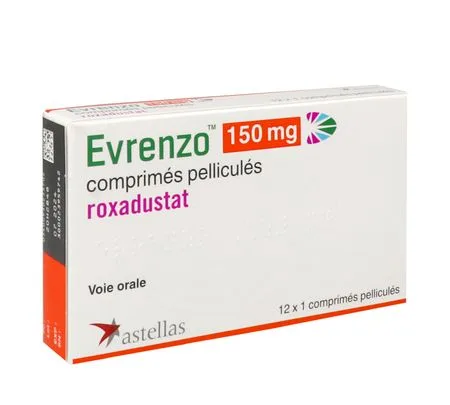
EVRENZO 150 mg, film-coated tablets
Forms and presentations
Marketed products
EVRENZO 150 mg, film-coated tablets
EVRENZO 20 mg, film-coated tablets
EVRENZO 70 mg, film-coated tablets
EVRENZO 100 mg, film-coated tablets
EVRENZO 50 mg, film-coated tablets
Film-coated tablets (tablets).
Evrenzo 20 mg tablets
Red, oval tablets (approximately 8 mm x 4 mm) engraved with "20" on one side.
Evrenzo 50 mg tablets
Red, oval tablets (approximately 11 mm x 6 mm) engraved with "50" on one side.
Evrenzo 70 mg tablets
Red, round tablets (approximately 9 mm) engraved with "70" on one side.
Evrenzo 100 mg tablets
Red, oval tablets (approximately 14 mm x 7 mm) engraved with "100" on one side.
Evrenzo 150 mg tablets
Red, almond-shaped tablets (approximately 14 mm x 9 mm) engraved with "150" on one side.
Composition
Evrenzo 20 mg film-coated tablets
Each film-coated tablet contains 20 mg of roxadustat.
Excipient(s) with known effect
Each 20 mg film-coated tablet contains 40,5 mg of lactose, 0,9 mg of Allura Red AC aluminium lake and 0,21 mg of soya lecithin.
Evrenzo 50 mg film-coated tablets
Each film-coated tablet contains 50 mg of roxadustat.
Excipient(s) with known effect
Each 50 mg film-coated tablet contains 101,2 mg of lactose, 1,7 mg of Allura Red AC aluminium lake and 0,39 mg of soya lecithin.
Evrenzo 70 mg film-coated tablets
Each film-coated tablet contains 70 mg of roxadustat.
Excipient(s) with known effect
Each 70 mg film-coated tablet contains 141,6 mg of lactose, 2,1 mg of Allura Red AC aluminium lake and 0,47 mg of soya lecithin.
Evrenzo 100 mg film-coated tablets
Each film-coated tablet contains 100 mg of roxadustat.
Excipient(s) with known effect
Each film-coated tablet of 100 mg contains 202,4 mg of lactose, 2,8 mg of Allura Red AC aluminium lake and 0,63 mg of soya lecithin.
Evrenzo 150 mg film-coated tablets
Each film-coated tablet contains 150 mg of roxadustat.
Excipient(s) with known effect
Each film-coated tablet of 150 mg contains 303,5 mg of lactose, 3,7 mg of Allura Red AC aluminium lake and 0,84 mg of soya lecithin.
Tablet core : lactose monohydrate, microcrystalline cellulose (E460 (i)), croscarmellose sodium (E468), povidone (E1201), magnesium stearate (E470b).
Film coating : polyvinyl alcohol (E1203), talc (E553b), macrogol (E1521), Allura Red AC aluminium lake (E129), titanium dioxide (E171), lecithin (soya) (E322).
Indications
Evrenzo is indicated for the treatment of adult patients with symptomatic anaemia associated with chronic kidney disease (CKD).
Dosage and administration
Treatment with roxadustat must be initiated by a physician experienced in the management of anaemia. All other causes of anaemia must be evaluated before starting treatment with Evrenzo and when deciding to increase the dose.
The symptoms and sequelae of anaemia may vary according to age, sex and disease burden; assessment by a physician of the patient's clinical course and condition is necessary. In addition to the presence of symptoms of anaemia, criteria such as the rapidity of the fall in haemoglobin (Hb) concentration, the previous response to iron-based treatment and the risk of needing a red blood cell (RBC) transfusion may be of interest in assessing the patient's clinical course and condition.
Dosage
The appropriate dose of roxadustat must be taken orally three times a week on non-consecutive days.
The dose must be individualised in order to achieve and maintain target Hb levels of 10 to 12 g/dL, as described below.
Roxadustat treatment must not be continued beyond 24 weeks if a clinically significant increase in Hb levels is not achieved. Other causes of an inadequate response should then be sought and treated before resuming Evrenzo.
Initial dose at the start of treatment
It should be ensured that iron stores are sufficient before starting treatment.
Patients not currently receiving an erythropoiesis-stimulating agent (ESA)
For patients starting treatment for their anaemia who have not previously been treated with an ESA, the recommended initial dose of roxadustat is 70 mg three times a week in patients weighing less than 100 kg and 100 mg three times a week in patients weighing 100 kg and above.
Patients currently receiving an ESA
Treatment of patients currently on an ESA may be switched to roxadustat treatment. However, switching stable dialysis patients on ESA treatment should only be considered if there is a valid clinical reason (see sections Warnings and precautions and Pharmacodynamics).
Switching non-dialysis-dependent patients who are stable on ESA treatment has not been studied. The decision to treat these patients with roxadustat must be based on the assessment of the benefit-risk balance for each patient.
The recommended initial dose of roxadustat is based on the average ESA dose prescribed over the 4 weeks preceding the switch (see table 1).
The first dose of roxadustat should replace the next scheduled dose of the current ESA.
|
Darbepoetin alfa dose by intravenous or subcutaneous route
|
Epoetin dose by intravenous or subcutaneous route
|
Dose of methoxy polyethylene glycol-epoetin beta intravenously or subcutaneously
|
Dose of roxadustat
|
|
Less than 25 |
Less than 5 000 |
Less than 80 |
70 |
|
From 25 to less than 40 |
From 5 000 to 8 000 |
From 80 to 120 inclusive |
100 |
|
From 40 to 80 inclusive |
Greater than 8 000 and up to 16 000 inclusive |
Greater than 120 and up to 200 inclusive |
150 |
|
Greater than 80 |
Greater than 16 000 |
Greater than 200 |
200 |
ESA: erythropoiesis-stimulating agent
Dose adjustment and monitoring of Hb level
The individualised maintenance dose is between 20 mg and 400 mg three times a week (see section maximum recommended dose). Hb levels should be monitored every two weeks until the target level between 10 and 12 g/dL is reached and stabilised, then every 4 weeks, or as clinically appropriate.
The roxadustat dose may be increased or decreased progressively (in steps) from the initial dose, 4 weeks after the start of treatment, then every 4 weeks, unless the Hb level increases by more than 2 g/dL, in which case the dose must be immediately decreased by one step. When adjusting the roxadustat dose, the current Hb level and the change in this level over the last 4 weeks should be taken into account, and the dose adjustment steps should be followed according to the algorithm described in table 2.
Stepwise dose adjustments must follow the sequence of available doses:
20 mg - 40 mg - 50 mg - 70 mg - 100 mg - 150 mg - 200 mg - 250 mg - 300 mg - 400 mg (this last step (400 mg) is only valid for dialysis patients)
|
Change in Hb level over the previous 4 weeks* |
Current Hb level (g/dL): |
|||
|
Less than 10,5 |
From 10,5 to 11,9 |
From 12,0 to 12,9 |
13,0 or greater |
|
|
Change of a value greater than +1,0 g/dL |
No change |
Reduce the dose by one step |
Reduce the dose by one step |
Suspend intake and monitor the Hb level.
|
|
Change in a value between -1,0 and +1,0 g/dL |
Increase the dose by one step |
No change |
Reduce the dose by one step |
|
|
Change in a value less than -1,0 g/dL |
Increase the dose by one step |
Increase the dose by one step |
No change |
|
The roxadustat dose should not be adjusted more often than once every 4 weeks, unless the Hb level rises by more than 2 g/dL at any time within a period of 4 weeks, in which case the dose must be immediately decreased by one step.
* Change in hemoglobin (Hb) level over the preceding period of 4 weeks = (current Hb value) - (previous Hb value obtained 4 weeks earlier).
If it is necessary to decrease the dose in a patient already receiving the lowest dose (20 mg three times per week), do not reduce the dose by 20 mg by breaking the tablet, but instead decrease the frequency of administration to twice per week. If a further dose reduction is required, the frequency of administration may again be reduced to once per week.
Maintenance dose
After the Hb level has stabilized within the target range of 10 to 12 g/dL, Hb levels must continue to be monitored regularly and the dose adjustment rules followed (see table 2).
Patients starting dialysis during roxadustat treatment
No specific dose adjustment is required for patients with CKD who start dialysis during their roxadustat treatment. The normal dose adjustment rules (see table 2) must be followed.
Concomitant treatment with roxadustat and enzyme inducers or inhibitors
When initiating or discontinuing concomitant treatment with strong inhibitors (e.g. gemfibrozil) or inducers (e.g. rifampicin) of CYP2C8, or UGT1A9 inhibitors (e.g. probenecid): Hb levels must be monitored regularly and the dose adjustment rules followed (see table 2; see also the sections Interactions and Pharmacokinetics).
Recommended maximum dose
Non-dialysis patients
Do not exceed a roxadustat dose of 3 mg/kg or 300 mg three times per week, the lowest dose being retained.
Dialysis patients
Do not exceed a roxadustat dose of 3 mg/kg or 400 mg three times per week, the lowest dose being retained.
Missed dose
If a dose is forgotten and the interval remaining before the next scheduled dose is greater than 24 hours, the missed dose must be taken as soon as possible.
If the interval remaining before the next scheduled dose is less than or equal to 24 hours, the forgotten dose must not be taken and the next dose should be taken on the scheduled day. In each case, the normal dosing schedule must then be resumed.
Elderly person
No adjustment of the initial dose is necessary in elderly patients (see section Pharmacokinetics).
Patients with hepatic impairment
In case of mild hepatic impairment (Child-Pugh class A), no adjustment of the initial dose is necessary (see sections Warnings and precautions and Pharmacokinetics).
In case of moderate hepatic impairment, caution is advised. The initial dose should be halved or rounded to the nearest dose to half when initiating treatment in patients with moderate hepatic impairment (Child-Pugh class B).
In case of severe hepatic impairment (Child-Pugh class C), the use of Evrenzo is not recommended as safety and efficacy have not been evaluated in this population (see sections Warnings and precautions and Pharmacokinetics).
Paediatric population
The safety and efficacy of roxadustat in patients under the age of 18 years have not been established. No data are available.
Method of administration
Evrenzo film-coated tablets must be taken orally with or without food. The tablets must be swallowed whole and not chewed, broken or crushed, in the absence of clinical data under these conditions, and in order to protect the photosensitive core of the tablet from photodegradation.
The tablets must be taken at least 1 hour after administration of phosphate chelators (with the exception of lanthanum) or other medicinal products containing multivalent cations such as calcium, iron, magnesium or aluminium (see sections Interactions and Pharmacokinetics).
Contraindications
- Hypersensitivity to the active substance, to peanut, to soya or to any of the excipients listed in section Composition.
- Third trimester of pregnancy (see sections Warnings and precautions and Fertility, pregnancy and breastfeeding).
- Breast-feeding (see section Fertility, pregnancy and breastfeeding).
Warnings and precautions
Cardiovascular and mortality risk
Overall, based on the data from direct comparison of treatments with roxadustat and ESA, the cardiovascular and mortality risk associated with treatment with roxadustat was estimated to be comparable to the cardiovascular and mortality risk of treatment with ESA (see section Pharmacodynamics). Since, for non-dialysis patients with anaemia associated with CKD, this risk could not be estimated with sufficient confidence versus placebo, the decision to treat these patients with roxadustat must be based on criteria similar to those that would be applied before treatment with ESA. In addition, several factors contributing to this risk have been identified, including lack of response to treatment and switching of treatment in stable dialysis patients treated with an ESA (see sections Dosage and administration and Pharmacodynamics). In case of lack of response, treatment with roxadustat must not be continued after 24th weeks of treatment (see section Dosage and administration). Switching of treatment in stable dialysis patients treated with an ESA should only be considered if there is a valid clinical reason (see section Dosage and administration). In stable non-dialysis patients treated with an ESA and presenting with anaemia associated with CKD, this risk could not be assessed since this patient population was not studied. The decision to treat these patients with roxadustat must be based on the assessment of the benefit-risk balance for each patient.
Thrombotic vascular events
The reported risk of thrombotic vascular events (TVE), including deep vein thrombosis (DVT), pulmonary embolism (PE) and cerebral infarction, must be carefully weighed against the benefits of treatment with roxadustat, particularly in patients with pre-existing risk factors for TVE, including obesity and a history of TVE. The majority of DVT, PE and cerebral infarction events were serious. Cases of cerebral infarction leading to death have been reported.
A rapid increase in Hb levels has been observed in some cases of cerebrovascular accidents.
In clinical studies, vascular access thrombosis (VAT) was reported as very common among dialysed patients with CKD (see section Adverse effects). In these patients, the rates of VAT in patients treated with roxadustat were higher in the first 12 weeks after initiation of treatment, particularly at Hb levels above 12 g/dL and when Hb had increased by more than 2 g/dL in 4 weeks. It is recommended to closely monitor the Hb level and adjust the dose following the dose adjustment rules (see table 2), in order to avoid these levels.
Patients showing signs and symptoms of TVE must be promptly evaluated and treated following the reference standard of care. The decision to interrupt or permanently discontinue treatment must be based on the individual assessment of the benefit-risk balance.
Convulsions
Convulsions have also been reported as common among patients included in clinical studies who received roxadustat (see section Adverse effects). Roxadustat must be used with caution in patients with a history of epilepsy (convulsions or epileptic seizures), epilepsies or medical conditions associated with a predisposition to convulsive activity such as central nervous system (CNS) infections. The decision to interrupt or permanently discontinue treatment must be based on the assessment of the benefit-risk balance for each patient.
Serious infections
The most frequently reported serious infections were pneumonia and urinary tract infections. Patients showing signs and symptoms of infection must be promptly evaluated and treated following the reference standard of care.
Sepsis
Sepsis was one of the most frequently reported serious infections and included fatal events. Patients showing signs and symptoms of sepsis (e.g. an infection that spreads throughout the body and is accompanied by low blood pressure and a risk of organ failure) must be promptly evaluated and treated following the reference standard of care.
Secondary hypothyroidism
Cases of secondary hypothyroidism have been reported during treatment with roxadustat (see section Adverse effects). These reactions were reversible upon discontinuation of roxadustat. Monitoring of thyroid function is recommended if clinically indicated.
Inadequate response to treatment
An inadequate response to treatment with roxadustat must promptly lead to investigation of the causes. Nutritional deficiencies must be corrected. Intercurrent infections, occult blood loss, haemolysis, severe aluminium intoxication, underlying haematological diseases or myelofibrosis may also compromise the erythropoietic response. Reticulocyte count should be considered as part of the assessment. If the usual causes of non-response have been excluded and the patient has reticulocytopenia, bone marrow examination should be considered. Treatment with Evrenzo must not be continued beyond 24 weeks in case of inadequate response for which a resolvable cause has not been found.
Hepatic impairment
Caution is warranted when roxadustat is administered to patients with moderate hepatic impairment (Child-Pugh class B). The use of Evrenzo is not recommended in patients with severe hepatic impairment (Child-Pugh class C) (see section Pharmacokinetics).
Pregnancy and contraception
Roxadustat must not be initiated in women who plan to become pregnant, during pregnancy, or when anaemia associated with CKD is diagnosed during pregnancy. In these cases, another treatment must be started, if appropriate. If a pregnancy begins during treatment with roxadustat, it must be discontinued and another treatment initiated, if appropriate. Women of childbearing potential must use highly effective contraception during treatment and for at least one week after the last dose of Evrenzo (see sections Contraindications and Fertility, pregnancy and breastfeeding).
Misuse
Misuse may lead to an excessive increase in haematocrit, which may be associated with cardiovascular complications that may be life-threatening.
Excipients
Lactose
Evrenzo contains lactose. Patients with rare hereditary problems of galactose intolerance, total lactase deficiency or glucose-galactose malabsorption must not take this medicine.
Allura AC red aluminium lake
Evrenzo contains Allura AC red aluminium lake, which may cause allergic reactions.
Soya lecithin
Evrenzo contains soya lecithin and is contraindicated in patients who are allergic to peanut or soya (see section Contraindications).
Interactions
Effect of medicines on roxadustat
Phosphate binders and other products containing multivalent cations
Co-administration of roxadustat and phosphate binders such as sevelamer carbonate or calcium acetate in healthy subjects decreased the AUC of roxadustat by 67% and 46% and the Cmax max by 66% and 52%, respectively. Roxadustat may form a chelate with multivalent cations such as those in phosphate binders or other products containing calcium, iron, magnesium or aluminium. Staggered administration of phosphate binders (with an interval of at least one hour) had no significant clinical effect on roxadustat exposure in patients with CKD. Roxadustat should be taken at least 1 hour after administration of phosphate binders or other medicines or supplements containing multivalent cations (see section Dosage and administration). This restriction does not apply to lanthanum carbonate, as co-administration of roxadustat and lanthanum carbonate did not lead to a clinically significant change in plasma exposure to roxadustat.
Modulators of CYP2C8 or UGT1A9 activity
Roxadustat is a substrate of CYP2C8 and UGT1A9. Co-administration of roxadustat and gemfibrozil (CYP2C8 and OATP1B1 inhibitor) or probenecid (UGT and OAT1/OAT3 inhibitor) in healthy subjects increased the AUC of roxadustat by 2,3-fold and the Cmax max by 1,4-fold. Hb levels should be monitored when initiating or discontinuing concomitant treatment with gemfibrozil, probenecid, other potent inhibitors or inducers of CYP2C8, or potent inhibitors of UGT1A9. The dose of roxadustat should be adjusted following the dose adjustment rules (see table 2) based on monitoring of Hb levels.
Effect of roxadustat on other medicines
Substrates of OATP1B1 or BCRP
Roxadustat is an inhibitor of BCRP and OATP1B1. These transporters play an important role in intestinal and hepatic uptake and efflux of statins. Co-administration of 200 mg roxadustat and simvastatin in healthy subjects increased the AUC and Cmax max of simvastatin by 1,8 and 1,9-fold, respectively, and the AUC and Cmax max of simvastatin acid (the active metabolite of simvastatin) by 1,9 and 2,8-fold, respectively. Concentrations of simvastatin and simvastatin acid also increased when simvastatin was administered 2 hours before or 4 or 10 hours after roxadustat. Co-administration of 200 mg roxadustat and rosuvastatin increased the AUC and Cmax max of rosuvastatin by 2,9 and 4,5-fold, respectively. Co-administration of 200 mg roxadustat and atorvastatin increased the AUC and Cmax max of atorvastatin by 2,0 and 1,3-fold, respectively.
Interactions are also likely to occur with other statins. When a statin is co-administered with roxadustat, the occurrence of statin-associated adverse reactions should be monitored, and the need for a statin dose reduction should be assessed. Refer to the prescribing information when making decisions on the appropriate statin dose for the patient concerned.
Roxadustat may increase the plasma exposure of other medicines that are substrates of BCRP or OATP1B1. Possible adverse effects of co-administered medicines should be monitored, and doses adjusted accordingly.
Roxadustat and ESAs
Concomitant administration of roxadustat and ESAs is not recommended as this combination has not been studied.
Fertility, pregnancy and breastfeeding
Pregnancy, women of childbearing potential and contraception
There are no data on the use of roxadustat in pregnant women. Studies performed in animals have shown reproductive toxicity (see section Preclinical safety).
Roxadustat is contraindicated during the third trimester of pregnancy (see sections Contraindications and Warnings and precautions).
Roxadustat is not recommended during the first and second trimesters of pregnancy (see section Warnings and precautions).
If pregnancy occurs during treatment with Evrenzo, it should be discontinued and other treatments initiated, as appropriate (see section Contraindications).
Breast-feeding
It is not known whether roxadustat/its metabolites are excreted in human milk. Available animal data have shown excretion of roxadustat in milk (see section Preclinical safety). Evrenzo is contraindicated during breast-feeding (see sections Contraindications and Preclinical safety).
Fertility
In animal studies, no effect of roxadustat on male and female fertility was observed. However, changes in the reproductive organs of male rats were observed. The potential effects of roxadustat on human male fertility are currently unknown. At a maternally toxic dose, increased embryonic loss was observed (see section Preclinical safety). Women of childbearing potential must use highly effective contraception during treatment and for at least one week after the last dose of Evrenzo.
Driving and using machines
Roxadustat has a minor influence on the ability to drive and use machines. Cases of convulsions have been reported during treatment with Evrenzo (see section Warnings and precautions). Therefore, caution is advised when driving vehicles or operating machinery.
Adverse effects
Summary of the safety profile
The safety of Evrenzo has been evaluated in 3 542 non-dialysis-dependent (NDD) patients and 3 353 dialysis-dependent (DD) patients with anaemia and CKD who received at least one dose of roxadustat.
The most frequent adverse reactions (≥ 10 %) associated with roxadustat are hypertension (13,9 %), vascular access thrombosis (12,8 %), diarrhoea (11,8 %), peripheral oedema (11,7 %), hyperkalaemia (10,9 %) and nausea (10,2 %).
The most frequent serious adverse reactions (≥ 1 %) associated with roxadustat were sepsis (3,4 %), hyperkalaemia (2,5 %), hypertension (1,4 %) and deep vein thrombosis (1,2 %).
Tabulated list of adverse reactions
Adverse reactions observed during clinical studies and/or post-marketing experience are listed in this section by frequency category.
Frequency categories are defined as follows: very common (≥ 1/10); common (≥ 1/100, < 1/10); uncommon (≥ 1/1 000, < 1/100); rare (≥ 1/10 000, < 1/1 000); very rare (< 1/10 000); not known (cannot be estimated from the available data).
|
MedDRA System Organ Class (SOC) |
Frequency category |
Adverse reaction |
|
Infections and infestations |
Common |
Sepsis |
|
Blood and lymphatic system disorders |
Common |
Thrombocytopenia |
|
Endocrine disorders |
Frequency not known |
Secondary hypothyroidism |
|
Metabolism and nutrition disorders |
Very common |
Hyperkalaemia |
|
Psychiatric disorders |
Common |
Insomnia |
|
Nervous system disorders |
Common |
Convulsions, headache |
|
Uncommon |
Cerebral infarction |
|
|
Vascular disorders |
Very common |
Hypertension, vascular access thrombosis (VAT)1 |
|
Common |
Deep vein thrombosis (DVT) |
|
|
Respiratory, thoracic and mediastinal disorders |
Uncommon |
Pulmonary embolism |
|
Gastrointestinal disorders |
Very common |
Nausea, diarrhoea |
|
Common |
Constipation, vomiting |
|
|
Hepatobiliary disorders |
Uncommon |
Hyperbilirubinaemia |
|
Skin and subcutaneous tissue disorders |
Frequency not known |
Generalised exfoliative dermatitis (GED) |
|
General disorders and administration site conditions |
Very common |
Peripheral oedema |
|
Investigations |
Frequency not known |
Decreased blood levels of thyroid-stimulating hormone (TSH), increased blood copper level |
1 This adverse effect is associated with CKD patients who were on dialysis during treatment with roxadustat.
Description of selected adverse reactions
Thrombotic vascular events
In patients with NDD CKD, DVT events were infrequent and occurred in 1,0 % (0,6 patient with events over 100 patient-years of exposure) in the roxadustat group, and in 0,2 % (0,2 patient with events over 100 patient-years of exposure) in the placebo group. In patients with DD CKD, DVT events occurred in 1,3 % (0,8 patient with events over 100 patient-years of exposure) in the roxadustat group, and in 0,3 % (0,1 patient with events over 100 patient-years of exposure) in the ESA group (see section Warnings and precautions).
In patients with NDD CKD, pulmonary embolism was observed in 0,4 % (0,2 patient with events over 100 patient-years of exposure) in the roxadustat group, compared with 0,2 % (0,1 patient with events over 100 patient-years of exposure) in the placebo group. In patients with DD CKD, pulmonary embolism was observed in 0,6 % (0,3 patient with events over 100 patient-years of exposure) in the roxadustat group, compared with 0,5 % (0,3 patient with events over 100 patient-years of exposure) in the ESA group (see section Warnings and precautions).
In patients with DD CKD, vascular access thrombosis was observed in 12,8 % (7,6 patients with events over 100 patient-years of exposure) in the roxadustat group, compared with 10,2 % (5,4 patients with events over 100 patient-years of exposure) in the ESA group (see section Warnings and precautions).
In patients with NDD CKD, the overall incidence of ischaemic cerebrovascular events was higher in the roxadustat group (3,9 %) than in the placebo group (2,4 %), and the adjusted incidence rate during follow-up was higher in the roxadustat group (2,3) than in the placebo group (1,8). The occurrence of cerebral infarctions was higher by 0,2 % in the roxadustat group than in the placebo group (0,6 % vs 0,4 %).
In patients with DD CKD, the overall incidence of ischaemic cerebrovascular events was similar in the roxadustat group (4,8 %) and in the active control group (4,2 %). The incidence rate over 100 patient-years of exposure was 2,8 in the roxadustat group versus 2,2 in the active control group. The occurrence of ischaemic strokes was higher by 0,2 % in the roxadustat group than in the active comparator group (0,8 % vs 0,6 %).
Convulsions
In patients with NDD CKD, convulsions occurred in 1,1 % (0,6 patient with events over 100 patient-years of exposure) in the roxadustat group, and in 0,2 % (0,2 patient with events over 100 patient-years of exposure) in the placebo group (see section Warnings and precautions).
In patients with CKD DD, convulsions occurred in 2,0 % (1,2 patient with events over 100 patient-years of exposure) in the roxadustat group, and in 1,6 % (0,8 patient with events over 100 patient-years of exposure) in the ESA group (see section Warnings and precautions).
Sepsis
In patients with CKD NDD, sepsis was observed in 2,1 % (1,3 patient with events over 100 patient-years of exposure) in the roxadustat group, compared with 0,4 % (0,3 patient with events over 100 patient-years of exposure) in the placebo group. In dialysis patients, sepsis was observed in 3,4 % (2,0 patients with events over 100 patient-years of exposure) in the roxadustat group, compared with 3,4 % (1,8 patient with events over 100 patient-years of exposure) in the ESA group (see section Warnings and precautions).
Skin reactions
Generalised exfoliative dermatitis, part of severe cutaneous adverse reactions (SCAR), has been reported during post-marketing surveillance and has shown a link with treatment with roxadustat (frequency unknown).
Reporting of suspected adverse reactions
Reporting suspected adverse reactions after authorisation of the medicinal product is important. It allows continued monitoring of the benefit/risk balance of the medicinal product. Healthcare professionals are asked to report any suspected adverse reactions via the national reporting system-see Appendix V.
Overdose
Single supratherapeutic doses of roxadustat 5 mg/kg (up to 510 mg) administered to healthy subjects were associated with a transient increase in heart rate, an increased frequency of mild to moderate musculoskeletal pain, headache, sinus tachycardia and, less frequently, low blood pressure, all of these events being non-serious. Overdose of roxadustat may raise Hb levels above the target level (10-12 g/dL); it requires management by discontinuing roxadustat treatment or reducing its dose (see section Dosage and administration) and by close monitoring combined with symptomatic treatment, depending on the clinical indication. Roxadustat and its metabolites are not significantly removed by haemodialysis (see section Pharmacokinetics).
Pharmacodynamics
Pharmacotherapeutic class: antianaemic preparations, other antianaemic preparations.
ATC code: B03XA05.
Mechanism of action
Roxadustat is an inhibitor of hypoxia-inducible factor prolyl-hydroxylase (HIF-PHI). The activity of the HIF-PH enzyme controls intracellular HIF levels, a transcription factor that regulates the expression of genes involved in erythropoiesis. Activation of the HIF pathway is important in the adaptive response to hypoxia to increase red blood cell production. By reversibly inhibiting the HIF-PH enzyme, roxadustat stimulates a coordinated erythropoietic response that includes increased plasma levels of endogenous erythropoietin (EPO), regulation of iron transport proteins and reduction of hepcidin (an iron-regulating protein increased during inflammation in CKD). This response improves iron bioavailability, increases Hb production and red cell mass.
Pharmacodynamic effects
Effects on QTc interval and heart rate
A thorough QT study conducted in healthy subjects treated with roxadustat at a single therapeutic dose of 2,75 mg/kg and a single supratherapeutic dose of 5 mg/kg (up to 510 mg) did not show any prolongation of the QTc interval. This same thorough QT study demonstrated a placebo-corrected increase in heart rate of 9 to 10 beats per minute (bpm) between 8 and 12 h after the 2,75 mg/kg dose, and of 15 to 18 bpm between 6 and 12 h after the 5 mg/kg dose.
Clinical efficacy and safety
Development programme in anaemia associated with CKD
The efficacy and safety of roxadustat were evaluated for at least 52 weeks within a global phase III programme consisting of 8 multicentre, randomised studies conducted in anaemic patients with non-dialysis-dependent (NDD) and dialysis-dependent (DD) CKD (see table 4).
Three studies conducted in NDD patients with CKD stage 3-5 were double-blind versus placebo (ALPS, 1517-CL-0608; ANDES, FGCL-4592-060; OLYMPUS, D5740C00001) and one study was conducted open-label (DOLOMITES, 1517-CL-0610) using darbepoetin alfa as comparator. All NDD studies evaluated efficacy and safety in patients not treated with ESA by correcting, then maintaining, the Hb level within the target range of 10 to 12 g/dL (Hb correction studies).
Four open-label studies, versus ESA (control treatment: epoetin alfa and/or darbepoetin alfa), were conducted in haemodialysis or peritoneal dialysis patients and evaluated efficacy and safety using different approaches:
- Hb correction study (HIMALAYAS, FGCL-4592-063).
- Hb maintenance study within the target after conversion of ESA treatment to roxadustat (PYRENEES, 1517-CL-0613; SIERRAS, FGCL-4592-064).
- Or a combination of both approaches (correction and conversion) (ROCKIES, D5740C00002).
Patients in the NDD studies had CKD stage 3 to 5 and were not receiving dialysis. All patients had a mean Hb ≤ 10,0 g/dL, except patients in the DOLOMITES study (1517-CL-0610), who were allowed a mean Hb ≤ 10,5 g/dL. Ferritin levels had to be ≥ 30 ng/mL (ALPS, 1517-CL-0608; ANDES, FGCL-4592-060), ≥ 50 ng/mL (OLYMPUS, D5740C00001) or ≥ 100 ng/mL (DOLOMITES, 1517-CL-0610). With the exception of patients in the study (OLYMPUS, D5740C00001), who were allowed to take ESA treatment up to 6 weeks before randomisation, patients could not receive ESA treatment in the 12 weeks preceding randomisation.
Patients in the DD studies had to be on dialysis: stable DD patients in the PYRENEES study (1517-CL-0613), defined as being on dialysis for more than 4 months; or incident DD (ID) patients in the HIMALAYAS study (FGCL-4592-063), defined as being on dialysis for at least 2 weeks and no more than 4 months. Patients in the SIERRAS (FGCL-4592-064) and ROCKIES (D5740C00002) studies were both stable DD patients (approximately 80 to 90 %) and ID patients (approximately 10 to 20 %). All patients had to have a ferritin level ≥ 100 ng/mL. All patients had been treated with an intravenous or subcutaneous ESA for at least 8 weeks before randomisation, except in the HIMALAYAS study (FGCL 4592063), which excluded patients who had received ESA treatment in the 12 weeks preceding randomisation.
Roxadustat treatment followed the principles of the administration instructions described in section Dosage and administration. Demographic data and all inclusion characteristics of each study were comparable between the roxadustat groups and the control groups. The median age at randomisation ranged between 55 and 69 years, 16,6 to 31,1% of patients falling within the age range of 65 to 74 years, and 6,8 to 35% of them being aged ≥ 75 years. The percentage of female patients ranged between 40,5 and 60,7%. The races most frequently represented across all studies were White, Black or African American, and Asian. The most common aetiologies of CKD were hypertensive and diabetic nephropathy. Median Hb levels ranged between 8,60 and 10,78 g/dL. Approximately 50 to 60% of NDD patients and 80 to 90% of DD patients had sufficient iron stores at baseline.
Data from seven Phase III studies were grouped into two distinct populations (three NDD and four DD) (see table 4).
Three NDD studies versus placebo (2 386 patients on roxadustat; 1 884 patients on placebo) were included in the NDD pool. Data from the Phase III NDD DOLOMITES study versus ESA (1517-CL-0610; 323 patients on roxadustat and 293 patients on darbepoetin alfa) are not included in the pooled analyses of the NDD studies, as this study is open-label, versus an active comparator.
Four DD studies versus ESA (2 354 patients on roxadustat; 2 360 patients on ESA [epoetin alfa and/or darbepoetin alfa]) were included in the DD pool. Within the DD pool, two sub-pools were established to reflect the two different therapeutic approaches:
- Patients in the DD population who had been on dialysis for more than 2 weeks and less than 4 months were classified as incident DD patients (ID) (DD ID pool), a term reflecting the Hb correction approach.
- DD patients who had been on dialysis for more than 4 months were classified as stable DD patients (stable DD pool), a term reflecting the approach of conversion from ESA to roxadustat.
|
Studies conducted in NDD patients |
||||
|
Studies versus placebo (NDD pool) |
Study versus ESA
|
|||
|
Approach |
Hb correction |
|||
|
Study |
ALPS
|
ANDES
|
OLYMPUS
|
DOLOMITES
|
|
Randomised
|
594
|
916
|
2 760
|
616
|
|
Studies conducted in DD patients |
||||
|
Studies versus ESA (DD pool)
|
||||
|
Approach |
ESA conversion |
Hb correction |
ESA conversion or Hb correction |
|
|
Study |
PYRENEES
|
SIERRAS
|
HIMALAYAS
|
ROCKIES
|
|
Randomised
|
834
|
740
|
1 039
|
2 101
|
DD: dialysis-dependent; ASE: erythropoiesis-stimulating agent; Hb: hemoglobin; NDD: non-dialysis-dependent.
Patients with CKD NDD
Efficacy results
Change in Hb level during treatment
In clinical studies, roxadustat was effective in achieving and maintaining target Hb levels (10 to 12 g/dL) in anemic non-dialysis CKD patients (see figure 1).
Figure 1. Mean Hb level (+/-SE) (g/dL) over time up to week 52 (FAS); NDD pool (Hb correction)
FAS: full analysis set; Hb: hemoglobin; NDD: non-dialysis-dependent; SE: standard error.
Primary efficacy endpoints assessed by Hb level in patients with NDD CKD
In NDD patients requiring treatment for their anemia (Hb correction), the proportion who achieved a response during the first 24 weeks was higher in the roxadustat group (80,2%) than in the placebo group (8,7%). A statistically significant increase in Hb level was observed between baseline and weeks 28 to 36 in the roxadustat group (1,91 g/dL) compared with the placebo group (0,14 g/dL), and the lower limit of the confidence interval at 95% was greater than 1. In studies conducted in NDD patients, an increase in Hb level of at least 1 g/dL was achieved, with a median duration of 4,1 weeks (see table 5).
In the open-label DOLOMITES study (1517-CL-0610) versus ASE conducted in NDD patients, the proportion who achieved a response (Hb correction) during the first 24 weeks was non-inferior in the roxadustat group (89,5%) compared with the darbepoetin alfa group (78%) (see table 5).
|
Population |
Patients with CKD NDD |
|||
|
Approach |
Hb correction |
Hb correction |
||
|
NDD pool (FAS) |
DOLOMITES (PPS)
|
|||
|
Criterion/Parameter |
Roxadustat
|
Placebo
|
Roxadustat
|
Darbepoetin alfa
|
|
Proportion of patients achieving a responsea (Hb correction) |
||||
|
Responders, n (%)
|
1 899 (80,2)
|
163 (8,7)
|
256 (89,5)
|
213 (78,0)
|
|
Difference in proportions [CI at 95 %] |
71,5 [69,40 ; 73,51] |
11,51 [5,66 ; 17,36] |
||
|
Odds ratio [CI at 95 %] |
40,49 [33,01 ; 49,67] |
2,48 [1,53 ; 4,04] |
||
|
p-value |
< 0,0001 |
NE |
||
|
Change in Hb level from baseline (g/dL)b |
||||
|
Mean level (SD) at baseline |
9,10 (0,74) |
9,10 (0,73) |
9,55 (0,76) |
9,54 (0,69) |
|
Mean LS (SD) change from baseline |
1,85 (1,07) |
0,17 (1,08) |
1,85 (1,08) |
1,84 (0,97) |
|
Least squares mean |
1,91 |
0,14 |
1,85 |
1,84 |
|
Mean difference in least squares means [CI at 95 %] |
1,77 [1,69 ; 1,84] |
0,02 [-0,13 ; 0,16] |
||
|
p-value |
< 0,0001 |
0,844 |
||
LS: least squares; CI: confidence interval; CKD: chronic kidney disease; FAS: full analysis set; Hb: hemoglobin; LS: least squares; NE: not evaluated; NDD: non-dialysis-dependent; PPS: per protocol set; SD: standard deviation.
a Response (Hb correction) in the first 24 weeks.
b Change in Hb level between baseline and weeks 28 to 36.
Patients with DD CKD
Change in Hb level during treatment
In clinical studies, roxadustat was effective in achieving and maintaining target Hb levels (10 to 12 g/dL) in dialysed patients with CKD, regardless of their prior ESA treatment (see figures 2 and 3).
Figure 2. Mean Hb level (+/-SE) (g/dL) up to week 52 (FAS); DD incident sub-pool (Hb correction).
DD: dialysis-dependent; FAS: full analysis set; Hb: hemoglobin; ID: incident; SE: standard error.
Figure 3. Mean Hb level (+/-SE) (g/dL) up to week 52 (FAS); DD stable sub-pool (ESA conversion).
DD: dialysis-dependent; ESA: erythropoiesis-stimulating agent; FAS: full analysis set; Hb: hemoglobin; SE: standard error.
Primary efficacy endpoints assessed by Hb level in patients with DD CKD
DD patients requiring anemia treatment to correct their Hb level and those converted to ESA treatment achieved an increase in Hb level between baseline and weeks 28 to 36 in the roxadustat group; this increase was comparable to that observed in the ESA group and above the prespecified non-inferiority margin of -0,75 g/dL. The proportion of patients achieving an Hb response during the first 24 weeks was similar in the roxadustat and ESA groups (see table 6).
|
Population |
DD patients |
|||
|
Approach |
Hb correction |
ESA conversion |
||
|
DD incident pool (FAS/PPS) |
DD stable pool (PPS) |
|||
|
Criterion/Parameter |
Roxadustat
|
ESA
|
Roxadustat
|
ESA
|
|
Change in Hb level from baseline (g/dL) |
||||
|
Mean level (SD) at baseline |
8,77 (1,20) |
8,82 (1,20) |
10,32 (0,99) |
10,37 (0,99) |
|
Mean LS (SD) change from baseline |
2,37 (1,57) |
2,12 (1,46) |
0,65 (1,15) |
0,36 (1,23) |
|
Least squares mean |
2,17 |
1,89 |
0,58 |
0,28 |
|
Mean difference in least squares means [CI at 95 %] |
0,28 [0,110 ; 0,451] |
0,30 [0,228 ; 0,373] |
||
|
p-value |
0,0013 |
< 0,0001 |
||
|
Proportion of patients achieving a response on Hb levela, b |
||||
|
Responders, n (%)
|
453 (59,9)
|
452 (59,6)
|
978 (70,9)
|
959 (67,7)
|
|
Difference in proportions [CI at 95 %] |
0,3 [-4,5 ; 5,1] |
2,7 [-0,7 ; 6,0] |
||
|
Odds ratio [CI at 95 %] |
NE |
NE |
||
|
p-value |
NE |
NE |
||
VPI: change from baseline; CI: confidence interval; CKD: chronic kidney disease; DD: dialysis-dependent; ESA: erythropoiesis-stimulating agent; FAS: full analysis set; Hb: haemoglobin; ID: incident; LS: least squares; NE: not evaluated; PPS: per protocol set; SD: standard deviation.
a Hb level within the target range between 10,0 and 12,0 g/dL during weeks 28 to 36 without receiving rescue therapy in the 6 weeks preceding and during the 8-week evaluation period.
b Data from the DD ID pool were analysed only for weeks 28 to 52.
Rescue therapy, red blood cell (RBC) transfusion and intravenous iron administration
The effects of roxadustat treatment on the use of rescue therapy, RBC transfusion and intravenous iron administration are presented in Table 7 (NDD) and Table 8 (DD). In clinical studies, roxadustat decreased blood levels of hepcidin (a regulator of iron mechanism) and ferritin, and increased serum iron, while transferrin saturation remained stable, all of these parameters having been assessed over time as indicators of iron status.
Low-density lipoprotein (LDL) cholesterol
The effects of roxadustat treatment on LDL cholesterol are presented in Tables 7 and 8. Mean levels of LDL cholesterol and high-density lipoprotein (HDL) cholesterol decreased in patients treated with roxadustat compared with those receiving placebo or an ESA. The effect on LDL cholesterol was more pronounced, leading to a decrease in the LDL/HDL ratio, independently of statin use.
|
Population |
Patients with CKD NDD |
|||
|
Intervention |
Correction |
Correction |
||
|
NDD pool (FAS) |
DOLOMITES (1517-CL-0610) |
|||
|
Criterion/Parameter |
Roxadustat
|
Placebo
|
Roxadustat
|
Darbepoetin alfa
|
|
Number of patients with rescue therapy, n (%)* |
211 (8,9) |
580 (31,1) |
NE |
|
|
RBC transfusion |
118 (5,0) |
240 (12,9) |
||
|
IV iron |
50 (2,1) |
90 (4,8) |
||
|
ESA |
48 (2,0) |
257 (13,8) |
||
|
IR |
10,4 |
41,0 |
||
|
Hazard ratio |
0,19 |
NE |
||
|
CI at 95 % |
0,16 ; 0,23 |
|||
|
p-value |
< 0,0001 |
|||
|
Number of patients treated with IV iron, n (%)† |
NE |
20 (6,2) |
37 (12,7) |
|
|
IR |
9,9 |
21,2 |
||
|
Hazard ratio |
0,45 |
|||
|
CI at 95 % |
0,26 ; 0,78 |
|||
|
p-value |
0,004 |
|||
|
Change in LDL cholesterol (mmol/L) from baseline to weeks 12 to 28‡ |
||||
|
ANCOVA analysis |
||||
|
Least squares mean |
-0,446 |
0,066 |
-0,356 |
0,047 |
|
CI at 95 % |
-0,484 ; -0,409 |
0,017 ; 0,116 |
-0,432 ; -0,280 |
-0,033 ; 0,127 |
|
Mean difference in LS means
|
-0,513 |
-0,403 |
||
|
CI at 95 % |
-0,573 ; -0,453 |
-0,510 ; -0,296 |
||
|
p-value |
< 0,0001 |
< 0,001 |
||
The p-values presented for the NDD pool are nominal values.
ANCOVA: analysis of covariance; CI: confidence interval; ESA: erythropoiesis-stimulating agent; FAS: full analysis set; IR: incidence rate (per 100 patient-years at risk); IV: intravenous; LDL: low-density lipoprotein; LS: least squares; NE: not evaluated; NDD: non-dialysis-dependent; R: roxadustat; RBC: red blood cell;
* Regarding the use of rescue therapy, the NDD pool was analysed up to week 52.
† During weeks 1 to 36.
‡ Change in LDL cholesterol from baseline was assessed only up to week 24 in the OLYMPUS study (D5740C00001).
|
Population |
Patients with DD CKD |
|||
|
Intervention |
Correction |
Conversion |
||
|
Pool DD ID (FAS) |
Pool DD stable (FAS) |
|||
|
Criterion/Parameter |
Roxadustat
|
ESA
|
Roxadustat
|
ESA
|
|
Mean monthly IV iron administration over weeks 28 to 52 (mg)* |
||||
|
n |
606 |
621 |
1 414 |
1 486 |
|
Mean (SD) |
53,57
|
70,22
|
42,45
|
61,99
|
|
Change in LDL cholesterol (mmol/L) from baseline to weeks 12 to 28 |
||||
|
ANCOVA analysis |
||||
|
Least squares mean |
-0,610 |
-0,157 |
-0,408 |
-0,035 |
|
CI at 95 % |
-0,700 ; -0,520 |
-0,245 ; -0,069 |
-0,449 ; -0,368 |
-0,074 ; 0,003 |
|
Mean difference in LS means
|
-0,453 |
-0,373 |
||
|
CI at 95 % |
-0,575 ; -0,331 |
-0,418 ; -0,328 |
||
|
p-value |
< 0,0001 |
< 0,0001 |
||
The p-values presented for the ID and stable DD pools are nominal values. ANCOVA: analysis of covariance; CI: confidence interval; CKD: chronic kidney disease; DD: dialysis-dependent; ESA: erythropoiesis-stimulating agent; FAS: full analysis set; ID: incident dialysis; IV: intravenous; LDL: low-density lipoprotein; LS: least squares; R: roxadustat.
* The period for the PYRENEES study (1517CL0613) extended up to week 36, and that for the ROCKIES study (D5740C0002) ran from week 36 until the end of the study.
In the SIERRAS study (FGCL-4592-064) conducted in dialysis patients, the proportion of patients who received a red blood cell transfusion during treatment was significantly lower in the roxadustat group than in the EPO-alfa group (12,5% versus 21,1%); the difference was not statistically significant in the ROCKIES study (D5740C00002) (9,8% versus 13,2%).
Patient-reported outcomes in non-dialysis patients
In the DOLOMITES study (1517-CL-0610), non-inferiority of roxadustat compared with darbepoetin was established for the SF-36 PF and SF-36 VT scale scores.
Patient-reported outcomes in dialysis patients
In the PYRENEES study (1517-CL-0613), non-inferiority of roxadustat compared with ESA was established regarding the change in SF-36 PF and SF-36 VT scale scores between baseline and weeks 12 to 28.
Clinical safety
Pooled adjudicated cardiovascular events meta-analysis
A meta-analysis of major adverse cardiovascular events (MACE; composite criterion including all-cause mortality [ACM], myocardial infarction and stroke) and MACE+ (composite criterion including ACM, myocardial infarction, stroke and hospitalisation for unstable angina or congestive heart failure) from the phase III clinical study program was conducted in 8 984 patients.
MACE, MACE+ and ACM results are presented for three datasets using the pooled hazard ratio (HR) and its 95% confidence interval (CI). The three datasets include:
- A pooled dataset of placebo-controlled studies conducted on haemoglobin correction in NDD patients [includes patients from the OLYMPUS (D5740C00001), ANDES (FGCL-4592-060) and ALPS (1517-CL-0608) studies; see table 4]
- A pooled dataset of ESA-controlled studies conducted on haemoglobin correction in NDD and ID-DD patients [includes patients from the DOLOMITES (1517-CL-0610), HIMALAYAS (FGCL-4592-063) studies and the ID-DD patients from the SIERRAS (FGCL-4592-064) and ROCKIES (D5740C00002) studies; see table 4]
- A pooled dataset of ESA-controlled studies conducted on ESA conversion in stable DD patients [includes patients from the PYRENEES (1517-CL-0613) study and the stable DD patients from the ROCKIES (D5740C00002) and SIERRAS (FGCL-4592-064) studies; see table 4]
MACE, MACE+ and ACM in the pooled dataset of placebo-controlled studies conducted on haemoglobin correction in patients with NDD CKD
In NDD patients, analysis of MACE, MACE+ and ACM data from the on-treatment analyses included all data from the start of study treatment up to 28 days after the end of treatment (end of follow-up). The on-treatment analysis used a Cox model weighted by inverse probability of censoring weighting (IPCW), which aims to correct for differences in follow-up duration between roxadustat and placebo, including identified factors contributing to increased risk and premature treatment discontinuation, in particular determinants of estimated glomerular filtration rate (eGFR) and haemoglobin level at baseline and over time. It cannot be assured that confounding factors do not remain in this model. The HRs of the on-treatment analyses were 1,26, 1,17 and 1,16 (see table 9). The ITT analyses included all data from the start of study treatment until the end of post-treatment safety follow-up. These ITT analyses were included to reflect the imbalanced distribution of risk in favour of placebo in the on-treatment analysis. However, dilution of the study treatment effect is generally observed in ITT analyses. Bias cannot be completely ruled out, notably due to initiation of rescue ESA treatment after discontinuation of study treatment. The HRs were 1,10, 1,07 and 1,08 with upper 95% CI limits of 1,27, 1,21 and 1,26 respectively.
|
MACE |
MACE+ |
ACM |
||||
|
Roxadustat
|
Placebo
|
Roxadustat
|
Placebo
|
Roxadustat
|
Placebo
|
|
|
On treatment |
||||||
|
Number of patients with events (%) |
344 (14,4) |
166 (8,8) |
448 (18,8) |
242 (12,8) |
260 (10,9) |
122 (6,5) |
|
FAIR |
8,7 |
6,8 |
11,6 |
10,1 |
6,4 |
5,0 |
|
HR (CI at 95 %) |
1,26 (1,02 ; 1,55) |
1,17 (0,99 ; 1,40) |
1,16 (0,90 ; 1,50) |
|||
|
ITT |
||||||
|
Number of patients with event (%) |
480 (20,1) |
350 (18,6) |
578 (24,2) |
432 (22,9) |
400 (16,8) |
301 (16) |
|
FAIR |
10,6 |
10,3 |
13,2 |
13,2 |
8,3 |
8,1 |
|
HR (CI at 95 %) |
1,10 (0,96 ; 1,27) |
1,07 (0,94 ; 1,21) |
1,08 (0,93 ; 1,26) |
|||
ACM: all-cause mortality; the ACM endpoint is a composite endpoint of MACE/MACE+; CI: confidence interval; FAIR: follow-up adjusted incidence rate (number of patients with event/100 patient-years); HR: hazard ratio; ITT: intent to treat; MACE: major adverse cardiovascular event (death, non-fatal myocardial infarction and/or stroke); MACE+: major adverse cardiovascular event including hospitalisations for unstable angina and/or congestive heart failure.
MACE, MACE+ and ACM in the dataset of controlled studies versus ESA conducted on Hb correction in patients with NDD CKD and in ID-DD patients
In the Hb correction intervention of NDD and ID-DD patients, baseline characteristics and treatment discontinuation rates were comparable between pooled roxadustat patients and pooled ESA patients. Analysis of on-treatment MACE, MACE+ and ACM data showed HRs of 0,79, 0,78 and 0,78, with upper limits of the 95 % CIs of 1,02, 0,98 and 1,05, respectively (see table 10). Analyses of on-treatment data confirm the absence of evidence of an increased risk in terms of cardiovascular safety or mortality with roxadustat compared with an ESA in patients with CKD requiring Hb correction.
|
MACE |
MACE+ |
ACM |
||||
|
Roxadustat
|
ESA
|
Roxadustat
|
ESA
|
Roxadustat
|
ESA
|
|
|
On treatment |
||||||
|
Number of patients with events (%) |
105 (9,7) |
136 (12,8) |
134 (12,4) |
171 (16,1) |
74 (6,8) |
99 (9,3) |
|
IR |
6,5 |
8,2 |
8,3 |
10,3 |
4,6 |
6,0 |
|
HR (CI at 95 %) |
0,79 (0,61 ; 1,02) |
0,78 (0,62 ; 0,98) |
0,78 (0,57 ; 1,05) |
|||
ACM: all-cause mortality; the ACM endpoint is a composite endpoint of MACE/MACE+. CI: confidence interval; ESA: erythropoiesis-stimulating agent; HR: hazard ratio; IR: incidence rate (number of patients with event/100 patient-years); MACE: major adverse cardiovascular event (death, non-fatal myocardial infarction and/or stroke); MACE+: major adverse cardiovascular event including hospitalisations for unstable angina and/or congestive heart failure.
MACE, MACE+ and ACM in the dataset of controlled studies versus ESA conducted on ESA conversion in patients with stable DD CKD
In stable DD patients converted from an ESA to roxadustat, on-treatment analysis of the MACE, MACE+ and ACM endpoints showed HRs of 1,18, 1,03 and 1,23, with upper limits of the 95 % CIs for the HRs of 1,38, 1,19 and 1,49, respectively (see table 11). The results in table 11 must be interpreted with caution, because for patients who were converted from ESA treatment to roxadustat treatment at the start of the study, the impact of a risk inherent to switching to a new treatment compared with maintaining the existing treatment with a stabilised Hb level may distort the observed results, and therefore any comparison of the estimated treatment effect cannot be reliably established.
|
MACE |
MACE+ |
ACM |
||||
|
Roxadustat
|
ESA
|
Roxadustat
|
ESA
|
Roxadustat
|
ESA
|
|
|
On treatment |
||||||
|
Number of patients with events (%) |
297 (18,6) |
301 (18,9) |
357 (22,4) |
403 (25,3) |
212 (13,3) |
207 (13,0) |
|
IR |
10,4 |
9,2 |
12,5 |
12,3 |
7,4 |
6,3 |
|
HR (CI at 95 %) |
1,18 (1,00 ; 1,38) |
1,03 (0,90 ; 1,19) |
1,23 (1,02 ; 1,49) |
|||
ACM: all-cause mortality; the ACM endpoint is a composite endpoint of MACE/MACE+; CI: confidence interval; ESA: erythropoiesis-stimulating agent; HR: hazard ratio; IR: incidence rate (number of patients with event/100 patient-years); MACE: major adverse cardiovascular event (death, non-fatal myocardial infarction and/or stroke); MACE+: major adverse cardiovascular event including hospitalisations for unstable angina and/or congestive heart failure.
Pharmacokinetics
Plasma exposure to roxadustat (area under the plasma concentration-time curve [AUC] and maximum plasma concentrations [Cmax]) is dose-proportional within the recommended therapeutic dose range. With the three-times-weekly dosing regimen, steady-state plasma concentrations of roxadustat are reached within one week (3 doses) with minimal accumulation. The pharmacokinetics of roxadustat do not change over time.
Absorption
The maximum plasma concentrations (Cmax) are generally reached 2 hours after administration of the dose in the fasting state.
Administration of roxadustat with food decreased the Cmax by 25 % but did not change the AUC compared with fasting administration. Therefore, roxadustat can be taken with or without food (see section Dosage and administration).
Distribution
Roxadustat has a high binding affinity for human plasma proteins (approximately 99 %), mainly albumin. The blood-to-plasma ratio of roxadustat is 0,6. The apparent volume of distribution at steady state is 24 L.
Biotransformation
Based on data in vitro, roxadustat is a substrate of the enzymes CYP2C8 and UGT1A9, as well as of BCRP, OATP1B1, OAT1 and OAT3. Roxadustat is not a substrate of OATP1B3 nor of P-gp. Roxadustat is mainly metabolised to hydroxyroxadustat and -roxadustat-Oglucuronide. Unchanged roxadustat was the main component circulating in human plasma; no detectable metabolite in human plasma accounted for more than 10 % of total drug-related exposure, and no human-specific metabolite was observed.
Elimination
The mean effective half-life (t1/2) of roxadustat is approximately 15 hours in patients with CKD.
The apparent total body clearance (CL/F) of roxadustat is 1,1 L/h in non-dialysis CKD patients and 1,4 L/h in dialysis CKD patients. Roxadustat and its metabolites are not significantly removed by haemodialysis.
After oral administration of radiolabelled roxadustat to healthy subjects, on average 96 % of the radioactivity was eliminated (50 % in faeces, 46 % in urine). In faeces, 28 % of the dose was excreted as unchanged roxadustat. Less than 2 % of the roxadustat dose was recovered unchanged in urine.
Special populations
Effects of age, sex, body weight and race
No clinically relevant difference in the pharmacokinetics of roxadustat was observed by age (≥ 18 years), sex, race, body weight, renal function (eGFR) or dialysis status in adult patients with anaemia associated with CKD.
Haemodialysis
In dialysis-dependent CKD patients, no marked difference in pharmacokinetic parameter values was observed when roxadustat was administered 2 hours before or 1 hour after haemodialysis. Dialysis is a negligible route of total roxadustat clearance.
Hepatic impairment
After a single dose of 100 mg roxadustat, the mean AUC of roxadustat was increased by 23 % and the Cmax mean decreased by 16 % in subjects with moderate hepatic impairment (Child-Pugh class B) and normal renal function, compared with subjects with normal hepatic and renal function. In subjects with moderate hepatic impairment (Child-Pugh class B) and normal renal function, the AUCinf of unbound roxadustat was increased (+70 %) compared with healthy subjects.
The pharmacokinetics of roxadustat in subjects with severe hepatic impairment (Child-Pugh class C) have not been studied.
Drug interactions
Based on data in vitro, roxadustat is an inhibitor of CYP2C8, BCRP, OATP1B1 and OAT3 (see section Interactions). The pharmacokinetics of rosiglitazone (a moderately sensitive CYP2C8 substrate) were not affected by co-administration of roxadustat. Roxadustat may be an inhibitor of intestinal UGT1A1 but not hepatic UGT1A1, and did not demonstrate inhibition of other transporters or CYP-metabolising enzymes, nor induction of CYP enzymes, at clinically relevant concentrations. Oral activated charcoal or omeprazole have no clinically significant effect on the pharmacokinetics of roxadustat. Clopidogrel has no effect on roxadustat exposure in patients with CKD.
Preclinical safety
Repeated-dose toxicology studies
In the 26-week intermittent repeated-dose study in Sprague-Dawley or Fisher rats, roxadustat, administered at approximately 4 to 6 times the total AUC at the maximum recommended human dose (MRHD), led to abnormal histopathological findings, including valvular disease of the aortic and atrioventricular (A-V) valves. These findings were present in animals surviving at the end of the study, as well as in animals removed prematurely from the study in a moribund state. Furthermore, they were not fully reversible, as they were still present in animals at the end of the 30-day recovery period.
Repeated-dose toxicity studies in healthy animals showed that exaggerated pharmacology led to excessive erythropoiesis.
Haematological changes such as decreases in circulating platelets and prolongations of activated partial thromboplastin time and prothrombin time were recorded in rats at approximately 2 times the total AUC at the MRHD. Thrombi were observed in the bone marrow (systemic exposures of approximately 7 times the total AUC at the MRHD in rats), in the kidneys (systemic exposures of approximately 5 to 6 times the total AUC at the MRHD in rats), in the lungs (systemic exposures of approximately 8 and 2 times the total AUC at the MRHD in rats and cynomolgus monkeys, respectively) and in the heart (systemic exposures of approximately 4 to 5 times the total AUC at the MRHD in rats).
Cerebral tolerance
In the 26-week intermittent repeated-dose study in Sprague-Dawley rats, one animal showed an abnormal histological finding with cerebral necrosis and gliosis, at approximately 6 times the total AUC at the MRHD. In Fisher rats, for which the treatment duration was the same, cerebral/hippocampal necrosis was noted in a total of four animals, at approximately 3 to 5 times the total AUC at the MRHD.
Cynomolgus monkeys, which received intermittent doses of roxadustat for 22 or 52 weeks, did not show similar findings at systemic exposures up to 2 times the total AUC at the MRHD.
Carcinogenicity and mutagenicity
Roxadustat was negative in the in vitro Ames mutagenicity test, the in vitro chromosomal aberration test in human peripheral blood lymphocytes and the in vivo mouse micronucleus test, at 40 times the MRHD based on a human equivalent dose.
In carcinogenicity studies conducted in rats and mice, animals received roxadustat on a three-times-weekly dosing schedule. Due to the rapid clearance of roxadustat in rodents, systemic exposures were not continuous throughout the dosing period. Possible non-targeted carcinogenic effects may therefore be underestimated.
In the carcinogenicity study of 2 years conducted in mice, significant increases in the incidence of bronchoalveolar carcinoma were observed in the low- and high-dose groups (systemic exposures of approximately 1 times and approximately 3 times the total AUC at the MRHD). A significant increase in subcutaneous fibrosarcoma was observed in females of the high-dose group (systemic exposures of approximately 3 times the total AUC at the MRHD).
In the carcinogenicity study of 2 years conducted in rats, a significant increase in the incidence of mammary adenoma was observed at the mid dose (systemic exposure of approximately 1 times the total AUC at the MRHD). However, this result was not dose-dependent, and the incidence of this type of tumour was lower at the highest dose tested (systemic exposure of approximately 2 times the total AUC at the MRHD) and was therefore not considered related to the product studied.
Clinical studies did not show results similar to those of the carcinogenicity studies conducted in mice and rats.
Reproductive and developmental toxicity
Roxadustat had no effect on reproduction or fertility in treated male or female rats, at approximately 4 times the human exposure at the MRHD. However, at the NOAEL (no observed adverse effect level) in male rats, decreases in epididymal and seminal vesicle (with fluid) weights were observed without effect on male fertility. The NOEL (no observable effect level) for all male reproductive organ findings was equivalent to 1,6 times the MRHD. In female rats, the number of non-viable embryos and post-implantation losses was increased at this dose level compared with control animals.
Results of reproductive and developmental toxicity studies conducted in rats and rabbits demonstrated a reduction in mean fetal and offspring body weight, an increase in mean placental weight, abortions, and offspring mortality.
Pregnant Sprague-Dawley rats administered roxadustat daily from implantation until hard palate fusion (gestation days 7 to 17) showed decreased fetal body weight and increased skeletal alterations at approximately 6 times the total AUC at the MRHD. Roxadustat had no effect on fetal survival after implantation.
Pregnant New Zealand rabbits received roxadustat daily from gestation days 7 to 19, and caesarean sections were performed on gestation day 29. Administration of roxadustat at systemic exposures up to approximately 3 times the total AUC at the MRHD did not show embryo-fetal alterations. However, one doe aborted at approximately 1 times the total AUC at the MRHD, and 2 does aborted at approximately 3 times the total AUC at the MRHD. The does that aborted were emaciated.
In the peri-/postnatal development study conducted in Sprague-Dawley rats, pregnant rats received roxadustat daily from gestation day 7 to lactation day 20. During the lactation period, pup mortality in litters of rats receiving roxadustat at approximately 2 times the total AUC at the MRHD was elevated during the pre-weaning period, and pups were sacrificed at weaning.max Pups receiving roxadustat at doses leading to systemic exposures of approximately 3 times the human exposure at the MRHD showed a significant decrease in survival 21 days after birth (lactation index) compared with pups from control litters.
In a cross-fostering study, the most pronounced effects on pup viability were observed in those exposed to roxadustat after birth only, and the viability of pups exposed to roxadustat up to birth was lower than in those not exposed.
The cross-fostering study, in which pups from unexposed rats were nursed by rats treated with roxadustat (equivalent human dose of approximately 2 times the MRHD), showed the presence of roxadustat in pup plasma, demonstrating transfer of the drug into milk. The milk of these rats contained roxadustat. Pups exposed to milk containing roxadustat showed a lower survival rate (85,1%) than those born to untreated mothers and nursed by untreated rats (survival rate of 98,5%). The mean body weight of surviving pups exposed to roxadustat during the lactation period was also lower than that of control pups (which had been exposed neither in utero nor through milk).
Cardiovascular safety
A cardiovascular safety pharmacology study showed that heart rate increases after a single administration of 100 mg/kg of roxadustat in monkeys. No effect was observed on hERG or ECG. Additional safety pharmacology studies conducted in rats showed that roxadustat reduced total peripheral resistance, followed by a reflex increase in heart rate at approximately 6 times the MRHD exposure.
SPECIAL PRECAUTIONS FOR DISPOSAL AND OTHER HANDLING
No special requirements for disposal.
Any unused medicinal product or waste material should be disposed of in accordance with local requirements.
Prescription, supply and reimbursement
Medicine subject to an annual initial hospital prescription.
Prescription reserved for nephrology specialists.
| Marketing authorisation (AMM) |
|
| Price: |
|
Reimbursed by Social Security 65% and by Collectivités only in the treatment of symptomatic anaemia associated with chronic kidney disease only in adult patients who are not already treated with an erythropoiesis-stimulating agent (ESA), who are not on dialysis or who have been on dialysis for less than 4 months.
Medicine subject to an annual initial hospital prescription.
Prescription reserved for nephrology specialists.
| Marketing authorisation (AMM) |
|
| Price: |
|
Reimbursed by Social Security 65% and by Collectivités only in the treatment of symptomatic anaemia associated with chronic kidney disease only in adult patients who are not already treated with an erythropoiesis-stimulating agent (ESA), who are not on dialysis or who have been on dialysis for less than 4 months.
Medicine subject to an annual initial hospital prescription.
Prescription reserved for nephrology specialists.
| Marketing authorisation (AMM) |
|
| Price: |
|
Reimbursed by Social Security 65% and by Collectivités only in the treatment of symptomatic anaemia associated with chronic kidney disease only in adult patients who are not already treated with an erythropoiesis-stimulating agent (ESA), who are not on dialysis or who have been on dialysis for less than 4 months.
Medicine subject to an annual initial hospital prescription.
Prescription reserved for nephrology specialists.
| Marketing authorisation (AMM) |
|
| Price: |
|
Reimbursed by Social Security 65% and by Collectivités only in the treatment of symptomatic anaemia associated with chronic kidney disease only in adult patients who are not already treated with an erythropoiesis-stimulating agent (ESA), who are not on dialysis or who have been on dialysis for less than 4 months.
Medicine subject to an annual initial hospital prescription.
Prescription reserved for nephrology specialists.
| Marketing authorisation (AMM) |
|
| Price: |
|
Reimbursed by Social Security 65% and by Collectivités only in the treatment of symptomatic anaemia associated with chronic kidney disease only in adult patients who are not already treated with an erythropoiesis-stimulating agent (ESA), who are not on dialysis or who have been on dialysis for less than 4 months.
9 PLACE MARIE-JEANNE BASSOT CS 90067
92309 LEVALLOIS-PERRET CEDEX
Tel: 01 55 91 75 00 https://www.astellas.com/fr/nous-contacter
Source: VIDAL · Updated on 10/11/2026. This information does not replace advice from a healthcare professional.