Medicines
SmPC of 10/07/2025
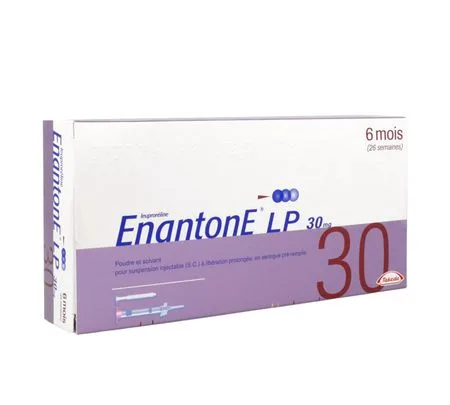
ENANTONE LP 30 mg, powder and solvent for prolonged-release injectable suspension (S.C.) in pre-filled syringe
Forms and presentations
Powder and solvent for prolonged-release injectable suspension (S.C.) in pre-filled syringe.
Composition
For one pre-filled syringe:
Leuprorelin acetate: 30,00 mg
Equivalent to leuprorelin base: 28,58 mg
Excipient with known effect: this medicine contains less than 1 mmol (23 mg) of sodium per dose, that is to say it is essentially « without sodium ».
Powder : polylactic acid, mannitol
Solvent : carmellose sodium, mannitol, polysorbate 80, water for injections
Indications
Treatment of locally advanced and advanced prostate cancer requiring androgen suppression, as a switch from another prolonged-release formulation of the GnRH agonist.
Concomitant and adjuvant treatment to external radiotherapy in locally advanced prostate cancer (stage T3-T4 of the TNM classification or stage C of the AUA classification).
Dosage and administration
Dosage
One subcutaneous injection to be repeated every 6 months (26 weeks).
Method of administration
ENANTONE LP 30 mg must be prepared, reconstituted and administered only by a healthcare professional who has read the instructions relating to the steps of reconstitution and administration.
As with other specialties administered subcutaneously, the injection site must be changed periodically.
Duration of treatment :
The need to continue treatment with ENANTONE LP 30 mg will be evaluated by the treating physician.
In the indication « Concomitant and adjuvant treatment to external radiotherapy in locally advanced prostate cancer (stage T3-T4 of the TNM classification or stage C of the AUA classification) », it is recommended to continue treatment for 3 years.
Testosterone levels must be measured at least every six months during treatment with ENANTONE LP 30 mg.
In patients treated with GnRH analogues for metastatic prostate cancer, treatment is generally maintained in the event of development of castration-resistant prostate cancer. Account should be taken of current recommendations.
Method of administration
This product must be prepared, reconstituted and administered only by healthcare professionals familiar with these procedures.
For instructions on reconstitution and dilution of the product before administration, refer to the section Disposal and handling.
Contraindications
Hypersensitivity to the active substance, to GnRH derivatives, to GnRH analogues or to any of the excipients listed in the section Composition.
Warnings and precautions
Special warnings
Isolated cases of worsening of symptoms (in particular bone pain), often transient, have been observed at the initiation of treatment with GnRH analogues.
Careful monitoring will be performed upon initiation of treatment with leuprorelin and during the first weeks following it:
- in patients with obstruction of the excretory pathways;
- in patients with vertebral metastases (see section Adverse effects) ;
- in subjects presenting signs announcing spinal cord compression.
At the start of treatment, a transient increase in acid phosphatases may be observed.
Depression
There is an increased risk of occurrence of incident depression (which may be severe) in patients treated with GnRH agonists, such as leuprorelin. Patients should be informed accordingly and treated appropriately if symptoms appear.
Cardiovascular and metabolic risk
Epidemiological data have shown that metabolic changes (for example reduced glucose tolerance, hepatic steatosis or worsening of pre-existing diabetes) as well as an increased risk of cardiovascular disease may occur during treatment with androgen deprivation. However, prospective data have not confirmed the link between treatment with GnRH analogues and an increase in cardiovascular mortality. Patients at high risk of cardiovascular or metabolic diseases should be monitored appropriately.
Treatments with androgen deprivation may prolong the QT interval.
In patients with a history or risk factors for QT interval prolongation and in patients receiving concomitant treatment that may prolong the QT interval (see section Interactions), the benefit/risk ratio including the potential risk of torsades de pointes should be evaluated before initiation of treatment with ENANTONE.
Ensure that the suspension is not injected intra-arterially.
Cases of convulsions have been reported in patients treated with leuprorelin after its marketing. These convulsions have been observed both in adults and in children, with or without history, disorders or risk factors related to convulsions.
Idiopathic intracranial hypertension
Cases of idiopathic intracranial hypertension (serous meningitis) have been reported in patients receiving leuprorelin. Patients should be warned of the possibility of signs and symptoms of idiopathic intracranial hypertension, including severe or recurrent headaches, visual disturbances and tinnitus. In the presence of idiopathic intracranial hypertension, discontinuation of treatment with leuprorelin should be considered.
Severe cutaneous adverse reactions
Severe cutaneous adverse reactions (SCAR), including Stevens-Johnson syndrome (SJS), and toxic epidermal necrolysis (TEN, or Lyell syndrome), which may be life-threatening or fatal, have been reported in association with treatment with leuprorelin. At the time of prescription, patients should be informed of the signs and symptoms, and monitored closely in case of severe skin reactions. In case of appearance of signs and symptoms suggestive of these reactions, treatment with leuprorelin should be stopped immediately and another treatment should be considered (where appropriate).
Precautions for use
Testosteronaemia must be checked periodically during treatment, its value not to exceed 1 ng/ml.
An assessment of the response to treatment will be performed periodically by clinical and prostatic examination (digital rectal examination), blood tests (prostate-specific antigen assay or PSA), or even a bone scan.
If a change in colour of the sustained-release microspheres or turbidity in the dilution solvent is observed before suspension, do not use the pre-filled syringe. In men, long-term androgen deprivation by bilateral orchidectomy or by administration of GnRH analogues is associated with an increased risk of bone loss which, in patients with additional risk factors, may lead to osteoporosis and increase the risk of bone fracture (see section Adverse effects).
It is rare to observe abscesses caused by an injection. If such a phenomenon occurs with ENANTONE LP 30 mg, monitor testosteronaemia; indeed, an increase in testosteronaemia may occur, due to inadequate absorption of the leuprorelin contained in the microspheres.
In the event of the appearance of clinical signs of progression despite adequate treatment, it is recommended to monitor the patient regularly during treatment with ENANTONE LP 30 mg by performing appropriate examinations, clinical examination including digital rectal examination, ultrasound, bone scan, and/or computed tomography as well as by biological monitoring of blood levels of phosphatases, PSA and testosteronaemia.
Sodium
This medicine contains less than 1 mmol (23 mg) of sodium per dose, that is to say it is essentially « without sodium ».
Interactions
Treatments with androgen deprivation that may prolong the QT interval, the concomitant use of ENANTONE with medicines known to prolong the QT interval or with medicines inducing torsades de pointes such as class IA antiarrhythmics (for example quinidine, disopyramide) or class III (for example amiodarone, sotalol, dofetilide, ibutilide), methadone, moxifloxacin, antipsychotics, etc... should be evaluated with caution (see section Warnings and precautions).
Fertility, pregnancy and breastfeeding
Not evaluated, this formulation not being indicated in women.
Driving and using machines
The effects of ENANTONE LP 30 mg on the ability to drive vehicles and use machines have not been studied. Fatigue, muscle weakness and sleep disorders being possible adverse effects of the treatment or the consequence of the underlying disease, the ability to drive vehicles and use machines may be impaired.
Adverse effects
They are partly due to the pharmacological activity of the product, namely hormonal deprivation. The frequency of observation of adverse events during clinical trials and post-marketing experience with ENANTONE LP 30 mg are listed below by frequency category. The categories are defined as follows: very common (> 1/10), common (> 1/100, < 1/10), uncommon (> 1/1 000, < 1/100), rare (> 1/10 000, < 1/1 000), very rare (< 1/10 000), undetermined (cannot be estimated from the available data).
|
System organ classes |
Very common |
Common |
Uncommon |
Rare |
Very rare |
Not known |
|
Blood and lymphatic system disorders |
Anemia |
|||||
|
Immune system disorders |
Generalised allergic reactions (fever, pruritus, eosinophilia and cutaneous rash) |
Anaphylactic reaction (urticaria, angioedema, anaphylactic shock) |
||||
|
Metabolism and nutrition disorders |
Loss of appetite |
Modification of glucose metabolism (decrease or increase) |
Glucose intolerance |
|||
|
Psychiatric disorders |
Mood alteration, depression have been frequently observed during long-term treatments |
Mood alteration, depression have been uncommonly observed during short-term treatments |
||||
|
Nervous system disorders |
Headaches |
Malaise, transient taste alterations |
Pituitary apoplexy (after initial administration in patients with pituitary adenoma) |
Convulsions
|
||
|
Eye disorders |
Visual disturbances |
|||||
|
Cardiac disorders |
QT interval prolongation (see sections Warnings and precautions and Interactions) |
|||||
|
Vascular disorders |
Hot flushes |
Modification of blood pressure (hypertension or hypotension) |
||||
|
Gastrointestinal disorders |
Nausea |
Vomiting, diarrhea |
||||
|
Hepatobiliary disorders |
Abnormal liver function |
|||||
|
Skin and subcutaneous tissue disorders |
Dry skin or mucous membranes |
Alopecia |
Stevens-Johnson syndrome (SJS)/toxic epidermal necrolysis (TEN or Lyell syndrome) (see section Warnings and precautions), toxic rash, erythema multiforme |
|||
|
Musculoskeletal and connective tissue disorders |
Bone pain |
Joint pain, muscle weakness |
Myalgia |
|||
|
Reproductive system and breast disorders |
Libido disorders, impotence, reduction in testicular size |
Gynecomastia |
Testicular pain |
|||
|
Renal and urinary disorders |
Nocturia, dysuria |
|||||
|
General disorders and administration site conditions |
Injection site reactions, including erythema, pain, oedema, pruritus. These events generally decrease with continued treatment; isolated cases of abscess have been observed.
|
Fatigue, peripheral oedema, paraesthesia, sleep disorders |
||||
|
Respiratory, thoracic and mediastinal disorders |
Interstitial pneumonitis |
|||||
|
Investigations |
Weight gain |
Elevation of blood levels of LDH, transaminases, gamma-GT and alkaline phosphatases |
Weight loss |
Initiation of treatment (see section Warnings and precautions) :
It is sometimes accompanied by an exacerbation of clinical signs and symptoms (in particular bone pain).
A few cases of worsening of pre-existing hematuria or urinary obstruction, sensations of weakness or paraesthesia of the lower limbs have been reported with GnRH analogues.
These manifestations are usually transient, disappearing in 1 to 2 weeks upon continuation of treatment. Nevertheless, the possibility of a temporary exacerbation of symptoms during the first weeks of treatment must be taken into account in patients threatened by the occurrence of neurological disorders or in those presenting with urinary obstruction.
Alteration of biological parameters
Frequent: cases of elevation of blood levels of LDH, transaminases, gamma-GT and alkaline phosphatases have been noted, possibly related to the underlying disease; decrease in blood hemoglobin level.
Variations in bone density
A decrease in bone density has been reported in the medical literature in men who have undergone orchiectomy or those treated with a GnRH agonist. It is probable that long-term treatment with leuprorelin will reveal signs of worsening osteoporosis, with regard to the increased risk of osteoporotic fracture (see section Warnings and precautions).
Reporting of suspected adverse reactions
Reporting suspected adverse reactions after authorization of the medicinal product is important. It allows continued monitoring of the benefit/risk balance of the medicinal product. Healthcare professionals report any suspected adverse reaction via the national reporting system: Agence nationale de sécurité du médicament et des produits de santé (ANSM) and network of Regional Pharmacovigilance Centres - Website: https://signalement.social-sante.gouv.fr/
Pharmacodynamics
Pharmacotherapeutic group: GONADOTROPIN RELEASING HORMONE ANALOGUE, ATC code: L02AE02.
The active substance of ENANTONE LP 30 mg, leuprorelin, is a synthetic nonapeptide, an analogue of natural GnRH, a hormone that controls the release of the gonadotropic hormones LH (luteinizing hormone) and FSH (follicle-stimulating hormone) by the anterior lobe of the pituitary gland.
Leuprorelin is 80 times more potent than the natural hormone, but it acts in the opposite manner: in chronic use, it blocks the LHRH receptors of the pituitary gland and, after an initial phase of stimulation, it desensitizes these receptors.
This results in a reversible suppression of pituitary gonadotropins, followed by a rapid decrease in blood testosterone levels, thereby stopping the growth of prostate cancer (indeed, the latter is usually stimulated by dihydrotestosterone which is formed from testosterone at the level of prostate cells).
Regular administration of leuprorelin acetate leads to a reduction in the number and/or sensitivity of GnRH receptors in the pituitary gland and therefore to a decrease in LH, FSH and DHT (dihydrotestosterone) levels, thereby reducing the testosterone level below the castration threshold.
The anti-androgenic inhibitory effect of leuprorelin acetate on the growth of prostate cancer has been demonstrated in animals.
Experimental and clinical studies have demonstrated that a 6-month treatment with ENANTONE LP 30 mg leads to inhibition of gonadotropin release after an initial stimulating effect.
Subcutaneous administration of ENANTONE LP 30 mg produces an increase in blood levels of LH and FSH, leading to an initial increase in gonadal steroid levels (testosterone and DHT). Isolated cases of exacerbation of symptoms during the first few weeks of treatment with a GnRH agonist have been reported; concomitant administration of an appropriate anti-androgen may be considered at the start of treatment with leuprorelin.
Continuation of treatment leads to a decrease in LH and FSH levels in all patients, thereby leading to a decrease in androgen levels to levels comparable to those of surgical castration. This usually occurs within 2 to 3 weeks after initiation of treatment with the GnRH agonist and is maintained for as long as the product is administered.
In addition, administration of ENANTONE LP 30 mg makes it possible to verify the hormonal sensitivity of prostate cancer during treatment. It represents an alternative to surgical castration.
To date, it has been demonstrated that leuprorelin can maintain the testosterone level below the castration threshold for 5 years with continuous administration.
The clinical response to treatment with ENANTONE LP 30 mg can be assessed by measuring serum levels of testosterone, acid phosphatase and PSA (Prostate Specific Antigen). In particular, an increase in the testosterone level is generally observed, followed by an exponential decrease then a stabilization phase suggesting suppression of testosterone (level below the castration threshold) which continues throughout the treatment.
Pharmacokinetics
Leuprorelin administered subcutaneously is well absorbed. Leuprorelin acetate, the active substance, is released continuously from the lactic acid polymers for 26 weeks (6 months) after the injection of ENANTONE LP 30 mg. The microspheres, in which the active substance is embedded, are subsequently resorbed.
The first peak plasma concentration is reached 2 hours after the injection. This is followed by a rapid decrease to reach a minimum concentration level. A second peak concentration is observed at the 4th week; the concentrations then decrease slowly to reach a level below 100 pg/ml (observed at the 20th week after the injection).
Preclinical safety
Toxicological evaluation
Acute toxicity studies in mice and rats (males and females) have been conducted with leuprorelin administered by 4 routes (parenteral, intramuscular, subcutaneous and oral). No deaths were observed at doses up to 2 000 mg and 5 000 mg of leuprorelin acetate, respectively.
Repeated administration toxicity
Studies of toxicity with continuous use have been conducted in rats and dogs, receiving injections of leuprorelin acetate:
- for 13 weeks, subcutaneously or intramuscularly, at doses up to 8 mg/kg/week;
- and for 12 months, subcutaneously, at doses up to 32 mg/kg/month.
At all doses tested (at least 0,8 mg/kg/month), lesions at the injection site as well as atrophy of the reproductive organs were observed. In rats, liver cells as well as renal tubular epithelial cells showed vacuoles at all doses. The changes in the reproductive organs are due to the endocrine effect of the active substance.
Carcinogenicity, mutagenicity, effect on fertility
Carcinogenicity
Carcinogenesis studies were conducted in the rat and the mouse over a duration of 2 years. A dose-dependent increase in pituitary adenomas was observed in the rat secondary to daily subcutaneous administration of leuprorelin at doses ranging from 0,6 to 4 mg; whereas no pituitary adenoma was observed in the mouse during daily administrations for 2 years of 60 mg/kg of leuprorelin.
Mutagenicity
In vitro and in vivo studies with leuprorelin acetate have not shown any mutagenic potential in terms of genetic or chromosomal mutations.
INCOMPATIBILITIES
In the absence of compatibility studies, this medicinal product must not be mixed with other medicinal products.
Shelf life
3 years
The stability of the reconstituted suspension has been demonstrated for 24 hours at 25 °C. However from a microbiological point of view, the product must be used immediately.
Special storage precautions
Store at a temperature not exceeding 25 °C.
Store in the original outer packaging, protected from light.
SPECIAL PRECAUTIONS FOR DISPOSAL AND HANDLING
This product must be prepared, reconstituted and administered only by healthcare professionals familiar with these procedures.
Wash hands before opening the syringe packaging.
Hold the syringe in a vertical position (needle turned upwards) throughout the preparation to avoid leaks.
Use the mixture immediately after reconstitution as the suspension forms a deposit very rapidly after reconstitution.
Check the expiry date printed on the syringe label and check the powder and the diluent in the syringe barrel. The powder must be white and dry, the diluent must be clear. Inspect the syringe to verify that it is not damaged.
- Do not use the syringe if the expiry date has been exceeded.
- Do not use the syringe if the powder appears clumped or stuck.
- Do not use the syringe if the powder or the diluent appear discoloured.
- Do not use the syringe if any of its parts is damaged.
Step 1. Screw the plunger to the syringe and attach the needle
- Remove the plunger (part 2) from the packaging.
- Screw the plunger rod to the end of the pre-filled syringe (opposite side to the needle) until the plastic seal starts to rotate in the syringe.
- Do not twist or pull back the plunger rod once it has been attached to the syringe.
- Without removing the needle cap, turn the needle to the right (clockwise) to ensure it is securely attached.
- Do not remove the needle cap before being ready to inject.
Step 2. Release of the diluent
- Holding the syringe vertically, release the diluent by slowly pushing the plunger until the movable seal separating the 2 chambers reaches the blue line in the middle of the syringe. You should see the diluent flow into the inner chamber above the blue line.
- Do not push the plunger too rapidly and do not exceed the blue line in order not to cause leaks.
- Do not withdraw the plunger again.
Step 3. Homogenization of the suspension
- Tap the syringe lightly against the palm of your hand to mix the powder and the diluent for as long as necessary to obtain a homogeneous suspension of white color.
- Note: If particles stick to the stopper during mixing, dislodge them by gently tapping the syringe with your finger.
- Do not shake in order to avoid the formation of bubbles.
- Use immediately after mixing because the suspension forms a deposit very rapidly after reconstitution.
Important: The suspension thus obtained must be homogeneous and of white color (milky) before proceeding to the injection.
Step 4. Remove the needle cap
- Remove the needle cap by pulling it straight upwards.
- Do not twist the needle cap.
- Prime the syringe by pushing the plunger upwards until all the air has been expelled from the syringe.
Step 5. Injection
- The syringe is now ready for injection. Use immediately because the suspension stabilizes very rapidly after reconstitution.
- At the time of injection, check the direction of the safety device (with a round mark pointing towards you) and inject all the contents of the syringe subcutaneously or as you would for a normal injection.
Step 6. Activate the safety system
- When the injection is completed, remove the needle from the patient. Activate the safety device immediately by pushing the protective cap upwards just below the arrow until a “CLICK” is heard or felt and the needle is completely covered.
Step 7. Discard the syringe
- Discard the used device in the appropriate container in accordance with current regulations.
Prescription, supply and reimbursement
| AMM |
|
| Price: |
|
16 PLACE DE L'IRIS
92400 COURBEVOIE
Tel: 01 40 67 33 00 https://www.takeda.com/fr-fr
Source: VIDAL · Updated on 10/11/2026. This information does not replace advice from a healthcare professional.