
Medicines
RCP du 30/04/2026
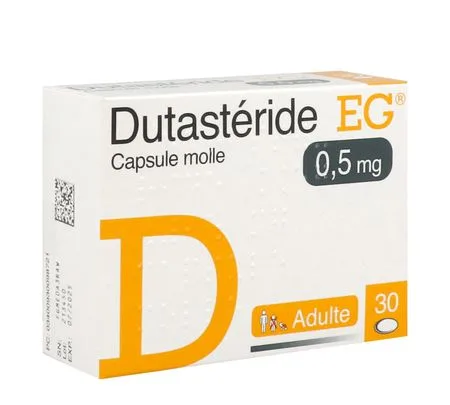
DUTASTERIDE EG 0,5 mg, soft capsule
Forms and presentations
Soft capsule.
Opaque, yellow, oblong soft gelatin capsule filled with an oily, yellowish liquid, without marking.
The dimensions of the soft capsule are: 19 ± 0.8 mm x 6.9 ± 0.4 mm.
Composition
Dutasteride ...................................................................................................................................................0,5 mg
Excipient(s) with known effect: lecithin (which may contain soya oil).
Capsule contents:
Butylated hydroxytoluene (E321), glycerol monocaprylocaprate (type I).
Capsule shell:
Gelatin, glycerol, titanium dioxide (E171), yellow iron oxide (E172), medium-chain triglycerides, lecithin (may contain soya oil) (E-322), purified water.
Indications
Treatment of moderate to severe symptoms of benign prostatic hyperplasia (BPH).
Reduction of the risk of acute urinary retention (AUR) and of surgery in patients with moderate to severe symptoms of BPH.
For information on the effects of treatment and the populations studied in clinical trials, see section Pharmacodynamics.
Dosage and administration
Dosage
DUTASTERIDE EG may be administered alone or in combination with the alpha-blocker tamsulosin (0,4 mg), (see sections Warnings and precautions, Adverse effects and Pharmacodynamics).
Adults (including elderly patients)
The recommended dose of DUTASTERIDE EG is one capsule (0,5 mg) once daily by oral route.
Although rapid improvement may be observed, a treatment of at least 6 months may be necessary to achieve an optimal response.
No dose adjustment is necessary in elderly patients.
Special populations
Renal impairment
The pharmacokinetics of dutasteride have not been studied in patients with renal impairment. However, no dose adjustment is required in patients with renal impairment (see section Pharmacokinetics).
Hepatic impairment
The pharmacokinetics of dutasteride have not been studied in patients with hepatic impairment; therefore caution should be exercised in patients with mild to moderate hepatic impairment (see sections Warnings and precautions and Pharmacokinetics).
In patients with severe hepatic impairment, the use of dutasteride is contraindicated (see section Contraindications).
Method of administration
Capsules must be swallowed whole and must not be chewed or opened, as contact with the capsule contents may cause irritation of the oropharyngeal mucosa. Capsules may be taken with or without meals.
Contraindications
DUTASTERIDE EG is contraindicated in:
• women, children and adolescents (see section Fertility, pregnancy and breastfeeding) ;
• patients hypersensitive to the active substance, to other 5-alpha-reductase inhibitors, to soy, to peanut or to any of the excipients mentioned in section Composition ;
• patients with severe hepatic impairment.
Warnings and precautions
A therapeutic combination must be prescribed after careful evaluation of the benefit-risk ratio due to a possible increase in adverse effects (including heart failure), and this after considering other alternatives, including monotherapies (see section Dosage and administration).
Heart failure
In two clinical studies lasting 4 years, the incidence of heart failure (a composite term of reported events, essentially heart failure and congestive heart failure) was higher in subjects taking the combination of dutasteride and an alpha-blocker, mainly tamsulosin, compared with subjects not taking the combination. In these 2 studies, the incidence of heart failure was low (≤ 1%) and varied between studies (see section Pharmacodynamics).
Effects on prostate-specific antigen (PSA) and detection of prostate cancer
A digital rectal examination as well as other examinations for prostate cancer screening must be performed in patients before starting any treatment with DUTASTERIDE EG and periodically thereafter.
Serum Prostate-Specific Antigen (PSA) levels are an important test in prostate cancer screening. After 6 months of treatment, dutasteride causes a decrease in mean serum PSA levels of approximately 50%.
A new baseline PSA measurement must be performed after 6 months of treatment in patients receiving DUTASTERIDE EG. It is subsequently recommended to regularly monitor PSA values. During treatment with DUTASTERIDE EG, any confirmed increase in PSA level relative to its lowest value may indicate the presence of prostate cancer (particularly high-grade cancer) or may be due to non-compliance with DUTASTERIDE EG treatment.
This increase must be interpreted carefully, even if these values remain within the normal range for men not taking a 5 α-reductase inhibitor (see section Pharmacodynamics).
In a patient receiving DUTASTERIDE EG, to interpret a PSA value, previous PSA values must be looked up in order to make a comparison.
Treatment with DUTASTERIDE EG does not interfere with the use of PSA as an aid in the diagnosis of prostate cancer once a new baseline value has been established (see section Pharmacodynamics)
Serum total PSA levels return to their baseline level within 6 months after discontinuation of treatment. The free PSA to total PSA ratio remains constant even during treatment with dutasteride. If the clinician chooses to use the percentage of free PSA as a prostate cancer screening tool in men treated with DUTASTERIDE EG, no adjustment of this value appears necessary.
Prostate cancer and high-grade tumors
In men at increased risk of prostate cancer, the results of a clinical study (REDUCE Study) showed a higher incidence of prostate cancers with a Gleason score of 8 to 10 in men treated with dutasteride compared with those taking a placebo. The relationship between dutasteride and high-grade prostate cancer is not clearly established.
Men treated with DUTASTERIDE EG must undergo regular assessment of their prostate cancer risk, including a PSA test (see section Pharmacodynamics).
Damaged capsules
As dutasteride is absorbed through the skin, women, children and adolescents must avoid any contact with damaged capsules (see section Fertility, pregnancy and breastfeeding). In case of contact with damaged capsules, the area of contact must be immediately washed with water and soap.
Hepatic impairment
Dutasteride has not been studied in patients with liver disorders. Caution is necessary when administering dutasteride to a patient with mild to moderate hepatic impairment (see sections Dosage and administration, Contraindications and Pharmacokinetics).
Breast cancer
Cases of breast cancer have been reported in men treated with dutasteride in clinical trials (see section Pharmacodynamics) and since its marketing. Physicians should ask their patients to promptly report any change in breast tissue such as the appearance of a lump or the occurrence of discharge from the nipple. To date, the relationship between the occurrence of breast cancer in men and long-term use of dutasteride is not clearly established.
Changes in mood and depression
Changes in mood, including depressed mood, depression and, less frequently, suicidal ideation, have been reported in patients treated with another oral inhibitor of 5-alpha reductase. Patients should be advised to consult a healthcare professional if any of these symptoms occur.
This medicine contains lecithin (which may contain soybean oil). If you are allergic to soy or peanut, do not use this medicine (see section Contraindications).
Interactions
For information regarding the decrease in serum PSA levels during treatment with dutasteride and advice regarding the detection of prostate cancer (see section Warnings and precautions).
Effects of other medicines on the pharmacokinetics of dutasteride
Use with CYP3A4 and/or P-glycoprotein inhibitors
Dutasteride is mainly eliminated by metabolism. In vitro studies indicate that this metabolism is catalyzed by CYP3A4 and CYP3A5. No interaction study has been performed with potent CYP3A4 inhibitors. However, in a population pharmacokinetic study, serum concentrations of dutasteride were on average 1,6 to 1,8 times higher in a small number of patients concomitantly treated with verapamil or diltiazem, respectively (moderate CYP3A4 inhibitors and P-glycoprotein inhibitors), than in other patients.
Long-term combination of dutasteride with potent inhibitors of the enzyme CYP3A4 (for example ritonavir, indinavir, nefazodone, itraconazole, oral ketoconazole) may increase serum concentrations of dutasteride.
Greater inhibition of 5-alpha-reductase following increased exposure to dutasteride is unlikely.
However, a reduction in the frequency of dutasteride administration may be considered if adverse reactions occur. It should be noted that in cases of enzyme inhibition, the long half-life may be further increased, and more than 6 months of concomitant treatment may be needed to reach a new steady state.
Administration of 12 g of cholestyramine 1 hour after a single dose of 5 mg of dutasteride did not alter the pharmacokinetics of dutasteride.
Effects of dutasteride on the pharmacokinetics of other medicines
Dutasteride has no effect on the pharmacokinetics of warfarin or digoxin. This indicates that dutasteride does not inhibit / induce CYP2C9 or P-glycoprotein. In vitro interaction studies show that dutasteride does not inhibit the enzymes CYP1A2, CYP2D6, CYP2C9, CYP2C19 or CYP3A4.
In a small study (n=24) lasting 2 weeks, in healthy men, dutasteride (0,5 mg/day) had no effect on the pharmacokinetics of tamsulosin or terazosin. There was also no sign indicating a pharmacodynamic interaction in this study.
Fertility, pregnancy and breastfeeding
DUTASTERIDE EG is contraindicated in women.
Fertility
Dutasteride may alter semen characteristics (reduction in sperm count, ejaculate volume and sperm motility) in healthy men (see section Pharmacodynamics). A possible decrease in male fertility cannot be excluded.
Pregnancy
As with other 5-alpha reductase inhibitors, dutasteride inhibits the conversion of testosterone to dihydrotestosterone, and may, if administered to a pregnant woman carrying a male fetus, inhibit the development of the external genital organs of that fetus (see section Warnings and precautions).
Small quantities of dutasteride have been found in the semen of subjects receiving a dose of 0,5 mg per day of dutasteride.
It is not known whether a male fetus is affected when its mother is exposed to dutasteride contained in the semen of a treated patient (the risk being greater during the first 16 weeks of pregnancy).
As with all 5-alpha reductase inhibitors, it is recommended that the patient use a condom if his partner is, or may potentially be, pregnant.
For information on preclinical data, see section Preclinical safety.
Breast-feeding
The passage of dutasteride into breast milk is not known.
Driving and using machines
Given the pharmacodynamic properties of dutasteride, treatment with dutasteride has no effect on the ability to drive vehicles and use machines.
Adverse effects
DUTASTERIDE EG AS MONOTHERAPY
Approximately 19% of the 2167 patients who received dutasteride in the placebo-controlled phase III trials over 2 years developed adverse effects during the first year of treatment. The majority of effects were mild to moderate and concerned the reproductive system. No change in the tolerability profile appeared during the open-label extension over a further 2 years of the clinical studies. The following table describes the adverse effects reported in the controlled clinical trials and after marketing.
The listed adverse effects reported during the clinical trials were judged by investigators as being related to treatment (with an incidence greater than or equal to 1%), with a higher incidence in patients treated with dutasteride than in patients on placebo during the first year of treatment. The incidence of adverse effects reported after marketing is not known because it corresponds to an estimated rate from spontaneous reports rather than an actual incidence.
Very common (≥ 1/10); Common (≥ 1/100 and < 1/10); Uncommon (≥ 1/1 000 and < 1/100); Rare (≥ 1/10 000 and < 1/1 000); Very rare (< 1/10 000); Not known (cannot be estimated from the available data).
|
System organ |
Adverse reaction |
Incidence of the adverse effect reported during the clinical trials |
|
|
|
Incidence during the first year of treatment (n= 2167) |
Incidence during the second year of treatment (n= 1744) |
|
|
Disorders of the reproductive system and breast |
Impotence* |
6,0 % |
1,7% |
|
Change (decrease) in libido* |
3,7 % |
0,6% |
|
|
Ejaculation disorders* |
1,8 % |
0,5% |
|
|
Breast disorders† |
1,3 % |
1,3% |
|
|
|
|
Incidence of adverse reaction reported after marketing |
|
|
Immune system disorders |
Allergic reactions including rash, pruritus, urticaria, localised oedema and angio-oedema |
Not known |
|
|
Psychiatric disorders |
Depressed mood |
Not known |
|
|
Skin and subcutaneous tissue disorders |
Alopecia (mainly hair loss), hypertrichosis |
Uncommon |
|
|
Disorders of the reproductive system and breast |
Testicular pain and swelling |
Not known |
|
* These sexual adverse events are associated with dutasteride treatment (including monotherapy and in combination with tamsulosin). These adverse events may persist after treatment discontinuation. The role of dutasteride in this persistence is unknown.
† including breast tenderness and breast enlargement.
DUTASTERIDE EG IN COMBINATION WITH THE ALPHA-BLOCKER TAMSULOSIN
Data from the CombAT study over 4 years, comparing dutasteride 0,5 mg alone (n=1 623), tamsulosin 0,4 mg alone (n=1 611) administered once daily and in combination (n=1610), showed that the incidence of treatment-related adverse events, according to the investigator, during the first, second, third and fourth year of treatment was 22 %, 6 %, 4 % and 2 % respectively for the dutasteride/tamsulosin combination, 15 %, 6 %, 3 % and 2 % respectively for dutasteride monotherapy, and 13 %, 5 %, 2 % and 2 % respectively for tamsulosin monotherapy. The higher incidence of adverse events in the combination group during the first year of treatment was due to a higher incidence of reproductive organ disorders, more particularly ejaculation disorders.
The following treatment-related adverse events (according to the investigator) were reported with an incidence greater than or equal to 1 % during the first year of treatment in the CombAT study. The incidence of adverse events over the four years of treatment is presented in the table below:
|
System organ class |
Adverse reaction |
Incidence during the treatment period |
|||
|
Year 1 |
Year 2 |
Year 3 |
Year 4 |
||
|
Combinationa (n) |
(n=1610) |
(n=1428) |
(n=1283) |
(n=1200) |
|
|
Dutasteride |
(n=1623) |
(n=1464) |
(n=1325) |
(n=1200) |
|
|
Tamsulosin |
(n=1611) |
(n=1468) |
(n=1281) |
(n=1112) |
|
|
Nervous system disorders |
Dizziness sensations |
|
|
|
|
|
Combinationa |
1,4% |
0,1% |
<0,1% |
0,2% |
|
|
Dutasteride |
0,7% |
0,1% |
<0,1% |
<0,1% |
|
|
Tamsulosin |
1,3% |
0,4% |
<0,1% |
0% |
|
|
Cardiac disorders |
Heart failure (composite termb) |
|
|
|
|
|
Combinationa |
0,2% |
0,4% |
0,2% |
0,2% |
|
|
Dutasteride |
<0,1% |
0,1% |
<0,1% |
0% |
|
|
Tamsulosin |
0,1% |
<0,1% |
0,4% |
0,2% |
|
|
Disorders of the reproductive organs and breast,
Investigations |
Impotencec |
|
|
|
|
|
Combinationa |
6,3% |
1,8% |
0,9% |
0,4% |
|
|
Dutasteride |
5,1% |
1,6% |
0,6% |
0,3% |
|
|
Tamsulosin |
3,3% |
1,0% |
0,6% |
1,1% |
|
|
Decreased libidoc |
|
|
|
|
|
|
Combinationa |
5,3% |
0,8% |
0,2% |
0% |
|
|
Dutasteride |
3,8% |
1,0% |
0,2% |
0% |
|
|
Tamsulosin |
2,5% |
0,7% |
0,2% |
<0,1% |
|
|
Ejaculation disordersc |
|
|
|
|
|
|
Combinationa |
9,0% |
1,0% |
0,5% |
<0,1% |
|
|
Dutasteride |
1,5% |
0,5% |
0,2% |
0,3% |
|
|
Tamsulosin |
2,7% |
0,5% |
0,2% |
0,3% |
|
|
Breast disordersd |
|
|
|
|
|
|
Combinationa |
2,1% |
0,8% |
0,9% |
0,6% |
|
|
Dutasteride |
1,7% |
1,2% |
0,5% |
0,7% |
|
|
Tamsulosin |
0,8% |
0,4% |
0,2% |
0% |
|
a Combination = dutasteride 0,5 mg once daily and tamsulosin 0,4 mg once daily.
b The composite term of heart failure includes congestive heart failure, cardiac failure, left ventricular failure, acute cardiac failure, cardiogenic shock, acute left ventricular failure, right ventricular failure, acute right ventricular failure, ventricular failure, cardiorespiratory failure and congestive cardiomyopathy.
c These sexual adverse events are associated with treatment with dutasteride (including monotherapy and combination with tamsulosin). These adverse events may persist after discontinuation of treatment. The role of dutasteride in this persistence is unknown.
d Including breast tenderness and breast enlargement.
OTHER DATA
A higher incidence of prostate cancers with a Gleason score of 8 to 10 was observed in the REDUCE study in men treated with dutasteride compared to those on placebo (see sections Warnings and precautions and Pharmacodynamics).
It has not been established whether the effect of dutasteride on reducing prostate volume, or whether study-related factors, had an impact on the results of this study.
The following effect has been reported in clinical trials and post-marketing: breast cancer in men (see section Warnings and precautions).
Reporting of suspected adverse reactions
Reporting suspected adverse reactions after authorisation of the medicinal product is important. It allows continued monitoring of the benefit/risk balance of the medicinal product. Healthcare professionals are asked to report any suspected adverse reaction via the national reporting system: National Agency for the Safety of Medicines and Health Products (ANSM) and the network of Regional Centres of Pharmacovigilance - Website: https://signalement.social-sante.gouv.fr.
Overdose
In studies with dutasteride conducted in healthy volunteers, single daily doses of dutasteride up to 40 mg/day (80 times the therapeutic dose) were administered for 7 days without significant tolerability problems. In clinical studies, daily doses of 5 mg were administered to subjects for 6 months without other adverse effects than those observed at the therapeutic doses of 0,5 mg.
There is no specific antidote for dutasteride; therefore, in case of suspected overdose, appropriate symptomatic and supportive treatment should be administered.
Pharmacodynamics
Pharmacotherapeutic class: 5ALPHA TESTOSTERONE REDUCTASE INHIBITORS, ATC code: G04CB02
Dutasteride decreases circulating levels of dihydrotestosterone (DHT) by inhibiting the 1 and 2 isoenzymes of 5-alpha-reductase, which are responsible for the conversion of testosterone to DHT.
DUTASTERIDE EG AS MONOTHERAPY
Effects on DHT/Testosterone
The effect of daily dutasteride intake on the reduction of DHT is dose-dependent; it is observed at 1 and 2 weeks (85% and 90% reduction, respectively).
In patients with BPH treated with dutasteride at 0,5 mg/day, the median reduction in serum DHT concentrations is 94% at 1 year and 93% at 2 years, and the median increase in serum testosterone concentrations is 19% at 1 and 2 years.
Effects on prostate volume
A significant reduction in prostate volume was detected as early as 1 month after initiation of treatment, and this reduction continued through the 24th month (p<0,001). Dutasteride resulted in a mean reduction in total prostate volume of 23,6% at the 12th month (from a baseline value of 54,9 ml to 42,1 ml), compared with a mean reduction of 0,5% in the placebo group (from 54,0 ml to 53,7 ml).
Significant reductions (p<0,001) in transition zone prostate volume occurred from the first month through the 24th month, with a mean reduction in transition zone prostate volume of 17,8% in the dutasteride group (from a baseline of 26,8 ml to 21,4 ml), compared with a mean increase of 7,9% in the placebo group (from 26,8 ml to 27,5 ml) at the 12th month. The reduction in prostate volume observed during the first 2 years of double-blind treatment was maintained during the open-label extension of the studies for an additional 2 years. The reduction in prostate volume is accompanied by improvement in symptoms and a reduced risk of acute urinary retention and BPH-related surgery.
Clinical efficacy and safety
Treatment with dutasteride 0,5 mg/day or placebo was evaluated in 4325 male subjects with moderate to severe BPH symptoms who had prostates ≥ 30 ml and serum PSA levels between 1,5 and 10 ng/ml, in 3 main international multicentre efficacy studies conducted over 2 years, double-blind and placebo-controlled. The studies were continued open-label for up to 4 years, and all patients were switched to dutasteride at the same dose of 0,5 mg. Thirty-seven percent of patients initially randomised to the placebo group, and 40% of patients randomised to the dutasteride group remained in the study at 4 years. The majority (71%) of the 2 340 patients in the open-label extension continued treatment for an additional 2 years.
The most important clinical parameters were the AUA-SI (American Urological Association Symptom Index) questionnaire, maximum urinary flow rate (Qmax), and the incidence of acute urinary retention and BPH-related surgery.
The AUA-SI is a seven-item questionnaire on BPH-related symptoms with a maximum score of 35.
At the start of the studies, patients had a mean score of approximately 17. After 6 months, 1 and 2 years of treatment, the placebo group had a mean improvement of 2,5, 2,5 and 2,3 points, respectively, whereas the dutasteride group had an improvement of 3,2, 3,8 and 4,5 points, respectively. The differences between groups were statistically significant. The improvement in AUA-SI observed during the first 2 years of double-blind treatment was maintained during the open-label extension of the studies for an additional 2 years.
Qmax (maximum urinary flow rate)
The mean baseline Qmax in the studies was approximately 10 ml/sec (normal Qmax ≥ 15 ml/sec). After 1 and 2 years of treatment, urinary flow in the placebo group had increased by 0,8 ml/sec and 0,9 ml/sec, respectively, and by 1,7 ml/sec and 2,0 ml/sec, respectively, in the dutasteride group. The difference was statistically significant between the two groups from the 2st to the 1th month, through the 24th month. The increase in maximum urinary flow rate observed during the first 2 years of double-blind treatment was maintained during the open-label extension of the studies for an additional 2 years.
Acute urinary retention and surgical intervention
After 2 years of treatment, the incidence of acute urinary retention was 4,2% in the placebo group and 1,8% in the dutasteride group (risk reduction of 57%). This difference is statistically significant and means that 42 patients (95% CI [30 - 73]) need to be treated for 2 years to prevent one case of acute urinary retention.
The incidence of BPH-related surgery after 2 years of treatment was 4,1% in the placebo group and 2,2% in the dutasteride group (risk reduction of 48%). This difference is statistically significant and means that 51 patients (95% CI [33 - 109]) need to be treated for 2 years to prevent one surgical intervention.
Hair distribution
The effect of dutasteride on hair distribution was not formally studied during the phase III study program. However, 5-alpha reductase inhibitors may reduce hair loss and may induce hair regrowth in subjects with male-pattern alopecia (androgenetic alopecia).
Thyroid function
Thyroid function was evaluated in a one-year study in healthy volunteers. Free thyroxine levels remained stable under dutasteride treatment, but TSH levels increased slightly (by 0,4 mIU/ml) compared with placebo at the end of the one-year treatment. However, as TSH levels were variable, median TSH deviations (1,4 - 1,9 mIU/ml) remained within the normal range (0,5 - 5/6 mIU/ml), free thyroxine levels remained stable within the normal range and were similar for placebo and dutasteride; the TSH changes were not considered clinically significant. In all clinical studies, no impairment of thyroid function by dutasteride was demonstrated.
Breast cancer
During the clinical trials lasting 2 years, representing an exposure of 3374 patient-years, as well as in the 2-year open-label extension phase, there were 2 cases of breast cancer in patients treated with dutasteride and 1 case in a patient who received placebo. In the clinical trials lasting 4 years, CombAT and REDUCE, for which total exposure was 17489 patient-years to dutasteride and 5027 patient-years for the dutasteride and tamsulosin combination, no cases of breast cancer were reported in any treatment group.
To date, a relationship between the occurrence of breast cancer in men and long-term use of dutasteride has not been clearly established.
Effects on male fertility
The effects of dutasteride at a dose of 0,5 mg/day on semen characteristics were evaluated in healthy volunteers aged 18 to 52 years (n = 27 on dutasteride, n = 23 on placebo) during 52 weeks of treatment and 24 weeks of follow-up after treatment discontinuation.
At week 52, the mean percentage reductions from baseline in total sperm count, ejaculate volume and sperm motility were 23%, 26% and 18% respectively in the dutasteride group compared with the placebo group. Sperm concentration and morphology were unchanged.
After 24 weeks of follow-up, a mean decrease in total sperm count of 23% from baseline persisted in the dutasteride group.
While the mean values of all semen parameters studied remained within normal values at all times and did not reach the predefined criteria for a clinically significant change (30%); 2 subjects on dutasteride showed at week 52 a decrease in sperm count greater than 90% from baseline, with partial recovery at week 24 of follow-up.
The possibility of a decrease in male fertility cannot be excluded.
DUTASTERIDE IN COMBINATION WITH THE ALPHA-BLOCKER TAMSULOSIN
Treatment with dutasteride 0,5 mg/day (n=1 623), tamsulosin 0,4 mg/day (n=1 611) or the combination of dutasteride 0,5 mg and tamsulosin 0,4 mg (n=1 610) was evaluated in men with moderate to severe BPH symptoms, with a prostate volume ≥ 30 ml and a PSA level between 1,5 and 10 ng/ml in a multicentre, international, randomised, double-blind, parallel-group study (the CombAT study). Approximately 53% of subjects had previously been treated with a 5-alpha reductase inhibitor or an alpha-blocker. The primary efficacy endpoint during the first two years of treatment was the change in the International Prostate Symptom Score (IPSS). The IPSS is a score based on 8 items from the AUA-SI questionnaire with an additional question on quality of life. Secondary efficacy endpoints during the first two years of treatment included maximum urinary flow rate (Qmax) and prostate volume.
The IPSS score was significant at the third month with the combination compared with dutasteride alone, and at month 9 compared with tamsulosin.
From month 6 onwards, the Qmax value was significant with the combination compared with dutasteride and tamsulosin.
The primary efficacy endpoint at 4 years of treatment was the time to occurrence of a first episode of acute urinary retention (AUR) or BPH-related surgery. After 4 years of treatment, the combination significantly reduced the risk of AUR or BPH-related surgery (65,8% risk reduction p<0,001; CI 95% [54,7% - 74,1%]) compared with tamsulosin monotherapy.
At 4 years, the incidence of AUR or BPH-related surgery was 4,2% for the combination and 11,9% for tamsulosin (p<0,001). The combination reduced the risk of AUR or BPH-related surgery by 19,6% (p=0,18; CI 95% [-10,9% - 41,7%]) compared with dutasteride monotherapy. The incidence of AUR or BPH-related surgery at 4 years was 4,2% for the combination and 5,2% for dutasteride.
The secondary efficacy endpoints after 4 years of treatment included time to clinical progression (composite criterion including: deterioration of IPSS ≥ 4 points, occurrence of BPH-related AUR, incontinence, urinary tract infection, and renal failure), change in the International Prostate Symptom Score (IPSS), maximum urinary flow rate (Qmax) and prostate volume.
The four-year treatment results are presented below:
|
Parameters |
Time of assessment |
Combination |
Dutasteride |
Tamsulosin |
|
|
AUR or BPH-related surgery (%) |
Incidence at 48 months |
4,2 |
5,2 |
11,9a |
|
|
Clinical progression* (%) |
At 48 months |
12,6 |
17,8b |
21,5a |
|
|
IPSS (units) |
[Baseline] 48 months (change from baseline) |
[16,6] -6,3 |
[16,4] -5,3b |
[16,4] -3,8a |
|
|
|
|||||
|
Qmax (ml/sec) |
[Baseline] 48 months (change from baseline) |
[10,9] 2,4 |
[10,6] 2,0 |
[10,7] 0,7a |
|
|
|
|||||
|
Prostate volume (ml) |
[Baseline] 48 months (% change from baseline) |
[54,7] -27,3 |
[54,6] -28,0 |
[55,8] +4,6a |
|
|
|
|||||
|
Prostatic transition zone volume (ml)# |
[Baseline] 48 months (% change from baseline) |
[27,7] -17,9 |
[30,3] -26,5 |
[30,5] 18,2a |
|
|
|
|||||
|
BPH Impact Index (BII) (units) |
[Baseline] 48 months (change from baseline) |
[5,3] -2,2 |
[5,3] -1,8b |
[5,3] -1,2a |
|
|
|
|||||
|
IPSS question 8: quality of life in BPH (units) |
[Baseline] 48 months (change from baseline) |
[3,6] -1,5 |
[3,6] -1,3b |
[3,6] -1,1a |
|
|
|
The values for the reference levels are mean values, and the changes from the reference level are changes adjusted for the mean.
* Clinical progression was defined as a composite criterion including: deterioration of IPSS ≥ 4 points, occurrence of AUR related to BPH, incontinence, urinary tract infection, and renal failure.
# Measured at selected sites (13 % of randomised patients)
a. Significance of the association (p<0,001) vs tamsulosin at 48 months
b. Significance of the association (p<0,001) vs dutasteride at 48 months
Heart failure
In one study (CombAT study), lasting 4 years, conducted in BPH with dutasteride in combination with tamsulosin in 4844 men, the incidence of the composite criterion "heart failure" in the group treated with the combination (14/1610, 0,9 %) was higher than in the groups receiving dutasteride (4/1623, 0,2 %) or tamsulosin (10 / 1611, 0,6 %) as monotherapy.
In another study (REDUCE study), lasting 4 years, conducted in 8231 men aged 50 to 75 years, with a prior negative prostate biopsy for prostate cancer and a baseline PSA value between 2,5 ng/ml and 10,0 ng/ml in men aged 50 to 60 years, or between 3 ng/ml and 10,0 ng/ml in men older than 60 years, the results showed a higher incidence of the composite criterion "heart failure" in subjects taking 0,5 mg of dutasteride per day (30 / 4105, 0,7 %) than in subjects taking a placebo (16 / 4126, 0,4 %).
A post hoc analysis of this study showed a higher incidence of the composite criterion "heart failure" in subjects receiving dutasteride in combination with an alpha blocker (12 / 1152, 1,0 %) than in subjects receiving dutasteride (18 / 2953, 0,6 %), or an alpha-blocker (1 / 1399, <0,1 %), or a placebo (15 / 2727, 0,6 %) as monotherapy (see section Warnings and precautions).
Prostate cancer and high-grade tumors
After 4 years of treatment, a comparison of dutasteride to a placebo in 8231 men aged 50 to 75 years, with a prior negative prostate biopsy for prostate cancer and a baseline PSA value between 2,5 ng/ml and 10,0 ng/ml in men aged 50 to 60 years, or between 3 ng/ml and 10,0 ng/ml in men older than 60 years (the REDUCE study) was carried out. 6 706 subjects had data available from a prostate needle biopsy (mainly planned by the protocol) to determine Gleason scores. In the study, a diagnosis of prostate cancer was made in 1517 subjects. The majority of prostate cancers detectable by biopsy in the 2 treatment groups were considered low grade (Gleason 5 and 6, 70 %).
A higher incidence of prostate cancers with a Gleason score of 8 to 10 was observed in the dutasteride group (n=29, 0,9 %) compared with the placebo group (n=19, 0,6 %) (p=0,15).
After one year and two years of treatment, the number of subjects with cancers with a Gleason score of 8 to 10 was identical in the dutasteride group (n=17, 0,5 %) and the placebo group (n=18, 0,5 %). After three and four years of treatment, the number of subjects with diagnosed cancers with a Gleason score of 8 to 10 was higher in the dutasteride group (n=12, 0,5 %) than in the placebo group (n=1, <0,1 %) (p=0,0035). In men at risk of prostate cancer, no data are available on the effect of dutasteride beyond 4 years of treatment.
The percentage of subjects diagnosed with cancers with a Gleason score of 8 to 10 was consistent across the different study periods (years 1-2 and years 3-4) in the dutasteride group (0,5 % in each period). In the placebo group, the percentage of subjects with Gleason 8 to 10 cancer was lower at 3 and 4 years than after one and two years of treatment (<0,1 % versus 0,5 %, respectively) (see section Warnings and precautions). There was no difference in the incidence of cancers with a Gleason score of 7 to 10 (p=0,81).
In a 4-year study conducted in BPH (the CombAT study), without a biopsy initially planned by the protocol and where all prostate cancer diagnoses were established on "for cause" biopsies, the rates of cancers with a Gleason score of 8 to 10 were 0,5 % (n=8) with dutasteride, 0,7 % (n=11) with tamsulosin, and 0,3 % (n=5) with the combination.
The relationship between dutasteride and high-grade prostate cancer is not clearly established.
Pharmacokinetics
Absorption
After oral administration of a single dose of 0,5 mg of dutasteride, the maximum serum concentration is reached in 1 to 3 hours. Absolute bioavailability is of the order of 60 %. The bioavailability of dutasteride is not affected by food intake.
Distribution
Dutasteride has a large volume of distribution (300 to 500 L), and it is highly bound to plasma proteins (>99,5 %). Following daily intake, serum concentrations of dutasteride reach 65 % of the steady-state concentration in 1 month and approximately 90 % in 3 months.
Steady-state serum concentrations (Css), of the order of 40 ng/ml, are reached after 6 months of treatment at 0,5 mg once daily. The transfer of dutasteride from serum to semen averages 11,5 %.
Elimination
Dutasteride is extensively metabolised in vivo. In vitro, dutasteride is metabolised by cytochromes P450 3A4 and 3A5 into three monohydroxylated metabolites and one dihydroxylated metabolite.
Following oral administration of 0,5 mg of dutasteride per day up to steady state, 1,0 % to 15,4 % (mean of 5,4 %) of the administered dose is excreted unchanged in the faeces. The remainder is excreted in the faeces as four major metabolites, each representing 39 %, 21 %, 7 % and 7 % of the administered dose, and six minor metabolites (less than 5 % each). Dutasteride is only found in trace amounts (less than 0,1 % of the administered dose) in the urine.
Elimination of dutasteride is dose-dependent, and the process appears to follow two parallel elimination pathways, a saturable pathway at clinical concentrations and a non-saturable pathway.
At low serum concentrations (less than 3 ng/ml), dutasteride is eliminated rapidly by the two parallel elimination pathways, concentration-dependent and concentration-independent. Single doses of 5 mg or less showed rapid clearance and a short elimination half-life of 3 to 9 days.
At therapeutic concentrations following repeated administration of 0,5 mg per day, the slow, linear elimination pathway predominates and the elimination half-life is approximately 3 to 5 weeks.
Elderly subject
The pharmacokinetics of dutasteride were evaluated in 36 healthy male subjects aged 24 to 87 years after administration of a single dose of 5 mg of dutasteride. No significant influence of age was observed on systemic exposure to dutasteride, but the elimination half-life was shorter in men under 50 years. The elimination half-life was not significantly different between the 50-69 years group and the group over 70 years.
Renal impairment
The pharmacokinetics of dutasteride have not been studied in patients with renal impairment. However, less than 0,1 % of a dose of 0,5 mg of dutasteride at steady state is recovered in urine, so no clinically significant increase in plasma concentrations of dutasteride is expected in patients with renal impairment (see section Dosage and administration).
Hepatic impairment
The pharmacokinetics of dutasteride have not been studied in patients with hepatic impairment. As dutasteride is mainly eliminated by metabolism, an increase in plasma concentrations of dutasteride and a prolongation of the half-life are expected in patients with hepatic impairment (see sections Dosage and administration and Warnings and precautions).
Preclinical safety
Current studies of general toxicity, genotoxicity and carcinogenicity have shown no particular risk in humans.
Reproductive toxicity studies in male rats showed a decrease in prostate and seminal vesicle weight, as well as a decrease in secretion of the accessory genital glands and a decline in fertility indices (related to the pharmacological effect of dutasteride). The clinical significance of these results is not known.
As with other 5-alpha reductase inhibitors, feminisation of male fetuses in rats and rabbits was observed when dutasteride was administered during gestation.
Dutasteride was found in the blood of female rats after mating with treated males.
When dutasteride was administered to primates during gestation, no feminisation of male fetuses was observed at systemic exposure levels sufficiently higher than those that could be reached via human semen. It is unlikely that a male fetus could be affected by transfer of dutasteride in semen.
Special storage precautions
To be stored at a temperature not exceeding 30°C.
Store in the original packaging, protected from moisture.
SPECIAL PRECAUTIONS FOR DISPOSAL AND OTHER HANDLING
As dutasteride is absorbed through the skin, any contact with damaged capsules must be avoided. In case of contact with damaged capsules, the area of contact must be immediately washed with water and soap (see section Warnings and precautions).
Any unused medicinal product or waste material should be disposed of in accordance with local requirements.
Prescription, supply and reimbursement
| Marketing authorisation (AMM) |
|
| Price: |
|
- Benign prostatic hyperplasia, symptomatic treatment of 2 intention (of)
- Reduction of the risk of AUR in case of moderate to severe symptoms of BPH, treatment of 2 intention
- Reduction of the risk of surgery in case of moderate to severe symptoms of BPH, treatment of 2 intention
Collection.
CENTRAL PARK 9-15 RUE MAURICE MALLET
92130 ISSY-LES-MOULINEAUX
Tel: 01 46 94 86 86 contact@eglabo.fr
https://www.eglabo.fr/
Source: VIDAL · Updated on 10/11/2026. This information does not replace advice from a healthcare professional.