
Medicines
SmPC of 31/07/2025
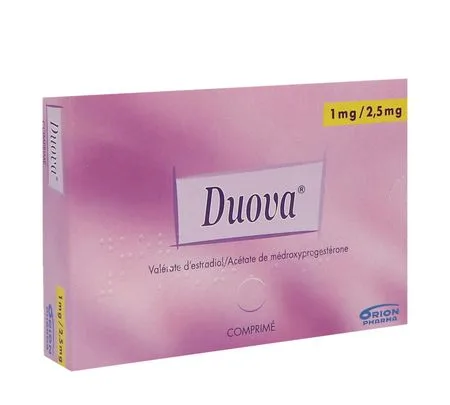
DUOVA 1 mg/2,5 mg, tablet
Forms and presentations
Tablet.
White, round tablet with bevelled edges, diameter 7 mm, flat with the code 1+2,5 on one side.
Composition
Estradiol valerate ……………………………………………………………………………………. 1,00 mg
Medroxyprogesterone acetate ………………………………………………………….………… 2,50 mg
For one tablet.
Excipient with known effect : lactose 78,9 mg (as monohydrate).
Lactose monohydrate, maize starch, gelatin, magnesium stearate.
Indications
Hormone replacement therapy (HRT) for the symptoms of oestrogen deficiency in non-hysterectomised postmenopausal women more than three years post-menopause.
Prevention of postmenopausal osteoporosis in women at increased risk of osteoporotic fracture and presenting intolerance or contraindication to other treatments indicated in the prevention of osteoporosis (see sections Warnings and precautions and Pharmacodynamics).
Experience with this treatment in women aged over 65 years is limited.
Dosage and administration
DUOVA is a continuous combined hormone replacement therapy (HRT) in which an oestrogen and a progestogen are administered daily without interruption.
Dosage
One tablet per day, orally, without a break interval. The tablet should be taken at approximately the same time of day.
It is recommended to start treatment with one tablet of DUOVA 1 mg/2,5 mg. The dose may subsequently be adjusted individually according to clinical response.
The dose of 2,5 mg medroxyprogesterone acetate is usually sufficient to prevent intercurrent bleeding. If such bleeding occurs and persists, and after exclusion of an endometrial abnormality, the dose may be increased to 5 mg (DUOVA 1mg/5 mg).
If the dose of 1 mg estradiol valerate is not sufficient to correct the symptoms of oestrogen deficiency, the dose may be increased to 2 mg (DUOVA 2 mg/5 mg).
In postmenopausal women with amenorrhoea who are not taking HRT, as well as when switching from a continuous combined HRT, treatment with DUOVA may be started on any day. When switching from a cyclical HRT, treatment with DUOVA should be started one week after the end of the cycle.
The effect of oestrogens on bone mineral density is dose-dependent. Therefore, the effect of 1 mg estradiol valerate may be less than that of 2 mg (see section Pharmacodynamics).
If the patient has forgotten to take a tablet, the forgotten tablet should be discarded. Forgetting a tablet may favour the occurrence of intercurrent bleeding and spotting.
To start or continue treatment for postmenopausal symptoms, the minimum effective dose should be used for the shortest duration possible (see section Warnings and precautions).
Paediatric population
There is no justified use of DUOVA in the paediatric population.
Method of administration
Oral use.
Contraindications
• Hypersensitivity to the active substances or to any of the excipients listed in section Composition ;
• Known or suspected breast cancer or history of breast cancer;
• Known or suspected estrogen-dependent malignant tumours (example: endometrial cancer);
• Undiagnosed genital bleeding;
• Untreated endometrial hyperplasia;
• History of venous thromboembolic event or current venous thromboembolic event (deep vein thrombosis, pulmonary embolism);
• Known thrombophilic disorders (example: protein C, protein S or antithrombin deficiency) (see section Warnings and precautions) ;
• Recent or ongoing arterial thromboembolic event (example: angina, myocardial infarction);
• Acute hepatic disorder or history of hepatic disorder, until normalisation of liver function tests;
• Porphyria.
Warnings and precautions
In the indication for treatment of menopausal symptoms, HRT should only be initiated if the symptoms are perceived by the patient as impairing her quality of life. In all cases, reassessment of the benefit/risk ratio should be performed at least once a year. HRT may be continued as long as the benefit exceeds the risk incurred.
Evidence of risks associated with HRT in the treatment of women with premature menopause is limited. Due to the low absolute risk in younger women, however, the benefit/risk balance may be more favourable than in older women.
Clinical examination and monitoring
Before starting or restarting hormone replacement therapy (HRT), it is essential to perform a complete clinical and gynaecological examination (including collection of personal and family medical history), taking into account contraindications and precautions for use. Throughout the duration of treatment, regular examinations will be carried out, their nature and frequency being adapted to each patient.
Women must be informed of the type of breast abnormalities that may occur during treatment; these abnormalities must be reported to the treating physician (see the "breast cancer" paragraph below). Examinations, including appropriate imaging examinations such as mammography, must be carried out according to current recommendations and adapted to each patient.
Conditions requiring monitoring
If any of the following conditions occur, have occurred previously, and/or worsened during pregnancy or during a previous hormonal treatment, the patient should be closely monitored. The following conditions may recur or worsen during treatment with DUOVA, in particular:
• leiomyoma (uterine fibroid) or endometriosis;
• thromboembolic risk factors (see below);
• risk factors for estrogen-dependent tumours, for example: 1er degree of hereditary predisposition for breast cancer;
• arterial hypertension;
• hepatic disorders (for example: hepatic adenoma);
• diabetes with or without vascular involvement;
• gallstone disease;
• migraines or severe headaches;
• systemic lupus erythematosus;
• history of endometrial hyperplasia (see below);
• epilepsy;
• asthma;
• otosclerosis;
• angioedema (hereditary/acquired).
Immediate discontinuation of treatment
Treatment must be discontinued immediately in the event of the occurrence of a contraindication or in the following cases:
• jaundice or impairment of liver function;
• significant increase in blood pressure;
• unusual migraine-type headache;
• pregnancy.
Endometrial hyperplasia and endometrial cancer
In women with an intact uterus, the risk of endometrial hyperplasia and endometrial cancer increases with prolonged administration of estrogens alone. The risk of endometrial cancer is 2 to 12 times higher compared with women not taking estrogens, depending on the duration of treatment and the dose of estrogens used (see section Adverse effects).
After treatment discontinuation, the risk may remain elevated for at least 10 years.
In women who have not had a hysterectomy, the addition of a progestogen cyclically for at least 12 days per month / cycle of 28 days, or taking a continuous combined estrogen-progestogen treatment, prevents the increased risk associated with estrogens alone as HRT.
Metrorrhagia and "spotting" may occur during the first months of treatment. The occurrence of irregular bleeding several months after starting treatment, or persistent bleeding after stopping treatment, should prompt investigation for an underlying pathology. This may require an endometrial biopsy to rule out malignant pathology.
Breast cancer
All available data show an increased risk of breast cancer in women taking estrogen-progestogen combined treatment or in those taking estrogen-only HRT, this increased risk depending on the duration of treatment.
Treatment with combined estrogen-progestogen
• The randomised, placebo-controlled Women's Health Initiative Study (WHI) and a meta-analysis of prospective epidemiological studies show an increased risk of breast cancer in women treated with combined estrogen-progestogen HRT, appearing after about 3 years (1-4) of treatment (see section Adverse effects).
Estrogen-alone treatment
• The WHI study did not show an increased risk of breast cancer in hysterectomised women using estrogens alone as HRT. Observational studies have generally reported a slight increase in breast cancer risk, this risk being lower than in women using estrogen-progestogen combinations (see section Adverse effects).
The results of a major meta-analysis showed that after stopping treatment, the additional risk decreases over time, and the time needed for it to return to normal depends on the duration of HRT use. When HRT has been taken for more than 5 years, the risk may persist for 10 years or more.
HRT, particularly combined estrogen/progestogen treatments, increases breast density on mammography, which could hinder the diagnosis of breast cancer.
Ovarian cancer
Ovarian cancer is much rarer than breast cancer. Epidemiological data from a major meta-analysis suggest a slight increase in risk in women taking estrogen-only HRT or a combination of estrogens and progestogens, which appears within five years of starting use of the product and gradually decreases after stopping treatment.
Other studies, including the WHI (Women's Health Initiative) study, suggest that a similar or slightly lower risk may be associated with the use of combined HRT (see section Adverse effects).
Venous thromboembolic events
HRT is associated with a 1,3 to 3 times higher risk of venous thromboembolic events (deep vein thrombosis or pulmonary embolism). This event is more likely to occur during the first year of treatment (see section Adverse effects).
Patients with a history of venous thromboembolism or a known thrombotic disease have an increased risk of venous thromboembolic events. HRT may increase this risk. In these patients, the use of HRT is contraindicated (see section Contraindications).
The recognised risk factors for venous thromboembolic events are: use of estrogens, age, major surgery, prolonged immobilisation, severe obesity (BMI > 30 kg/m²), pregnancy/postpartum, systemic lupus erythematosus (SLE), cancer. However, there is no consensus on the possible role of varicose veins in venous thromboembolic events.
In order to prevent any post-operative venous thromboembolic risk, the usual prophylactic measures must be strictly applied. In the case of prolonged immobilisation following a scheduled surgical procedure, a temporary interruption of the 4 treatment 6 weeks before the procedure is recommended. Treatment will only be reinstated once the patient has resumed normal mobility.
In women without a history of venous thrombosis but with a close family member who had thrombosis at a young age, tests may be offered, while informing them of their limitations (only certain types of thrombophilic disorders are identified by these tests). If a thrombophilic disorder linked to thromboses in family members is identified, or if the disorder is severe (for example antithrombin III, protein S or protein C deficiency, or a combination of disorders), HRT is contraindicated.
In women already receiving long-term anticoagulant treatment, the benefit/risk ratio of HRT must be carefully evaluated.
The occurrence of a thromboembolic event requires discontinuation of HRT. Patients should be informed of the need to contact their doctor immediately if signs suggestive of thrombosis occur, such as a painful swollen leg, sudden chest pain or dyspnoea.
Coronary heart disease
Randomised controlled studies have not demonstrated protection against myocardial infarction in women with or without pre-existing coronary artery disease treated with combined estrogen-progestogen or with estrogens alone.
Treatment with a combined estrogen-progestogen regimen
The relative risk of coronary heart disease is slightly increased during treatment with an estrogen-progestogen combination. Since the baseline absolute risk of coronary heart disease depends strongly on age, the number of additional cases of coronary heart disease due to the estrogen-progestogen combination is very low in healthy women close to menopause, but increases with age.
Treatment with oestrogens alone
Randomised controlled studies have not demonstrated an increased risk of coronary heart disease in hysterectomised women using oestrogens alone.
Cerebrovascular accidents
An increase of up to 1,5 times in the risk of ischaemic stroke has been shown in women treated with an estrogen-progestogen combination or estrogens alone. The relative risk does not change with age or time since menopause. However, as the baseline absolute risk of stroke is strongly dependent on age, the overall risk of stroke in women using HRT will increase with age (see section Adverse effects).
Other special warnings and precautions for use
• As estrogens may cause fluid retention, patients with renal or cardiac insufficiency must be closely monitored.
• Women with pre-existing hypertriglyceridaemia should be monitored during hormone replacement therapy. Rare cases of marked increases in triglyceride levels leading to pancreatitis have been observed under estrogen therapy.
• Exogenous estrogens may induce or exacerbate symptoms of hereditary and acquired angioedema.
• During treatment with estrogens, an increase in plasma levels of TBG (thyroid binding globulin) is observed, leading to an elevation of total plasma thyroid hormone levels measured by PBI (protein-bound iodine), total T4 (measured by column or by RIA (radioimmunoassay)) and total T3 (measured by RIA). The uptake of T3 on the resin is decreased, reflecting the increase in TBG. The concentrations of the free fractions of T4 and T3 remain unchanged. Serum levels of other binding proteins such as CBG (corticoid binding globulin) and SHBG (sex-hormone binding globulin) may be increased, resulting, respectively, in increased circulating levels of corticoids and sex steroids. The concentrations of the free or active fractions of the hormones remain unchanged.
• Other plasma proteins may also be increased (angiotensinogen/renin substrate, alpha-1-antitrypsin, ceruloplasmin).
• Chloasma may occasionally occur, particularly in women with a history of gravid chloasma. Women prone to chloasma who take HRT should avoid sun or ultraviolet exposure.
• The use of HRT does not improve cognitive function. There is an increased risk of probable dementia in women starting continuous combined or oestrogen-alone treatment after 65 years.
Elevations of ALT levels
In clinical trials in patients treated for hepatitis C virus (HCV) infection with ombitasvir/paritaprevir/ritonavir and dasabuvir with or without ribavirin, elevations of ALT levels greater than 5 times the upper limit of normal (ULN) were significantly more frequent in women taking medicinal products containing ethinylestradiol. In addition, also in patients treated with glecaprevir/pibrentasvir or sofosbuvir/velpatasvir/voxilaprevir, ALT elevations were observed in women taking medicinal products containing ethinylestradiol, such as combined hormonal contraception (CHC). Women taking medicinal products containing estrogens other than ethinylestradiol, such as estradiol, and ombitasvir/paritaprevir/ritonavir and dasabuvir, with or without ribavirin, had a percentage of ALT elevations similar to that of women not taking any estrogen. However, due to the limited number of women taking these other estrogens, caution is required for concomitant administration with the following combinations: ombitasvir/paritaprevir/ritonavir and dasabuvir with or without ribavirin, glecaprevir/pibrentasvir or sofosbuvir/velpatasvir/voxilaprevir (see section Interactions).
Excipient(s)
Patients with hereditary galactose intolerance, total lactase deficiency or glucose-galactose malabsorption syndrome must not take this medicine.
Interactions
Associations to be taken into account
The metabolism of estrogens and progestogens may be increased by concomitant use of enzyme-inducing medicinal products, in particular cytochrome P450 isoenzymes, such as anticonvulsants (phenobarbital, phenytoin, carbamazepine) and anti-infectives (rifampicin, rifabutin, nevirapine, efavirenz).
Ritonavir and nelfinavir, although known as potent enzyme inhibitors, paradoxically have inducing properties when used with steroid hormones.
A number of HIV protease inhibitors and non-nucleoside reverse transcriptase inhibitors, including combinations with HCV inhibitors, may increase or decrease plasma concentrations of estrogens when administered concomitantly with sex hormones. The effect of these changes may be clinically significant in some cases.
Therefore, prescribing information should be consulted during concomitant treatments, including anti-HIV or anti-HCV antivirals, to identify possible interactions and any other recommendations.
Herbal preparations containing St John's wort (Hypericum perforatum) may induce the metabolism of estrogens and progestogens.
Clinically, increased metabolism of estrogens and progestogens may lead to a decrease in therapeutic effect and a change in the uterine bleeding profile.
Effect of estrogen-containing HRT on other medicinal products
Hormonal contraceptives containing estrogens have been shown to significantly decrease lamotrigine concentrations when co-administered, due to induction of lamotrigine glucuronidation.
This may reduce seizure control. Although the potential interaction between hormone replacement therapy and lamotrigine has not been studied, a similar interaction may exist, which may lead to reduced seizure control in women taking both medicines together.
Pharmacodynamic interactions
In clinical trials with the combination ombitasvir/paritaprevir/ritonavir and dasabuvir with or without ribavirin in the treatment of HCV, elevations of ALT levels 5 times greater than the upper limit of normal (ULN) were significantly more frequent in women taking medicinal products containing ethinylestradiol such as CHC. In addition, with glecaprevir/pibrentasvir or sofosbuvir/velpatasvir/voxilaprevir, an elevation of ALT levels was observed in women using medicinal products containing ethinylestradiol, such as CHC.
Women taking medicinal products containing estrogens other than ethinylestradiol, such as estradiol, and ombitasvir/paritaprevir/ritonavir and dasabuvir, with or without ribavirin, had a percentage of ALT level elevation similar to that of women not taking any estrogen. However, due to the limited number of women taking these other estrogens, caution is required for concomitant administration with the following combinations: ombitasvir/paritaprevir/ritonavir and dasabuvir with or without ribavirin, glecaprevir/pibrentasvir or sofosbuvir/velpatasvir/voxilaprevir (see section Warnings and precautions).
Fertility, pregnancy and breastfeeding
Pregnancy
DUOVA has no indication during pregnancy. Discovery of a pregnancy during treatment with DUOVA requires immediate discontinuation of treatment.
Data on a limited number of pregnancies exposed to medroxyprogesterone acetate have not shown adverse effects for the foetus. Studies conducted in animals have shown reproductive toxicity (see section Preclinical safety). The potential risks in women are not known.
To date, most epidemiological studies have not demonstrated a teratogenic or foetotoxic effect in pregnant women inadvertently exposed to therapeutic doses of estrogens and progestogens.
Breast-feeding
DUOVA has no indication during breastfeeding.
Driving and using machines
DUOVA has no effect or negligible effect on the ability to drive vehicles and use machines.
Adverse effects
The adverse reaction most frequently reported during clinical trials with DUOVA was breast tension, occurring in 10,6 % of treated women.
Adverse reactions reported during hormone replacement therapy are presented by system organ class in the table below:
|
System organ class |
Frequent adverse reactions (≥1/100 to <1/10) |
Uncommon undesirable effects (≥ 1/1 000 to <1/100) |
Rare adverse reactions (≥1/10 000 to < 1/1 000) |
Undetermined (cannot be estimated from available data) |
|
Benign, malignant and unspecified neoplasms (including cysts and polyps) |
|
Benign neoplasms of the breast and endometrium |
|
Uterine fibroid |
|
Immune system disorders |
|
Hypersensitivity reaction |
|
Exacerbation of angioedema (hereditary and acquired) |
|
Metabolism and nutrition disorders |
Oedema, weight gain/loss |
Increased sensation of hunger, hypercholesterolaemia1 |
|
|
|
Psychiatric disorders |
Depression, nervousness, lethargy |
Anxiety, insomnia, apathy, emotional lability, difficulty concentrating, mood and libido changes, euphoria1, agitation1 |
|
|
|
Nervous system disorders |
Headache, dizziness |
Migraines, paresthesia, tremors1 |
|
|
|
Eye disorders |
|
Abnormal vision, dry eye1 |
Intolerance to contact lenses |
|
|
Cardiac disorders |
|
Palpitations |
|
|
|
Vascular disorders |
Hot flushes |
Hypertension1, superficial phlebitis1, purpura1 |
Venous thromboembolic events (e.g., deep vein thrombosis, pulmonary embolism)² |
Ischemic cerebrovascular accidents |
|
Thoracic and mediastinal respiratory disorders |
|
Dyspnoea1, rhinitis1 |
|
|
|
Gastrointestinal disorders |
Nausea, vomiting, stomach cramps, flatulence |
Constipation, dyspepsia1, diarrhea1, disorders of the rectum1 |
|
Abdominal pain, bloating (abdominal distension) |
|
Hepatobiliary disorders |
|
|
Impairment of liver function and bile secretions |
Cholestatic jaundice |
|
Skin and subcutaneous tissue disorders |
|
Acne, alopecia, dry skin, nail disorders1, cutaneous nodule1, hirsutism1, erythema nodosum, urticaria |
Rash
|
Eczema |
|
Musculoskeletal and connective tissue disorders |
|
Joint disorders, muscle cramps |
|
|
|
Renal and urinary disorders |
|
Micturition disorders (increased frequency or urgency), urinary incontinence1, cystitis1, discoloration of urine1, haematuria1 |
|
|
|
Disorders of the reproductive organs and breasts |
Breast tenderness/pain, irregular bleeding or spotting, vaginal discharge, disorders of the vulva or vagina, menstrual disorders |
Breast swelling, breast sensitivity, endometrial hyperplasia, disorders of the uterus |
Dysmenorrhoea, premenstrual syndrome |
|
|
General disorders and administration site conditions |
Excessive sweating |
Fatigue, abnormal laboratory tests1, asthenia1, fever1, flu-like syndrome1, malaise1 |
|
|
1 These are isolated cases reported in clinical studies. Since these studies were carried out in a small population (n=611), it is not possible to determine whether these effects are uncommon or rare.
2 See sections Contraindications and Warnings and precautions
The following undesirable effects have been reported with the administration of an oestroprogestogen treatment:
• myocardial infarction,
• biliary disorders,
• skin and subcutaneous disorders: chloasma, erythema multiforme,
• probable dementia beyond the age of 65 years (see section Warnings and precautions),
• pancreatitis (see section Warnings and precautions).
Risk of breast cancer
• An increase of up to 2 times in the risk of breast cancer has been reported in women taking an oestroprogestogen combination for more than 5 years.
• The increase in risk is lower in users of oestrogens alone compared with users of oestroprogestogen combinations.
• The level of risk is dependent on the duration of treatment (see section Warnings and precautions).
• Absolute risk estimates based on the results of the largest randomised placebo-controlled trial (WHI study) and the largest meta-analysis of prospective epidemiological studies are presented below.
Largest meta-analysis of prospective epidemiological studies – Estimate of additional risk of breast cancer after 5 years of treatment in women with a BMI of 27(kg/m2)
|
Age at start of HRT (years) |
Incidence per 1 000 patients who have never taken HRT over 5 years (50-54 years)* |
Relative risk |
Number of additional cases per 1 000 HRT users after 5 years |
|
Oestrogen-only HRT |
|||
|
50 |
13,3 |
1,2 |
2,7 |
|
Oestrogen-progestogen combination |
|||
|
50 |
13,3 |
1,6 |
8,0 |
*Derived from baseline incidence rates in England in 2015 in women with a BMI of 27 (kg/m²).
Note: since the baseline incidence of breast cancer differs between European Union (EU) countries, the number of additional cases of breast cancer will vary proportionally.
Estimates of additional risk of breast cancer after 10 years of use in women with a BMI of 27 (kg/m²)
|
Age at start of HRT (years) |
Incidence per 1 000 patients who have never taken HRT over a period of 10 years (50-59 years)* |
Relative risk |
Number of additional cases per 1 000 HRT users after 10 years |
|
Oestrogen-only HRT |
|||
|
50 |
26,6 |
1,3 |
7,1 |
|
Oestrogen-progestogen combination |
|||
|
50 |
26,6 |
1,8 |
20,8 |
*Derived from baseline incidence rates in England in 2015 in women with a BMI of 27 (kg/m²).
Note: since the baseline incidence of breast cancer differs between EU countries, the number of additional cases of breast cancer will vary proportionally.
WHI study in the United States – Additional risk of breast cancer over 5 years of treatment
|
Age (years) |
Incidence per 1 000 women in the placebo arm over 5 years |
Relative Risk (CI 95 %) |
Number of additional cases per 1 000 HRT users over 5 years (CI 95 %) |
|
Oestrogens alone (conjugated equine oestrogens) |
|||
|
50-79 |
21 |
0,8 (0,7-1,0) |
-4 ( -6 -0)* |
|
Oestroprogestogen combination (CEE + MPA)# |
|||
|
50-79 |
17 |
1,2 (1,0-1,5) |
+4 (0-9) |
# When the analysis was limited to women who had not used HRT before the study, no increase in risk was observed during the first 5 years of treatment: after 5 years, the risk was higher than in non-users.
*WHI study in hysterectomised women, which showed no increase in the risk of breast cancer.
Endometrial cancer risk
The risk of endometrial cancer is approximately 5 per 1000 women with an intact uterus who do not use HRT.
In women with an intact uterus, the use of oestrogen-only HRT is not recommended due to the increased risk of endometrial cancer (see section Warnings and precautions).
In epidemiological studies, the increased risk of endometrial cancer depended on the duration of oestrogen-only treatment and the oestrogen dose, and ranged between 5 and 55 additional cases diagnosed per 1000 women aged 50 to 65 years.
Adding a progestogen to oestrogen-only treatment for at least 12 days per cycle prevents the increased risk. In the MWS study, use for 5 years of combined HRT (sequential or continuous) did not increase the risk of endometrial cancer (RR = 1 ,0 (0,8 – 1,2)).
Risk of ovarian cancer
The use of oestrogen-only HRT or a combination of oestrogen and progestogen has been associated with a slight increase in the risk of diagnosed ovarian cancer (see section Warnings and precautions).
A meta-analysis of 52 epidemiological studies reported an increased risk of ovarian cancer in women currently taking HRT compared with women who have never taken it (RR 1.43, CI 95% 1.31-1.56). In women aged 50 to 54 years, taking HRT for five years results in one additional case for every 2 000 users. In women aged 50 to 54 years who do not take HRT, a diagnosis of ovarian cancer will be made in approximately 2 women out of 2 000 over a five-year period.
Risk of venous thromboembolic event
HRT is associated with a 1,3 to 3-fold increase in the relative risk of venous thromboembolic events, i.e. deep vein thrombosis or pulmonary embolism. The probability of such an event occurring is higher during the first year of HRT use (see section Warnings and precautions). The results of the WHI studies are presented:
WHI studies – Additional risk of venous thromboembolic events over 5 years of treatment
|
Age (years) |
Incidence per 1 000 women in the placebo arm over 5 years |
Relative risk (CI 95 %) |
Number of additional cases per 1 000 HRT users |
|
Oral estrogens alone* |
|||
|
50-59 |
7 |
1,2 (0,6-2,4) |
1 (-3-10) |
|
Oral estrogen-progestogen combination |
|||
|
50-59 |
4 |
2,3 (1,2-4,3) |
5 (1-13) |
*Study in women who have had a hysterectomy
Risk of coronary heart disease
The risk of coronary heart disease is slightly increased in users of estrogen-progestogen HRT beyond 60 years (see section Warnings and precautions).
Risk of ischaemic stroke
Use of HRT based on estrogens alone or an estrogen-progestogen combination is associated with an increase of up to 1,5-fold in the relative risk of ischaemic stroke. The risk of haemorrhagic stroke is not increased with the use of HRT.
This relative risk does not depend on age or duration of treatment, but as the baseline risk is strongly age-dependent, the overall risk of stroke in women using HRT increases with age (see section Warnings and precautions).
Combined WHI studies – Additional risk of stroke* over 5 years of treatment
|
Age (years) |
Incidence per 1000 women in the placebo arm over 5 years |
Relative risk (CI 95 %) |
Number of additional cases per 1 000 HRT users over 5 years |
|
50-59 |
8 |
1,3 (1,1 - 1,6) |
3 (1-5) |
*No distinction was made between ischaemic and haemorrhagic strokes.
Reporting of suspected adverse reactions
Reporting suspected adverse reactions after authorisation of the medicinal product is important. It allows continued monitoring of the benefit/risk balance of the medicinal product. Healthcare professionals are asked to report any suspected adverse reactions via the national reporting system: National Agency for the Safety of Medicines and Health Products (ANSM) and the network of Regional Pharmacovigilance Centres - Website: https://signalement.social-sante.gouv.fr.
Overdose
An estrogen overdose may cause nausea, headache and vaginal bleeding. Many cases of ingestion of oral contraceptives containing high doses of estrogens by young children have not revealed any serious harmful effects. Treatment of estrogen overdose is symptomatic. High doses of medroxyprogesterone acetate (MPA) used in the treatment of cancers have not resulted in serious adverse effects.
Pharmacodynamics
Pharmacotherapeutic class: Sex hormones and modulators of the genital system, progestogens and estrogens in fixed combination, ATC code: G03FA12.
Mechanism of action
The active substance, 17β-estradiol, is chemically and biologically identical to endogenous human estradiol.
It replaces the cessation of estrogen production in postmenopausal women and relieves the climacteric symptoms of menopause.
Estrogens prevent bone loss associated with menopause or ovariectomy.
Medroxyprogesterone acetate is a derivative of natural progesterone, the 17-α-hydroxy-6-methylprogesterone. Medroxyprogesterone acetate binds to specific progesterone receptors and acts on the endometrium to transform it from the proliferative to the secretory state.
Estrogens stimulate endometrial growth and increase the risk of endometrial hyperplasia and endometrial cancer. Association with medroxyprogesterone acetate in women who have not undergone hysterectomy results in a marked reduction in the risk of estrogen-induced endometrial hyperplasia.
Information on clinical studies
Relief of symptoms associated with estrogen deficiency and bleeding
Relief of menopausal symptoms was obtained from the first weeks of treatment.
Amenorrhea was observed in 91 % of women receiving 1 mg of estradiol valerate and in 80 % of women receiving 2 mg of estradiol valerate after 10 to 12 months of treatment.
Bleeding and/or spotting occurred in 41 % of women receiving 1 mg of estradiol valerate and in 51 % of women receiving 2 mg of estradiol valerate during the first three months of treatment, and in 9 % of women receiving 1 mg of estradiol valerate and in 20 % of women receiving 2 mg of estradiol valerate after 10 to 12 months of treatment.
Prevention of osteoporosis
Estrogen deficiency at menopause is associated with increased bone turnover and a decrease in bone mass.
The effect of estrogens on bone mineral density is dose-dependent. Protection is effective throughout treatment. On discontinuation of HRT, bone loss resumes at the same rate as in untreated women.
The results of the WHI study and a meta-analysis of several studies show that the use of estrogen replacement therapy, alone or in combination with a progestogen – mainly in healthy women – reduces the risk of hip, vertebral and other osteoporotic fractures. Limited data suggest that HRT may also prevent fractures in women with low bone mineral density and/or established osteoporosis.
After 4 years of treatment with the DUOVA combinations containing the 1 mg dose, the increase in bone mineral density (BMD) at the lumbar spine was 6,2 ±0,5 % (mean ± standard deviation). The percentage of women whose lumbar BMD was maintained or increased during treatment was 86,6 %.
The DUOVA combinations containing the 1 mg dose also had an effect on BMD at the hip. The increase after 4 years was 2,9 ± 0,4 % (mean ± standard deviation) at the femoral neck. The percentage of women whose hip BMD increased during treatment was 80,4 %.
After 4 years of treatment with the DUOVA combinations containing the 2 mg dose, the increase in BMD at the lumbar spine was 7,4 ± 0,4 % (mean ± standard deviation). The percentage of women whose lumbar BMD increased during treatment was 95,8 %. The DUOVA combinations containing the 2 mg dose also had an effect on BMD at the hip. The increase after 4 years was 2,9 ± 0,4 % (mean ± standard deviation) at the femoral neck. The percentage of women whose hip BMD increased during treatment was 72,3 %.
Pharmacokinetics
After oral administration, estradiol valerate is absorbed from the gastrointestinal tract and is rapidly hydrolysed to estradiol by esterases. In postmenopausal women aged 50 to 65 years, the maximum serum concentration of estradiol (Cmax) is reached in 4 to 6 hours after repeated administration of a dose of 1 or 2 mg of estradiol valerate. At the dose of 1 mg, the Cmax is approximately 166 pmol/l, the minimum concentration (Cmin) approximately 101 pmol/l and the average concentration (Caverage) approximately 123 pmol/l.
For the 2 mg dose, the Cmax is 308 pmol/l, the Cmin of 171 pmol/l and the Caverage of 228 pmol/l. Comparable concentrations of estradiol were observed in women aged over 65 years.
Circulating estradiol is bound to plasma proteins, mainly SHBG (sex hormone binding globulin) and albumin. Estradiol undergoes extensive metabolism. Its metabolites are excreted in urine as glucuronide and sulfate conjugates with a small proportion of unchanged estradiol. In addition, estrogen metabolites undergo enterohepatic cycling. Only a small fraction of the dose is excreted in faeces.
After oral administration, the absorption of medroxyprogesterone acetate is low due to poor solubility; interindividual variations are significant. Medroxyprogesterone acetate undergoes practically no hepatic first-pass effect. After repeated administration of 2,5 mg or 5 mg of medroxyprogesterone acetate in women aged 50 to 65 years, the maximum serum concentration is reached in less than 2 hours. After the dose of 2,5 mg, the Cmax is approximately 0,37 ng/ml, the Cmin approximately 0,05 ng/ml and the Caverage approximately 0,11 ng/ml. At the dose of 5 mg, the Cmax is approximately 0,64 ng/ml, the Cmin approximately 0,12 ng/ml and the Caverage approximately 0,21 ng/ml. Comparable concentrations of medroxyprogesterone acetate were observed in women aged over 65 years.
Medroxyprogesterone acetate is more than 90% bound to plasma proteins, mainly albumin. The elimination half-life of medroxyprogesterone acetate after oral administration is approximately 24 hours. Medroxyprogesterone acetate is extensively metabolised by hydroxylation and hepatic conjugation and is excreted in urine and bile. There is little data on metabolism, and the pharmacological activity of the metabolites is not known.
Preclinical safety
Animal studies conducted with estradiol and medroxyprogesterone acetate showed expected oestrogenic and progestogenic effects. Both compounds induced adverse effects during reproductive toxicity studies.
Estradiol in particular showed embryotoxic effects and induced feminisation of male foetuses.
Medroxyprogesterone showed embryotoxic effects and induced anti-androgenic effects on male foetuses and masculinisation of female foetuses.
The relevance of these data to human exposure is unknown (see section Fertility, pregnancy and breastfeeding).
Regarding other preclinical effects, the toxicity profiles of estradiol valerate and medroxyprogesterone acetate are well known. They reveal no particular risks other than those described in the other sections of the SmPC, which generally apply to hormone replacement therapy.
Special storage precautions
Store at a temperature not exceeding + 25 °C.
To be stored in the original outer packaging, protected from moisture.
SPECIAL PRECAUTIONS FOR DISPOSAL AND OTHER HANDLING
Any unused medicinal product or waste material should be disposed of in accordance with local requirements.
Prescription, supply and reimbursement
| Marketing authorisation (AMM) |
|
| Price: |
|
Collection.
6-8 RUE DU 4 SEPTEMBRE
92130 ISSY-LES-MOULINEAUX CEDEX
Tel: 01 85 18 00 00 fr-contact@orionpharma.com
https://www.orionpharma.fr/
Source: VIDAL · Updated on 10/11/2026. This information does not replace advice from a healthcare professional.