
Medicines
SmPC of the 16/04/2026
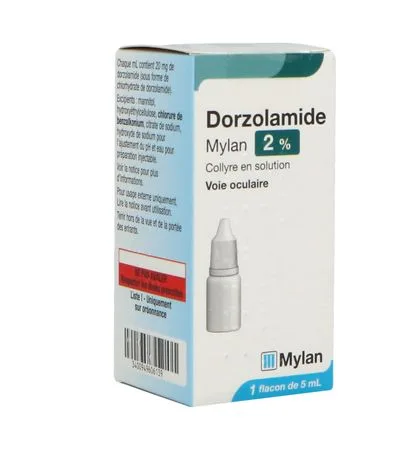
DORZOLAMIDE VIATRIS 2 %, eye drops, solution
Forms and presentations
Eye drops in solution.
Colourless, clear, slightly viscous, isotonic, buffered aqueous solution.
Composition
Each ml contains 20 mg of dorzolamide (as dorzolamide hydrochloride).
Excipient with known effect :
Each ml contains 0,075 mg of benzalkonium chloride
Mannitol, hydroxyethylcellulose, sodium citrate, sodium hydroxide for pH adjustment, benzalkonium chloride in solution at 50 %, water for injections.
Indications
DORZOLAMIDE VIATRIS 2 %, eye drops, solution is indicated:
• as adjunctive therapy to beta-blockers,
• as monotherapy in patients who do not respond to beta-blockers or in patients for whom beta-blockers are contraindicated,
• in the treatment of elevated intraocular pressure in patients with the following conditions:
- ocular hypertension,
- open-angle glaucoma,
- pseudoexfoliative glaucoma.
Dosage and administration
Dosage
As monotherapy, the dose is one drop of dorzolamide in the conjunctival sac of the affected eye(s), three times daily.
In combination with an ophthalmic beta-blocker, the dose is one drop of dorzolamide in the conjunctival sac of the affected eye(s), twice daily.
When another ophthalmic antiglaucoma agent is replaced by dorzolamide, the medicinal product must be stopped after the recommended daily dose has been taken and dorzolamide must be started the following day.
If more than one ophthalmic medicinal product is used, the medicinal products must be administered at least ten minutes apart.
Patients should be advised to avoid allowing the tip of the dropper bottle to touch the eye or surrounding areas of the eye.
Patients should also be informed that ophthalmic solutions, if improperly handled, may become contaminated by common bacteria known to cause eye infections. Use of contaminated solutions may lead to serious eye damage and subsequent loss of vision.
Paediatric population
Limited clinical data in paediatric patients are available on administration of dorzolamide three times daily (For information concerning administration to paediatric patients, see section Pharmacodynamics).
Method of administration
For ocular use
Patients should wash their hands thoroughly before use.
Patients should be instructed on the correct handling of dropper bottles.
1. The tamper-evident ring at the neck of the bottle must be intact, and will be broken before the first use of the eye drops. A gap between the bottle and the cap is normal on an unopened bottle.
2. The cap of the bottle must be removed.
3. The patient must tilt the head back and the lower eyelid must be gently pulled down to form a small pocket between the eyelid and the eye.
4. Invert the bottle and squeeze until a single drop falls into the eye. THE EYE OR EYELID MUST NOT BE TOUCHED WITH THE TIP OF THE DROPPER.
5. Repeat steps 3 & 4 for the other eye if necessary.
6. Replace the cap and close the bottle immediately after use.
Systemic absorption is reduced by nasolacrimal occlusion or closure of the eyelids for 2 minutes. This technique may reduce systemic adverse effects and increase local efficacy.
Contraindications
• Hypersensitivity to the active substance or to any of the excipients listed in section Composition.
• Dorzolamide has not been studied in patients with severe renal impairment (creatinine clearance < 30 ml/min) or hyperchloraemic acidosis. As dorzolamide and its metabolites are mainly excreted by the kidney, dorzolamide is contraindicated in such patients.
Warnings and precautions
Dorzolamide has not been studied in patients with hepatic impairment and should therefore be used with caution in such patients.
The management of patients with acute angle-closure glaucoma requires therapeutic interventions in addition to ocular hypotensive medicinal products. Dorzolamide has not been studied in patients with acute angle-closure glaucoma.
Dorzolamide contains a sulfonamide group, which is also present in sulfonamides that, even when administered topically, are absorbed systemically. Consequently, adverse effects of the same type as those attributable to sulfonamides may occur with topical administration, including severe reactions such as Stevens-Johnson syndrome and toxic epidermal necrolysis. If signs of serious hypersensitivity reactions occur, use of the medicinal product should be discontinued.
Treatment with oral carbonic anhydrase inhibitors has been associated with urolithiasis resulting from alterations in acid-base balance, particularly in patients with a history of renal stones. Although no acid-base imbalance has been observed with dorzolamide, urolithiasis has been reported in rare cases. As dorzolamide is a carbonic anhydrase inhibitor that, even when administered topically, is absorbed systemically, patients with a history of renal stones may have a higher risk of urolithiasis when treated with dorzolamide.
If allergic reactions (for example conjunctivitis and eyelid reactions) are observed, discontinuation of treatment should be considered.
There is a possibility of additive systemic effects of known carbonic anhydrase inhibition in patients receiving an oral carbonic anhydrase inhibitor concomitantly with dorzolamide. Concomitant administration of dorzolamide and an oral carbonic anhydrase inhibitor is not recommended.
Corneal oedema and irreversible corneal decompensation have been reported in patients with pre-existing chronic corneal abnormalities and/or a history of intraocular surgery who were treated with DORZOLAMIDE VIATRIS 2 %, eye drops, solution. Topical dorzolamide should be used with caution in such patients.
Choroidal detachment with ocular hypotension has been reported following filtration surgery with administration of therapies that reduce aqueous humour secretion.
Paediatric population
Dorzolamide has not been studied in premature infants born before the 36th week of gestation and aged less than one week. Patients with significant renal tubular immaturity should receive dorzolamide only after careful evaluation of the benefit-risk ratio due to the potential risk of metabolic acidosis.
DORZOLAMIDE VIATRIS 2 %, eye drops, solution contains benzalkonium chloride.
DORZOLAMIDE VIATRIS 2 %, eye drops, solution contains 0,075 mg benzalkonium chloride in 1 ml.. Benzalkonium chloride may be absorbed by soft contact lenses and may discolour them.. Any contact with soft contact lenses should be avoided. Contact lenses must be removed before instillation of the eye drops and may be reinserted at least 15 minutes after.
Based on the limited data available, the adverse reaction profile in children is similar to that in adults. However, a stronger reaction to a given stimulus is generally observed in children than in adults. Irritation may affect treatment adherence in children.
Benzalkonium chloride is known to cause eye irritation, dry eye syndrome symptoms, and may affect the tear film and corneal surface. Should be used with caution in patients with dry eye and those at risk of corneal damage.
Patients should be monitored in case of prolonged use.
Interactions
No interaction studies have been performed.
In clinical studies, dorzolamide has been used without signs of adverse interaction with the following medicinal products: timolol ophthalmic solution, betaxolol ophthalmic solution and systemic medicinal products including angiotensin-converting enzyme inhibitors, calcium channel blockers, diuretics, non-steroidal anti-inflammatory drugs including aspirin, and hormones (for example oestrogens, insulin, thyroxine).
The combination of dorzolamide with miotics and adrenergic agonists has not been fully evaluated in the treatment of glaucoma
Dorzolamide is a carbonic anhydrase inhibitor that, although administered topically, is absorbed systemically. In clinical studies, no acid-base imbalance has been reported with this medicinal product. Nevertheless, treatment with oral carbonic anhydrase inhibitors has been associated with such disorders and, in some cases, has led to drug interactions (for example, toxicity associated with high doses of salicylates). Consequently, the possibility of such drug interactions should be considered in patients also using DORZOLAMIDE VIATRIS 2 %, eye drops, solution.
Fertility, pregnancy and breastfeeding
Pregnancy
Dorzolamide must not be used during pregnancy. There are no or limited data on the use of dorzolamide in pregnant women. In rabbits, dorzolamide administered at maternotoxic doses produced teratogenic effects (see section Preclinical safety).
Breast-feeding
It is not known whether dorzolamide or its metabolites are excreted in human milk. Available pharmacodynamic and toxicological data in animals have shown excretion of dorzolamide and its metabolites in milk. The decision to stop breastfeeding or to discontinue treatment with DORZOLAMIDE VIATRIS 2 %, eye drops in solution must be made considering the benefits of breastfeeding for the child and the benefits of the treatment for the woman. A risk to the newborn or infant cannot be excluded.
Fertility
Data in animals suggest an effect of dorzolamide treatment on male and female fertility. Data in humans are insufficient.
Driving and using machines
DORZOLAMIDE VIATRIS 2 %, eye drops in solution has a minor or moderate influence on the ability to drive and use machines. Possible undesirable effects such as dizziness and visual disturbances may occur (see also section Adverse effects).
Adverse effects
Dorzolamide has been evaluated in controlled and uncontrolled clinical studies in more than 1400 subjects. In long-term studies involving 1108 patients treated with dorzolamide as monotherapy or in combination with an ophthalmic beta-blocker, the most frequent cause of discontinuation of dorzolamide treatment (approximately 3 % of patients) was drug-related ocular adverse reactions, mainly conjunctivitis and eyelid reactions.
Adverse reactions reported in more than one case either during clinical studies or since dorzolamide was marketed are listed below by system organ class and by frequency.
Frequencies are defined as follows: very common (≥ 1/10); common (≥ 1/100 to < 1/10); uncommon (≥ 1/1000 to < 1/100); rare (≥ 1/10 000 to < 1/1000), very rare (< 1/10 000) and frequency not known (cannot be estimated from available data).
|
System organ class
|
Very common |
Common |
Uncommon |
Rare |
Frequency not known |
|
Nervous system disorders |
|
Headache |
|
Dizziness, paraesthesia |
|
|
Eye disorders |
Burning and stinging |
Superficial punctate keratitis, lacrimation, conjunctivitis, eyelid inflammation, ocular pruritus, eyelid irritation, blurred vision |
Iridocyclitis |
Irritation including redness, pain, crusty eyelid lesions, transient myopia (which disappeared on discontinuation of treatment), corneal oedema, ocular hypotension, choroidal detachment after filtration surgery |
Sensation of foreign body in the eye, photophobia |
|
Cardiac disorders |
|
|
|
|
Palpitations, Tachycardia |
|
Vascular disorders |
|
|
|
|
Hypertension |
|
Respiratory, thoracic and mediastinal disorders |
|
|
|
Epistaxis |
Dyspnoea |
|
Gastrointestinal disorders |
|
Nausea, bitter taste |
|
Throat irritation, dry mouth |
|
|
Skin and subcutaneous tissue disorders |
|
|
|
Contact dermatitis, Stevens-Johnson syndrome, toxic epidermal necrolysis |
|
|
Renal and urinary disorders |
|
|
|
Urinary lithiasis |
|
|
General disorders and administration site conditions |
|
Asthenia/fatigue |
|
Hypersensitivity: signs and symptoms of local reactions (eyelid reactions) and systemic allergic reactions including angioedema, urticaria and pruritus, skin rash, dyspnoea, rarely bronchospasm |
|
Laboratory tests: no clinically significant electrolyte disturbance was associated with dorzolamide.
Paediatric population
See section Pharmacodynamics.
Reporting of suspected adverse reactions
Reporting suspected adverse reactions after authorisation of the medicinal product is important. It allows continued monitoring of the benefit/risk balance of the medicinal product. Healthcare professionals are asked to report any suspected adverse reactions via the national reporting system: Agence nationale de sécurité du médicament et des produits de santé (ANSM) and the network of Regional Centres of Pharmacovigilance – Website: https://signalement.social-sante.gouv.fr.
Overdose
There is only limited human data available regarding overdose from accidental or intentional ingestion of dorzolamide hydrochloride. The following effects have been reported after oral ingestion: somnolence; after topical administration: nausea, dizziness, headache, fatigue, abnormal dreams and dysphagia.
Treatment should be symptomatic and supportive. Electrolyte imbalance, acidosis and possible effects on the central nervous system may occur. Serum electrolyte levels (in particular potassium) and blood pH should be monitored.
Pharmacodynamics
Pharmacotherapeutic class: ANTIGLAUCOMA AGENTS AND MIOTICS, CARBONIC ANHYDRASE INHIBITOR. ATC code: S01EC03.
Mechanism of action
Carbonic anhydrase (CA) is an enzyme found in many tissues of the body, including the eye. In humans, carbonic anhydrase exists as many isoenzymes, the most active of which is carbonic anhydrase II (CA II), mainly present in red blood cells (RBC) but also in other tissues. Inhibition of carbonic anhydrase in the ciliary processes of the eye reduces the secretion of aqueous humour. The result is a reduction in intraocular pressure (IOP).
DORZOLAMIDE VIATRIS 2 %, eye drops in solution contains dorzolamide hydrochloride, a potent carbonic anhydrase II inhibitor in humans. After topical ocular administration, dorzolamide reduces elevated intraocular pressure, whether or not associated with glaucoma. Elevated intraocular pressure is a major risk factor in the pathogenesis of optic nerve damage and visual field loss.
Dorzolamide does not cause pupillary constriction and reduces intraocular pressure without adverse effects such as night blindness and accommodative spasm. Dorzolamide has little or no effect on heart rate or blood pressure.
Topically administered beta-blockers also reduce IOP by reducing aqueous humour secretion through a different mechanism of action. Studies have shown that when dorzolamide is added to a topical beta-blocker, a further reduction in IOP is observed; this finding is consistent with the additive effects reported for beta-blockers and orally administered carbonic anhydrase inhibitors.
Pharmacodynamic effects
Clinical effects:
Adult patients
In patients with glaucoma or ocular hypertension, the efficacy of dorzolamide administered three times daily as monotherapy (baseline IOP ≥ 23 mm Hg) or twice daily when combined with ophthalmic beta-blockers (baseline IOP ≥ 22 mm Hg) has been demonstrated in large-scale clinical studies lasting up to one year. The IOP-lowering effect of dorzolamide as monotherapy or in combination was demonstrated over the entire day and this effect was maintained during long-term administration. Long-term efficacy as monotherapy was similar to that of betaxolol and slightly lower than that of timolol. In combination with ophthalmic beta-blockers, dorzolamide demonstrated a further IOP reduction similar to that observed with pilocarpine 2 %, administered four times daily.
Paediatric population
A multicentre, double-blind, active-controlled study was conducted over three months in 184 children (including 122 receiving dorzolamide) aged from one week to less than 6 years, with glaucoma or elevated intraocular pressure (IOP at inclusion greater than 22 mm Hg). This study aimed to evaluate the safety of dorzolamide 20 mg/mL eye drops in solution administered topically 3 times daily. In both groups, approximately half of the patients had a diagnosis of congenital glaucoma; other common aetiologies were Sturge-Weber syndrome, mesenchymal irido-corneal dysgenesis or aphakia. The distribution by age and treatment during the monotherapy phase was as follows:
|
|
Dorzolamide 20 mg/mL |
Timolol |
|
|
Age cohort < 2 years |
n = 56 |
Timolol GS 0,25 % n = 27 |
|
|
|
Age range: 1 to 23 months |
Age range: 0,25 to 22 months |
|
|
Age cohort ≥ 2 - < 6 years |
n = 66 |
Timolol 0,5 % n = 35 |
|
|
|
Age range: 2 to 6 years |
Age range: 2 to 6 years |
|
For both age cohorts, approximately 70 patients received treatment for at least 61 days and approximately 50 patients received between 81 and 100 days of treatment.
If IOP was not adequately controlled by dorzolamide or timolol gel-forming solution as monotherapy, treatment was modified with unblinding as follows: 30 patients under 2 years were switched to a treatment combining timolol gel-forming solution at 0,25 % once daily and dorzolamide at 20 mg/ml three times daily; 30 patients over 2 years were switched to a fixed combination of dorzolamide 2 %/timolol 0,5 % twice daily.
Overall, this study revealed no additional safety concerns in children: approximately 20 % of patients on dorzolamide monotherapy experienced drug-related adverse effects, the majority of which were non-serious local ocular effects such as burning and stinging sensation, bloodshot eyes and eye pain.
A small percentage (< 4 %) experienced corneal oedema or blurred vision. Local reactions appeared as frequent as with the comparator product. Since marketing, cases of metabolic acidosis have been reported in very young patients, particularly those with renal immaturity/insufficiency.
The paediatric efficacy results suggest that the mean IOP reduction observed in the dorzolamide group was comparable to the mean IOP reduction observed in the timolol group, even though a slight numerical advantage was observed for timolol.
No long-term efficacy study (more than 12 weeks) is available.
Pharmacokinetics
Unlike oral carbonic anhydrase inhibitors, topical administration of dorzolamide hydrochloride allows a direct action of the active substance on the eye at markedly lower doses and therefore with lower systemic exposure. In clinical trials, the consequence was a reduction in IOP without the acid-base imbalances or electrolyte disturbances characteristic of orally administered carbonic anhydrase inhibitors.
Absorption
Topically, dorzolamide passes into the systemic circulation. To assess the possibility of systemic carbonic anhydrase inhibition after topical administration, dorzolamide and its metabolite concentrations in red blood cells and plasma were measured, as well as carbonic anhydrase inhibition in red blood cells.
Distribution
With chronic administration, dorzolamide accumulates in red blood cells as a result of selective binding to CA-II, while extremely low concentrations of the active substance in free form are maintained in plasma.
Metabolism
The parent substance is transformed into a single N-desethyl metabolite which inhibits CA-II less potently than the parent substance but also inhibits a less active isoenzyme (CA-I). The metabolite also accumulates in red blood cells where it binds mainly to CA-I. Dorzolamide binds moderately to plasma proteins (approximately 33 %).
Elimination
Dorzolamide is excreted mainly unchanged in the urine; its metabolite is also eliminated in the urine. At the end of treatment, dorzolamide is eliminated from red blood cells non-linearly, resulting in an initially rapid decrease in drug concentration followed by a slower elimination phase with a half-life of approximately four months.
When dorzolamide was administered orally to simulate maximal systemic exposure after long-term ocular administration, a steady state was reached in 13 weeks. At steady state, there was virtually no active substance in free form or metabolite in plasma; CA inhibition in red blood cells was lower than expected, which would be required to obtain a pharmacological effect on renal function or respiration. Similar pharmacokinetic results were observed after prolonged topical administration of dorzolamide.
Nevertheless, some elderly patients with renal impairment (estimated creatinine clearance of 30 - 60 ml/min) had higher metabolite concentrations in red blood cells, but no significant difference in carbonic anhydrase inhibition, and no clinically significant systemic adverse effect could be directly attributed to this finding.
Preclinical safety
The main findings in animal studies after oral administration of dorzolamide hydrochloride were related to the pharmacological effects of systemic carbonic anhydrase inhibition. Some of these findings were species-specific and/or a consequence of metabolic acidosis. In rabbits given maternotoxic doses and exhibiting metabolic acidosis, malformations of the vertebral bodies were observed.
In lactating female rats, decreases in offspring body weight were observed. No adverse effects on fertility were observed in males and females administered dorzolamide before and during mating.
In clinical studies, patients showed no signs of metabolic acidosis or changes in serum electrolytes indicating systemic CA inhibition. Therefore, the effects seen in animal studies are not expected in patients receiving therapeutic doses of dorzolamide.
Special storage precautions
To be stored at a temperature not exceeding 30°C.
Store in the original package, protected from light.
Prescription, supply and reimbursement
| Marketing authorisation (AMM) |
|
| Price: |
|
Collection.
1 RUE DE TURIN
69007 LYON
Tel: 04 37 25 75 00 https://www.viatris.fr/
Source: VIDAL · Updated on 10/11/2026. This information does not replace advice from a healthcare professional.