
Medicines
SmPC of 02/03/2021
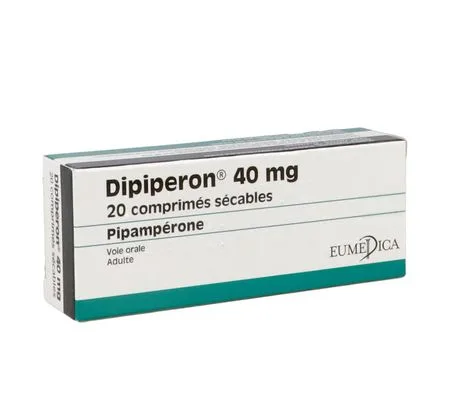
DIPIPERON 40 mg, scored tablet
Composition
Pipamperone dihydrochloride...................................................................................................................48,00 mg
Quantity corresponding to pipamperone base............................................................................................40,00 mg
For one tablet.
Excipients with known effect: lactose (90 mg/tablet) and sucrose (12 mg/tablet)
Maize starch, lactose monohydrate, sucrose, talc, magnesium stearate.
Indications
Short-term treatment of states of agitation and aggressiveness during acute and chronic psychotic states (schizophrenias, chronic non-schizophrenic delusional disorders: paranoid delusions, chronic hallucinatory psychoses).
Dosage and administration
Dosage
Reserved for adults.
The daily dosage is:
|
Age |
Average dosage |
Initial dose |
Daily increase |
|
Adult |
1 to 3 tablets |
1/2 tablet |
1/2 tablet |
In elderly subjects:
The tablet form is not suitable for treating elderly subjects.
In elderly subjects, the oral drops solution form is the only suitable one.
Method of administration
Administration should preferably be in one or two evening doses, for example, at dinner and at bedtime.
Contraindications
This medicine is CONTRAINDICATED in the following cases:
- hypersensitivity to the active substance or to any of the excipients mentioned in section Composition,
- comatose state, depression of the central nervous system,
- association with non-Parkinson dopaminergic agents (cabergoline, quinagolide) (see section Interactions).
Warnings and precautions
Special warnings
Neuroleptic malignant syndrome
As with other antipsychotics, DIPIPERON has been associated with the occurrence of neuroleptic malignant syndrome, an idiosyncratic reaction characterised by hyperthermia, generalised muscle rigidity, autonomic instability, and impaired consciousness. Hyperthermia is often an early sign of this syndrome. Antipsychotic treatment must be stopped immediately and appropriate symptomatic treatment and regular monitoring must be put in place.
Cardiovascular effects
Very rare cases of QT interval prolongation have been reported with pipamperone. This effect, known to potentiate the risk of occurrence of serious ventricular arrhythmias, notably of the torsade de pointes type, is increased by the presence of bradycardia, hypokalaemia, a congenital or acquired long QT (association with a medicinal product increasing the QT interval) (see section Adverse effects).
Therefore, when the clinical situation allows, it is advisable to ensure before any administration that there are no factors that may favour the occurrence of this arrhythmia:
- bradycardia below 55 beats per minute
- hypokalaemia
- congenital QT interval prolongation
- ongoing treatment with a medicinal product likely to cause marked bradycardia (< 55 beats per minute), hypokalaemia, slowing of intracardiac conduction, or QT interval prolongation (see section Interactions).
Apart from emergency situations, it is recommended to perform an ECG as part of the initial assessment of patients who are to be treated with a neuroleptic.
Cerebrovascular accident
In randomised placebo-controlled clinical studies conducted in elderly patients with dementia treated with certain atypical antipsychotics, an approximately 3-fold higher risk of cerebrovascular accident compared with placebo was observed. The mechanism of such an increased risk is not known. An increased risk with other antipsychotics or in other patient populations cannot be excluded. DIPIPERON should be used with caution in patients with risk factors for cerebrovascular accident.
Parkinson's disease
Outside exceptional situations, this medicine should not be used in cases of Parkinson's disease.
Tardive dyskinesia
As with all antipsychotics, tardive dyskinesia may occur in some patients during long-term treatment or after treatment has been stopped.
This syndrome is mainly characterised by involuntary rhythmic movements of the tongue, face, mouth or jaw. These manifestations may be permanent in some patients. The syndrome may be masked when treatment is reintroduced, when the dose is increased, or when switching to another antipsychotic. Treatment should be stopped as soon as possible.
Extrapyramidal symptoms
As with all antipsychotics, extrapyramidal symptoms may occur, for example tremor, rigidity, hypersalivation, bradykinesia, akathisia, acute dystonia. The occurrence of extrapyramidal effects is dose-dependent, but varies greatly from one patient to another. Elderly patients are particularly sensitive to them. A dose reduction, if possible, or the use of anticholinergics helps to control the symptoms.
Increased mortality in elderly patients with dementia
The results of two observational studies conducted in a large number of patients showed that elderly patients with dementia treated with antipsychotics have a small increase in mortality risk compared with those who are not treated.
The available data are insufficient to establish a precise estimate of this risk, and the cause of this increase is unknown.
DIPIPERON is not indicated for the treatment of behavioural disorders associated with dementia.
Venous thromboembolism
Cases of venous thromboembolism (VTE) have been reported with antipsychotics. Since patients treated with antipsychotics often have acquired risk factors for VTE, all risk factors for the occurrence of VTE must be identified before and during treatment with DIPIPERON, and preventive measures must be taken where appropriate.
Hyperglycaemia / Metabolic syndrome
Cases of hyperglycaemia or glucose intolerance and the occurrence or exacerbation of diabetes have been reported in patients treated with antipsychotics (see section Adverse effects).
Patients treated with DIPIPERON must undergo clinical and biological monitoring in accordance with current recommendations. Particular attention is recommended for diabetic patients or patients with risk factors for diabetes.
Other
As with all antipsychotics, DIPIPERON should not be used alone when a depressive state predominates. Combination with an antidepressant should be considered when depression and psychosis coexist.
Related to excipients
This medicine contains sucrose and lactose. Patients with galactose or fructose intolerance, total lactase deficiency, glucose-galactose malabsorption syndrome or sucrase-isomaltase deficiency (rare hereditary diseases) must not take this medicine.
Precautions for use
Alcohol intake is strongly discouraged during the duration of treatment.
Effects endocrine : the hormonal effects of all antipsychotics include hyperprolactinaemia, which may lead to galactorrhoea, gynaecomastia and oligo- or amenorrhoea.
Populations at risk
Elderly subject: due to greater sensitivity to sedation, orthostatic hypotension and extrapyramidal effects, pipamperone should be used with caution.
Severe cardiovascular disorders (see sections Warnings and precautions "Special warnings" and 4.8).
Epilepsy, convulsions: pipamperone may lower the seizure threshold, particularly in epileptic patients and in subjects with other factors predisposing to convulsions (alcohol withdrawal, brain damage).
Monitoring (clinical and possibly electrical) must be reinforced in epileptic patients.
Hepatic and/or renal impairment : due to a risk of accumulation, pipamperone should be used with caution.
Interactions
Medicines lowering the epileptogenic threshold
The concomitant use of proconvulsant medicines, or medicines lowering the epileptogenic threshold, should be carefully weighed, given the severity of the risk incurred. These medicines are notably represented by most antidepressants (imipramine-like, selective serotonin reuptake inhibitors), neuroleptics (phenothiazines and butyrophenones), mefloquine, chloroquine, bupropion, tramadol.
Sedative medicinal products
It must be taken into account that many medicines or substances can add up their central nervous system depressant effects and contribute to decreased alertness. These include morphine derivatives (analgesics, antitussives and substitution treatments), neuroleptics, barbiturates, benzodiazepines, anxiolytics other than benzodiazepines (for example, meprobamate), hypnotics, sedative antidepressants (amitriptyline, doxepin, mianserin, mirtazapine, trimipramine), sedative H1 antihistamines, centrally acting antihypertensives, baclofen and thalidomide.
Medicines liable to cause torsades de pointes
This serious cardiac rhythm disorder can be caused by a number of drugs, whether antiarrhythmic or not. Hypokalaemia (see hypokalaemic drugs) is a contributing factor, as are bradycardia (see bradycardic drugs) or a pre-existing prolongation of the QT interval, congenital or acquired.
The medicinal products concerned include in particular class Ia and III antiarrhythmics and certain neuroleptics.
For erythromycin, spiramycin and vincamine, only the intravenous forms are concerned by this interaction.
The use of a torsadogenic medicine with another torsadogenic medicine is generally contraindicated.
However, methadone, as well as certain subclasses, are exceptions to this rule:
- antiparasitics (halofantrine, lumefantrine, pentamidine) are only advised against with other torsadogenic drugs;
- neuroleptics liable to cause torsade de pointes are also advised against, and not contraindicated, with other torsadogenic drugs.
Contraindicated combinations
Non-Parkinson dopaminergics (cabergoline, quinagolide).
Reciprocal antagonism between the dopamine agonist and neuroleptics.
Combinations not recommended
Other medicinal products that may cause torsades de pointes: class Ia antiarrhythmics (quinidine, hydroquinidine, disopyramide) and class III (amiodarone, sotalol, dofetilide, ibutilide), and other medicines such as bepridil, cisapride, diphemanil, erythromycin IV, mizolastine, vincamine IV, moxifloxacin, spiramycin IV.
Increased risk of ventricular rhythm disorders, in particular torsades de pointes.
Other neuroleptics that may cause torsades de pointes (amisulpride, cyamemazine, droperidol, fluphenazine, periciazine, haloperidol, levomepromazine, pimozide, pipotiazine, sertindole, sulpiride, sultopride, tiapride)
Increased risk of ventricular rhythm disorders, in particular torsades de pointes.
Antiparasitic agents that may cause torsades de pointes (halofantrine, lumefantrine, pentamidine)
Increased risk of ventricular rhythm disorders, in particular torsades de pointes.
If possible, stop one of the two treatments.
If the association cannot be avoided, check the QT interval beforehand and monitor with continuous ECG.
Dopaminergic antiparkinsonian agents (amantadine, apomorphine, bromocriptine, entacapone, lisuride, pergolide, piribedil, ropinirole, selegiline, pramipexole).
Reciprocal antagonism between dopaminergic agents and neuroleptics.
The dopaminergic agent may cause or worsen psychotic disorders. If neuroleptic treatment is necessary in a parkinsonian patient treated with dopaminergic agents, the latter must be gradually reduced until discontinued (abrupt discontinuation exposes the patient to a risk of "neuroleptic malignant syndrome").
Alcohol consumption
Potentiation by alcohol of the sedative effect of neuroleptics.
Impaired alertness may make driving vehicles and using machines dangerous.
Avoid taking alcoholic beverages and medicines containing alcohol.
Levodopa
Reciprocal antagonism of levodopa and neuroleptics.
In parkinsonian patients, use the minimum effective doses of each of the two medicines.
Methadone
Increased risk of ventricular rhythm disorders, in particular torsades de pointes.
Associations subject to Precautions for use
Beta-blockers in heart failure: (bisoprolol, carvedilol, metoprolol)
Increased risk of ventricular rhythm disorders, in particular torsade de pointes.
Clinical and electrocardiographic monitoring.
Bradycardic agents
Increased risk of ventricular rhythm disorders, in particular torsade de pointes.
Clinical and electrocardiographic monitoring.
Potassium-lowering agents (hypokalaemic agents)
Increased risk of ventricular rhythm disorders, in particular torsades de pointes.
Correct any hypokalaemia before administering the product and carry out clinical, electrolyte and electrocardiographic monitoring.
Associations to be taken into account
Antihypertensives
Increased risk of hypotension, particularly orthostatic hypotension.
Beta-blockers (except esmolol and sotalol)
Vasodilating effect and risk of hypotension, particularly orthostatic (additive effect).
Nitrates and related compounds
Increased risk of hypotension, particularly orthostatic hypotension.
Fertility, pregnancy and breastfeeding
Pregnancy
Maintaining good maternal psychological balance is desirable throughout pregnancy to avoid any decompensation. If drug treatment is necessary to ensure this balance, it must be initiated or continued at an effective dose throughout pregnancy.
Data on the use of pipamperone in pregnant women are limited.
Neonates exposed to antipsychotics (including DIPIPERON) during the third trimester of pregnancy are at risk of adverse events including extrapyramidal symptoms and/or withdrawal symptoms that may vary in severity and duration after birth. The following reactions have been reported: agitation, hypertonia, hypotonia, tremor, somnolence, respiratory distress, feeding disorder.
In view of these data, it is preferable to avoid using pipamperone during pregnancy, regardless of the stage of pregnancy. If it proves essential to prescribe pipamperone treatment during pregnancy, the neonates must be closely monitored.
Breast-feeding
Butyrophenone neuroleptics pass into breast milk; therefore, breastfeeding is not recommended for the duration of treatment.
Driving and using machines
Attention is drawn, particularly in drivers and machine operators, to the risks of reduced alertness, somnolence, dizziness and visual disturbances associated with this medicine.
Adverse effects
Based on safety data from clinical trials, the most frequently reported adverse reactions (incidence in %) were: Nervous system disorders: somnolence (22,5 %), cogwheel phenomenon (11,3 %).
The adverse reactions reported with the use of DIPIPERON during clinical trials (including those mentioned above) and after marketing are grouped in the table below. Frequencies are presented according to the following convention:
Very common (≥ 1/10); common (≥ 1/100, < 1/10); uncommon (≥ 1/1 000, < 1/100); rare (≥ 1/10 000, < 1/1 000); very rare (< 1/10 000); frequency not known (cannot be estimated from the available data).
|
System organ classes |
Adverse effects |
||
|
Frequencies of occurrence |
|||
|
Very common (≥ 1/10) |
Common (≥ 1/100, < 1/10) |
Not known |
|
|
Blood and lymphatic system disorders |
|
|
Leukopenia, thrombocytopenia. |
|
Immune system disorders |
|
|
Hypersensitivity. |
|
Endocrine disorders |
|
|
Hyperprolactinaemia, hyponatraemia, SIADH (syndrome of inappropriate antidiuretic hormone secretion). |
|
Psychiatric disorders |
|
Depression |
Indifference, anxious reactions, mood changes. |
|
Nervous system disorders |
Somnolence; cogwheel phenomenon. |
Hypertonia; akathisia; oculogyric crises; opisthotonos; dyskinesia, spasmodic torticollis, trismus. |
Convulsions (including convulsions and epileptic Grand Mal status); Neuroleptic malignant syndrome; parkinsonism; syncope; tardive dyskinesia; tremors. |
|
Cardiac disorders |
|
Tachycardia. |
Ventricular arrhythmias such as ventricular tachycardia, ventricular fibrillation, torsades de pointes, cardiac arrest. |
|
Vascular disorders |
|
Orthostatic hypotension. |
Hypotension. |
|
Gastrointestinal disorders |
|
Vomiting. |
|
|
Skin and subcutaneous tissue disorders |
|
Urticaria. |
Rash, erythematous eruptions, bullous eruptions including Lyell's syndrome (toxic epidermal necrolysis). |
|
Musculoskeletal and systemic disorders |
|
Muscle spasticity. |
|
|
Disorders of the reproductive organs and breasts |
|
Amenorrhoea. |
Galactorrhoea; gynaecomastia (including gynaecomastia and breast hypertrophy); oligomenorrhoea; sexual disorders including priapism. |
|
General disorders and administration site conditions |
|
Gait disturbance; asthenia. |
Fatigue; oedema (including facial oedema and peripheral oedema); hypothermia; hyperthermia. |
|
Investigations |
|
|
Increased hepatic enzymes, prolongation of the QT interval. Weight gain. |
|
Pregnancy, puerperium and perinatal conditions |
|
|
Neonatal withdrawal syndrome. |
Furthermore, isolated cases of sudden cardiac death as well as cases of unexplained sudden death have been reported in patients treated with antipsychotics of the phenothiazine, butyrophenone or benzamide structure.
Cases of venous thromboembolism, including cases of pulmonary embolism as well as deep venous thrombosis, have been reported with antipsychotics (frequency not known).
Cases of hyperglycaemia or glucose intolerance and the onset or exacerbation of diabetes have been reported in patients treated with antipsychotics.
Reporting of suspected adverse reactions
Reporting suspected adverse reactions after authorisation of the medicinal product is important. It allows continued monitoring of the benefit/risk balance of the medicinal product. Healthcare professionals are asked to report any suspected adverse reaction via the national reporting system: National Agency for the Safety of Medicines and Health Products (ANSM) and the network of Regional Centres of Pharmacovigilance - Website: www.signalement-sante.gouv.fr.
Overdose
Signs and symptoms
The symptoms correspond to an exacerbation of the pharmacological effects of the product; symptoms such as extrapyramidal symptoms, convulsions, hypotension, tachycardia, drowsiness, asthenia, vomiting and fatigue have been reported.
Other reactions have also been reported, including cardiorespiratory arrest, torsades de pointes, respiratory distress, coma, cerebral edema, anoxia, cerebral ischemia, acidosis, paralytic ileus, nausea, diarrhea, aggressiveness, disorientation, pallor, malaise, myosis and abnormal gastrointestinal sounds.
Cases of death related to overdose have been reported.
Treatment
There is no specific antidote. Although treatment is essentially symptomatic, it is recommended to perform gastric lavage or induce vomiting (except in unconscious patients or patients presenting with convulsions), and then administer activated charcoal.
Symptomatic treatment, continuous respiratory and cardiac monitoring (risk of QT interval prolongation), which will be continued until the patient recovers.
Pharmacodynamics
Pharmacotherapeutic class: ANTIPSYCHOTIC, ATC code: N05AD05
(N: central nervous system)
Pipamperone is a sedative non-anticholinergic neuroleptic.
Pharmacokinetics
Absorption
Pipamperone is rapidly absorbed from the gastrointestinal tract. After taking one 40 mg tablet, the maximum plasma concentration, reached in approximately 2 hours, is on average 36,8 ± 17,1 ng/ml. The bioavailability of pipamperone observed with the tablet is comparable to that observed with the oral solution.
Distribution
Plasma protein binding is low, at approximately 36%.
Metabolism
Pipamperone is mainly metabolized by oxidative N-dealkylation, piperidine oxidation and ketone reduction.
Elimination
The plasma half-life in healthy subjects is on average 22 hours. Elimination occurs essentially as metabolites via the urinary and fecal routes.
Preclinical safety
Preclinical safety data do not show any particular risk for humans, based on conventional studies of acute and repeated-dose toxicity or genotoxicity. In rodents, reproduction studies showed a general decrease in reproductive function, a delay in skeletal ossification, and an increase in skeletal variations.
In in vitro studies on isolated, perfused rabbit hearts, pipamperone was shown to block the cardiac hERG channel and prolong the action potential duration.
Pipamperone has been tested in a battery of non-clinical safety studies including: single-dose toxicity studies after oral (mice, rats, hamsters and dogs), subcutaneous (mice) and intravenous (dogs) administration; repeated-dose toxicity study by oral route for 18 months in rats and 12 months in dogs; reproduction studies by oral route (and simultaneous subcutaneous in rats) testing fertility and general reproductive performance in rats, teratogenicity and embryotoxicity in mice, rats and rabbits. The genotoxicity of pipamperone was evaluated in an in vitro chromosomal aberration test on cultures of human peripheral lymphocytes and in the in vivo micronucleus test. The mutagenic potential of nitroso derivatives of pipamperone was evaluated in an in vitro Ames gene and/or point mutation test on Salmonella typhimurium.
Single-dose toxicity assessments in multiple species revealed that pipamperone was well tolerated and had a wide safety margin, with LD50 values exceeding 600 mg/kg (approximately 83 times the maximum recommended human dose (MRHD) on a mg/kg basis) in rats, mice and hamsters, and approximately 165 mg/kg (approximately 23 times the maximum recommended human dose (MRHD)) in dogs. Results of chronic repeated-dose oral toxicity studies showed a dose-dependent decrease in body weight, food consumption and general activity, all considered to result from the sedative pharmacological properties of pipamperone and similar to those observed with other butyrophenone neuroleptics. Relative increases in kidney, liver and brain (in rats only) weights were observed in rats and dogs, as well as slight changes in chemical parameters during the subchronic toxicity study in rats. Increases in mammary gland activity were observed in both sexes and most likely attributed to increased prolactin secretion due to the dopaminergic antagonist effects of pipamperone. After chronic administration in rats (18 months) and dogs (12 months), no increase in tumor incidence was observed. Results of chromosomal evaluation studies showed no signs of genetic toxicity. In reproduction studies, a general decrease in reproductive function at a dose of approximately 75 mg/kg (approximately 10 times the maximum recommended human dose (MRHD)) can be directly attributed to the sedative effect of pipamperone; a delay in skeletal ossification and an increase in skeletal variations were observed at doses of 25 mg/kg (approximately 3,5 times the maximum recommended human dose (MRHD)) and at higher doses in mice, at maternal doses of 40 mg/kg (approximately 6 times the maximum recommended human dose (MRHD)), low embryotoxicity was observed as well as a potential delay in embryonic development. In summary, the reported clinical signs are generally consistent with or related to the pharmacological activity of pipamperone and consequently the no-effect dose could not be established for most of these animal studies.
SPECIAL PRECAUTIONS FOR DISPOSAL AND OTHER HANDLING
Any unused medicinal product or waste material should be disposed of in accordance with local requirements.
Prescription, supply and reimbursement
| Marketing authorisation (AMM) |
|
| Price: |
|
Collection.
CHEMIN DE LA NAUWELETTE 1 99131 BELGIUM
7170 MANAGE
Tel: 00 32 64 27 17 00 info@eumedica.com
https://eumedica.com/
Source: VIDAL · Updated on 10/11/2026. This information does not replace advice from a healthcare professional.