
Medicines
SmPC of 29/05/2026
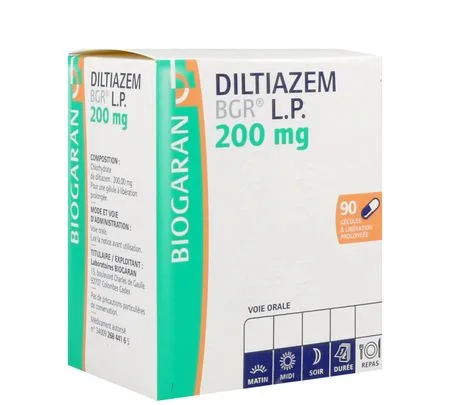
DILTIAZEM BGR LP 200 mg, prolonged-release capsule
Forms and presentations
Prolonged-release capsule.
Opaque white capsule, containing white and off-white micropellets.
Composition
Diltiazem hydrochloride..........................................................................................................................200 mg
For a prolonged-release capsule.
For the full list of excipients, see section Composition.
Povidone, ethylcellulose, talc, stearic acid.
Capsule shell : gelatin.
Dosage and administration
Dosage
Stable angina and arterial hypertension.
Treatment will be initiated with one DILTIAZEM BGR 200 mg capsule as a single intake per day, particularly in elderly patients, renally impaired patients and hepatically impaired patients.
The dose may be increased to one DILTIAZEM BGR 300 mg capsule per day depending on therapeutic response and tolerability.
Paediatric population
As tolerability and efficacy have not been established, the use of diltiazem is not recommended in children.
Method of administration
The time of intake during the day is immaterial, but it should remain relatively constant in a given patient.
The capsule must be swallowed without being opened or chewed.
Diltiazem should be used with caution in patients with renal or hepatic insufficiency (see section Warnings and precautions).
Contraindications
This medicine MUST NEVER BE USED in cases of:
• hypersensitivity to the active substance or to any of the excipients listed in section Composition ;
• sinus node dysfunction;
• second- and third-degree atrioventricular blocks without a pacemaker;
• left ventricular failure with pulmonary congestion;
• severe bradycardia (less than or equal to 40 beats per min);
• in combination with (see section Interactions) :
- dantrolene infusion;
- pimozide;
- dihydroergotamine;
- ergotamine;
- nifedipine;
- ivabradine;
- lomitapide.
Warnings and precautions
Diltiazem hydrochloride IS GENERALLY NOT RECOMMENDED in the following cases:
• in combination with:
- esmolol (in case of impaired left ventricular function);
- beta-blockers used in heart failure (bisoprolol, carvedilol, metoprolol, nebivolol);
- other beta-blockers;
- fingolimod;
- colchicine;
• in pregnant women or women who may become pregnant (see section Fertility, pregnancy and breastfeeding) ;
• monitoring should be exercised in patients with impaired left ventricular function, bradycardia (risk of worsening), atrioventricular block of the 1er degree on the electrocardiogram (risk of aggravation and, exceptionally, of complete block). In contrast, no particular precaution in case of isolated bundle branch block;
• cases of acute renal failure secondary to decreased renal perfusion have been reported in patients with existing heart disease, in particular reduced left ventricular function, severe bradycardia or severe hypotension. Close monitoring of renal function is advised;
• in elderly subjects, patients with renal impairment and patients with hepatic impairment, plasma concentrations of diltiazem may be increased. Particular attention is recommended to contraindications and precautions for use, and close monitoring, in particular of heart rate and electrocardiogram, at the start of treatment;
• diltiazem may cause a drop in blood pressure and significant bradycardia, particularly in elderly subjects;
• in case of general anesthesia, inform the anesthesiologist that the medicine is being taken;
• during general anesthesia, diltiazem generally causes a moderate decrease in blood pressure and systemic vascular resistance and a slight slowing of heart rate. The vasodilation induced by anesthetics may be potentiated by diltiazem. Their dose should be adjusted to the hemodynamic response;
• calcium channel antagonists, such as diltiazem, may be associated with mood disorders, including depression (see sections Interactions and Adverse effects) ;
• like other calcium channel antagonists, diltiazem has an inhibitory effect on intestinal motility. Therefore, it should be used with caution in patients at risk of developing intestinal obstruction;
• as an increase in blood glucose is possible, close monitoring is necessary in patients with latent or established diabetes;
• use of diltiazem may induce bronchospasm, including worsening of asthma, particularly in patients with pre-existing bronchial hyperreactivity. Cases have also been reported after a dose increase. Patients should be monitored to detect signs and symptoms of respiratory failure during treatment with diltiazem;
• precautions must be taken when direct oral anticoagulants (DOACs) are administered concomitantly with diltiazem, a moderate CYP3A4 inhibitor and weak P-gp inhibitor, particularly in patients at high bleeding risk (see section Interactions) ;
• capsule residues could pass into the stools, without clinical consequence.
Interactions
Antiarrhythmic medicines (amiodarone, cibenzoline, diltiazem, disopyramide, dofetilide, dronedarone, flecainide, hydroquinidine, ibutilide, lidocaine, mexiletine, propafenone, quinidine, sotalol, verapamil).
Many antiarrhythmics depress cardiac automaticity, conduction and contractility.
The association of antiarrhythmics of different classes can provide a beneficial therapeutic effect, but it proves most often very delicate, requiring close clinical monitoring and ECG control. The association of antiarrhythmics causing torsades de pointes (amiodarone, disopyramide, quinidine-type agents, sotalol…) is contraindicated.
Combining antiarrhythmics of the same class is not recommended, except in exceptional cases, due to the increased risk of cardiac adverse effects.
The association with medicinal products having negative inotropic, bradycardic and/or atrioventricular conduction-slowing properties is delicate and requires clinical monitoring and ECG control.
Bradycardic medicinal products
Many medicinal products may cause bradycardia. This is particularly the case with class Ia antiarrhythmics, beta-blockers, certain class III antiarrhythmics, certain calcium antagonists, digitalis glycosides, pilocarpine, anticholinesterases, etc.
Contraindicated combinations
+ Dantrolene administered by infusion
In animals, cases of fatal ventricular fibrillation are consistently observed during intravenous administration of verapamil and dantrolene. The combination of a calcium antagonist and dantrolene is therefore potentially dangerous. However, a few patients received the combination of nifedipine and dantrolene without inconvenience.
+ Dihydroergotamine
Ergotism with possible necrosis of the extremities (inhibition of hepatic metabolism of the ergot alkaloid).
+ Ergotamine
Ergotism with possible necrosis of the extremities (inhibition of hepatic metabolism of the ergot alkaloid).
+ Ivabradine
The combination with ivabradine is contraindicated due to the additional risk of decreased heart rate of diltiazem with ivabradine (see section Contraindications).
+ Lomitapide
Diltiazem (a moderate inhibitor of CYP3A4) may increase the plasma concentrations of lomitapide by inhibiting CYP3A4, resulting in an increased risk of elevated liver enzymes (see section Contraindications).
+ Nifedipine
Significant increase in nifedipine concentrations due to decreased hepatic metabolism by diltiazem, with a risk of severe hypotension.
+ Pimozide
Increased risk of ventricular rhythm disorders, in particular torsades de pointes.
Combinations not recommended
+ Beta-blockers (except esmolol)
Disorders of automaticity (excessive bradycardia, sinus arrest), sinoatrial and atrioventricular conduction disorders, and heart failure.
Such a combination should only be made under close clinical and ECG monitoring, particularly in elderly subjects or at the start of treatment.
An increased risk of depression has been reported when diltiazem is co-administered with beta-blockers (see section Adverse effects).
+ Beta-blockers in heart failure (bisoprolol, carvedilol, metoprolol, nebivolol)
Negative inotropic effect with risk of decompensation of heart failure, disorders of automaticity (bradycardia, sinus arrest), and sino-atrial and atrioventricular conduction disorders.
An increased risk of depression has been reported when diltiazem is co-administered with beta-blockers (see section Adverse effects).
+ Colchicine
Colchicine is a substrate of CYP3A and of P-glycoprotein (P-gp), an efflux transporter. Diltiazem is known to inhibit CYP3A and P-gp. In case of concomitant administration of diltiazem and colchicine, inhibition of P-gp and/or CYP3A by diltiazem may result in increased exposure to colchicine.
+ Esmolol, in case of impaired left ventricular function
Disorders of automaticity (excessive bradycardia, sinus arrest), disorders of sino-atrial and atrioventricular conduction, and cardiac failure.
+ Fingolimod
Potentiation of bradycardic effects that may have fatal consequences. Beta-blockers are all the more at risk as they prevent adrenergic compensatory mechanisms.
Clinical monitoring and continuous ECG for 24 hours following the first dose.
Associations requiring precautions for use
+ Alfentanil
Increased respiratory depressant effect of the opioid analgesic due to decreased hepatic metabolism. Adjust the dosage of the analgesic in case of treatment with diltiazem.
+ Amiodarone
Risk of bradycardia or atrioventricular block, particularly in elderly people. Clinical monitoring and ECG.
+ Direct oral anticoagulants (DOAC)
Diltiazem is a moderate inhibitor of CYP3A4 and a weak inhibitor of P-gp. It may increase the plasma concentration of direct oral anticoagulants (DOACs) when co-administered. Precautions must be put in place in case of concomitant treatment with a DOAC. Patients must be monitored, particularly patients at high risk of bleeding.
+ Enzyme-inducing anticonvulsants
Decrease in plasma concentrations of the calcium antagonist due to increased hepatic metabolism.
Clinical monitoring and possible dosage adjustment of the calcium antagonist during treatment with the anticonvulsant and after its discontinuation.
+ Atorvastatin
Increased risk of concentration-dependent adverse effects such as rhabdomyolysis, due to decreased hepatic metabolism of the lipid-lowering agent.
Use lower doses of the cholesterol-lowering agent or another statin not affected by this type of interaction.
+ Buspirone
Increase in plasma concentrations of buspirone due to decreased hepatic metabolism by diltiazem, with increased adverse effects.
Clinical monitoring and dosage adjustment of buspirone if necessary.
+ Dronedarone
Risk of bradycardia or atrioventricular block, particularly in elderly subjects. In addition, slight increase in dronedarone concentrations due to decreased metabolism by the calcium channel antagonist.
Start treatment with the calcium antagonist at the minimum recommended doses and adjust doses according to the ECG.
+ Esmolol, in case of normal left ventricular function
Disorders of automaticity (excessive bradycardia, sinus arrest), sino-atrial and atrioventricular conduction disorders and cardiac failure.
Clinical monitoring and ECG.
+ Phenytoin
When co-administered with phenytoin, diltiazem may increase the plasma concentration of phenytoin.
It is recommended to monitor plasma concentrations of phenytoin.
+ Contrast media used in radiography
The cardiovascular effects of intravenously administered contrast media, such as hypotension, may be increased in patients treated with diltiazem. Particular caution is recommended in patients receiving diltiazem and contrast media simultaneously.
+ Ibrutinib
Increase in plasma concentrations of ibrutinib due to decreased hepatic metabolism of ibrutinib by diltiazem. Close clinical monitoring and reduction of the ibrutinib dose to 140 mg per day for the duration of the combination.
+ Immunosuppressants (ciclosporin, everolimus, sirolimus, tacrolimus, temsirolimus)
Increase in blood concentrations of the immunosuppressant due to decreased metabolism of the immunosuppressant.
Measurement of blood concentrations of the immunosuppressant, monitoring of renal function and dose adjustment during the combination and after its discontinuation.
+ Potent inhibitors of CYP3A4
Increased adverse effects of calcium channel antagonism, most often in the form of hypotension, particularly in elderly subjects.
Clinical monitoring and dose adjustment during treatment with the enzyme inhibitor and after its discontinuation.
Grapefruit juice may increase exposure to diltiazem (1,2 times). Patients consuming grapefruit juice should be monitored for increased adverse effects of diltiazem. Grapefruit juice should be avoided if an interaction is suspected.
+ Midazolam
Increased plasma concentrations of midazolam due to decreased hepatic metabolism, with increased sedation.
Clinical monitoring and dose reduction during treatment with diltiazem.
+ Medicinal products liable to induce torsades de pointes
Increased risk of ventricular rhythm disorders, in particular torsades de pointes.
Clinical and electrocardiographic monitoring.
+ Rifampicin
Decrease in plasma concentrations of the calcium antagonist due to increased hepatic metabolism.
Clinical monitoring and possible dose adjustment of the calcium antagonist during treatment with rifampicin and after its discontinuation.
+ Simvastatin
Increased risk of adverse effects (concentration-dependent) such as rhabdomyolysis, due to decreased hepatic metabolism of the lipid-lowering agent. Do not exceed a dose of 20 mg/day of simvastatin. If the therapeutic goal is not achieved at this dose, use another statin not affected by this type of interaction.
+ Tamsulosin
Risk of increased adverse effects of tamsulosin, through inhibition of its hepatic metabolism.
Clinical monitoring and adjustment of the tamsulosin dosage during treatment with the enzyme inhibitor and after its discontinuation, where applicable.
Associations to be taken into account
+ Alpha-blockers for urological use (alfuzosin, doxazosin, prazosin, silodosin, tamsulosin, terazosin)
Increase of the hypotensive effect. Increased risk of orthostatic hypotension.
+ Antiplatelet agents
In a pharmacodynamic study, diltiazem was shown to inhibit platelet aggregation. Although the clinical significance of this observation is not known, potential additive effects should be considered when diltiazem is used in combination with antiplatelet agents.
+ Alpha-blocking antihypertensives
Increased hypotensive effect. Increased risk of orthostatic hypotension.
+ Other bradycardic agents
Risk of excessive bradycardia (additive effects).
+ Cilostazol
Inhibition of cilostazol metabolism (CYP3A4). Diltiazem has been shown to increase exposure to cilostazol and its pharmacological activity.
+ Clonidine, guanfacine
Disorders of automaticity (atrioventricular conduction disorders due to additive negative effects on conduction).
+ Dapoxetine
Risk of increased adverse effects, notably dizziness or syncope.
+ Medicines causing orthostatic hypotension (notably antihypertensives, nitrates, phosphodiesterase type 5 inhibitors, alpha-blockers used for urological purposes, imipramine-type antidepressants, phenothiazine neuroleptics, dopamine agonists, levodopa)
Risk of increased hypotension, in particular orthostatic hypotension.
+ Medicinal products liable to prolong the QT interval
Diltiazem may cause prolongation of the QT interval when administered with medicinal products that have the potential to prolong the QT interval or are known to do so. In cases of concomitant treatment, appropriate precautions and monitoring must be put in place. Concomitant administration of diltiazem with medicinal products known to prolong the QT interval must be based on a careful assessment of the potential risks and benefits of treatment.
+ Ticagrelor
Risk of increased plasma concentrations of ticagrelor due to decreased hepatic metabolism.
Fertility, pregnancy and breastfeeding
Pregnancy
Studies conducted in animals (rat, mouse, rabbit) have demonstrated a teratogenic effect.
There are currently no sufficient data on a possible malformative or foetotoxic effect of diltiazem hydrochloride when administered during pregnancy. Consequently, the use of diltiazem hydrochloride is not recommended during pregnancy and also in women of childbearing potential not using contraception.
Breast-feeding
Diltiazem is found at very low concentrations in breast milk.
However, breastfeeding during treatment with diltiazem should be avoided. If the use of diltiazem is necessary, infant feeding must be carried out using an alternative method.
Driving and using machines
Based on the reported adverse effects such as dizziness (frequent) and malaise (frequent), the ability to drive vehicles and use machines may be impaired. Nevertheless, no studies have been carried out.
Adverse effects
Classification of adverse effects according to expected frequencies: very common (≥ 1/10); common (≥ 1/100, < 1/10); uncommon (≥ 1/1000, < 1/100); rare (≥ 1/10 000, < 1/1000); very rare (< 1/10 000); frequency not known (cannot be estimated from the available data).
Within each frequency group, undesirable effects are presented in decreasing order of seriousness.
Cardiac disorders
• Frequent: atrioventricular blocks (which may be of 1er, 2th or 3th degree; possible bundle branch blocks), palpitations;
• uncommon: bradycardia;
• frequency not known: sinoatrial blocks, congestive heart failure, sinus arrest, cardiac arrest (asystole).
Respiratory, thoracic and mediastinal disorders
• Frequency not known: bronchospasm (including worsening of asthma).
Vascular disorders
Manifestations corresponding to vasodilation (headaches, flushing and in particular oedema of the lower limbs) are dose-dependent, related to the pharmacological activity of the active substance. They occur more readily in elderly subjects.
• Common: flushing;
• uncommon: orthostatic hypotension;
• frequency not known: vasculitis (including leukocytoclastic vasculitis).
Gastrointestinal disorders
• Common: constipation, dyspepsia, epigastric pain, nausea;
• uncommon: vomiting, diarrhoea;
• rare: dry mouth;
• Frequency undetermined: gingival hyperplasia.
Metabolism and nutrition disorders
• Frequency undetermined: hyperglycemia.
Skin and subcutaneous tissue disorders
• Common: erythema;
• Rare: urticaria;
• Frequency undetermined: Quincke's edema, rash, erythema multiforme (notably Stevens-Johnson syndrome and toxic epidermal necrolysis), exfoliative dermatitis, acute generalized exanthematous pustulosis, photosensitivity reactions (notably lichenoid keratosis on sun-exposed areas of skin), sweating, erythema possibly febrile and/or desquamative, lupus-like syndrome, drug-induced lichenoid eruption.
Hepatobiliary disorders
• Uncommon: isolated, moderate and generally transient increases in liver enzymes (AST, ALT, LDH, alkaline phosphatase) have been observed in the initial period of treatment;
• Frequency undetermined: clinical hepatitis reversible on treatment discontinuation.
Nervous system disorders
• Common: headache, dizziness;
• Frequency undetermined: extrapyramidal symptoms, generally reversible on treatment discontinuation.
Psychiatric disorders
• Uncommon: nervousness, insomnia;
• Frequency undetermined: mood changes (notably depression).
Reproductive system disorders
• Frequency undetermined: gynecomastia, generally reversible on treatment discontinuation.
General disorders and administration site conditions
• Very common: edema of the lower limbs;
• Common: malaise, asthenia.
Blood and lymphatic system disorders
• Frequency undetermined: thrombocytopenia.
Reporting of suspected adverse reactions
Reporting suspected adverse effects after marketing authorisation of the medicinal product is important. It allows continued monitoring of the benefit/risk balance of the medicinal product. Healthcare professionals should report any suspected adverse effect via the national reporting system: Agence nationale de sécurité du médicament et des produits de santé (ANSM) and the network of Regional Centres for Pharmacovigilance - Website: https://signalement.social-sante.gouv.fr/
Overdose
The clinical picture of massive acute intoxication may include marked hypotension that may progress to collapse and acute renal failure, sinus bradycardia with or without isorhythmic dissociation, sinus arrest, atrioventricular conduction disturbances, cardiac arrest.
Cases of non-cardiogenic pulmonary edema have rarely been reported following diltiazem overdose, which may appear in a delayed manner (24-48 hours after ingestion) and require ventilatory assistance. Early resuscitation measures (including fluid overload) to maintain perfusion and cardiac output may be triggering factors.
Treatment to be undertaken in a hospital setting will include: gastric lavage, osmotic diuresis.
Conduction disturbances may benefit from temporary electro-systolic pacing.
The proposed antidotes are: atropine, adrenaline, vasopressive substances, positive inotropic and chronotropic agents, glucagon and calcium gluconate by infusion.
Pharmacodynamics
Pharmacotherapeutic class: selective calcium antagonist with direct cardiac effects/benzothiazepine derivative, ATC code: C08DB01 (Cardiovascular system).
Diltiazem inhibits transmembrane calcium entry at the level of the myocardial muscle fibre and the smooth muscle fibre of the vessels, and thus reduces the amount of intracellular calcium reaching the contractile proteins.
In animals
• Anti-anginal properties
Diltiazem increases coronary flow without causing a coronary steal phenomenon. It acts on the small coronary arteries, on the large trunks, and on the collateral arteries.
This vasodilator effect, which is exerted moderately on peripheral systemic arterial territories, is observed at doses that are not negatively inotropic.
The two main active circulating metabolites (desacetyl diltiazem and N-monodemethyl diltiazem) have a pharmacological activity, in angina pectoris, of approximately 10 and 20 % of that of diltiazem hydrochloride.
• Anti-hypertensive properties
By reducing calcium entry into vascular smooth muscle cells, diltiazem decreases arterial tone and causes vasodilation, responsible for a decrease in peripheral resistance.
In various animal models of hypertension, in particular in the genetically hypertensive rat, diltiazem reduces blood pressure without reflex tachycardia. It does not modify cardiac output and maintains renal blood flow.
In addition, it preferentially inhibits the vasoconstrictor effects of noradrenaline and angiotensin II. In hypertensive rats, diltiazem increases diuresis without modifying the urinary sodium/potassium ratio.
Diltiazem reduces myocardial hypertrophy in spontaneously hypertensive rats. Diltiazem reduces the development of arterial calcinosis in rats.
The two main active circulating metabolites (desacetyl diltiazem and N-monodemethyl diltiazem) have a pharmacological activity in hypertension of approximately 50 % of that of diltiazem.
In men
• Anti-anginal properties
- Diltiazem increases coronary flow by decreasing resistance;
- through its moderate bradycardic action, clearly demonstrated at heart rates greater than or equal to 75 beats per minute, and the moderate decrease in systemic arterial resistance, diltiazem reduces cardiac workload;
- electrophysiologically, in normal subjects, diltiazem is moderately bradycardic, slightly prolongs intranodal conduction, and has no effect on conduction at the His bundle and infra-His levels.
• Anti-hypertensive properties
At the vascular level, the calcium-antagonist action of diltiazem is expressed by moderate arterial vasodilation and improves the compliance of large arteries. In hypertensive patients, this vasodilation leads to a decrease in blood pressure linked to the decrease in peripheral resistance, without causing reflex tachycardia. On the contrary, there is a bradycardic effect, more marked at high heart rates.
Visceral blood flows, in particular renal and coronary, are maintained or increased.
A slight natriuretic effect is observed after acute administration.
During prolonged treatment, diltiazem does not stimulate the renin-angiotensin-aldosterone system and does not cause hydrosodium retention, as evidenced by the absence of weight variation and of modification of the plasma hydroelectrolytic composition.
At the cardiac level, diltiazem exerts a coronary vasodilator effect and, in hypertensive patients, reduces left ventricular hypertrophy. It does not significantly modify cardiac output.
No negative inotropic effect has been demonstrated on a healthy myocardium. Diltiazem moderately slows heart rate and may have a depressant effect on the pathological sinus node. It slows atrioventricular conduction, with a risk of AV block.
Diltiazem has no effect on conduction at the His bundle and infra-His levels.
Diltiazem has no influence on glucose regulation or on lipid metabolism, in particular plasma lipoproteins.
Pharmacokinetics
• The pharmacokinetics of diltiazem are linear and non-saturable;
• in healthy volunteers, with chronic oral administration, diltiazem is well absorbed (90 %);
• the LP 200 mg formulation allows prolonged absorption of the active ingredient, resulting in stable plasma concentrations between 2 and 14 hours, the range within which the times of maximum concentration peak occur;
• the bioavailability of the diltiazem LP 200 mg capsule is 35 ± 5 % due to the hepatic first-pass effect;
• diltiazem is bound to plasma proteins in the proportion of 80 – 85 %. It is extensively metabolised by the liver;
• only 0,7 to 5 % of unchanged diltiazem is found in the urine;
• the main circulating metabolite, N-monodemethyl diltiazem, represents approximately 35 % of the circulating amount of diltiazem;
• the concentrations observed after administration of 200 mg of diltiazem in the elderly subject are higher than those obtained in the young subject.
However, they remain lower than those observed in the young subject after administration of 300 mg of diltiazem. The plasma concentrations observed in renally impaired and hepatically impaired subjects are on average higher than in the young subject;
• food intake does not significantly modify the kinetics of diltiazem LP 200 mg; however, a trend towards greater absorption in the first hours after administration is observed when administration takes place with a meal;
• diltiazem and its metabolites are very poorly dialysable.
Prescription, supply and reimbursement
| Marketing authorisation (AMM) |
|
| Price: |
|
- Indication(s) listed in the marketing authorisation (AMM) on the date of publication of this decree (Plq/30, Plq/90)
Collection.
15 BOULEVARD CHARLES DE GAULLE
92707 COLOMBES CEDEX
Tel: 01 55 72 41 00 contact@biogaran.fr
https://www.biogaran.fr
Source: VIDAL · Updated on 10/11/2026. This information does not replace advice from a healthcare professional.