
Medicines
Update of 06/07/2023
DIAMICRON® 60 mg
gliclazide
Forms and presentations
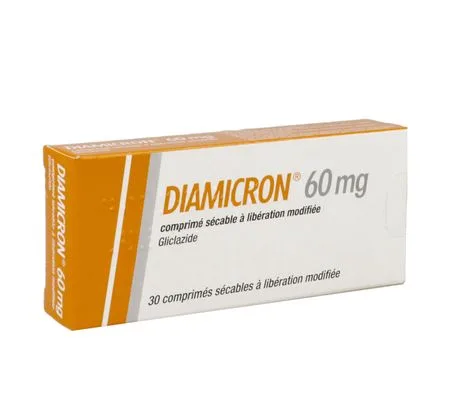
Scored tablet* modified-release (elongated, white, scored, 15 mm long and 7 mm wide, engraved "DIA 60" on both faces): Boxes of 30 and 90, under blister packs.Hospital model: Box of 100.
* The tablet can be divided into two equal doses.
Composition
| per tablet | |
| Gliclazide
|
60 mg |
Excipient with known effect: lactose.
Indications
Non-insulin-dependent diabetes (type 2) in adults, when diet, physical exercise and weight reduction alone are not sufficient to achieve glycemic control.Dosage and administration
DosageThe daily dose of Diamicron 60 mg may vary from ½ to 2 tablets per day, i.e. 30 to 120 mg in a single oral dose at breakfast.
It is recommended to swallow the tablet(s) without crushing or chewing them.
In case of a missed dose, the next day's dose must not be increased.
As with any hypoglycemic agent, the dose must be adjusted according to each patient's individual metabolic response (blood glucose, HbA1c).
Method of administration:
- Initial dose:
- The recommended initial dose is 30 mg per day (½ tablet of Diamicron 60 mg).
-
- If glycemic control is satisfactory, this dose may be adopted as maintenance treatment.
- If glycemic control is not satisfactory, the dose may be increased to 60, 90 or 120 mg per day, in successive steps, observing an interval of at least 1 month between each step, except in patients whose blood glucose does not decrease after two weeks of treatment. In this case, a dose increase may be proposed from the end of the second week of treatment.
- If glycemic control is satisfactory, this dose may be adopted as maintenance treatment.
- The maximum recommended dose is 120 mg per day.
- One modified-release tablet of Diamicron 60 mg is equivalent to two modified-release tablets of Diamicron 30 mg. The scored nature of Diamicron 60 mg modified-release tablets allows dose flexibility.
- Switch from Diamicron 80 mg tablet to Diamicron 60 mg scored modified-release tablet:
- One Diamicron 80 mg tablet is comparable to 30 mg of the modified-release formulation (i.e. ½ Diamicron 60 mg tablet). Therefore, the switch may be made provided blood glucose changes are closely monitored.
- Switch from another oral antidiabetic to Diamicron 60 mg:
- Diamicron 60 mg may take over from another oral antidiabetic treatment.
- In this case, the dose and half-life of the previous antidiabetic must be taken into account.
- The switch will generally be made without a transition period, preferably starting with a dose of 30 mg. The dose will then be adjusted as indicated above, according to each patient's glycaemic response.
- When switching from a sulfonylurea with a prolonged half-life, a therapeutic window of a few days may be necessary in order to avoid an additive effect of the two products, which may lead to hypoglycaemia.
- During this switch, it is recommended to follow the same procedure as when initiating treatment with Diamicron 60 mg, i.e. starting at a dose of 30 mg/day, then increasing the dose in successive steps according to metabolic results.
- Combination with other antidiabetics:
- Diamicron 60 mg may be combined with biguanides, alpha-glucosidase inhibitors or insulin.
- In patients insufficiently controlled with Diamicron 60 mg, combined insulin treatment may be initiated under strict medical supervision.
- Special populations:
-
- Elderly: Diamicron 60 mg will be prescribed according to the same dosage regimen as in subjects under 65 years of age.
- Renal impairment:
In patients with mild to moderate renal impairment, the dosage regimen will be the same as in subjects with normal renal function, but with careful monitoring.
These data have been confirmed in clinical trials. - Patients at risk of hypoglycaemia:
- states of undernutrition or malnutrition,
- severe or poorly controlled endocrine disorders (anterior pituitary insufficiency, hypothyroidism, adrenal insufficiency),
- withdrawal from prolonged and/or high-dose corticosteroid therapy,
- severe vascular disease (severe coronary artery disease, severe carotid involvement, diffuse vascular disease),
- states of undernutrition or malnutrition,
- Paediatric population:
The safety and efficacy of Diamicron 60 mg have not been established in children and adolescents.
No data are available.
- Elderly: Diamicron 60 mg will be prescribed according to the same dosage regimen as in subjects under 65 years of age.
Contraindications
This medicine is contraindicated in cases of:- Hypersensitivity to the active substance or to any of the excipients listed in section Composition, other sulfonylureas, sulfonamides.
- Type 1 diabetes.
- Diabetic precoma and coma, diabetic ketoacidosis.
- Severe renal or hepatic insufficiency: in these situations, it is recommended to use insulin.
- Treatment with miconazole (see Interactions).
- Breastfeeding (see Fertility/Pregnancy/Breastfeeding).
Warnings and precautions
This treatment will only be prescribed if the patient is likely to eat regularly (including having breakfast). It is important to consume carbohydrates regularly, as the risk of hypoglycaemia is increased in cases of late meals, insufficient food intake or a diet low in carbohydrates. Hypoglycaemia may occur more particularly during a low-calorie diet, after strenuous or prolonged exercise, after alcohol intake, or when a combination of hypoglycaemic agents is administered.
Hypoglycaemia may occur after administration of hypoglycaemic sulfonylureas (see Undesirable effects). Some episodes may be severe and prolonged. Hospitalisation may then prove necessary, and glucose intake may need to be continued over several days.
Careful selection of patients, of the dose used, and adequate information for the patient are necessary to reduce the risk of hypoglycaemia.
- Factors favouring the risk of hypoglycaemia:
-
- refusal or inability of the patient to cooperate (particularly in elderly subjects);
- malnutrition, irregular meal times, skipped meals, fasting periods or changes in diet;
- imbalance between physical exercise and carbohydrate intake;
- renal insufficiency;
- severe hepatic failure;
- overdose of Diamicron;
- certain endocrine disorders: thyroid disorders, pituitary and adrenal insufficiency;
- concomitant administration of other medicinal products (see Interactions).
- refusal or inability of the patient to cooperate (particularly in elderly subjects);
- Renal and hepatic insufficiency:
- The pharmacokinetics and/or pharmacodynamics of gliclazide may be altered in patients with hepatic insufficiency or severe renal insufficiency. In these patients, hypoglycaemia may be prolonged, and appropriate management must be instituted.
- Patient information:
- The risks of hypoglycaemia, its symptoms (see Undesirable effects), its treatment, and the conditions predisposing to it must be explained to the patient and their family.
- The patient must be informed in particular of the importance of adhering to the diet, the need to perform regular physical exercise, and of regularly monitoring blood glucose.
The glycaemic control of a patient treated with an oral antidiabetic agent may be altered in the event of the following: concomitant administration of preparations based on St John's Wort (Hypericum perforatum) (see Interactions), fever, trauma, infection or surgical intervention.
In certain cases, it may be necessary to resort to insulin.
The hypoglycaemic efficacy of any oral antidiabetic agent, including gliclazide, may diminish over time in many patients: this may be due to worsening of the diabetes or to a decreased response to treatment. This phenomenon is called secondary failure, to distinguish it from primary failure in which the medicinal product is ineffective from the first use. Before classifying a patient as a secondary failure, the possibilities of dose adjustment and dietary follow-up should be evaluated.
Disturbances of blood glucose, including hypoglycaemia and hyperglycaemia, have been reported in diabetic patients receiving concomitant treatment with fluoroquinolones, particularly in elderly patients. Therefore, close monitoring of blood glucose is recommended in all patients receiving Diamicron 60 mg and a fluoroquinolone simultaneously.
Measurement of glycated haemoglobin (or fasting blood glucose) is recommended to assess glycaemic control. Blood glucose self-monitoring may also be performed.
Medicines of the sulfonylurea class may cause haemolytic anaemia in subjects with a G6PD (glucose-6-phosphate dehydrogenase) enzyme deficiency. As gliclazide belongs to this class, precautions should be taken in patients deficient in G6PD, and a treatment from a therapeutic class other than sulfonylureas should be considered.
Cases of acute porphyria have been described with other sulfonylurea-class medicines in patients with porphyria.
This medicine contains lactose. Its use is not recommended in patients with galactose intolerance, Lapp lactase deficiency or glucose-galactose malabsorption syndrome (rare hereditary diseases).
Interactions
The following products may increase hypoglycaemia:
Contraindicated combinations:
- Miconazole (systemic route, oral gel): increased hypoglycaemic effect with possible occurrence of hypoglycaemic manifestations, even coma.
Combinations not recommended:
- Phenylbutazone (systemic route): increased hypoglycaemic effect of sulfonylurea hypoglycaemic agents (displacement of their binding to plasma proteins and/or decreased elimination). Preferably use another anti-inflammatory; otherwise warn the patient and reinforce self-monitoring; adjust the dose if necessary during treatment with the anti-inflammatory and after its discontinuation.
- Alcohol: increased hypoglycaemic reaction (inhibition of compensatory reactions), which may facilitate the occurrence of hypoglycaemic coma. Avoid consumption of alcoholic beverages and medicines containing alcohol.
Associations subject to precautions for use:
Due to the increased hypoglycaemic effect, in some cases hypoglycaemia may occur during concomitant treatment with the following medicines: other antidiabetic agents (insulin, acarbose, metformin, thiazolidinediones, dipeptidyl peptidase-4 inhibitors, GLP-1 receptor agonists), beta-blockers, fluconazole, angiotensin-converting enzyme inhibitors (captopril, enalapril), H2-receptor antagonists, MAOIs, sulfonamides, clarithromycin and non-steroidal anti-inflammatory drugs.
The following products may cause an increase in blood glucose:
Combinations not recommended:
- Danazol: diabetogenic effect of danazol. If the combination cannot be avoided, warn the patient and reinforce blood glucose and urinary monitoring. Adjust the antidiabetic dose if necessary during treatment with danazol and after its discontinuation.
Associations subject to precautions for use:
- Chlorpromazine (neuroleptics): at high doses (> 100 mg per day of chlorpromazine): increase in blood glucose (decreased insulin release). Warn the patient and reinforce blood glucose monitoring. Adjust the antidiabetic dose if necessary during treatment with the neuroleptic and after its discontinuation.
- Glucocorticoids (systemic and local routes: intra-articular, cutaneous and rectal enema) and tetracosactide: increase in blood glucose with occasional ketosis (decreased carbohydrate tolerance caused by corticosteroids). Warn the patient and reinforce blood glucose monitoring, especially at the start of treatment. Adjust the antidiabetic dose if necessary during treatment with corticosteroids and after their discontinuation.
- Ritodrine, salbutamol, terbutaline (IV route): increase in blood glucose by beta-2 stimulants. Reinforce blood glucose monitoring. Consider switching to insulin if necessary.
- St John's wort-based preparations (Hypericum perforatum) : exposure to gliclazide is decreased by St John's wort (Hypericum perforatum), hence the importance of monitoring blood glucose.
The following products may cause dysglycaemia:
Associations subject to precautions for use:
- Fluoroquinolones: in case of concomitant use of Diamicron 60 mg with a fluoroquinolone, the patient must be warned of the risk of dysglycaemia and blood glucose monitoring must be reinforced.
Associations to be taken into account:
- Anticoagulants (warfarin...): sulfonylurea hypoglycaemic agents may increase the anticoagulant effect during treatment. Adjustment of the anticoagulant dose may be necessary.
Fertility, pregnancy and breastfeeding
Pregnancy:There are no data or limited data (fewer than 300 pregnancies) on the use of gliclazide in pregnant women; few data exist with other sulfonylureas.
In animals, gliclazide is not teratogenic (see Preclinical safety).
As a precaution, it is preferable to avoid using gliclazide during pregnancy.
Diabetes control should be achieved before conception in order to reduce the risk of congenital malformations due to poorly controlled diabetes.
During pregnancy, oral antidiabetics are not appropriate; insulin is then the treatment of choice for diabetes. It is recommended to switch from oral antidiabetics to insulin when pregnancy is planned or as soon as it is discovered.
Breastfeeding:
The excretion of gliclazide or its metabolites in breast milk is not known. Given the risk of neonatal hypoglycaemia, gliclazide is therefore contraindicated in women who are breastfeeding.
A risk in the newborn/infant cannot be excluded.
Fertility:No effect on fertility or reproduction has been observed in male and female rats (see Preclinical safety).
Driving and using machines
Diamicron 60 mg has no or negligible effect on the ability to drive vehicles and use machines. However, patients should be made aware of the symptoms of hypoglycaemia and should be careful when driving and/or using machines, especially at the start of treatment.Adverse effects
Based on clinical experience with gliclazide, the following adverse effects have been reported:
- The most frequent adverse effect with gliclazide is hypoglycaemia.
- As with other hypoglycaemic sulfonylureas, treatment with Diamicron may cause hypoglycaemia, in particular in cases of meals taken at irregular intervals or when a meal is skipped.
- Possible symptoms are: headache, intense hunger, nausea, vomiting, fatigue, sleep disturbances, agitation, aggressiveness, decreased concentration, alertness and reactions, depression, confusion, visual disturbances and speech disturbances, aphasia, tremor, paresis, sensory disturbances, dizziness, feeling of helplessness, loss of self-control, delirium, convulsions, shallow breathing, bradycardia, drowsiness, loss of consciousness or even coma, which may lead to a fatal outcome.
- On the other hand, signs of adrenergic counter-regulation may be observed: hyperhidrosis, clammy skin, anxiety, tachycardia, hypertension, palpitations, angina and cardiac arrhythmia.
- Symptoms generally disappear after taking carbohydrates (sugars). On the other hand, artificial sweeteners have no effect. Experience with other hypoglycaemic sulfonylureas shows that, despite initially effective measures, hypoglycaemia may recur.
- In case of severe or prolonged hypoglycaemia, even if temporarily controlled by sugar intake, immediate medical treatment or even hospitalisation may be necessary.
- Other adverse effects:
- Gastrointestinal disorders such as abdominal pain, nausea, vomiting, dyspepsia, diarrhoea and constipation have been reported; they may be avoided or reduced if the treatment is taken during breakfast.
-
The following adverse effects have been reported less frequently:
- Mucocutaneous eruptions: rash, pruritus, urticaria, angioedema, erythema, maculopapular eruptions, bullous reactions (such as Stevens-Johnson syndrome and toxic epidermal necrolysis and bullous autoimmune diseases), and exceptionally, DRESS syndrome (drug eruption with eosinophilia and systemic symptoms).
- Haematological disorders: these are rare and include anaemia, leucopenia, thrombocytopenia, granulocytopenia. These abnormalities are generally reversible on discontinuation of treatment.
- Hepato-biliary disorders: elevation of liver enzymes (AST, ALT, alkaline phosphatases), hepatitis (isolated cases). Discontinue treatment if cholestatic jaundice occurs. As a general rule, these symptoms regress on discontinuation of treatment.
- Visual disturbances: transient visual disturbances due to changes in blood glucose may occur, particularly at the initiation of treatment.
- Mucocutaneous eruptions: rash, pruritus, urticaria, angioedema, erythema, maculopapular eruptions, bullous reactions (such as Stevens-Johnson syndrome and toxic epidermal necrolysis and bullous autoimmune diseases), and exceptionally, DRESS syndrome (drug eruption with eosinophilia and systemic symptoms).
- Class effects:
- As with other hypoglycaemic sulfonylureas, the following adverse effects have been observed: erythrocytopenia, agranulocytosis, haemolytic anaemia, pancytopenia, allergic vasculitis, hyponatraemia, increased liver enzyme levels, hepatic insufficiency (cholestasis and jaundice) or even hepatitis, which regressed on discontinuation of treatment; only a few cases led to hepatic insufficiency life-threatening.
Reporting suspected adverse reactions after authorisation of the medicinal product is important. It allows continuous monitoring of the benefit/risk balance of the medicinal product. Healthcare professionals should report any suspected adverse reaction via the national reporting system: National Agency for the Safety of Medicines and Health Products (ANSM) and the network of Regional Pharmacovigilance Centres. Website: https://signalement.social-sante.gouv.fr.
Overdose
An overdose of sulfonylureas can cause hypoglycaemia.
Moderate symptoms of hypoglycaemia, without loss of consciousness or neurological signs, must absolutely be corrected by carbohydrate intake, an adjustment of the dosage and/or a change in diet. Close monitoring must be continued by the physician until the patient is out of danger.
Severe hypoglycaemic reactions, with coma, convulsions or other neurological disorders are possible and constitute a medical emergency requiring immediate hospitalisation of the patient.
If hypoglycaemic coma is diagnosed or suspected, the patient must receive a rapid intravenous injection of 50 mL of a concentrated glucose solution (20 to 30 %), followed by a continuous infusion of a more dilute glucose solution (at 10 %) at the rate necessary to maintain blood glucose above 1 g/L.
Close monitoring of the patient will be instituted and reinforced if necessary by the physician according to the patient's condition.
Due to the strong protein binding of gliclazide, dialysis is not necessary.
Pharmacodynamics
Pharmacotherapeutic class: Sulfonylurea hypoglycaemic agent, urea derivative (ATC code: A10BB09).
Gliclazide is a sulfonylurea hypoglycaemic agent, an oral antidiabetic, possessing a nitrogen-containing heterocycle with an endocyclic bond, which distinguishes it from other sulfonylureas. Gliclazide lowers blood glucose by stimulating insulin secretion by the beta cells of the islets of Langerhans. The increase in insulin and C-peptide secretion that follows a meal persists after 2 years of treatment.
In addition to these metabolic properties, gliclazide has haemovascular properties.
- Effects on insulin release:
- In type 2 diabetics, in the presence of glucose, gliclazide restores the early peak of insulin secretion and increases the second phase of insulin secretion. A significant increase in the insulin response is observed in response to a meal or glucose intake.
- Haemovascular properties:
-
Gliclazide reduces the process of microthrombosis by two mechanisms that could be involved in the complications of diabetes:
- partial inhibition of platelet aggregation and adhesiveness, as well as a decrease in markers of platelet activation (beta-thromboglobulin, thromboxane B2);
- an action on the fibrinolytic activity of the vascular endothelium with an increase in t-PA activity.
- partial inhibition of platelet aggregation and adhesiveness, as well as a decrease in markers of platelet activation (beta-thromboglobulin, thromboxane B2);
Pharmacokinetics
- Absorption:
- After oral administration, the plasma concentration increases progressively until the 6e hour to reach a plateau between the 6e and the 12e hour.
- Intra-individual variations are small.
- Absorption of gliclazide is complete. Food intake changes neither the rate nor the extent of absorption.
- Distribution:
- Binding to plasma proteins is approximately 95 %. The volume of distribution is approximately 30 litres. A single daily dose of Diamicron 60 mg maintains an effective plasma concentration of gliclazide for 24 hours.
- Biotransformation:
- Gliclazide is mainly metabolised in the liver. Excretion is essentially urinary; less than 1 % is found unchanged in the urine. No circulating active metabolite has been detected.
- Disposal:
- The elimination half-life of gliclazide is 12 to 20 hours.
- Linearity/Non-linearity:
- Up to the dose of 120 mg, there is a linear relationship between the dose administered and the area under the concentration curve (AUC).
- Special populations:
- Elderly: in elderly subjects, no clinically significant modification of pharmacokinetic parameters was observed.
Preclinical safety
The preclinical data, based on chronic toxicity and genotoxicity studies, revealed no risk for humans. No long-term carcinogenicity study has been carried out.
No teratogenic effect has been reported in animals; only a decrease in fetal weight was observed in animals that received doses 25 times higher than the maximum recommended dose in humans. In studies carried out in animals, administration of gliclazide had no impact on fertility and reproduction.
Storage conditions
- Shelf life
- 3 years.
No special precautions for storage.
HANDLING/DISPOSAL INSTRUCTIONS
No special requirements.
Any unused medicinal product or waste material should be disposed of in accordance with local requirements.
Prescription, supply and reimbursement
LIST I| Marketing authorisation (AMM) | 3400933814687 (2009, RCP rév 05.06.2023) 30 tab. |
| 3400933823382 (2009, RCP rev 05.06.2023) 90 tab. | |
| 3400933823443 (2009, RCP rev 05.06.2023) 100 tab. |
| Price: | 2,92 euros (30 tablets). |
| 8,22 euros (90 tablets). | |
| Social Security reimbursement at 65% based on the TFR: 2,92 euros (30 tablets), 8,22 euros (90 tablets). | |
| Hospital model: Collect. | |
Les Laboratoires Servier
50, rue Carnot. 92284 Suresnes cdx
Tel: 01 55 72 60 00
www.servier.fr
Source: VIDAL · Updated on 10/11/2026. This information does not replace advice from a healthcare professional.